
Supported YouTube file formats Note: Audio files, like MP3, WAV, or PCM files, can’t be uploaded to create a YouTube video. You can use video editing software to convert your audio file to a video. Audio files can only be uploaded as extra languages for your video.
Day: May 20, 2026
Categories
1-800 Contacts
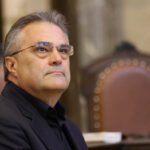
Former intelligence official Egisto Ott has been convicted of spying for Russia in what is being called Austria’s largest spy trial in years, News.Az reports, citing BBC.
***
A jury in Vienna found Ott, 63, guilty of having handed over information to Russian intelligence officers and to Jan Marsalek, the fugitive executive of collapsed German payments firm Wirecard.
Ott, who denies the charges, was sentenced to four years and one month in prison. His lawyer has appealed against the verdict.
The spy scandal has revived fears that Austria remains a hotbed of Russian espionage activity.
In addition to spying, Ott was found guilty of misuse of office, bribery, aggravated fraud and breach of trust.
The court heard how he had supported “a secret intelligence service of the Russian Federation to the detriment of the Republic of Austria” by collecting secret facts and a large amount of personal data from police databases from 2015 to 2020.
Prosecutors said Ott gave this information to Marsalek and unknown representatives of the Russian intelligence service, and received payment in return.
Marsalek, who is also an Austrian citizen, is wanted by German police for alleged fraud and is currently believed to be in the Russian capital, Moscow, having fled via Austria in 2020.
Alleged to be a Russian intelligence asset, Marsalek is the subject of an Interpol Red Notice and, as such, could be arrested if found in the territory of any of the countries belonging to the 196-member international police organisation.
Prosecutors told the court that Marsalek commissioned Ott to obtain a laptop containing secret electronic security hardware used by EU states for secure electronic communication. The laptop, they said, was handed over to the Russian intelligence service.
Ott was also found guilty of having passed phone data from senior Austrian interior ministry officials to Russia. He obtained the work phones after they accidentally fell into the River Danube on an interior ministry boating trip.
The court heard how he copied their contents and passed them on to Marsalek, and Moscow.
The prosecution told the court that Ott was “not romantic about Russia”, but had acted out of financial motives and frustration with work.
Ott denied the accusations in court. He said that he had not worked for Moscow, but had carried out a covert operation in collaboration with a Western intelligence service.
The case has shed light on more of the alleged activities of Marselek, who has since been charged with fraud and embezzlement, suspected of having inflated Wirecard’s balance sheet total and sales volume.
Marsalek is also believed to have been the controller of a group of Bulgarians who were convicted in London in 2025 of spying for Russia.
When Ott was arrested in 2024, Austria’s then Chancellor, Karl Nehammer, described the case as “a threat to democracy and our country’s national security”.
The post Former Austrian intelligence officer guilty of spying for Russia appeared first on azeritimes.com.

The U.S. Southern Command and the U.S. Embassy in Buenos Aires announced the pact under the “Protecting Global Commons Program,” an initiative aimed at strengthening maritime surveillance and security in Argentine waters over the next five years, News.Az reports, citing UPI.
***
The cooperation will begin with the delivery of a specialized camera for maritime aerial patrol operations and will expand through “advanced equipment, elite training and support to intercept and neutralize maritime threats,” the U.S. Embassy said.
Argentine Navy Chief of Staff Adm. Juan Carlos Romay and Rear Adm. Carlos Sardiello, who represents the Southern Command Naval Forces, signed the letter of intent.
U.S. officials described the agreement as part of a broader effort to strengthen regional security in the South Atlantic, a strategic zone for international trade and access to Antarctica.
Argentine President Javier Milei and U.S. President Donald Trump strengthened their cooperation in defense and security in recent months amid growing political alignment between both governments.
In late April, Milei visited the nuclear-powered aircraft carrier USS Nimitz during joint naval exercises between Argentine and U.S. forces in the South Atlantic as part of the Passex operation.
At the time, U.S. Ambassador Peter Lamelas said the exercises demonstrated “concrete capabilities that strengthen South Atlantic maritime security like never before.”
“With Argentina, we are building a stronger and safer Western Hemisphere,” Lamelas said.
For Washington, the South Atlantic has gained increasing strategic relevance due to concerns linked to illegal fishing, particularly by foreign deep-water fleets, drug trafficking and the presence of actors such as China and Russia.
Argentina has one of the world’s largest exclusive economic zones, with strategic maritime corridors near the Drake Passage and the Strait of Magellan — key routes connecting the Atlantic and Pacific oceans and providing access to Antarctica.
However, opposition sectors in Argentina argue that the agreement represents an increase in U.S. military influence in a region.
The criticism focused particularly on the use of the concept “global commons,” a term some sectors consider inappropriate for referring to waters under Argentine jurisdiction.
Union organizations and nationalist leaders said the concept is usually used in reference to international waters or territories such as Antarctica, and not sovereign exclusive economic zones.
“Sovereignty and a large part of the nation’s interests are at stake,” Hugo “Cachorro” Godoy, secretary-general of the CTA Autónoma labor union, said during a parliamentary meeting on maritime sovereignty and port infrastructure, according to reports by Argentine newspaper La Nacion.
Godoy also argued there is a “geopolitical intention of domination over the territory and fragmentation of the homeland itself.”
Evan Ellis told UPI the program appears focused on improving maritime surveillance capabilities and regional coordination rather than transferring sovereign control.
“This is fundamentally about improving maritime domain awareness in the South Atlantic and helping Argentina address challenges such as illegal fishing and transnational trafficking,” Ellis said.
“The South Atlantic … has enormous strategic importance, but I do not see this agreement as an erosion of Argentine sovereignty or as an initiative directed against another country,” he said.
Ellis said hat cooperation through maritime patrol aircraft, intelligence sharing and joint training is common among allied countries that seek to monitor vast maritime areas with limited resources.
The debate also revived historical sensitivities surrounding the Falkland Islands, where the United Kingdom maintains a military base about 300 miles from the Argentine coast.
Nationalist sectors questioned why the agreement with Washington makes no reference to the territorial dispute with London or the British military presence in the South Atlantic.
Milei’s government, however, frames the rapprochement with the United States as part of a strategic realignment toward the West and a deepening of bilateral cooperation in defense, security and trade.
The post Argentina-U.S. South Atlantic pact fuels sovereignty debate appeared first on azeritimes.com.
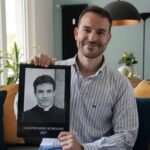
The long-standing cover model, Giovanni Galizia, whose enigmatic smile has adorned the so-called “sexy priest calendar” for many of its 23 editions, is among those who never took holy orders. Galizia, now a 39-year-old flight attendant for a Spanish airline, was just 17 when he posed for the photograph, News.Az reports, citing The Independent.
***
He recalled the shoot as a “lark,” telling The Associated Press: “It was the smile of an embarrassed kid, because I saw all my friends in front of me laughing out loud because I was dressed like I was a priest.”
The image, showing him in a clerical collar against a granite church wall in his native Palermo, has been recycled year after year. This week, a story in the Rome daily La Repubblica brought nationwide attention to the calendar, revealing it could be more accurately dubbed “the fake priest calendar.”
The Vatican has declined to comment on the matter, as the calendar is not affiliated with the Holy See.
Officially named Calendario Romano, each edition showcases 12 black-and-white portraits of men, mostly in clerical attire. Photographer Piero Pazzi, who also creates a calendar of Venetian gondoliers, was behind the lens.
Galizia confirmed he only knew one other subject in the calendar, a French man, who was also not a priest. Pazzi, however, said that at least one-third of the models in the already released 2027 calendar are indeed priests, though he offered no further details.
Despite his widespread image, Galizia says he has never been recognised on the street, though his cousins once gifted the calendar to their grandmother, “and they all died laughing.”
Both Galizia and Pazzi insist the calendar was intended as art, not deception. Galizia draws a parallel to actors playing priests in TV dramas, noting that no one assumes they are actual clergy.
He explained: “Of course, it winks a bit at the dynamic between the sacred and the profane, because it is clear that seeing a world that is distant and in some ways so lofty as the ecclesiastical world, with such a fresh-faced young man, creates a kind of dissonance.”
He expressed bewilderment at the “sexy” interpretation of the black-and-white close-ups, a sentiment echoed by Pazzi.
“There’s a tendency to confuse what is beautiful with what is sensual, because nowadays, especially in today’s world, which is quite sexualized, beauty is expressed only through sensuality,” Galizia mused, adding: “That said, I appreciate the observation and take it as a compliment — because managing to be sexy in a priest’s collar is no small feat.”
Pazzi estimates several thousand copies of the Roman calendar are sold annually, though he wouldn’t disclose exact figures. While Pazzi receives royalties, Galizia, who signed a release form at the time of the photo shoot, has never sought payment. The calendar retails for around 8 euros in shops surrounding the Vatican and throughout Rome’s historic centre, with one shop clerk, Hassam Mohammad, reporting sales of a handful daily.
Despite its unofficial nature, the calendar has found an unexpected advocate in Father Domenico, a South Korean priest. Walking near the Vatican, he noted the calendar’s popularity in his home country, particularly among young people who view it with humour.
“They often think priests are stiff and distant,” Father Domenico said. “But looking at this calendar, they think priests are more familiar, and priests can be funny. I think in Korea this calendar is very famous, and it is OK.”
The post Rome ‘sexy priest’ calendar star admits never attended seminary appeared first on azeritimes.com.