
Thanks to Azerbaijan’s resolute position and actions, the South Caucasus is transitioning from decades of persistent instability toward genuine prospects for peace and cooperation, Foreign Minister Jeyhun Bayramov said during a high-level event held in Baku on the sidelines of the World Urban Forum 13, AzerNEWS reports.
Day: May 19, 2026
Georgia’s disputed parliament is considering amendments to the Law on Broadcasting that would exempt certain “specialized broadcasters” that do not air news or political programming, from foreign funding restrictions.
Georgian Dream amended the Law on Broadcasting in 2025, banning broadcasters from receiving funding from “foreign entities,” with exceptions for commercial advertising, sponsorships, and product placement services. The amendments also expanded the powers of Georgia’s state media regulator, the Communications Commission (ComCom), over broadcast content.
According to the new draft’s explanatory note, “specialized broadcasters” that would be exempt from the foreign funding ban are channels that offer single-topic programming, including sports, educational, and entertainment content. Those airing news programs or socio-political talk shows – most major pro-government and critical TV channels – would not qualify for the exemption.
In addition, the draft law says broadcasters that air political content and receive foreign funding would be required by the ComCom, in addition to sanctions provided under existing law, to transfer those funds to the state budget. If a broadcaster fails to comply with the Commission’s decision “within the established deadline,” the enforcement will be carried out by the National Bureau of Enforcement.
The proposed changes come as Georgian broadcasters continue to face financial hurdles amid tightening media regulations. In December, Transparency International-Georgia said that “17 regional broadcasters” halted operations in 2025 due to financial difficulties. The watchdog also warned that other major critical broadcasters, Formula TV and TV Pirveli, are also facing financial difficulties and the “risk of closure.”
Also Read:
The remains of eleven people who went missing in connection with the 1992–1993 war in Abkhazia were recovered, identified and handed over to their families, the International Committee of the Red Cross (ICRC) said on May 18.
“This was made possible under the humanitarian mandate of the Coordination Mechanism on Persons Unaccounted For in Connection with the Events of the 1992–1993 Armed Conflict and After, which has operated with the ICRC’s support since 2010 and involves Abkhaz and Georgian participants,” the ICRC said.
According to the ICRC, a meeting was held at the Levan Samkharauli National Forensics Bureau (NFB), where the families of the missing people met with representatives from the Office of the State Minister of Georgia for Reconciliation and Civic Equality, the NFB and the ICRC, and received information about the process of the search and recovery of of remains and identification of their loved ones.
The civil funeral service for the eleven people, including nine civilians and two military officers, was held at Tbilisi’s Holy Trinity Cathedral. Georgian Dream-elected President Mikheil Kavelashvili and State Minister for Reconciliation and Civic Equity Tea Akhvlediani paid their respects. Akhvlediani’s office said the individuals would be buried with honors in family cemeteries across Georgia.
According to the state minister’s office, the first identifications and repatriations of those missing in connection with the 1992–1993 Abkhazia war and the August 2008 war were carried out in 2013. “Since then, the remains of 740 people have been found, of whom 334 have been identified. Around 1,900 people are still considered missing.”
Also Read:
🇦🇿 FM: Azerbaijan’s post-conflict recovery reshaping South Caucasus dynamics
#Caliber #Azerbaijan #SouthCaucasus #Reconstruction #Diplomacy #Recovery
— @CaliberEnglish May 19, 2026
Azerbaijan’s “Tartar case”
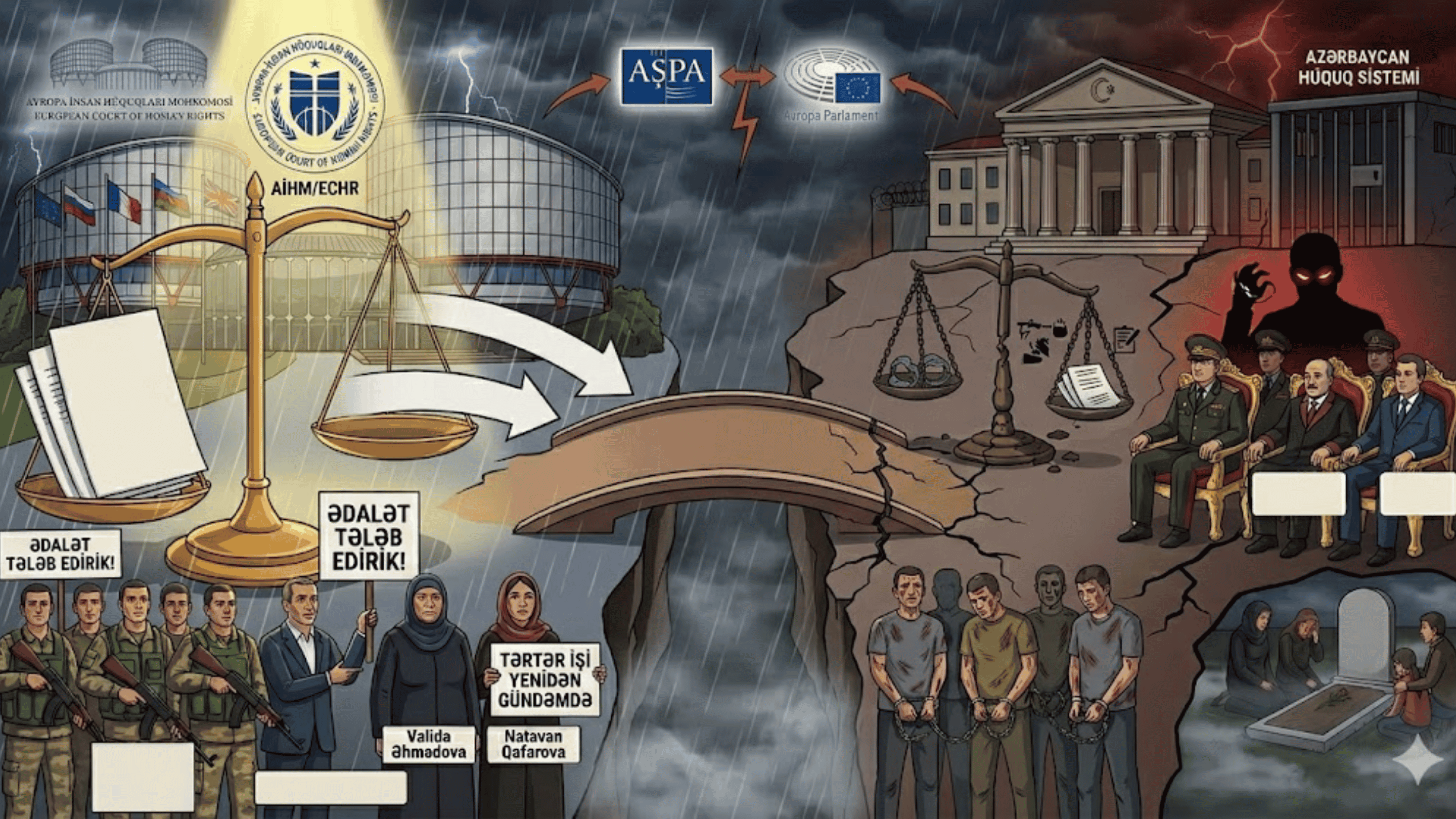
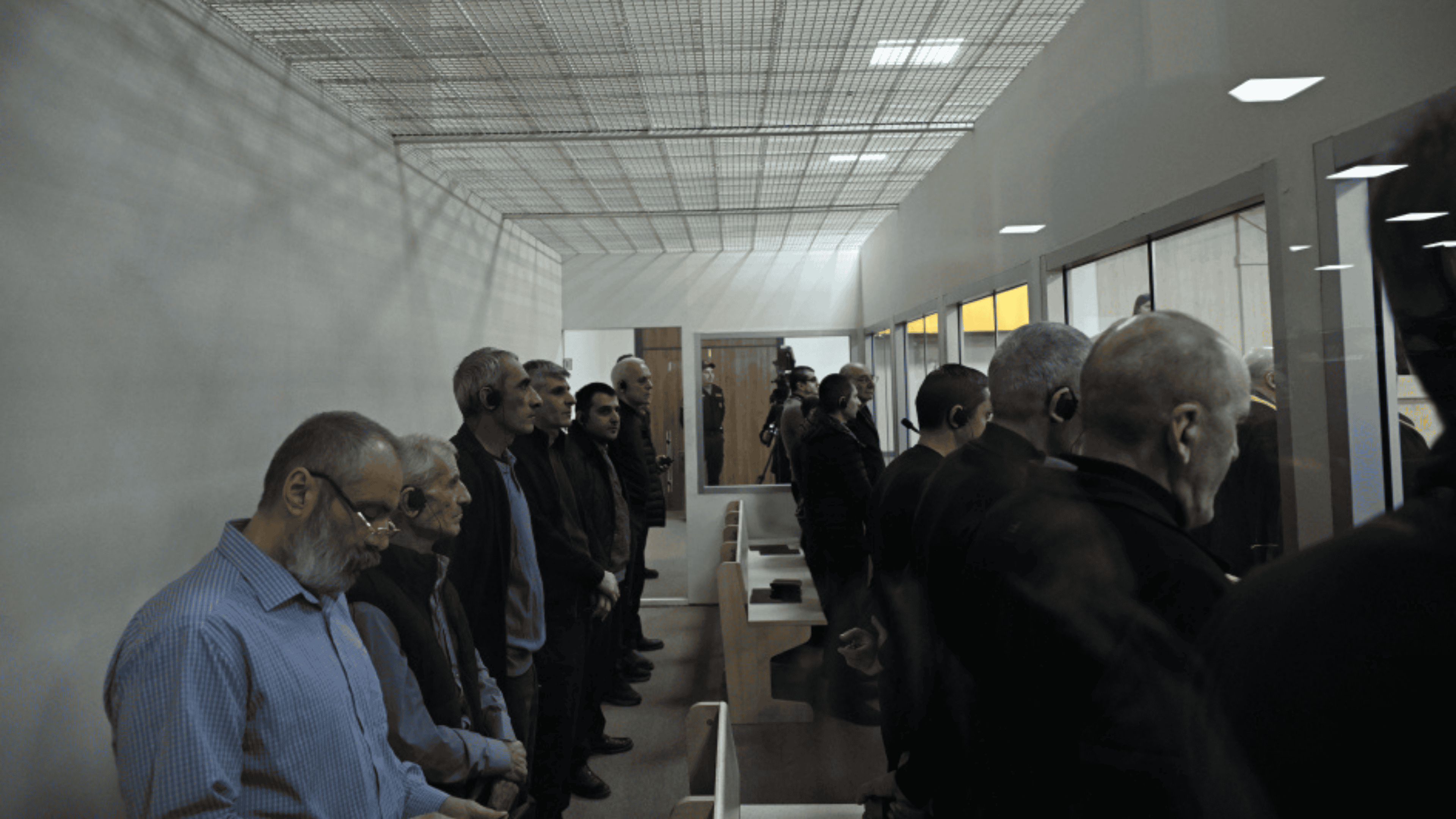
Last week, the “Tartar case” was once again brought before the European Court of Human Rights (ECHR). On 30 April, the court accepted for consideration complaints filed by the families of two servicemen who died after being tortured. On 12 May, it also accepted complaints from ten servicemen who spent five and a half years in prison before later being acquitted.
At this stage, the ECHR has asked the Azerbaijani government to provide official explanations. In the case brought by the families of the deceased, the court raised questions under Articles 2 (right to life), 3 (prohibition of torture) and 8 (right to respect for private and family life) of the European Convention on Human Rights. In the case involving the ten servicemen, the questions relate to Article 6, which guarantees the right to a fair trial.
The ECHR is examining whether the ten servicemen received a fair trial, including whether they had equal opportunities to present their case, choose legal representation and question witnesses. In the complaint filed by the two families, the key issues are whether torture took place, whether the deaths amounted to violations of the right to life and whether the state carried out an effective investigation.
In the case of one of the men involved, Saleh Gafarov, the court is also separately considering alleged violations under Article 8. His family says they were prevented from arranging a proper burial and visiting his grave.
What is the ‘Tartar case’?
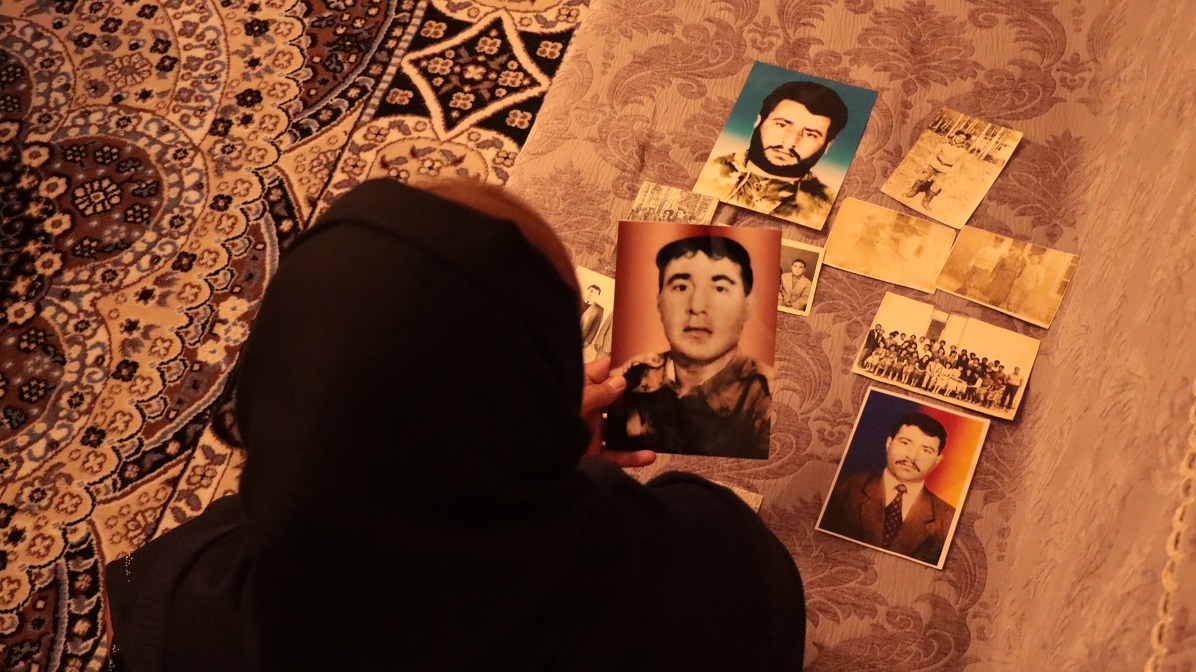
The origins of the “Tartar case” date back to May and June 2017. During that period, amid allegations of espionage, mass detentions of servicemen and some civilians began in the Tartar, Aghdam and Beylagan districts, among other areas.
In December 2021, after the investigation was reopened, 452 people were officially recognised as victims in the case. Materials compiled by Radio Free Europe/Radio Liberty and the World Organisation Against Torture recorded 11 deaths resulting from torture.
A joint statement issued on 18 December 2021 by Azerbaijan’s Prosecutor General’s Office, Interior Ministry and State Security Service also confirmed the creation of new investigative teams to examine cases involving physical and psychological violence, torture, inhuman treatment and deaths.
Reported methods of torture included forced stripping, electric shocks, electric torture involving wet socks and water, having fingernails torn out, being held in barrels of water to the point of suffocation, the deliberate breaking of bones, cigarette burns and other forms of severe abuse. These allegations appear both in reports by human rights groups and in indictments presented before the Baku Military Court. Testimony given in court by Vasif Agayev and other recognised victims also included accounts of torture involving water and electricity.
The official explanations for some of the deaths have also raised serious questions. A ruling by the Military Prosecutor’s Office stated that Lieutenant Colonel Saleh Gafarov died from injuries sustained after, according to investigators, he fell from a window during questioning. Documents relating to the case of Elchin Guliyev said he died from injuries inflicted during interrogation.
At the same time, the families of those who died and human rights defenders argue that these deaths cannot be viewed separately from the broader context of torture allegations.
The applicants and their claims
Ten servicemen have filed applications with the ECHR: Mushfig Ahmadli, Rauf Orujov, Turan Ibrahimli, Emin Adilzade, Nasif Aliyev, Mirpasha Mekhtiyev, Atabey Rahimov, Majid Gasimov, Faig Ahmadov and Emil Aliyev.
The applicants claim that charges of treason and other serious offences were brought against them without sufficient evidence and that they were forced under torture and pressure to give statements during the investigation. They say those statements were later used as key evidence in court proceedings.
Natavan Gafarova and Valida Ahmadova have also filed complaints with the ECHR. While different in form, their applications raise similar concerns. They argue that their relatives died as a result of torture and that local investigations failed to establish either the full scale of what happened or identify all those responsible.
Their complaints stress that prison sentences of five to six years handed down to five defendants do not bring the case to a close, arguing that the events should be treated not as incitement to suicide but as murder and the systematic use of torture.
In the case of Saleh Gafarov, his family has also alleged restrictions on arranging his burial and visiting his grave.
Why does the case remain unresolved?
Nine years on, the central question is no longer whether torture took place. Accounts from victims, official investigation materials and court documents all point to the widespread nature of the abuse. What remains unresolved is the chain of command and responsibility.
As part of the reopened investigation, 13 people were convicted in connection with three episodes of the case and received prison sentences ranging from four years and 10 months to 13 years. However, victims and their representatives argue that accountability has largely been limited to lower- and mid-level officials. In many cases, senior figures whom victims sought to have summoned to court were not questioned even as witnesses.
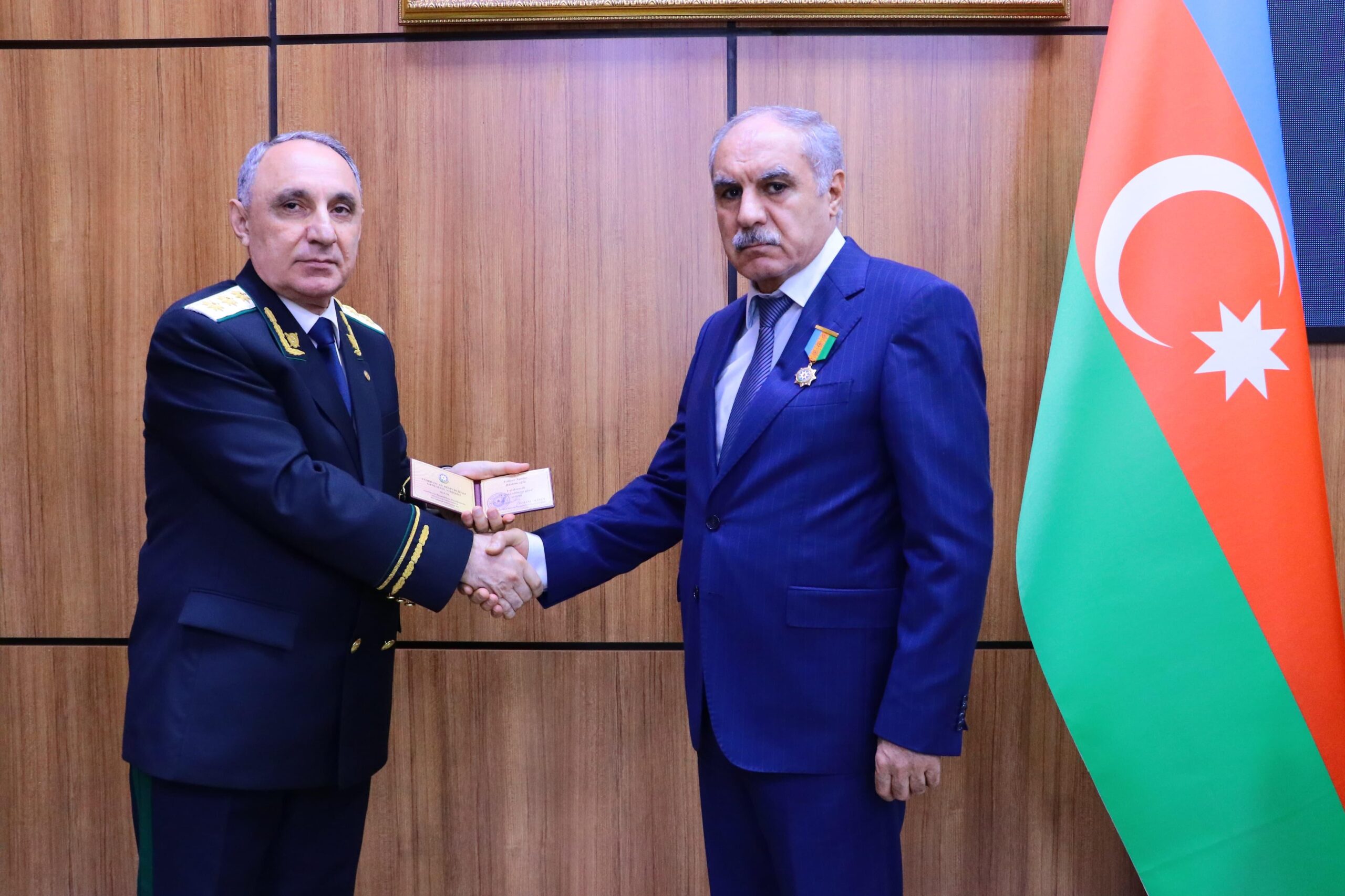
Among those whose names have repeatedly been mentioned in connection with the case are Defence Minister Zakir Hasanov, former Chief of the General Staff Najmeddin Sadygov, former corps commander Hikmat Hasanov, former military prosecutor Khanlar Valiyev and his deputy, Shafagat Imranov.
Despite this, in February 2026 Shafagat Imranov was appointed prosecutor of the Absheron district, while in April 2025 Khanlar Valiyev became a judge at the Constitutional Court. These appointments are seen by victims and human rights advocates as one of the clearest institutional indicators of why the “Tartar case” remains unresolved: accountability has largely been limited to lower-level figures, while the careers of senior officials have remained unaffected.
The case’s impact on Azerbaijan’s international reputation
The “Tartar case” has entered the communication stage before the ECHR against a backdrop of already strained relations between Azerbaijan and European institutions. In January 2024, the Parliamentary Assembly of the Council of Europe refused to ratify the credentials of Azerbaijan’s delegation, citing the country’s failure to meet key obligations.
A resolution adopted by the European Parliament in October 2024 also singled out the human rights situation in Azerbaijan as a serious concern. At the same time, the Council of Europe’s office in Baku continues to describe Azerbaijan as a member state committed to obligations on human rights, democracy and the rule of law. The “Tartar case” could make this contradiction even more visible.
Previous cases in the region and across Europe suggest that proceedings of this kind rarely focus solely on compensation. In Mikheyev v Russia, the ECHR highlighted problems related to torture and ineffective investigations; in El-Masri v North Macedonia, it pointed to state responsibility for human rights violations; and in Ochigava v Georgia, it addressed violence within the prison system and the lack of effective accountability mechanisms.
A 2026 report by Human Rights Watch also noted that, in a separate case against Azerbaijan in 2025, the ECHR found that the failure to effectively investigate allegations of torture violated Article 3 of the European Convention on Human Rights.
In this context, the “Tartar case” extends beyond a domestic legal dispute and has become an issue affecting Azerbaijan’s international legal reputation.
What institutional problems did the “Tartar case” expose?
The “Tartar case” exposed a number of problems within Azerbaijan’s law enforcement institutions and military justice system. Case materials suggest that investigations relied heavily on confessions. Applicants argued that these statements were obtained under pressure and torture and later used in court as key evidence.
At the same time, claims made by the defence were for years not effectively examined. Appeal courts in many cases also upheld earlier decisions. Meanwhile, accountability largely remained limited to lower-level figures, while senior officials remained outside the scope of the investigation. The fact that the ECHR has raised questions under Articles 2, 3, 6 and 8 of the Convention also suggests the case is being viewed as an institutional problem.
In this sense, the “Tartar case” cannot yet be considered fully resolved. Several key questions remain unanswered:
- Who was responsible for bringing the charges?
- How did statements allegedly obtained under torture become accepted as evidence in court?
- Why did courts accept these materials?
- Why, after acquittals were handed down, was meaningful accountability at senior levels not established?
As long as these questions remain unanswered, the “Tartar case” is no longer simply a criminal case from the past. Instead, it has become one of the most serious tests of Azerbaijan’s legal system, accountability mechanisms and record on impunity.
The ECHR’s final ruling is still pending. However, it is already clear that proceedings in Strasbourg have shifted attention back to fundamental questions: the issue is not only about securing justice for ten acquitted servicemen or two families, but also about how a state investigates allegations of torture, maintains oversight within the military and whether courts rely on evidence rather than confessions.
Azerbaijan’s “Tartar case”
Housing has historically served as one of the most powerful tools for economic recovery, poverty reduction, and post-conflict reconstruction, Executive Director of the United Nations Human Settlements Programme (UN-Habitat) Anacláudia Rossbach said at the World Urban Forum 13 in Baku, AzerNEWS reports.