Categories
South Caucasus News

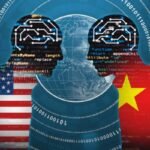
The global AI race: How China and the U.S. are competing for technological dominance


What began as competition over trade and manufacturing has rapidly evolved into a high stakes struggle for control over the technologies expected to shape the global economy, military power and political influence in the 21st century.
***
Governments, technology companies and security experts increasingly view AI not simply as a commercial innovation, but as a strategic asset comparable to oil, nuclear technology or industrial power during earlier eras. Artificial intelligence is expected to transform industries ranging from healthcare and finance to defense, transportation and scientific research.
As a result, Washington and Beijing are investing enormous financial, political and technological resources into securing leadership in advanced computing, semiconductors, machine learning and digital infrastructure.
The rivalry is no longer only about who builds better technology.
It is increasingly about who shapes the future rules, standards and architecture of the global digital order itself.
Why has AI become so strategically important?
Artificial intelligence is expected to influence nearly every sector of modern society.
AI systems can:

Analyze massive amounts of data
Automate industrial production
Improve military intelligence
Accelerate scientific discovery
Optimize logistics
Support financial systems
Enhance cybersecurity
Power autonomous systems

Because AI affects both economic productivity and national security, governments increasingly see technological leadership as directly tied to geopolitical power.
Experts often compare AI to earlier transformative technologies such as electricity or the internet because of its potential to reshape entire economies.
The country leading in AI could gain major advantages in:

Economic competitiveness
Military capability
Industrial efficiency
Scientific research
Global influence

This explains why the United States and China now treat artificial intelligence as a core national priority.
Why are the U.S. and China leading the AI race?
Several factors explain why Washington and Beijing dominate global AI competition.
The United States remains the world leader in many critical areas including:

Advanced semiconductor design
Cloud computing
Software ecosystems
AI research institutions
Venture capital investment
Leading technology companies

Major American firms play central roles in developing cutting edge AI systems and computing infrastructure.
Meanwhile, China possesses several major advantages of its own.
These include:

Massive domestic data availability
Large scale manufacturing capacity
Strong government support
Rapid digital adoption
Expanding AI research
Huge technology markets

China’s digital ecosystem has expanded rapidly across sectors such as:

Mobile payments
E commerce
Smart cities
Facial recognition
Digital platforms

The scale of both economies and technological ecosystems makes them natural competitors for global AI leadership.
Why are semiconductors central to the AI competition?
Semiconductors, commonly known as computer chips, are at the heart of the AI race.
Advanced AI systems require enormous computing power, which depends heavily on high performance chips.
Modern semiconductors power:

AI training systems
Data centers
Smartphones
Military systems
Autonomous vehicles
Cloud computing infrastructure

The United States and its allies currently dominate many of the most advanced semiconductor technologies.
Washington has increasingly restricted Chinese access to cutting edge chips and semiconductor manufacturing equipment.
American officials argue that advanced AI and chip technologies could strengthen China’s military capabilities and threaten long term strategic balance.
These export controls have become one of the most significant aspects of U.S.–China technological competition.
China, meanwhile, has accelerated efforts to develop domestic semiconductor production and reduce dependence on foreign suppliers.
The semiconductor battle increasingly represents the technological front line of geopolitical rivalry.
How is China responding to U.S. technology restrictions?
China has responded to American export controls by intensifying investment in technological self sufficiency.
Beijing increasingly views reliance on foreign advanced technologies as a strategic vulnerability.
As a result, China has expanded support for:

Domestic semiconductor production
AI research institutions
Quantum computing
Advanced manufacturing
National technology champions

Chinese companies are also investing heavily in alternative supply chains and domestic innovation ecosystems.
The government’s broader goal is reducing dependence on Western technologies while strengthening national technological sovereignty.
At the same time, China continues competing aggressively in commercial sectors such as:

Electric vehicles
Renewable energy
Telecommunications
Consumer electronics
Smart infrastructure

This reflects a larger strategy of securing technological leadership across multiple industries simultaneously.
Why is data so important in AI development?
Artificial intelligence systems depend heavily on large datasets.
The more data AI models can process, the more effectively they can identify patterns, improve predictions and refine performance.
China’s enormous population and highly digitized consumer ecosystem provide significant advantages in data generation.
Massive volumes of information are produced daily through:

Mobile payments
E commerce
Social media
Smart city infrastructure
Digital public services

Meanwhile, American technology companies continue dominating many global digital platforms and cloud computing systems.
This creates a global competition not only for algorithms, but also for:

Data access
Computing power
Digital infrastructure
Cloud services

However, growing concerns about privacy and data security are also shaping AI governance debates worldwide.
How does AI affect military competition?
Military applications of artificial intelligence are becoming increasingly important in strategic planning.
AI may influence:

Autonomous weapons systems
Intelligence analysis
Cyber warfare
Drone operations
Battlefield coordination
Missile defense
Surveillance systems

Both Washington and Beijing are investing heavily in military AI capabilities.
The United States emphasizes maintaining technological superiority across advanced defense systems, while China seeks to modernize its military through AI integration and digital transformation.
Some analysts warn that AI could fundamentally change future warfare by accelerating decision making and increasing automation.
Others fear that autonomous weapons and AI driven military systems could create new risks of accidental escalation or destabilization.
The militarization of artificial intelligence therefore represents one of the most sensitive aspects of the global AI race.
Why is the competition also economic?
AI is expected to generate enormous economic value over the coming decades.
Industries transformed by AI may experience major increases in:

Productivity
Automation
Efficiency
Innovation
Cost reduction

Countries leading in AI could therefore gain significant long term economic advantages.
AI is already reshaping sectors including:

Finance
Healthcare
Manufacturing
Transportation
Logistics
Retail
Education

The global AI market is projected to become one of the largest sectors of the future digital economy.
This explains why governments increasingly integrate AI into national industrial strategies and economic planning.
The race is therefore not only about military or geopolitical influence.
It is also about controlling future engines of economic growth.
How are technology companies influencing the rivalry?
Private technology companies play central roles in the AI competition.
Major firms in both countries invest billions of dollars into:

AI model development
Cloud computing
Data centers
Semiconductor research
Robotics
Digital infrastructure

In the United States, private sector innovation has historically driven technological leadership.
China, meanwhile, combines private technology expansion with strong state support and strategic coordination.
The relationship between governments and technology companies has therefore become increasingly important in shaping national AI strategies.
At the same time, concerns are growing regarding:

Corporate power
Data control
Market concentration
AI ethics
National security risks

Technology companies now influence geopolitics in ways previously associated mainly with governments.
What role does cybersecurity play?
Cybersecurity has become deeply intertwined with AI competition.
Artificial intelligence can strengthen cyber defense systems by:

Detecting threats faster
Automating security responses
Identifying vulnerabilities
Monitoring network activity

However, AI can also enhance offensive cyber capabilities.
Governments increasingly fear:

AI powered cyberattacks
Infrastructure sabotage
Digital espionage
Data theft
Disinformation campaigns

As digital systems become more integrated into critical infrastructure, cybersecurity itself becomes a major national security issue.
The AI race therefore extends into broader struggles over digital resilience and technological sovereignty.
Could the AI race divide the global technology ecosystem?
One major concern is the possibility of technological fragmentation.
As competition intensifies, the world could gradually split into separate digital ecosystems shaped by different standards, regulations and technologies.
This may affect:

Internet infrastructure
Semiconductor supply chains
Cloud computing systems
Telecommunications networks
AI governance models

Countries may increasingly face pressure to align technologically with either American or Chinese systems in certain sectors.
Some experts describe this trend as a “digital bifurcation” of the global economy.
Others argue that complete separation remains unlikely because global technology systems remain deeply interconnected.
However, strategic competition is clearly reshaping how governments think about technological dependence and supply chain security.
How does AI affect global influence?
Artificial intelligence is increasingly becoming a tool of international influence.
Countries leading in AI may shape:

Global technology standards
Digital infrastructure development
Data governance rules
Cybersecurity frameworks
Smart city systems

China has expanded international digital infrastructure projects through telecommunications, smart city technologies and digital connectivity initiatives.
Meanwhile, the United States continues leading many global technology standards and research ecosystems.
Competition therefore extends beyond innovation itself into the broader architecture of global digital governance.
The country shaping future AI norms may gain significant geopolitical advantages.
Are there risks of overregulation or underregulation?
Governments worldwide face difficult regulatory questions regarding AI.
Too little regulation may create risks involving:

Privacy violations
Algorithmic bias
Disinformation
Job displacement
Autonomous weapons
Market monopolies

At the same time, excessive regulation could slow innovation and reduce competitiveness.
The United States and China currently approach AI governance differently.
Washington generally relies more heavily on private sector innovation and regulatory debate, while Beijing emphasizes stronger state oversight and strategic coordination.
These different governance models may influence how AI systems develop globally.
Could cooperation still exist despite rivalry?
Despite intense competition, some experts argue that limited cooperation between the United States and China remains necessary.
Artificial intelligence raises global challenges involving:

AI safety
Cybersecurity
Autonomous weapons
Ethical standards
Misinformation
Existential technological risks

Without communication and coordination, some analysts fear uncontrolled escalation or technological instability.
There are growing international calls for dialogue regarding:

AI ethics
Military AI limits
Data governance
Global standards
Risk management

However, geopolitical mistrust continues complicating such cooperation.
How does the AI race affect ordinary people?
The AI rivalry between Washington and Beijing may appear geopolitical, but its consequences affect everyday life globally.
Artificial intelligence influences:

Employment markets
Consumer technologies
Education systems
Healthcare access
Financial services
Social media
Public infrastructure

Competition between major powers may accelerate innovation and technological investment.
At the same time, it may also contribute to:

Supply chain disruptions
Higher technology costs
Data privacy concerns
Digital surveillance
Economic instability

Workers worldwide may face major labor market transformations as automation expands across industries.
The AI race is therefore not only a state level competition.
It is reshaping how societies function economically and socially.
Could AI become the defining geopolitical issue of the century?
Many analysts increasingly believe artificial intelligence could become as strategically important in the 21st century as oil was in the 20th century.
AI influences:

Economic power
Military capability
Scientific advancement
Industrial competitiveness
Political influence

The rivalry between United States and China is therefore about far more than technology alone.
It is about who shapes the future structure of global power itself.
The outcome of this competition may influence:

International alliances
Economic systems
Global governance
Security structures
Digital freedoms
Technological standards

The world is entering an era where technological leadership increasingly determines geopolitical influence.
The central question is no longer whether artificial intelligence will transform global politics and economics.
It already is.
The real question is whether the growing AI competition between the United States and China can remain stable enough to avoid deepening geopolitical fragmentation in an increasingly interconnected world.

The post The global AI race: How China and the U.S. are competing for technological dominance appeared first on azeritimes.com.


Categories
South Caucasus News

Can the U.S. and China avoid a new Cold War?


What was once largely an economic partnership built on trade and globalization has increasingly evolved into a multidimensional rivalry involving technology, military power, global influence, supply chains, ideology and national security.
***
Many analysts now openly ask whether the world is witnessing the emergence of a new Cold War.
The comparison reflects growing fears that competition between Washington and Beijing could reshape the international system for decades, dividing global markets, technology ecosystems and geopolitical alliances into rival blocs.
At the same time, however, the relationship between the United States and China differs significantly from the original Cold War between the United States and the Soviet Union. The two economies remain deeply interconnected, global trade continues linking both countries and neither side appears willing to fully sever economic ties despite escalating tensions.
This has created a complicated global environment where competition and interdependence exist simultaneously.
The central question facing policymakers today is whether the world’s two largest powers can manage strategic rivalry without allowing it to escalate into open confrontation.
Why are U.S.–China relations deteriorating?
The deterioration of relations between Washington and Beijing did not occur suddenly.
For decades, economic cooperation dominated bilateral ties. China’s integration into the global economy accelerated after joining the World Trade Organization in 2001. American companies invested heavily in Chinese manufacturing while consumers benefited from cheaper products and expanding trade.
However, several developments gradually transformed perceptions inside the United States.
Many American policymakers began arguing that China’s rapid economic and technological rise challenged long term U.S. global leadership. Concerns increased regarding:

Trade imbalances

Intellectual property disputes

Industrial subsidies

Technology transfer

Cybersecurity

Military modernization

Human rights issues

At the same time, China increasingly viewed American policies as efforts to contain its development and limit its international influence.
The result has been growing mistrust on both sides.
Today, competition extends far beyond trade. It now affects nearly every major area of international politics.
Why do some experts compare the rivalry to the Cold War?
The term “Cold War” refers to prolonged geopolitical confrontation without direct large scale military conflict between major powers.
Several similarities between current U.S.–China tensions and the original Cold War have fueled these comparisons.
These include:

Strategic military competition

Technological rivalry

Competing global influence

Ideological tensions

Expanding alliance systems

Economic pressure tools

Information warfare

The Indo Pacific region has become particularly central to this competition, much like Europe during the original Cold War.
Military activity around Taiwan, the South China Sea and broader Asian maritime routes has intensified significantly in recent years.
At the same time, both Washington and Beijing increasingly portray the rivalry as a struggle over the future international order itself.
However, many experts caution against oversimplified comparisons.
Unlike the Soviet Union, China is deeply integrated into global trade and financial systems. The American and Chinese economies remain closely connected despite rising tensions.
This economic interdependence creates both stabilizing incentives and additional vulnerabilities.
How important is economics in the rivalry?
Economic competition lies at the center of modern U.S.–China tensions.
China has become the world’s second largest economy and a dominant manufacturing power. It plays critical roles in:

Electronics production

Rare earth minerals

Battery supply chains

Solar technology

Electric vehicles

Consumer manufacturing

Meanwhile, the United States remains dominant in:

Advanced semiconductors

Financial systems

Software

Aerospace

Global reserve currency influence

Trade relations between the two countries remain enormous despite political tensions.
However, economic policy has increasingly become tied to national security.
Washington has introduced tariffs, export controls and restrictions targeting advanced technologies, particularly semiconductors and artificial intelligence systems.
The United States argues that certain technologies could strengthen China’s military capabilities and threaten strategic balance.
China, meanwhile, accuses Washington of attempting to slow its technological development and maintain global dominance.
As a result, economic globalization itself is increasingly being reshaped by geopolitical competition.
Why are semiconductors so important?
Semiconductors have become one of the most strategically important issues in U.S.–China relations.
Modern chips power nearly every advanced technology system including:

Artificial intelligence

Smartphones

Military equipment

Data centers

Telecommunications

Electric vehicles

Aerospace systems

The United States and its allies currently dominate the most advanced semiconductor technologies, while China remains highly dependent on imported high end chips.
Washington has imposed restrictions limiting Chinese access to advanced semiconductor equipment and AI related technologies.
These measures are intended to prevent China from rapidly advancing in critical strategic sectors.
China, in response, has accelerated efforts to achieve technological self sufficiency.
The semiconductor rivalry increasingly represents a broader struggle for technological leadership in the 21st century.
What role does Taiwan play in tensions?
Taiwan is widely viewed as the most dangerous flashpoint in U.S.–China relations.
China considers Taiwan part of its territory and has repeatedly stated that reunification remains a national priority.
The United States officially follows the “One China” policy while simultaneously maintaining unofficial ties with Taiwan and supporting its defensive capabilities.
Tensions have increased significantly in recent years as:

Chinese military activity near Taiwan expanded

U.S. political and military support for Taiwan increased

Regional alliances strengthened

Indo Pacific security competition intensified

Taiwan is also critically important economically because it hosts some of the world’s most advanced semiconductor manufacturing facilities.
A major crisis in the Taiwan Strait could therefore have enormous global economic consequences.
Many analysts view Taiwan as the area where strategic competition carries the highest risk of military escalation.
How are military tensions evolving?
Military competition between the United States and China has intensified rapidly.
China has significantly modernized its armed forces over the past two decades, expanding capabilities in:

Naval power

Missile systems

Cyber warfare

Space technologies

Air defense

Artificial intelligence

The United States continues strengthening military alliances and partnerships across the Indo Pacific region, including with:

Japan

South Korea

Australia

The Philippines

India

Freedom of navigation operations in the South China Sea and military exercises near Taiwan have become increasingly common.
At the same time, both countries remain cautious about direct confrontation.
The economic and geopolitical consequences of open conflict between two nuclear powers would likely be catastrophic globally.
This creates a paradox where competition intensifies while both sides simultaneously seek to avoid uncontrolled escalation.
How does ideology influence the rivalry?
Ideological differences also shape perceptions between Washington and Beijing.
American officials frequently frame the rivalry around:

Democracy

Human rights

Open markets

International rules based systems

Chinese leaders, meanwhile, emphasize:

Sovereignty

Political stability

Economic development

Noninterference

Multipolar global governance

Beijing often argues that Western countries seek to impose political values internationally, while Washington increasingly warns about authoritarian influence and democratic backsliding globally.
However, modern U.S.–China competition is generally less ideological than the original Cold War between capitalism and communism.
Economic pragmatism and strategic interests often remain more important than ideological confrontation alone.
Can both powers decouple economically?
“Decoupling” refers to reducing economic dependence between the United States and China.
Some policymakers advocate partial decoupling in strategic sectors such as:

Semiconductors

Telecommunications

Artificial intelligence

Critical minerals

Pharmaceuticals

However, full economic separation would be extremely difficult.
The two economies remain deeply interconnected through:

Manufacturing

Supply chains

Consumer markets

Financial systems

Investment flows

Many multinational companies continue operating heavily in both countries.
As a result, some experts prefer the term “de risking” rather than complete decoupling.
This involves reducing strategic vulnerabilities while maintaining broader economic engagement.
Global businesses increasingly face pressure to diversify supply chains and reduce overreliance on either side.
How are other countries responding?
Many countries are attempting to balance relations with both Washington and Beijing simultaneously.
China remains a major trading partner for much of the world, while the United States continues playing central roles in:

Security alliances

Global finance

Technology

Military protection

As a result, many governments do not want to choose exclusively between the two powers.
This is particularly visible across:

Southeast Asia

The Middle East

Africa

Latin America

Central Asia

Several emerging economies increasingly seek multipolar diplomacy that avoids alignment with only one side.
The Global South has become especially important in this competition because both powers seek influence through:

Infrastructure investment

Trade agreements

Energy cooperation

Technology partnerships

Development financing

How does artificial intelligence affect the rivalry?
Artificial intelligence has become one of the most important strategic battlegrounds between the two countries.
AI is expected to influence:

Economic productivity

Military systems

Cybersecurity

Surveillance technologies

Scientific research

Digital infrastructure

Both Washington and Beijing view AI leadership as critical for future global influence.
This competition has accelerated investment in:

Data centers

Semiconductor development

Research funding

Advanced computing

Quantum technologies

AI competition also raises concerns regarding military escalation and cyber conflict.
Autonomous weapons systems, AI driven intelligence analysis and digital surveillance capabilities are becoming increasingly important in national security strategies.
Could cooperation still be possible?
Despite intense rivalry, the United States and China continue cooperating in certain areas.
Climate change represents one major example because both countries are among the world’s largest carbon emitters.
Global economic stability also requires some level of coordination between the two largest economies.
Other areas where cooperation remains possible include:

Public health

Financial stability

Nuclear nonproliferation

Counterterrorism

Climate policy

Diplomatic communication channels therefore remain critically important.
Many analysts argue that strategic competition does not automatically make conflict inevitable.
The challenge is establishing mechanisms that prevent rivalry from escalating uncontrollably.
What makes this rivalry different from the original Cold War?
Several major differences distinguish modern U.S.–China competition from the Soviet American Cold War.
First, economic interdependence remains far greater.
Second, globalization creates more complex international relationships where countries often maintain ties with both powers simultaneously.
Third, technology and digital infrastructure now play central roles alongside traditional military competition.
Finally, global challenges such as climate change and pandemics require at least some degree of international cooperation regardless of geopolitical rivalry.
This creates a more interconnected but also more unstable international environment.
Could the rivalry reshape globalization itself?
Many experts believe U.S.–China tensions are already transforming globalization.
Global supply chains are increasingly reorganizing around geopolitical risk considerations.
Countries and companies are reassessing dependence on:

Strategic technologies

Rare earth minerals

Energy systems

Shipping routes

Digital infrastructure

This may lead to a more fragmented global economy divided into competing technological and strategic ecosystems.
Some analysts describe this as “selective globalization” rather than complete deglobalization.
The future international system may therefore become more regionalized and strategically competitive.
Why does this relationship matter globally?
The relationship between the United States and China affects nearly every major international issue.
It influences:

Global trade

Financial markets

Technology development

Climate policy

Energy security

Military stability

Supply chains

International institutions

Because both powers are deeply integrated into the global system, tensions between them create worldwide economic and political consequences.
Even countries far from the Indo Pacific region increasingly feel the effects of this rivalry through:

Inflation

Energy prices

Investment patterns

Technology access

Trade disruptions

The stakes are therefore extraordinarily high.
The central challenge facing the international community is whether strategic competition between the world’s two largest powers can remain manageable.
The question is no longer whether rivalry exists.
It clearly does.
The real question is whether Washington and Beijing can prevent that rivalry from evolving into a destabilizing global confrontation that reshapes international politics for generations.

The post Can the U.S. and China avoid a new Cold War? appeared first on azeritimes.com.


Categories
South Caucasus News

How the Global South is reshaping the future of urban development


Major cities in Europe and North America often served as the primary reference points for urban planning, infrastructure systems and economic modernization. Today, however, the center of urban transformation is increasingly shifting toward the Global South.
***
Cities across Asia, Africa, the Middle East, Latin America and parts of the South Caucasus are now experiencing some of the fastest urban growth in the world. These regions are becoming laboratories for new approaches to housing, infrastructure, sustainability, digital governance and climate adaptation.
At the same time, developing countries face some of the most serious urban challenges globally, including rapid population growth, housing shortages, infrastructure deficits, climate vulnerability and social inequality. The solutions emerging from these regions are therefore attracting growing international attention.
This shift has become one of the defining conversations at World Urban Forum 13, where governments and urban experts are discussing how the Global South is increasingly shaping the future direction of urban development itself.
The broader debate reflects a major geopolitical and economic transformation: the cities driving global urban growth in the 21st century are increasingly located outside the traditional Western world.
What does “Global South” actually mean?
The term “Global South” generally refers to developing and emerging economies across:

Asia
Africa
Latin America
The Middle East
Parts of Oceania
Some post Soviet and transitional economies

The concept is not purely geographical. Instead, it reflects economic development patterns, historical inequalities and differing positions within the global economy.
Many Global South countries experienced colonialism, uneven industrialization and infrastructure gaps that continue influencing urban development today.
However, the term also increasingly represents rising economic influence, demographic growth and geopolitical importance.
Urbanization trends demonstrate this transformation clearly.
Most future global urban population growth is expected to occur in cities located in the Global South.
Why is urban growth shifting toward the Global South?
Several major demographic and economic trends are driving this shift.
Populations in many developing countries remain younger and continue growing rapidly. At the same time, rural to urban migration is accelerating as people move to cities seeking:

Employment
Education
Healthcare
Better living standards
Economic opportunity

As a result, many of the world’s fastest growing cities are now located in:

South Asia
Sub Saharan Africa
Southeast Asia
The Middle East

This urban expansion is occurring at an unprecedented scale.
Some cities are absorbing millions of new residents within relatively short periods, placing enormous pressure on:

Housing
Transportation
Water systems
Electricity networks
Healthcare infrastructure
Waste management
Public services

At the same time, these rapidly developing urban centers are becoming engines of economic growth, innovation and geopolitical influence.
Why are Global South cities becoming increasingly important globally?
The economic importance of Global South cities is rising rapidly.
Many developing economies are becoming central hubs for:

Manufacturing
Logistics
Technology
Energy
Financial services
Digital innovation

Urban areas increasingly drive national economic output and regional trade connectivity.
Large infrastructure projects such as ports, railways, industrial corridors and digital networks are transforming cities into strategic international hubs.
This is particularly visible along emerging trade routes linking Asia, the Middle East, the South Caucasus and Europe.
Cities are therefore becoming major geopolitical actors themselves.
Urban development is no longer only a domestic policy issue. It increasingly influences:

Global trade
Investment flows
Regional integration
Energy security
Diplomatic influence

This explains why international urban forums are attracting growing geopolitical significance.
What urban challenges does the Global South face?
Despite rapid growth, many Global South cities face serious structural challenges.
One of the biggest issues is infrastructure pressure.
Urban expansion often occurs faster than governments can build roads, housing, water systems and public transportation networks.
As a result, many cities struggle with:

Traffic congestion
Informal settlements
Housing shortages
Pollution
Limited public services
Energy instability

Climate vulnerability is another major concern.
Many Global South cities are located in regions highly exposed to:

Extreme heat
Flooding
Water scarcity
Rising sea levels
Storms
Droughts

At the same time, financial resources for climate adaptation are often more limited than in wealthier countries.
Social inequality also remains a major urban challenge.
Rapid economic growth can create highly unequal cities where modern business districts exist alongside informal settlements lacking basic infrastructure.
Urban governance systems are therefore under significant pressure to balance growth with inclusion.
How are Global South cities responding differently?
Despite these challenges, many cities in the Global South are developing innovative urban solutions adapted to local realities.
In some cases, these cities are avoiding older development mistakes made by heavily industrialized Western urban systems.
For example, several developing cities are investing directly in:

Renewable energy
Smart infrastructure
Public transportation
Mixed use urban planning
Digital governance
Climate adaptive construction

Because some infrastructure systems are still developing, governments sometimes have greater flexibility to adopt newer technologies more quickly.
Mobile technology adoption is one example.
In several developing regions, digital payment systems, mobile public services and smart urban applications expanded rapidly without requiring older legacy infrastructure.
Urban innovation is therefore increasingly emerging from developing economies rather than only from traditional global centers.
How is climate change affecting Global South cities?
Climate change represents one of the greatest threats facing urban areas in the Global South.
Many rapidly growing cities are highly exposed to environmental risks while lacking sufficient infrastructure resilience.
Heatwaves, flooding and water shortages are already affecting millions of urban residents globally.
Informal settlements are often especially vulnerable because they may lack:

Proper drainage systems
Stable electricity
Safe construction
Reliable water access

Urban climate adaptation has therefore become an urgent priority.
Cities are increasingly investing in:

Flood protection infrastructure
Green urban spaces
Heat resistant design
Sustainable transportation
Water conservation systems
Renewable energy

However, financing remains a major challenge.
Developing countries frequently argue that wealthier nations should provide greater climate financing support because industrialized economies historically contributed more to global emissions.
Climate justice has therefore become closely linked to urban development debates.
What role does technology play in Global South urbanization?
Technology is becoming increasingly important for developing urban systems.
Smart city technologies are helping some cities improve:

Traffic management
Public transportation
Utility monitoring
Public safety
Digital governance
Environmental management

Artificial intelligence and data analytics are also supporting urban planning decisions.
Some developing cities are using digital systems to expand public services more efficiently despite limited resources.
Digital governance platforms may help reduce bureaucracy and improve access to state services.
At the same time, digital inequality remains a challenge.
Unequal internet access and technological infrastructure gaps may limit the benefits of smart city systems for poorer communities.
Cybersecurity and data governance are also emerging concerns as urban systems become increasingly digitized.
Why is affordable housing such a major issue?
Housing shortages are among the most visible urban problems across many Global South cities.
Rapid population growth and migration have increased demand for housing far faster than supply in many regions.
This contributes to the expansion of informal settlements and rising housing costs.
Governments face difficult choices:

Expanding affordable housing
Preventing uncontrolled urban sprawl
Improving infrastructure
Protecting environmental sustainability

Some cities are experimenting with:

Social housing programs
Mixed income developments
Modular housing
Transit oriented urban planning

However, financing affordable housing at large scale remains difficult in many developing economies.
Urban planners increasingly emphasize that housing policy must be integrated with transportation, employment and public services.
How are infrastructure corridors changing cities?
Major infrastructure corridors are reshaping urban development across many Global South regions.
New railways, ports, highways and logistics hubs are creating entirely new economic zones and urban centers.
Projects linked to:

Regional trade routes
Energy infrastructure
Digital connectivity
Industrial development

are transforming the geography of economic activity.
This is particularly visible in Eurasian connectivity initiatives linking Central Asia, the South Caucasus, the Middle East and Europe.
Cities located along these routes are gaining strategic importance as transportation and logistics hubs.
Urban development is therefore becoming increasingly connected to broader geopolitical and economic integration strategies.
Why are local identities becoming important in urban design?
One criticism of earlier globalization models was that many cities became visually similar, prioritizing generic skyscrapers and commercial districts over local identity.
Today, many Global South cities are attempting to balance modernization with cultural preservation.
Urban planners increasingly emphasize:

Historical heritage
Traditional architecture
Public culture
Local climate adaptation
Indigenous urban knowledge

This reflects a growing understanding that successful cities must remain culturally rooted rather than simply copying foreign models.
Some cities are integrating traditional architectural principles with modern sustainability technologies.
This approach is becoming increasingly important in discussions about identity, tourism and social cohesion.
How is the Global South influencing international urban policy?
Global South countries are becoming more active participants in international urban governance discussions.
Rather than simply adopting external development models, many governments now seek greater influence over:

Climate financing
Urban investment priorities
Infrastructure development
Technology access
Sustainable development frameworks

This shift reflects broader geopolitical changes in the international system.
Emerging economies increasingly view urbanization as central to national development and international competitiveness.
As a result, forums such as WUF13 are becoming platforms not only for technical urban discussions, but also for geopolitical dialogue.
Why is Baku significant in this context?
Hosting World Urban Forum 13 highlights the growing role of cities outside traditional Western urban centers in shaping global urban conversations.
Baku occupies a strategic geographic position connecting:

Europe
Central Asia
The South Caucasus
The Middle East

The city also reflects broader themes of:

Rapid urban modernization
Energy driven economic transformation
Infrastructure development
Post Soviet urban transition
Regional connectivity

For many participants, the forum demonstrates how emerging urban centers are increasingly influencing international development discussions.
Can the Global South avoid past urban mistakes?
One of the major questions facing developing cities is whether they can avoid repeating problems experienced by older industrialized urban systems.
These problems include:

Car dependent sprawl
Environmental degradation
Severe inequality
Unsustainable infrastructure
Social segregation

Some experts believe developing cities have opportunities to “leapfrog” older models by adopting:

Renewable energy
Smart technologies
Sustainable transportation
Mixed use planning
Climate resilient infrastructure

However, rapid population growth and financial constraints make implementation difficult.
The challenge is balancing speed of development with long term sustainability.
What role does youth play in urban transformation?
Global South populations are generally younger than those in many industrialized countries.
Young people therefore play a major role in shaping future urban economies, politics and culture.
Youth driven innovation is increasingly visible in:

Technology sectors
Urban entrepreneurship
Creative industries
Climate activism
Community development

At the same time, youth unemployment and housing affordability remain major concerns in many rapidly growing cities.
Urban development policies increasingly focus on creating opportunities for younger populations through:

Education
Digital infrastructure
Public transportation
Affordable housing
Startup ecosystems

The future competitiveness of many cities may depend heavily on whether they can retain and support young talent.
What could the future urban map of the world look like?
The global urban balance is likely to continue shifting toward the Global South over the coming decades.
Future economic and demographic growth may increasingly concentrate in:

African megacities
Asian industrial corridors
Middle Eastern logistics hubs
Eurasian connectivity centers

Cities in these regions may become major centers of:

Innovation
Manufacturing
Finance
Energy
Technology
Cultural influence

This transformation may also reshape global political dynamics.
Urban development is increasingly becoming tied to strategic competition, climate policy and economic influence.
Why does this transformation matter globally?
The future of urbanization will largely be determined by what happens in the Global South.
The success or failure of rapidly growing cities will affect:

Global economic growth
Climate outcomes
Migration trends
Energy demand
Political stability
Technological development

Urban challenges in developing regions are therefore not isolated regional issues.
They are central to the future of the global system itself.
The discussions taking place at World Urban Forum 13 demonstrate that the Global South is no longer simply adapting to global urban trends created elsewhere.
Increasingly, it is becoming the place where the future of urban civilization itself is being shaped.

The post How the Global South is reshaping the future of urban development appeared first on azeritimes.com.


Categories
South Caucasus News

The rise of the “15 minute city” and human centered urban planning


As cities expanded outward, commuting times increased, traffic congestion worsened and many urban residents became increasingly disconnected from essential services within their own neighborhoods.
***
Today, however, a different urban model is gaining global attention: the “15 minute city.”
The idea is simple but transformative. In a 15 minute city, residents should be able to access most essential daily needs within a short walk or bicycle ride from their homes. Workplaces, schools, healthcare services, parks, grocery stores, public transportation and recreational spaces are designed to exist within close proximity rather than requiring long car dependent commutes.
Supporters argue that this model can improve quality of life, reduce environmental damage, strengthen local economies and create healthier communities. Critics, meanwhile, warn about potential social inequality, rising property prices and fears of excessive urban regulation.
As cities worldwide rethink urban development after the COVID 19 pandemic, climate change and rapid population growth, human centered urban planning has become one of the major themes discussed at World Urban Forum 13.
The debate surrounding the 15 minute city reflects a broader global question: should cities be designed primarily for vehicles and economic efficiency, or for the daily wellbeing of people?
What exactly is a “15 minute city”?
The 15 minute city concept is based on proximity and accessibility.
Under this model, residents should be able to reach most daily necessities within approximately 15 minutes by walking, cycling or public transportation.
These necessities generally include:

Schools
Healthcare services
Grocery stores
Parks
Public transportation
Workspaces
Restaurants and cafes
Cultural facilities
Recreational areas

The concept does not necessarily mean people are restricted to their neighborhoods. Rather, it aims to reduce dependence on long commutes and improve local accessibility.
Urban planners argue that cities should function more like interconnected communities rather than fragmented zones separated by large distances and heavy traffic infrastructure.
The idea gained significant international attention during and after the COVID 19 pandemic, when lockdowns highlighted the importance of local neighborhoods, nearby public services and walkable urban environments.
Why are cities reconsidering car centered development?
Many modern cities were shaped heavily by automobile oriented planning during the 20th century.
Highways, large parking areas and suburban expansion became central features of urban development in many countries. While this model supported economic growth and personal mobility, it also created long term challenges.
Car dependent cities often experience:

Severe traffic congestion
Air pollution
Noise pollution
Long commuting times
Social isolation
Reduced public space
Higher carbon emissions

In many urban areas, roads and parking infrastructure occupy enormous amounts of valuable land that could otherwise support housing, parks or public facilities.
Long commutes also affect mental health, family life and productivity.
Urban planners increasingly argue that cities designed primarily around vehicles often become less human centered and less socially connected.
The 15 minute city model seeks to reverse some of these trends by prioritizing pedestrians, cyclists and public transportation over private cars.
How does the 15 minute city relate to climate change?
Climate change is one of the major drivers behind growing interest in human centered urban planning.
Transportation remains one of the largest sources of greenhouse gas emissions globally. Car dependent urban systems contribute significantly to air pollution and energy consumption.
By reducing the need for long daily commutes, 15 minute cities may help lower:

Fuel consumption
Traffic congestion
Carbon emissions
Urban pollution

Walkable cities also encourage more sustainable lifestyles by supporting public transportation and active mobility.
Green urban planning often accompanies the 15 minute city concept through:

Expanded green spaces
Bicycle infrastructure
Energy efficient buildings
Climate adaptive public areas
Reduced road infrastructure

Urban experts increasingly argue that sustainable cities require not only technological solutions, but also redesigned urban lifestyles.
The structure of cities themselves directly influences environmental impact.
How can walkable cities improve public health?
Health experts increasingly link urban design to physical and mental wellbeing.
Walkable neighborhoods encourage daily physical activity, helping reduce risks associated with:

Obesity
Heart disease
Diabetes
Stress
Depression

Access to parks, green spaces and public gathering areas also supports mental health and social interaction.
Long commuting times, by contrast, are often associated with:

Higher stress levels
Reduced family time
Sleep problems
Sedentary lifestyles

During the COVID 19 pandemic, many residents realized how important nearby parks, local businesses and public spaces were for daily life.
Urban planners increasingly argue that healthy cities should not only provide medical services, but also create environments that support healthier lifestyles naturally.
Human centered planning therefore integrates public health directly into urban design.
What role does public transportation play?
The 15 minute city does not eliminate the need for public transportation. Instead, it seeks to integrate transportation more effectively with local communities.
Efficient public transport remains essential for:

Regional connectivity
Economic mobility
Access to specialized services
Reducing car dependency

However, planners increasingly emphasize multimodal mobility systems that combine:

Walking
Cycling
Buses
Metro systems
Trams
Shared mobility services

The goal is creating flexible transportation networks that prioritize accessibility rather than car ownership alone.
Many cities are expanding bicycle lanes, pedestrian zones and public transport infrastructure simultaneously as part of broader urban transformation strategies.
This reflects a growing recognition that mobility should focus on people rather than vehicles.
Why are mixed use neighborhoods becoming more popular?
Traditional urban planning often separated cities into distinct zones:

Residential districts
Business areas
Industrial zones
Commercial centers

While this model improved organization, it also increased commuting distances and reduced neighborhood diversity.
Mixed use development seeks to combine housing, workplaces, shops and services within the same areas.
Supporters argue this creates:

More vibrant communities
Stronger local economies
Reduced transportation needs
Safer public spaces
Better social interaction

Local businesses may also benefit because residents spend more time within their neighborhoods.
Human centered planning increasingly prioritizes community interaction and street level activity rather than isolated urban functions.
How does technology support human centered planning?
Modern technology is helping cities redesign urban spaces more efficiently.
Data analytics and artificial intelligence allow planners to study:

Traffic patterns
Pedestrian movement
Public transport usage
Air quality
Population density
Infrastructure demand

Smart city technologies can help identify which neighborhoods lack access to essential services and where improvements are needed most.
Digital urban models also allow governments to simulate how street redesigns or transportation changes may affect mobility before construction begins.
However, urban experts caution that technology should support human centered planning rather than dominate it.
The ultimate goal is not creating cities that are simply more efficient, but cities that improve quality of life and social wellbeing.
Could the 15 minute city increase inequality?
Despite its popularity among many urban planners, the 15 minute city concept also faces criticism.
One concern is that highly desirable walkable neighborhoods may become more expensive over time, potentially pushing lower income residents out through gentrification.
As neighborhoods improve, property values and rents may rise significantly.
Critics warn that without affordable housing policies, human centered urban development could unintentionally deepen inequality.
There are also concerns that wealthier districts may receive better infrastructure investments than poorer communities.
Urban experts therefore stress that inclusive planning is essential.
A successful 15 minute city should provide equal access to:

Public services
Transportation
Green spaces
Education
Healthcare
Housing

Otherwise, urban transformation risks benefiting only privileged populations.
Why has the concept become politically controversial in some places?
In some countries, the 15 minute city idea has become politically sensitive and the subject of misinformation campaigns.
Critics and conspiracy theories have falsely claimed that such urban models aim to restrict freedom of movement or confine residents to specific districts.
Urban planners strongly reject these interpretations.
The actual concept focuses on increasing convenience and reducing unnecessary commuting rather than limiting mobility.
Residents remain free to travel throughout cities and beyond them.
However, debates surrounding traffic restrictions, environmental regulations and urban redesign have sometimes created political tension.
The controversy reflects broader societal debates about:

Climate policy
Government regulation
Urban lifestyles
Technological change
Individual freedom

As cities attempt major transformations, public communication and community participation have become increasingly important.
How are different cities implementing these ideas?
Cities around the world are adopting human centered planning approaches in different ways.
Some are expanding pedestrian zones and reducing car traffic in city centers. Others focus on improving public transportation and bicycle infrastructure.
Several urban areas are investing heavily in:

Local parks
Community spaces
Mixed use developments
Neighborhood healthcare facilities
Local education infrastructure

European cities have often been among the most active promoters of walkable urban models, although similar approaches are also expanding in parts of Asia, Latin America and the Middle East.
The exact implementation varies depending on:

Geography
Population density
Economic conditions
Existing infrastructure
Cultural preferences

There is no single universal model for a 15 minute city.
What role does architecture play in human centered urbanism?
Architecture is becoming increasingly focused on human experience rather than purely visual or commercial considerations.
Human centered architecture emphasizes:

Accessibility
Natural light
Public interaction
Environmental sustainability
Community integration
Flexible public spaces

Street design is also evolving.
Urban planners increasingly favor:

Wider sidewalks
Outdoor public seating
Tree lined streets
Safe cycling routes
Reduced traffic dominance

Public spaces themselves are viewed as essential social infrastructure.
Parks, plazas and community areas help strengthen social cohesion and improve mental wellbeing.
The design of buildings and streets therefore directly shapes how people interact with cities and with each other.
Can human centered planning improve economic productivity?
Supporters argue that walkable and accessible cities may also strengthen economies.
Reduced commuting times can improve productivity and work life balance. Attractive urban environments may help cities attract talent, tourism and investment.
Local businesses often benefit from increased pedestrian activity and neighborhood based commerce.
At the same time, infrastructure costs may decrease if cities rely less heavily on large highway expansion projects.
Urban economists increasingly argue that quality of life itself has become an important economic factor in global competitiveness.
Cities that offer healthier, safer and more accessible environments may become more attractive for both residents and businesses.
How does this relate to social cohesion?
One major goal of human centered urbanism is rebuilding social connection within increasingly fragmented urban environments.
Car dependent cities often reduce spontaneous public interaction because residents spend large amounts of time commuting between isolated zones.
Walkable neighborhoods encourage:

Community interaction
Local engagement
Public activity
Cultural exchange

Public spaces become areas where social life develops naturally.
Urban sociologists increasingly warn that social isolation and declining community interaction can weaken civic trust and social resilience.
Human centered urban planning therefore seeks not only to improve infrastructure, but also to strengthen community relationships.
What challenges do developing cities face?
Implementing human centered urban models can be especially difficult in rapidly growing developing cities.
Challenges often include:

Limited funding
Informal settlements
Weak infrastructure
Rapid population growth
Traffic congestion
Housing shortages

However, some experts argue that developing cities may also have opportunities to avoid repeating mistakes made by heavily car dependent urban systems elsewhere.
New urban expansion projects increasingly incorporate:

Mixed use development
Public transportation
Green infrastructure
Walkable neighborhood planning

International cooperation and investment may play important roles in supporting these transitions.
Why is WUF13 focusing on these discussions?
At World Urban Forum 13, discussions about human centered urban planning reflect growing global concern regarding the future livability of cities.
Rapid urbanization, climate pressures, technological transformation and social inequality are forcing governments to reconsider traditional development models.
The forum highlights how urban planning affects not only transportation and infrastructure, but also:

Public health
Social equality
Climate resilience
Economic opportunity
Community wellbeing

Human centered cities are increasingly viewed as critical for long term sustainability and stability.
What could the cities of the future look like?
Future cities may become:

More walkable
Less car dependent
More environmentally sustainable
Digitally integrated
Community oriented
Climate resilient

Urban spaces may increasingly prioritize:

Public interaction
Accessibility
Mixed use development
Green infrastructure
Local services

Technology will likely continue playing an important role, but experts increasingly stress that successful cities must remain focused on human experience rather than technological efficiency alone.
The future of urban development may therefore depend on whether governments can design cities that are not only economically productive, but also healthier, more inclusive and more connected socially.
The rise of the 15 minute city reflects a broader transformation in how humanity understands urban life itself.
The central question facing modern urban planners is no longer simply how cities expand.
It is how cities can become places where people genuinely want to live, work and build communities in an increasingly complex world.

The post The rise of the “15 minute city” and human centered urban planning appeared first on azeritimes.com.


Categories
South Caucasus News

The future of affordable housing and the global housing crisis


In cities across every continent, millions of people are struggling with rising rents, growing mortgage costs, housing shortages and declining affordability. For many families, access to safe and affordable housing is no longer guaranteed even in economically developed countries.
***
What was once viewed primarily as a social policy issue has now evolved into a global crisis affecting economic stability, urban development, migration patterns and political systems. Governments, international organizations and urban planners are increasingly warning that without large scale reforms, the housing crisis could deepen inequality and social instability for decades.
This issue has become one of the central themes discussed at World Urban Forum 13, where global leaders, urban development experts and policymakers are examining how cities can provide affordable and sustainable housing for rapidly growing populations.
The global debate now centers on a difficult question: how can cities remain livable if ordinary people can no longer afford to live in them?
Why is the housing crisis becoming global?
Housing affordability problems were once associated mainly with large global cities such as London, New York or Hong Kong. Today, however, the crisis affects cities of all sizes across both developed and developing countries.
Several factors are driving this trend simultaneously.
Urban populations continue to grow rapidly as people migrate toward cities in search of jobs, education and better living standards. This increases demand for housing faster than many cities can build new homes.
At the same time, construction costs have risen significantly due to inflation, supply chain disruptions and higher material prices. Interest rate increases in many countries have also made mortgages more expensive.
Another major factor is the financialization of housing.
In many cities, housing has increasingly become treated as an investment asset rather than a basic social need. Large investment funds, real estate speculation and short term rental platforms have contributed to rising property prices in many urban areas.
Climate change and conflict are also intensifying housing pressures by forcing migration and displacement.
As a result, millions of people worldwide now spend large portions of their income on housing costs, leaving less money for healthcare, education, food and transportation.
What exactly is “affordable housing”?
Affordable housing generally refers to housing that does not place excessive financial pressure on households.
Urban economists often define affordable housing as homes where residents spend no more than around 30 percent of their income on housing related costs including rent, mortgages and utilities.
However, in many major cities, residents now spend far more than this threshold.
For lower income households, housing costs can consume over half of monthly income, creating severe financial stress.
Affordable housing can include:

Public housing
Social housing
Subsidized rental housing
Cooperative housing
Mixed income developments
Affordable private sector housing

The challenge for governments is not only increasing the number of homes available, but ensuring that ordinary workers can actually afford them.
Teachers, healthcare workers, public employees and service sector workers are increasingly struggling to live in the cities where they work.
This is creating broader economic problems for urban centers.
Why are rents rising so rapidly?
Rental prices have surged globally in recent years due to multiple overlapping pressures.
One major factor is housing supply shortages. In many cities, new housing construction has failed to keep pace with population growth for years.
Strict zoning regulations, land shortages and slow permitting systems have often limited large scale development.
Meanwhile, high interest rates have pushed many people out of home ownership markets and into rental markets, increasing demand for apartments.
Tourism related short term rental platforms have also reduced long term housing availability in some cities by encouraging landlords to prioritize short term visitors over permanent residents.
Inflation has further increased operational costs for landlords, many of whom pass these expenses onto tenants.
As rental competition intensifies, lower income households are often pushed farther away from city centers, increasing commuting costs and social inequality.
In some cities, long term residents are being displaced entirely due to rising housing costs.
How does the housing crisis affect younger generations?
Young people are among the groups most heavily affected by housing affordability problems.
In many countries, younger generations are entering adulthood during periods of:

High property prices
Expensive rents
Rising debt burdens
Economic uncertainty
Slower wage growth

As a result, many young adults are delaying major life decisions such as:

Marriage
Having children
Home ownership
Career mobility

Some remain living with parents much longer than previous generations because independent housing has become financially unattainable.
Housing experts increasingly warn that declining affordability may reshape demographic trends and long term economic growth.
The inability of younger populations to build financial stability through housing ownership could widen wealth inequality over time.
This has become particularly visible in large urban centers where housing prices have grown much faster than incomes.
Why is homelessness increasing in many cities?
The global housing crisis has also contributed to rising homelessness in many urban areas.
Economic instability, unemployment, mental health challenges and insufficient social support systems all play roles. However, housing affordability itself has become a central factor.
When rents rise faster than incomes, vulnerable populations face growing risks of eviction and displacement.
In some cities, even employed individuals struggle to secure stable housing due to rising living costs.
Temporary shelters and emergency accommodation systems are increasingly overwhelmed in several countries.
Urban experts warn that homelessness should not be viewed only as a humanitarian issue. It also reflects broader failures in housing systems, social policy and economic inequality.
As a result, many governments are reconsidering long term housing strategies focused on prevention rather than emergency response alone.
What role do governments play in affordable housing?
Governments remain central actors in housing policy because private markets alone often fail to provide affordable homes at sufficient scale.
Different countries use different approaches.
Some governments invest directly in public or social housing construction. Others provide subsidies, tax incentives or rental support programs.
Policy tools may include:

Rent controls
Affordable housing quotas
Public housing projects
Housing vouchers
Tax incentives for developers
Land use reforms
Mortgage assistance programs

However, housing policy is often politically sensitive.
Critics of heavy regulation argue that excessive restrictions can discourage private investment and reduce overall housing supply.
Supporters of stronger intervention argue that housing is a basic human need that cannot be left entirely to market forces.
The balance between public responsibility and private sector participation remains one of the most debated issues in urban policy.
Can cities solve the crisis through more construction?
Many economists argue that increasing housing supply is essential for improving affordability.
Cities with severe housing shortages often experience the highest price growth.
As a result, governments worldwide are under pressure to accelerate construction through zoning reforms, faster permitting systems and infrastructure expansion.
However, building more housing alone does not always guarantee affordability.
Luxury developments may increase overall supply without helping lower income households directly.
This has led many cities to adopt mixed income development models that require portions of new projects to include affordable housing units.
Infrastructure is another critical factor.
Affordable housing developments require access to:

Transportation
Schools
Healthcare
Water systems
Electricity
Employment opportunities

Without proper planning, rapid construction can create isolated communities lacking essential services.
Urban experts increasingly emphasize that housing policy must be integrated into broader city planning strategies.
How does climate change affect housing?
Climate change is becoming an increasingly important housing issue.
Extreme weather events such as floods, wildfires, hurricanes and heatwaves are damaging homes and increasing insurance costs worldwide.
In some regions, climate risks are making certain areas less affordable or even uninhabitable.
At the same time, climate migration is increasing pressure on urban housing systems as displaced populations move toward safer areas.
Sustainable housing is therefore becoming a major focus of modern urban development.
Governments and developers are increasingly investing in:

Energy efficient buildings
Climate resilient construction
Green infrastructure
Sustainable materials
Heat resistant urban design

However, green housing technologies can also increase construction costs initially, creating additional affordability challenges.
The goal for many cities is to balance sustainability with accessibility.
Why are informal settlements growing?
In many developing countries, formal housing systems cannot meet rapid urban population growth.
As a result, millions of people live in informal settlements lacking adequate infrastructure and legal protections.
These communities often face:

Limited access to clean water
Poor sanitation
Unsafe construction
Flood risks
Limited healthcare access
Insecure property rights

Despite these challenges, informal settlements also demonstrate strong community resilience and economic activity.
Urban development experts increasingly argue that forced evictions are not effective solutions.
Instead, many governments now focus on upgrading informal settlements through infrastructure improvements, legal recognition and public investment.
The broader goal is integrating these communities into formal urban systems while preserving social stability.
How is technology changing housing policy?
Technology is increasingly influencing housing markets and urban planning.
Artificial intelligence and data analytics allow governments to monitor housing demand, track construction trends and identify vulnerable communities more effectively.
Digital platforms are also changing how housing markets function.
Online rental systems, smart housing management technologies and digital urban planning tools are becoming more common globally.
Some cities are experimenting with modular construction and 3D printed housing to reduce building costs and accelerate development timelines.
Smart housing technologies may also improve energy efficiency and reduce long term living expenses.
However, technology can also intensify inequality if access remains uneven.
Experts warn that digital housing systems must remain accessible to all populations, including elderly residents and lower income communities.
Can housing remain a human right in modern cities?
The idea of housing as a human right has gained increasing international attention.
Many urban experts argue that access to safe and affordable housing is essential for:

Public health
Economic stability
Education
Social mobility
Human dignity

Without stable housing, families often face long term disadvantages affecting multiple generations.
International organizations increasingly stress that housing policy should prioritize people rather than purely financial returns.
However, implementing this principle remains difficult in highly competitive urban markets where land values continue rising rapidly.
The debate often reflects deeper ideological differences regarding the role of governments, markets and social welfare systems.
How are different countries responding to the crisis?
Countries worldwide are experimenting with different housing strategies.
Some European states continue investing heavily in social housing and tenant protections.
Several Asian countries focus on large scale urban development and public housing construction.
Meanwhile, some cities are introducing stricter regulations on short term rentals and speculative property investment.
Others are encouraging private sector participation through tax incentives and public private partnerships.
No single model has solved the crisis completely.
Housing experts increasingly argue that successful strategies require long term planning, political commitment and coordinated urban development policies.
Why is housing becoming a political issue globally?
Housing affordability is increasingly influencing elections, protests and political debates worldwide.
Rising rents and declining home ownership opportunities affect millions of voters directly.
In some countries, housing inequality has become closely connected to broader frustrations regarding:

Economic inequality
Wage stagnation
Urban development
Social mobility
Generational wealth gaps

As urban populations continue growing, governments face mounting pressure to demonstrate that cities remain accessible not only for wealthy residents and investors, but also for ordinary workers and families.
The housing crisis is therefore no longer viewed solely as an urban planning issue.
It has become a major political and economic challenge affecting national stability and public trust.
What role does WUF13 play in these discussions?
At World Urban Forum 13, affordable housing discussions are closely linked to broader debates about sustainability, resilience and inclusive urban development.
Governments, architects, financial institutions and international organizations are exploring how cities can:

Expand affordable housing supply
Reduce inequality
Improve infrastructure
Support sustainable growth
Protect vulnerable populations

The forum reflects growing global recognition that housing policy will shape the future of cities as much as transportation, energy or technology systems.
Urban experts increasingly emphasize that cities cannot remain economically competitive or socially stable if large portions of the population are excluded from adequate housing.
What could the future of urban housing look like?
Future housing systems may become more flexible, sustainable and technology integrated.
Possible trends include:

Mixed use urban neighborhoods
Smaller but more efficient housing units
Green construction technologies
Modular and prefabricated housing
Expanded public transportation connectivity
Digital urban planning systems
Greater emphasis on community centered design

Some experts also predict that cities may move away from car centered suburban expansion toward denser and more walkable development models.
At the same time, the future of housing will likely depend heavily on political choices.
The key question is whether governments prioritize housing primarily as an investment commodity or as essential social infrastructure.
Why does the housing crisis matter beyond real estate?
Housing influences nearly every aspect of urban life.
It affects:

Economic productivity
Public health
Education outcomes
Social stability
Demographic trends
Environmental sustainability
Community cohesion

When housing becomes unaffordable, entire urban systems experience pressure.
Workers may leave cities. Families may postpone having children. Social divisions may deepen. Homelessness may rise. Economic inequality may intensify.
The global housing crisis therefore represents far more than a real estate problem.
It reflects a broader struggle over what cities are ultimately designed for and who they are meant to serve.
The discussions taking place at World Urban Forum 13 demonstrate that affordable housing is increasingly viewed as one of the defining urban challenges of the modern era.
The future of cities may ultimately depend on whether governments can ensure that urban life remains accessible not only for investors and elites, but for ordinary people seeking stability, opportunity and dignity.

The post The future of affordable housing and the global housing crisis appeared first on azeritimes.com.


Categories
South Caucasus News

President Aliyev shares WUF13 opening video highlighting Azerbaijan


A video about Azerbaijan, screened during the opening ceremony of the 13th Session of the United Nations World Urban Forum (WUF13), has been shared on the social media accounts of President of the Republic of Azerbaijan Ilham Aliyev, News.Az reports, citing AZERTAC.

The post President Aliyev shares WUF13 opening video highlighting Azerbaijan appeared first on azeritimes.com.


Categories
South Caucasus News

Can artificial intelligence build smarter and more inclusive cities?


Governments around the world increasingly view smart technologies as essential tools for solving some of the biggest challenges facing rapidly growing cities.
***
At the same time, the expansion of AI powered urban systems is raising major concerns about privacy, inequality, surveillance and digital control. Critics warn that while AI can improve efficiency and sustainability, it may also deepen social divisions if access to technology remains unequal or if governments rely excessively on automated decision making.
These debates have become one of the central discussions at World Urban Forum 13, where policymakers, urban planners, technology companies and researchers are examining how artificial intelligence may shape the cities of the future.
The core question is increasingly clear: can AI help create cities that are not only smarter, but also more inclusive, sustainable and humane?
Why are cities turning to artificial intelligence?
Urban populations are growing at an unprecedented pace. According to United Nations estimates, nearly 70 percent of the world’s population could live in urban areas by 2050. This rapid urbanization is placing enormous pressure on transportation networks, housing systems, public utilities, healthcare infrastructure and environmental sustainability.
Traditional governance systems often struggle to manage such complexity in real time. AI offers governments a way to process massive amounts of data quickly and automate many urban management functions.
Modern cities generate enormous volumes of information every day through:

Traffic cameras
Public transport systems
Energy grids
Mobile devices
Smart sensors
Weather monitoring systems
Surveillance networks
Digital public services

Artificial intelligence can analyze this data continuously and identify patterns that humans alone may struggle to detect.
Supporters argue that AI allows cities to become more efficient, reduce waste, improve public services and respond faster to emergencies.
As a result, governments worldwide are investing heavily in smart city technologies.
What exactly is a “smart city”?
A smart city is generally defined as an urban area that uses digital technologies and data driven systems to improve infrastructure, governance and quality of life.
Artificial intelligence is increasingly becoming the central engine behind these systems.
Smart cities typically integrate technologies such as:

AI powered traffic management
Smart electricity grids
Digital healthcare systems
Intelligent public transport
Automated waste management
Smart water distribution
Real time environmental monitoring
Predictive emergency response systems

The goal is to create urban environments that operate more efficiently while reducing costs and environmental impact.
However, experts increasingly emphasize that technology alone does not make a city “smart.” A truly intelligent city must also prioritize inclusion, accessibility and social equity.
Otherwise, smart cities risk becoming highly efficient systems that primarily benefit wealthier populations while excluding vulnerable communities.
How is AI changing transportation in cities?
Transportation is one of the most visible areas where AI is already transforming urban life.
Traffic congestion costs cities billions of dollars annually through lost productivity, fuel consumption and environmental damage. AI powered traffic systems are now helping many cities reduce congestion by analyzing vehicle movement in real time.
Smart traffic lights can automatically adjust based on traffic volume. AI systems can reroute vehicles during accidents or road closures. Public transportation networks increasingly use predictive analytics to optimize schedules and reduce delays.
Ride sharing platforms also rely heavily on AI to match passengers, predict demand and improve routing efficiency.
Some cities are experimenting with autonomous public transportation systems, including self driving buses and delivery vehicles.
Artificial intelligence is also playing a growing role in sustainable mobility. AI can help reduce emissions by improving transport efficiency and supporting electric vehicle infrastructure management.
Urban planners argue that future transportation systems may become significantly more integrated through AI driven coordination between trains, buses, bicycles, electric scooters and autonomous vehicles.
However, major questions remain about regulation, safety and employment impacts.
Can AI help solve housing problems?
Housing affordability has become one of the most serious urban challenges globally.
Many cities face severe shortages of affordable housing, rising rents and expanding informal settlements. Governments are increasingly using AI to improve housing management and urban planning.
Artificial intelligence can analyze demographic trends, migration patterns and land usage data to help cities predict future housing demand more accurately.
Some municipalities use AI systems to identify vacant properties, monitor illegal construction and improve zoning decisions.
AI powered digital twins, which are virtual models of cities, allow planners to simulate how new developments may affect transportation, infrastructure and population density before construction begins.
This can help governments make more informed urban development decisions.
However, critics warn that AI driven housing systems can also reinforce existing inequalities if algorithms rely on biased or incomplete data.
For example, automated housing assessments or loan approval systems may unintentionally discriminate against lower income communities if oversight is weak.
This has made algorithmic transparency a major issue in urban governance debates.
How is AI transforming public safety?
Public safety is another area where artificial intelligence is expanding rapidly.
Many cities now use AI assisted surveillance systems capable of monitoring large public areas continuously. Facial recognition technologies, predictive policing software and behavioral analysis systems are becoming increasingly common in some countries.
Supporters argue these tools can:

Detect criminal activity faster
Improve emergency response
Identify security threats
Locate missing persons
Prevent terrorist attacks
Manage crowd safety during major events

AI is also being used for disaster response. Smart systems can predict flood risks, monitor wildfire spread and coordinate emergency evacuations more efficiently.
However, public safety technologies have become highly controversial.
Civil liberties organizations warn that excessive surveillance may undermine privacy, freedom of movement and democratic rights. Critics also point to risks of racial profiling, algorithmic bias and mass data collection.
Several cities and countries have introduced restrictions on facial recognition technologies due to these concerns.
The debate increasingly centers on how to balance security benefits with human rights protections.
Can AI make cities more environmentally sustainable?
Climate change is forcing cities to rethink energy consumption, emissions and environmental management. Artificial intelligence is increasingly viewed as a powerful tool for improving urban sustainability.
AI systems can optimize electricity usage across smart grids, reducing energy waste and improving efficiency. Buildings equipped with smart systems can automatically regulate heating, cooling and lighting based on occupancy and weather conditions.
Water management systems powered by AI can detect leaks, monitor consumption and improve distribution efficiency.
Waste collection routes can also be optimized through predictive analytics, reducing fuel usage and operational costs.
Environmental monitoring is another major application. AI can analyze air quality, heat patterns and pollution levels in real time, helping authorities respond faster to environmental threats.
Some cities are even using AI to expand green infrastructure by identifying areas most vulnerable to heat stress or flooding.
However, AI itself also has environmental costs.
Large data centers and advanced AI systems require enormous amounts of electricity and water for operation. As AI adoption expands globally, concerns are growing about the environmental footprint of digital infrastructure itself.
This creates a paradox: AI may help fight climate change while simultaneously increasing energy consumption.
How are healthcare systems using AI in cities?
Urban healthcare systems are increasingly adopting AI technologies to improve efficiency and patient care.
Artificial intelligence can assist hospitals by:

Predicting patient demand
Optimizing staffing levels
Supporting diagnostics
Managing emergency response
Monitoring disease outbreaks

During the COVID 19 pandemic, many cities used AI systems to track infection patterns and allocate medical resources more effectively.
Telemedicine platforms powered by AI are also expanding access to healthcare services, especially in densely populated urban areas.
Some experts believe AI could significantly improve healthcare accessibility in developing countries where medical resources are limited.
However, concerns remain regarding:

Data privacy
Medical bias in algorithms
Unequal access to digital healthcare
Dependence on private technology companies

Healthcare experts increasingly stress that AI should support human medical professionals rather than replace them.
Could AI deepen inequality in cities?
One of the biggest concerns surrounding smart city development is the possibility of widening social inequality.
Advanced technologies are often introduced first in wealthier urban districts with better infrastructure and internet access. Poorer communities may struggle to benefit equally from digital transformation.
This digital divide affects:

Internet access
Digital literacy
Access to online services
Employment opportunities
Education systems

If governments rely too heavily on digital systems without ensuring universal access, vulnerable populations may become increasingly excluded from essential services.
Automation also raises employment concerns.
AI may reduce demand for certain urban jobs, particularly in transportation, administration, retail and logistics sectors.
Experts warn that cities must prepare for workforce transformation through:

Reskilling programs
Digital education
Social protection systems
Inclusive economic policies

Otherwise, technological progress could intensify unemployment and social instability.
Why is data becoming the most valuable urban resource?
Modern smart cities rely heavily on data collection.
Every interaction with digital infrastructure generates information about how cities function. Transportation patterns, energy consumption, shopping behavior, mobility trends and communication systems all produce valuable datasets.
This data helps governments improve urban management, but it also creates new political and ethical questions.
Who owns urban data? Who controls it? How is it stored? Can private companies profit from it? How secure is it from cyberattacks?
Technology companies increasingly play major roles in smart city infrastructure, giving private corporations significant influence over public systems.
Some experts warn that cities could become overly dependent on a small number of powerful technology providers.
Cybersecurity has therefore become a central issue in urban governance.
A successful cyberattack against transportation systems, electricity grids or healthcare infrastructure could paralyze entire cities.
As a result, urban resilience now includes digital security alongside physical infrastructure protection.
What role does AI play in urban planning?
Urban planning itself is being transformed by artificial intelligence.
Traditionally, city planning required lengthy studies, manual data analysis and long term projections. AI now allows planners to simulate urban scenarios much faster.
Digital twins can create detailed virtual models of entire cities. These models help authorities test how policy decisions may affect traffic, housing, pollution and infrastructure before implementing them in reality.
AI can also identify patterns invisible to traditional planning methods.
For example:

Predicting which neighborhoods may face future flooding
Identifying infrastructure most vulnerable to heatwaves
Forecasting transport demand
Mapping urban inequality
Detecting inefficient land use

This allows cities to become more proactive rather than reactive.
However, urban experts caution that AI should remain a tool rather than a replacement for democratic decision making.
Human judgment, public participation and cultural context remain essential components of urban development.
How are different countries approaching smart city development?
Countries around the world are pursuing smart city strategies differently based on their political systems, economic priorities and technological capacities.
Some Asian cities have become global leaders in integrating AI into urban infrastructure. Smart transportation systems, digital payments and AI assisted governance are expanding rapidly in parts of East Asia and the Gulf region.
European cities often place stronger emphasis on privacy protections, sustainability and human centered design.
Meanwhile, many developing countries view smart technologies as opportunities to modernize infrastructure more rapidly despite limited resources.
The challenge for many governments is balancing innovation with regulation.
Too little regulation may create privacy risks and corporate dominance. Too much regulation may slow technological progress and investment.
As a result, international forums such as WUF13 are increasingly important for sharing experiences and developing common principles for ethical urban AI governance.
Can AI actually make cities more human centered?
One of the major criticisms of smart city models is that they sometimes prioritize efficiency over human experience.
Critics argue that cities are not simply machines to be optimized. They are social environments shaped by culture, history and human relationships.
Urban planners increasingly stress that technology should improve quality of life rather than dominate it.
This means smart cities must prioritize:

Accessibility
Community participation
Public spaces
Mental wellbeing
Cultural preservation
Social inclusion

For example, AI may help improve public transportation efficiency, but cities must still ensure that systems remain affordable and accessible for all residents.
Similarly, digital governance should simplify public services without excluding citizens who lack technological access.
The future of smart cities therefore depends not only on technological innovation, but also on political choices and social priorities.
What does the future of AI driven cities look like?
Experts believe AI will become even more deeply integrated into urban life over the next two decades.
Future cities may include:

Autonomous public transport networks
Fully integrated smart energy systems
Predictive healthcare infrastructure
AI assisted disaster response
Intelligent climate adaptation systems
Automated logistics networks
Digital governance platforms

Some futurists envision highly connected urban ecosystems where infrastructure continuously adapts in real time based on data analysis.
At the same time, debates about ethics, surveillance and inequality are likely to intensify.
The challenge facing governments will be ensuring that AI strengthens democratic governance rather than weakening it.
The cities that succeed may not necessarily be those with the most advanced technology, but those that use technology most responsibly and inclusively.
Why is this debate becoming so important globally?
Artificial intelligence is no longer a distant future concept. It is already shaping how millions of people live, travel, work and interact within cities every day.
The decisions governments make now regarding digital infrastructure, data governance and AI regulation may determine the character of urban life for generations.
The discussions taking place at World Urban Forum 13 reflect a broader global realization that the future of cities will increasingly depend on how societies manage technological transformation.
The central issue is not whether AI will become part of urban life.
It already has.
The real question is whether artificial intelligence will help create cities that are more equal, sustainable and human centered, or whether it will deepen division, surveillance and inequality in an increasingly digital world.

The post Can artificial intelligence build smarter and more inclusive cities? appeared first on azeritimes.com.


Categories
South Caucasus News

Baku highlights leaders’ statements at WUF13


Baku hosted the Leaders’ Statements on May 18 as part of the 13th Session of the UN World Urban Forum (WUF13), News.Az reports, citing AZERTAC.

***

The event featured speeches by President of Kyrgyzstan Sadyr Zhaparov, President of Kenya William Samoei Ruto, President of Serbia Aleksandar Vučić, President of Bulgaria Iliana Iotova, Prime Minister of Georgia Irakli Kobakhidze, Prime Minister of Kazakhstan Olzhas Bektenov, His Majesty King Mswati III of Eswatini, President of Mauritius Dharambeer Gokhool, President of the Presidential Council of the State of Libya Mohamed Younis al-Menfi, Vice Premier of the State Council of the People’s Republic of China Zhang Guoqing, Vice President of Zimbabwe Constantino Guveya Dominic Nyikadzino Chiwenga, Chairman of the House of Representatives of the National Assembly of the Republic of Belarus Igor Sergeyenko, Deputy Prime Minister and Minister of Environment of Slovakia Tomáš Taraba, Chairman of the State Committee for the Construction of the City of Arkadag under the President of Turkmenistan Deryageldi Orazov, Deputy Prime Minister and Minister of Land Management, Urban Planning and Construction of Cambodia Say Sam Al, Deputy Prime Minister of Albania Albana Koçiu, Deputy Prime Minister of Ukraine Oleksii Kuleba, and Chief Minister of the Punjab Province of Pakistan Maryam Nawaz Sharif.
The speakers expressed deep gratitude to the leadership of Azerbaijan for the excellent organization of WUF13 in Baku and the warm hospitality. They highly praised the transformation of Baku into an important dialogue center under the leadership of President Ilham Aliyev, as well as the large-scale restoration and reconstruction efforts carried out in a short period of time in the liberated territories. The speakers emphasized that WUF13 serves as an important platform for discussing urban planning challenges and presenting innovative ideas for sustainable urban development, highlighting the significance of this event.
The 13th Session of the World Urban Forum — one of the United Nations’ most prestigious global urbanization platforms — is being held in Baku from May 17 to 22 under the theme “Housing the World: Safe and Resilient Cities and Communities.” Organized by UN-Habitat, the event focuses on issues related to urban planning, sustainable development, and inclusive living environments.

The post Baku highlights leaders’ statements at WUF13 appeared first on azeritimes.com.


Categories
South Caucasus News

Cities under pressure: How urban centers are learning to survive war, climate disasters and permanent crisis


From missile strikes in Ukraine and earthquakes in Türkiye to floods in Pakistan, wildfires in Southern Europe, heatwaves in the Gulf region and blackouts affecting critical infrastructure worldwide, urban resilience has become one of the defining global issues of the 21st century.
***
The conversation is now no longer limited to how cities grow, but whether they can continue functioning during continuous shocks and emergencies.
This issue has become one of the most discussed themes at World Urban Forum 13, where global leaders, urban planners, architects, policymakers and humanitarian organizations are debating how cities can withstand wars, climate disasters, migration crises and infrastructure collapse.
Urban resilience is no longer viewed as a theoretical concept for future planning. It has become an urgent necessity affecting billions of people.
Why are cities becoming more vulnerable?
More than half of the world’s population currently lives in urban areas, and according to United Nations projections, nearly 70 percent of humanity could live in cities by 2050. This rapid urbanization has created enormous pressure on infrastructure, housing systems, transportation networks and public services.
At the same time, climate change is intensifying natural disasters. Floods are becoming more frequent, temperatures are rising, droughts are affecting water supplies and coastal cities are facing growing risks from sea level rise.
Geopolitical instability has added another dimension to the crisis. Wars and conflicts increasingly target urban infrastructure directly. Electricity stations, water pipelines, hospitals, roads and communication systems have become strategic targets in modern warfare.
The result is that many cities now face multiple crises simultaneously.
A city may experience climate related flooding while also struggling with energy shortages, economic instability, housing pressures and migration inflows. This overlapping pressure has fundamentally changed how governments think about urban development.
Traditional urban planning models focused on expansion, economic productivity and transportation efficiency. Modern urban resilience planning focuses on continuity of life under stress.
What does an “urban resilient city” actually mean?
Urban resilience refers to a city’s ability to continue functioning during crises while recovering quickly afterward.
This includes maintaining essential services such as:

Electricity
Water supply
Transportation
Emergency healthcare
Communications
Food distribution
Shelter systems
Public security

A resilient city is not necessarily one that avoids disasters completely. Instead, it is a city capable of adapting, absorbing shocks and restoring daily life even under extreme conditions.
This concept has expanded significantly in recent years.
Previously, resilience discussions mainly focused on earthquakes, floods or storms. Today, the definition includes cyberattacks, armed conflicts, disinformation campaigns, migration crises, pandemics and energy warfare.
Urban resilience therefore combines security policy, climate adaptation, engineering, governance, social policy and technology into one framework.
How did the war in Ukraine change urban planning debates?
The war in Ukraine dramatically transformed global discussions on urban resilience.
Cities such as Kyiv, Kharkiv and Odesa demonstrated that urban life can continue even under missile attacks and infrastructure destruction. Despite constant threats, millions of people remained in cities, forcing governments and municipalities to rethink how urban systems operate during wartime.
The conflict highlighted several critical lessons.
First, energy infrastructure became one of the most vulnerable urban systems. Repeated attacks on power grids showed how dependent modern cities are on centralized electricity systems.
Second, underground infrastructure gained renewed importance. Metro stations, underground parking facilities and shelters became essential components of urban survival.
Third, decentralized systems proved more resilient than centralized ones. Smaller local energy sources, distributed water systems and localized emergency response mechanisms often recovered faster after attacks.
Finally, digital governance became essential. Mobile applications warning citizens about air raids, digital public services and emergency communication platforms became critical tools for urban continuity.
Urban planners around the world are now studying Ukraine’s experience closely because it represents one of the clearest modern examples of how cities function during prolonged conflict.
Why is energy independence becoming central to city survival?
Energy resilience has emerged as one of the most important topics in modern urban planning.
Cities depend on electricity for nearly every essential service. Hospitals, traffic systems, water pumps, telecommunications, internet infrastructure, public transportation and emergency response systems all require stable power supplies.
When electricity networks fail, entire urban systems can collapse rapidly.
This is why many governments are now investing in decentralized energy infrastructure.
Instead of relying entirely on one centralized grid, cities are increasingly developing:

Solar microgrids
Local battery storage systems
Backup generators
Smart grids
Renewable energy networks
Distributed energy hubs

The goal is to ensure that even if one part of the system fails, critical infrastructure can continue functioning.
Several countries are also redesigning public buildings to operate independently during emergencies. Schools, stadiums and municipal centers are increasingly being equipped with emergency energy systems capable of functioning as temporary shelters during crises.
This shift reflects a broader transformation in urban thinking. Energy is no longer viewed only as an economic issue. It is increasingly considered a matter of national security and urban survival.
How are climate disasters reshaping cities?
Climate change is affecting cities faster than many experts initially predicted.
Extreme heat has become one of the deadliest urban threats globally. Dense urban environments trap heat through concrete, asphalt and limited green spaces, creating what experts call “urban heat islands.”
In many cities, temperatures can be several degrees higher than surrounding rural areas.
This has major consequences for:

Public health
Electricity demand
Water usage
Transportation systems
Worker productivity

Flooding presents another major challenge. Poor drainage systems, uncontrolled urban expansion and rising sea levels are increasing flood risks worldwide.
Cities in Asia, Europe, Africa and the Americas are all experiencing increasingly costly climate related disasters.
As a result, urban planners are now integrating climate adaptation directly into city design.
Examples include:

Expanding green zones
Creating flood resistant infrastructure
Building water retention systems
Increasing tree coverage
Using heat resistant construction materials
Designing climate adaptive public transport systems

The idea is no longer simply to protect cities from climate threats. Instead, cities themselves must become adaptive systems capable of operating under changing environmental conditions.
What role does technology play in resilient cities?
Technology is becoming one of the most powerful tools in modern urban resilience planning.
Smart sensors, artificial intelligence and predictive analytics are now helping cities monitor infrastructure in real time.
For example:

Flood sensors can warn authorities before drainage systems fail.
Smart electricity grids can reroute power during outages.
AI systems can optimize evacuation routes during emergencies.
Satellite monitoring can track wildfire risks and infrastructure damage.
Digital mapping can identify vulnerable neighborhoods.

Communication technology is equally important.
During emergencies, access to accurate information can save lives. Governments increasingly rely on mobile alerts, emergency applications and digital coordination systems to communicate with residents during crises.
However, technology also creates new vulnerabilities.
Cyberattacks against infrastructure systems are becoming more frequent globally. Water systems, electricity grids and public transport networks are increasingly exposed to digital threats.
This means urban resilience now includes cybersecurity alongside physical infrastructure protection.
Cities must therefore protect not only roads and buildings, but also data systems and communication networks.
Why are shelters and underground infrastructure returning to urban planning?
For decades, many countries reduced investments in civil defense infrastructure after the Cold War ended.
Today, however, shelters and underground systems are returning to the center of urban planning discussions.
The war in Ukraine, tensions in different regions and increasing climate disasters have reminded governments that cities need protected emergency spaces.
Modern shelters are no longer viewed simply as wartime bunkers.
Instead, they are increasingly designed as multifunctional resilience spaces capable of serving during:

Missile attacks
Hurricanes
Heatwaves
Floods
Blackouts
Industrial accidents

Some cities are redesigning underground transportation systems to double as emergency shelters. Others are integrating protected spaces directly into residential and commercial developments.
Nordic countries have become particularly notable examples. Several European governments maintain extensive shelter systems and emergency preparedness programs designed for large scale crises.
The broader lesson is that resilience requires redundancy. Cities cannot rely on only one system, one supply chain or one infrastructure model.
Backup systems are increasingly becoming a core principle of urban survival.
How does migration affect urban resilience?
Mass migration has become another major challenge for cities worldwide.
Wars, climate disasters and economic instability are forcing millions of people to relocate, often toward urban areas. Cities frequently become the first destination for displaced populations seeking safety and employment.
This creates enormous pressure on:

Housing markets
Public transportation
Healthcare systems
Schools
Water supplies
Employment opportunities

However, migration can also strengthen cities economically and socially if managed effectively.
Urban resilience experts increasingly argue that inclusion is critical for stability. Marginalized communities living without proper housing, healthcare or infrastructure are often the most vulnerable during crises.
Therefore, resilient cities require social resilience alongside physical infrastructure.
This includes:

Affordable housing
Accessible healthcare
Inclusive urban planning
Equal access to services
Community participation
Strong local governance

Cities that fail to integrate vulnerable populations often face deeper instability during emergencies.
Why are local governments becoming more important globally?
One of the major shifts in recent years is the growing influence of mayors and local authorities.
In many crises, municipal governments respond faster than national institutions because they operate directly at the community level.
Local authorities manage:

Emergency response
Public transport
Water systems
Local policing
Housing
Waste management
Community services

As a result, cities are increasingly cooperating directly with each other internationally.
Urban diplomacy has become a growing phenomenon. Cities now share expertise on climate adaptation, emergency preparedness and digital governance through international networks.
Forums such as WUF13 provide platforms where municipalities exchange practical experiences rather than abstract policy discussions.
This reflects a larger reality: many global crises are ultimately experienced locally.
Climate change, migration, blackouts and disasters directly affect neighborhoods, streets and households. Therefore, local governance capacity has become one of the most important factors determining urban resilience.
Can architecture itself improve resilience?
Architects and engineers are increasingly designing buildings capable of functioning during emergencies.
Modern resilient architecture focuses on:

Energy efficiency
Heat resistance
Flood protection
Emergency accessibility
Flexible public spaces
Sustainable materials

Some buildings are designed to operate independently for several days during infrastructure failures.
Hospitals, data centers and emergency response facilities now often include advanced backup systems and reinforced structural protections.
Urban design itself is also changing.
Wide green corridors can reduce heat and improve evacuation routes. Mixed use neighborhoods reduce transportation dependency. Decentralized service distribution lowers the risk of complete system collapse during emergencies.
This represents a major philosophical shift in architecture.
The question is no longer only whether a building looks modern or economically profitable. Increasingly, planners ask whether it can continue functioning during extreme disruption.
Why are resilience discussions especially relevant for developing countries?
Developing countries often face the greatest urban vulnerabilities while having fewer financial resources to respond.
Rapid urbanization, informal settlements, weak infrastructure and limited emergency systems create significant risks.
At the same time, many developing states are among the most exposed to climate impacts.
This creates a difficult challenge: cities must expand rapidly while simultaneously becoming more resilient.
International organizations increasingly emphasize that resilience investments are not optional future expenses. They are essential economic protections.
Every dollar invested in prevention and adaptation can reduce future disaster costs significantly.
This is why global urban forums increasingly focus on financing mechanisms, international cooperation and technology transfer for vulnerable cities.
What is the significance of WUF13 being held in Baku?
Hosting World Urban Forum 13 reflects the growing international focus on urban transformation beyond traditional Western centers.
Baku itself represents an example of rapid urban transformation shaped by energy development, infrastructure modernization and strategic regional positioning.
The forum also highlights the increasing role of the South Caucasus in global connectivity and urban diplomacy discussions.
For Azerbaijan, the event provides an opportunity to present its urban development strategies, infrastructure projects and post conflict reconstruction initiatives to a global audience.
The discussions held during the forum demonstrate that urban resilience is no longer a niche technical issue. It has become one of the defining political, economic and security questions of the modern era.
What will the cities of the future look like?
Experts increasingly believe that future cities will be designed around flexibility and adaptability rather than permanence.
Key characteristics may include:

Decentralized infrastructure
Renewable energy systems
Smart digital management
Climate adaptive construction
Multifunctional public spaces
Integrated emergency systems
Strong local governance
Mixed use urban districts

Future cities may also rely more heavily on predictive technologies capable of identifying risks before disasters occur.
At the same time, urban planners warn that resilience should not create overly militarized or surveillance driven environments. Maintaining democratic freedoms, social inclusion and quality of life remains essential.
The challenge is to create cities that are both secure and livable.
Why does this issue matter to everyone?
Urban resilience is no longer a topic affecting only governments, architects or security experts.
For ordinary citizens, it influences:

Whether electricity remains available during emergencies
Whether homes can withstand extreme weather
Whether transportation systems continue operating
Whether healthcare remains accessible
Whether food and water supplies are stable
Whether communities can recover after disasters

In many ways, the future of global stability depends heavily on how cities adapt to growing uncertainty.
The modern city is increasingly becoming the frontline where climate change, geopolitics, technology and human security intersect.
As crises become more interconnected, the ability of cities to survive and recover may determine not only economic growth, but social stability itself.
This is why the debates taking place at WUF13 are attracting global attention.
The central question facing urban planners today is no longer simply how to build bigger cities.
It is how to build cities capable of enduring a world defined by constant disruption.

The post Cities under pressure: How urban centers are learning to survive war, climate disasters and permanent crisis appeared first on azeritimes.com.


Categories
South Caucasus News

Angela Merkel opts out of EU peace talks mediation


Speaking at the WDR Europaforum, Merkel explained that she does not believe it is possible to conduct diplomacy with the Kremlin without holding actual political power, according to Hasepost on May 18, News.Az reports, citing United24.
***
She noted that negotiations with Russian leader Vladimir Putin following the 2014 annexation of Crimea and the outbreak of hostilities in Donbas were only possible because she and then-French President François Hollande were active heads of state.
The former German leader expressed deep skepticism about sending former politicians to negotiate with current world leaders. “Personally, it would never occur to me to ask a mediator to go to Minsk in my place and speak with Putin there,” Merkel stated during the forum.
Her statement comes amid intense ongoing discussions within the European Union regarding the structure of possible future diplomatic contact with Moscow.
Prior to her refusal, Merkel was considered a top candidate for the role by European Union sources and expert Andreas Umland due to her personal acquaintance with both Putin and Ukrainian President Volodymyr Zelenskyy.
Proponents of her candidacy also highlighted her fluency in the Russian language and her perceived neutrality, which stems from her
These requirements led to the consideration of alternative figures, such as Norwegian Foreign Minister Espen Barth Eide, who possesses extensive diplomatic experience in the Middle East, and Indian External Affairs Minister Subrahmanyam Jaishankar, who maintains functional relationships with both sides.
Meanwhile, Putin previously suggested that another former German Chancellor, 82-year-old Gerhard Schröder, who led Germany from 1998 to 2005, should be brought in as a mediator. The European Union quickly rejected the proposal. Schröder has faced continuous criticism for his close personal friendship with Putin and his past employment at Russian state-owned oil and gas corporations.
Although Schröder has described the current war as a mistake and previously traveled to Moscow with a peace plan, his initiative was dismissed. His proposed framework required Ukraine to drop its aspirations to join NATO and cede Crimea to Russia, while keeping the Donbas region under the condition that Russian would become a second official state language.
Previously, the European Union explored the possibility of involving former German Chancellor Angela Merkel as a mediator in negotiations with Russia. EU sources suggested that Merkel’s fluency in the Russian language and her retirement made her a relatively neutral candidate.
distance from current active politics.

The post Angela Merkel opts out of EU peace talks mediation appeared first on azeritimes.com.