
Turkish arms maker Sarsilmaz’s submachine gun SAR 109T has been officially added to the operational inventory of the Miami-Dade County Police Department in Doral, Florida, marking the first time a Turkish submachine gun has been adopted by a US law enforcement agency, AzerNEWS reports, citing Anadolu Agency.
Day: May 15, 2026
Restoring Georgia–Ukraine relations
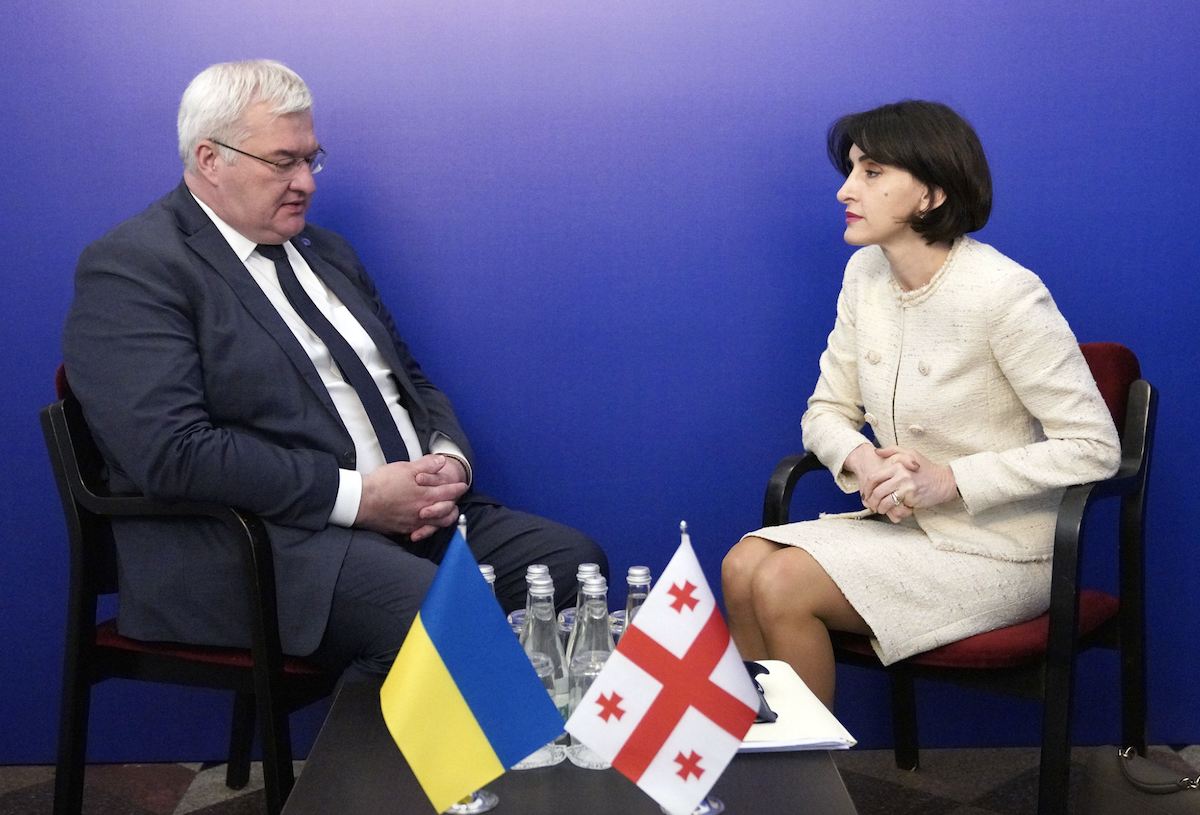
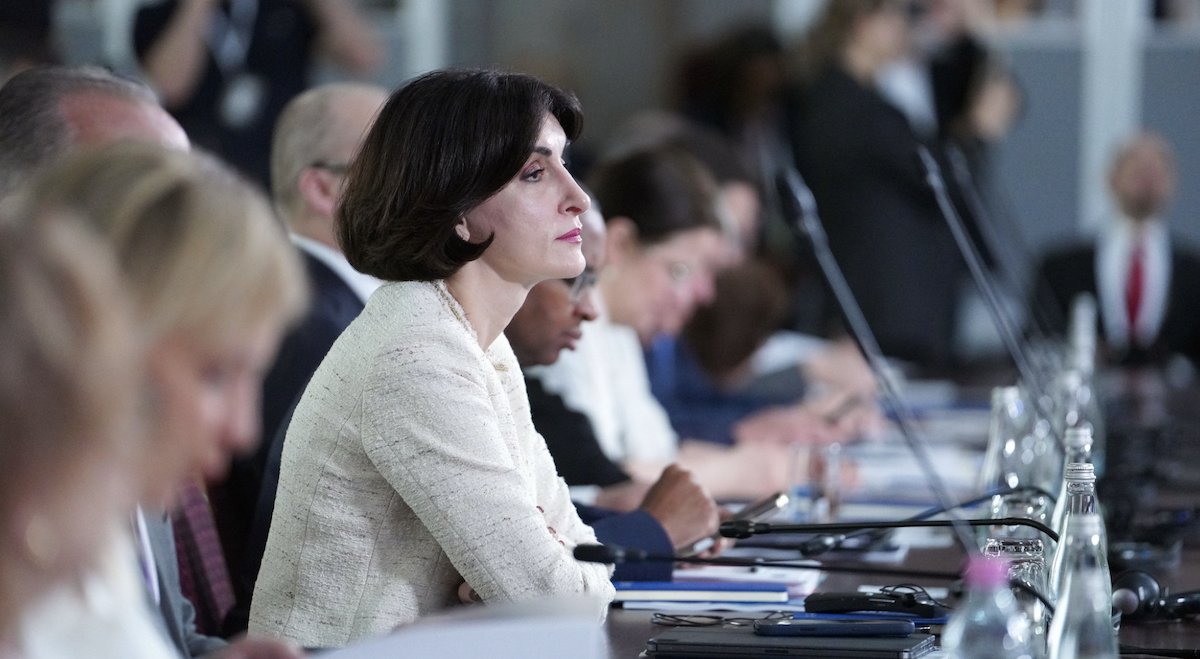
As part of the 135th session of the Council of Europe’s Committee of Ministers in Chisinau, Georgian Foreign Minister Maka Botchorishvili met her Ukrainian counterpart, Andrii Sybiha.
The talks followed the recent resumption of dialogue between Georgia and Ukraine.
According to Georgia’s foreign ministry, the discussion covered Georgia’s political and humanitarian support for Ukraine, as well as strains in relations between the two countries.

According to the ministry, the Georgian side drew attention to steps taken by the Ukrainian authorities in recent years, as well as positions that, in its view, have complicated efforts to normalise relations between the two countries.
Georgia’s foreign ministry also said both sides reaffirmed the importance of restoring relations and continuing dialogue.
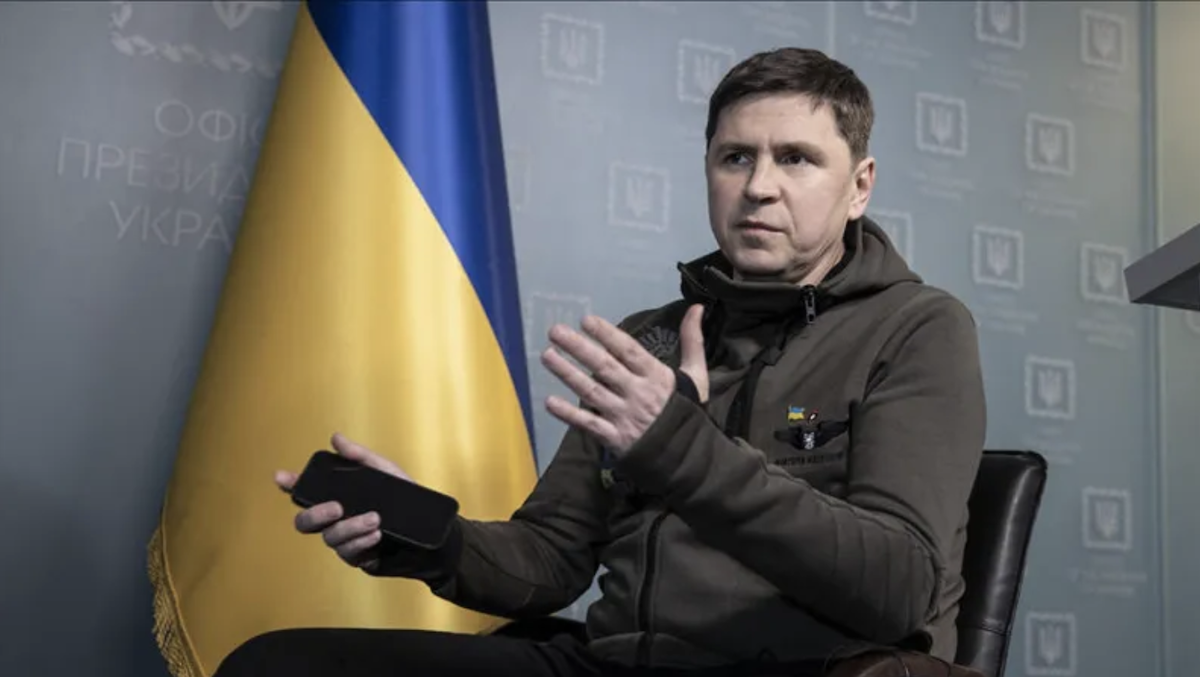
Ukrainian Foreign Minister Andrii Sybiha also commented on the meeting on social media. According to him, the sides discussed the bilateral agenda, cooperation within international organisations — including the GUAM Organization for Democracy and Economic Development format — and current political developments in the region.
“We continue to maintain a transparent, pragmatic and constructive Ukrainian-Georgian dialogue,” Sybiha wrote.
Context
Relations between Ukraine and Georgia deteriorated sharply in 2022 following Russia’s full-scale invasion of Ukraine, although tensions had existed earlier, including over the imprisonment of former Georgian president and Ukrainian citizen Mikheil Saakashvili.
Tbilisi accused Kyiv of trying to draw Georgia into the war and used images of destroyed Ukrainian cities in domestic political campaigns. In response, Ukrainian President Volodymyr Zelenskyy said the ruling Georgian Dream party acted in Russia’s interests and imposed sanctions on the party’s founder Bidzina Ivanishvili, Prime Minister Irakli Kobakhidze and other senior officials.
However, contacts between representatives of the two countries have increased in recent months. Maka Botchorishvili and Andrii Sybiha met in Yerevan during the European Political Community summit, where Georgian Prime Minister Irakli Kobakhidze also met President Volodymyr Zelenskyy. The meetings took place at Ukraine’s initiative.
Ukraine also recently appointed an ambassador to Georgia after nearly four years without one in the country. Kyiv recalled its ambassador to Georgia, Igor Dolgov, for consultations in March 2022. Ukrainian authorities cited Georgia’s position on sanctions against Russia and the issue of Georgian volunteers in Ukraine.
Restoring Georgia–Ukraine relations
Opinion on the Russia–Tskhinvali agreement
Tamta Mikeladze, director of the Social Justice Center, responded to the agreement signed on 9 May 2026 between the de facto authorities of South Ossetia and Russia.
In her view, the document effectively amounts to the almost complete annexation of the region.
On 9 May, Vladimir Putin and Alan Gagloev met at the Kremlin and signed an agreement that, officially, aims to “deepen allied cooperation” between Russia and the so-called South Ossetia. However, the agreement has triggered renewed debate in the region over whether Moscow is moving closer to the de facto annexation of South Ossetia.
Tamta Mikeladze said: “The agreement signed on 9 May 2026 between the de facto government of South Ossetia and Russia amounts to the practical annexation of the region.
“Look at the key and deeply alarming provisions of the so-called agreement:
‘Citizens of one side may hold state and municipal positions, as well as civil service posts, in the state and municipal bodies of the other side.’
“This means Russian citizens could be directly appointed to positions within the de facto government of South Ossetia.
‘The parties equally recognise and protect all forms of property recognised in their territories and ensure equal rights for citizens to acquire, own, use and dispose of property.’
“This means Russian citizens could acquire and control property and land in the region under the same legal framework as local residents.
‘The parties will take further steps towards creating a single economic space aimed at improving citizens’ welfare and living standards. To achieve this, they will harmonise legislation regulating economic activity, including civil and tax law, on the basis of transparency and fairness.’
“This would lead to the region’s full economic absorption by Russia.
‘The parties will continue taking steps towards the gradual integration of energy systems (including gas pipelines), transport systems, as well as communications and telecommunications. The rules governing shared elements of this infrastructure will be determined by separate international agreements.’
“This would mean Russia taking full control over the region’s transport, energy and telecommunications systems.
“It is no coincidence that Alan Gagloev used these words during his meeting with Vladimir Putin: the document would become a step towards the ‘reunification of the Ossetian people’.
“Local media in Tskhinvali had previously reported that a document concerning the creation of a union state with Russia was likely to be signed on 9 May.
“In Tskhinvali — unlike in Abkhazia — there is virtually no opposition to this annexation policy. Local residents therefore welcomed it enthusiastically.”
“This is the so-called peace policy of the ruling Georgian Dream.
“They have given everything away to Russia, deprived us of the chance to join the European Union and attack, on a daily basis, the countries that recognise and defend our territorial integrity. Yet with this submissive policy towards Russia, they have achieved nothing.
“In reality, they have not taken a single step forward in the breakaway regions. Georgians in Gali remain without rights, and even a necessary programme to protect the Georgian language has never been properly implemented. No detainees have been released from the occupied territories in a timely manner, and so on.
[The website of the minister for reconciliation reports no progress beyond the exchange of bodies of those killed during the war. It is truly a dead ministry pursuing a dead policy.]
“Now we are witnessing a genuinely catastrophic push towards annexation in Tskhinvali. Beyond this, almost nothing remains except the region’s direct and legal incorporation into Russia.
“Will Georgian diplomacy and foreign policy move beyond the remarks made by Maka Botchorishvili in Chisinau?”
Opinion on the Russia–Tskhinvali agreement