Categories
South Caucasus News

CoE Committee of Ministers Adopts 13th Decision on Conflict in Georgia


The Committee of Ministers of the Council of Europe (CoE) reiterated its “unequivocal support” for Georgia’s sovereignty and territorial integrity, condemned Russia’s actions in Georgia’s occupied Abkhazia and Tskhinvali regions, and called on Moscow to reverse those moves in its 13th decision on the Conflict in Georgia adopted on May 6.

The decision welcomes the 2023 Reykjavík Declaration, adopted at the 4th Summit of CoE Heads of State and Government, which calls on Russia “to comply with its international obligations and to withdraw immediately, completely and unconditionally its forces from Georgia,” and “reasserts the Council of Europe member States’ unwavering support for Georgia’s sovereignty, independence and territorial integrity, within its internationally recognised borders.”

More than 17 years after the August 2008 war, Russia “continues to impede the peaceful conflict resolution process,” the decision said, citing Russia’s “illegal military presence,” “increased military exercises and infrastructure reinforcements,” the installation of fences in the Chorchana/Tsnelisi area, and “steps toward de facto annexation of Georgia’s Abkhazia and Tskhinvali regions.”

The Committee also referred to Moscow’s 2025 decision to introduce a simplified procedure for granting Russian citizenship to residents of the two regions, saying all actions by Russia intended to alter the status of Georgia’s regions “have no legal effect and further aggravate the situation on the ground.”

The document expressed concern over “hampering the activities of international organisations operating on the ground and restricting the confidence-building efforts,” and called on Russia to “stop and reverse this illegal process” and comply with its obligations under the EU-mediated August 12, 2008 ceasefire agreement, including withdrawing forces from Abkhazia and the Tskhinvali region/South Ossetia and allowing the establishment of international security mechanisms on the ground.

The decision welcomed a series of judgments by the European Court of Human Rights (ECtHR), which established Russia’s responsibility, “as the State exercising effective control over those regions,” for grave human rights violations committed after the 2008 war, including “killing, torture, ill-treatment and arbitrary detention of Georgian civilians and military personnel,” the “looting and burning of Georgian homes,” “inhuman treatment of Georgians targeted as an ethnic group,” and depriving IDPs and refugees of the right to return to their homes.

The decision said it “deeply regretted” that, despite repeated calls, Russia continues to install “razor and barbed wire fences and other artificial obstacles along the dividing line,” separating families and communities and impeding conflict resolution efforts.

The Committee expressed “grave” and “profound” concern over restrictions on crossing opportunities at “crossing points” in Abkhazia and the Tskhinvali region. It said the human rights situation in both regions “has been further deteriorating.”

It also voiced concern over impunity in the deaths of ethnic Georgians David Basharuli, Giga Otkhozoria, Archil Tatunashvili, Tamaz Ginturi, Vitali (Temur) Karbaia, and Irakli Kvaratskhelia.

The document raised “particular concern” over “the continued discrimination of Georgians on the grounds of ethnicity” in both regions, particularly in the Gali and Akhalgori districts. It cited “further restrictions to the freedom of movement, residence rights, the right to work and property rights in cases of forced registration as foreign residents or demands to change surnames and ethnic identity, as well as the restriction of their right to education in the native language and preventing their access to religious sites or graveyards and grazing and farming lands.”

The Committee further expressed concern over a decision by Abkhazia’s de facto parliament restricting inheritance rights for individuals deemed to have fought against the region’s self-proclaimed independence during the 1992–1993 war. It also expressed “deep concern” over the demolition of Georgian IDPs’ homes in the Tskhinvali region/South Ossetia.

The decision additionally raised concerns over “obliteration and alteration of Georgian features” of Georgian cultural heritage monuments, the continued deprivation of IDPs’ and refugees’ right to voluntary, safe, and dignified return, and “continued arbitrary detentions of local inhabitants along the dividing line.”

The Committee expressed grave concern over the detention of Georgian citizens, including Kristine Takalandze, Giorgi Mosiashvili, and Irakli Bebua, noting that some cases, such as that of Genadi Bestaev, resulted in death.

It also strongly condemned a decision in Abkhazia allowing for the death penalty under certain circumstances in cases related to the so-called “export, import and/or transit of drugs.”

The Committee reaffirmed its support for Georgia’s peace initiatives and underlined “the necessity to immediately and unconditionally resume” the Incident Prevention and Response Mechanism (IPRM) meetings in Gali, which have been suspended since 2018.

Among other recommendations, the Committee reiterated calls on Russia as the state exercising effective control, to ensure conditions for the “voluntary, safe and dignified return of all IDPs and refugees,” end ethnic discrimination, remove obstacles to ending impunity in cases involving murdered ethnic Georgians, cease policies leading to human rights violations, remove restrictions on freedom of movement, “cease arbitrary detentions of persons, including in the context of so-called ‘illegal border crossings’ and to re-open ‘crossing points’.”

It also called on Russia to “immediately release” Kristine Takalandze, Shalva Khizanishvili, and all other “illegal detainees,” end “violations of the right to education” in Georgian-language schools and preschools, and prevent “further deterioration of monuments” belonging to the cultural heritage throughout Georgia’s regions.

The Committee further called on Russia to grant immediate and unrestricted access to Council of Europe bodies to Abkhazia and the Tskhinvali region/South Ossetia, execute ECtHR judgments, and cooperate with the International Criminal Court.

Also Read:


Categories
South Caucasus News

ЕБРР подключится к финансированию Зангезурского коридора? | Перемирие РФ-Украина не состоялось


Categories
South Caucasus News

Azerbaijan, Mongolia sign Air Services Agreement


During the talks, the sides discussed prospects for expanding cooperation in the field of transportation, with particular focus on increasing opportunities in road and air transportation between the two countries.

Categories
South Caucasus News

Int’l Mugham Center highlights legacy of renowned pianist and educator


A commemorative evening and documentary screening marking the 90th anniversary of the birth of renowned pianist, educator, and author of the first scholarly study on Azerbaijani piano culture, Farida Khalilova (1936–2004), has been held at the International Mugham Center, AzerNEWS reports.

Categories
South Caucasus News

Pentagon signs $500 Million AI contract with Scale


The deal represents a fivefold jump from a $100 million contract the company secured from the Pentagon in September 2025.

Categories
South Caucasus News

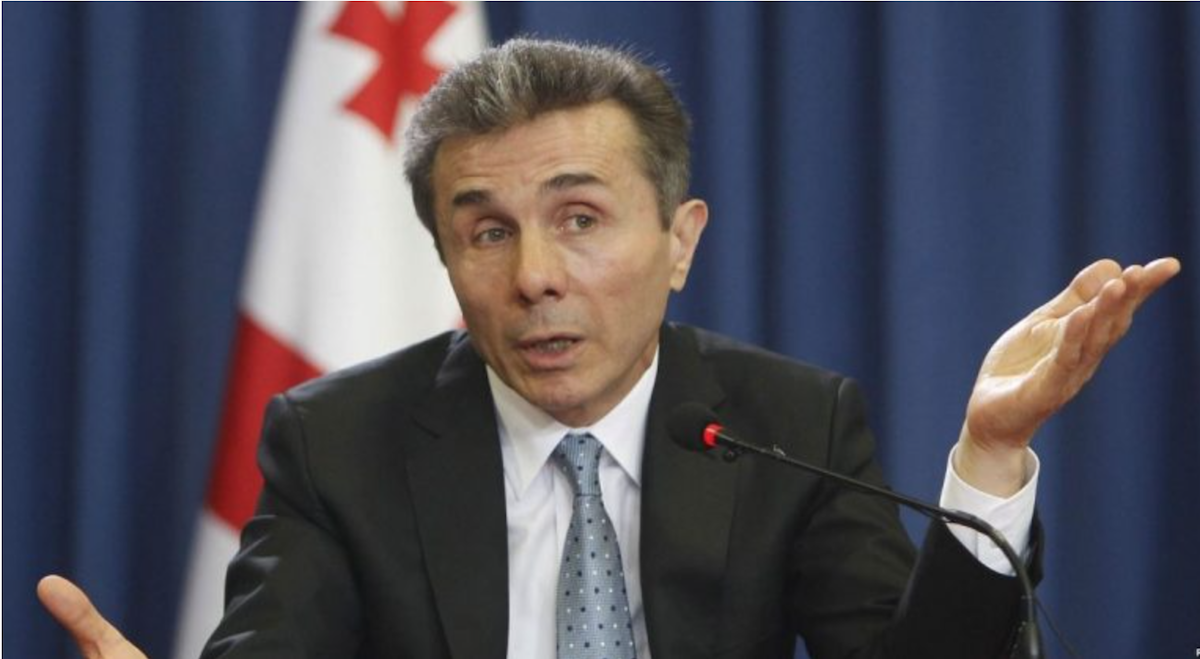
Author of Magnitsky Act urges UK to impose sanctions on Bidzina Ivanishvili


Sanctions against Ivanishvili

Bill Browder, the architect of the Magnitsky Act, has called on the UK to impose sanctions on Bidzina Ivanishvili.

He made the remarks during a discussion in London on recent developments in Georgia and the case of journalist Mzia Amaghlobeli.


Bill Browder

Bill Browder said: “The way he [Vladimir Putin] ultimately gained control over Georgia came down to one man — Bidzina Ivanishvili. It cost him far less than sending in an army. Ivanishvili made his fortune in Russia, and I am certain there is all kinds of compromising material on him.

“Since coming to power, he has largely acted in Russia’s interests. He has done so to such an extent that there is now little difference between the way Russia oppresses its own people and the way Georgia’s government treats its citizens. Some of the details I heard here today were new even to me. The description of what happened to Mzia Amaghlobeli follows exactly the same pattern Russia uses against its own people. Denial of medical care, beatings and similar treatment all come straight from the same playbook. There is no real difference anymore between the actions of Russia and Georgia.

“What is happening now is inhumane, and we all understand why they are doing it. This is how dictators behave. This is how Soviet-style regimes, Russians and the KGB operate. What can we do in response?

“Ivanishvili is an oligarch and billionaire whose money is spread across the world. Why was the Magnitsky Act created in the first place? It was designed to target specific oligarchs who violate human rights, instead of punishing the population of an entire country.

“He also has assets in the United Kingdom. At the end of 2025, I spoke about Ivanishvili before the US Senate Foreign Relations Committee and explained how the Magnitsky Act should be used against him. The United States later imposed sanctions on him, and I am sure that has caused him serious discomfort.

“However, he also appears to have assets in the UK, which has not yet sanctioned him. We should begin working on that. In fact, it is very simple. If the United Kingdom truly believes in human rights, freedom of the press and all the values the British government regularly claims to defend, then it should impose sanctions on Ivanishvili, as well as on all the judges and prosecutors involved in what I consider the unlawful, inhumane and rights-violating imprisonment of Mzia.”

What is the Magnitsky Act?

Sergei Magnitsky was a 37-year-old Russian tax adviser and lawyer of Ukrainian origin who accused Russian officials of corruption and abuse of power. Russian authorities arrested him in 2008 after he exposed what was described as one of the largest financial fraud schemes in Russian history. He died in prison 11 months later.

The Magnitsky Act was passed by the US Congress in 2012. The law initially aimed to hold Russian officials accountable for Magnitsky’s death.

Under an expanded version adopted in 2016, US authorities gained the power to impose sanctions on foreign government officials around the world over human rights violations. The measures allow the US to freeze assets held on American territory and ban entry into the country.


Categories
South Caucasus News

Dispatch – May 7: The Lake, Part III


When I published my first Dispatch about The Lake on May 7, 2023, it was a story about disruption. Heavy rains would flood the only road into my Tbilisi neighborhood, producing first a puddle and soon a recurring lake, one of many obstacles locals would encounter on their stressful days. Instead of fixing it, authorities chose to invent nonexistent problems. In short, the story was a bit of a political rant.

When, exactly two years later, on May 7, 2025, I published my second Dispatch about The Lake, it was a story about acceptance. Construction on four residential buildings, responsible for the damaged road, was still ongoing, so The Lake was growing and thriving. Adults now avoided it via an ad hoc pedestrian bypass, while local kids and dogs chose to interact with the water, wading into it, biking through it, or standing in the middle for no reason. Then I somehow made the story about the struggles of Georgian resistance and the nation’s overabundant patience in the face of repression.

Now it is May 7 again, but in 2026. During the year that passed, construction finished, and the flooded section, too, was finally taken care of. The Lake disappeared, leaving me with a mixed sense of relief and regret.

But then, ultimately and inevitably, The Lake returned, and The Lake returned with a force greater than ever before. 


Here is Nini and the Dispatch newsletter to talk about… to simply talk about The Lake.


They started repairing The Lake area months ago.

Residents were already moving into their newly built apartment blocks and renovating. Workers appeared near the damaged road, too. The men, as men often do, looked like they knew what they were doing. They soon built a new sidewalk opposite the narrow, concrete pedestrian “bridge” that had been arranged earlier for locals to bypass The Lake. A storm drain was installed in the new sidewalk, while the “bridge” was left untouched, turning it into a kind of opposite sidewalk. The temporary construction fence that had led to the accumulation of rainwater was also dismantled.

After that, The Lake was absent for a while.

Then, rain after rain, puddles started reemerging. It didn’t take long for those puddles to grow into a lake. The Lake, now fully resurrected, did not mind the new drainage system: she simply used the two sidewalks around her as a mold to reinvent herself in a new shape, greater length, and bigger depth. The only acknowledgment, the only sense of purpose she left for that drain hole, was a tiny dry – at times heart-shaped – asphalt island around it, which she, after showing some initial restraint, still ends up flooding.

The Lake keeps coming and going, returning stronger and larger each time. The two sidewalks around her have now become a mere illusion of choice, a freedom for locals to pick which way to avoid the water each day – some level of positive liberty in unfree times.

The Betrayal

It was late February, and The Lake had long marked her grand return, when unfamiliar sounds disrupted the peace of our neighborhood.

A stage was being arranged in front of one of the new apartment buildings, not far from The Lake area. An event crew had arrived, bringing their equipment and checking the sound. Fancy cars parked one after another, drones began flying overhead, chairs were set in front of the stage, and a screen behind read that “more than 2,500 citizens affected by cooperative housing construction have been provided with residential space.” The familiar municipal decor and the bustle of workers announced the mayor’s arrival. Not something you get to witness here every day, or every year.

The Mayor indeed came to inaugurate the finished construction, but I got to watch him on TV.

I had to leave for the office earlier, passing through the area while the stage was still being set. An elderly neighbor, a grey-haired lady, was heading from the opposite direction and seemed similarly confused by the sudden revival of the place. If, before that day, the two of us had only exchanged curious glances, unsure whether to say hello, now we finally exchanged scattered words of discontent. I don’t remember the exact phrasing, or whether The Lake was explicitly mentioned, but I know we both had the same rhetorical question in mind: Where was The Lake when we needed her?

The Lake was not there that day. She didn’t appear in the drone footage that, livestreamed by pro-government channels, presented the neighborhood cleaner than we knew it. Neither did she bother to give familiar panic to officials who drove into the area in their expensive cars. The Lake chose to spare, to whitewash the government, and to betray the neighborhood that came to embrace her. She only reappeared two or three days later, when it was too late.

I tried to find excuses. I wanted to think that cruel officials kept checking the weather only to somehow squeeze the event into a lake-free period. I wanted to think that the raindrops that started falling on that day were a desperate cry of the deceived Lake struggling her way back. She just didn’t make it in time.

But now, months later, I want to think differently. I want to think that The Lake simply did not care what I, or anyone else, wanted her to do, when to appear or disappear. The Lake had her own nature, pace, aesthetics, and her own battles to fight, including a battle not to be defined by someone else’s battles. The Lake had her own story, and society and its politics, the incompetent government and those resisting it, only mattered to her insofar as they allowed her to have that story.

Battles of Water

I saw her fight one of her latest battles in early April.

The Lake had grown largest she had ever been under heavy rains, attracting renewed attention from local workers. I watched in suspense as three men in black raincoats and water shoes tried their best to drain it. They, again, looked like they knew what they were doing. They opened the drain cover, first doing something with spades, and, when that didn’t work, bringing a long tube and sticking it into the well. At that point, I felt I was rooting for The Lake. The Lake won, and the men left.

And yet, the stable ability of The Lake to preserve and reinvent herself, to force her way back against every effort of men who seem to know what they are doing, still comes with a hidden sense of imminent loss. Every time The Lake appears, it feels like it is her last time. Every time she disappears, you think she is never coming back.

That’s what I was fearing when I started writing this text: as May came, she had been absent again for weeks. Maybe those men had won, after all. Then, over the past few days, shower by shower, thunder after thunder, she reappeared. She is still here, changing colors with the rapidly changing weather, and menacing the lingering island before she swallows it.

Can The Lake ever be drained for good? I don’t know. But even if that day comes, it will be after she has drained me of any temptation to make The Lake about anything other than The Lake herself: she is muddy enough to be further polluted with someone else’s unresolved issues, let alone the nation’s political traumas.

For that, I admire The Lake, and I envy The Lake.

Men vs Lake


Categories
South Caucasus News

Azercell supports Baku Marathon 2026


On May 3, “Baku Marathon 2026” brought together thousands of runners for one of the country’s most anticipated sporting events. The marathon was organized at the initiative of the Heydar Aliyev Foundation, with the exclusive partnership of Azercell Telecom.

Categories
South Caucasus News

Gold surges above $4,700 amid Middle East tensions and oil rally


Gold, traditionally regarded as a safe-haven asset, has experienced a complex and volatile trajectory in early 2026, shaped by competing macroeconomic forces, geopolitical risks, and liquidity dynamics, AzerNEWS reports.

On the COMEX Commodity Exchange in New York, the price of one troy ounce of gold rose by…


Categories
South Caucasus News

Rescuers search rubble after Israel strikes Beirut’s southern suburbs