
In January-February 2026, investments directed toward fixed capital in Azerbaijan’s construction sector totaled 386 million manats, AzerNEWS reports, citing the State Statistics Committee. This marks a 12.5% decline compared to the same period in 2025. The construction sector accounted for…
Month: March 2026
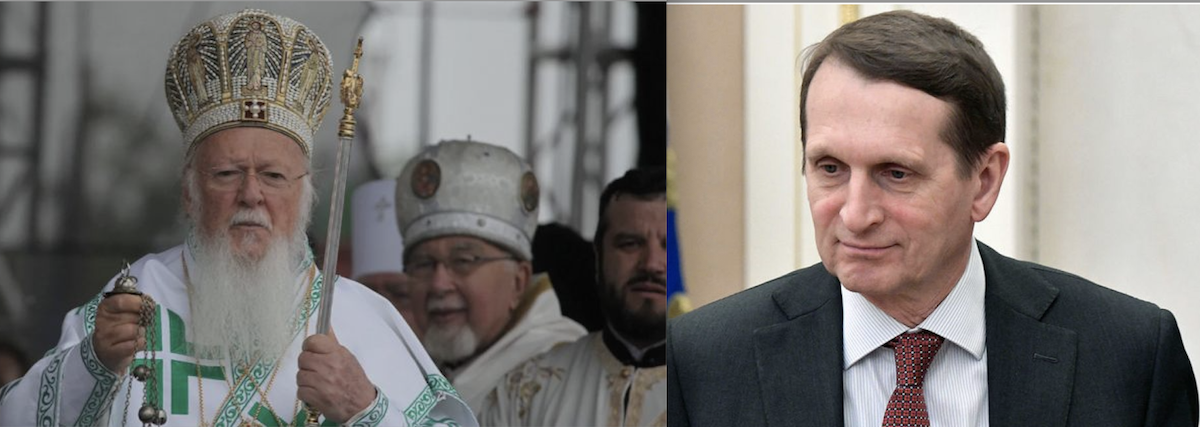
Russia’s Foreign Intelligence Service (SVR) has issued a statement following the election of a new Catholicos-Patriarch of Georgia, claiming that Ecumenical Patriarch Bartholomew is seeking to bring the Georgian Orthodox Church under his influence and is lobbying for Metropolitans Abraham (Garmelia) and Grigol (Berbichashvili) as candidates for the patriarchal throne.
“According to information received by the SVR, Ecumenical Patriarch Bartholomew continues to pursue what it describes as a ‘treacherous’ line aimed at splitting global Orthodoxy, guided by the principle of ‘divide and rule’. This time, he is said to be seeking to bring the Georgian Orthodox Church under his influence, taking advantage of the death of Catholicos-Patriarch of All Georgia Ilia II.
The Patriarch of Constantinople is allegedly looking to promote a representative of the Georgian Church to the vacant post on whom he could rely. Among the candidates, Bartholomew is said to be considering Metropolitan Abraham (Garmelia) of Western Europe and Metropolitan Grigol (Berbichashvili) of Poti and Khobi, presenting them within his inner circle as the most suitable figures to carry out his will,” the Russian intelligence statement said.
The SVR accuses the Ecumenical Patriarch of interfering in the internal affairs of the Georgian Orthodox Church and claims that Bartholomew has acted in a similar way in Ukraine, Serbia and the Baltic states.
“In church circles, it is noted that a lust for power has become a constant companion of the Constantinople-based schismatic. Through his actions, Bartholomew is once again replacing ‘primacy of honour’ with ‘primacy of power’, interfering in the internal affairs of yet another Church—one of the oldest, the Georgian Orthodox Church. It is clear that, as in the cases of Ukraine, Serbia and the Baltic states, he has forgotten the second rule of the Second Ecumenical Council: ‘Bishops must not extend their authority to churches beyond their own jurisdiction…’,” the SVR said in a statement released by its press service.
Metropolitan Abraham of Western Europe is 77 years old and, under the Statute of the Georgian Autocephalous Orthodox Church, is not eligible to take part in the patriarchal election. According to the statute, a candidate for Catholicos-Patriarch must be at least 40 and no older than 70.
Election of a new Patriarch of Georgia
Ali Moujani, Iran’s ambassador to Georgia, warned countries of a “price” for aiding the United States in social media posts that came a day after U.S. Secretary of State Marco Rubio spoke in a call with Georgian Dream Prime Minister Irakli Kobakhidze about “areas of mutual interest,” including “security in the Caucasus and Black Sea region.”
The ambassador published two posts on March 31: one on X and a longer one on Facebook. Hours after the Facebook post went up, his page became unavailable, while the shorter message remained accessible on X. The posts followed, but did not explicitly refer to, a March 30 call between Rubio and Kobakhidze.
In the Facebook post, Ambassador Ali Moujani wrote, “One fact about Donald Trump and American politics cannot be overlooked: when some countries, whether inadvertently or hastily, lend their space and territory to external adventurers, they sooner or later pay the price within their own borders.” He also warned that “no country is immune to the consequences of a regional crisis” and that “the crisis is much closer than it appears at first glance.”
The posts came in the fifth week of the war in the Middle East, as strikes continue in the region and most oil and gas tankers remain stalled in and around the Strait of Hormuz amid a largely blocked shipping environment driven by ongoing conflict between Iran and U.S.-Israeli forces.
Below is the English translation of a Georgian Facebook post by Ambassador Ali Moujani:
“One fact about Donald Trump and American politics cannot be overlooked: when some countries, whether inadvertently or hastily, lend their space and territory to external adventurers, they sooner or later pay the price within their own borders.
Today, the signs are clear: disruptions in export routes, capital flight, and society’s growing anxiety over the consequences of the war of attrition, as well as the risks of escalation – including the threat of nuclear weapons use by the United States – are all challenges facing the decision-makers of small countries.
Now, on the 32nd day of the war, the White House is even considering making countries south of Iran bear the costs of this conflict.
This is precisely the point where short-term decisions and miscalculations turn into long-term challenges.
Those who supported Donald Trump yesterday are now forced to pay the price for that step.
This approach is a continuation of the same policy that Joe Biden has periodically followed when opening new fronts. Today, even some NATO allies choose a ‘policy of maintaining distance from Washington.’ Pay attention to this phrase: no country is immune to the consequences of a regional crisis.
The crisis is much closer than it appears at first glance.”
In a relatively short post on X, the ambassador wrote in Persian, “Trump’s approach carries a lesson: Ceding land and space to external interventions brings the cost back home. Yesterday: disrupted exports, capital flight, and …Today: on the 32nd day of the war, discussion of shifting the costs to Iran’s southern neighbors. The crisis is closer than it appears in the mirror.”
Also Read: