
transnational repression – Google Search google.com/search?q=transnat…
— Michael Novakhov (@mikenov) Mar 31, 2026
Month: March 2026
The Russian Foreign Intelligence Service (SVR) has accused Ecumenical Patriarch Bartholomew I of Constantinople of interfering in the Georgian Orthodox Church’s internal affairs by promoting candidates for Georgian patriarch, as the country will soon have a new church leader following the death of Ilia II.
In a March 31 statement, Russia’s SVR said that Ecumenical Patriarch Bartholomew, who is the spiritual leader of Orthodox Christians worldwide, “continues to pursue a treacherous line aimed at dividing global Orthodoxy, guided by the principle ‘divide and rule.’” The statement claims that the Ecumenical Patriarch “seeks to bring the Georgian Orthodox Church under his influence” and is “taking advantage” of the passing of Ilia II.
The statement says Patriarch Bartholomew “intends to promote to the vacant position a representative of GOC [Georgian Orthodox Church] on whom he could rely,” claiming he is considering Metropolitan Abraam (Garmelia) of Western Europe and Metropolitan Grigoli (Berbichashvili) of Poti and Khobi. It added that “in his inner circle, he presents them as the most suitable executors of his will.”
Notably, Metropolitan Abraam (Garmelia), whom the SVR claims is one of the candidates promoted by Patriarch Bartholomew, is 77 years old – older than the 40-to-70 age limit for election. Another candidate, Metropolitan Grigoli (Berbichashvili), is 69 and will turn 70 in July.
“Within church circles, it is noted that lust for power has become the constant companion of the Constantinopolitan schismatic,” the agency further claims, adding, “Through his actions, Bartholomew once again substitutes ‘primacy of honor’ with ‘primacy of power,’ interfering in the internal affairs of yet another, notably one of the oldest, churches – the Georgian Orthodox Church.”
“Evidently, as in the cases of Ukraine, Serbia, and the Baltic countries, he has forgotten the second rule of the Second Ecumenical Council: ‘Regional bishops shall not extend their authority over Churches beyond their own territory…’” the statement concludes.
The Russian SVR’s accusations against the Ecumenical Patriarch come amid a long-standing conflict between the Orthodox Churches of Constantinople and Russia. In 2018, the Russian Orthodox Church broke off ties with Constantinople after the Ecumenical Patriarchate granted independence to the Orthodox Church of Ukraine.
Georgia’s late Patriarch Ilia II, who had led the Georgian Orthodox Church for nearly half a century, died at the age of 93 on March 17. He was buried on March 22 following a funeral procession in Tbilisi that drew tens of thousands of people. Ecumenical Patriarch Bartholomew was also in Tbilisi on that day to pay his respects and perform a funeral service for the late patriarch, whose body was in repose at Holy Trinity Cathedral for days before being transferred to Sioni Cathedral in downtown Tbilisi, where all other patriarchs of Georgia since the Church regained its autocephaly in 1917 are buried.
A Russian delegation, led by Metropolitan Benjamin (Tupieka), Patriarchal Exarch of Belarus, also attended the March 22 funeral service in the Holy Trinity Cathedral.
Since the passing of Ilia II, Georgia has 40 to 60 days to elect a new patriarch. During this period, Locum Tenens Shio Mujiri carries out patriarchal duties. The Holy Synod of 39 senior clergymen will elect a new patriarch, who must secure more than half of the votes. As no official candidates have been presented yet, Georgia’s ruling Georgian Dream party and its critics are trading accusations over possible interference in the election of the leader of the institution that has enjoyed the highest public trust in an overwhelmingly Christian nation.
Also Read:
- 28/03/2026 – After Patriarch’s Funeral, Ruling Party Accuses Opponents of ‘Anti-Church Campaign’
- 23/03/2026 – Religious, Political Leaders Deliver Funeral Speeches on Ilia II at Holy Trinity Cathedral
- 22/03/2026 – Obituary | Ilia II – The Man Who Reinvented the Church
- 21/03/2026 – ‘End of Epoch’ – Georgia Mourns Patria
- International Condolences Pour In After Ilia II’s Passing
#TransnationalRepression #Counterintelligence
Repression Task Force: The #FBI Philadelphia Field Office established the first operational task force specifically dedicated to disrupting transnational repression threats. – Google Search google.com/search?q=Repressi…— Michael Novakhov (@mikenov) Mar 31, 2026
#HavanaSyndrome #CIA #Counterintelligence
Havana Syndrome – Google Search
Havana Syndrome: Mystery and Shifting Consensus – Cemini
gemini.google.com/share/79a7…Havana Syndrome, officially referred to by the U.S. government as Anomalous Health Incidents (AHIs), is a cluster of unexplained medical symptoms first experienced by U.S. State Department personnel, intelligence officers, and their families.
Because the symptoms are largely invisible and the suspected mechanisms leave little traditional physical evidence, it has become one of the most heavily debated medical and geopolitical mysteries of the modern era.
Reported Symptoms
Victims often describe the onset of symptoms as a sudden, highly localized phenomenon—like walking into an invisible beam of energy. Symptoms generally fall into two categories:
Acute (Immediate) Symptoms: A sudden perception of loud noises (often described as buzzing, clicking, or high-pitched squealing), accompanied by intense pressure or vibration in the head, severe ear pain, dizziness, and vertigo.Chronic (Long-Term) Symptoms: Debilitating headaches, persistent tinnitus (ringing in the ears), hearing loss, cognitive dysfunction (brain fog), memory loss, fatigue, visual disturbances, and insomnia.
Origins and SpreadThe phenomenon first gained public attention in late 2016 when personnel stationed at the U.S. Embassy in Havana, Cuba, began reporting sudden neurological symptoms.
Since the initial Havana cluster, hundreds of similar cases have been reported by U.S. diplomats, CIA officers, and military personnel stationed globally. Incidents have been reported in China, Russia, Austria, Switzerland, Colombia, and even near the White House in Washington, D.C.
Theories and Potential CausesThe exact mechanism behind Havana Syndrome has been the subject of intense scientific study and intelligence gathering. The primary theories include:
Pulsed Radiofrequency (RF) / Directed Energy: A landmark 2020 report by the National Academies of Sciences, Engineering, and Medicine concluded that “directed, pulsed radiofrequency energy” was the most plausible mechanism for the acute symptoms. This theory posits that a hostile actor could use covert, portable devices to beam concentrated microwave or electromagnetic energy at targets.
Acoustic Weapons: Initially, sonic or acoustic attacks were suspected due to the auditory symptoms, though this theory is now considered less likely than RF energy by most physicists and acoustic experts.
Alternative Explanations: For years, skeptical assessments have pointed to alternative explanations, such as mass psychogenic illness (stress-induced symptoms spreading through a high-anxiety community), pre-existing medical conditions, conventional illnesses, or environmental factors (such as the loud mating calls of the Indies short-tailed cricket).Shifting Intelligence and Recent Breakthroughs (2024–2026)
The official government consensus on Havana Syndrome has experienced dramatic whiplash over the last few years as new investigations have challenged earlier conclusions:
The “Very Unlikely” Consensus (2023–2024): In March 2023, the U.S. National Intelligence Council released an assessment concluding it was “very unlikely” that a foreign adversary was responsible for AHIs. This was bolstered by a 2024 National Institutes of Health (NIH) study that found no consistent MRI-detectable brain injuries or biological abnormalities among patients compared to a control group.The Investigative Pushback (2024): In April 2024, a joint, year-long investigation by 60 Minutes, Der Spiegel, and The Insider uncovered compelling circumstantial evidence linking the attacks to Russia’s GRU Unit 29155 (a notorious military intelligence assassination and sabotage unit). The investigation revealed that operatives from this unit were physically present near the locations of several reported incidents, and some members had been formally rewarded for work related to “non-lethal acoustic weapons.”
The 2026 Reversal: The landscape shifted entirely in early 2026. Reports emerged that the U.S. government had covertly acquired a portable device on the black market capable of generating pulsed radio waves that could feasibly cause the reported symptoms, and had successfully tested it. By March 2026, following intense pressure and investigations by the U.S. House Intelligence Committee, senior U.S. intelligence, military, and law enforcement officials reportedly agreed to withdraw the 2023 assessment that dismissed a foreign role, acknowledging that the earlier reports were likely based on flawed intelligence and rigid analytical thresholds.
Victim Support and The HAVANA ActRegardless of the ongoing debates surrounding attribution, the U.S. government has formally acknowledged the severity of the symptoms. Through the HAVANA Act (Helping American Victims Afflicted by Neurological Attacks), the government provides specialized medical care (often at facilities like Walter Reed National Military Medical Center) and six-figure financial compensation to public servants who have sustained career-ending brain injuries from these incidents.
— Michael Novakhov (@mikenov) Mar 31, 2026
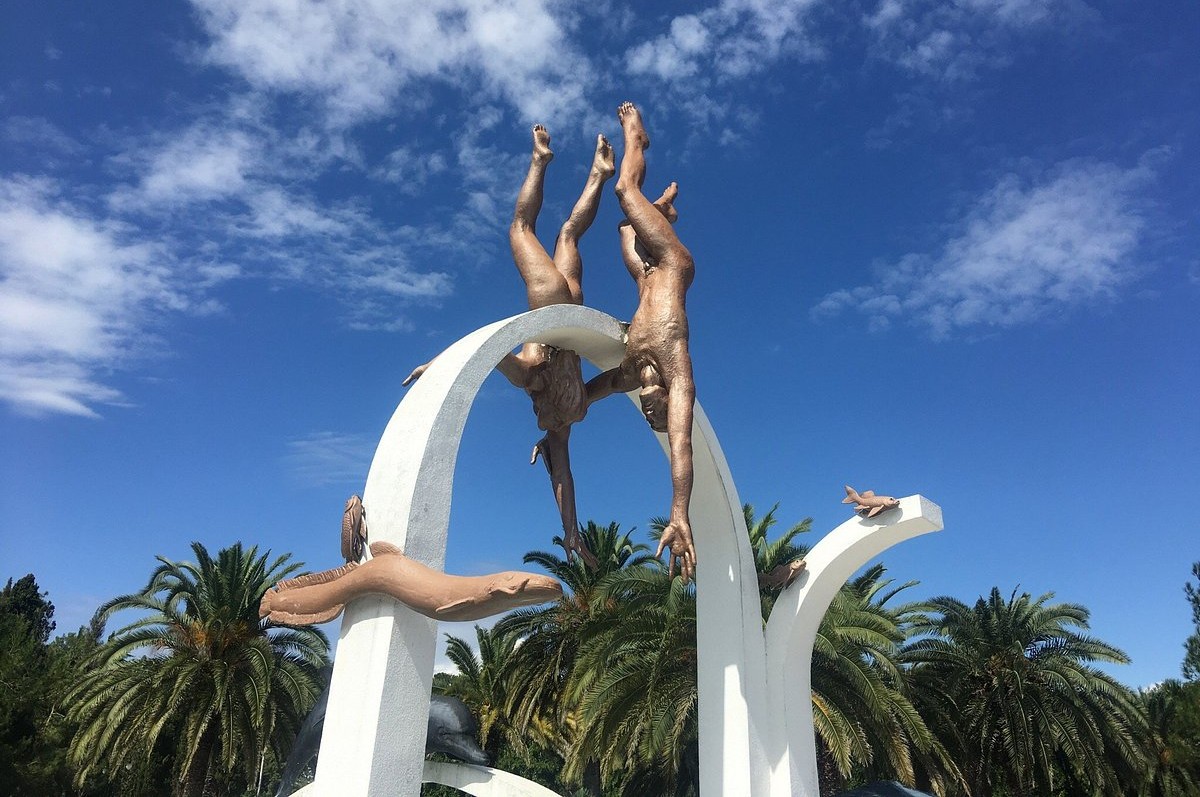
In Abkhazia, two resort towns—New Athos and Pitsunda—will be allowed to manage their own revenues.
By making this “generous gesture”, the authorities are not losing anything, as both resorts are already self-sufficient and contribute more to the state budget than they receive in funding.
The decision to allow Pitsunda and New Athos to form their own budgets was made during a meeting held at the presidential administration.

Before a new law “On the fundamentals of the budget system and budget process in the Republic of Abkhazia” came into force in 2015, these towns had their own local budgets. However, their financial status was later effectively reduced to that of settlements and villages.
This meant that most of the taxes collected by these resorts were channelled to the republican and district budgets (Pitsunda is part of the Gagra district, while New Athos falls under the Gudauta district). Funds were then redistributed back to the towns for municipal services and social needs in line with budgets approved by district assemblies.
According to Murat Adzhba, chairman of the Pitsunda Assembly (local parliament), this system limits the ability of local deputies to address even basic municipal and social needs:
“It is not only about the budget, but also about the lack of certain powers—we cannot respond in a timely manner to the issues the city faces.
Residents have to appeal to the district administration or the Assembly, which in turn refers the issue to the head of Pitsunda, who then turns to the district head. As a result, issues that could be resolved in two or three days sometimes drag on for weeks.”

Since 2015, the assemblies of Pitsunda and New Athos have effectively ceased to function as genuine local self-government bodies, turning instead into “advisory bodies” without financial tools to address urban problems.
Abkhazia’s president, Badra Gunba, believes that restoring independent budgets for Pitsunda and New Athos will allow local authorities to move from the role of “petitioners” to that of “decision-makers” in their own cities, while also creating additional financial incentives to expand the tax base.
“When taxes collected from hotels, restaurants and shops remain in the city, the administration has a direct incentive: the better the conditions for local businesses, the higher the city’s budget revenues.
Administrations will be motivated to ensure that every hotel and guesthouse operates legally, as this money will go towards developing their own city,” Gunba said.

Pitsunda is expected to transition to independent budget planning from 1 January 2027, while New Athos will follow from 1 January 2028.
The exact distribution of tax revenues between the republican and local budgets will be determined by a working group set up by the president and then submitted to parliament for consideration.
Terms, place names, opinions and ideas suggested by the author of the publication are her / his own and do not necessarily coincide with the opinions and ideas of JAMnews or its individual employees. JAMnews reserves the right to remove comments on posts that are deemed offensive, threatening, violent or otherwise ethically unacceptable.
Pitsunda and New Athos to gain autonomy
Havana Syndrome – Google Search google.com/search?num=10&new…
— Michael Novakhov (@mikenov) Mar 31, 2026
Havana Syndrome: Mystery and Shifting Consensus gemini.google.com/share/79a7…
Havana Syndrome, officially referred to by the U.S. government as Anomalous Health Incidents (AHIs), is a cluster of unexplained medical symptoms first experienced by U.S. State Department personnel, intelligence officers, and their families.
Because the symptoms are largely invisible and the suspected mechanisms leave little traditional physical evidence, it has become one of the most heavily debated medical and geopolitical mysteries of the modern era.
Reported Symptoms
Victims often describe the onset of symptoms as a sudden, highly localized phenomenon—like walking into an invisible beam of energy. Symptoms generally fall into two categories:
Acute (Immediate) Symptoms: A sudden perception of loud noises (often described as buzzing, clicking, or high-pitched squealing), accompanied by intense pressure or vibration in the head, severe ear pain, dizziness, and vertigo.Chronic (Long-Term) Symptoms: Debilitating headaches, persistent tinnitus (ringing in the ears), hearing loss, cognitive dysfunction (brain fog), memory loss, fatigue, visual disturbances, and insomnia.
Origins and SpreadThe phenomenon first gained public attention in late 2016 when personnel stationed at the U.S. Embassy in Havana, Cuba, began reporting sudden neurological symptoms.
Since the initial Havana cluster, hundreds of similar cases have been reported by U.S. diplomats, CIA officers, and military personnel stationed globally. Incidents have been reported in China, Russia, Austria, Switzerland, Colombia, and even near the White House in Washington, D.C.
Theories and Potential CausesThe exact mechanism behind Havana Syndrome has been the subject of intense scientific study and intelligence gathering. The primary theories include:
Pulsed Radiofrequency (RF) / Directed Energy: A landmark 2020 report by the National Academies of Sciences, Engineering, and Medicine concluded that “directed, pulsed radiofrequency energy” was the most plausible mechanism for the acute symptoms. This theory posits that a hostile actor could use covert, portable devices to beam concentrated microwave or electromagnetic energy at targets.
Acoustic Weapons: Initially, sonic or acoustic attacks were suspected due to the auditory symptoms, though this theory is now considered less likely than RF energy by most physicists and acoustic experts.
Alternative Explanations: For years, skeptical assessments have pointed to alternative explanations, such as mass psychogenic illness (stress-induced symptoms spreading through a high-anxiety community), pre-existing medical conditions, conventional illnesses, or environmental factors (such as the loud mating calls of the Indies short-tailed cricket).Shifting Intelligence and Recent Breakthroughs (2024–2026)
The official government consensus on Havana Syndrome has experienced dramatic whiplash over the last few years as new investigations have challenged earlier conclusions:
The “Very Unlikely” Consensus (2023–2024): In March 2023, the U.S. National Intelligence Council released an assessment concluding it was “very unlikely” that a foreign adversary was responsible for AHIs. This was bolstered by a 2024 National Institutes of Health (NIH) study that found no consistent MRI-detectable brain injuries or biological abnormalities among patients compared to a control group.The Investigative Pushback (2024): In April 2024, a joint, year-long investigation by 60 Minutes, Der Spiegel, and The Insider uncovered compelling circumstantial evidence linking the attacks to Russia’s GRU Unit 29155 (a notorious military intelligence assassination and sabotage unit). The investigation revealed that operatives from this unit were physically present near the locations of several reported incidents, and some members had been formally rewarded for work related to “non-lethal acoustic weapons.”
The 2026 Reversal: The landscape shifted entirely in early 2026. Reports emerged that the U.S. government had covertly acquired a portable device on the black market capable of generating pulsed radio waves that could feasibly cause the reported symptoms, and had successfully tested it. By March 2026, following intense pressure and investigations by the U.S. House Intelligence Committee, senior U.S. intelligence, military, and law enforcement officials reportedly agreed to withdraw the 2023 assessment that dismissed a foreign role, acknowledging that the earlier reports were likely based on flawed intelligence and rigid analytical thresholds.
Victim Support and The HAVANA ActRegardless of the ongoing debates surrounding attribution, the U.S. government has formally acknowledged the severity of the symptoms. Through the HAVANA Act (Helping American Victims Afflicted by Neurological Attacks), the government provides specialized medical care (often at facilities like Walter Reed National Military Medical Center) and six-figure financial compensation to public servants who have sustained career-ending brain injuries from these incidents.
— Michael Novakhov (@mikenov) Mar 31, 2026