
Iranian Foreign Minister Abbas Araghchi told United States Special Envoy to the Middle East Steve Witkoff that Supreme Leader Ayatollah Mojtaba Khamenei gave him his “consent and blessing” to agree to a deal with Washington if Tehran’s conditions on its nuclear status are met, AzerNEWS reports.
Day: March 24, 2026
Categories
Новый удар по Ирану
Opinion on Georgia’s next Patriarch
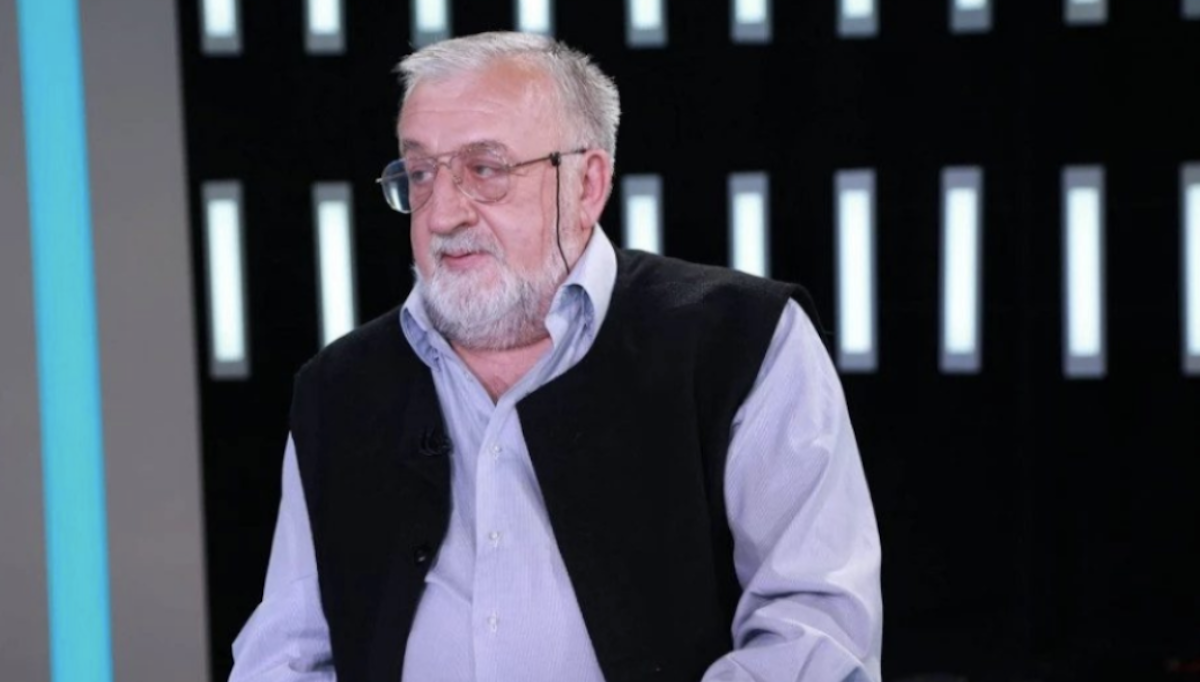
Political analyst Vakhtang Dzabiradze, commenting on the death of Catholicos-Patriarch Ilia II and the subsequent transition of power, said it would be desirable to separate the Church from politics, but that this is virtually impossible in Georgia’s current reality. In his view, the question of who becomes the next Patriarch is of interest not only to Georgian politics, but also to Russia.
He also criticised the fact that, on the day of the Patriarch’s funeral, access to the Holy Trinity Cathedral was limited to members of the ruling party and their circle, adding that opposition leaders should also have been present.
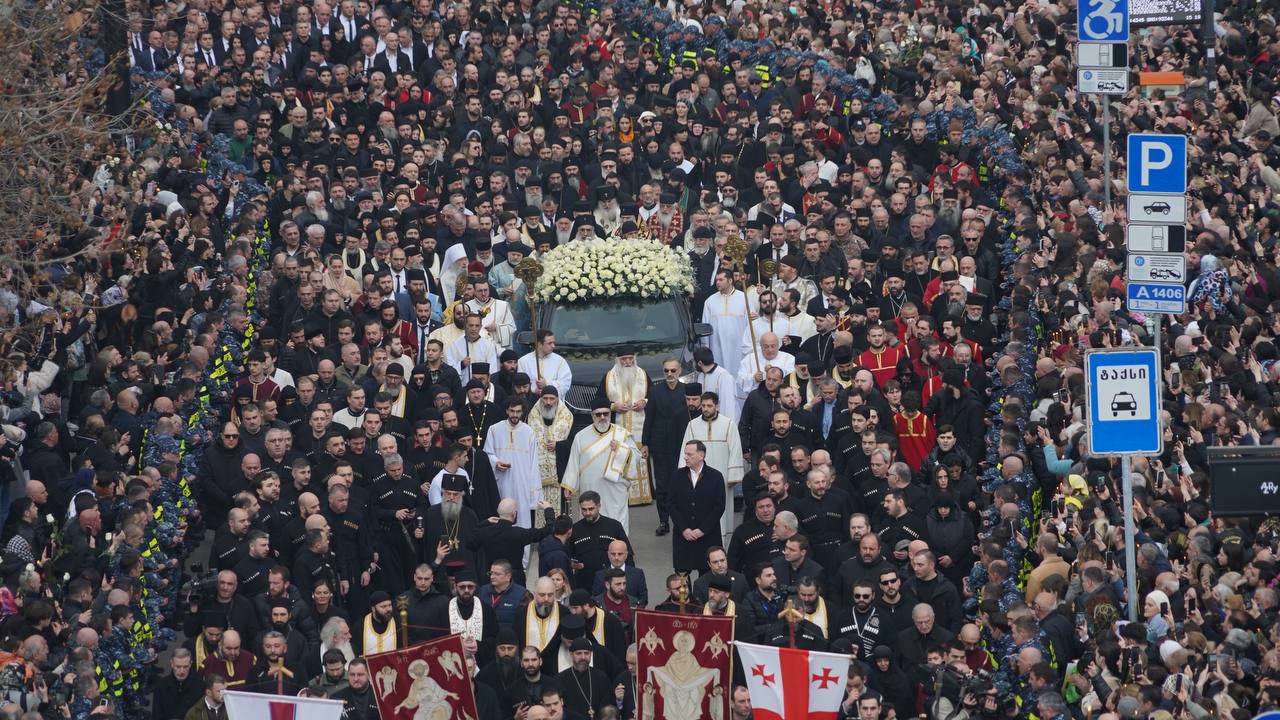
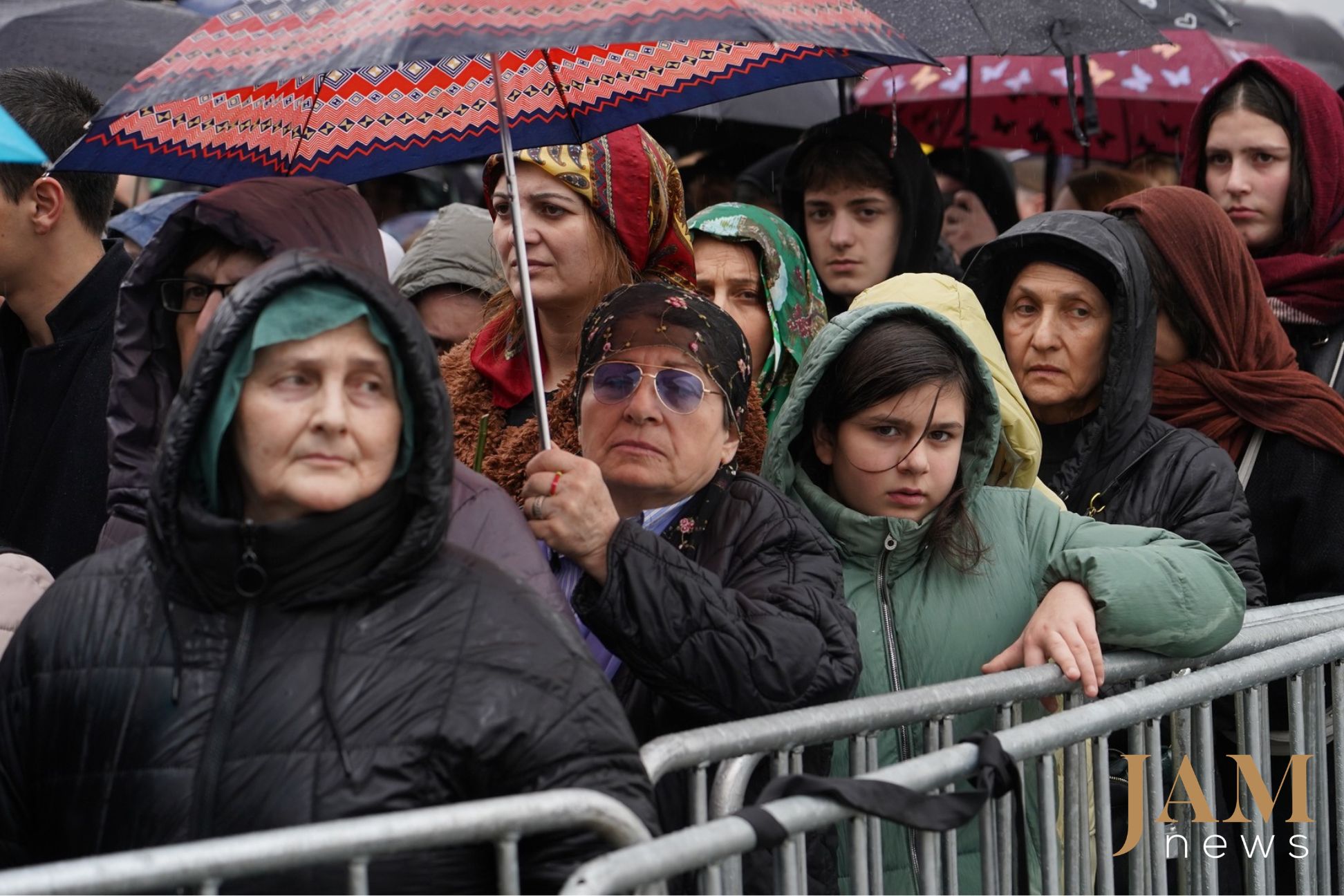
Catholicos-Patriarch of the Georgian Orthodox Church Ilia II was buried on Sunday, 22 March 2026, at Sioni Cathedral in Tbilisi. After five days of mourning, the country bid farewell to a figure who for nearly half a century shaped the direction of the Church and, often, of society as a whole. His funeral became a major historic event and a display of collective emotion.
Vakhtang Dzabiradze said:
“Of course, when such a figure passes away — whether a clergyman or a layperson — a huge void emerges that is difficult to fill in any circumstances. In the case of the Patriarch’s death, that void is particularly deep. He had enormous authority.
The Patriarch was like a father, and we are like brothers. Relations between brothers cannot be the same as those between the Patriarch and the current members of the Synod. Whoever becomes Patriarch, there are different groups with different political interests. It is hard to say whether the state and the political elite will remain neutral.
Even during the days of mourning, when senior clergy touched on this issue, they repeatedly said that the successor — the one who will be elevated to the Patriarchal throne — will not necessarily become a Catholicos-Patriarch in the same sense. The only thing that can be assumed, and most likely will be the case, is that we are facing a rather complex process.
The Patriarchate has been the only institution in the life of the nation that has preserved unity until now. I would like it to maintain that unity after the election of a new Patriarch, rather than split. Because this would affect the whole of society. We are already fragmented and decentralised, and if a religious dimension is added — however politicised — it will be harmful for the nation and the country as a whole.
As for the chances of Bishop Shio [the leading contender], it is difficult for me to predict, as I am not familiar with the internal workings of the Patriarchate. I am speaking based only on observable reality and the information available.
Bishop Shio has been in a position of authority for some time and appears to have established a certain level of contact with the government, but this does not mean the government has no alternative. It will, of course, want a fully compliant candidate. I cannot say whether Bishop Shio meets that criterion.
Who will become Patriarch? This question is of interest not only to Georgian politics, but also to the neighbouring Russian Orthodox Church. Naturally, it has its own interests, including in relation to the recognition of Ukraine’s autocephaly. There are also issues concerning developments in the Pitsunda and Sukhumi-Abkhaz dioceses. There are many interests involved.
Politics in every country seeks stable relations with the Church. Where possible, it will try to extend its influence over the Church and the wider religious sphere. It is clear that it would be better for the Church to be free from politics, but in our reality this is practically impossible. There may be individuals within the Synod whose relations with the government are not fully aligned and who will not take its views into account, but the majority today will likely consider the government’s stance towards any given candidate.
To speak frankly, the opposition in Georgia has never played a significant role under any government, including under the United National Movement. If they were in power today, what would be different? Would the United National Movement have invited opposition representatives to the funeral? No — that is the problem.
The problem is that we have failed to move away from a model of totalitarian governance. We gained independence, but retained a totalitarian system of rule.
Unfortunately, there has not been a political government in this country that has not regarded the opposition as an enemy. If the opposition is seen as an enemy, a traitor or a spy, then the government must prove it and act accordingly. It is clear that Georgian Dream has spoken about a complete ban on opposition parties, but I believe this is just rhetoric. What happened [at the funeral] was wrong. Opposition representatives should have been present. But this reflects a broader reality across the country, and that is our core problem.”
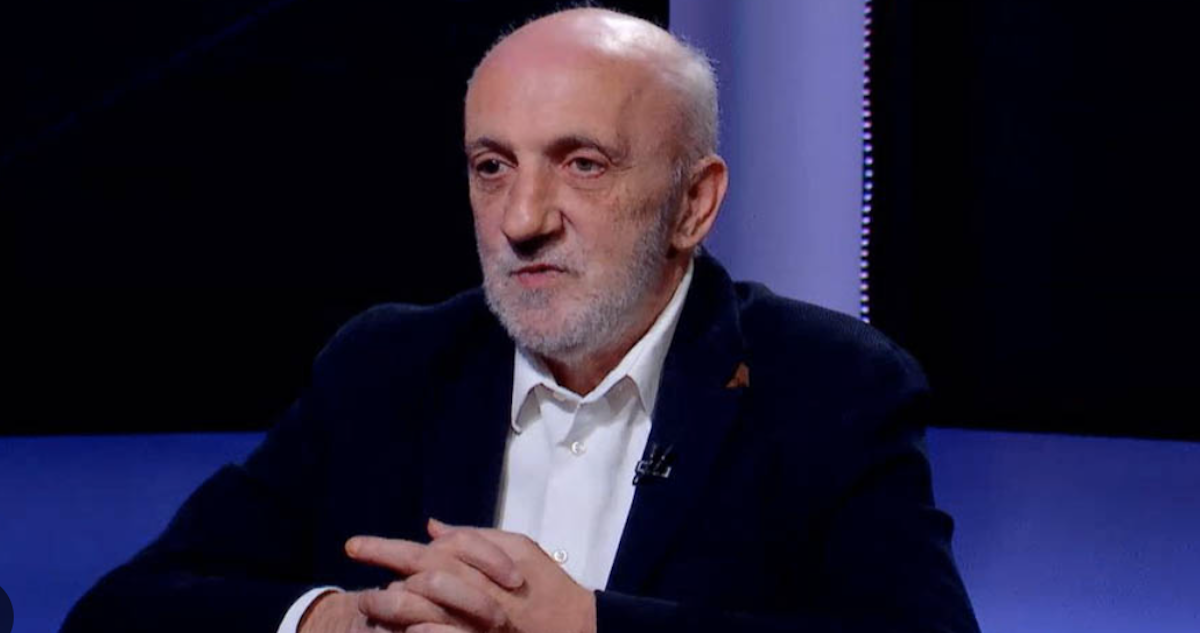
“The government is always given decisive importance, and it always has the resources to take the first step if it truly wants to — but does it really want to? Is there any chance the government would be concerned by statements from the Patriarch and begin changing its policy tomorrow or the day after? I do not think so.
The government feels quite comfortable. It may not enjoy broad public support, but institutions are functioning smoothly. It faces no real problems from a fragmented society. On the contrary, this allows it to manoeuvre and use the political situation to retain power. It has done so until now and will continue to do so. No external will is likely to force it off this path.”
“All governments — especially under a system like the one in this country — take decisive steps only when they are under threat. Does the government today face any real threat from the opposition or society? No. They feel secure and control all institutions. Growing isolation from the West is an issue, but as long as it does not spread to society, it poses no real risk to the government.
Do you expect detainees to be released out of goodwill or because of mourning? Lukashenko, for example, has found a new model of relations — exchanging prisoners and gradually rebuilding ties.
In any case, his relations with the United States are now better than they were before. The Georgian government sees this and may ask why it should not do the same.
Only when domestic discontent reaches a critical level will there be a real chance that the state will make concessions. Until then, no institution will collapse. In Georgia’s history, changes of government have occurred during periods when public dissatisfaction reached its peak.”
Opinion on Georgia’s next Patriarch
Forbes Georgia, a local business publication, on March 23 published its first-ever ranking of Georgia’s 100 richest entrepreneurs, placing Bidzina Ivanishvili – the founder of the ruling Georgian Dream party and its current honorary chairman, widely considered the country’s informal ruler – in second place.
According to Forbes Georgia, the combined wealth of the 100 richest Georgians exceeds GEL 60.1 billion (approximately USD 22.4 billion), nearly 60% of the country’s annual gross domestic product and roughly three times its annual budget revenue. Even among the richest, wealth is unevenly distributed, with the top 10 controlling around 60% of the total held by the top 100, and the top 5 holding almost half, the publication added.
Finance, telecommunications, healthcare, trade, and real estate account for “the lion’s share” of total wealth, Forbes Georgia said, noting that these sectors “rely on infrastructure, existing networks, and operational scale.”
It added that, unlike technology, “where wealth can be created in leaps,” the industries listed above “strengthen their position through advantages accumulated over time,” reflecting the “institutional reality” of a developing economy, where “existing market access and contacts play a decisive role.”
“Innovation-based capital emerges, but the wealth hierarchy remains largely defined by control over existing economic systems.”
Forbes Georgia noted that the ranking covers only assets located within Georgia, excluding foreign and offshore holdings, and is based on “financial reporting, ownership data, sectoral analysis, and multiple verifications.”
It noted that the ranking includes only individuals whose business assets can be assessed based on publicly available and verifiable data. Core financial figures are drawn from 2023 financial statements submitted to the Service for Accounting, Reporting and Auditing Supervision portal, while ownership information was sourced from the Public Registry, the financial reporting portal, official company websites, “communication with individuals affiliated with the companies, and other public sources.”
The list includes 12 women. The average age of the 100 richest Georgians is 56, with the youngest at 25 and the oldest at 90. Only the top two – Mikheil Lomtadze and Bidzina Ivanishvili – also appear on the Forbes global ranking.
The Top Ten
Mikheil Lomtadze, 50, tops the ranking with a declared wealth of GEL 15.853 billion. He is CEO and chairman of Kaspi, Kazakhstan’s leading digital and banking services company, whose app is used by more than half the country’s population. Originally from Batumi, he built his wealth in Kazakhstan. Since 2024, he has also owned English football club Wycombe Wanderers. He ranks 597th in the Forbes Global ranking.
Bidzina Ivanishvili, 70, founder of the ruling Georgian Dream party, former prime minister of Georgia, the party’s current honorary chairman and widely regarded as the country’s informal ruler, ranks second with GEL 7.254 billion. Ivanishvili accumulated his wealth in Russia following the collapse of the USSR, primarily in the “banking and metallurgy sectors.” Ivanishvili has been engaged in a long-running legal dispute with Swiss bank Credit Suisse. London’s Privy Council found the bank defrauded him of USD 607 million, but his lawyer said the funds might not have been recovered, citing U.S. sanctions. He ranks 1362nd in the Forbes Global ranking.
Giorgi Jokhtaberidze, 72, ranks third with GEL 2.764 billion. He owns a 75% stake in MagtiCom, the leading telecommunications company in Georgia, which Forbes ranks as the country’s fifth most valuable firm. According to Forbes Georgia, Jokhtaberidze, the son-in-law of Georgia’s second president, Eduard Shevardnadze, is also a collector of contemporary Georgian art. Nearly 3,500 works from his family’s collection are exhibited at the Museum of Georgian Fine Arts, which he founded.
Irakli Rukhadze, 59, ranks fourth with GEL 2.227 billion. His assets include a 25% stake in MagtiCom, a 41% stake in Georgian Cement, near full ownership of Liberty Bank, and full ownership of Rustavi Steel. Rukhadze also owned the pro-government TV channel Imedi, which he sold in February, weeks before Imedi, alongside another pro-government channel, POSTV, was sanctioned by the United Kingdom for “Russian disinformation.”
Temur Chkonia, 75, ranks fifth with GEL 1.745 billion. He holds an 87% stake in Coca-Cola Bottlers Georgia and a 90% stake in T & K Restaurants LLC, which operates the McDonald’s fast-food restaurant chain in Georgia. His company has been bottling soft drinks since 1993 and also holds Coca-Cola licenses in Armenia and Azerbaijan, according to Forbes. Chkhonia is widely regarded as an opposition-leaning businessman who has funded, among others, major critical TV channels.
Paata Kurtanidze, 58, ranks sixth with GEL 1.562 billion. He owns Aversi, a major pharmacy chain ranked by Forbes among the country’s top ten companies with revenues, and holds an 85% stake in Aversi Rational, a pharmaceutical manufacturing company. The Aversi group also includes Aversi Clinic, previously named among Georgia’s third most profitable hospitals.
Giorgi Ramishvili, 58, ranks seventh with a wealth of GEL 1.485 billion. He owns a 62% stake in Silk Road Group, which brings together several major companies, including Silknet, a leading local communications provider. Silknet acquired Geocell, a mobile communication brand, in 2018 in what the publication calls “the largest corporate deal” in Georgia’s history. The holding also includes hotels such as Radisson Blu Iveria and The Telegraph. He also holds a 16% stake in Wissol Petroleum, one of Georgia’s largest fuel station chains.
Kakhaber Okriashvili, 59, ranks eighth with GEL 1.141 billion. He owns a 95% stake in PSP, one of Georgia’s largest pharmaceutical companies, as well as GM Pharma and a 33% stake in Western Georgia Medical Center. Okriashvili served five terms as an MP between 2004 and 2024 under both ruling parties at different times: first as a UNM MP from 2008 to 2016, then as a GD MP from 2016 to 2020, and again as a UNM MP from 2020 to 2024.
Khvicha Makatsaria, 61, ranks ninth with GEL 1.132 billion. He owns a 25% stake in Tbilisi Energy, which supplies gas to the capital, and a 12% stake in Telasi, the electricity distributor in Tbilisi. In 2022, he acquired Cellfie Mobile (formerly Beeline), the country’s third-largest mobile operator.
Gia Gorgoshadze, 55, rounds out the top ten with GEL 1.045 billion. He is the sole owner of Gorgia, a major company in the construction and refurbishment sector, operating 13 branches across eight cities since its founding in 1998.
Other Notable Entries
Maka Asatiani, 52, a former model and businesswoman, ranks 12th with GEL 806 million. Her family owns Mercedes-Benz Georgia LLC and real estate firm Trade Stone Iberia LLC, through which she holds a 30% stake in Black Sea Petroleum, operator of the Kulevi oil terminal. The terminal reportedly received its first cargo of Russian oil from Russneft in October and was being considered for the European Union’s 20th Russian sanctions list.
Mamuka Khazaradze, 59, leader of the opposition Lelo-Strong Georgia party, ranks 18th with GEL 732.2 million. A co-founder of TBC Bank, one of the two major commercial banks in Georgia, he currently holds a 10% stake in the bank as well as a 25% stake in real estate firm Lisi Development. He is among eight opposition figures facing charges in the so-called “sabotage” case over “crimes against the state.”
Badri Japaridze, 65, with GEL 478.8 million, ranks 23rd. He is another co-founder of TBC Bank, currently holding a 6% stake in the company and a 25% stake in Lisi Lake Development. He also faces charges in the same case.
Kakha Bekauri, 57, former head of Georgia’s Communications Commission, the state media regulator, ranks 36th with GEL 326.2 million. He owns one-third of Ori Nabiji, one of the country’s largest supermarket chains.
Anton Obolashvili, 51, a Georgian Dream MP since 2020, ranks 46th with GEL 244.6 million. He is the sole owner of Globalpharm, which operates in pharmaceutical import and distribution. He is also active in the real estate sector.
Shota Berekashvili, 51, also a Georgian Dream MP and chair of a parliamentary commission examining the pricing of food products, medicines, and fuel, ranks 73rd with GEL 122.3 million. He holds a 50% stake in BK Construction LLC, founded in 2017, active in residential, commercial, and hotel development.
Zaal Dugladze, 55, another Georgian Dream MP, ranks 80th with GEL 115.9 million. He and his brother Davit co-own Dugladze Wine Company LLC, founded in 2013, which produces and trades wine and spirits.
Also Read: