Categories
South Caucasus News

Opinion: Sentence of Georgian opposition figure Elene Khoshtaria is ‘political revenge’


Opinion on Elene Khoshtaria’s sentence

Opinion on Elene Khoshtaria’s sentence

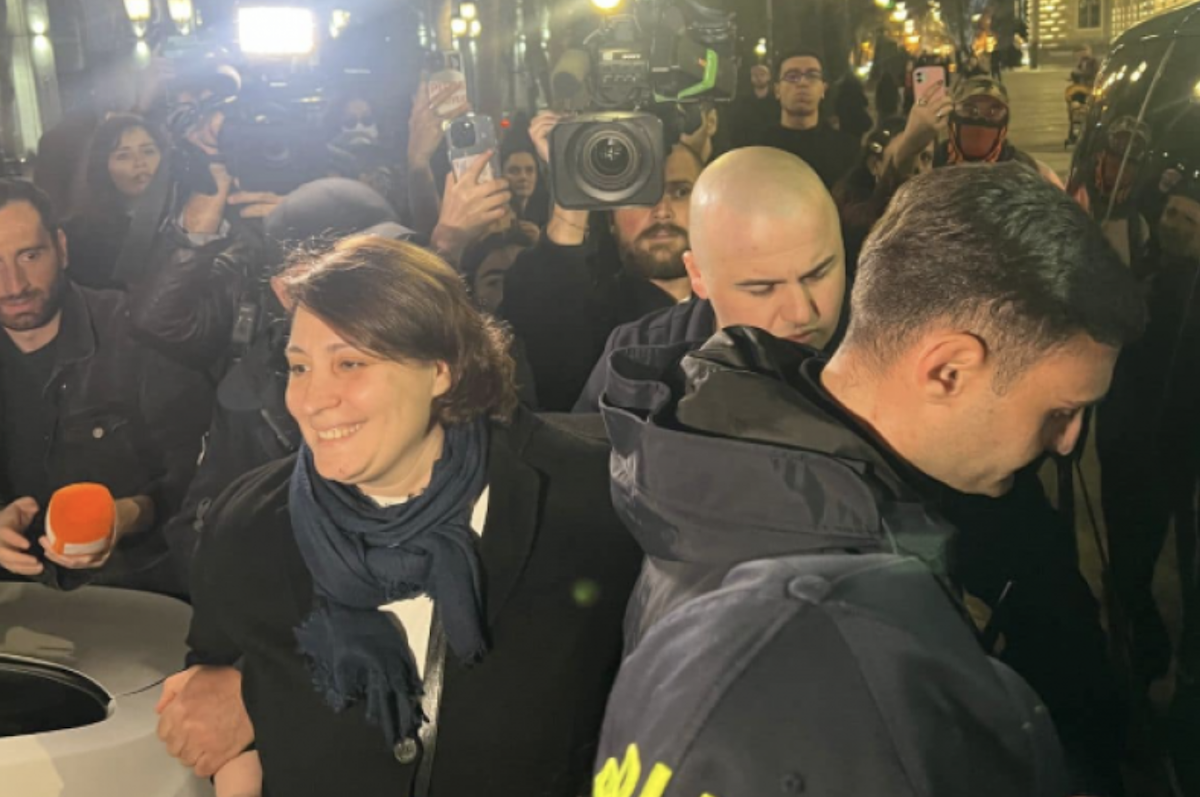
Lawyers and the Alliance of Liberals and Democrats for Europe (ALDE) party have reacted to the court verdict against Droa party leader Elene Khoshtaria in a vandalism case involving election banners, saying the sentence is an instrument of political revenge.
Tbilisi City Court has sentenced opposition politician Elene Khoshtaria to 18 months in prison for writing “Russian Dream” on an election poster of Tbilisi Mayor Kakha Kaladze.
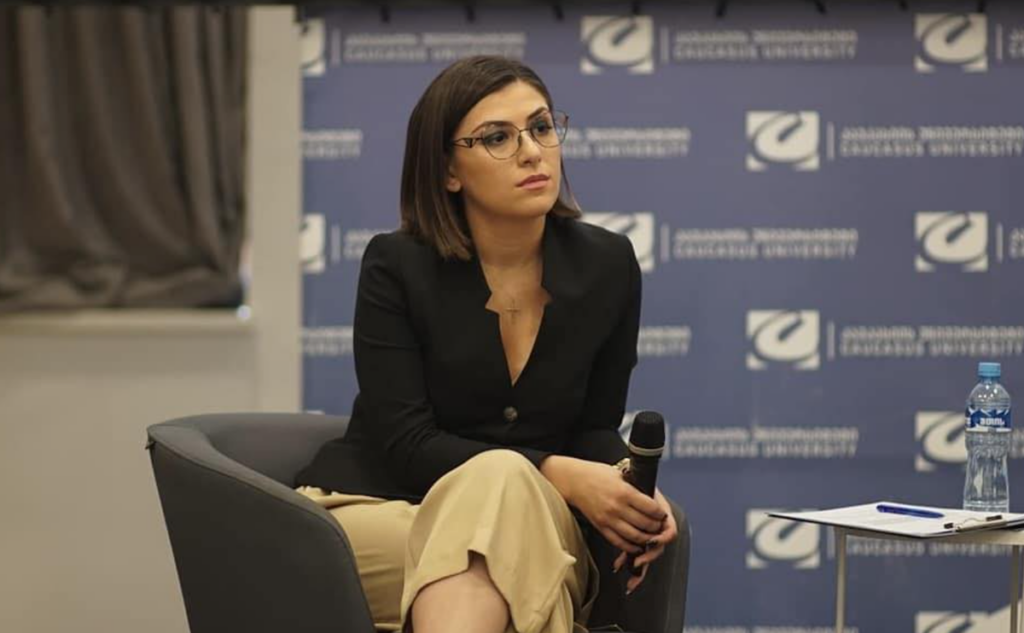
Opinion on Elene Khoshtaria’s sentence: Tamar Oniani, chair of the Georgian Young Lawyers’ Association

Tamar Oniani, chair of the Georgian Young Lawyers’ Association, said:

“The 18-month prison sentence handed to Elene Khoshtaria for writing on a poster is another example of the judiciary being used as a tool of political revenge.

Such a decision cannot be justified by arguing that the current criminal law framework left the court with no alternative. In reality, the case concerns an act whose classification as a criminal offence is itself questionable. Even if it did fall under this framework, the court had the option to impose a fine (Article 187.1 of the Criminal Code) instead of a custodial sentence.

The criminal response in this case is manufactured and, unfortunately, has become part of a broader trend, where the judiciary treats differing opinions and forms of political expression as grounds for imprisonment. It responds with threats and coercion, often supported by rapidly adopted legislative changes in the Georgian parliament.”
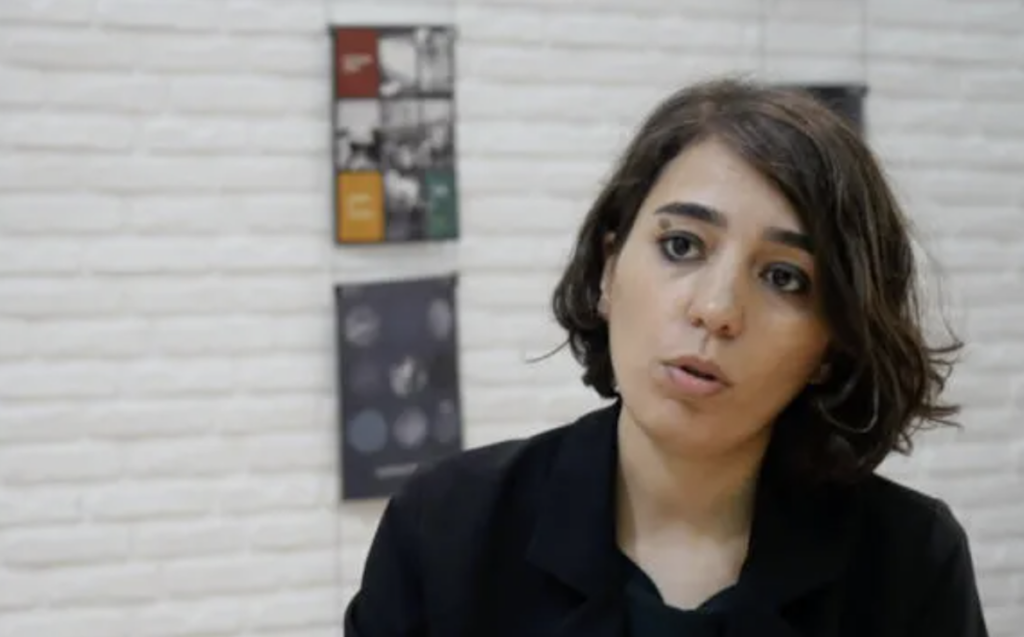

Tamta Mikeladze, Director of the Social Justice Centre

Tamta Mikeladze, director of the Social Justice Centre, said:

“The sentence against Elene Khoshtaria is outrageous and immoral. Let us first assess the legal aspect of the case.

Article 187 of the Criminal Code, under which Khoshtaria was convicted, concerns damage to another person’s property causing significant harm, or its destruction. ‘Significant harm’ in this context applies if the value of the property exceeds 150 lari.

According to judicial practice, ‘destruction’ means rendering property completely unusable or eliminating it altogether, whereas in cases of ‘damage’, the property can be restored.

Footage circulating in the media shows the inscription on Kakha Kaladze’s campaign banner.

It should be emphasised that liability for damaging a campaign banner is предусмотрена a specific law — the Election Code — which directly regulates campaign materials. This excludes criminal liability for such an act and further underlines the absurdity of the charges.

The same code also provides for administrative liability for the unlawful removal, tearing down, covering or damage of election posters.

Even if it is objectively established that the banner was damaged, this still does not justify initiating criminal proceedings. Under the relevant provisions, only administrative sanctions may apply.

Moreover, when determining punishment, it is necessary to assess whether the defendant’s actions fall under the protection of freedom of expression. Freedom of expression includes symbolic acts. This can include writing on a banner, which, given the minor nature of the act, cannot be considered a violation of the rights of any political party.

Criminal law should be used as ultima ratio — a last resort — and only when other, less severe legal measures, such as administrative sanctions, are insufficient. Ignoring this principle amounts to the politicisation of criminal law and a fundamental distortion of its function. In this case, given the nature and consequences of the act, the application of criminal liability is theoretically unfounded.

Therefore, Judge Giorgi Arevadze’s decision is clearly unlawful and another sign of political bias.

It is evident that this case primarily has a political dimension. Punishing politicians for political actions indicates political persecution and repression. In a system where legal tools are used to target specific political figures, the legal system becomes a mechanism of political control and punishment, and the courts act as instruments of the ruling party. In such conditions, the judiciary loses even a minimal standard of independence.

At the same time, it is impossible not to address the moral dimension. Issuing such a decision against a woman politician with four children, whose health has deteriorated — in part due to the political stress she has endured — is deeply immoral. No previous political regime has made such decisions against women as the current leadership of Georgian Dream, which presents itself as a defender of family values.

The courage and resilience of Elene Khoshtaria, who is sacrificing her health in her struggle against the Georgian Dream government, are evident to citizens, regardless of whether they share her political views.”

Alliance of Liberals and Democrats for Europe (ALDE)

The Alliance of Liberals and Democrats for Europe (ALDE) said:

“We condemn the 18-month prison sentence handed to Droa party leader Elene Khoshtaria, which is wholly disproportionate to her alleged offence — exercising freedom of expression and advocating for Georgia’s pro-European future. We call for her immediate release and the dropping of all politically motivated charges against her and other leaders and activists of the democratic opposition. We also call for the introduction of additional targeted sanctions. Georgians, you are not alone!”

Opinion on Elene Khoshtaria’s sentence

Categories
South Caucasus News

Khamenei said to back US deal if terms are met


Iranian Foreign Minister Abbas Araghchi told United States Special Envoy to the Middle East Steve Witkoff that Supreme Leader Ayatollah Mojtaba Khamenei gave him his “consent and blessing” to agree to a deal with Washington if Tehran’s conditions on its nuclear status are met, AzerNEWS reports.

Categories
South Caucasus News

В регионах Азербайджана применяются передовые технологии | США и Иран могут договориться


Categories
South Caucasus News

Abkhazia Arrests Tajik National in Extremism Case – Caspian Post


Abkhazia Arrests Tajik National in Extremism Case  Caspian Post

Categories
South Caucasus News

Новый удар по Ирану


Categories
South Caucasus News

Kazakhstan doubles direct investment in Azerbaijan in 2025


Kazakhstan significantly increased its direct investments in Azerbaijan in 2025, reflecting strengthening economic ties between the two countries, AzerNEWS reports.

Categories
South Caucasus News

Heydar Aliyev International Airport transitions to summer flight schedule


Heydar Aliyev International Airport switches to spring-summer flight schedule from March 29, 2026, AzerNEWS reports, citing the airport.

Categories
South Caucasus News

Denmark votes in early election that follows crisis over US designs on Greenland


Categories
South Caucasus News

Opinion: Who becomes Georgia’s next Patriarch is question of interest not only to Georgia, but also to Russia


Opinion on Georgia’s next Patriarch


Opinion on Georgia’s next Patriarch

Political analyst Vakhtang Dzabiradze, commenting on the death of Catholicos-Patriarch Ilia II and the subsequent transition of power, said it would be desirable to separate the Church from politics, but that this is virtually impossible in Georgia’s current reality. In his view, the question of who becomes the next Patriarch is of interest not only to Georgian politics, but also to Russia.

He also criticised the fact that, on the day of the Patriarch’s funeral, access to the Holy Trinity Cathedral was limited to members of the ruling party and their circle, adding that opposition leaders should also have been present.

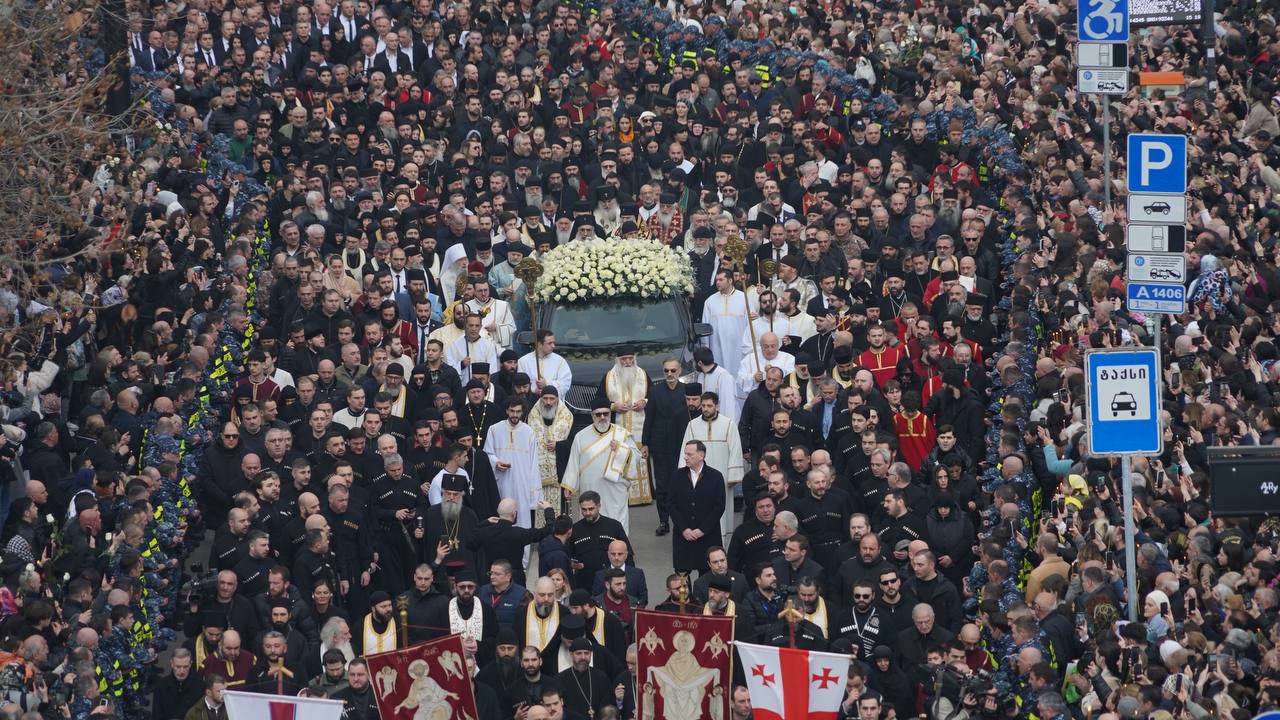
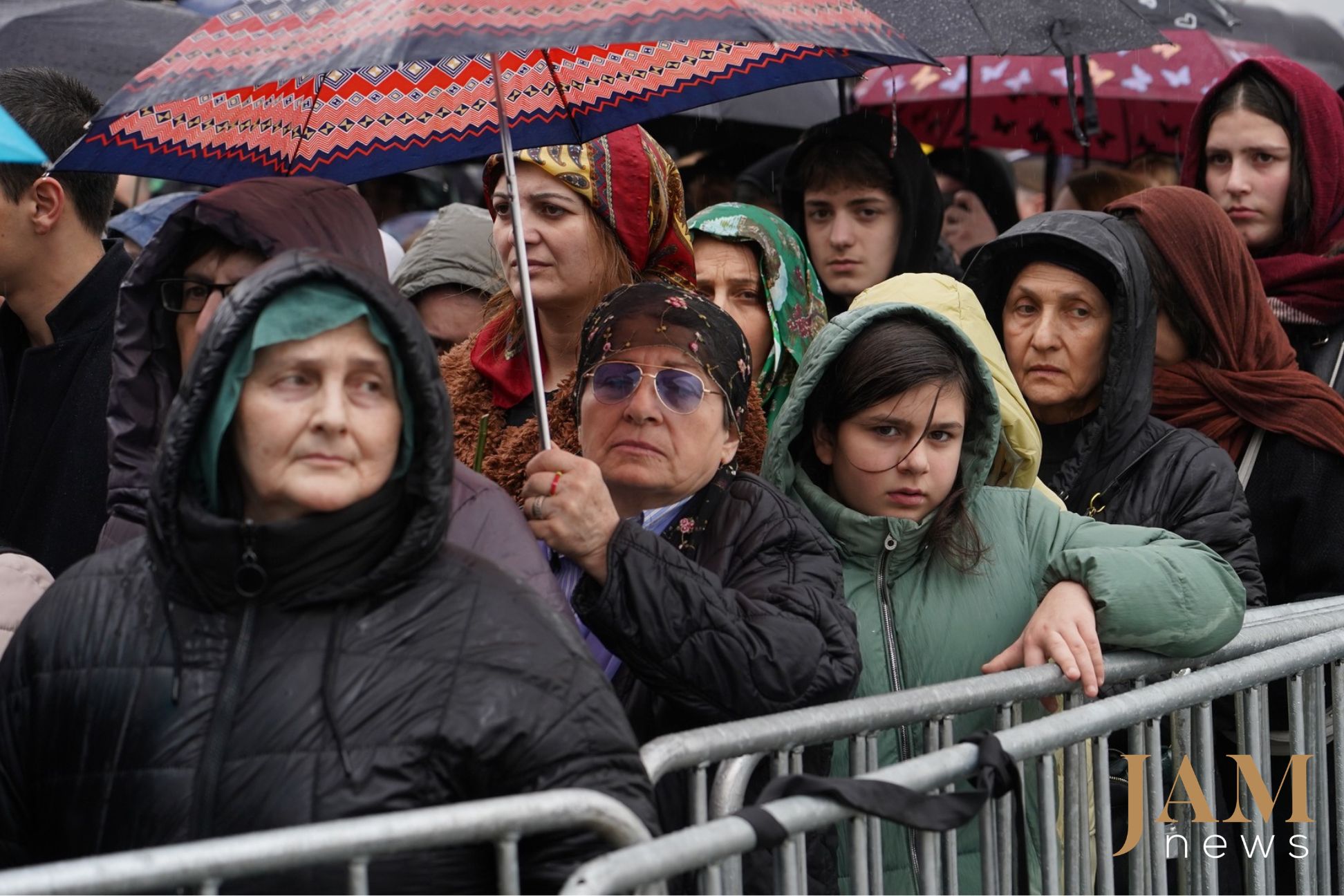
Catholicos-Patriarch of the Georgian Orthodox Church Ilia II was buried on Sunday, 22 March 2026, at Sioni Cathedral in Tbilisi. After five days of mourning, the country bid farewell to a figure who for nearly half a century shaped the direction of the Church and, often, of society as a whole. His funeral became a major historic event and a display of collective emotion.

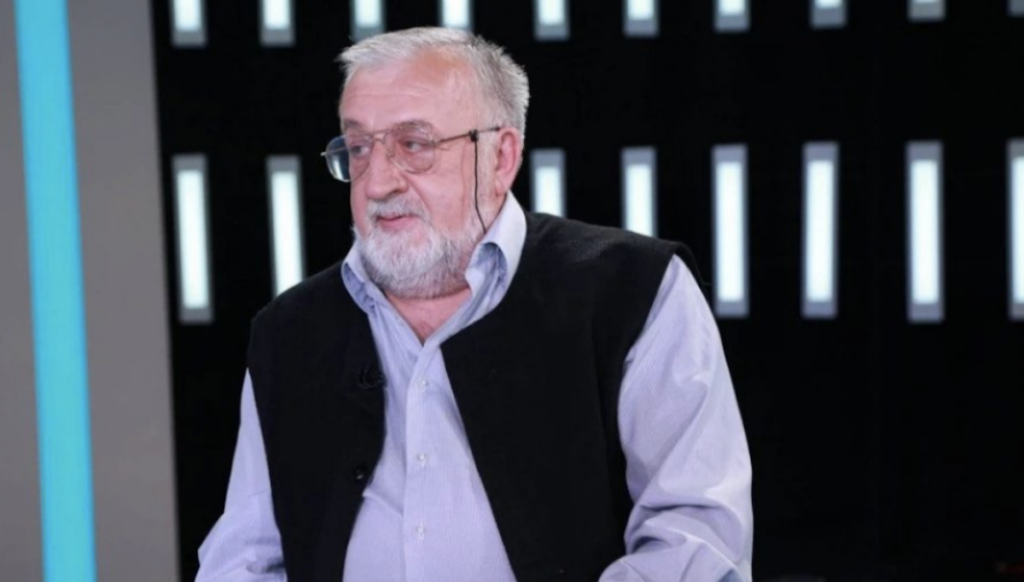
Opinion on Georgia’s next Patriarch: Political analyst Vakhtang Dzabiradze

Vakhtang Dzabiradze said:

“Of course, when such a figure passes away — whether a clergyman or a layperson — a huge void emerges that is difficult to fill in any circumstances. In the case of the Patriarch’s death, that void is particularly deep. He had enormous authority.

The Patriarch was like a father, and we are like brothers. Relations between brothers cannot be the same as those between the Patriarch and the current members of the Synod. Whoever becomes Patriarch, there are different groups with different political interests. It is hard to say whether the state and the political elite will remain neutral.

Even during the days of mourning, when senior clergy touched on this issue, they repeatedly said that the successor — the one who will be elevated to the Patriarchal throne — will not necessarily become a Catholicos-Patriarch in the same sense. The only thing that can be assumed, and most likely will be the case, is that we are facing a rather complex process.

The Patriarchate has been the only institution in the life of the nation that has preserved unity until now. I would like it to maintain that unity after the election of a new Patriarch, rather than split. Because this would affect the whole of society. We are already fragmented and decentralised, and if a religious dimension is added — however politicised — it will be harmful for the nation and the country as a whole.

As for the chances of Bishop Shio [the leading contender], it is difficult for me to predict, as I am not familiar with the internal workings of the Patriarchate. I am speaking based only on observable reality and the information available.

Bishop Shio has been in a position of authority for some time and appears to have established a certain level of contact with the government, but this does not mean the government has no alternative. It will, of course, want a fully compliant candidate. I cannot say whether Bishop Shio meets that criterion.

Who will become Patriarch? This question is of interest not only to Georgian politics, but also to the neighbouring Russian Orthodox Church. Naturally, it has its own interests, including in relation to the recognition of Ukraine’s autocephaly. There are also issues concerning developments in the Pitsunda and Sukhumi-Abkhaz dioceses. There are many interests involved.

Politics in every country seeks stable relations with the Church. Where possible, it will try to extend its influence over the Church and the wider religious sphere. It is clear that it would be better for the Church to be free from politics, but in our reality this is practically impossible. There may be individuals within the Synod whose relations with the government are not fully aligned and who will not take its views into account, but the majority today will likely consider the government’s stance towards any given candidate.

To speak frankly, the opposition in Georgia has never played a significant role under any government, including under the United National Movement. If they were in power today, what would be different? Would the United National Movement have invited opposition representatives to the funeral? No — that is the problem.

The problem is that we have failed to move away from a model of totalitarian governance. We gained independence, but retained a totalitarian system of rule.

Unfortunately, there has not been a political government in this country that has not regarded the opposition as an enemy. If the opposition is seen as an enemy, a traitor or a spy, then the government must prove it and act accordingly. It is clear that Georgian Dream has spoken about a complete ban on opposition parties, but I believe this is just rhetoric. What happened [at the funeral] was wrong. Opposition representatives should have been present. But this reflects a broader reality across the country, and that is our core problem.”

“The government is always given decisive importance, and it always has the resources to take the first step if it truly wants to — but does it really want to? Is there any chance the government would be concerned by statements from the Patriarch and begin changing its policy tomorrow or the day after? I do not think so.

The government feels quite comfortable. It may not enjoy broad public support, but institutions are functioning smoothly. It faces no real problems from a fragmented society. On the contrary, this allows it to manoeuvre and use the political situation to retain power. It has done so until now and will continue to do so. No external will is likely to force it off this path.”

“All governments — especially under a system like the one in this country — take decisive steps only when they are under threat. Does the government today face any real threat from the opposition or society? No. They feel secure and control all institutions. Growing isolation from the West is an issue, but as long as it does not spread to society, it poses no real risk to the government.

Do you expect detainees to be released out of goodwill or because of mourning? Lukashenko, for example, has found a new model of relations — exchanging prisoners and gradually rebuilding ties.

In any case, his relations with the United States are now better than they were before. The Georgian government sees this and may ask why it should not do the same.

Only when domestic discontent reaches a critical level will there be a real chance that the state will make concessions. Until then, no institution will collapse. In Georgia’s history, changes of government have occurred during periods when public dissatisfaction reached its peak.”


Opinion on Georgia’s next Patriarch


Categories
South Caucasus News

Lebanon expels Iranian ambassador over alleged interference in ‘internal issues’


The government of Lebanon has expelled the ambassador of Iran, citing interference in the country’s internal affairs, AzerNEWS reports via Associated Press.