Summary
The Middle East conflict has entered a dangerous new phase with Iran-backed strikes targeting US allies and Israeli territory, while the US responds with direct airstrikes against Iranian assets. Hamas undergoes internal leadership shifts amid the broader regional turmoil, and US political figures push for stricter sanctions linking Iran to Russia. The crisis risks destabilizing global energy markets and drawing in additional state actors.
Key Stories
Hamas leadership vote signals Iran-aligned shift amid Gaza power struggle — Hamas reportedly selects Iran ally Khalil al-Hayya as successor to Yahya Sinwar, with covert voting by imprisoned members suggesting a consolidation of hardline factions aligned with Tehran’s regional strategy. The move may indicate preparations for prolonged conflict rather than diplomatic resolution.
Iran launches missile strikes near Israel as US deploys naval assets in Red Sea — Iranian missiles targeting Aqaba, Jordan, triggered Israeli Iron Dome interceptions, with debris landing inside Israel. An Israeli submarine was simultaneously spotted near Eilat, signaling heightened military readiness as the US conducts retaliatory airstrikes against Iranian positions following attacks on US troops.
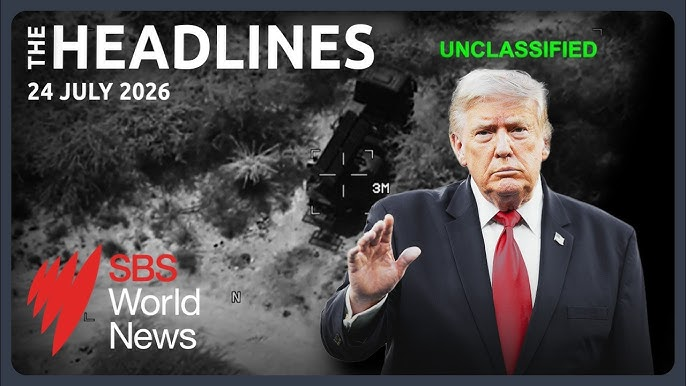
US political leaders push to link Iran and Russia sanctions amid escalating conflict — Former President Trump urges Congress to include Iran in a Russia sanctions bill, framing it as a tribute to late Senator Lindsey Graham. The move reflects growing bipartisan pressure to treat Iran and Russia as a unified threat, potentially setting the stage for broader economic warfare.
Explosions and power outages reported in Iranian city as regional tensions flare — Unconfirmed reports describe explosions and blackouts in Abadan, Iran, following a night of US airstrikes. Analysts warn the Persian Gulf conflict is evolving into a systematic assault on civilian infrastructure, with potential cascading effects on global supply chains.
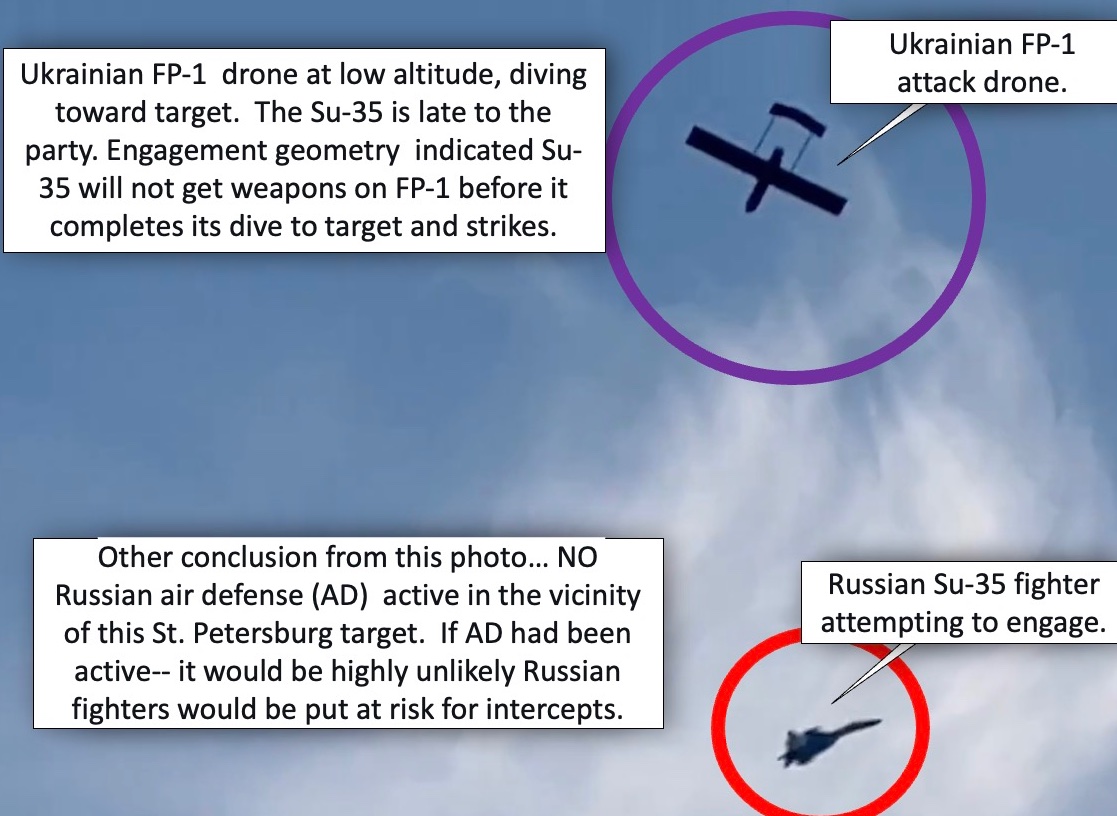
Ukraine drone strike on Russia highlights shifting battlefield dynamics — A long-range Ukrainian FP-1 drone strike inside Russia demonstrates Kyiv’s growing ability to project force beyond frontlines, potentially complicating Moscow’s military calculus as Western support faces capacity constraints.










![@khodorkovsky_en: RT by @mikenov: RT by @mikenov: Russians can no longer ignore the economic cost of Putin's invasion. Three-quarters now acknowledge that the war is damaging the national economy despite relentless state propaganda. 🧵[1/7]](https://pbs.twimg.com/media/HOAJByDXwAAIKq1.jpg)





![Arab Pepper Etymology: Arrabaca generally stems from geographical or toponymic origins, while Pimenta is a Portuguese name derived from the word for "pepper," historically used to describe someone with a fiery personality or a spice merchant. [1, 2, 3, 4] Arrabaca Pimenta - Google Search https://www.google.com/search?q=Arrabaca+Pimenta&rlz=1C1ONGR_enUS1133US1133&oq=Arrabaca+Pimenta&gs_lcrp=EgZjaHJvbWUyBggAEEUYOTIHCAEQIRigATIHCAIQIRiPAjIHCAMQIRiPAtIBCDIxMTZqMGo3qAIIsAIB8QW06PTT82s8ng&sourceid=chrome&source=chrome.ob&ie=UTF-8](https://pbs.twimg.com/media/HNwavGOXQAA7XM2.jpg)
![The surname Arrabaca is a Sephardic Jewish and Iberian surname originating from the Iberian Peninsula (modern-day Spain and Portugal). It is widely cataloged in historical registries tracking Sephardic Jewish genealogy and the records of the Spanish and Portuguese congregations of London. [1, 2, 3] The name traces its etymology to two main sources: Occupational/Topographical: Surnames in this region often evolved from local geography or daily trades. Variant Connections: It is closely linked to the surname Arrabaca Pimenta, which derives from the word pimenta, meaning "pepper" in both Spanish and Portuguese. [1, 4, 5] To explore the geographical distribution or historical documents associate](https://pbs.twimg.com/media/HNwWNwVXQAAdSoN.png)