Categories
Selected Articles

Georgian Prime Minister expresses readiness to contribute to regional peace and stability


Georgian Prime Minister expresses readiness to contribute to regional peace and stability
16:30, 9 September 2023

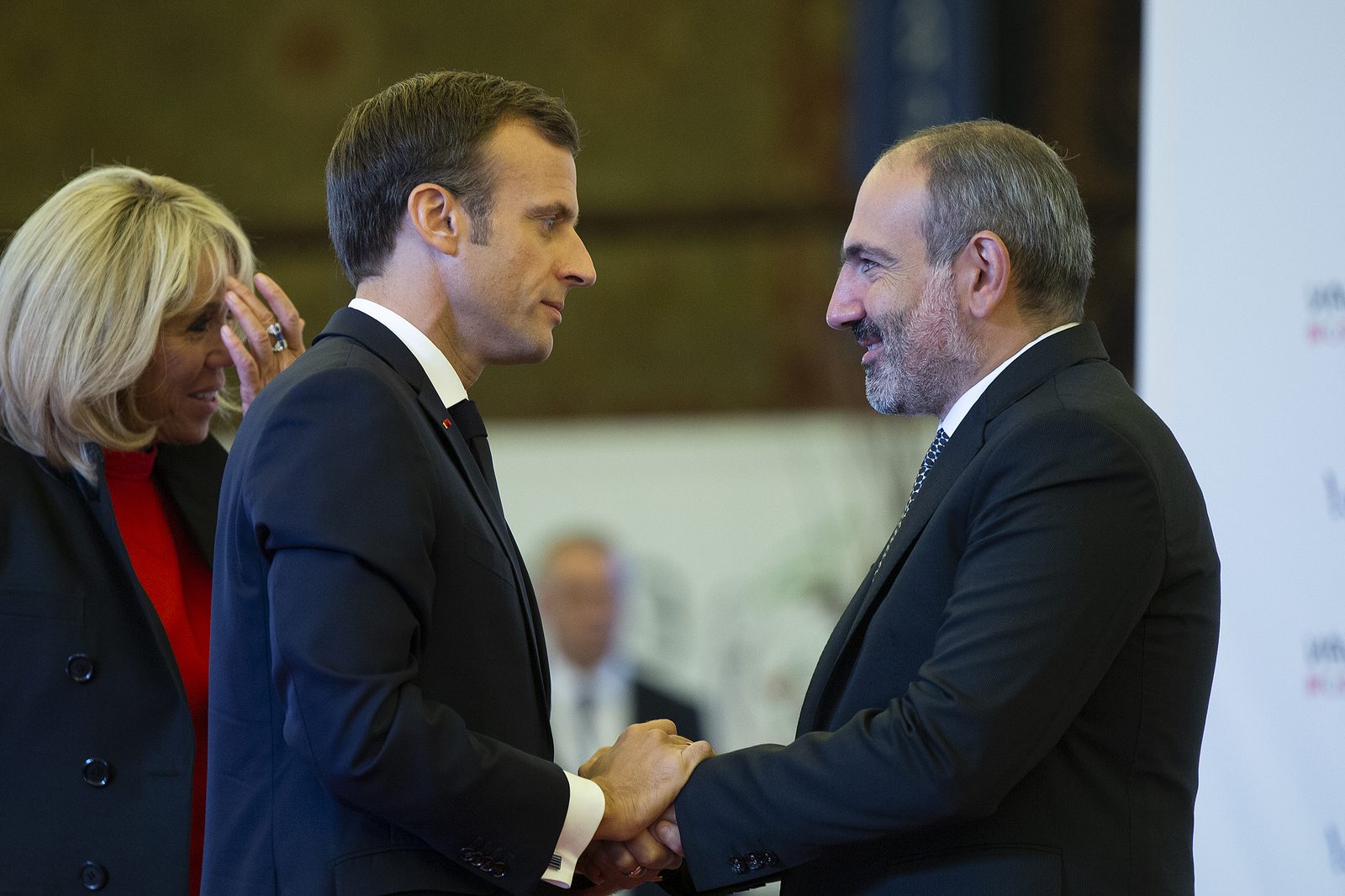
YEREVAN, SEPTEMBER 9, ARMENPRESS. Armenian Prime Minister Nikol Pashinyan spoke by phone on Saturday with his Georgian counterpart Irakli Garibashvili to discuss issues related to the current situation in the region, the Prime Minister’s Office reported.

PM Pashinyan and PM Garibashvili discussed the worsening humanitarian crisis in Nagorno-Karabakh due to the illegal blocking of the Lachin Corridor, the accumulation of Azerbaijani troops around Nagorno-Karabakh, and the increase in tension on the Armenia-Azerbaijan state border, the Prime Minister’s Office said in a readout.

“Prime Minister Pashinyan emphasized his commitment to the Prague agreements of October 6, 2022 and Brussels agreements of May 14, 2023, as well as to the approaches to solving all issues exclusively through diplomatic means and in a constructive atmosphere.

The Prime Minister of Georgia stated that he is ready to make necessary efforts to promote peace and stability in the region.

The sides emphasized the settlement of existing problems through peaceful negotiations.

PM Nikol Pashinyan reaffirmed that he is ready to have urgent discussions with the President of Azerbaijan,” the Prime Minister’s Office added.


Categories
Selected Articles

Azerbaijan–Israel relations


Bilateral relations

Map indicating locations of Israel and AzerbaijanAzerbaijan–Israel relations


Israel

Azerbaijan

Azerbaijan and Israel have engaged in close cooperation since 1992.[1] Azerbaijan is one of the majority Muslim countries, alongside Turkey, Egypt, Bahrain, United Arab Emirates, Jordan, Sudan, Kosovo, Morocco, Albania, Gulf countries and the other former Soviet republics to develop bilateral strategic and economic relations with Israel. In President Ilham Aliyev‘s meeting with Israel Prime Minister Benjamin Netanyahu, Aliyev praised the active role of the Jewish community living in Azerbaijan in developing bilateral relations between the countries.[2]

Background

220px-Stamp_of_Azerbaijan_395-397.jpgAzerbaijani stamp commemorating the 3000th anniversary of Jerusalem.

On October 18, 1991, the declaration of the Parliament of Azerbaijan restored the country’s independence, and in November 1991 Turkey became the first state to formally recognize it.[3] On December 25, 1991, Israel formally recognized the independence of Azerbaijan,[4] becoming one of the first states to do so, and established diplomatic relations with the country on April 7, 1992.[4] During the Nagorno-Karabakh conflict between Armenia and Azerbaijan, Israel funded and provided weapons and artillery to Azerbaijan.[5]

According to a 2009 U.S. diplomatic memo, made public through WikiLeaks, Azerbaijan’s President Ilham Aliyev once compared his country’s relationship with Israel to an iceberg: “Nine-tenths of it is below the surface.”[6]

Azerbaijan was visited by David Harris, executive director of the American Jewish Committee, in July 2010, shortly after the visit of Hillary Clinton to Baku. During the reception, Harris said Azerbaijan presented cultural, strategic and political importance.[7]

Azerbaijan was visited by John Shapiro, executive director of the American Jewish Committee, in January 2017, shortly after the visit of Benjamin Netanyahu to Baku. During the reception, Shapiro said that constructive partnership between Azerbaijan, US and Israel has a big significance.[8]

Visiting Azerbaijan in December 2016 the Israeli, Prime Minister Benjamin Netanyahu said: “Relations with Azerbaijan are very close. They will be even better after this visit.”[9]

Azerbaijan is home to some 30,000 Jews, residing primarily in Baku and the Qırmızı Qəsəbə settlement in the Quba district of Azerbaijan.[10] Mountain Jews have been living in Azerbaijan for close to 1,500 years; they are the descendants of Persian Jews. During the conquest by the Islamic Caliphate, Arabs settled an allied Jewish tribe in the neighborhoods of Baku; in 1730, Jews were officially allowed the right of residence and property ownership rights in Quba.[11] There are also nearly 5,000 Ashkenazi Jews living mostly in Baku. The first Jewish Sochnut school in the Soviet Union was opened in 1982 in Baku, then capital of Azerbaijan SSR.

April 2017 marked the 25th anniversary of the establishment of diplomatic ties between Israel and Azerbaijan.[12][13] A congratulatory letter to the President of Azerbaijan Ilham Aliyev from the Israeli Prime Minister Benjamin Netanyahu included:[14][15]

Israel is proud to have been one of the first nations to recognize the independent Republic of Azerbaijan. In the quarter-century since, our countries have built a solid relationship based on genuine friendship between the Jewish and Azerbaijani peoples. … Azerbaijan is a model of inter-faith and multicultural harmony in an area fraught with religious and ethnic rivalries. Like you, Israel is a beacon of stability and tolerance in an unstable region. Despite the challenges we face, we have both succeeded in creating thriving economies and vibrant, prosperous and peace-seeking societies.

Israeli–Azerbaijani ties strengthened since the very early 1990s. The strategic relationship included cooperation in trade and security matters, cultural and educational exchanges, etc. Relations entered a new phase in August 1997 during the visit of the then Israeli prime minister Benjamin Netanyahu to Baku. Since then Israel has been developing closer ties with Azerbaijan and has helped modernize the Armed Forces of Azerbaijan. The Israeli military has been a major provider of battlefield aviation, artillery, anti-tank, and anti-infantry weaponry to Azerbaijan.[16][17]

In 2009, Israeli President Shimon Peres made a visit to Azerbaijan where military relations were expanded further, with the Israeli company Aeronautics Defense Systems Ltd announcing it would build a factory in Baku.[18]

In 2010, Azerbaijani President Ilham Aliyev issued a decree banning the issue of visas in the country’s international airports; foreigners henceforth had to apply for visas at the nearest Azerbaijani consulate. Israel and Turkey were the only two countries whose citizens were unaffected by the new law.[19]

In 2016, Israel’s Defence Minister Avigdor Lieberman supported the position of Azerbaijan in the 2016 Nagorno-Karabakh conflict, calling it “absolutely justified”.[20] Furthermore, Lieberman held Armenia responsible for provoking the conflict in April 2016.[citation needed]

A delegation of the World Jewish Congress visited Azerbaijan in September 2016; during the talks with the Azerbaijani President Ilham Aliyev emphasis was put on “excellent” relations with Israel and the Jewish community.[21][22]

In December 2016, Israeli Prime Minister Benjamin Netanyahu paid an official visit to Baku. During the visit he emphasized that “Israel and Azerbaijan enjoy an excellent relationship and warm friendship”.[23] During the visit Netanyahu visited the Alley of Martyrs and paid tribute to Azerbaijani heroes.[24] He also visited the Ohr Avner Chabad Day School, met with the local Jewish community and gave a speech before students.[25][26] Press statements made by the President of Azerbaijan Ilham Aliyev and the Israeli Prime Minister Benjamin Netanyahu also showed satisfaction with the bilateral cooperation of the two countries.[27][28]

In December 2016, the Azerbaijan-Israel intergovernmental agreement on air communication was signed.[29]

In March 2017, several regional tours were made by the Israeli envoy to Azerbaijan to deepen economic cooperation in the spheres of economy, agriculture, and tourism:[30] Azerbaijan and Israel abolished double taxation between the two countries in April 2017.[31]

During his speech at the 72nd session of the UN General Assembly on September 19, 2017, Netanyahu mentioned the expansion of cooperation between the two countries.[32]

In January 2019, the State Border Service of Azerbaijan purchased Sky Striker kamikazes from Israel’s Elbit Systems. Azerbaijan became the first foreign buyer of Sky Strikers.[33]

Recent developments

In the September 2020 Nagorno-Karabakh war with Armenia, Azerbaijan has deployed Israeli-made weapons on Armenian targets,[34] and Israel continues to back Azerbaijan in its decades-long territorial dispute with Armenia.[citation needed]

Security relations

Following an October 2001 meeting with Israeli ambassador Eitan Naeh, Azerbaijan’s then-president Heydar Aliyev declared that the two countries had identical positions in the fight against international terrorism.[35] Israeli intelligence helps collect human intelligence about what they view as extremist organizations in the region. One of the groups, Hizb ut-Tahrir, which seeks the annihilation of the state of Israel, threatens both Jerusalem and Baku. Hizb ut-Tahrir is suspected of having several hundred members in Azerbaijan, and several its members were arrested and prosecuted by Azerbaijani authorities.[36]

In 2008, a plot was foiled to bomb the Israeli Embassy in Baku, which is located in a high-rise building along with the Thai and Japanese embassies. Two Hezbollah militants went on trial for the attempt in May 2009.[37] Local police narrowly averted the potential disaster, which involved placing three or four car bombs around the high-rise complex to carry out the attack. Groups planned the bombing in retaliation for the 2008 assassination in Damascus, Syria of Hezbollah’s second in command Imad Mughniyah, which the Lebanese group blamed on Israel. News reports suggested Iran was involved in the plan as well.[38]

In 2012, Israel and Azerbaijan signed an agreement according to which state-run Israel Aerospace Industries would sell $1.6 billion in drones and anti-aircraft and missile defense systems to Azerbaijan.[39]

Some analysts consider that both Israel and Azerbaijan see Iran as an existential threat. Azerbaijan fears Iranian Islamist influence, but Iran fears Azerbaijan, too, as up to 18 million Iranians are ethnic Azeris. On the other hand, Azerbaijan has close links with Turkey, and the post-2006 worsening of Israel–Turkey relations may have repercussions on Azerbaijan’s relations with Israel.[40]

In February 2012, Iran rebuked Azerbaijan for allegedly aiding anti-Iranian activities by Israel’s Mossad intelligence agency.[41] A few weeks later Azerbaijan arrested 22 people in a suspected Iranian plot against Israeli and US targets in Azerbaijan.[42] In March 2012, the magazine Foreign Policy reported that the Israeli Air Force may be preparing to use the Sitalchay Military Airbase, located 500 km (340 miles) from the Iranian border, for air strikes against the nuclear program of Iran.[6]

Azerbaijan has sought closer relations with the West. There are, however, several inhibiting factors to a more proximate alliance. One is Russia. Another is Azerbaijan’s vulnerability to pressure from the Muslim world. This pressure is the reason Azerbaijan has yet to open an embassy in Israel and why it has voted against Israel’s views in international forums.[43]

Trade relations

Economic cooperation between Israel and Azerbaijan has been growing significantly. As Azerbaijan deregulated its industries and liberalized its economy in the early 1990s, Israeli companies penetrated Azerbaijani markets.[44] Many companies have invested in service industry. One example is Bezeq, a major Israeli telecommunication provider. Through a trade contract bid in 1994, Bezeq bought a large share of the telephone operating system.[45] Today it installs phone lines and operates regional services throughout much of the country. Another company, Bakcell, was commenced as a joint venture between the Ministry of Communication of Azerbaijan and GTIB (Israel)[46] in early 1994 as the first cellular telephone operator in the country. Dozens of Israeli companies are active in the Azerbaijani energy sector. For instance, Modcon Systems Ltd., an Israel-based supplier of high technology to the oil and gas industries, opened a branch in Azerbaijan.[citation needed] In March 2021, Israeli defense company Meteor Aerospace teamed up with Caspian Ship Building Company (CSBC) of Azerbaijan to jointly offer advanced defense solutions to meet the Eurasian country’s national needs.[47]

Between 2000 and 2005, Israel has risen from being Azerbaijan’s tenth largest trading partner to its fifth. According to U.N. statistics, between 1997 and 2004, exports from Azerbaijan to Israel increased from barely over US$2 million to $323 million, fueled in recent years by the high price of oil.[48] As of 2013, 40 percent of oil to Israel is exported from Baku, which makes Azerbaijan Israel’s largest oil supplier.[49]

Azerbaijan and Israel abolished double taxation between countries in April 2017.[50] “Defense and energy sectors apart, the bilateral trade between the two countries amounted to $260 million in 2016,” said the Israeli ambassador to Azerbaijan.[51] According to the State Customs Committee of Azerbaijan, the total trade turnover between Azerbaijan and Israel amounted to $116.2 million in January–February 2017, which is 17.5 percent more compared to the same period of 2016.[50]

In 2020 trade between Azerbaijan and Israel was approximately 200 million US dollars (beside oil supplies).[52]

On July 29, 2021 Trade and Tourism representative office of Azerbaijan was founded in Tel Aviv.[53]

Energy

Azerbaijan and Israel cooperate closely in the field of energy: Israel buys 40 percent of its oil from Azerbaijan. [54][55]

In a 2007 speech, the Israeli ambassador to Azerbaijan, Arthur Lenk, spoke of continuous trade between Azerbaijan and Israel in the energy sector. He noted that until the inauguration of the Baku–Tbilisi–Ceyhan pipeline in 2006, Israel was a key consumer of Azerbaijani oil exports and that the proximity of Ceyhan to Israel offers excellent new opportunities for greater Israeli participation in this sector of the economy, thus creating additional areas for collaboration and mutual benefit. He underlined that through the Trans-Israel pipeline between Ashkelon and Eilat, Israel could be a strategic partner for marketing Caspian oil to Asia. Israeli efforts in developing alternative energy resources, especially solar energy, were also mentioned. Israel additionally seeks possibilities of importing gas from the Caspian Sea region.[56]

In December 2016, during his visit to Azerbaijan the Prime Minister of Israel Benjamin Netanyahu said: “Today we are negotiating not only for the supply of Azerbaijani oil, but also imports of Azerbaijani gas to Israel”.[27][28]

Cooperation against Iran

Further information: Azerbaijan–Iran relations

On March 29, 2012, officials[who?] stated that Israel was granted access to air bases in Azerbaijan through a “series of quiet political and military understandings.” According to Haaretz, these airbases could potentially be used in a strike against Iran over its nuclear program and other tensions with Iran, and would be allowed by Azerbaijan.[57] Israeli and Azerbaijani officials denied these reports.[58][59]

On September 30, 2012, it was reported that Azerbaijan and Israel jointly examined the use of Azerbaijani air bases and spy drones to help Israeli jets perform a long-range strike on Iran. This would help Israel with regard to issues with refueling, reconnaissance, and rescuing crews, and could make an attack more feasible.[60] The plan involves using an Israeli tanker aircraft painted in the colors of a third country airline company that would land and refuel in Azerbaijan and then refuel the Israeli strike aircraft.[61]

Israeli arms exports to Azerbaijan

Israel is an important exporter of arms to Azerbaijan. According to research of the Stockholm International Peace Research Institute, Israel accounted for 27 percent of Azerbaijan’s major arms imports from 2011 to 2020 and from 2016 to 2020, Israel accounted for 69 percent of Azerbaijan’s major arms imports.[62]

See also

References

  1. ^ “News.Az – Azerbaijan, Israel to continue ‘to forge strong friendship’. Archived from the original on January 16, 2013. Retrieved March 8, 2016.
  2. ^ “Ilham Aliyev and Prime Minister of Israel Benjamin Netanyahu held one-on-one meeting”. President of the Republic of Azerbaijan. Archived from the original on September 20, 2017. Retrieved May 27, 2017.
  3. ^ Nichol, James P. (1995). Diplomacy in the Former Soviet Republics. Praeger/Greenwood. p. 150. ISBN 0-275-95192-8.
  4. ^ a b Lenk, Arthur (April 7, 2007). “15th anniversary of Israel-Azerbaijan diplomatic relations” (PDF). Ministry of Foreign Affairs of Israel. Archived (PDF) from the original on July 21, 2011. Retrieved March 21, 2008.
  5. ^ “Azerbaijan buys Israeli weapons, but is very cautious”. Archived from the original on March 31, 2019. Retrieved September 7, 2020.
  6. ^ a b Perry, Mark (March 28, 2012). “Israel’s Secret Staging Ground”. Foreign Policy. Archived from the original on March 31, 2012. Retrieved March 29, 2012.
  7. ^ “Ilham Aliyev received the Executive Director of American Jewish Committee”. President’s office. July 4, 2010. Archived from the original on July 6, 2011. Retrieved July 4, 2010.
  8. ^ “Azerbaijan-US-Israel partnership very important (exclusive)”. Trend.Az (in Russian). January 30, 2017. Archived from the original on April 5, 2017. Retrieved April 4, 2017.
  9. ^ “PM Netanyahu meets with members of the Azerbaijan Jewish community and visits Martyrs Lane memorial site”. Archived from the original on April 9, 2017. Retrieved April 8, 2017.
  10. ^ “Azerbaijan Virtual Jewish History Tour”. Jewish Virtual Library. Archived from the original on January 13, 2017. Retrieved March 6, 2017. As of 2016, approximately 30,000 Jews live in Azerbaijan
  11. ^ “Jerusalem of the Caucasus”. Visions of Azerbaijan Magazine. Archived from the original on March 12, 2017. Retrieved March 9, 2017.
  12. ^ “Israel and Azerbaijan: Celebrating 25 Years of Friendship”. Jewish Journal. April 7, 2017. Archived from the original on April 9, 2017. Retrieved April 8, 2017.
  13. ^ “Celebrating 25 years of Azerbaijan-Israel Relations”. The Jerusalem Post | JPost.com. Archived from the original on April 7, 2017. Retrieved April 8, 2017.
  14. ^ “From Benjamin Netanyahu, Prime Minister of the State of Israel”. en.president.az. Archived from the original on April 9, 2017. Retrieved April 8, 2017.
  15. ^ “Israeli PM: Azerbaijan model of inter-faith, multicultural harmony”. Trend.Az (in Russian). April 8, 2017. Archived from the original on April 9, 2017. Retrieved April 8, 2017.
  16. ^ “Good Relations between Azerbaijan and Israel”. Archived from the original on August 21, 2009. Retrieved March 8, 2016.
  17. ^ Jane’s Defence Weekly, October 16, 1996
  18. ^ Ora Coren (June 29, 2009). “Aeronautics to build plant in Azerbaijan”. Haaretz. Retrieved March 5, 2012.
  19. ^ Citizens of Turkey and Israel Unaffected by New Visa Issue Law Archived March 11, 2012, at the Wayback Machine. Vesti.az. November 9, 2010.
  20. ^ “Avigdor Lieberman: Azerbaijan’s position in Karabakh conflict justified”. April 6, 2016. Archived from the original on September 29, 2018. Retrieved September 28, 2018.
  21. ^ ‘Excellent relations with Jewish community and Israel,’ Azerbaijan’s president tells WJC delegation”. www.worldjewishcongress.org. World Jewish Congress. Archived from the original on April 5, 2017. Retrieved April 4, 2017.
  22. ^ “Ronald Lauder: I highly appreciate respectful and warm attitude of Azerbaijani people and Azerbaijani leadership towards Jewish community”. Azertag. September 16, 2016. Archived from the original on April 5, 2017. Retrieved April 4, 2017.
  23. ^ “Netanyahu: Israel, Azerbaijan enjoy excellent relations”. APA Information Agency, APA. Archived from the original on March 12, 2017. Retrieved March 9, 2017.
  24. ^ “Israeli Prime Minister visits Alley of Martyrs in Baku”. Azertag. December 13, 2016. Archived from the original on March 12, 2017. Retrieved March 9, 2017.
  25. ^ “PM Netanyahu Meets with Jewish Community in Baku”. YouTube. December 13, 2016. Archived from the original on April 5, 2017. Retrieved March 8, 2017.
  26. ^ “PM Netanyahu Meets with Jewish Community in Azerbaijan”. YouTube. December 13, 2016. Archived from the original on April 5, 2017. Retrieved March 8, 2017.
  27. ^ a b “Statements by PM Netanyahu and President of Azerbaijan Ilham Aliyev”. YouTube. December 13, 2016. Archived from the original on April 10, 2017. Retrieved April 8, 2017.
  28. ^ a b “PM Netanyahu meets with Azerbaijan President Aliyev”. Archived from the original on April 9, 2017. Retrieved April 8, 2017.
  29. ^ “Azerbaijan, Israel agree on air communication”. AzerNews.az. December 29, 2016. Archived from the original on April 9, 2017. Retrieved April 8, 2017.
  30. ^ “Israeli envoy tours regions to deepen economic cooperation”. AzerNews.az. March 15, 2017. Archived from the original on March 27, 2017. Retrieved March 27, 2017.
  31. ^ “Azerbaijan, Israel abolishing double taxation”. Trend.Az (in Russian). April 7, 2017. Archived from the original on April 8, 2017. Retrieved April 8, 2017.
  32. ^ “FULL TEXT: Netanyahu’s Address to UN General Assembly”. Haaretz. September 19, 2017. Archived from the original on September 19, 2017. Retrieved September 20, 2017.
  33. ^ “Azerbaijan purchases kamikaze drones from Israel”. AzerNews.az. January 14, 2019. Archived from the original on May 15, 2019. Retrieved May 15, 2019.
  34. ^ “Azeris use Israeli-made drones as conflict escalates with Armenia — report”. The Times of Israel. Archived from the original on October 3, 2020. Retrieved October 1, 2020.
  35. ^ Itar-TASS News Agency (Moscow), October 22, 2001
  36. ^ Swietochowski, “Azerbaijan: The Hidden Faces of Islam,” World Policy Journal, p. 75.
  37. ^ “Israeli Embassy Bombing Foiled – Defense/Middle East – News – Arutz Sheva”. Arutz Sheva. May 31, 2009. Archived from the original on March 9, 2016. Retrieved March 8, 2016.
  38. ^ Rotella, Sebastian (May 30, 2009). “Azerbaijan seen as new front in Mideast conflict”. Los Angeles Times. Archived from the original on June 13, 2009. Retrieved April 9, 2010.
  39. ^ Israel signs deal to provide Azerbaijan with $1.6 billion in military equipment Archived February 26, 2012, at the Wayback Machine. The Washington Post. February 26, 2012.
  40. ^ Tim Judah (February 6, 2012). “Israel’s front-line in the South Caucasus”. The Jewish Chronicle. United Kingdom. Archived from the original on April 19, 2012. Retrieved March 18, 2012.
  41. ^ “Iran rebukes Azerbaijan for allegedly aiding Israel’s Mossad”. Haaretz. February 12, 2012. Archived from the original on March 17, 2012. Retrieved March 18, 2012.
  42. ^ “Azerbaijan arrests 22 suspects in plot to attack Israeli, U.S. targets”. Haaretz. March 14, 2012. Archived from the original on March 17, 2012. Retrieved March 18, 2012.
  43. ^ Gallia Lindenstrauss, Israel-Azerbaijan: Despite the Constraints, a Special Relationship Archived April 22, 2016, at the Wayback Machine, Institute for National Security Studies, January 2015
  44. ^ Bourtman, Ilya (2006). “Israel and Azerbaijan’s Furtive Embrace”. Middle East Quarterly. 13 (3): 44–57. Archived from the original on April 14, 2012. Retrieved April 1, 2012.
  45. ^ Perry, Mark (March 28, 2012). “Israel’s Secret Staging Ground”. Foreign Policy. Archived from the original on December 16, 2014. Retrieved April 1, 2012.
  46. ^ Israel-Azerbaijan Telecommunications Forum Archived December 6, 2008, at the Wayback Machine
  47. ^ Israel’s Meteor Aerospace, Azerbaijan’s CSBC forge defense solution alliance, Israel defense, Retrieved 27 March 2021
  48. ^ Ilya Bourtman (June 2006). “Israel and Azerbaijan’s Furtive Embrace”. Middle East Forum. Archived from the original on May 17, 2008. Retrieved March 8, 2016.
  49. ^ “Azerbaijan’s Cooperation with Israel Goes Beyond Iran Tensions”. www.washingtoninstitute.org. Archived from the original on September 29, 2018. Retrieved September 28, 2018.
  50. ^ a b “Azerbaijan, Israel abolishing double taxation”. Trend.Az. April 7, 2017. Archived from the original on April 8, 2017. Retrieved April 8, 2017.
  51. ^ “Israeli ambassador hails the country’s relations with Azerbaijan”. April 6, 2017. Archived from the original on April 11, 2017. Retrieved April 10, 2017.
  52. ^ “Azerbaijan opens trade office in Tel Aviv 30 years after forming ties”. The Jerusalem Post | JPost.com. Retrieved August 6, 2021.
  53. ^ Economy, The Republic of Azerbaijan Ministry of. “Trade and Tourism Representative Offices of Azerbaijan in Israel established – The Republic of Azerbaijan Ministry of Economy”. www.economy.gov.az. Retrieved August 6, 2021.
  54. ^ “Why Azerbaijan is Good for Israel and the International Community”. Haaretz. Archived from the original on November 1, 2020. Retrieved November 12, 2020.
  55. ^ Keinon, Herb. (November 15, 2018). “Jewish State appoints Christian envoy to Muslim Country”. Jerusalem Post Archived November 15, 2018, at the Wayback Machine Retrieved 16 November 2018.
  56. ^ Embassy of Israel in Azerbaijan. Ambassador Lenk: “Israel can be a strategic partner for marketing Caspian oil to Asia”. Archived July 21, 2011, at the Wayback Machine Retrieved on 2007-07-12
  57. ^ “Azerbaijan granted Israel access to air bases on Iran border”. Haaretz. March 29, 2012. Archived from the original on October 10, 2012. Retrieved September 30, 2012.
  58. ^ “Azerbaijan denies report it gave Israel access to airfields”. The Times of Israel. Archived from the original on March 12, 2017. Retrieved March 9, 2017.
  59. ^ “Israel’s Lieberman rebuffs claims on Azeri air base access”. AzerNews.az. April 25, 2012. Archived from the original on March 12, 2017. Retrieved March 9, 2017.
  60. ^ “Azerbaijan eyes aiding Israel against Iran”. Ynetnews. Reuters. September 30, 2012. Retrieved September 30, 2012.
  61. ^ Grove, Thomas. “Azerbaijan eyes aiding Israel against Iran.” Archived September 24, 2015, at the Wayback Machine Reuters, September 30, 2012.
  62. ^ Azerbaijan-Armenia conflict could impact the Israeli-Russian relationship — especially in Syria

Further reading

External links


Categories
Selected Articles

Azerbaijani foreign policy advisor tells i24NEWS about new era of ties


4 min read

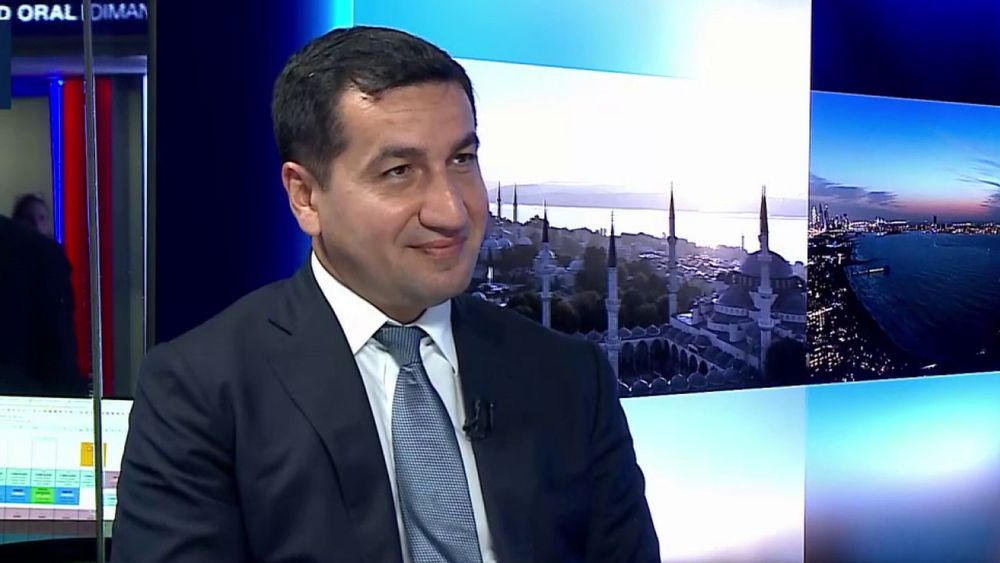
Foreign policy adviser to Azerbaijani President Hikmet Hajiyev in i24NEWS studio in Jaffa porti24NEWSForeign policy adviser to Azerbaijani President Hikmet Hajiyev in i24NEWS studio in Jaffa port

i24NEWS spoke with Hikmet Hajiyev, foreign policy advisor to the President of Azerbaijan on defense cooperation, Iran, and the Azerbaijani Jewish community.

In March of 2023, Azerbaijan became the first Shia Muslim country to open an embassy in Israel. On Wednesday Hikmet Hajiyev, the foreign policy advisor to Azerbaijani President Ilham Aliyev spoke to i24NEWS about the growing partnership between the two countries. 

“Azerbaijan and Jewish people have centuries old traditions of the bonds of friendship and partnership, and currently Israel and Azerbaijani have that cooperation in many spheres, developing dynamically- we have been making really great progress now that Israel’s embassy is also in Azerbaijan. What we see with the establishment of the embassy in Israel is that we are entering a new level of cooperation between the two countries,” Hajiyev said.

The bilateral cooperation has so far included realms of agriculture, education, and defense. Azerbaijan and Armenia have fought two wars over Nagorno-Karabakh region, internationally recognized as Azerbaijan, since the 1980s, unable to reach a lasting peace settlement despite mediation efforts by the European Union, United States and Russia. The foreign policy advisor spoke highly of Israel on defense collaboration in this context, “Defense cooperation with Israel, in particular the Israeli defense equipment, plays a crucial and important role [in our conflict] and we are thankful to Israel and the Israeli people. It is very much inscribed in the memory of Azerbaijani people.” This confirms speculations that Israeli Defense Minister Yoav Gallant’s visit to Azerbaijan in July included military agreements in addition to discussions about Azerbaijan’s neighboring country, Iran. 

“Holding strong ties and cooperation with neighboring countries is important” the foreign policy advisor said when discussing Azerbaijan-Iran relations. Hajiyev discussed that it is the country’s perspective to hold an ‘inclusive’ foreign policy, meaning a diplomatic friendship with Israel does not mean losing one with Iran. However, there have been reports of growing tensions between Iran and Azerbaijan since their opening of an embassy in Israel. 

On the warming ties between Turkey and Israel, the advisor said, “we would like our friends to be friends among themselves. Azerbaijan is glad to see a friendship and mutual understanding between Israel and Turkey and would be happy to further develop communication between the two countries, perhaps in a trilateral format.”

Hikmet Hajiyev also discussed with i24NEWS the Jewish community within Azerbaijan, “they are our brothers and sisters,” he said, and spoke about the positive ways the Azerbaijani Jewish community contributes to the country’s identity as a whole. During World War 2, Azerbaijan accepted many Jewish refugees escaping religious persecution in Europe. “The Jewish community is such a part of our society; we made sure to share our bread during difficult times.” 


Categories
Selected Articles

Baku Hails Benefits of Defense Cooperation with Israel


1694089069_7141654_1694088879_5762622ezg

Assistant to the President of Azerbaijan and Head of the Foreign Policy Affairs Department of the Presidential Administration, Hikmet Hajiyev, recently discussed the benefits of the defense cooperation with Israel.

Hajiyev’s remarks came during an interview with the Israeli I24 News TV channel on Wednesday.

“We are thankful to the State of Israel for defense cooperation. It is one of the signs of confidence and trust between our countries that we are cooperating in such a specific area,” Hajiyev said.

He added that strengthening national defense capability was crucial for Azerbaijan, which was subjected to military occupation by Armenia for decades and fought a war to liberate occupied territories.

“Defense cooperation with Israel, in particular the Israeli defense equipment, plays a crucial and important role and we are thankful to Israel and the Israeli people. It is very much inscribed in the memory of Azerbaijani people,” Hajiyev said.

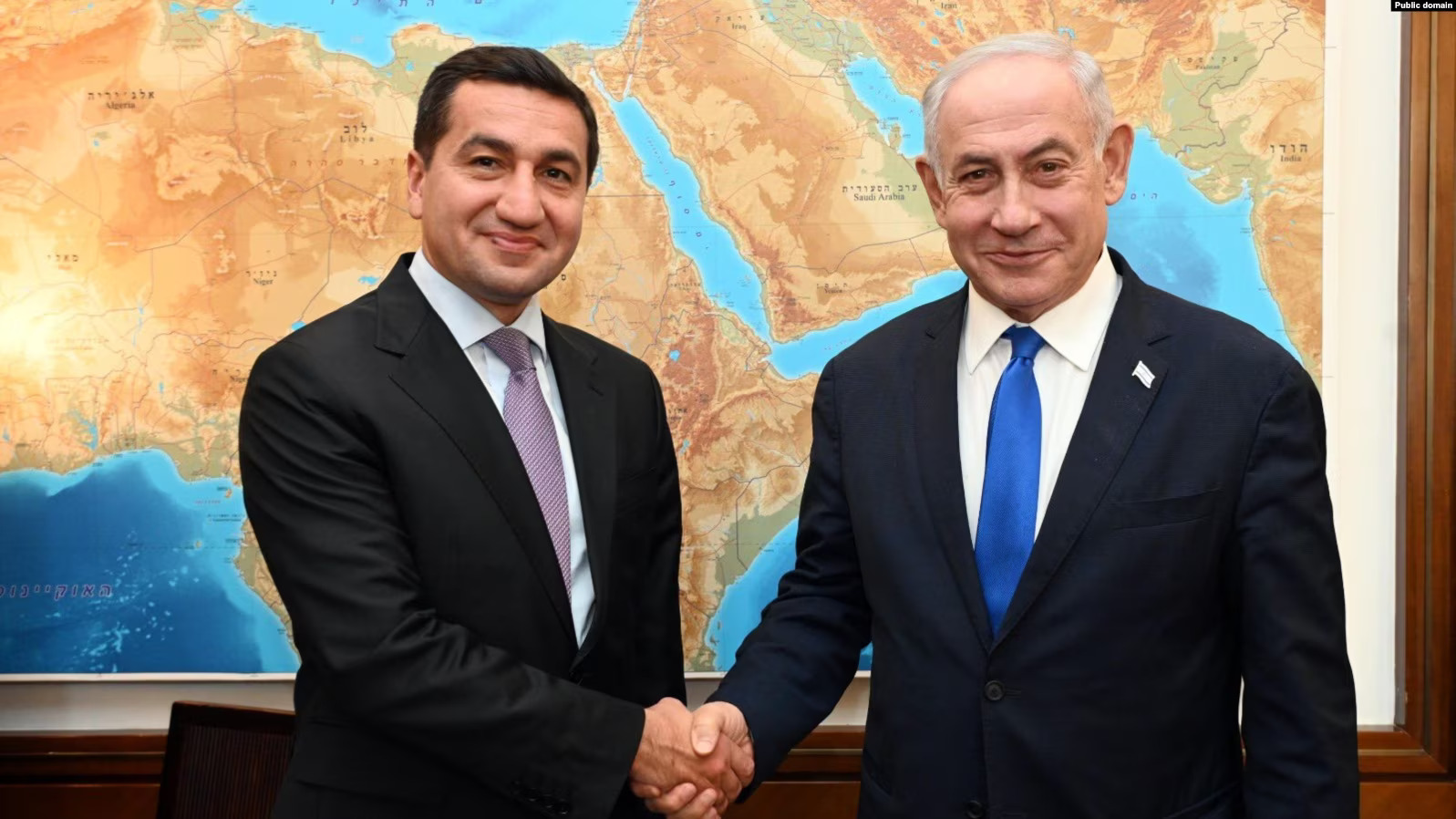
Hajiyev paid a short trip to Israel this week. He met with Prime Minister Benjamin Netanyahu, Foreign Ministry’s Director General Ronen Levi, and Tzachi Hanegbi, National Security Advisor and Head of the National Security Agency. During the meetings they discussed a “wide range of bilateral and regional issues”.

The defense cooperation between Azerbaijan and Israel was among the priority issues during Israeli President Isaac Herzog’s visit to Azerbaijan in May. Back then, President Aliyev said at a joint press briefing with President Herzog that Azerbaijan has had access to modern Israeli defense equipment for many years, which helped Azerbaijan modernize its defense capability and be able to protect its statehood and territorial integrity.

Azerbaijan has been one of the major importers of defence products from Israel for many years. In 2014-2018 and 2018-2022, according to data compiled by the Stockholm International Peace Research Institute (SIPRI), the second-largest importer of Israel-made arms was Azerbaijan. In 2016-2020, the purchases from Israel, one of the world’s top eight arms exporters, made up 69 percent of Azerbaijan’s arms imports.

In 2016, President Aliyev revealed that the defense equipment contracts between Azerbaijan and Israeli companies were close to $5 billion.

Among the major arms supplied by Israel are loitering munitions, reconnaissance unmanned aerial vehicles (UAVs), guided missiles, and ballistic missiles produced by Israel Aerospace Industries (IAI), Elbit, Rafael, and other Israeli defense companies.

Azerbaijani authorities confirmed the use of Israeli-made “suicide” drones in the 2020 war with Armenia in the Karabakh region, the internationally recognized territory of Azerbaijan.

Harop loitering munitions, known also as “kamikaze drones,” have reportedly had a great impact on giving the Azerbaijani army a clear edge over Armenia’s troops on the battlefields. Azerbaijani forces also deployed the Israeli-made LORA operational-tactical missile system during the war.

The Middle East Eye claimed that Armenia launched the Russian-made Iskander ballistic missiles at Azerbaijan’s capital Baku in the final days of the hostilities in November 2020. However, the Azerbaijani forces intercepted the missile with a Barak-8 air defense system purchased from IAI.

Meanwhile, in 2021, Israeli defense company Meteor Aerospace and Azerbaijan’s Caspian Ship Building Company established a joint venture, known as Caspian Meteor. Its product portfolio reportedly features hi-tech defense solutions to meet the needs of the Azerbaijani military.

The defense cooperation between Azerbaijan and Israel also enables countering the threats coming from Iran – the southern neighbor of Azerbaijan and Israel’s arch-rival, who has been seen intensifying its bellicose rhetoric against Azerbaijan following the opening of the Azerbaijani embassy in Israel on March 29, 2023.


Categories
Selected Articles

What the West Still Gets Wrong About Russia’s Military


RTSIHW6M.jpg?itok=b9lZH7pu

In the spring of 2022, as the West watched Russian President Vladimir Putin’s invasion of Ukraine unfold, one of the greatest surprises was what it revealed about Russian military strength. When the assault began, many Western leaders and analysts assumed that Ukraine would be quickly overpowered by Russia’s vast army, powerful air force, and deep reserves of major weaponry. Instead, Russia’s ground forces proved to be disorganized, poorly trained, and lacking crucial supply lines, while Russian planes failed to gain control of Ukrainian airspace. It took weeks for the West to fully recognize these weaknesses and help Ukraine exploit them.

In recent months, there has been a similar misreading. In the weeks after Ukraine’s slow counteroffensive began in June, many commentators dwelled on the strength and depth of Russian defenses. Some expressed pessimism about Ukraine’s ability to break through them at all; others warned that Moscow could order a second mobilization, bringing hundreds of thousands of new troops into combat. Yet by late August, Ukraine was making solid gains, with Biden administration officials acknowledging “notable” progress, including against Russia’s second line of defenses.

This pattern is not new. For decades, Western analysts and policymakers have consistently overrated Moscow’s military strength. In part, this has been the result of a lack of reliable information. Although Russia (and the Soviet Union before it) has fought in many wars, there have been few examples of Moscow facing off against resolute and well-armed enemies, and Russian propaganda and repression by the Kremlin have effectively limited independent analysis inside Russia. But another factor may be even more important: in assessing Russia’s strength, U.S. and other Western experts have tended to focus on quantitative assessments of weapons systems—tanks, planes, and missiles—and raw manpower, rather than on the qualitative and psychological characteristics that often determine a military’s performance on the battlefield.

In fact, on many qualitative measures, Russian forces have been woefully lacking. Moscow lacks the kind of highly trained officer corps that has proved essential to the world’s best armies. Relying in part on conscription that is imposed unequally across the population, it suffers from low troop morale. Many of Russia’s best young minds have sought to avoid service altogether or have fled the country. And because of Russia’s autocratic system and pervasive corruption, it has proved difficult to bring the kinds of innovation, adaptability, and versatility that tend to produce the best outcomes on the battlefield.

Paradoxically, the West is acutely aware of qualitative issues when assessing other militaries. Take the cases of Kuwait, Qatar, and Saudi Arabia. Although their per capita defense outlays are among the highest in the world, few analysts would rank the effectiveness of their armed forces at a similar level: it has long been demonstrated that they lack sufficient training, morale, discipline, and experience in operating under demanding and adverse conditions. Yet because of Russia’s historic reputation as a superpower, analysts have tended to view its armed forces differently, concentrating on material strength while neglecting crucial intangibles such as the quality and experience of its troops—and, more specifically, the way that Russia has built up its manpower. As a result, the United States and its allies may be foreclosing more effective policy responses to the war or even inhibiting Ukraine’s warfighting strategy.

SUPERPOWER OR SUPER HYPE?

The overestimation of Moscow’s military goes back at least to the mid-twentieth century. Following World War II, experts often overrated Soviet forces, with major consequences for U.S. national security policy and, particularly, defense spending. Perhaps the best known example was the so-called missile gap controversy of the late 1950s and early 1960s. Along with influential Cold War commentators such as Joseph Alsop, then Senator John F. Kennedy argued that the Eisenhower administration had become complacent about keeping up with Russian missile programs. During Kennedy’s presidency, his military advisers, fueled by that debate, seriously overestimated the quantity and quality of Soviet intercontinental ballistic missiles and advocated for increased defense spending, leading the Soviet leadership to conclude that Kennedy was a dangerous extremist. Much the same happened two decades later, in the early years of the Reagan administration: inaccurate assessments of Soviet military advances by the U.S. intelligence community pushed Washington to reevaluate its defense policies and increase military outlays.

Nor did this pattern end after the Cold War. Most Western security experts fully appreciated the decline of the Russian military after the failure of the Soviet war in Afghanistan and the collapse of the Soviet Union. But Moscow’s defense reforms, especially once the armed forces were rebooted in 2008, were misjudged by most Western military analysts. Many concluded that Russia’s military had developed powerful new weapons, improved training, and become an effective fighting force that could pose a serious challenge to the world’s top armies.

Those miscalculations, combined with other assessments over the past decade, led directly to the West’s overvaluation of the Russian armed forces’ likelihood of success in Ukraine. By 2022, most analysts believed that by possessing one of the largest standing armies in the world and having equipped it with a variety of sophisticated weapons systems, Russia would inevitably have a natural advantage over Ukraine’s much smaller defense forces.

Western analysts have been too ready to take information from Russia at face value.

Four reasons go a long way to explaining these misjudgments. First, Western military observers have tended to rest their assumptions on flawed evidence. For instance, many seemed to interpret Russia’s annexation of Crimea in 2014 and its intervention in Syria in 2015 as demonstrations of the success of its post-2008 defense reforms. In Crimea, however, there was almost no fighting involved and some of the local population was pro-Russian; and in Syria, Russia’s air force could carry out major bombing campaigns in the virtual absence of air defenses. In other words, these conflicts said little about how Russian forces would perform in a conventional land war against a resolute and well-armed enemy. It was thus surprising to many of these same analysts that Putin’s army was unable to take Kyiv in 48 hours in 2022. They had not accounted for the fact that Russia now faced the very different situation of a city of three million people spread out over 330 square miles and split by a large river with tributaries, and whose population was overwhelmingly hostile.

Second, Western analysts have been too ready to take information coming out of Russia at face value. For example, Russian reports about its large-scale military exercises convinced many security experts that Moscow’s army had vastly improved its logistics, communications systems, air support of ground operations, and, more generally, joint operations between different branches of the armed forces. Skepticism should have been warranted: Russian defense analysts could hardly be expected to admit that their country’s military reform was a failure or that corruption was a pervasive cancer on the system of armaments acquisition. Yet when Putin began massing troops on Ukraine’s border in late 2021, many Western analysts feared an overwhelming onslaught. A third problem relates to the nature of contacts between Russian military and security experts and their colleagues in the United States and NATO in the years before the war. These Russian experts, who cultivated ties to the West, tended to be urbane, westernized, multilingual, and smart, but they also had close ties to the Kremlin and supported official Russian narratives. Meanwhile, throughout Putin’s 23-year reign, his regime has imposed decades-long prison sentences on local defense analysts who have said things or published articles objectionable to the censors even if they enjoyed no access to classified materials.

Finally, but no less important, U.S. military experts have long given too much focus to weapons systems and new technology in Putin’s Russia. Since 2010, the Russian Ministry of Defense has organized annual large-scale exercises with tens of thousands of soldiers, featuring interservice combined-arms maneuvers, showing off the military’s new weapons and equipment, from high-tech personal communications systems to the Zircon scramjet-powered antiship hypersonic cruise missile. Observing these staged events, many Western observers concluded that Russia was building a modern, professional, and effective army. Thus, when Russian forces invaded Ukraine, many assumed that they would quickly subdue the second-largest country in Europe. Few paid close attention to the actual composition, training, and preparedness of Russian troops themselves.

MOTLEY CREW

The inherent weaknesses in Russia’s armed forces have much to do with the way that its manpower is organized. In most volunteer-based armies, joining the military generally provides an avenue of social mobility, secure livelihood, and lifelong benefits. Successful recruitment is also highly dependent on the state of the general economy: booming markets tend to make it harder for military recruiters to attract new soldiers. By contrast, conscription is impervious to the vagaries of the economy but, especially in dictatorships such as Russia, is rarely implemented fairly. Sons of the political and business elites and even of upper-middle-class families normally manage to avoid mandatory military service.

The contemporary Russian army relies on a hybrid system of voluntary contractors (kontraktniki) and conscripted soldiers. Although the Russian government would have preferred long ago to transition to an all-volunteer force, which would offer a professional force made up of soldiers who actually wanted to serve, it cannot afford to use volunteers to reach its target of 900,000 to 1,000,000 military professionals—including officers, noncommissioned officers (NCOs), and soldiers. Since Moscow’s unprovoked invasion of Ukraine began in February 2022, it has needed to step up both the recruitment of paid volunteers and the conscription of draft-age men to satisfy its manpower requirements.

Lacking a critical mass of professionally trained NCOs, Russia is unable to fight effectively.

In the late 2010s, following military reforms, the Russian government set out to hire half a million contract soldiers, which were to be complemented by about 250,000 conscripts. But that number of contractors could not be reached, because salaries, while initially competitive, were quickly eroded by inflation. As economic opportunities improved elsewhere in the Russian economy, military recruiters were pursuing not only fewer but also increasingly less desirable soldiers. By March 2020 the Russian military was made up of approximately 405,000 kontraktniki and 225,000 conscripted soldiers—many of whom were very poorly trained. These figures were unlikely to have significantly changed before the invasion.

The hybrid structure also contributes to one of the enduring weaknesses of the Russian armed forces: the dearth of professional noncommissioned officers. In the world’s best armies, NCOs often serve as the backbone and are responsible for training the troops, operating sophisticated weapons systems, maintaining morale and discipline, and providing a vital link between officers and soldiers. In Russia’s case, however, there are relatively few professional, well-trained NCOs, for which Russia tends to use contractors. Moreover, Russia’s senior officers tend to refuse to delegate authority, robbing their younger colleagues of the chances to develop initiative and leadership qualities. As became clear after the invasion of Ukraine began, without a critical mass of properly trained NCOs Russia was unable to fight effectively. Its soldiers lacked guidance and discipline, and the refusal to delegate authority meant that high-ranking officers—including generals—were actively leading troops to the front, suffering numerous casualties. At least nine Russian generals have been killed in the war so far, an extraordinary number in any modern conflict.

Putin and his generals seem to recognize that the manpower requirements for the current, slow-grinding war of attrition they are fighting in Ukraine can be satisfied only through radical measures. One such step was Putin’s decision in September 2022 to mobilize 300,000 conscripts, many of whom were sent to the front with little training. The Kremlin has also been recruiting soldiers from Kyrgyzstan and other neighboring countries. And it has expanded the age limit for men eligible for the draft. One wonders if these measures will offset the tens of thousands of casualties and the loss of hundreds of thousands of military-age men—including many of the country’s best educated—who have fled since the invasion began. And these constraints come on top of Russia’s already unfavorable demographic trends.

RURAL, POOR, AND OLD

In theory, the volunteer portion of Russia’s armed forces should be strong. As in many other armies, volunteers serve in the military either because they are patriotic and enjoy the military discipline and lifestyle or because they come from socioeconomically disadvantaged groups for whom military service holds benefits that might not otherwise be available. In Russia’s case, however, the latter group has predominated, with the result that participation in the armed forces is highly uneven across the country and that men from rural areas and remote regions are vastly overrepresented. Although there are few signs of the ongoing war in Moscow and St. Petersburg, in faraway and poorer regions of the country the war is an ever-present reality, and it is not uncommon for men in advanced middle age to sign up. As a consequence, a growing portion of the Russian army is well beyond typical fighting age.

Soldiers’ pay has also distorted the composition of the army. To maintain recruitment since the war in Ukraine began, the government has made participation in the armed forces far more lucrative than it was before the invasion. By early 2023, the state was offering up to $2,600 per month for those willing to enlist, a salary that is several times over what ordinary people earn in small-town Russia. These wages are complemented by comprehensive social assistance including housing subsidies, guaranteed placement at universities, and lifelong veteran benefits. In July 2023 Dmitry Medvedev, the deputy chairman of Russia’s Security Council, announced that 185,000 new recruits had joined the military, although it was unclear if this number included conscripts as well as volunteers.

Meanwhile, Russia has begun a recruitment campaign in Kazakhstan, home to about three million ethnic Russians. But Kazakh leaders have not endorsed Putin’s war, and the country’s laws—like those of other Central Asian republics—forbid its citizens from joining foreign armies. Furthermore, given Kazakhstan’s oil wealth and dynamic economy, it is questionable how many Kazakh citizens would put their lives on the line even for a one-off payment of 495,000 rubles ($5,300) and a monthly salary of at least 190,000 rubles ($2,000). Russian recruiters have targeted men from other Central Asian republics as well, for whom these service contracts are likely to be more enticing. In September 2022, Russia’s rubber-stamp legislature, the Duma, also made it easier for people who serve in the army to obtain Russian citizenship, shortening the service requirement from three years to one year.

It also remains unclear how effective mercenaries have been to the Russian campaign in Ukraine. Following the death of its leader, Yevgeny Prigozhin, the Wagner paramilitary company appears to be no longer a factor in Ukraine, although it remains highly active in Africa, thus aggravating the Russian military’s manpower challenges in Ukraine. The state has now moved to bring other private armies, which have been technically illegal in Russia, under its control. There are several of them, all with close ties to the Kremlin. They ostensibly function as security companies for oligarchs’ oil and gas business empires, but most of them have been fighting in Ukraine. Although mercenaries might be more motivated and effective soldiers, as the Wagner example has shown, they are far less likely to be subordinate to the official military command.

EASY COME, EASY GO

But undisciplined mercenaries and aging volunteers are only part of Russia’s challenge. A significant portion of its current manpower—about one-third—comes from conscripts. New legislation now prohibits military-age men from leaving the country. Draft notices are now sent out electronically and recipients must report to their local recruitment office within 20 days or face harsh penalties (including suspension of one’s driver’s license, ineligibility for bank loans, and a ban on registering real estate). At the same time, eligibility for conscription has been expanded from men between 18 and 27 years of age to men between 18 and 30 years of age, and the Duma has extended the maximum age at which reservists can be mobilized to 55 in the case of junior officers and 70 for the most senior officers.

According to official Russian accounts, these measures have produced the desired results. Thus, the June 2023 call-up supposedly yielded 140,000 conscripts, and volunteers have signed 117,000 new contracts in the first six months of the year. But some analysts, including Russian experts in exile, have estimated that the real numbers are likely far lower, perhaps even less than half of these figures. One indication of the government’s desperation for manpower has been its large-scale use of prison inmates for combat duty—an approach that dates to the Stalin era. In September 2022, Putin opened the way for convicts to join the armed forces in return for commuting their sentences and other potential benefits. According to some estimates, at least 40,000 convicts joined the military in the second half of 2022 alone. Wagner has stated that of the 49,000 former inmates it employed in Ukraine, 20 percent had died on the battlefield. By all accounts, convicts are treated even more severely than regular soldiers, but those who fulfilled their contractual obligations have been allowed to leave as free men.

Another factor that has helped obscure Russia’s actual military strength has been the Kremlin’s apparent lack of concern for casualties. Soviet and Russian political elites have traditionally displayed high tolerance of casualties. Since September 2022, when Putin’s government announced the unrealistically low figure of 5,937 Russian combat deaths, the Kremlin has offered no new data on Russian casualties. Owing to the dearth and unreliability of Russian figures, several Western, Ukrainian, and independent Russian sources have provided their own numbers, which are, by definition, speculative. U.S. officials estimated Russian war dead at 50,000 in May 2023, while the Center for Strategic and International Studies calculated 60,000–70,000 in the first year of war alone. An independent Russian outlet, Mediazona, released what may be the most rigorous and reliable estimate—based largely on inheritance data—and its figures are remarkably close to those of the U.S. government. Mediazona found that approximately 47,000 Russian men had died in Ukraine and an additional 78,000 were wounded so severely that they would be unable to return to combat. In other words, Russia has thus far lost some 125,000 soldiers—nearly equal to the size of its original invading force, and far more men than it has lost in all its other wars since World War II.

Russia has lost far more men in Ukraine than in all its other wars since World War II.

The Russian military’s lackadaisical attitude toward casualties is demonstrated in its general neglect of combat medicine. In the West, major advances have been made in bringing together wounded soldiers and critical care quickly—the so-called golden hour. But in the case of Russia, army doctors have been woefully underequipped and are often able to offer little more than first aid. This helps account for the dramatically lower survival rate of Russian casualties: where Ukraine has a wounded-to-killed ratio of seven to one, for Russia it remains just three to one. Although Russian psychologists have estimated that more than 100,000 veterans will need professional help to cope with mental health disorders, the country maintains just ten veterans’ hospitals, of which only one, with 32 beds, focuses on psychological rehabilitation.

Likely just as damaging to the military’s overall morale is the unequal demographics of who is getting killed. A wildly disproportionate number of those dying have come from the country’s ethnic minorities and rural populations. According to independent news outlets, for every Muscovite who dies fighting this war, more than 87 die who come from Dagestan, Russia’s southernmost republic; 275 who come from Buryatia, a republic in the Russian Far East; and 350 who come from Tuva, home to an Asian minority and Russia’s poorest region. The Kremlin is well aware that its manpower reserves are far greater than Ukraine’s and that dead soldiers can quickly be replaced. As Kusti Salm, Estonia’s deputy defense minister, has put it, “In Russia the life of a soldier is worth nothing.… All lost soldiers can be replaced, and the number of losses will not shift the public opinion against the war.”

RUSSIAN WEAKNESS, WESTERN OPPORTUNITY

The Russian military’s performance in Ukraine has not met the expectations of Western analysts, but those expectations were not based on realistic assumptions. Those who assessed the Russian military holistically, however, would hardly have been shocked at the low morale, poor training,  and general sloppiness of its soldiers (evidenced even in such seemingly minor and yet consequential lapses as underinflating their military vehicles’ tires). Underlying these specific issues are the deep-seated despotism that underscores Russian military politics and the pervasive corruption that has sapped the strength of its armed forces.

The enduring misperception among Western analysts and officials of Russia’s military strength has serious consequences. In the early phases of the current war, it may well have tempered the support in Western capitals that Ukraine has so desperately needed. Uncritical acceptance of reports and data emanating from Moscow encouraged many to believe in the inevitability of Russia’s eventual victory. Yet the effectiveness of Russia’s troops is unlikely to improve as the war grinds on. Putin’s upcoming meeting with Kim Jong Un to discuss the possibility of North Korea supplying Moscow with arms may be a sign that the Kremlin is not optimistic about its ability to arm its soldiers with the weapons they need. By recognizing and ignoring Russian propaganda and instead studying and identifying the actual vulnerabilities of Russia’s military, the United States and its allies may be able to develop new and better approaches that could allow them to help Ukraine prevail and to hasten the end of the war, just as the United States did with the Soviets’ war in Afghanistan.

Loading…


Categories
Selected Articles

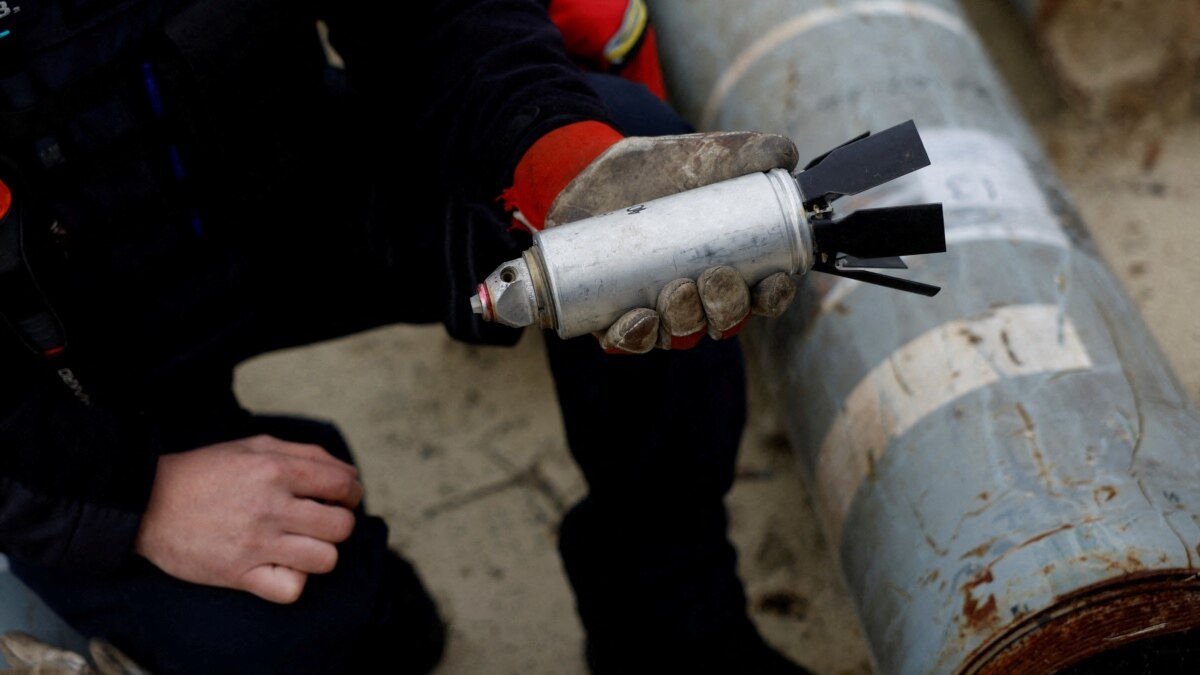
Ukraine War Spurs Jump In Use Of Cluster Munitions, Report Shows – Radio Free Europe / Radio Liberty


01000000-0aff-0242-e1bd-08db8041dc62_cx0

  Radio Free Europe / Radio Liberty


Categories
Selected Articles

Iran experts may carry out humanitarian demining in Armenia – NEWS.am


Iran experts may carry out humanitarian demining in Armenia  NEWS.am

Categories
Selected Articles

Let down by Moscow, Armenia looks to the West – Emerging Europe


bigstock-yerevan-armenia-october-4730343

  Emerging Europe


Categories
Selected Articles

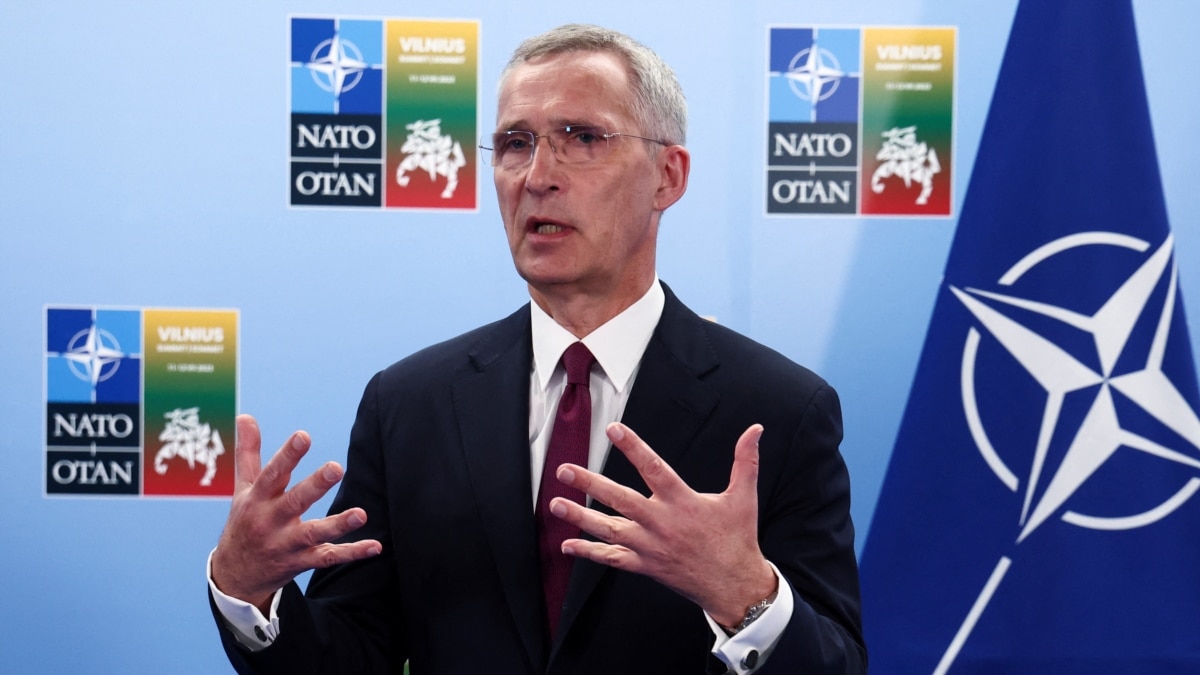
NATO: No Sign Drone Debris In Romania Was Result Of ‘Intentional Attack By Russia’ – Radio Free Europe / Radio Liberty


01000000-0aff-0242-823b-08db81ef6f21_w12

  Radio Free Europe / Radio Liberty


Categories
Selected Articles

Germany Will Keep Russian Oil Giant Rosneft Subsidiaries Under Its Control – Radio Free Europe / Radio Liberty


b2956f18-eeeb-455c-a3e6-40d5c19d4257_cx0

  Radio Free Europe / Radio Liberty