Categories
Selected Articles

US, Armenia hold military drills as Russia’s influence weakens in Caucasus


GettyImages-1528640216.jpg?h=a5ae579a&it

WASHINGTON — The United States and Armenia kicked off combined military exercises this week designed to train Armenian troops to participate in international peacekeeping missions, Armenia’s Defense Ministry said.

The exercise, dubbed “Eagle Partner,” includes 85 US and 175 Armenian personnel and is being held over 10 days at training facilities outside the capital Yerevan.

Why it matters: Tensions between Armenia and neighboring Azerbaijan are soaring. Both sides have accused each other of building up troops near the disputed territory of Karabakh.

The US military training mission puts Washington’s finger on the scale as it seeks to blunt Russia’s inroads in the Caucasus and amid a wider effort for rapprochement with Turkey.

Armenia has relied on a contingent of Russian peacekeeping troops since the 2020 Nagorno-Karabakh war, but Prime Minister Nikol Pashinyan has accused them of failing both to protect his side against Azerbaijan’s forces and to alleviate Baku’s blockade of Nagorno-Karabakh.

Earlier in September, Pashinyan went so far as to say his government had made a “strategic mistake” to rely on Russia for defense ties, citing Moscow’s own need for munitions amid its war in Ukraine.

Russian reaction: Moscow summoned Armenia’s ambassador Vagharshak Harutyunyan in protest on Friday. 

On Tuesday, President Vladimir Putin sought to downplay the rift by emphasizing Russia’s longstanding ties with Armenia. “We have no problems with Prime Minister Pashinyan, as we communicate regularly,” he said.

Russia has remained Armenia’s largest trading partner since the disintegration of the Soviet Union in 1991.

Wider context: Last week, Armenia held elections in the disputed territory in a move condemned by Azerbaijan and Turkey. The United States and the European Union said they did not recognize the legitimacy of the elections.

Coinciding with the military exercises, on Sunday the Biden administration reiterated its call on Azerbaijan to open two corridors to allow humanitarian supplies to reach Nagorno-Karabakh, which has been under a crippling blockade since December.

“The use of force to resolve disputes is unacceptable,” the State Department said in a press release.

“The United States further reaffirms the only way forward is peace, dialogue, and the normalization of relations between Armenia and Azerbaijan on the basis of mutual respect for each other’s sovereignty and territorial integrity,” it read.

Armenian authorities in Karabakh announced on Saturday that one of the roads, the Lachin corridor, would be opened to allow supplies to flow from Baku, a decision confirmed by Azerbaijan.

Baku’s armed forces chief of staff visited Ankara to meet with Turkey’s new defense chief Yasar Guler on Monday.

Know more: Read Amberin Zaman’s reporting from southeastern Armenia as fears began mounting in January amid the blockade.
Categories
Selected Articles

Karabakh Separatist Leaders Say Deal Reached With Azerbaijan On Transport Corridors


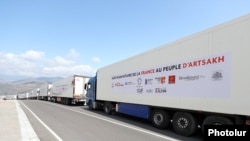
A French humanitarian aid convoy is stuck at the entrance to the Lachin corridor last month.

A French humanitarian aid convoy is stuck at the entrance to the Lachin corridor last month.

Armenian-backed separatist leaders in Nagorno-Karabakh have said Azerbaijani authorities agreed to allow aid deliveries to the breakaway region through the Lachin Corridor from Armenian territory in an operation to be controlled by Russian peacekeeping troops and the Red Cross.

In return, Karabakh authorities agreed on September 9 to also allow Russian-provided aid to be delivered directly from Baku-controlled territory via the Agdam road, opening a transport link from Azerbaijan proper for the first time since Karabakh broke away from Baku in a war that ended three decades ago.

Azerbaijani presidential aide Hikmat Haciyev confirmed to Reuters that the deal had been struck, adding that Azerbaijani checkpoints on the Lachin route would remain in place.

Haciyev, however, sought to clarify later on September 9 that “it is a separate deal and shouldn’t be confused with the suggestion on simultaneous opening of Agdam-Khankandi [Stepanakurt] and Lachin-Khankandi roads for [International Committee of the Red Cross] delivery.”

Food aid “by Russian Red Cross will go along the Agdam-Askaran road towards Khankandi in coordination with Azerbaijani Red Crescent,” Haciyev wrote on X, formerly known as Twitter.

Baku has pressed for its Agdam route to be used for aid deliveries instead of the blocked Lachin Corridor from Armenian territory. Karabakh officials, however, have claimed it is an effort by Baku to control aid shipments and reestablish authority of the region away from ethnic Armenian leaders.

In recent comments, Haciyev said use of the road was an opportunity for the ethnic Armenians of Karabakh to “establish communication with other parts of Azerbaijan.”

Western leadders have expressed concerns about the blocking of the Lachin route over recent months, a move that has left ethnic Armenians of Nagorno-Karabakh in desperate need of food, energy supplies, and other basic needs.

Baku denies it is blockading the region and offered the alternative Agdam route for aid transport.

Earlier on September 9, EU foreign policy chief Joseph Borrell said on the social-media platform X that, in a call with Azerbaijani Foreign Minister Ceyhun Bayramov, he “reiterated that the Lachin Corridor must be re-opened now. Other roads, such as Agdam, can be opened as part of the solution, but not an alternative.”

The announcement came hours after Armenian Prime Minister Nikol Pashinian, in calls with foreign leaders, offered to hold “urgent” talks with Azerbaijani President Ilham Aliyev to prevent another upsurge in violence in the Nagorno-Karabakh conflict zone and along the two countries’ borders.

The offer came as both sides traded accusations of “disinformation” and “provocations” in recent days and as Azerbaijani officials on September 9 accused Armenian forces of firing on their troops overnight, a claim Yerevan rejected.

Baku said the most recent firefight occurred in the north of Naxcivan, an exclave of Azerbaijan that borders Armenia, Turkey, and Iran. It did not say if there had been any casualties.

Persistent tensions between Yerevan and Baku have spiked in recent weeks, mainly over the status of Nagorno-Karabakh, a mountainous region controlled by ethnic Armenians who have accused Azerbaijan of blockading the breakaway region.

The Armenian government has also accused Azerbaijan of massing troops along the Armenian-Azerbaijani border and the Karabakh “line of contact” in possible preparation for another large-scale military assault.

Pashinian made his offer of new talks with Aliyev in separate phone calls with French President Emmanuel Macron, German Chancellor Olaf Scholz, U.S. Secretary of State Antony Blinken, and Iranian President Ebrahim Raisi, his office said.

Pashinian “expressed readiness to hold urgent discussions with the president of Azerbaijan aimed at reducing the tensions,” a government statement on his call with Macron, which reportedly took place late on September 8.

The statement said Pashinian also reaffirmed his recognition of Azerbaijan’s territorial integrity made during October 2022 and May 2023 meetings with Aliyev attended by Macron.

A foreign-policy adviser to Aliyev told Reuters that Azerbaijan had not received a renewed offer of talks from Yerevan.

Meanwhile, three senior Azerbaijani officials on September 8 met with Baku-based foreign diplomats to accuse Armenia of stepping up “military provocations,” “imitating” peace talks, and continuing to foment “separatism” in Karabakh.

The Armenian Foreign Ministry denied the accusations.

With tensions rising, Armenia announced on September 6 that it would host a joint army exercise with the United States next week.

The Armenian Defense Ministry said the purpose of the September 11-20 Eagle Partner 2023 exercise was to prepare its forces to take part in international peacekeeping missions.

A U.S. military spokesperson said 85 U.S. soldiers and 175 Armenians would take part, according to Reuters.

That announcement came following remarks by Pashinian stating that his country’s policy of relying solely on Russia to guarantee its security was a strategic mistake, in light of what he said was Moscow’s efforts to wind down its role in the wider region.

Moscow responded angrily to the comments, summoning the Armenian ambassador for a protest over what it termed “unfriendly steps” taken by Yerevan.

Meanwhile on September 9, separatist lawmakers in Nagorno-Karabakh voted to elect Samvel Shahramanian, 44, as the new president of the region, an action condemned by Baku.


Categories
Selected Articles

We don’t want to join Russia, breakaway Georgian region warns


GettyImages-82307104.jpg

Georgia’s separatist-held region of Abkhazia has firmly rejected suggestions it could be annexed by Russia, insisting that its autonomy from Moscow is not up for discussion.

In a statement issued by the unrecognized South Caucasus state’s foreign ministry on Thursday, officials said that while it is “a steadfast ally of the Russian Federation,” its self-proclaimed statehood “is not a subject for debate.”

The comments come shortly after the deputy chairman of the Kremlin’s Security Council, former president Dmitry Medvedev, hinted that Moscow could seek to absorb the two Russian-backed breakaway regions of neighboring Georgia — Abkhazia and South Ossetia.

“The idea of joining Russia is still popular. And it may well be implemented, if there are good reasons for it,” said Medvedev, who has been one of the most enthusiastic cheerleaders of Moscow’s war in Ukraine.

However, despite the presence of thousands of Moscow’s troops deployed to Abkhazia in the wake of a series of wars with Georgian government forces — most recently in 2008 — officials in the capital said the suggestion amounted to nothing more than a sign of “intensifying geopolitical contest.”

Meanwhile, the secretary of Abkhazia’s security council, Sergey Shamba, went further, pointing out that there “are no political entities” in the region pushing for integration with Russia.

“We haven’t received any formal requests to join the Russian Federation, and I’m yet to identify any political faction within Abkhazia that envisions such a relationship dynamic with Russia,” he went on.

Home to around a quarter of a million people and with its own distinct language, Abkhazia has existed as a de facto independent state from Georgia since a brutal civil war which followed the fall of the Soviet Union in the early 1990s. Hundreds of thousands of ethnic Georgians were displaced from the region, which borders Russia, as part of a campaign by the separatists, who were frequently backed by elements of the Russian armed forces.


Categories
Selected Articles

UN urges Armenia to respect territorial integrity of Azerbaijan – SecGen spokesperson


united_nations_oon_logo_190820_2.jpg

BAKU, Azerbaijan, September 12. We would like
to recall the UN Security Council resolutions, affirming the
sovereignty and territorial integrity of Azerbaijan, and call for
their full respect, Stéphane Dujarric, Spokesperson for the
Secretary-General, said at a briefing, Trend reports.

He has made the remark, while commenting upon the so-called
“presidential elections” held by Armenian separatists in
Azerbaijan’s Karabakh on September 9, 2023.

“The Secretary General urges to intensify efforts towards the
long term normalization of relations for security and peace of the
region,” he added.

Earlier, the Azerbaijani Foreign Ministry called on the
international community to strongly condemn the so-called
“elections”.

As noted in the statement of the Azerbaijani Foreign Ministry, the
holding of the so-called “elections” once again clearly shows that
Armenia and the puppet regime created by it, which has taken steps
to preserve the status quo and continue its occupation policy, are
not really interested in the peace process, on the contrary, have
taken the path of provocations and escalating the situation.


Categories
Selected Articles

US continues to work to resolve situation between Azerbaijan and Armenia – State Department


The US continues to work to resolve the situation between Azerbaijan and Armenia, US State Department Spokesman Matthew Miller said during a briefing on September 12, News.az reports.

“Secretary has been personally involved in this with multiple conversations just in the past week,” he said.

Miller went on to add that as a longer-term matter, the two countries need to come to an ultimate agreement.

He also touched upon the opening of the Aghdam-Khankendi route, through which food products from Russia passed today.


Categories
Selected Articles

Playing victim, Armenians try to internationalize Garabagh


The separatist in Garabagh does not accept either the food
convoy sent by the Russian Red Crescent or the convoy sent by the
Azerbaijani Red Crescent Society. Besides, according to the
received information, an ICRC truck is standing ready in the
territory of Armenia near the Lachin Border Checkpoint. The
Azerbaijani side noted the TIR in the Armenian territory can cross
the border at the same time when convoys in Aghdam cross the
Russian checkpoint in Khankendi. However, the separatist has
refused Azerbaijan’s proposal.

Thus, the completely inadequate behavior of the Garabagh
separatists raises suspicions. On the one hand, they make a fuss
about the “unbearable human crisis” in Garabagh, on the other hand,
they deliberately refuse all the humanitarian convoys.

To clarify the issue, Azernews asked the
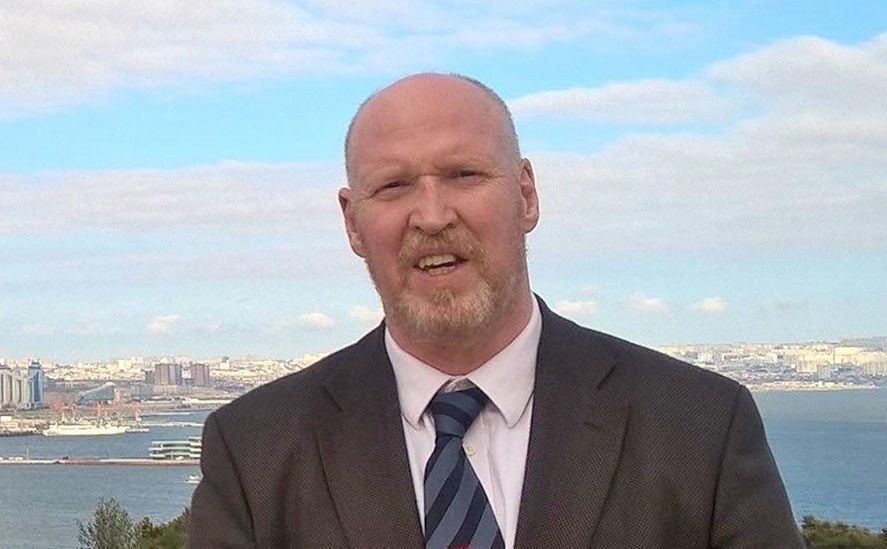
opinion of Irish political analyst and historian Patrick Walsh. He
noted since the defeat in the Second Garabagh War, Armenians have
tried to internationalize the Garabagh issue by playing the victim
cards. They tried to convince the West of genocide through the
blockades, but Azerbaijan destroyed this myth by offering an
alternative route.

“After the 2020 war, the Armenians in defeat switched to victim
mode. They decided to resist the sovereignty Azerbaijan was able to
exert over the formerly occupied territories by internationalizing
the Garabagh issue. The attempt involved the selling of a blockade
and genocide narrative to the West as Azerbaijan imposed legitimate
controls over its borders. This campaign was frustrated when
Azerbaijan offered alternative routes for supply to the Armenian
minority in Garabagh other than the Lachin-Khankendi road, which
Armenia had attempted to use to undermine Azerbaijani control over
its sovereign territory. The “blockade” has been exposed as
actually an Armenian imposition on its own population and part of a
campaign and it therefore in the interest of the illegal regime to
prolong the show by refusing legitimate aid,” Walsh noted.

As for the role of The International Committee of the Red Cross,
he pointed out that the organization turned into a political tool.
He emphasized that it is biased and could serve the Armenian
propaganda as well as playing into the hands of pro-Armenian
Western forces.

“The Red Cross has been mired in controversy lately. Far from
being an independent humanitarian organisation it works to a
political agenda and acts like a business in many respects. It
reflects Western biases and prejudices regarding Christians and
Muslims. It is no surprise therefore that the Red Cross can be an
instrument or willing tool of Armenian propaganda,” he said.

Patrick Walsh pointed out that he does not know the content of
the load on the TIR, but he ensures that to din the “blockade” into
the West. However, allowing the convoys through legitimate channels
contradicts the “blockade”.

“I do not know what the TIR contains. However, the Armenians are
intent on preserving the impression of a “blockade” to make their
propaganda effective in the West. Because of this they are
determined to resist the supply of aid through legitimate channels
because it breaks the self-imposed “blockade” intrinsic to the
propaganda. Their campaign will be frustrated however by supplies
passing through border checks, something that seems to be now
underway. What the Armenians did not bargain for is that any
campaign they launched aimed at provoking Western support would be
subverted by Moscow,” he said.

Qabil Ashirov is AzerNews’ staff journalist, follow him on
Twitter: @g_Ashirov

Follow us on Twitter @AzerNewsAz


Categories
Selected Articles

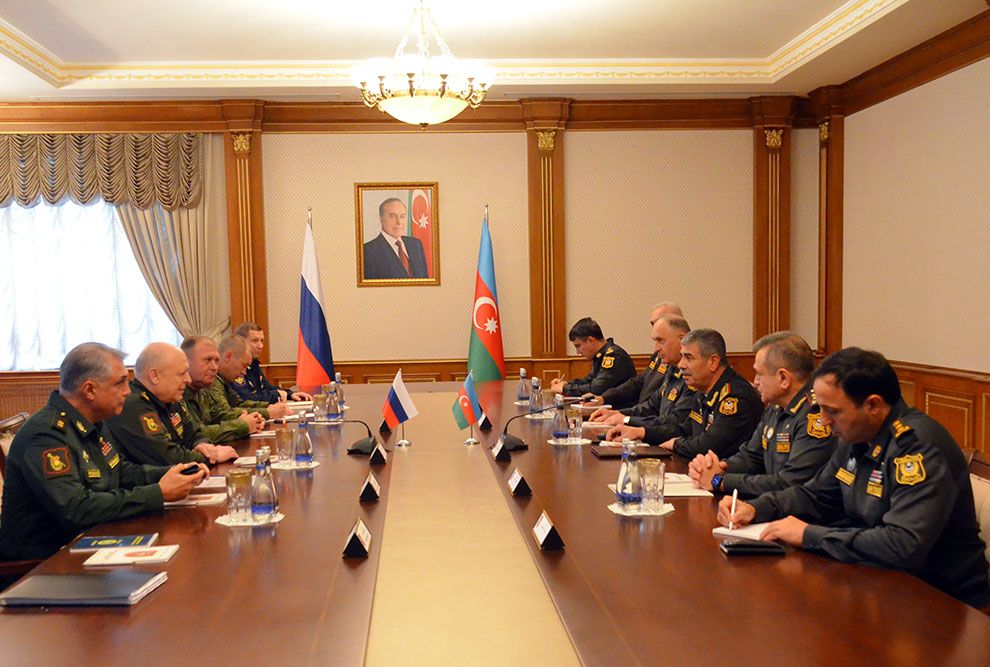
Azerbaijan Defense Minister receives new Commander of Russian peacekeeping forces


8a7ab81e2d4493298fe5f21a834ffa5b.jpg

On September 12, the new Commander of the Russian peacekeeping
forces temporarily stationed in Azerbaijan, Major General Kirill
Kulakov was introduced to the Azerbaijan Defense Minister, Colonel
General Zakir Hasanov by the Commander-in-Chief of the Land Forces
of the Russian Federation, Army General Oleg Salyukov,
Azernews reports, citing the Ministry.

The Defense Minister welcomed the guests and noted that
Azerbaijani-Russian cooperation is based on friendly relations and
mutual trust.

Colonel General Zakir Hasanov spoke about the operational
situation in the Garabagh economic region. He emphasized that the
number of provocations committed by illegal Armenian armed
detachments had increased recently.

Commander-in-Chief of the Land Forces of the Russian Federation,
Army General Oleg Salyukov expressed his gratitude for the warm
reception and noted that Azerbaijani-Russian bilateral relations
are based on historical roots, and the two countries are strategic
allies.

Follow us on Twitter @AzerNewsAz


Categories
Selected Articles

Azerbaijani government accused Iran of trying to infiltrate the country’s mosques, resulting in removal of 118 clerics from their jobs


iran_flag_271117.jpg

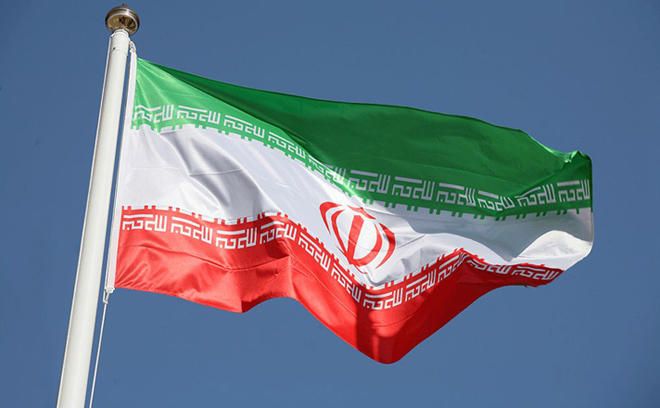
Iran was accused of attempting to influence Azerbaijan’s mosques; 118 clerics were removed from their jobs

On April 6, the Chairman of the State Committee for Work with Religious Organizations, Mubariz Gurbanli, announced that the Tehran regime had been attempting to establish Iranians in mosques in Azerbaijan.

Gurbanli added that his committee had been working patiently and purposefully to prevent this, as Iran was trying to spread its state-religion model to Azerbaijan and other surrounding countries. He also claimed that the Tehran regime had been conducting campaigns on social networks to carry out this propaganda in Azerbaijan.

Gurbanli further stated that after the authority to appoint people to mosques was transferred to the committee, about 120 people who received education and could express the state’s interests were appointed. At the same time, 118 clerics were removed from their jobs. He also mentioned the completion of repair work in the former Abu Bakir mosque and expected its opening soon.

Recently, around 400 Islamic-faith believers have been arrested in Azerbaijan, and social activists and human rights defenders have reported on this. Most of those arrested have been charged with drug possession, but their relatives and lawyers say these accusations are false. However, the Ministry of Internal Affairs claims that it is not aware of the arrest of 400 people.

On April 5, the Ministry of Internal Affairs, the State Security Service, and the General Prosecutor’s Office released a statement claiming that a group was created for the purpose of establishing a “Karim” state governed by Sharia law in Azerbaijan. The information says that Iran’s special services have seized a group of people with material and religious propaganda, and crimes have been prepared in the direction of destabilizing Azerbaijan.

Furthermore, the initial traces of the terrorist act against MP Fazil Mustafa were linked to Iran, according to a statement released by the Ministry of Foreign Affairs of Azerbaijan on March 31, 2023. The deputy was shot in front of his house on March 28, 2023, and the head of the security service of the embassy was killed in an armed attack on the Embassy of Azerbaijan in Iran on January 27, 2023. Employees of the Embassy of Azerbaijan in Iran were subsequently evacuated to Baku.


Categories
Selected Articles

Azerbaijan’s “Tartar Case” renews investigation into alleged torture and abuses, as the number of victims and accused persons rises


terter.jpg

Azerbaijan has been rocked by a torture case known as the “Tartar case,” where 452 victims have come forward with allegations of torture and abuse.

The trial of Colonel Vusal Alasgarov and three other soldiers accused of torturing soldiers accused of spying for Armenians during the “Tartar Incidents” in May-June 2017 continues in Baku. The victims have been giving their statements, and the family members of those who lost their lives have participated in the court proceedings as their legal heirs.

One of the victims was senior lieutenant Tamkin Guliyev, whose father Nizami Guliyev testified at the court session. Nizami Guliyev said that when his son’s body was brought back to them on May 15, 2017, they were told that he died of pneumonia. However, an exhumation in 2022 revealed that he died from torture, with injuries to the vertebrae, head, hands, and feet. Nizami Guliyev demanded that those who caused their death by torturing the soldiers, including his son, be charged with murder and treason.

Another victim was commander Suleyman Kazymov, whose wife Zulfiyya Kazimova testified in court. She demanded that high-ranking officials involved in the torture be brought to criminal responsibility, including Hikmet Hasanov, who she claims gave the orders. Kazimova said that they received the news of her husband’s death on May 9, 2017, and were initially told that he was a martyr, but later were told that he died in an accident. Those who brought the body to them tried to make them sign a blank piece of paper. Kazimova claimed that her husband was handcuffed, drowned in water, and beaten before his death.

Elchin Guliyev, who was accused of treason and acquitted after the “Tartar case” proceedings were renewed, also lost his life as a result of torture. His mother Valida Ahmadova testified in court and said that her son made a phone call for the last time on May 3, 2017. On May 8, his father and cousin were called to the executive power and told that Elchin Guliyev had died and was a “traitor to the country”. When his body was brought back to them, they claimed that he poured drugs into the food truck he was driving during the April 2016 battles so that the soldiers would sleep. However, Ahmadova said that her son was not driving the food truck at all, but was on vacation. She also claimed that the authorities created obstacles for those who came to his funeral and called her son a “traitor to the country”.

One victim, Vagif Abdullayev, claims that General Hikmat Hasanov threatened to send those who refused to engage in espionage to a minefield and had him put in a cage, and threatened to shoot him. Several other victims have confirmed this threat. Abdullayev emphasized the importance of prosecuting General Hasanov and other officials in order to have an objective investigation of the case.

Another victim, Merhamat Rajabli, accused Colonel Vusal Alasgarov of putting a gun in his mouth, tying his hands, and subjecting him to various forms of torture, including electric shocks and nail removal. The accused persons did not respond to the accusations made by the victims.

After the investigation into the “Tartar case” was renewed in December 2021, the number of people brought to criminal responsibility for torture reached 17, with one person still wanted. Four more people who were already in prison were re-indicted due to their participation in torturing others.

In November 2022, the cases of 19 people who had been sentenced to 20 years in prison for treason and other serious charges were re-examined, their sentences were canceled, and they were acquitted five years later. The court investigations on the cases of the four named persons in this particular incident are still ongoing.

The trial continues in Baku, and the victims’ families are seeking justice for their loved ones who lost their lives as a result of torture.


Categories
Selected Articles

Armenia PM gives interview to POLITICO Europe, speaks about regional issues


default.jpg

Armenian Prime Minister Nikol Pashinyan gave an interview to POLITICO Europe, PM’s press secretary Nazeli Baghdasaryan informed.

In the interview, Pashinyan spoke about the buildup of Azerbaijani troops around Nagorno-Karabakh, the increase in tension on the Armenia-Azerbaijan border, as well as the need to overcome the current situation through diplomatic methods and in a constructive atmosphere, Baghdasaryan added.

!

This text available in   Հայերեն and Русский

Print