Thirty years after the Soviet Union’s collapse, the geopolitical boundaries that once marked its former republics are blurring. Treating this space as simply post-Soviet, as Western policymakers have done for the past three decades, is out of date. Undoubtedly, Russia is anything but shy about throwing its weight around the neighborhood. Countries along Russia’s periphery have learned the hard way that they must manage relations with Moscow carefully. But portraying the region simply as part of Russia’s periphery mischaracterizes its principal defining characteristics.
Russia’s pull is, if anything, weakening. The centrifugal forces drawing its neighbors toward other parts of the world are becoming stronger. At the same time, the West’s interest in the region is ebbing—the United States and the EU are increasingly preoccupied with domestic problems stemming from the pandemic as well as with reorienting their foreign policies to deal with China and other regions closer to home.
This trend is particularly evident in the South Caucasus. Today, the boundaries between the three states—Armenia, Azerbaijan, and Georgia—and the eastern Mediterranean and wider Middle East are shifting. The United States’ and the EU’s long-standing declaratory policies about the region’s centrality in the West’s foreign policy are becoming less and less credible. It’s one thing for Washington and Brussels to promote closer security ties with the South Caucasus and to boost their capabilities to stand up to Moscow’s bullying. But it is another thing entirely to match the South Caucasus states’ expanding web of relationships with the countries to their south, west, and east.
It is these relationships that show the greatest dynamism in terms of increased trade and economic ties, changes in energy markets, and the prospects for new infrastructure projects. Regrettably, these regions—just like the South Caucasus—have more than their fair share of common challenges arising from regional and sectarian conflicts, migration, and poverty.
This article examines how the three South Caucasus states have increasingly diversified their foreign and economic policies. These efforts are unfolding against the backdrop of weakening ties to Russia on the one hand and diminishing interest from the United States and the EU on the other. The article explores the dynamic between Russia—as it seeks to reassert itself—and Turkey and Iran, both of which have made major inroads in the region. Finally, the analysis touches on the growing ties between the South Caucasus and China, Israel, Lebanon, and the Arab states of the Persian Gulf. It concludes with policy implications and recommendations for policymakers in Washington and Brussels.
A Brief History
Given their geographic proximity and historic connections, interactions between the Caucasus and the broader Middle East should come as no surprise. Before the Soviet era, the Caucasus was where the Ottoman, Persian, and Russian empires converged and competed for territory and influence. Each of the three empires once ruled the region, creating a key meeting ground of cultures along an important transit route.1 During the bulk of the twentieth century, the Soviet Union enjoyed firm control over the region and tried to project power and influence into Iran and Turkey from the Caucasus. The Soviet Union’s collapse weakened Moscow’s position in the region but defied initial speculation that Iranian-Russian-Turkish competition would lead to the carving of respective spheres of influence across the Caucasus.
The 1990s proved to be a difficult time for all three powers. Russia focused largely on managing waves of domestic instability and fighting the insurgency in the North Caucasus. Moscow’s highly reactive policies in the South Caucasus were shaped primarily by the conflict between Armenia and Azerbaijan as well as instability in Georgia, which Moscow opportunistically took advantage of to further state fracture.
Iran too struggled economically in the 1990s, facing a combination of sanctions and the aftereffects of its nearly decade-long war with Iraq. Deeply isolated on the world stage, Iran had little to offer the three South Caucasus states—all of which also received pressure from Washington to curtail ties with their southern neighbor.
Turkey, meanwhile, was more focused on integrating with Europe than on engaging with its eastern neighbors. Ankara’s efforts to promote a broad pan-Turkic agenda across Eurasia initially appeared promising but amounted to little except in Azerbaijan. However, the diplomatic and security ties that took root between Ankara and Baku during the first Nagorno-Karabakh war reinforced Armenian perceptions of pan-Turkic threats leading to frigid Armenian-Turkish relations and an economic blockade that continues to the present day.
It was the West that had money, markets, and geopolitical clout in the 1990s. Former Azerbaijani president Heydar Aliyev reportedly claimed in the 1990s that “Washington is the new Moscow.” All of the region’s leaders were swept up in the euphoria of building economic and political ties to the United States and Europe. Western influence continued to grow after the September 11, 2001, terrorist attacks and the Rose Revolution in Georgia, which enhanced the region’s stature in U.S. foreign policy. Azerbaijan and Georgia became important links in the supply lines that ran through the South Caucasus into Central Asia and Afghanistan. Georgia sent large numbers of troops to Iraq and Afghanistan, which built goodwill in key parts of the U.S. national security establishment. The war against extremism also led to stronger security ties between NATO and all three states.
However, Eurasia’s centrality in U.S. foreign policy proved fleeting and often rhetorical. The U.S. drawdowns from Afghanistan and Iraq during the administrations of former U.S. presidents Barack Obama and Donald Trump, Washington’s pivot away from Europe and Eurasia to the Indo-Pacific beginning in 2011, and the turmoil of the Trump era shifted U.S. attention away from the South Caucasus. With the anticipated full withdrawal of U.S. troops from Afghanistan by September 2021, the U.S. presence in, and commitment to, Eurasia remains uncertain.
The period of intense U.S. focus on the South Caucasus was, in many ways, a historical anomaly of the early post-Soviet era. The region is geographically far from American shores and its strategic importance to Washington was tied to the transition away from Soviet rule, the urgent need to secure Soviet-era biological and nuclear material, and the imperative of finding alternate routes to Afghanistan. The West’s turn away from the Caucasus is not uniquely a U.S. phenomenon. The EU in practice has pivoted from the region too—a result of expansion fatigue, the war in Ukraine, and internal challenges including Brexit and the euro crisis.
The Inevitability of Geography
Although Russia will remain the most important power in the region for the foreseeable future, the capitals of the three South Caucasus states are geographically closer to many of the economic and political power centers of the eastern Mediterranean and Persian Gulf than they are to Moscow. Baku, for example, is slightly closer (roughly 1,000 miles) to Doha, Qatar, and Ankara, Turkey, than to the Russian capital (roughly 1,300 miles). Tbilisi, Georgia, is just about 800 miles to Ankara, while Yerevan, Armenia, is just a few hundred miles to Mosul, Iraq—a city that once had a significant Armenian minority.
Given their proximity, Turkey and the Gulf countries now serve as key regional hubs for air travel—a far cry from the Soviet era when access to the world was routed through Moscow. Turkey has become a secondary destination after Russia for migrant workers from the Caucasus, including Armenia. Human trafficking of women from the three South Caucasus states to the Gulf, Turkey, and beyond sadly remains a problem, facilitated by transnational organized crime links.
Historical connections between the Caucasus and the Middle East are reflected in diaspora populations, particularly in Mediterranean littoral states. Turkey is home to a sizeable minority population from the North and South Caucasus, including Azerbaijanis, Armenians, Circassians, and Ossetians. Roughly 4 percent of Lebanon’s population (about 160,000 people) is ethnically Armenian. Another 100,000 Armenians called Syria home before that country’s brutal civil war began in 2011. Thousands of ethnic Armenians living in the Middle East have escaped the brutal conflicts there, moving to Armenia or Nagorno-Karabakh. Today, Armenia is the third-largest recipient of displaced Syrian citizens per capita in Europe.
Armenia became directly involved in the Middle East, sending peacekeepers to Iraq at the urging of the United States (as did Azerbaijan and Georgia) and later to Syria at Russia’s call. The self-proclaimed Islamic State served as a magnet for hard-line Islamic radicals from across the North and South Caucasus, as well as Central Asia and other parts of Russia. Georgia has long tried to stabilize its restless Pankisi Gorge, a Muslim-minority region that served as a hotbed of radicalization and safe harbor for fighters from the North Caucasus. The Pankisi Gorge experienced renewed attention between 2015 and 2017, as Islamic State recruiters reportedly enlisted Georgian citizens to fight in Iraq or Syria—some of whom went on to serve as hardened Islamic State commanders.
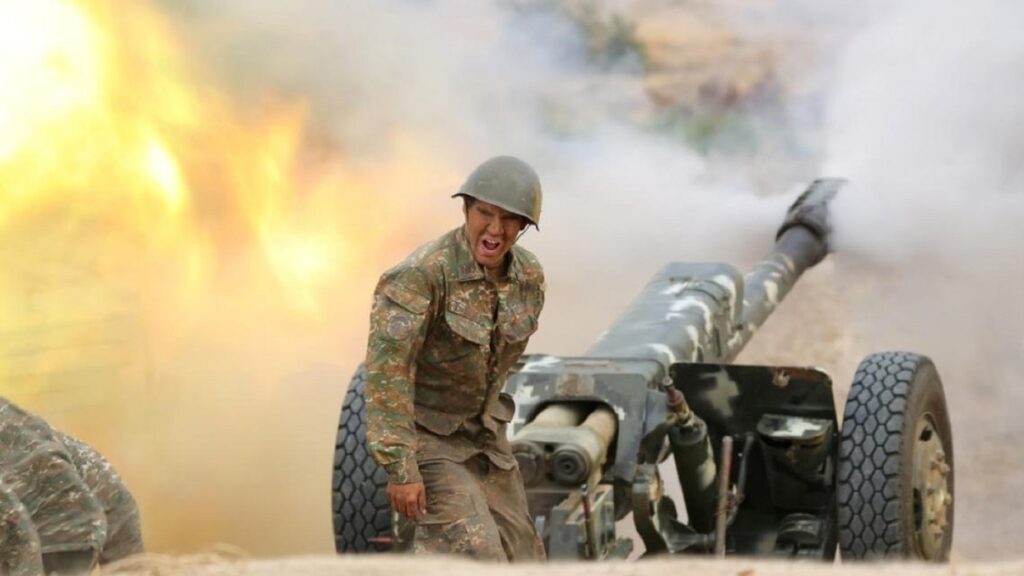
Azerbaijani foreign fighters traveled to the Middle East to join the Islamic State or Jabhat al-Nusra during the height of the Syrian conflict. Azerbaijanis have also fought in Libya, likely in support of Turkey’s intervention there. More recently, in 2020, up to 2,000 Syrian mercenaries allegedly fought on Azerbaijan’s behalf in the second Nagorno-Karabakh war, raising concerns about the presence of Sunni extremists in the region. Irregular volunteers from the Armenian diaspora in the Middle East and elsewhere descended on the Caucasus during both Nagorno-Karabakh wars.
Regional Competition Isn’t New
During the Cold War, the Soviet Union used the South Caucasus to try to influence the broader Middle East, specifically neighboring Iran and Turkey. There is a sizeable ethnic Azerbaijani minority in Iran—roughly one-quarter of the population is ethnically Azeri. Iran, along with Turkey, housed early Soviet-era refugees from Azerbaijan, creating strongholds of anti-Soviet Azerbaijani nationalism. The Azeri minority in Iran has stirred lingering fears of irredentism in Iran—fears that Joseph Stalin stoked after World War II when the Soviet Union occupied northern Iran.2
Given broad geopolitical differences, there is a long-standing wariness in Baku of Iranian covert activities. Azerbaijani security forces periodically arrest both Iranian and Azerbaijani citizens for allegedly participating in terrorist activity directed by Iran’s Islamic Revolutionary Guard Corps. Baku and Tehran possess divergent views on, and conduct different types of activity in, the broader region. Azerbaijan now enjoys a range of diplomatic, economic, and security ties to two of Iran’s key rivals, Israel and Turkey.
The Caucasus was on the front lines of the Soviet-NATO confrontation during the Cold War, and the Soviet-Turkish border was highly militarized. Moscow cultivated memories of the Armenian genocide at home and overseas to sully the image of NATO member Turkey, particularly in the run-up to the genocide’s fiftieth anniversary commemoration in 1965. The Soviet government also reached out to Armenians across the Middle East, inviting genocide survivors and their descendants to relocate to Soviet Armenia during the Cold War. Some did, including independent Armenia’s first president, Levon Ter-Petrosyan.3 Many Soviet-era Armenian repatriates, however, regretted that decision—adjusting to life in the Soviet Union proved challenging, especially in the Stalinist era when many ended up in the Gulag.
Today, Armenia engages in outreach efforts across the Mediterranean basin, following in the footsteps of the Soviet Union. Former Armenian president Serzh Sargsyan treated Armenians in the Middle East as a key diaspora constituency when he promoted Turkish-Armenian reconciliation a decade ago. Armenia still depends on these communities as partners for trade, investment, and diplomacy. Iran has long remained a geographic and economic lifeline for Armenia, which at times complicates relations with the United States. Yerevan reached out to Cyprus, Greece, Lebanon, and Jordan for diplomatic support and humanitarian aid during the 2020 war in Nagorno-Karabakh. All four countries have either strained or at least complex ties with Turkey, making them obvious diplomatic interlocutors for Yerevan.
Azerbaijan may not have as large a diaspora, but Baku actively promotes its interests in the Islamic world. Since the 1990s, the Organisation of Islamic Cooperation has repeatedly adopted resolutions to reaffirm Azerbaijan’s territorial integrity and called on Armenia to withdraw from Azerbaijan’s internationally recognized territory in Nagorno-Karabakh. Many Islamic countries backed Azerbaijan in resolutions at the United Nations and other international arenas. In the early post-Soviet period, Baku received humanitarian assistance from several wealthy Gulf states, which helped stabilize the country and manage flows of displaced people.
Economics and Energy Have Blurred Borders
On the economic front, energy pipelines and transportation corridors from Azerbaijan through Georgia to Turkey have opened Caspian resources for southeastern Europe and the Middle East, giving Azerbaijan influence over several Mediterranean states. Israel has long courted Azerbaijan to hedge against Iran. Today, roughly 40–45 percent of Israeli oil imports originate in Azerbaijan, making it Azerbaijan’s third-largest export market after Italy and Turkey. Energy exports to Israel have also helped accelerate the two countries’ political and security ties. Azerbaijan is the second-largest buyer of Israeli arms, which were on display when Baku deployed Israeli drones during the most recent Nagorno-Karabakh conflict. Israel is also promoting closer agricultural cooperation, capitalizing on Azerbaijan’s desire to diversify its dependence on hydrocarbons.
Albania and Italy receive Azerbaijani gas via the Trans Adriatic Pipeline, which is fed by the Trans Anatolian Natural Gas Pipeline that crosses the entire width of Turkey from the Georgian to Greek borders. It enables Azerbaijan to supply 6 billion cubic meters (bcm) of gas to the Turkish market, with an additional 10 bcm earmarked for transit further into southern Europe. The recent agreement between Azerbaijan and Turkmenistan to jointly develop their disputed Kyapaz/Sardar Caspian gas field could eventually enable Central Asian gas supplies to reach the Mediterranean. Countries in the South Caucasus have long promoted energy corridors, but the economic viability of such routes will depend heavily on ongoing shifts in global energy markets and the unfolding transition to a low-carbon future.
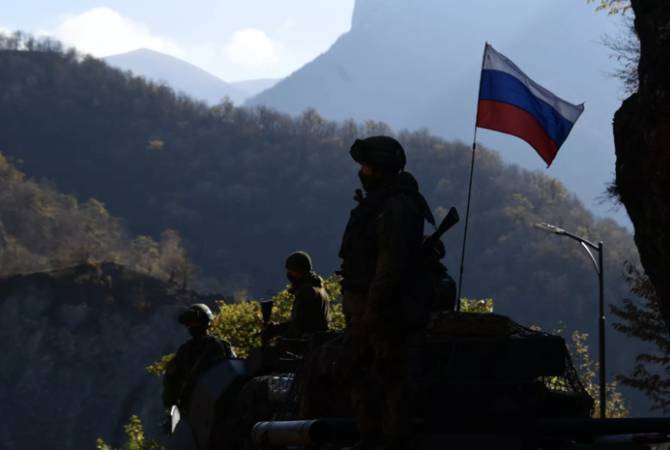
The Moscow-brokered November 2020 ceasefire between Armenia and Azerbaijan envisions the creation of new transportation routes through both countries. In theory, these routes could link Russia directly to Turkey and Iran, creating new north-south and east-west connections. That would potentially both enhance Russia’s presence in the region and create new links between the Caspian Sea, the Mediterranean, and the Persian Gulf. Such plans unnerve the Georgian government, which fears any new Russian-sponsored transportation infrastructure will undermine its role as the key east-west trade route between the Caspian and Mediterranean Seas. Some of the planned projects also rankle Armenia, given its trust deficit with both Ankara and Baku. Armenian wariness, the lack of a comprehensive peace or stabilization plan in Nagorno-Karabakh, and Iran’s continued geopolitical isolation will complicate this new vision for regional transportation.
Growing Cooperation and Competition Between Russia and Turkey
Russia and Turkey have improved ties over the past decade. Closer energy relations—for example, the TurkStream natural gas pipeline and the Akkuyu nuclear power plant—have been a major factor. Ankara has also bought Russian S-400 air defense system, provoking tensions between Turkey and NATO—which Moscow has certainly relished. And the strong personal relationship between Turkish President Recep Tayyip Erdoğan and Russian President Vladimir Putin, especially their mutual resentment of their many Western critics, continues to soothe the overall relationship.
Yet friction points between the two countries persist. Turkey and Russia are at loggerheads in both Syria and Libya. Turkey criticizes Russian aggression against its Eurasian neighbors, continues to oppose Russia’s annexation of Crimea, and has warned about Moscow’s naval buildup in the Black Sea. Ankara continues its military cooperation with Kyiv; the latter deployed several Turkish-made Bayraktar-TB2 armed drones over the Donbas in April 2021 (the same drones Azerbaijan reportedly used with success to defeat Armenia in 2020). Ukrainian President Volodymyr Zelenskiy visited Turkey that same month, a time of high tension in eastern Ukraine, for a session of the Turkey-Ukraine High-Level Strategic Cooperation Council, which he co-chairs with Erdoğan.
Moscow’s maneuvers throughout the Middle East and Turkey’s ambitions for Eurasia help stoke the Russian-Turkish rivalry, as does the fact that both Azerbaijan and Georgia look to Ankara as a hedge against Russia. Interest groups inside Turkey have provided momentum for Ankara’s multilayered approach to Georgia. Turkish businesses are well established in Georgia, with ties dating back to the early 1990s. Erdoğan’s government also conveys strong diplomatic support for Georgia’s territorial integrity, rejecting Russia’s recognition of Abkhazia and South Ossetia as independent states and decrying the continued Russian occupation of Georgian territory. At the same time, Turkey’s powerful Abkhaz diaspora, which maintains a strong lobby in the Turkish parliament and business circles, seeks to expand commercial and people-to-people ties with Abkhazia.4
Azerbaijan has long pushed for closer ties with Turkey, viewing Ankara as its most powerful and dependable backer in the international sphere. Turkey is among the top investors in both Azerbaijan and Georgia, with all three countries linked via road, rail, and pipeline infrastructure. Azerbaijan sees Turkey as the essential counterweight to not only Russia but also to the United States and Europe, both of which have grown increasingly critical of Baku’s human rights record.
Turkey’s unequivocal support for Azerbaijan slowed Russian mediation in the first few weeks of the 2020 Nagorno-Karabakh conflict. Having inserted itself directly into the conflict, Turkey now serves, particularly in the eyes of Azerbaijan, as a check on Russian peacekeeping operations; Baku and Ankara pushed hard for the joint Turkish-Russian ceasefire-monitoring center that was established on Azerbaijani-held territory earlier this year.
As Turkey’s influence in the Caucasus grows, all three South Caucasus governments must strategize on how to adjust to Turkey’s enhanced role in the region. Ankara also must balance its presence there with maintaining its relations with Moscow. Russia remains keen to preserve the region as part of its privileged sphere of influence and is reticent for Turkey to enjoy a broader regional mandate. Nevertheless, Turkey’s ability to carve out a role for itself in the Caucasus is a fait accompli that Russia must now manage. As Habibe Ozdal has argued, Russia and Turkey are not allies in the Caucasus or Middle East; they do not necessarily share the same goals. Yet, as they continually bump into each other, the two powers find ways on occasion to align their competing interests and to dampen tensions.
New—and Old—Players in the South Caucasus
While Russia and Turkey jockey for influence in the Caucasus, other countries are asserting their influence as well.
Although geographically distant, China has pursued various opportunities, eyeing infrastructure projects across the South Caucasus, Persian Gulf, and the Mediterranean. Port development, roads, and rail all fall under the purview of its sprawling Belt and Road Initiative. Chinese companies have shown interest in infrastructure projects on the Georgian and Azerbaijani coasts and in regional road and rail construction across all three South Caucasus countries. However, implementation of such projects has been slow, mired in corruption allegations and accusations of labor abuse and environmental degradation.
Georgia’s decision in 2020 to cancel its contract with the Anaklia Development Consortium—primarily a Georgian-U.S. entity—to build a deepwater port on the Black Sea coast has renewed long-standing Chinese interest in the project. Beijing appears eager to link the infrastructure it helped put into place in Central Asia with similar assets it either controls or envisions across the broader Mediterranean via the Caucasus. China’s commitment to the Caucasus, however, could end up largely rhetorical. Chinese financial flows have not materialized as quickly as local countries expected. Throughout the region, leaders continue to see Beijing as a way to alleviate perennial concerns about Russia’s overbearing presence and the tensions stemming from its war against Ukraine.
Iran also is reasserting itself in the Caucasus. Tehran proposed its own peace initiative as the 2020 Nagorno-Karabakh conflict raged on. After the Russian-brokered ceasefire, Iran embraced the 3+3 format—a Turkish-proposed regional cooperation mechanism that unites the three Caucasus states with Iran, Russia, and Turkey. This mechanism bears more than a passing resemblance to the mix of cooperative and combative dynamics that the three powers bring to bear in Syria. The proposal received lukewarm support from the Caucasus countries, especially Georgia. They remain wary of Iranian, Russian, and Turkish aspirations to dominate the region without any counterbalance from the West or other powerful players.
Iran, however, is the top market for both Azerbaijani and Armenian exports to the Gulf region. Both Caucasian countries remain keen to build transportation infrastructure to the south to tap broader Gulf markets.
Iranian visitors were also important for the Armenian, Azerbaijani, and Georgian tourist industries before Iran’s economic troubles in 2018 and the coronavirus pandemic. A key growth sector and important source of employment for the Armenian and Georgian economies, tourism in the region focuses largely on small businesses. Iranian tourism peaked in 2017–2018, when 220,000 Iranians visited Armenia, 320,000 came to Georgia, and 360,000 traveled to Azerbaijan. It dropped significantly in 2018 and 2019, although Iran remains among the top five countries of origin for visitors to the three Caucasus nations.
Other Persian Gulf states have also begun to invest in the tourism, banking, construction, and energy sectors in the South Caucasus, although they generally have refrained from the sort of political or military engagement they pursue in the Middle East (in other words, Saudi Arabia in Yemen or the UAE in Libya).
Saudi Arabia recently announced a deal to construct a wind park in Azerbaijan, while the UAE has invested over $2 billion in a joint Emirati-Azerbaijani investment fund created in 2016. Trade turnover between Azerbaijan and the UAE has also grown in recent years, although it remains relatively minimal at $240 million in 2019. There is a large trade imbalance, however, with Emirati imports to Azerbaijan far exceeding Azerbaijani exports. Baku is hoping that Emirati investments could help Azerbaijan reconstruct the territories formerly occupied by Armenian forces.
Armenia and Georgia, meanwhile, both see the Gulf as a potential market for agricultural exports and are seeking free trade agreements with the Gulf Cooperation Council. Wealthy residents of the Caucasus, including some with ties to organized crime, also look to Dubai as a friendly place to park or launder their money.
Is There Any Room Left for the West?
The United States and Europe certainly remain important actors in the region, but their influence—particularly in Armenia and Azerbaijan—is declining.
Relations between Azerbaijan and the West have deteriorated over the past decade due to human rights issues and Azerbaijan’s frustration with the the Organization for Security and Co-operation’s Minsk Group, the formal mediators in Nagorno-Karabakh. Despite being long-standing members of the Minsk Group, neither France nor the United States was able—or perhaps willing—to broker even a temporary ceasefire in the 2020 Nagorno-Karabakh war. Azerbaijan saw both countries, due to their large and influential Armenian diaspora populations, as biased negotiators. Armenia felt abandoned by the West (and Russia) during the war, as the Trump administration’s half-hearted efforts to broker a ceasefire came late. The West now struggles to find a role for the Minsk Group. It is not yet clear how U.S. President Joe Biden’s administration plans to support post-conflict stabilization, reconciliation, and governance projects—all areas where Western support, financing, and expertise are needed.
Beyond two prominent U.S. investments in the energy and mining sectors and Armenian diaspora remittances and charitable donations, economic ties between the United States and Armenia are minimal. Yerevan hopes that Armenia’s Comprehensive and Enhanced Partnership Agreement with the EU, as well as its efforts to promote political and economic reforms, could lead to greater European economic engagement. Despite recent efforts to diversify its economic partners, Armenia is unlikely to have much success in the near future given Russia’s economic clout in the country and Armenia’s membership in the Eurasian Economic Union. Political instability in the country after its loss in the 2020 war also dampens its investment climate. Meanwhile, despite tensions, the EU remains Azerbaijan’s largest trade partner (although the bulk of that trade is in the energy sector and is dominated by just one country, Italy).
Georgia, on the other hand, is still eager to integrate itself into the trans-Atlantic community. As a symbol of its partnership with the West, Georgia hosts a NATO training center outside Tbilisi, although the country remains highly insecure because of Russia’s continued occupation of Georgian territory and persistent Russian threats to its sovereignty. While trade with the United States remains miniscule, the EU-Georgia Association Agreement, which outlines a Deep and Comprehensive Free Trade Area, has resulted in visa-free travel for Georgians. This has spurred travel, educational, and some labor migration ties between Georgia and Europe, as well as modest growth in EU-Georgian bilateral trade. Yet increased economic ties with the EU have not resolved Georgia’s high poverty, unemployment, and underemployment rates. Although Georgia remains by far the most successful reformer in Eurasia, Western support for its efforts has not prevented the country’s political turmoil or democratic backsliding.
Conclusion and Recommendations for Policymakers
The South Caucasus is in the midst of a geopolitical transition. No longer an isolated backwater of the former Soviet Union, the South Caucasus today interacts with and is impacted by a much larger region around it. It is becoming more interconnected with its neighbors in the Mediterranean and Persian Gulf. Despite disruptions caused by the pandemic, those new connections are likely here to stay. This trend should not unnerve Western policymakers; the South Caucasus is essentially rediscovering its historical geography as a region with multiple influential neighbors. That is a positive change.
The region is also being impacted by broader global trends. The period of U.S. retrenchment that began under Obama and accelerated under Trump has ushered in a period of disengagement. The resulting vacuum has encouraged leaders across the region to pursue overlapping relationships that are tying the Caucasus more closely to the Middle East, the Mediterranean, and Asia. Regional integration generally is a positive development too.
The Armenian, Azerbaijani, and Georgian governments are looking for signals from Washington on whether the Biden administration will shift some attention back to the South Caucasus. However, the ongoing U.S. pivot to the Indo-Pacific region and the need to respond to China’s rise suggest that Washington will prioritize more pressing problems elsewhere. All of that comes on top of urgent global and domestic challenges facing the Biden administration, starting with the pandemic, economic recovery, racial justice, and climate change. Against that backdrop, it is unlikely that key players in the South Caucasus can expect much high-level attention from Washington.
Nevertheless, U.S. and EU policymakers will advocate for the emergence of a more stable and prosperous South Caucasus. But that cannot be willed into being. It is possible only with bottom-up reforms that will help the region overcome deep-seated governance shortcomings, manage regional conflicts, and integrate the South Caucasus countries into broader regional (and global) economic and political structures. The recent political crises in Armenia and Georgia suggest that polarization remains high and that democratic backsliding is a real threat. Yet the region’s citizens have made clear they want governments and economies that work.
As the new foreign policy team in Washington develops its approach to the Caucasus, it must recognize how the region is changing and encourage its rapidly expanding ties with the wider neighborhood. The region should no longer be viewed through the simple prism of Russia-West competition or the battle against Russian neo-imperialism; it is being increasingly contested by rising powers and impacted by broader regional problems, including extremism, migration, ethnic tensions, shifting energy markets, and the pandemic.
The West certainly has a role to play mitigating the impacts of the pandemic, which has highlighted the permeability of international borders. The United States and Europe should help the Caucasus states acquire adequate vaccine supplies and help promote their continued integration into the wider region. Russia and China have both stepped into that space with their vaccine diplomacy, although production shortfalls with their vaccines, questions about efficacy, and vaccine hesitancy have stalled inoculation programs in all three Caucasus countries. The West should also help the region address broader human and economic security problems that COVID-19 has exacerbated by focusing on basic human security needs, particularly when the prospects for democratic reform are limited.
Washington need not lament these regional changes and the efforts of the Caucasus states to engage additional partners beyond Russia or the West. This shifting geography in the Caucasus suits a long-standing U.S. policy goal: rejecting Moscow’s claim of an exclusive sphere of influence in the region. History in the South Caucasus shows that no single power has been able to achieve hegemony over the broad region. Today’s emerging multipolar world, combined with local dynamics on the ground and new trade patterns, will make it challenging for Russia or any other individual state to dominate the region for long.
Yet the United States still has interests in the South Caucasus and should pursue them—particularly in Georgia, where it has invested heavily in the country’s political and economic reform efforts, enhanced defense, and integration with the West. However, past patterns of U.S. policy implementation suggest that Washington does not, and likely never will, possess the same level of strategic interests in the South Caucasus as the region’s immediate neighbors. The sheer distance between the United States and the Caucasus dictates that Washington should not pretend otherwise. This does not mean, however, that the Biden administration should ignore the region, especially since it is a meeting place of some of the West’s biggest competitors (China, Iran, and Russia) and most challenging partners (Israel, Turkey, and Saudi Arabia).
The Biden administration should, over time, articulate where the South Caucasus stands in the long list of U.S. priorities. The United States should continue efforts to promote regional stability, help abate or prevent regional conflicts, and stem illicit financial and human flows. Washington and its European partners can assist in stabilization, reconstruction, and integration after the latest Nagorno-Karabakh war, particularly given the poor track records Russia and Turkey have on these issues elsewhere. Given the long-standing U.S. investment in Georgia and the Armenian people’s clear desire for better governance, the West should also continue to support those countries’ democratic and economic reform efforts (although that support must be conditional and demand driven).
Washington finally should recognize the role of other players, accept that they too have stakes in the region’s stability, and lean on them to use their capacity to support common interests in the region. A new approach mandates a more surgical use of U.S. power and the U.S. toolkit rather than the broad transformative agendas Washington pushed in the past, usually with limited success. This calls for enlisting the help of allies and partners to improve the South Caucasus states’ ability to balance against their assertive neighbors and to address their own internal challenges from the bottom up.
Acknowledgments
The author would like to thank Thomas de Waal, Anna Ohanyan, Joanna Pritchett, Gene Rumer, John Tefft, and Andrew Weiss for their comments on early drafts of this article, as well as Tatyana Pyak for her research and editing assistance.
Notes
1 Charles King, The Ghost of Freedom: A History of the Caucasus (Oxford: Oxford University Press, 2008); and Thomas de Waal, The Caucasus, an Introduction (Oxford: Oxford University Press, 2010).
2 Brenda Shaffer, Borders and Brethren: Iran and the Challenge of Azerbaijan Identity (Cambridge, MA: Belfer Center for Science and International Affairs, 2002).
3 Razmik Panossian, The Armenians: From Kings and Priests to Merchants and Commissars (New York: Columbia University Press, 2006).
4 Rustam Anshba, “The Influence of the Abkhaz Diaspora on the Turkish Policy Formation on Abkhazia,” Master’s Thesis, Central European University, 2015.

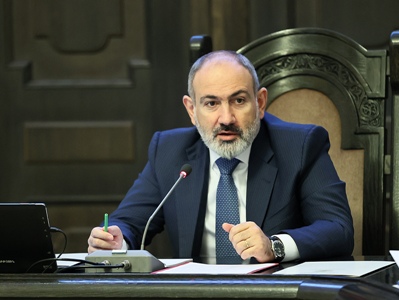
 Earlier this week, protesters in Yerevan accused Pashinyan of abandoning Karabakh ArmeniansImage: SNA/IMAGO
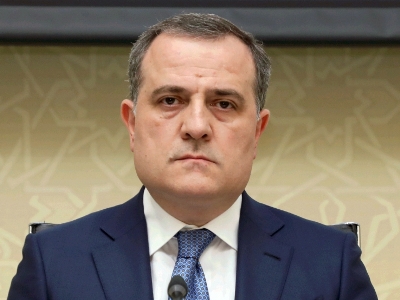
  The EU is engaged in negotiations with Baku and Yerevan, but that didn’t stop the latest round of hostilitiesImage: Dursun Aydemir/AA/picture alliance
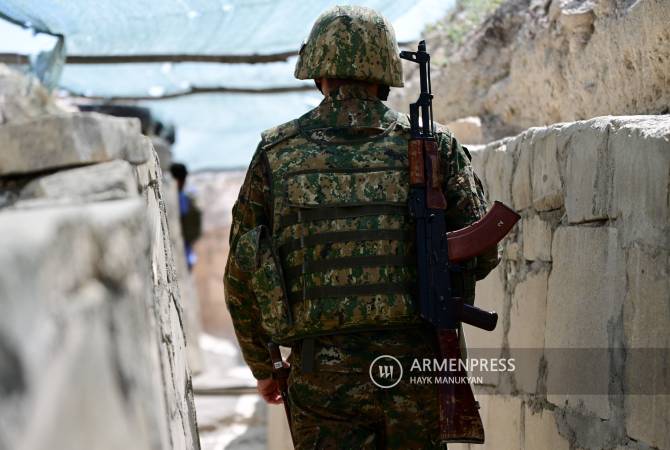
  Nagorno-Karabakh lies in tatters after fresh fighting earlier this weekImage: TAR-TASS/IMAGO