Categories
Selected Articles

A Felon in the Oval Office Would Test the American System


  • Trump Found Guilty
  • The Verdict
  • Trial Highlights
  • Takeaways
  • What Happens Next
  • Can He Still Run for President?

The system of checks and balances established in the Constitution was meant to hold wayward presidents accountable, but some wonder how it will work if the next president is already a felon.

Listen to this article · 9:49 min Learn more
A black-and-white illustration of a scene with a person in a long coat raising his arm. Seated and standing all around him are others looking in his direction, some also raising their arms.

An illustration of Patrick Henry, who warned at the Virginia convention on ratifying the Constitution of the possibility of “absolute despotism.”Credit…Library of Congress

June 2, 2024, 5:05 a.m. ET

The revolutionary hero Patrick Henry knew this day would come. He might not have anticipated all the particulars, such as the porn actress in the hotel room and the illicit payoff to keep her quiet. But he feared that eventually a criminal might occupy the presidency and use his powers to thwart anyone who sought to hold him accountable. “Away with your president,” he declared, “we shall have a king.”

That was exactly what the founders sought to avoid, having thrown off the yoke of an all-powerful monarch. But as hard as they worked to establish checks and balances, the system they constructed to hold wayward presidents accountable ultimately has proved to be unsteady.

Whatever rules Americans thought were in place are now being rewritten by Donald J. Trump, the once and perhaps future president who has already shattered many barriers and precedents. The notion that 34 felonies is not automatically disqualifying and a convicted criminal can be a viable candidate for commander in chief upends two and a half centuries of assumptions about American democracy.

And it raises fundamental questions about the limits of power in a second term, should Mr. Trump be returned to office. If he wins, it means he will have survived two impeachments, four criminal indictments, civil judgments for sexual abuse and business fraud, and a felony conviction. Given that, it would be hard to imagine what institutional deterrents could discourage abuses or excesses.

Moreover, the judiciary may not be the check on the executive branch that it has been in the past. If no other cases go to trial before the election, it could be another four years before the courts could even consider whether the newly elected president jeopardized national security or illegally sought to overturn the 2020 election, as he has been charged with doing. As it is, even before the election, the Supreme Court may grant Mr. Trump at least some measure of immunity.

Mr. Trump would still have to operate within the constitutional system, analysts point out, but he has already shown a willingness to push its boundaries. When he was president, he claimed that the Constitution gave him “the right to do whatever I want.” After leaving office, he advocated “termination” of the Constitution to allow him to return to power right away without another election and vowed to dedicate a second term to “retribution.”

Some supporters and even critics maintain that the likelihood of Trump expanding or abusing the power of the presidency should he be re-elected is unlikely.Credit…Hiroko Masuike/The New York Times

His advisers are already mapping out an extensive plan to increase his power in a second term by clearing out the civil service to install more political appointees. Mr. Trump has threatened to prosecute not only President Biden but others that he considers to be his enemies. In seeking immunity from the Supreme Court, Mr. Trump’s lawyers even embraced the argument that there are circumstances when a president could order the assassination of a political rival without criminal jeopardy.

“There is no useful historical precedent whatsoever,” said Jeffrey A. Engel, the director of the Center for Presidential History at Southern Methodist University. “The interesting matter is not that a former president has been tried and convicted, as the founders might well have anticipated, but that he remains a viable candidate for office, which they would have found astounding and ultimately disheartening.”

The question of how to create an empowered executive without making him an unaccountable monarch absorbed the framers when they designed the Constitution. They divided power among three branches of government and envisioned impeachment as a check on a rogue president. They even explicitly made clear that an impeached president could still be prosecuted for crimes after being removed from office.

But even then, there were voices worried that the limits were not enough. Among them was Henry, the patriot famed for his “give me liberty or give me death” speech. At the Virginia convention on ratifying the Constitution in 1788, he warned of the possibility of “absolute despotism.”

“His point is that if such a criminal president comes to power, that president will realize there are few mechanisms to stop him,” said Corey L. Brettschneider, a Brown University professor who writes about Henry in his forthcoming book, “The Presidents and the People: Five Leaders Who Threatened Democracy and the Citizens Who Fought to Defend It.” “He goes so far as to claim that such a president will claim the throne of a monarch.”

“My argument,” Mr. Brettschneider added, “is that this warning is even more true now given the possible immunity of a sitting president from indictment and the powerlessness that we have seen after two attempted impeachments.”

Robert Kagan, a scholar at the Brookings Institution in Washington, warned in his new book, “Rebellion: How Antiliberalism Is Tearing America Apart — Again,” that a second Trump term could result in unfettered abuses of authority.

“With all the immense power of the American presidency, with his ability to control and direct the Justice Department, the F.B.I., the I.R.S., the intelligence services and the military, what will prevent him from using the power of the state to go after his political enemies?” Mr. Kagan wrote.

To Mr. Trump’s supporters and even some of his critics, such concerns go too far. His allies maintain that when Mr. Trump makes provocative comments like being a “dictator” for a day, he is either joking or pushing buttons to get a rise out of his critics. The real crisis is not a lack of accountability for presidents, they argue, but the politicization of the justice system against Mr. Trump.

Jonathan Turley, a law professor at George Washington University who was in the Manhattan courtroom on Thursday when the jury returned its guilty verdict, called the case against Mr. Trump “a raw political use of the criminal justice system” and a “thrill kill” by his opponents. “What happened in that room comes at a cost,” he said on Fox News. “It comes at a cost to the rule of law.”

Even some who do not support Mr. Trump argue that warnings of an unchecked executive are overwrought. Eric Posner, a professor at the University of Chicago Law School who wrote his own book calling Mr. Trump a demagogue who tests American democracy, said the former president was too “weak” and incompetent to execute a true dictatorship.

“Trump was and is many things, most of them bad,” Mr. Posner wrote last winter in response to a Washington Post column by Mr. Kagan. “But he wasn’t a fascist when he was president, and he won’t be a dictator if he is elected a second time.” While Mr. Trump riled up a mob and spread lies to try to stay in power, Mr. Posner added, “he failed completely.”

American lawmakers have struggled to devise an independent mechanism to enforce presidential accountability without seeming so tainted by politics that it loses credibility with the public. The issue has come up repeatedly over the last half century without a consensus resolution.

Nine out of the last 10 presidents have had a special counsel or independent counsel investigate themselves or someone in their administration — the lone exception being Barack Obama. (Gerald R. Ford’s campaign finances came under scrutiny while he was vice president and resulted in no charges.)

President Richard Nixon’s firing of the first special prosecutor investigating Watergate prompted Congress to pass a law establishing an independent counsel. Credit…Associated Press

Neither of the two who faced serious risk of criminal charges before Mr. Trump let it get that far. Richard M. Nixon escaped prosecution for the Watergate coverup by resigning and then accepting a pardon from Mr. Ford, his successor. Bill Clinton avoided possible perjury and obstruction of justice charges stemming from his affair with Monica S. Lewinsky by making a deal with prosecutors on his last day in office in which he admitted to providing false testimony under oath and gave up his law license.

Mindful that Nixon fired the first special prosecutor investigating Watergate, Congress passed the independent counsel law creating a prosecutor theoretically insulated from politics. But Republicans grew disenchanted with that model after Lawrence Walsh’s Iran-contra investigation, as did Democrats after Ken Starr’s Whitewater investigation, so Congress let the law lapse.

The special counsels who have investigated subsequent presidents, including both Mr. Trump and Mr. Biden, were appointed by the attorney general at the time. While they have considerable autonomy, they are not completely independent and therefore their investigations and conclusions have often been assailed as political, even without evidence of interference.

Having endured the Russia investigation by the special counsel Robert S. Mueller III and the current election interference and classified documents investigations by the special counsel Jack Smith, Mr. Trump is hardly likely to appoint an attorney general who would allow Mr. Smith to continue his work, much less name any new special counsel to look into him.

Jack Smith, the special counsel overseeing the two federal cases against Mr. Trump, was appointed by the attorney general. It is unlikely that he would continue his work under a Trump Justice Department.Credit…Doug Mills/The New York Times

Instead, Mr. Trump has proved that pushing ahead relentlessly regardless of scandal, investigation and trial can work for him politically — at least so far. He is on track to win the Republican presidential nomination for a third time and has at least an even chance of beating Mr. Biden to return to the White House. If he does, he will set a new standard for what is considered acceptable in a president.

“I think my biggest takeaway is how lucky we’ve been as a nation to have presidents who have mostly comported themselves with dignity, or at least respected the dignity of the office,” said Lindsay M. Chervinsky, the incoming executive director of the George Washington Presidential Library and the author of “Making the Presidency,” a book about John Adams to be published in September. “This conviction brings into stark relief how violently Trump has rejected that tradition.”
Categories
Selected Articles

A Felon in the Oval Office Would Test the American System


  • Trump Found Guilty
  • The Verdict
  • Trial Highlights
  • Takeaways
  • What Happens Next
  • Can He Still Run for President?

The system of checks and balances established in the Constitution was meant to hold wayward presidents accountable, but some wonder how it will work if the next president is already a felon.

Listen to this article · 9:49 min Learn more
A black-and-white illustration of a scene with a person in a long coat raising his arm. Seated and standing all around him are others looking in his direction, some also raising their arms.

An illustration of Patrick Henry, who warned at the Virginia convention on ratifying the Constitution of the possibility of “absolute despotism.”Credit…Library of Congress

June 2, 2024, 5:05 a.m. ET

The revolutionary hero Patrick Henry knew this day would come. He might not have anticipated all the particulars, such as the porn actress in the hotel room and the illicit payoff to keep her quiet. But he feared that eventually a criminal might occupy the presidency and use his powers to thwart anyone who sought to hold him accountable. “Away with your president,” he declared, “we shall have a king.”

That was exactly what the founders sought to avoid, having thrown off the yoke of an all-powerful monarch. But as hard as they worked to establish checks and balances, the system they constructed to hold wayward presidents accountable ultimately has proved to be unsteady.

Whatever rules Americans thought were in place are now being rewritten by Donald J. Trump, the once and perhaps future president who has already shattered many barriers and precedents. The notion that 34 felonies is not automatically disqualifying and a convicted criminal can be a viable candidate for commander in chief upends two and a half centuries of assumptions about American democracy.

And it raises fundamental questions about the limits of power in a second term, should Mr. Trump be returned to office. If he wins, it means he will have survived two impeachments, four criminal indictments, civil judgments for sexual abuse and business fraud, and a felony conviction. Given that, it would be hard to imagine what institutional deterrents could discourage abuses or excesses.

Moreover, the judiciary may not be the check on the executive branch that it has been in the past. If no other cases go to trial before the election, it could be another four years before the courts could even consider whether the newly elected president jeopardized national security or illegally sought to overturn the 2020 election, as he has been charged with doing. As it is, even before the election, the Supreme Court may grant Mr. Trump at least some measure of immunity.

Mr. Trump would still have to operate within the constitutional system, analysts point out, but he has already shown a willingness to push its boundaries. When he was president, he claimed that the Constitution gave him “the right to do whatever I want.” After leaving office, he advocated “termination” of the Constitution to allow him to return to power right away without another election and vowed to dedicate a second term to “retribution.”

Some supporters and even critics maintain that the likelihood of Trump expanding or abusing the power of the presidency should he be re-elected is unlikely.Credit…Hiroko Masuike/The New York Times

His advisers are already mapping out an extensive plan to increase his power in a second term by clearing out the civil service to install more political appointees. Mr. Trump has threatened to prosecute not only President Biden but others that he considers to be his enemies. In seeking immunity from the Supreme Court, Mr. Trump’s lawyers even embraced the argument that there are circumstances when a president could order the assassination of a political rival without criminal jeopardy.

“There is no useful historical precedent whatsoever,” said Jeffrey A. Engel, the director of the Center for Presidential History at Southern Methodist University. “The interesting matter is not that a former president has been tried and convicted, as the founders might well have anticipated, but that he remains a viable candidate for office, which they would have found astounding and ultimately disheartening.”

The question of how to create an empowered executive without making him an unaccountable monarch absorbed the framers when they designed the Constitution. They divided power among three branches of government and envisioned impeachment as a check on a rogue president. They even explicitly made clear that an impeached president could still be prosecuted for crimes after being removed from office.

But even then, there were voices worried that the limits were not enough. Among them was Henry, the patriot famed for his “give me liberty or give me death” speech. At the Virginia convention on ratifying the Constitution in 1788, he warned of the possibility of “absolute despotism.”

“His point is that if such a criminal president comes to power, that president will realize there are few mechanisms to stop him,” said Corey L. Brettschneider, a Brown University professor who writes about Henry in his forthcoming book, “The Presidents and the People: Five Leaders Who Threatened Democracy and the Citizens Who Fought to Defend It.” “He goes so far as to claim that such a president will claim the throne of a monarch.”

“My argument,” Mr. Brettschneider added, “is that this warning is even more true now given the possible immunity of a sitting president from indictment and the powerlessness that we have seen after two attempted impeachments.”

Robert Kagan, a scholar at the Brookings Institution in Washington, warned in his new book, “Rebellion: How Antiliberalism Is Tearing America Apart — Again,” that a second Trump term could result in unfettered abuses of authority.

“With all the immense power of the American presidency, with his ability to control and direct the Justice Department, the F.B.I., the I.R.S., the intelligence services and the military, what will prevent him from using the power of the state to go after his political enemies?” Mr. Kagan wrote.

To Mr. Trump’s supporters and even some of his critics, such concerns go too far. His allies maintain that when Mr. Trump makes provocative comments like being a “dictator” for a day, he is either joking or pushing buttons to get a rise out of his critics. The real crisis is not a lack of accountability for presidents, they argue, but the politicization of the justice system against Mr. Trump.

Jonathan Turley, a law professor at George Washington University who was in the Manhattan courtroom on Thursday when the jury returned its guilty verdict, called the case against Mr. Trump “a raw political use of the criminal justice system” and a “thrill kill” by his opponents. “What happened in that room comes at a cost,” he said on Fox News. “It comes at a cost to the rule of law.”

Even some who do not support Mr. Trump argue that warnings of an unchecked executive are overwrought. Eric Posner, a professor at the University of Chicago Law School who wrote his own book calling Mr. Trump a demagogue who tests American democracy, said the former president was too “weak” and incompetent to execute a true dictatorship.

“Trump was and is many things, most of them bad,” Mr. Posner wrote last winter in response to a Washington Post column by Mr. Kagan. “But he wasn’t a fascist when he was president, and he won’t be a dictator if he is elected a second time.” While Mr. Trump riled up a mob and spread lies to try to stay in power, Mr. Posner added, “he failed completely.”

American lawmakers have struggled to devise an independent mechanism to enforce presidential accountability without seeming so tainted by politics that it loses credibility with the public. The issue has come up repeatedly over the last half century without a consensus resolution.

Nine out of the last 10 presidents have had a special counsel or independent counsel investigate themselves or someone in their administration — the lone exception being Barack Obama. (Gerald R. Ford’s campaign finances came under scrutiny while he was vice president and resulted in no charges.)

President Richard Nixon’s firing of the first special prosecutor investigating Watergate prompted Congress to pass a law establishing an independent counsel. Credit…Associated Press

Neither of the two who faced serious risk of criminal charges before Mr. Trump let it get that far. Richard M. Nixon escaped prosecution for the Watergate coverup by resigning and then accepting a pardon from Mr. Ford, his successor. Bill Clinton avoided possible perjury and obstruction of justice charges stemming from his affair with Monica S. Lewinsky by making a deal with prosecutors on his last day in office in which he admitted to providing false testimony under oath and gave up his law license.

Mindful that Nixon fired the first special prosecutor investigating Watergate, Congress passed the independent counsel law creating a prosecutor theoretically insulated from politics. But Republicans grew disenchanted with that model after Lawrence Walsh’s Iran-contra investigation, as did Democrats after Ken Starr’s Whitewater investigation, so Congress let the law lapse.

The special counsels who have investigated subsequent presidents, including both Mr. Trump and Mr. Biden, were appointed by the attorney general at the time. While they have considerable autonomy, they are not completely independent and therefore their investigations and conclusions have often been assailed as political, even without evidence of interference.

Having endured the Russia investigation by the special counsel Robert S. Mueller III and the current election interference and classified documents investigations by the special counsel Jack Smith, Mr. Trump is hardly likely to appoint an attorney general who would allow Mr. Smith to continue his work, much less name any new special counsel to look into him.

Jack Smith, the special counsel overseeing the two federal cases against Mr. Trump, was appointed by the attorney general. It is unlikely that he would continue his work under a Trump Justice Department.Credit…Doug Mills/The New York Times

Instead, Mr. Trump has proved that pushing ahead relentlessly regardless of scandal, investigation and trial can work for him politically — at least so far. He is on track to win the Republican presidential nomination for a third time and has at least an even chance of beating Mr. Biden to return to the White House. If he does, he will set a new standard for what is considered acceptable in a president.

“I think my biggest takeaway is how lucky we’ve been as a nation to have presidents who have mostly comported themselves with dignity, or at least respected the dignity of the office,” said Lindsay M. Chervinsky, the incoming executive director of the George Washington Presidential Library and the author of “Making the Presidency,” a book about John Adams to be published in September. “This conviction brings into stark relief how violently Trump has rejected that tradition.”


Categories
Selected Articles

The US allows Ukraine to use its weapons to strike inside Russia, but it is unlikely to be a game-changer


The story of the past 27 months since Russia invaded Ukraine has been one of crumbling taboos. After repelling Russia’s initial march on Kyiv, Ukraine has asked its Western allies for greater and greater support: first ammunition, then tanks, then cluster munitions, then fighter jets.

Each time, the West has agonized over whether to grant Kyiv’s latest request, fearing escalation and a potential Russian response. Each time, the taboo was broken – and nothing happened. What seemed beyond the pale one week had become banal the next.

But the rhythm of deliberation and delay has been hard to shake. Despite securing more weapons from the United States last month, Ukraine has not been able to use them as it pleases. As Moscow this month launched its surprise assault on the northeastern Kharkiv region, Washington forbade Kyiv from using US weapons to strike targets inside Russia.

This too crumbled. President Joe Biden this week gave Ukraine permission to carry out limited strikes using US weapons in Russian territory around Kharkiv, after several European nations had removed restrictions on how the weapons they have given to Kyiv can be used.

“Over the past few weeks, Ukraine came to us and asked for the authorization to use weapons that were provided to defend against this aggression” near Kharkiv city, “including against Russian forces that are massing on the Russian side of the border,” US Secretary of State Antony Blinken said Friday on a visit to Prague, the Czech capital. He confirmed Biden had approved Ukraine’s request.

Ukrainian President Volodymyr Zelensky praised the decision as a “step forward” which will help his forces to defend the embattled Kharkiv region.

While the decision may mark a new phase of the war, analysts have questioned whether the new freedoms will significantly bolster Ukraine’s ability to repel Russia’s invasion.

Some are bullish. This month, the calls for the US to remove the restrictions became more desperate, as Russia continue to pummel Kharkiv city with missiles and make gains elsewhere in the region.

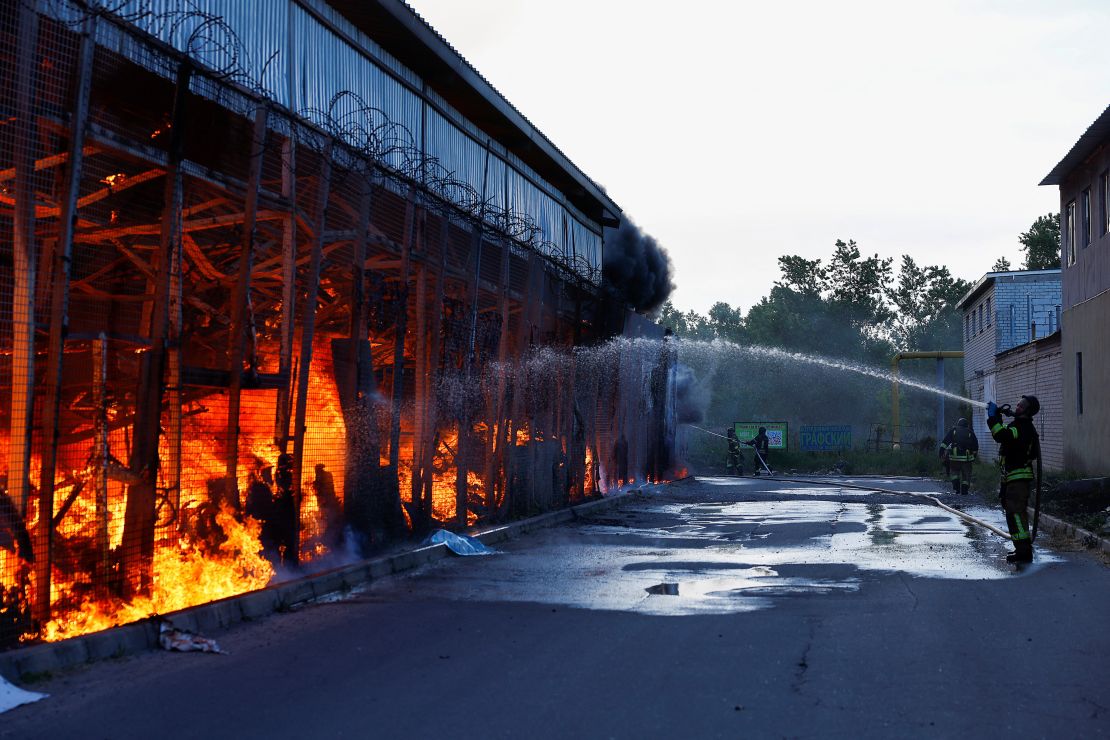
Firefighters work at a hardware store targeted by a Russian air strike in Kharkiv, May 25, 2024.

In a CNN op-ed, Adam Kinzinger and Ben Hodges described the bizarre effect of the US taboo: “We have heard Ukrainian soldiers repeatedly tell stories of Russian columns attacking, being repelled, and retreating to safe Russian territory to regroup, have a hot meal, plan and attack again.”

“Ukraine cannot win if Russians can attack civilian targets with impunity and call ‘time out’ in their own territory,” they wrote, urging Biden to call his Russian counterpart Vladimir Putin’s bluff.

But military analysts have tempered expectations, partly because the US is standing firm in not allowing Ukraine to use the most formidable munition it has been given to fire into Russia: the long-range missiles known as ATACMS that can hit targets 300 kilometers (nearly 200 miles) away.

Instead, Ukraine can only use shorter-range missiles known as GMLRS, which have a range of around 70 kilometers (around 40 miles).

Kateryna Stepanenko, an analyst at the Institute for the Study of War in Washington, told CNN the policy change will “blunt” Russia’s offensive in Kharkiv, but still “preserves the majority of Russia’s sanctuary space.”

“The policy still protects Russia’s operational and deep rear sufficiently that this change near Kharkiv Oblast is insufficient to bring about a turning point in the war. Ukraine particularly needs the capacity to strike deep rear areas to defeat the Russian ground and air threats, as many Russian airfields that support strikes against Ukrainian cities are located outside of the allowed GMLRS range,” she said.

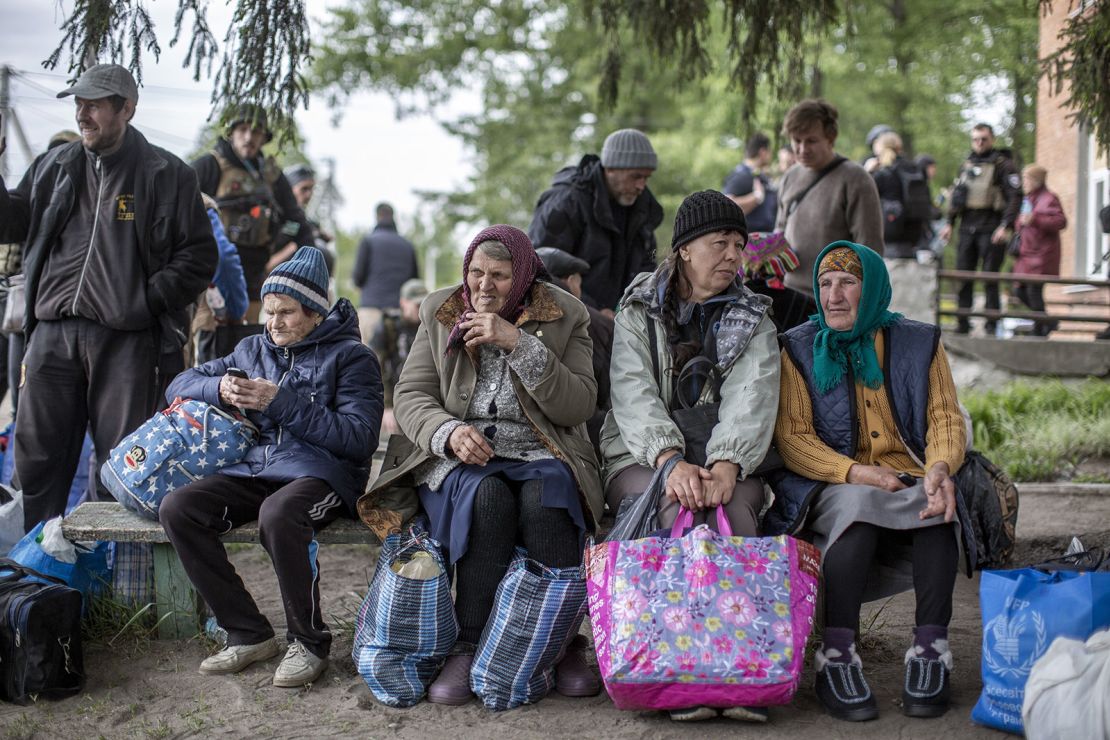
Elderly Ukrainians wait to be evacuated from the city of Vovchansk as Russia advances in Kharkiv region, May 20, 2024.

Franz-Stefan Gady, an associate fellow at the International Institute for Strategic Studies, told CNN the GMLRS cross-border strikes will allow Ukraine “to hit some Russian staging areas, command and control centers, as well as supply depots. It will not stop but complicate Russian military operations against Kharkhiv.”

“We need to be realistic about what can be expected from this policy change, since the Russian armed forces have already adapted to the introduction of ground-based precision fires,” he said.

Mathieu Boulegue, a researcher at the Center for European Policy Analysis, said the policy change would allow Ukraine to “be more efficient when it comes to repelling attacks and pushing back preemptively.”

“It’s not a game changer, per se. It’s an add-on, a steroid, an extra booster for Ukraine to defend itself,” he said.

The US is joining the United Kingdom, France, Germany and several others in removing restrictions on how Ukraine uses the weapons it is given.

Before Biden gave the green light, Putin had made veiled nuclear threats to countries considering allowing Ukraine to strike Russia with their weapons. He warned the move could lead to “serious consequences,” particularly for “small and densely populated countries.”

As well as making nuclear threats, Putin also signaled earlier this month that he was open to peace talks.

“All of these false narratives deliberately aimed to discourage Western decisionmakers from allowing Ukraine to preempt Russia’s attack on Kharkiv city,” Stepanenko said.

While the removal of this taboo appears to mark a new chapter in the war, Russia has previously experienced Ukrainian strikes with Western weapons on territory it considers its own.

Ukraine has frequently targeted occupied Crimea, which Russia annexed in 2014, using “Storm Shadow” missiles provided by the UK.

Ukraine also launched strikes on Kharkiv and Kherson in late 2022, as it sought to liberate the regions occupied by Russia in the early weeks of the full-scale invasion.

In both cases, Russia had warned Ukraine and its Western allies not to cross its red line. In both cases, Ukraine and its Western allies ignored the warning.

“The Kremlin already regards strikes against occupied Crimea and Donetsk, Luhansk, Kherson, and Zaporizhia oblasts as ‘strikes against Russia,’ but the reality is that there are few things that Russia can do to further escalate its war in Ukraine without incurring major risks,” Stepanenko said.

CNN’s Alex Marquardt, Jennifer Hansler, Kylie Atwood, Niamh Kennedy and Anna Chernova contributed reporting.


Categories
Selected Articles

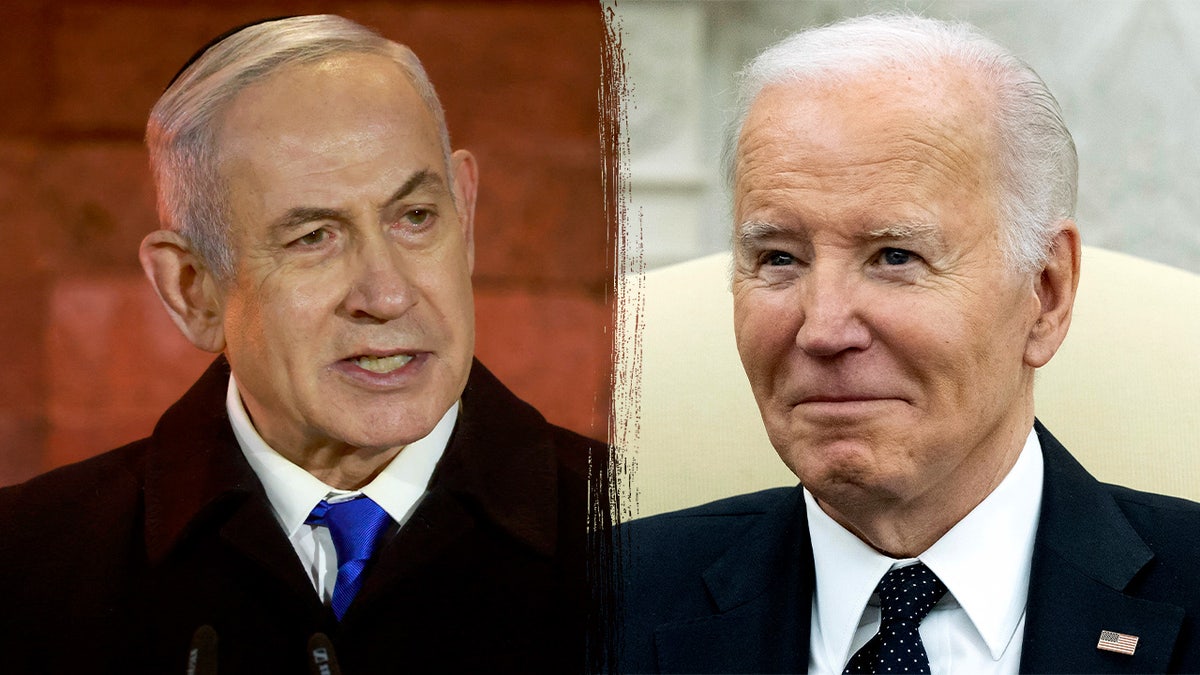
Israel begrudgingly accepts Biden’s Gaza deal: ‘Not a good plan’


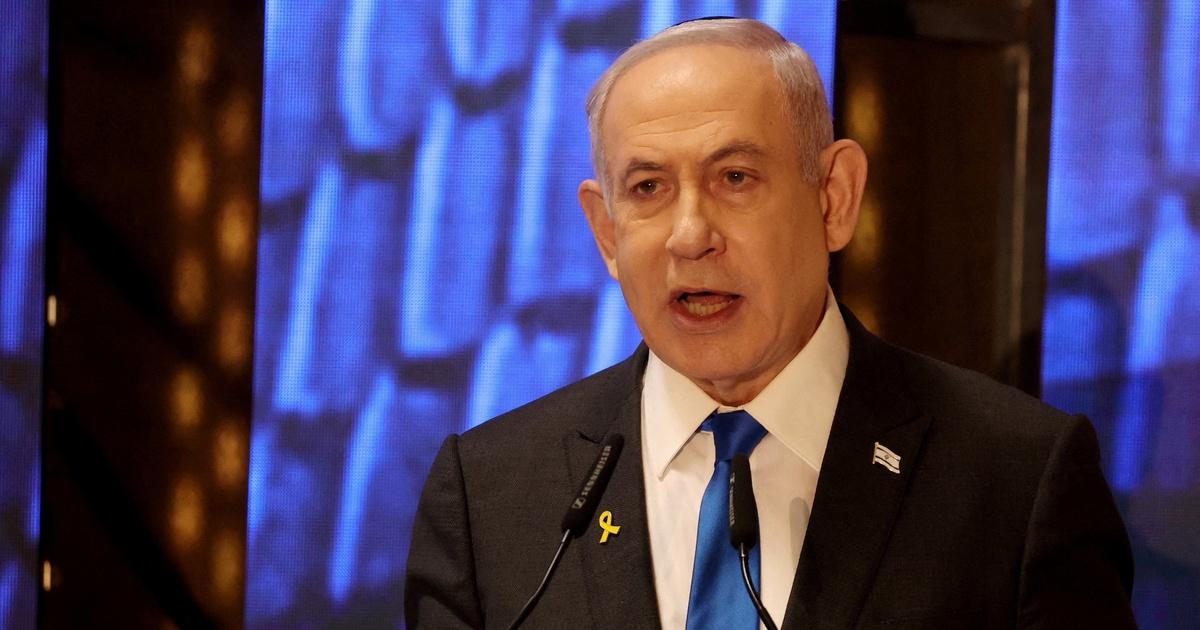
Israeli Prime Minister Benjamin Netanyahu’s government begrudgingly accepted President Biden’s plan for a cease-fire in Gaza on Sunday.

Biden had issued the plan on Friday, and Netanyahu initially responded with dismissal. Hamas has indicated it favors the plan, though no formal agreement has been made.

Ophir Falk, chief foreign policy adviser to Netanyahu described Biden’s plan in an interview with the U.K.’s Sunday Times, saying it was “a deal we agreed to — it’s not a good deal but we dearly want the hostages released, all of them.”

“There are a lot of details to be worked out,” he said, adding that Israel remains committed to “the release of the hostages and the destruction of Hamas as a genocidal terrorist organization.”

NETANYAHU INVITED TO ADDRESS CONGRESS AS BIDEN URGES HAMAS TO TAKE ISRAEL PEACE OFFER

biden and netanyahu

COMBAT IN PART OF NORTH GAZA IS OVER, ISREALI MILITARY SAYS

Netanyahu’s office initially appeared to contradict Biden’s plan in a statement on Saturday, saying Israel’s conditions for ending the war – the destruction of Hamas’s military and governing capabilities, the freeing of all hostages and ensuring that Gaza no longer poses a threat to Israel – had not changed. 

“The notion that Israel will agree to a permanent ceasefire before these conditions are fulfilled is a non-starter,” his office wrote.

Biden’s plan appears to allow for Hamas to continue to exist and play some role in Gaza, however.

In a speech from the White House on Friday, Biden described his “roadmap to an enduring ceasefire and the release of all hostages,” which he said came after intensive diplomacy carried out by a U.S. team with the leaders of Israel, Qatar, Egypt and other Middle Eastern countries.

COMBAT IN PART OF NORTH GAZA IS OVER, ISREALI MILITARY SAYS

In a statement also on Saturday, Hamas said that it viewed the president’s plan positively, particularly “his call for a permanent cease-fire, the withdrawal of [Israeli] forces from Gaza Strip, reconstruction and an exchange of prisoners.”

IDF Forces preparing for possible Rafah campaign

CLICK HERE TO GET THE FOX NEWS APP

In his speech, Biden said the plan consisted of three phases: the first, which would take six weeks, would see a full and complete cease-fire, a withdrawal of Israeli forces from all populated areas of Gaza and a release of a number of hostages. In exchange, Israel would release hundreds of Palestinian prisoners and allow Gaza’s civilians to return to their homes and neighborhoods in all of the Gaza Strip.

Fox News’ Ruth Marks Eglash and Reuters contributed to this report


Categories
Selected Articles

Zelensky says China’s ‘support to Russia’ will extend war in Ukraine during surprise appearance in Asia


2024-06-02t043519z-109953195-rc2s28anlce

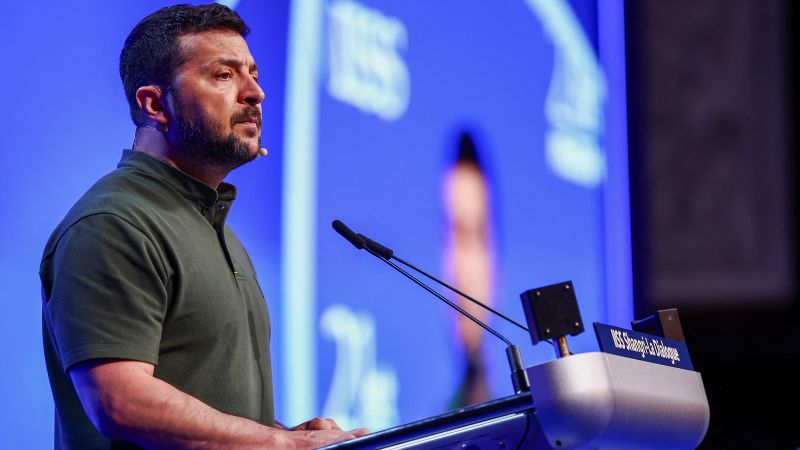
China’s support to Russia will extend the war in Ukraine, President Volodymyr Zelensky said Sunday, as he called on countries across the Asia-Pacific to join an upcoming peace summit he accused Russia of trying to thwart.

Zelensky made the comments in Singapore during a surprise appearance at a meeting of defense chiefs from across the Asia-Pacific, including China and the US. It comes ahead of the international peace conference on Ukraine slated to be held June 15-16 in Switzerland.

“With China’s support to Russia the war will last longer. That is bad for the whole world, and the policy of China – who declares that it supports territorial integrity and sovereignty and declares it officially. For them it is not good,” Zelensky said during a press conference.

China claims neutrality in the conflict and has said it is a proponent of peace, even as it has emerged as a key economic lifeline and tightened its already close strategic and diplomatic partnership with Russia since the country’s February 2022 invasion of Ukraine.

The US has also alleged that China’s export of dual-use goods to Russia is powering the warring country’s defense industrial base and warned Beijing of consequences for such support – a claim Beijing has refuted, saying it has not provided weapons to either side and maintains tight export controls on dual use goods.

Zelensky alluded to such support in comments Sunday, saying certain elements that make up parts of Russia’s weaponry “come from China.”

The Ukrainian leader also warned that Russia was attempting to pressure countries not to join the upcoming international peace summit – with China’s help.

“Russia is trying to disrupt the peace summit and that is true … (Russia) is now traveling around many countries in the world threatening them with the blockade of the agricultural goods, of the food products, of chemical products … it is simply pushing the other countries of the world so that they’re not present on the summit,” Zelensky said after delivering an address at the defense conference.

When asked later about China’s statement it would not attend the peace summit, the Ukrainian leader accused Russia of using Chinese diplomats to disrupt it.

“Regrettably, it is unfortunate that such big independent powerful country as China is an instrument in the hands of Putin,” Zelensky said, speaking through an interpreter.

The Ukrainian leader added that he had not had any meetings with Chinese representatives in Singapore, despite interest on the Ukrainian side for more dialogue.

China last week said it would not send a delegation to the peace summit, saying any international peace conference should have “recognition by both Russia and Ukraine, equal participation by all parties, and fair discussion of all peace plans.”

Chinese Minister of National Defense Dong Jun in an address earlier Sunday said China had been “promoting peace talks with a responsible attitude.”

Dong also appeared to respond to US allegations that China is bolstering Russia’s defense industrial base with dual-use exports, saying in his remarks that China has not provided weapons to either side in the conflict and had put “stricter control” on dual-use exports.

US defense chief Lloyd Austin raised those transactions with Dong during a sideline meeting Friday, where he warned of consequences for any Chinese support of Russia’s military.

CNN has reached out to China’s Ministry of Foreign Affairs for comment on Zelensky’s claims.

The Ukrainian leader’s in-person appeal at the Shangri-La Dialogue comes as Ukraine’s troops scramble to repel a major Russian advance into its northeast region of Kharkiv amid shortages of weaponry and manpower more than two years into Russia’s invasion – raising the urgency for Kyiv to bolster international support for its peace plan.

Zelensky’s plan calls for the full withdrawal of Russian forces and a restoration of Ukraine’s internationally recognized borders. The Ukrainian leader has previously said he won’t negotiate with Russia until its forces withdraw.

“Time is running out” including for Ukrainian children taken by Russia, Zelensky told a packed hall during an address on the closing day of the three-day security meeting.

The summit, he said, would address three points of his peace formula, including “nuclear security, food security, and the release of prisoners of war,” as well as “Ukrainian children abducted by Russia” and enable countries to come to a consensus on peace in Ukraine that could be “passed to Russia.”

The International Criminal Court in The Hague last year issued an arrest warrant for Russian President Vladimir Putin for an alleged scheme to deport Ukrainian children to Russia.

Russia has referred to the peace conference as “trickery” designed by the United States, with a Ministry of Foreign Affairs spokesperson last week saying the “real ‘peace formula’” was for Western countries to stop providing Ukraine with weaponry.

So far more than 100 countries and international organizations have committed to join the gathering, Zelensky said.

The upcoming peace summit and Ukraine’s defense were also key topics for Zelensky as he held sideline meetings since arriving in Singapore on Saturday.

Those included talks with US Defense Secretary Austin, Indonesia’s President-Elect Prabowo Subianto, and Timor-Leste’s President José Ramos-Horta, as well as a delegation of American lawmakers.

In his meeting with Zelensky Sunday morning, Austin reiterated “unwavering US support for Ukraine in the face of Russian aggression” and provided an update on American security assistance to Ukraine, according to a readout from Pentagon press secretary Maj. Gen. Pat Ryder after the meeting.

Zelensky said in a post on Twitter that the two sides discussed “the defense needs of our country, bolstering Ukraine’s air defense system, the F-16 coalition, and drafting of a bilateral security agreement.”

He also thanked US President Joe Biden for “an important decision” regarding defensive strikes with American weapons, in reference to the White House’s decision, as reported by CNN, to permit Ukraine to use American munitions for limited strikes within Russian territory.

CNN’s Natasha Bertrand, Eric Cheung, Sandi Sidhu and Wayne Chang contributed to this report.


Categories
Selected Articles

Zelensky Hails ‘Very Good’ Meeting with US Defense Secretary Austin in Singapore


Ukrainian President Volodymyr Zelensky said Sunday he had a “very good” meeting with US Defence Secretary Lloyd Austin in Singapore, as he seeks to rally support for Kyiv while a Russian offensive gains ground.

Zelensky met with Austin on the sidelines of the Shangri-La Dialogue, a major security forum attended by defense officials from around the world.

Follow our coverage of the war on the @Kyivpost_official.

The meeting came after Washington decided to partially lift restrictions on using US-provided weapons to strike inside Russia, which Zelensky has hailed as a “step forward”.

Asked about the meeting by reporters as he left the room, the Ukrainian president said it was “very good”. Austin made no comment.

A US official travelling with Austin had told AFP the pair would meet to “discuss the current battlefield situation in Ukraine and to underscore US commitment to ensuring Ukraine has what it needs to defend itself against ongoing Russian aggression”.

Zelensky is appealing for more military aid for the Ukrainian army, which has been ceding ground to relentless Russian attacks.

Zelensky and Austin last met face-to-face in December in Washington, where Zelensky made a last-ditch plea for US aid before it ran out.

The US Congress approved in April a $61 billion financial aid package for Ukraine following months of political wrangling, unlocking much-needed arms for the country’s outgunned troops


Page 2

AFP


Categories
Selected Articles

Donald Trump suffers triple polling blow in 48 hours after guilty verdict


Former President Donald Trump has suffered losses in three separate polls in the 48 hours since his guilty verdict in his Manhattan criminal trial.

A New York jury on Thursday found Trump, the presumptive GOP presidential nominee, guilty on 34 counts of falsifying business records relating to a hush money payment made to adult film star Stormy Daniels by Trump’s then-lawyer and fixer Michael Cohen shortly before the 2016 presidential election. Daniels alleges she had a sexual encounter with Trump in 2006, which he denies. Trump has maintained his innocence, claiming the case is politically motivated, and his lawyers plan to fight the verdict and appeal the case if necessary.

In a YouGov snap poll conducted just hours after the verdict was announced, 50 percent of the 3,040 U.S. adults who were polled said they believed Trump was guilty, while 30 percent said they believed he was not guilty. Another 19 percent said they were not sure. The poll has a margin of error of plus or minus 2.3 percent.

When broken down into party lines, 15 percent of Republicans think he is guilty while 64 percent do not, 48 percent of independents think Trump is guilty while 25 percent do not, and 86 percent of Democrats believe he is guilty while 5 percent do not. A total of 831 Republicans, 1,114 independents, and 1,113 Democrats were surveyed. The margin of error of the subgroups are unclear.

Donald Trump

Former President Donald Trump arrives to Trump Tower on Thursday in New York City. Trump has suffered losses in three separate polls in the 48 hours since his guilty verdict in his Manhattan criminal trial.
James Devaney/GC Images

A Morning Consult poll conducted on Friday found 54 percent of registered voters approve of the jury’s verdict while 39 percent disapprove. Across party lines, 18 percent of Republicans approve of the verdict while 74 percent disapprove, 52 percent of independents approve while 33 disapprove and 88 percent of Democrats approve while 8 percent disapprove. The poll surveyed 2,220 registered voters and had a margin of error of plus or minus 2 percentage points. The sizes and margins of error of the subsamples are also unclear.

Of the 2,220 registered voters, 51 percent said Trump should end his presidential campaign, while 43 percent said he should not. The majority of Republicans surveyed in the poll (79 percent) believe Trump should not drop out, however, 15 percent said he should. Meanwhile, 87 percent of Trump supporters don’t want him to end his campaign while 8 percent do. The margin of error for the Republican subsample is unclear.

A Reuters/Ipsos poll conducted between Thursday and Friday found that 5 percent of Republicans and 21 percent of independents said they are much less likely to vote for Trump because of the jury’s ruling. Meanwhile, 30 percent of Republicans and 13 percent of independents said the verdict made them much more likely to vote for Trump. However, the majority of Republicans (55 percent), independents (58 percent), and Democrats (58 percent) said the verdict didn’t change their minds on whether or not to vote for the former president.

The subsample of Republicans was 828 U.S. adults (with a margin of error of plus or minus 3.6 percent), independents was 708 (with a margin of error of plus or minus 4.0 percent), and Democrats was 774 (with a margin of error of plus or minus 3.7 percent).

Meanwhile, Steven Cheung, Trump’s campaign communications director, told Newsweek via email on Saturday, “President Trump has seen an outpouring support, which has led to polling increases and record-shattering fundraising numbers that include close to $53 million in just 24 hours, 30% of those who are new donors.”

He also mentioned a snap Daily Mail/J.L. Partners poll taken after Thursday’s verdict, which found that Trump’s approval rating was up by 6 percentage points compared to those who disapproved.

A total of 22 percent of likely voters had a more positive view of Trump after his guilty verdict while 16 percent had a more negative view. Meanwhile, 32 percent of likely voters who already had a negative view of Trump had no change of opinion while 27 percent of likely voters who already had a positive view of Trump had no change. The poll surveyed 403 likely voters from Thursday to Friday and had a margin of error of plus or minus 4.9 percent.

Newsweek is committed to challenging conventional wisdom and finding connections in the search for common ground.

Newsweek is committed to challenging conventional wisdom and finding connections in the search for common ground.


Categories
Selected Articles

PBS NewsHour


TVmH5iJ-asset-mezzanine-16x9-R4qVysm.jpg

GOOD EVENING, I’M JOHN YANG.

ISRAELI PRIME MINISTER BENJAMIN NETANYAHU HAS THROWN UP A HURDLE TO PRESIDENT BIDEN’S PROPOSED PATH TO ENDING THE WAR IN GAZA.

HE SAID THERE CAN BE NO PERMANENT CEASEFIRE UNTIL HAMA” MILITARY AND GOVERNING CAPABILITIES ARE DESTROYED.

IN A STATEMENT, NETANYAHU SAID “THE NOTION THAT ISRAEL WILL AGREE TO A PERMANENT CEASEFIRE BEFORE THESE CONDITIONS ARE FULFILLED IS A NON-STARTER.”

ON FRIDAY, MR. BIDEN SAID ISRAEL’S BOMBARDMENT OF GAZA HAS LEFT HAMAS “NO LONGER CAPABLE” OF ANOTHER LARGE-SCALE ATTACK ON ISRAEL LIKE OCTOBER 7 AND THAT IT IS “TIME FOR THIS WAR TO END.”

THE FAMILIES OF ISRAELIS HELD HOSTAGE IN GAZA CALLED ON BOTH ISRAEL AND HAMAS TO TAKE THE DEAL.

HAMAS SAID IT VIEWS THE PRESIDENT’S PROPOSAL “POSITIVELY,” AS DO MANY WAR-WEARY GAZA RESIDENTS.

>> [TRANSLATED] THIS PROPOSAL CAME LATE, BUT BETTER LATE THAN NEVER.

WE HOPE FROM GOD, THE AMERICAN ADMINISTRATION, AND THE EUROPEAN COMMUNITY IN GENERAL TO CONTINUE TO PUT PRESSURE ON ISRAEL FOR A CEASE-FIRE.

JOHN: NETANYAHU ALSO ACCEPTED AN INVITATION FROM THE BIPARTISAN CONGRESSIONAL LEADERSHIP TO ADDRESS A JOINT MEETING OF THE HOUSE AND SENATE.

A BARRAGE OF 100 RUSSIAN MISSILES AND DRONES TARGETED THE POWER GRID ACROSS UKRAINE TODAY.

AT LEAST 19 PEOPLE WERE INJURED, EIGHT OF THEM CHILDREN.

THE ATTACK CAME AS UKRAINIAN PRESIDENT VOLODYMYR ZELENSKYY IS ATTENDING A DEFENSE SUMMIT IN SINGAPORE, TRYING TO CONVINCE MORE ASIAN AND WESTERN COUNTRIES TO SUPPLY WEAPONS TO HIS COUNTRY AND CUT TIES WITH MOSCOW.

SOUTH AFRICA’S ANC PARTY HAS LOST ITS MAJORITY IN PARLIAMENT FOR THE FIRST TIME SINCE THE END OF WHITE MINORITY RULE 30 YEARS AGO.

THE PARTY ONCE LED BY NELSON MANDELA GOT JUST OVER 40 PERCENT OF THE VOTE IN NATIONAL ELECTIONS THIS WEEK.

SOUTH AFRICA IS STRUGGLING WITH HIGH UNEMPLOYMENT, ELECTRICITY AND WATER SHORTAGES, AND RAMPANT CRIME.

AND AN ATTEMPT TO LAUNCH BOEING’S FIRST ASTRONAUT FLIGHT WAS CALLED OFF AT THE LAST MINUTE TODAY, THE LATEST IN YEARS OF TECHNICAL PROBLEMS AND COSTLY DELAYS FOR THE STARLINER PROJECT.

THE ASTRONAUTS WERE IN THE CAPSULE ON THE LAUNCHPAD AND JUST MINUTES AWAY FROM HEADING TO THE INTERNATIONAL SPACE STATION WHEN A COMPUTER DETECTED A PROBLEM AND SHUT DOWN THE COUNTDOWN AT 3 MINUTES, 50 SECONDS.

IT’S ONE MORE BIT OF UNWELCOME NEWS FOR BOEING, WHOSE COMMERCIAL AIRLINERS HAVE BEEN SCRUTINIZED FOR SAFETY ISSUES.

STILL TO COME ON “PBS NEWS WEEKEND,” WHAT RELAXED COVID GUIDELINES MEAN FOR PEOPLE WITH DISABILITIES.

AND WHY RENTS ARE STILL HIGHER IN MUCH OF THE COUNTRY THAN BEFORE THE PANDEMIC.


Categories
Selected Articles

PBS NewsHour | News Wrap: Netanyahu clashes with Biden over Gaza cease-fire | Season 2024 | Montana PBS – montanapbs.org


PBS NewsHour | News Wrap: Netanyahu clashes with Biden over Gaza cease-fire | Season 2024 | Montana PBS  montanapbs.org

Categories
Selected Articles

Senior Netanyahu adviser on Biden’s Gaza truce offer: ‘It’s not a good deal but we dearly want the hostages released’ – The Times of Israel


Senior Netanyahu adviser on Biden’s Gaza truce offer: ‘It’s not a good deal but we dearly want the hostages released’  The Times of Israel