
The Moscow court ordered the French citizen, accused of gathering Russian military information, to be held in pre-trial detention on Friday, in the latest case of a Western citizen being detained in Russia.
Category: Selected Articles
Category Added in a WPeMatico Campaign
- Infowars host Alex Jones agrees to sell off his assets as he admits he has to pay Sandy Hook families NBC News
- Alex Jones to liquidate assets to pay Sandy Hook families CBS News
- Alex Jones Will Sell Off Infowars to Help Pay $1.5 Billion He Owes to Sandy Hook Families Rolling Stone
- Alex Jones to liquidate assets to help meet $1.5bn Sandy Hook judgment The Guardian US
- Is Alex Jones Broke? What We Know Newsweek

German researchers have pointed out that the onset of excess mortality in early 2021 in the country coincided with the rollout of vaccines, which the team said “warranted further investigation”.
However, more recent data regarding side-effects has not been made available to the public, with countries keeping their own individual databases of harms, which rely on self-reporting by the public and doctors, the experts warned.
Delays to other treatments
Researchers said that it was “likely” that the impact of containment measures, restricted healthcare and socioeconomic upheaval during the pandemic had contributed to deaths, although accepted that was difficult to prove.
Gordon Wishart, chief medical officer at Check4Cancer, and visiting professor of cancer surgery at Anglia Ruskin University, warned repeatedly that delaying cancer diagnosis would lead to deaths.
“It was predicted early in the lockdown period that limited access to healthcare for non-Covid conditions would lead to delays in the diagnosis and treatment of time-critical conditions such as cancer, cardiac disease, diabetes and dementia and that this would lead to excess deaths from these conditions,” he said.
NHS England data shows that per 100,000 people the cancer incidence was 521 in the pre-lockdown year, then fell to 456 in 2020-2021, suggesting around 45,000 cancers were missed in the first pandemic year.
The incidence rate rose to 540 per 100,000 the following year suggesting many cancers were diagnosed late, when treatment would be less effective.
Speaking about the potential for vaccine harm, Mr Wishart added: “The authors are correct to point out that many vaccine-related serious adverse events may have been unreported, and point to the fact that the simultaneous onset of excess mortality and Covid vaccination in Germany is worthy of further investigation on its own.
“The paper provides more questions than answers but, it is hard to disagree with their conclusion that further analysis is required to understand the underlying causes of excess mortality to better prepare for the future management of pandemic crises”
Categories
Article

Oops! We didn’t find anything on that query, try again with a different query!
This content has been removed. Get more news at Philanthropy News Digest.”
COVID vaccines could be partly to blame for a rise in “unprecedented” excess deaths in the US and other Western countries in the three years since the pandemic took hold, a new study suggests.
Analyzing mortality data from 47 Western countries, scientists from the Netherlands’ Vrije Universiteit found that excess mortality has “remained high” since 2020 — despite the widespread rollout of COVID vaccines and various containment measures.
The researchers said the trend “raised serious concerns” as they urged government leaders and policymakers to “thoroughly investigate the underlying causes of persistent excess mortality,” according to the study published in BMJ Public Health.
Vrije Universiteit ranks 150th out of more than 20,000 universities globally, according to the Center for World University Rankings.
 COVID vaccines could possibly be to blame, in part, for a rise in “unprecedented” excess deaths in the US and other Western countries, a study from the Netherlands’ Vrije Universiteit found. AP
“Although COVID-19 vaccines were provided to guard civilians from suffering morbidity and mortality by the COVID-19 virus, suspected adverse events have been documented as well,” the researchers wrote.

“Both medical professionals and citizens have reported serious injuries and deaths following vaccination to various official databases in the Western World.”
“During the pandemic, it was emphasized by politicians and the media on a daily basis that every Covid-19 death mattered and every life deserved protection through containment measures and Covid-19 vaccines. In the aftermath of the pandemic, the same moral should apply,” they added.
The study found there had been more than 3 million excess deaths across the US, Europe and Australia since 2020.
Of those excess deaths, more than 1 million occurred in 2020 at the height of the pandemic, according to the study.
Those figures, however, remained high in the following years, with 1.2 million in 2021 and 800,000 in 2022, researchers added.
The death toll figures include fatalities directly linked to the virus, as well as “indirect effects of the health strategies to address the virus spread and infection,” the study notes.
 The study found there had been more than 3 million excess deaths across the US, Europe and Australia since the pandemic took told in 2020. BMJ Public Health
The researchers added that serious side effects of the vaccines had been documented, including ischemic strokes, acute coronary syndromes and brain hemorrhages.
“This commonality hinders clinical suspicion and consequently its detection as adverse vaccine reactions,” the study stated.
More than 1.1 million Americans have died from COVID since the pandemic broke out, according to the US Centers for Disease Control and Prevention.
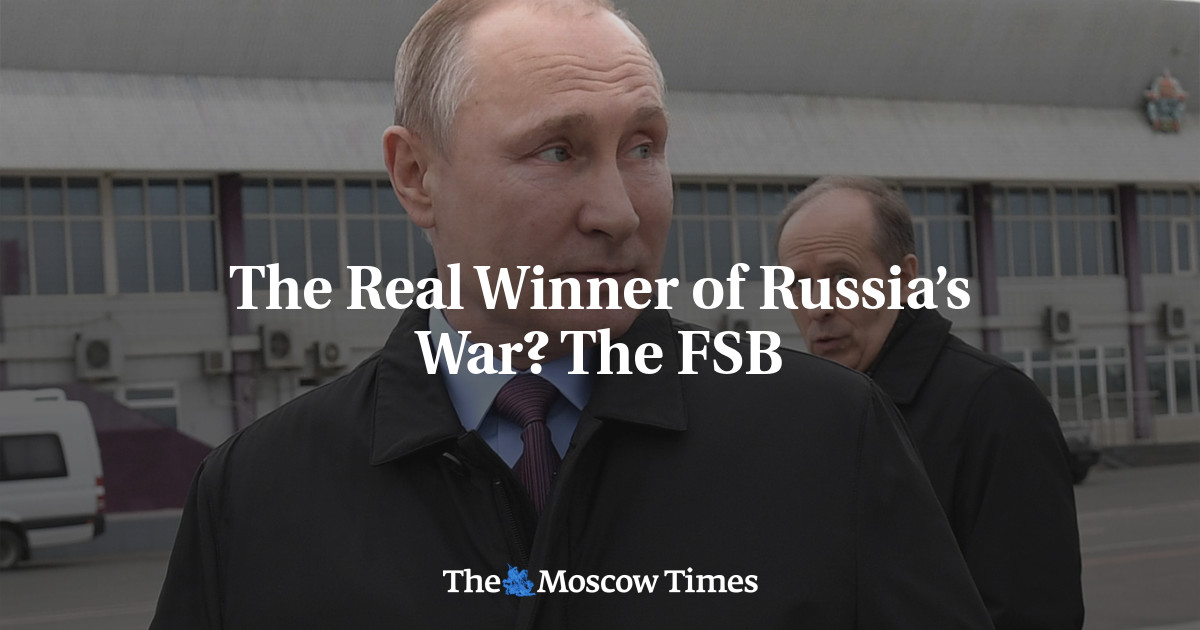
Exactly 25 years ago, the man widely regarded as President Vladimir Putin’s political instructor was hiding in Paris from the Russian police. Anatoly Sobchak, the former mayor of St. Petersburg, was suspected of corruption and was helped to leave Russia on a Finnish private jet by KGB lieutenant colonel Vladimir Putin, who had just been appointed director of Russia’s FSB.
When I interviewed him on my program “Top Secret”, Sobchak seemed a bit confused and unable to imagine the future. But that evening in the lobby of the Hôtel Ambassadeur we talked about the future. As we were leaving, Sobchak said to me, “I understand why Yeltsin chose Putin as his successor — he would never betray you. But I also understand that once he has power, Putin will never give it back to anyone.”
The meaning of these words was then understood by very few people, but Sobchak did not hope to be heard.
A quarter of a century later, Vladimir Putin’s supporters and critics understand exactly what Sobchak meant. Putin has only one successor — himself. The transition of power, about which so many political scientists both in Russia and abroad have speculated, ended in the elections this March.
If Putin still holds power in 2036 — which the sham 2020 referendum enabled him to do — he will surpass Josef Stalin and Catherine the Great to become the longest-ruling leader of Russia. After the outbreak of war with Ukraine, when Russian Foreign Minister Sergei Lavrov was asked whether Putin consulted with him, he replied, “Putin has three advisers — Ivan the Terrible, Peter the Great and Catherine the Great.”
Having placed himself on the level of the tsars, Putin remembers that power changed only after the monarch’s death. To continue this political tradition, however, two conditions must be met. The tsar must be reliably protected from assassination and must never give up the throne himself.
When Putin became president in the spring of 2000, at a closed board meeting of the Russian FSB, he said from the podium: “The KGB’s task of infiltrating the Russian government has been accomplished.” It is unclear whether he was joking or serious.
But from that moment on, the influence of the FSB on all the processes taking place in the country grew every year. Until May of this year, the only state institution that was not subject to the FSB’s influence was the army. Putin considered the military to be the most important pillar of power, but he never trusted it 100%.
When Putin approached Sergei Shoigu in November 2012 to take over as defense minister, Shoigu set one condition: that there be no FSB officers around him in the army leadership. Putin agreed, receiving in return a military leadership personally loyal to him. But to balance controlled conflicts within the Defense Ministry, Putin appointed General Valery Gerasimov, considered a close ally of Shoigu, to the post of Chief of the General Staff in the same fall of 2012. The time of the security services, for whom control over the army and its budgets was a cherished dream, had not yet arrived. It was to come later.
Until February 2022, there was a conditional truce between the influential clans in the Russian government. But two years ago, the FSB, whose reports (as well as those of the military) had convinced Putin that victory in Ukraine would be easy, opened its own personal front — an internal one. The FSB’s task was to take control of all spheres of life in Russia, to destroy the opposition and its leaders, to introduce censorship, to subjugate the industrial sector, financial institutions, culture and, of course, the military.
After Putin’s victory in the heavily corrupt presidential election, the Chekists went on the offensive. As journalists at Agenstvo calculated, 21 criminal cases were opened against officials and heads of state companies between March and April alone. Not only was Deputy Defense Minister Timur Ivanov arrested, but also Gennady Sakharov, an executive at the state Rosatom corporation, and Igor Andreev, vice president of Rossiya Bank. The truce among the elites is over.
But despite what the Kremlin says, this is not a fight against corruption. It is a fight for power.
By the beginning of Putin’s fifth term, the FSB had won. Officials from the Culture Ministry can tell you that all films are reviewed by two plainclothes officers before a rental certificate is issued. Raw materials businessmen will tell you how the new board of directors includes undercover FSB officers. The work of the presidential administration is controlled by the FSB’s Second Service (that combats terrorism and “protects the constitutional order”), and the Security Council is staffed only by security officers. To paraphrase Putin’s quote from 2000, Lubyanka has infiltrated the country’s hierarchy of power more successfully than at any other point in history.
Therefore, it was not difficult for the FSB to lobby for its employees to be exempt from military service, remaining to guard the political comfort of the regime in the rear. This decision caused serious irritation among the Defense Ministry and other institutions of power. But Putin sided with his former colleagues from the FSB, whom the historian of special services Andrei Soldatov once called “the new nobility.”
Historically, the Russian nobility was a military class. During the War of 1812, when the Russian army was defending its country rather than attacking a neighbor, representatives of the nobility led the fight. Now, the elites from the FSB, Interior Ministry, Federal Penitentiary Service, and special services remain at the rear.
Their real task in the conditions of the military-political “special operation” is not to protect the people, but to secure the regime. But in fulfilling this task, there is an inevitable temptation for the aforementioned elites to become an integral part of the state, and in the long run — to lead it.
However, this battle of the bulldogs in Moscow may deal the Kremlin a blow far more severe than the drones and missiles coming from Ukraine. The Russian system of political power is now organized in such a way that any bias in the direction of one of the clans can lead to the collapse of the pyramid or a coup by the siloviki.
And it is not by chance that today. Mikhail Khodorkovsky wrote that in 1996 Russia did not face a choice between Yeltsin and Gennady Zyuganov, the Communist Party candidate. The choice was between electing Yeltsin and declaring a state of emergency. The FSB and FSO were in favor of a state of emergency that would have turned Yeltsin into a puppet of the security services. “By defending the rejection of the state of emergency, we postponed the FSB’s rise to power for 8-12 years.”
Putin’s new term is just beginning. It will take place under the full control of the FSB, whose presence in government at all levels is growing constantly. Data suggests that in the last years of the Soviet Union, only 3% of officials in top government positions were representatives of special services. During Yeltsin’s rule, the figure was over 30% and has risen to 70-80% today.
Putin’s regime has become a dictatorship of the security services, which will try to ensure the sustainability of this model of government for as long as possible. But that will only be the case until the rising clan of young siloviki sees the 72-year-old president as a weak link in the chain of power.
… we have a small favor to ask. As you may have heard, The Moscow Times, an independent news source for over 30 years, has been unjustly branded as a “foreign agent” by the Russian government. This blatant attempt to silence our voice is a direct assault on the integrity of journalism and the values we hold dear.
We, the journalists of The Moscow Times, refuse to be silenced. Our commitment to providing accurate and unbiased reporting on Russia remains unshaken. But we need your help to continue our critical mission.
Your support, no matter how small, makes a world of difference. If you can, please support us monthly starting from just $2. It’s quick to set up, and you can be confident that you’re making a significant impact every month by supporting open, independent journalism. Thank you.
Not ready to support today? Remind me later.