
Categories
Blogs and Tweets

From the Republic of Georgia, a president’s plea to the West: Stop Russia here


Michael_Novakhov
shared this story
from The Christian Science Monitor | USA.

Salome Zourabichvili has a message tailored to the “America First” Washington of President Donald Trump.

The fifth president of Georgia – a small country of only 3.7 million people, yet strategically placed along the Black Sea in Central Europe’s Caucasus region – is the de facto standard-bearer of Georgia’s grassroots opposition movement. She says her homeland’s democracy and Western values are under threat. But that’s not why the United States should care. Instead, Ms. Zourabichvili points to the U.S. interests at stake in a region that in recent years has shifted in favor of Russia, China, and even Iran.

“Democracy is for us to defend; that’s the work of the people who are on our streets every day,” she told a gathering of journalists organized by the Monitor in Washington Wednesday morning. “But if we’re talking about a strong America, a strong America starts in this very strategic region” encompassing the Caucasus and the Black Sea.

Why We Wrote This

Salome Zourabichvili, Georgia’s “only legitimate president,” warned at a Monitor Breakfast that American interests would be at risk should her country and region fall under Russia’s sway.

Noting that “We are already a very strategic region to Russia,” she adds that it would be “a very major retreat for America” to cede influence to Moscow and an increasingly engaged Beijing.

Ms. Zourabichvili refused to step down this past December when Mikheil Kavelashvili was inaugurated as Georgia’s new president after elections that many Georgians and most Western countries dismissed as fraudulent.

Calling herself Georgia’s “only legitimate president,” Ms. Zourabichvili has spent recent weeks bucking up an opposition movement that has spread beyond the capital, Tbilisi, to dozens of smaller cities and towns.

But she is also touring European capitals and now Washington, warning that without a strong and united response from Western powers, Russia and China will extend their dominance westward.

When introduced to then-President-elect Trump at the official reopening of the Notre Dame cathedral in Paris in December, “I told [him] that this is a strategic region that cannot be forgotten by the United States,” she says, adding that she got the impression her point was received with interest. Noting that Mr. Trump has been to Georgia and indicated to her that he enjoyed being in her country, she adds of the encounter, “This was not an abstract moment; [he] can be considered a friend of Georgia.”

Ms. Zourabichvili says she shared the same message with Secretary of State Marco Rubio when she met him briefly at one of several inaugural events she attended – including Monday’s inauguration at the U.S. capital – at the invitation of Republican Rep. Joe Wilson of South Carolina.

To what extent Washington’s new powers will incorporate the Black Sea and Caucasus region’s geopolitical power play into their priorities remains to be seen, Ms. Zourabichvili says. But she emphasizes that the West can only ignore Russia’s increasingly sophisticated approach of undermining independent and pro-Western countries through subversion of free and fair elections at its peril.

“There is a strategy” for the entire region, she says, “and we had better start recognizing it.”

And to anyone mourning Washington’s apparent shift in foreign policy from former President Joe Biden’s emphasis on democracy and American values such as human rights to President Trump’s more muscular “peace through strength” and “America First,” Ms. Zourabichvili has another message.

From Georgia’s experience, she says, the Biden doctrine turned out to be mostly lip service.

“The previous administration … did not really do anything about preserving democracy in Georgia over the past two years,” she says, noting that it was not until Dec. 29, with the investiture of President Kavelashvili, that Washington imposed sanctions on what she calls “the new regime.”

Also that day, the country’s new prime minister announced that Georgia would “suspend” its candidacy for the European Union, a step largely opposed by the public.

At Wednesday’s breakfast, Ms. Zourabichvili was reminded that President Trump has shaken allies with his own “expansionist” plans, with talk of seizing the Panama Canal and acquiring Greenland.

The Georgian leader was careful not to burn any bridges, even as she underscored the principle of the integrity of international borders as a bedrock of international security.

“Donald Trump might talk about expansion, but the Russians have been doing it,” she says, noting Russia’s occupation of two Georgian regions. Important clues will come from the Trump administration’s stance on resolution of Russia’s war in Ukraine, she says.

For the sake of global stability, the world’s powers, including the U.S., “need to finally get Russia to accept to become an important power but … one that lives within its borders,” she says. “This ends when Russia has borders.”


Categories
Blogs and Tweets

https://t.co/w7CyIxV3X0 The South Caucasus News – https://t.co/FG8oiDxSpO #SouthCaucasus #SouthCaucasusNews #Armenia #Azerbaijan #Georgia Armenia Azerbaijan Georgia https://t.co/l6Spdb2DOV On Facebook – https://t.co/DTjXIbsAco Comprehensive, Balanced, Tim


Categories
Blogs and Tweets

RT @CaliberEnglish: 🇦🇿🇨🇳 President Ilham Aliyev gives exclusive interview to China’s CGTN in Davos https://t.co/lBsLbjJJMm #Caliber #Azer…


Categories
Blogs and Tweets

RT @news_az: #Gas route through #Azerbaijan: What’s behind #Russia’s new energy strategy? https://t.co/i5KZ6PRigo


Categories
Blogs and Tweets

RT @CaliberEnglish: ❗️Month after AZAL crash: Investigations progress and new revelations https://t.co/nrnHYm5uib #Caliber #Azerbaijan #R…


Categories
Blogs and Tweets

RT @azerhasret: #Iran’s ambassador summoned to the @AzerbaijanMFA to hear dissatisfaction in regard to his country’s attitude towards #Azer…


Categories
Blogs and Tweets

Armenia’s influence and Rubio’s role in shaping U.S. policy in S Caucasus


Michael_Novakhov
shared this story
from AzerNews – News from Azerbaijan, Business, Energy, Analysis.
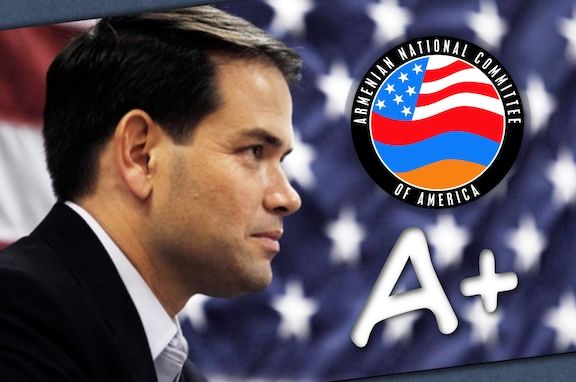
The appointment of Marco Rubio as Secretary of State under
President Trump has sparked discussions on the future direction of
U.S. foreign policy, particularly in relation to the South Caucasus
region. Rubio, known for his hawkish stance and internationalist
views, will play a significant role in shaping the administration’s
approach to global affairs. His comments on Iran, AUKUS, and other
key issues suggest that the U.S. may adopt a more assertive foreign
policy, though uncertainties remain regarding how these changes
will manifest in the South Caucasus.

Rubio’s approach to foreign policy, which prioritizes American
strength on the global stage, contrasts with the isolationist
tendencies of former President Trump. However, Rubio’s expertise,
honed through years of work on the Senate Foreign Relations
Committee and Senate Intelligence Committee, positions him as a
potential leader in shaping U.S. foreign relations. Despite his
background and experience, Rubio will face challenges, particularly
given his previous conflicts with President Trump and the
unpredictability of the administration.

How about the possible implications for the South
Caucasus region? The future of the South Caucasus in the context of
Rubio’s role and the broader Trump administration remains
uncertain, at least for now…

Policy Shifts Toward Iran: Rubio’s tough stance
on Iran, especially his commitment to preventing its nuclear
capabilities, could significantly affect the South Caucasus.
Azerbaijan, wary of Iran, may gain strategic importance as U.S.
pressure on Tehran escalates. However, a more aggressive approach
could also heighten regional tensions and destabilize neighbouring
areas.

U.S. Relations with Georgia: Georgia’s
alignment with the U.S. is vital for regional stability and will be
closely scrutinized under the new administration. Rubio’s policy
decisions could influence Tbilisi’s future, particularly in terms
of closer U.S. ties or opposition to the current government.

Russia’s Role: The region’s reliance on Russia
for security may increase amidst an unpredictable U.S. foreign
policy. The South Caucasus remains a strategic area of competition,
and changes in U.S. policy could either strengthen or weaken
Russia’s influence, potentially forcing regional states to choose
sides.

Azerbaijan, which has long prioritized strengthening ties with
the United States, finds itself at a crossroads as it moves into a
new era of diplomacy with Rubio at the helm. Throughout its history
of statehood, Azerbaijan has made concerted efforts to establish
solid political and economic relations with the U.S. Yet, during
the Biden administration, relations faced challenges, particularly
due to a perceived bias toward Armenia, fueled by the influence of
the Armenian lobby. In Azerbaijan, Biden will be remembered as a
president who, according to many, allowed the Armenian narrative to
dominate American foreign policy toward the region. His decision to
pardon his son and Antony Blinken’s tenure, marred by dishonesty,
further eroded trust in the administration.

With Rubio now in power, Azerbaijan may have a more balanced
diplomatic partner. Rubio’s foreign policy stance, rooted in
strength and security, aligns closely with Azerbaijan’s national
interests. However, Rubio’s appointment also comes at a time when
U.S. policy toward the South Caucasus is still unclear. Initial
indications reportedly suggest that there are pro-Armenian voices
within the new administration. For example, Marco Rubio himself,
and Tulsi Gabbard, nominated for the position of Director of
National Intelligence, have expressed pro-Armenian positions. Their
views will likely influence the White House’s policy, however,
these figures could wield considerable influence in shaping U.S.
policy toward Armenia and Azerbaijan, potentially complicating the
dynamics of the U.S.-Azerbaijan relationship.

We should of course note that, the Armenian National Committee
of America (ANCA) continues to work relentlessly to undermine
relations between Armenia and Azerbaijan. The ANCA, despite the
potential consequences, has long tried to sow discord in
U.S.-Azerbaijan relations. Which has been noticeable during the
Biden administration. Their (ANCA) actions, including submitting
testimony in support of Rubio’s confirmation as Secretary of State,
are part of a broader strategy to keep the U.S. aligned with
Armenian interests, regardless of the geopolitical realities at
play. It’s unfortunate to observe how one lobby’s policies diverge
from those of the country it represents, often enjoying greater
representation than the country itself. Despite the Armenian
authorities’ evolving and hopeful approach to relations with
Azerbaijan, the lobby continues to adopt a provocative stance. This
ongoing influence from Armenian lobby groups highlights the
challenges the U.S. government faces as it seeks to balance
competing interests in the region.

On the other hand, Rubio’s hawkish policies may also be met with
resistance from those in the U.S. who view a more isolationist
stance as preferable. President Trump’s unpredictable approach to
foreign relations, which included clashes with NATO allies and a
strained relationship with his own Cabinet members, left a legacy
of instability in U.S. foreign policy. Rubio’s ability to lead will
depend on his ability to navigate the internal contradictions
within the administration and stay true to the strategic goals he
has outlined.

Despite these challenges, Rubio’s early statements have already
given Azerbaijan hope for a renewed, more balanced relationship
with the U.S. His approach to foreign policy, characterized by
strength and pragmatism, could lead to closer economic and military
ties between the two countries. However, the actions of lobbying
groups like the ANCA, which continue to push for policies that
favour Armenia, could complicate these efforts. Rubio will need to
carefully navigate the political landscape to ensure that U.S.
policy reflects the evolving realities of the South Caucasus,
rather than being swayed by outdated alliances or political
pressures.

In any case, Rubio’s appointment signals a potentially
transformative period for U.S.-Azerbaijan relations. With a firm
belief in America’s role as a global leader, Rubio’s policies could
foster a stronger relationship with Baku. Yet, Azerbaijan must also
contend with the continued influence of Armenian lobby groups,
which remain intent on shaping U.S. policy to the detriment of
Azerbaijan’s interests. The coming months will determine whether
Rubio can overcome these challenges and chart a course for
U.S.-Azerbaijan relations that benefits both countries.


Categories
Blogs and Tweets

US Secretary of State, Turkish FM Discuss Armenia-Azerbaijan Peace Process • MassisPost


Michael_Novakhov
shared this story
from MassisPost.


Categories
Blogs and Tweets

https://t.co/zcnz9uriov #NewsAndTimes #NT #TNT #News #Times #World #USA #POTUS #DOJ #FBI #CIA #DIA #ODNI #Trump #TrumpNews #TRUMPISTAN #Israel #Mossad #Netanyahu #Ukraine #NewAbwehr #OSINT #Putin #Russia #GRU #Путин #Россия #SouthCaucasus #Blog


Categories
Blogs and Tweets

Hegseth confirmed as US defence chief in tiebreaker Senate vote https://t.co/nyG8EfoUXP