Azerbaijan’s inflation rate is projected to reach 5.3% in 2027, Finance Minister Sahil Babayev has said.
Day: November 6, 2026
Türkiye has suspended natural gas imports from Turkmenistan through Iran amid pressure linked to US sanctions, Energy and Natural Resources Minister Alparslan Bayraktar has revealed, raising fresh questions about Ankara’s ambitions to become a major transit hub for Central Asian gas supplies to Europe.
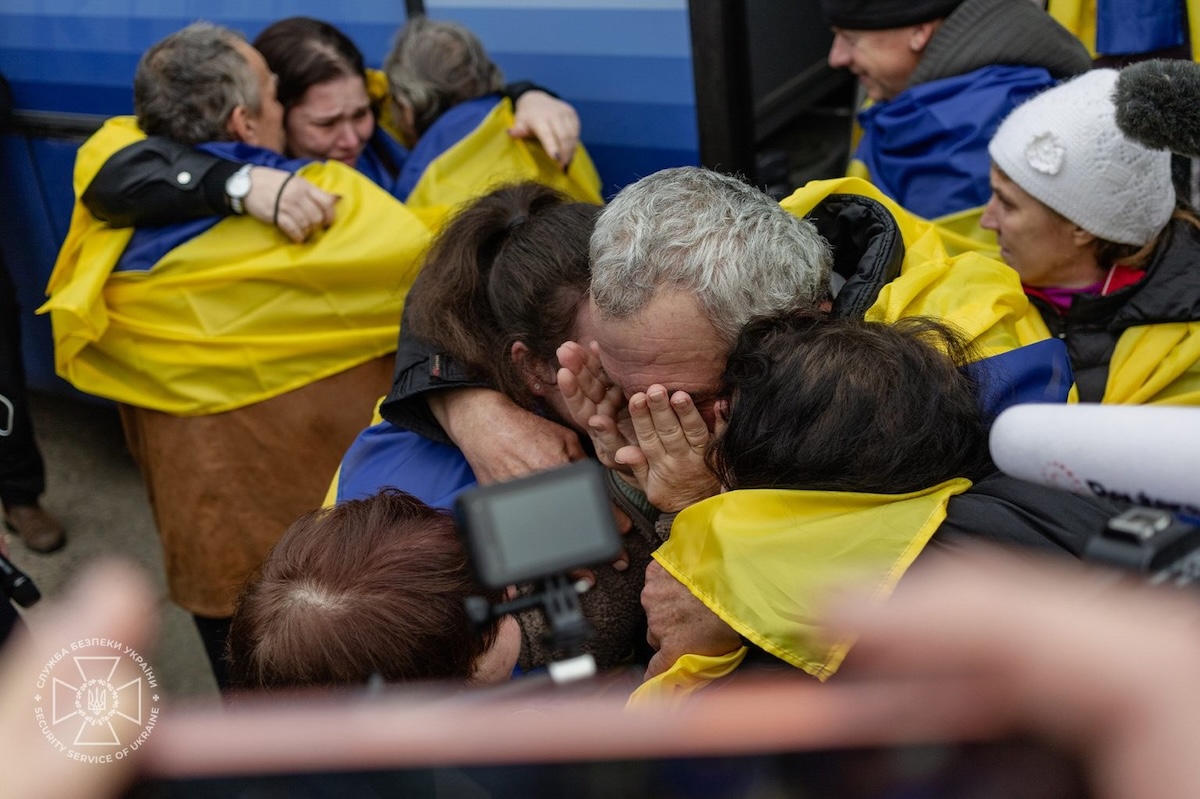
The evacuation from Oleshky
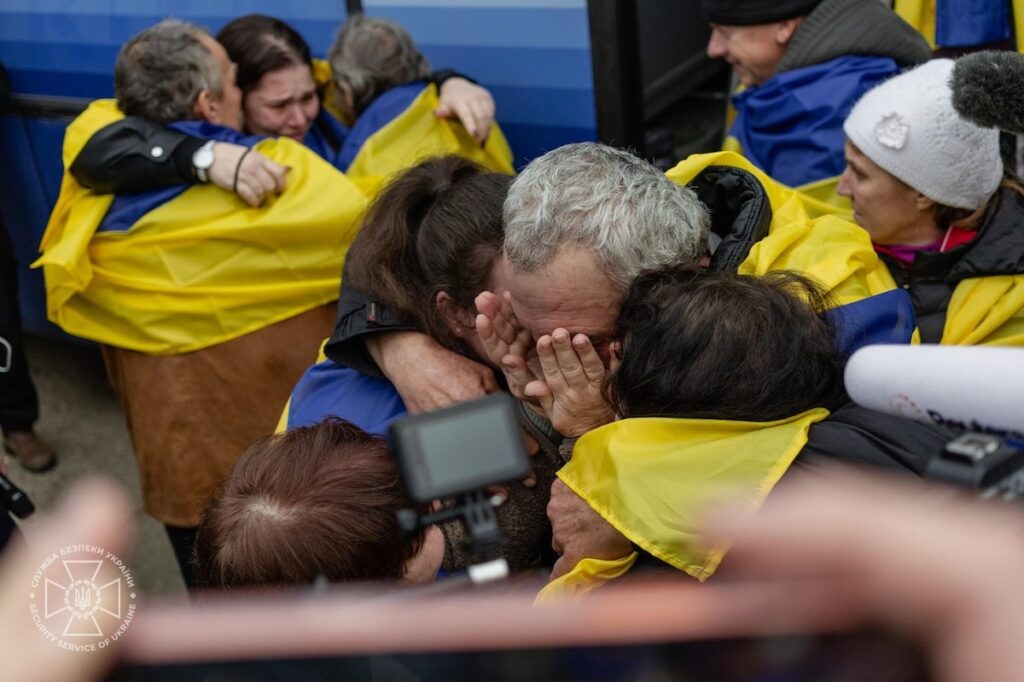
The evacuation from Oleshky (Oleshky, formerly known as Oleshky/Aloshky) in Ukraine’s Kherson region, during which around 800 civilians were evacuated and aid was delivered to those who remained, was a rare example of Ukraine and Russia working together under international mediation. For Russian state media and Z-bloggers, it also became an opportunity to launch a new information campaign.
The Ukrainian side stressed the need to save lives and continue humanitarian missions. Russian media, meanwhile, portrayed the evacuation as an act of concern by Moscow for the residents of occupied territories, sought to discredit Ukraine and tried to intimidate those considering returning to territory under Kyiv’s control.
Four narratives stood out in the media coverage: Russia cast as a humanitarian intermediary; residents’ alleged unwillingness to return to Ukraine; attempts to frighten men with the prospect of forced mobilisation; and efforts to shift responsibility for threats to civilians onto Ukraine.
Some of these claims contradicted both the circumstances of the operation and statements by official representatives of the parties involved.
A report by Novosti Donbassa By Yulia Tararui.
A catastrophe whose causes the propaganda ignores
Oleshky has been under Russian occupation since February 2022. After Ukrainian forces liberated the right-bank part of the Kherson region in the autumn of that year, the city found itself on the front line.
The situation deteriorated dramatically in June 2023, when the Kakhovka Hydroelectric Power Plant was destroyed. Flooding, damaged infrastructure, disruptions to electricity and water supplies, and restrictions on movement made life extremely difficult for residents.
By 2026, the situation had become critical. Fighting, landmines and drone attacks had left the city in urgent need of food, medicine and other essentials, while opportunities to leave safely were almost nonexistent.
Russian publications described the hardships faced by residents in detail, but avoided the central fact: Oleshky had been under the control of Russian occupation authorities throughout this period.
- The fifth year of Russia–Ukraine War — forecasts and scenarios for 2026
- How Shevchenko became a symbol of Ukraine’s resistance: A report from Kaniv
Russian media circulated the account of a local woman who tried to leave in an ambulance but could not get even as far as the outskirts of the city because the road was mined.
Other reports described elderly residents cycling to Radensk during a ceasefire to buy food and medicine – a journey of around 20 kilometres each way.
These stories conveyed the scale of the catastrophe. But they also helped construct a narrative convenient for Moscow: the suffering was blamed on the proximity of the fighting, while the occupation administration’s responsibility for meeting residents’ basic needs was left out of the picture.
A joint operation turned into a story of Moscow’s concern
Agreements on a temporary ceasefire and the evacuation were reached with international mediation, including the active involvement of US First Lady Melania Trump.
According to figures she cited, around 750 people left the city. Reports mentioned 25 buses.
Residents were free to choose their destination: territory under Ukrainian control or Russia.
Those who chose Ukraine were evacuated via Belarus. The Russian side arranged an airlift from Anapa to Gomel using military transport aircraft.
Evacuees who chose Russia were taken to a temporary accommodation centre in Simferopol.
Food, water, medicine, fuel for generators and hospital equipment were brought into the city. A total of 105 pets were evacuated from Oleshky.
According to Ukraine’s human rights ombudsman, Dmytro Lubinets, the ceasefire lasted five days, 19 hours and 59 minutes. The operation also made it possible to arrange the repatriation of the bodies of fallen soldiers and civilians from morgues in Oleshky and other settlements.
The Ukrainian and Russian human rights commissioners said that both sides had fulfilled their obligations and thanked each other.
Russian media coverage, however, focused on Moscow’s role: the military aircraft, the transfer of evacuees to Simferopol, medical assistance and the work of Russian officials. In this way, the joint operation helped promote the image of a state that not only controls occupied territory but also looks after its residents.
The fact that an international operation was needed to evacuate people from a city that had been under Russian control for more than four years was barely examined in these reports.
The story of evacuees being mobilised: What a Z-Blogger claimed
One revealing episode involved Russian Z-blogger Sergei Kolyasnikov, better known as Zergulio. He circulated a claim that men who chose to travel to Ukraine were detained by staff from territorial recruitment and social support centres (TCCs and SPs, Ukraine’s equivalent of military enlistment offices) immediately after the evacuation and sent to the front.
The story drew on a familiar image of Ukraine, where men of conscription age are supposedly bound to become victims of forced mobilisation. But it had a problem with the timeline.
When the claim began circulating, evacuees heading towards Ukraine had, according to published reports, been flown to Gomel, the regional capital of Belarus. The allegation that they were detained by TCC staff after arriving in Ukraine did not match the known evacuation route.
The reports provided no publicly available evidence of mass detentions of evacuated men.
Lubinets stressed separately that no screening had taken place during the evacuation, including for people with problems concerning their documents. He said: “There was no screening whatsoever. Moreover, we had people who said they had problems with their documents – for example, they had lost them. There were no problems.”
He added: “There was not only no screening, there were no checks of phones or documents either.”
These remarks concerned the evacuation procedure and did not describe all subsequent actions by state authorities after people returned to Ukraine. But they offered no support for the blogger’s claim.
▇ Disinformation exploits people’s genuine fears of war and mobilisation, attaching them to a specific event.
Such a message could also have been aimed at residents of occupied territories, particularly men of conscription age and their relatives.
For people who have lived in information isolation for years, a story about evacuees being sent to the front could become a reason not to leave, even in the absence of evidence.
Why people chose to leave: An attempt to undermine their decisions
The Russian military blog Kotsnews claims that most men of conscription age refused to travel towards Ukraine. According to the blog, those who left were mainly elderly people, women and children, and they did so for personal reasons rather than out of political conviction.
The author of the post writes: “Not out of any great love for ‘independent Ukraine’, but to sort out their personal affairs. People in Oleshky have long felt no gratitude towards Ukraine.”
This explanation serves several purposes at once. It diminishes the significance of people’s decisions by portraying them as pragmatic choices – for example, a chance to reunite with relatives or move to Europe.
It creates the impression that residents of the occupied city no longer see their future as being tied to Ukraine. It also reinforces the narrative of inevitable mobilisation.
The result is a self-reinforcing argument: men do not want to go to Ukraine because they fear the TCCs, while those who do make the journey are supposedly immediately confronted with mobilisation. Russian commentators provide no reliable statistics on the evacuees’ reasons for leaving.
Lubinets said the parties had agreed not to disclose how many people chose Ukraine and how many chose Russia. According to him, honouring that agreement was necessary to ensure that humanitarian operations could continue.
Meanwhile, various figures circulated in the Russian information space. Russian Z-war correspondent Romanov initially reported that 17 buses had travelled to Ukraine and four to Russia, but later deleted the figures from his post.
Newsmax journalist Alex Salvi reported 11 buses heading to Ukraine and four to Russia.
Without official figures, these reports do not make it possible to establish how the evacuees were divided between the two destinations. But the very attempt to interpret their choices as an indication of political allegiance became part of the information war surrounding the operation.
Accusations of violating the ceasefire
At the same time, Russian officials accused Ukrainian forces of breaching the agreement. Rodion Miroshnik, the Russian Foreign Ministry’s ambassador-at-large, claimed that a Ukrainian drone had attacked a civilian vehicle leaving Oleshky.
According to Miroshnik, the vehicle was carrying civilians travelling to Radensk to buy food. Two people were injured. He alleged that attacks on civilians had resumed before the agreed ceasefire had expired.
These accusations contradicted statements that the terms of the agreement had been observed. After the operation, Lubinets said that both sides had fulfilled their commitments.
Russia’s human rights commissioner, Yana Lantratova, gave a similar assessment. International media also reported that there had been no confirmed violations of the local ceasefire.
Miroshnik’s statement therefore remains an accusation made by the Russian side, not an established fact.
Such reports serve an obvious purpose. They portray Moscow as willing to take part in humanitarian initiatives while reinforcing the image of Ukraine as the side posing a threat to civilians.
Even during an operation that officials from both countries described in positive terms, the Russian information space continued to recycle familiar accusations.
The ceasefire ended, but the problem remains
Russia refused to extend the ceasefire. According to AFP, Ukraine’s Foreign Ministry had proposed prolonging the agreement, but the Russian side rejected the offer.
The ceasefire ended on 1 November. The ombudsmen said they were considering organising further humanitarian missions.
The need for evacuation has not gone away. Ksenia Arkhipova, a volunteer who has been helping residents of Oleshky since 2022, told the Agency that not everyone who wanted to leave had been evacuated.
According to her, some residents of the city’s suburbs were turned back at checkpoints, while no transport arrived for some people with limited mobility. The most vulnerable are elderly people, people with disabilities and those unable to reach an evacuation point on their own.
Lubinets said 22 ambulances had to be deployed. Some people were too unwell to withstand the planned journey.
In one case, medical staff initially approved a person for transport but, after examining them on site, decided they would not survive the journey. An alternative arrangement had to be made. Several families are now continuing their journey to Ukraine by road.
The ombudsman also said that the Ukrainian side had managed to deliver medical equipment and medicines to the hospital in Oleshky. But he acknowledged that it was still impossible to assess the quality of medical care there.
Russian reports focused on the number of vehicles involved, the aid delivered by Russia and the organisation of transport. The fate of those left behind amid the crisis received far less attention.
Why this poses a threat to future evacuations
Disinformation can put people’s safety at risk. If a resident of an occupied city believes that returning to Ukraine will mean being detained and sent to the front, they may refuse to evacuate even when a safe route is available.
Claims that large numbers of people are unwilling to return can make those who remain feel that choosing Ukraine is dangerous, unpopular or pointless. The reality is more complicated.
People choose where to go based on their health, whether they have relatives there, their documents, housing and access to assistance.
For an elderly person, for example, reuniting with children or grandchildren may be the priority. A person with a disability may need medical care. For a family with children, safety and the ability to continue their education may matter most.
None of these decisions, in itself, reveals a person’s political beliefs. Turning evacuation figures into a vote for either Ukraine or Russia is therefore a form of manipulation.
▇ Choosing an evacuation destination is not the same as voting for Ukraine or Russia.
The information war could also complicate future humanitarian missions, the need for which both sides acknowledge.
exchange