
Trump’s isn’t CNN’s only problem. Azerbaijan sues network | Opinion The Poughkeepsie Journal
Month: September 2026
Categories
【解説】窓・サッシの性能|JIS等級と実務での選び方
Tbilisi City Court sentenced Megis Kardava, a jailed former senior Defense Ministry official and one of the most controversial figures under the United National Movement government already been convicted in several high-profile criminal cases, to 11 years in prison over alleged misappropriation and embezzlement of GEL 768,107 in state funds. The sentence was subsequently reduced to five years and six months under the 2012 Georgian Amnesty Law, the Prosecutor’s Office said on September 22.
Kardava had been wanted by the Georgian authorities since 2013 on multiple charges in eleven criminal cases. He was detained in Ukraine in 2017 and extradited from Kyiv in 2021. He has previously been found guilty in cases concerning the Navtlugi special operation, the 2006 prison riot, the torture and sexual abuse videos case, as well as organizing the torture and sexual abuse of retired colonel Sergo Tetradze, for which Kardava was sentenced to nine years in prison in absentia.
According to the Prosecutor’s Office, the latest case concerns the alleged misappropriation and embezzlement of GEL 768,107 between November 16, 2011, and August 2012, with the funds allegedly taken under the guise of operational expenses with the assistance of other senior Defense Ministry officials.
The agency said that on May 22, 2012, Kardava, then head of the Military Police Department, submitted a written request to then-Defense Minister Bacho Akhalaia “under the article on covert expenses,” requesting GEL 330,000 for the department.
“With the minister’s consent, the funds transferred to the Military Police Department’s account were withdrawn from one of the banks on Megis Kardava’s instructions and converted, after which Megis Kardava illegally appropriated 200,000 US dollars,” the prosecutor’s office said.
According to the agency, fictitious documents were subsequently prepared on Kardava’s orders to conceal the misappropriation and embezzlement, “purporting to show that funds had been spent by a unit of the Military Police Department deployed to the Republic of Afghanistan for operational-search activities.” This allowed the funds in question “to be written off and the accounting records to be reconciled accordingly.”
The latest case is not Kardava’s first conviction for embezzlement. In September 2023, he was found guilty of embezzling GEL 60,000 belonging to the Defense Ministry and sentenced to eight years in prison. The sentence was subsequently reduced to four years under the Georgian Amnesty Law, along with a six-month ban on holding public office or employment.
Also Read:
According to a study by Transparency International Georgia (TI), a significant share of the funding for the pro-government and anti-Western People’s Power party comes from people who have previously funded, or continue to fund, the ruling Georgian Dream party.
The study found that, as of August 2026, 28 people had donated a total of 861,750 lari [~$320,000] to People’s Power, which split from Georgian Dream in 2022. Of these, 21 had previously donated 1,969,169 lari [~$730,000] to Georgian Dream. Another three continue to fund both parties.
TI says these financial links indicate that People’s Power is not independent of the political and business circles surrounding Georgian Dream founder Bidzina Ivanishvili.
The study highlights a group of businesspeople and companies linked to Ivanishvili’s circle. According to the organisation, members of this group donated a total of 381,000 lari [~$141,000] to People’s Power between 2024 and 2026.
One of them is Archil Mamatashvili, CEO of JSC Cartu Insurance Company and a member of the supervisory board of Ivanishvili-linked Artu Holding. In 2025–2026, Mamatashvili donated 70,000 lari [~$26,000] to People’s Power. He had previously donated 55,600 lari [~$20,600] to Georgian Dream.
According to the study, Cartu Insurance Company received government and municipal procurement contracts worth around 3.5 million lari [~$1.3 million]. Other company representatives — Alla Kakhniаuri, Kakha Kobiashvili, Zaza Verdzеuli, Givi Lebanidze and Zurab Chachkhiani — donated a total of around 1 million lari [~$370,000] to Georgian Dream.
Another major donor to People’s Power is Giorgi Damenia, a business partner of Bidzina Ivanishvili’s brother, Alexander Ivanishvili, in the company Tornado+. In 2025–2026, he donated 120,000 lari [~$44,400] to the party. Damenia had previously donated 170,000 lari [~$63,000] to Georgian Dream, while Tornado+ itself donated 85,000 lari [~$31,500] to Ivanishvili’s party between 2016 and 2018.
Another member of Ivanishvili’s business circle is Irakli Bekaури, CEO of Bolero & Company, owned by Vakhtang Karichashvili. Karichashvili, who holds Georgian and Russian citizenship, has been described as a business partner of Ivanishvili’s cousin, Ucha Mamatshvili. According to the study, his companies rank among Georgia’s largest wine exporters to Russia. Between 2014 and 2024, his companies received 56 million lari [~$20.7 million] in subsidies from Georgia’s Agriculture Ministry.
In 2026, Bekauri donated 60,000 lari [~$22,200] to People’s Power. He had previously donated 327,000 lari [~$121,000] to Georgian Dream.
Among people linked to Bekauri and Karichashvili is Levan Getsadze. Public Registry records list him at various times as a representative of companies linked to Ucha Mamatshvili’s business partners. Getsadze donated 13,000 lari [~$4,800] to People’s Power, which the study says was his first political donation.
For many years, Getsadze owned Trezor, a company founded in 2019 that operated a medical laboratory in Tbilisi. Soon after its establishment, the company began taking part in public procurement and has since received contracts worth around 3.2 million lari [~$1.19 million]. The laboratory is now owned by the US company Quest Biosciences LLC.
The study also links another major People’s Power donor, David Balanchivadze, to Ucha Mamatshvili’s business circle. In 2016–2017, the investigative journalism studio Monitor linked Balanchivadze’s appointment as executive director of RMG GOLD to Mamatshvili’s interests.
Balanchivadze began making political donations to Georgian Dream in 2016. According to the study, he donated a total of 532,000 lari [~$197,000] to the party. In 2026, he donated 60,000 lari [~$22,200] to People’s Power.
Among the donors to People’s Power is Giorgi Meskhi, who served as director of the state-owned company Sakspetstrans from 2017 to 2020. In 2024, he donated 58,000 lari [~$21,500] to the party.
While running the state-owned company, Meskhi founded the construction company Hiteco Group with his business partner Giorgi Khujadze. Meskhi now owns 100% of the company and serves as its director. Hiteco Group is building a multi-storey hotel in Tbilisi. Meskhi also owns a 33% stake in Gonio Group.
Another People’s Power donor, Guram Tetrashvili, is director of Georgian-Israeli Business Group LLC. The company is owned by Besik Papismedov, who is involved in several construction projects in Tbilisi. Tetrashvili donated 10,000 lari [~$3,700] to the party. According to the study, this was also his first political donation.
According to Transparency International Georgia, three of the 28 donors — Aleksandre Tushuri, Mamuka Gogrchiani and Givi Gabunia — fund both People’s Power and Georgian Dream.
All three donated a total of 60,000 lari [~$22,200] to People’s Power on 11 December 2025. Three months later, on 18 February 2026, the same people donated another 60,000 lari [~$22,200] to Georgian Dream.
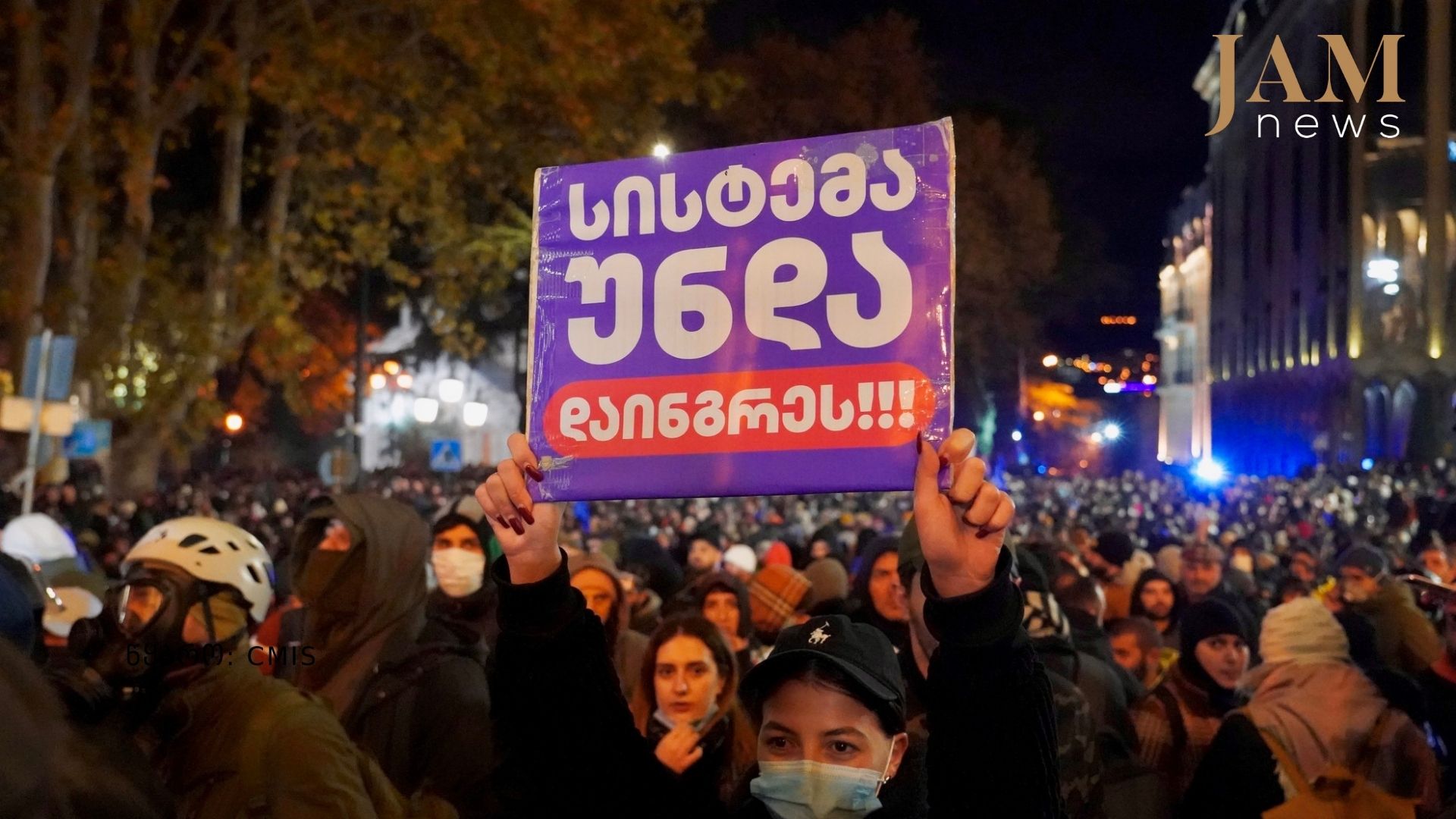
People’s Power was founded in August 2022 by three MPs who left Georgian Dream: Sozar Subari, Dimitri Khundadze and Mikheil Kavelashvili. It initially operated as a civic movement and registered as a political party in March 2024. Sozar Subari is the party’s chairman.
When they launched the movement, its founders said their goal was to provide the public with more information about developments in Georgian politics and defend the country’s national interests. People’s Power has been particularly vocal in criticising the influence of Western political forces and non-governmental organisations. The party initiated the draft law on the “Transparency of Foreign Influence”.
From 2022 to 2024, People’s Power formed part of the Georgian Dream parliamentary majority. In the 2024 parliamentary election, the party ran jointly with Georgian Dream. Today, People’s Power has its own parliamentary political group.
Transparency International Georgia study
Georgian authorities adjusted grape purchasing prices following two days of protests by grape growers in the country’s eastern wine-making region of Kakheti, where locals demanded higher prices for their harvest, including by blocking roads and paralyzing local traffic.
The protests, which ended following the government’s September 22 decision to revise the prices, come amid what officials have described as an “unprecedented” harvest in the history of the country’s independence, but also climate-related challenges reportedly affecting the sugar content of grapes.
The demonstrations began in Shilda, a village in Kvareli Municipality, before spreading to Akhalsopeli and Velistsikhe villages. Some growers refused to deliver their harvested grapes, with grape-laden vehicles remaining lined up near purchasing facilities, and resumed deliveries only after authorities adjusted the prices.
Much of the discontent focused on the more recent pricing scheme that differentiates between grapes by sugar content and grape condition.
Under the pricing scheme announced in August for this year’s harvest, in the event of a surplus harvest, the state-run Harvest Management Company would purchase grapes at a pre-defined differentiated scheme, first introduced during last year’s harvest and meant to promote the production of “competitive and high-value products.”
For most grape varieties, grapes with sugar content below 17% would be purchased by the state for GEL 0.3 (USD 0.12) per kilogram, while those with sugar content between 17% and 20% receive GEL 0.8 (USD 0.31). Undamaged grapes exceeding 20% sugar content were priced at GEL 1.3 (USD 0.5) per kilogram.
Different thresholds applied to Saperavi grapes, with the state paying GEL 1.5 (USD 0.58) per kilogram for undamaged grapes with a sugar content of at least 21%, GEL 0.9 (USD 0.35) for grapes with a sugar content of 17% to 21% and/or those that are partially damaged, and GEL 0.3 (USD 0.12) for grapes with a sugar content below 17% and/or those that are damaged.
The winegrowers said the prices offered for their harvest were insufficient to cover production expenses, including vineyard maintenance, agricultural chemicals, labor, and transportation.
“Kakheti needs attention. We are asking for an appropriate price,” one protester told the media.
‘Unprecedented Harvest’
The protests came amid what officials have described as an “unprecedented harvest” in Georgia but also challenges caused by “climate conditions” for grape sugar content.
“This year will be an unprecedented harvest in terms of quantity,” Davit Songhulashvili, Georgian Dream minister of agriculture, was quoted by the ministry on September 21. Songhulashvili predicted the harvest to exceed 320 tons, “which, perhaps, will be the first case of such a big harvest in the history of independent Georgia.”
The minister, however, warned that this year’s “climate conditions created certain challenges,” including some grapes struggling to develop proper sugar levels, which he said may delay the harvest.
The growers have also disputed measurements of the sugar content of their grapes at the purchasing facilities. Some protesters say measurements taken before delivery have differed from those recorded at the facilities, resulting in their grapes being downpriced. They have particularly objected to the GEL 0.3 state purchasing price applicable to the lowest category of grapes, saying they are unwilling to sell their harvest at that rate.
Protest Ends After Government Revises Prices
The growers ended their protest and resumed deliveries after Levan Mekhuzla, chair of the National Wine Agency, announced the changes on September 22, saying the decision was made following consultations with the government and the Minister of Environmental Protection and Agriculture.
Under the revised terms, Saperavi grapes with a sugar content of at least 20% will be purchased for GEL 1.5 per kilogram, while Rkatsiteli and other grape varieties with a sugar content of at least 19% will be purchased for GEL 1.3.
For grapes in the lower quality category, the state will pay GEL 1 per kilogram for Saperavi with sugar content between 16% and 20%, and GEL 0.9 for Rkatsiteli and other varieties with sugar content between 16% and 19%.
Grapes with sugar content below 16% will be purchased for GEL 0.5 per kilogram, while hybrid varieties will be purchased for GEL 0.3.
Mekhuzla said grapes below the 16% threshold are considered unsuitable for wine or spirit production, but the government decided to make an exception to allow growers to recover some of their expenses. He also said growers who had already sold their grapes under the previous state prices would have their payments recalculated under the new terms and would receive compensation for the difference.
Also Read:
- 29/04/2026 – Two Detained Briefly During Farmers’ Protest in Marneuli Municipality
- 24/02/2026 – Economy of No Tomorrow: What Keeps Food Prices Up in Georgia
- 24/12/2025 – Kobakhidze Calls on Law Enforcement Agencies, Parliament to Probe High Grocery Prices
- 14/09/2015 – PM Dismisses Grape Price Protest as UNM’s ‘Provocation’
- 11/09/2015 – Grape Growers in Gurjaani Protest over Lower Prices