
★★★★☆
This hour-long documentary follows a group of architects-turned-artists as they prepare for their first exhibition in Tallinn.
Georgian journalist and filmmaker David Lobzhanidze first became interested in the Georgian–Estonian collective Garbage Kids after realising their practice was grounded in ‘a shared philosophy of collaboration, responsibility, and alternative ways of working’.
Made up of Nika Gabiskiria, Ulla Alla, and Luka Abashidze, the collective focuses on creating one-of-a-kind sustainable furniture and design pieces from foraged and second-hand materials. While all three were trained as architects, their work now is focused more on carpentry and fabric design, mixing art with functionality.
Their name, however, has less to do with the materials they use than a reference to Soviet-era classifications.
‘I started school at five and struggled with reading — I was too young, so the slowest. The Soviet-era system even had a board labelling “students who embarrass us”. Because I was the slowest to read one stupid paragraph, I ended up on it. A garbage kid. That’s how our name was born — not just for its funkiness, but to encourage other “garbage kids” to create, innovate, and inspire’, Luka explains.
The documentary opens on Nika’s balcony, the collective’s main studio, as he works on carving a wooden hand. Nika explains that his time designing and then carving allows him time for contemplation — he finds beauty in the concept that through his works, a thought is being materialised into reality.
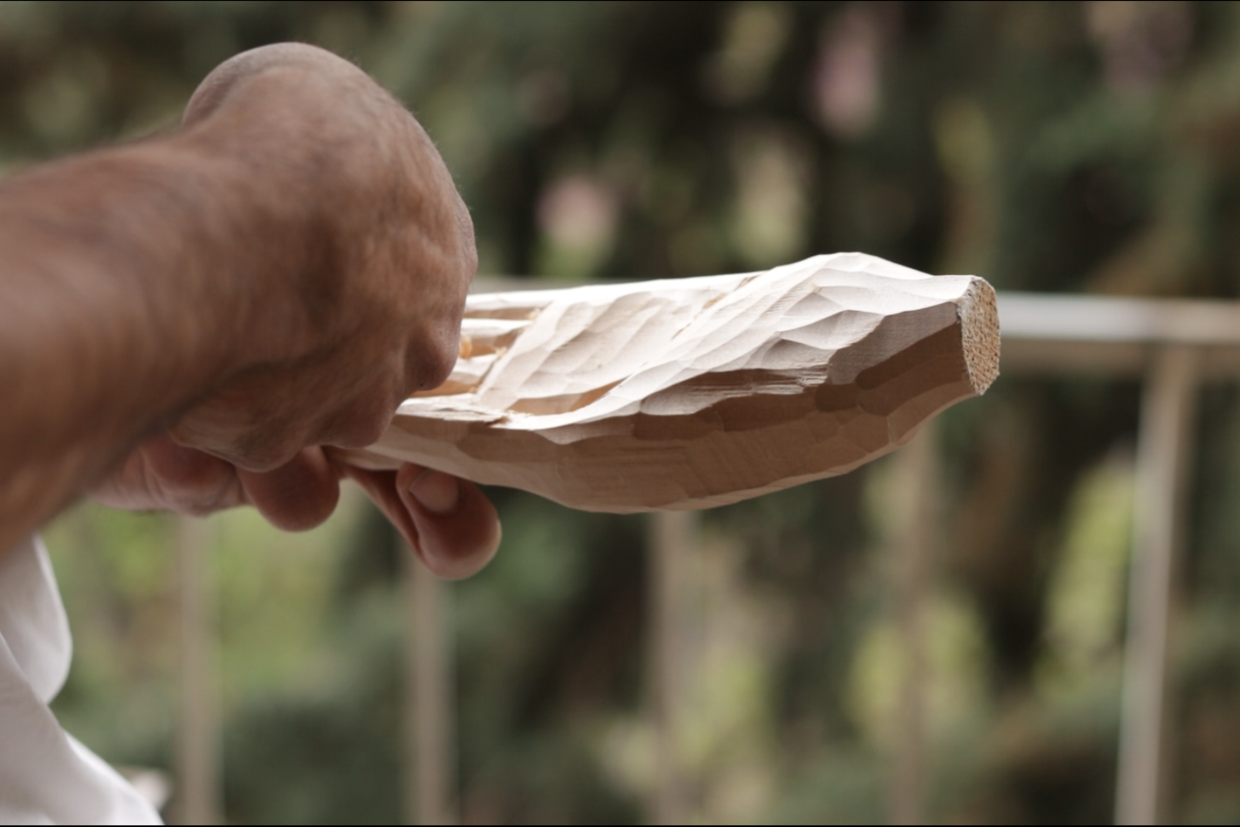
‘We have so much time to think […] you can contemplate the material or think about completely other things — it doesn’t matter, even the images you are playing with. For me, at least, it is that: I have the freedom to think, and my mind not to be employed or exploited in ways I do not want it to be exploited’, Nika tells the camera.
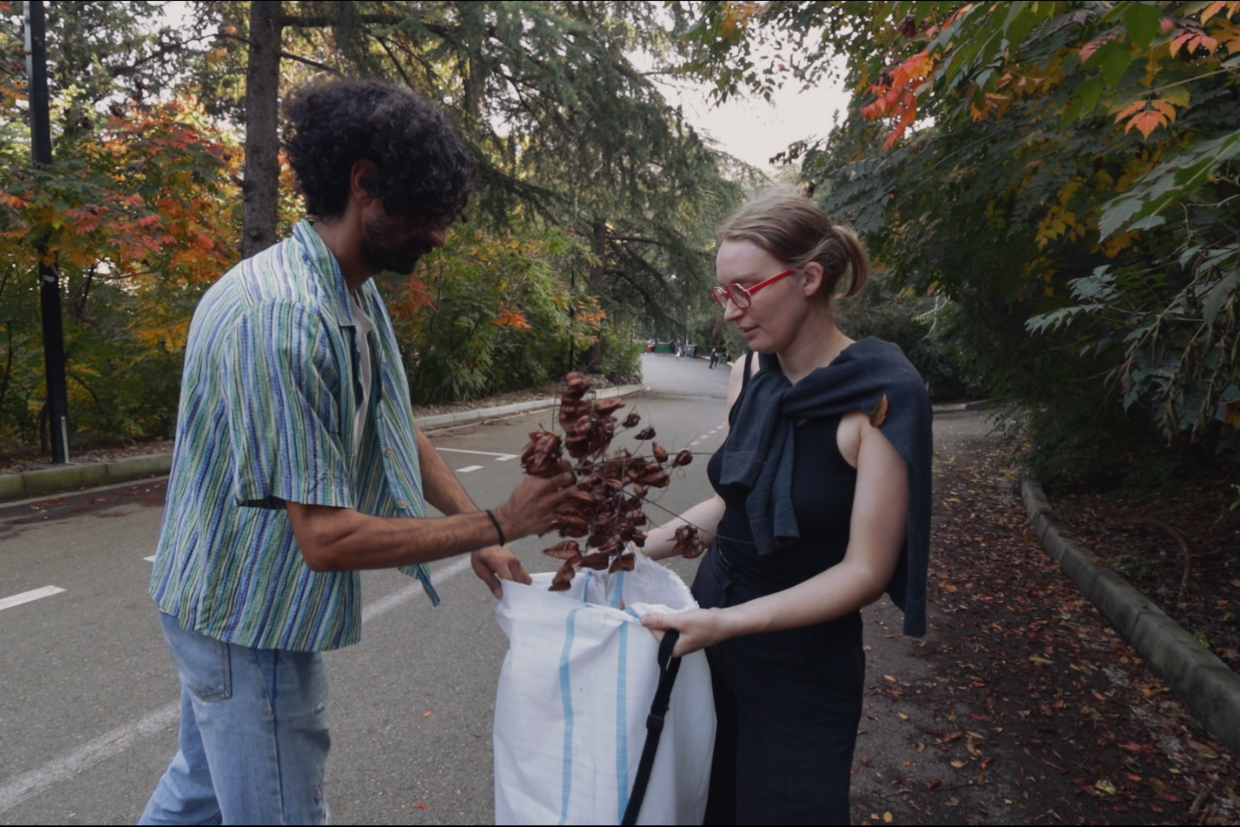
Throughout the hour-long film, Lobzhanidze traces the collective’s working process, showing the collaborative nature of their work, as they collect seeds from Vake Park, discuss various sketched designs, sew large blankets and tapestries from wool they have felted themselves, and carve numerous pieces of furniture, including their prominent crocodile tables.
Interspersed with shots of this process are observations on the collective’s philosophy and attitude towards life.
Ulla is perhaps the most verbose in this regard, repeatedly emphasising her belief that being a creator means making something that is meant to last forever.
‘It is ridiculous to me that, in the architecture world, they view 50 years as a long time. It is nothing; you have to think in terms of centuries for something to truly exist. That should be the baseline — in any kind of product design, any kind of technology — but that requires a complete rebuild of the world order’, she says.
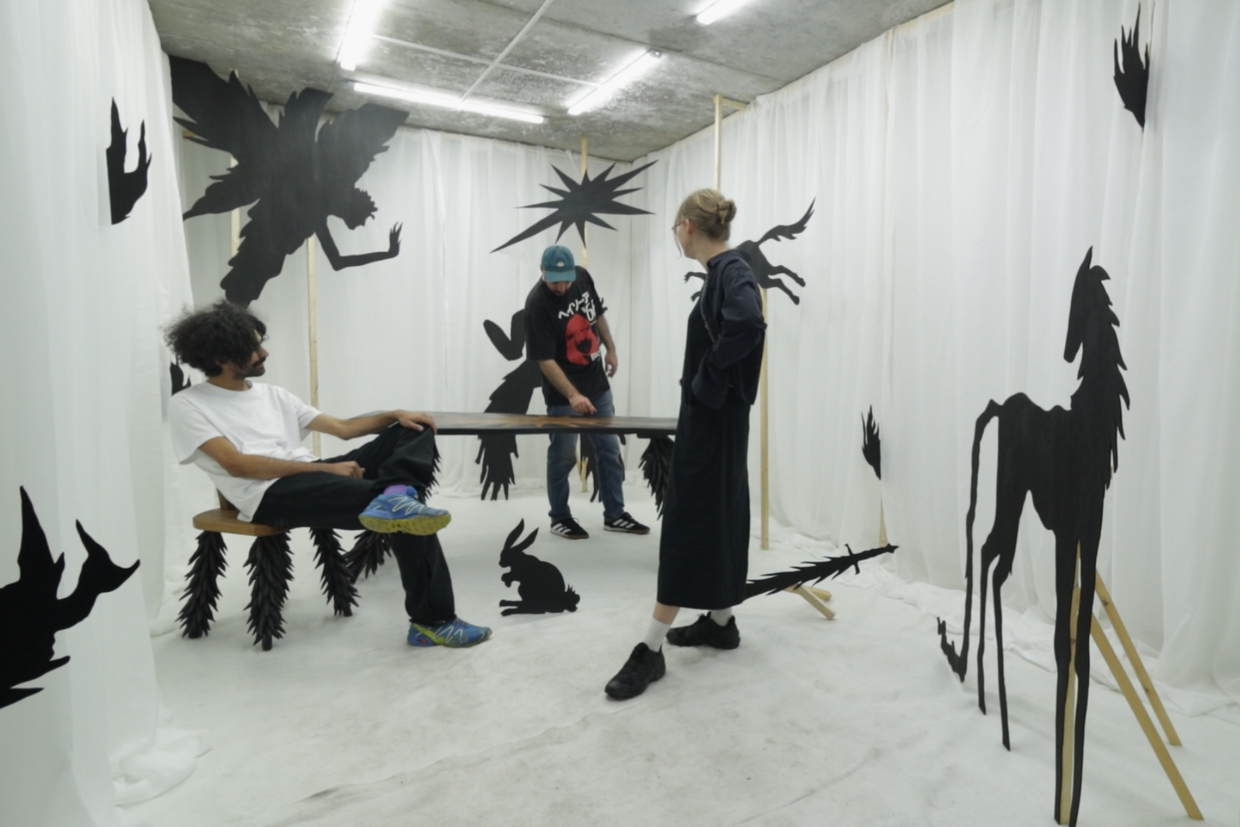
While the first half of the documentary introduces the collective and their work, the second focuses on their preparations for their first exhibition, ‘Shadow Objects’, which was presented at the Tallinn Design Museum in 2025. Unlike prior times their work was shown, this exhibition focuses on a single concept, requiring frantic preparations in Estonia ahead of time.
The film also shifts to examine what it means to feel the urge to create art despite lacking economic stability. As Ulla explains, it is easy to romanticise their work, yet there is a lot of hardship involved and sacrifices that all three have agreed upon, finding the happiness in creating well worth it.
Despite the film’s small-scale production — it was produced and edited entirely by Lobzhanidze and his wife Salome Lezhava — it manages to expertly weave together a breadth of concepts and ideas, never spending too much time on one topic at the expense of another. It is a film that a wider audience can appreciate, no matter their personal interests.
Film details: Garbage Kids (2026), directed by David Lobzhanidze, premiered in Tbilisi on 27 September 2026. It will be screened in a variety of Tbilisi locales over the next month before entering the festival circuit.