
Day: September 28, 2026

Saturday’s Azerbaijan Grand Prix was George Russell‘s third victory of the 2026 Formula 1 campaign, and his first career grand slam, but leading every lap in the wind-swept streets of Baku meant much more to the Mercedes driver than just a fancy statistic.
For Russell, Baku ended a character building spell of six winless weekends in which his younger team-mate Kimi Antonelli only further asserted his dominance in the championship, underlined by a memorable comeback win in Monza where the Italian came through the field to defeat Russell.
Under the hood, it was also a period in which Russell’s resilience was tested as he struggled to come to grips with the demands of 2026’s unique regulations, while 20-year-old Antonelli appeared to just click with the Mercedes W17 seemingly without trying.
For a man who had been patiently waiting on competitive machinery for years, only to be usurped by a youngster when that title winning opportunity finally arrived, the Azerbaijan weekend was a rejuvenating tonic that rewarded the work he had been doing in the background to turn things around, and a confirmation that he was right not to lose his self-belief.
“It feels great,” Russell basked in his first win since June’s Austrian Grand Prix. “I’m very proud of the resilience that I and my close group of engineers have shown during the tough periods this year because there’s been a lot of hard work to overcome some of the challenges, to adapt my driving style to suit this new car better.
“F1 is so tough, you don’t get opportunities to practice this, and finally it’s coming to me a bit more intuitively than it once did, and I’m gaining confidence. And especially on circuits like this, it just allows you to eke out that little bit more on the brakes, get that little bit closer to the walls, and it’s been a flawless weekend.”

George Russell held off a charging Max Verstappen after a double safety car bunched up the field.
Photo by: Mark Sutton / Formula 1 via Getty Images
He added: “I never lost that faith in myself. Even through the tough moments I knew there was a reason why I was off the pace. It wasn’t like I just suddenly forgot how to drive, and I knew I would be able to find it again. I just had to be patient.”
While still trailing Antonelli by 66 points, which is making a title comeback a possibility but one with long odds, Russell at least felt like he was back on even footing, going into every race weekend with an opportunity to repeat his Baku form.
“I feel confident. It’s been four races since the break. I’ve been on the front row in three of them, three podiums from the four races. I feel I can fight for victory week-in, week-out now,” the Briton insisted after holding off a hounding Max Verstappen to notch a grand slam, which is a win from pole while leading every lap and setting the fastest lap of the race.
“I think it’s probably my first grand slam in Formula 1 and, for sure, the most dominant weekend I’ve had in my career. So, that has come at a really great moment. And also to achieve it on a circuit that requires so much commitment and confidence, I’m really proud of it.
“It would have been very easy for me to lose the faith this season. Not necessarily about winning the championship, but in terms of my ability, and that never happened.”


We want your opinion!
What would you like to see on Motorsport.com?
– The Motorsport.com Team
The post George Russell after rejuvenating Baku win: “It would have been very easy for me to lose the faith” appeared first on azeritimes.com.
Singer Tata Simonyan apologized for the fact that his concert was broadcast on a Public TV on Sep. 27, the day of the 6th anniversary of the outbreak of the 44-day war. He said this’s unacceptable, it’s a gross mistake that had no justification. 1/2
#Armenia
#Armenia
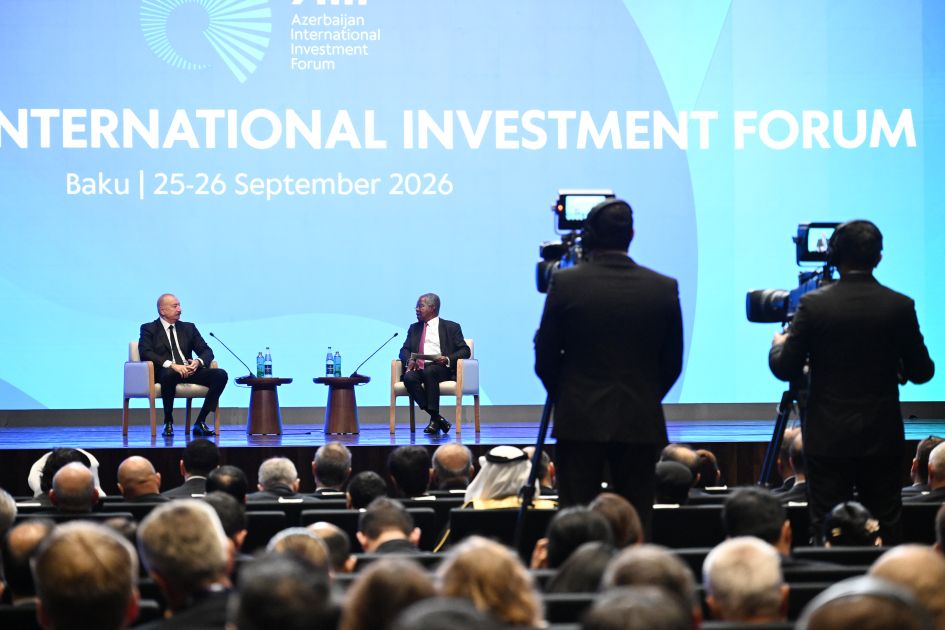
There is a revealing tension at the heart of Azerbaijan’s economic story. The country is still an energy exporter, and oil and gas remain central to its external trade. However, the investment message coming from Baku is increasingly about what comes after the first phase of energy-driven development.
There is a revealing tension at the heart of Azerbaijan’s economic story. The country is still an energy exporter, and oil and gas remain central to its external trade. However, the investment message coming from Baku is increasingly about what comes after the first phase of energy-driven development.
Categories
Bitcoin price falls to $83,000
In his address to the United Nations on 22 September 2026, King Abdullah of Jordan accused the Israeli government of making a viable Palestinian state impossible through the destruction of Gaza and the de facto annexation of the West Bank. He condemned settlement expansion, settler violence and forced displacement, accused the international community of years of inaction, and advocated sanctions, embargoes and diplomatic pressure. He spoke of terrorism in general terms; Hamas and the atrocities of October 7 were not mentioned.
By Oscar Hammerstein
In doing so, he presented Jordan as the foremost champion of peace and Palestinian rights. Anyone listening to King Abdullah speak about the Palestinian question is entitled to remind him of the history of his own royal house. That history encompasses both the reception and naturalisation of Palestinian refugees and a bloody war against Palestinians who threatened his father’s authority.
The late King Hussein bin Talal (ruled from 1953 to 1999) defended his state and his throne by military force. His son condemns Israel’s actions at length at the UN, while leaving his own country’s role in the Palestinian question unmentioned.
Therein lies the hypocrisy: the security interests of his own kingdom are taken for granted, while the terrorism confronting Israel is left entirely out of the picture.
Relations between the Hashemites, the Zionist movement and the Palestinians include an early chapter of rapprochement. Chaim Weizmann (left) and Emir Faisal first met on 4 June 1918 at Faisal’s military camp near Aqaba. On 11 December 1918, they met again at the Carlton Hotel in London to prepare for the Paris Peace Conference. They signed the agreement in London on 3 January 1919, before the conference.
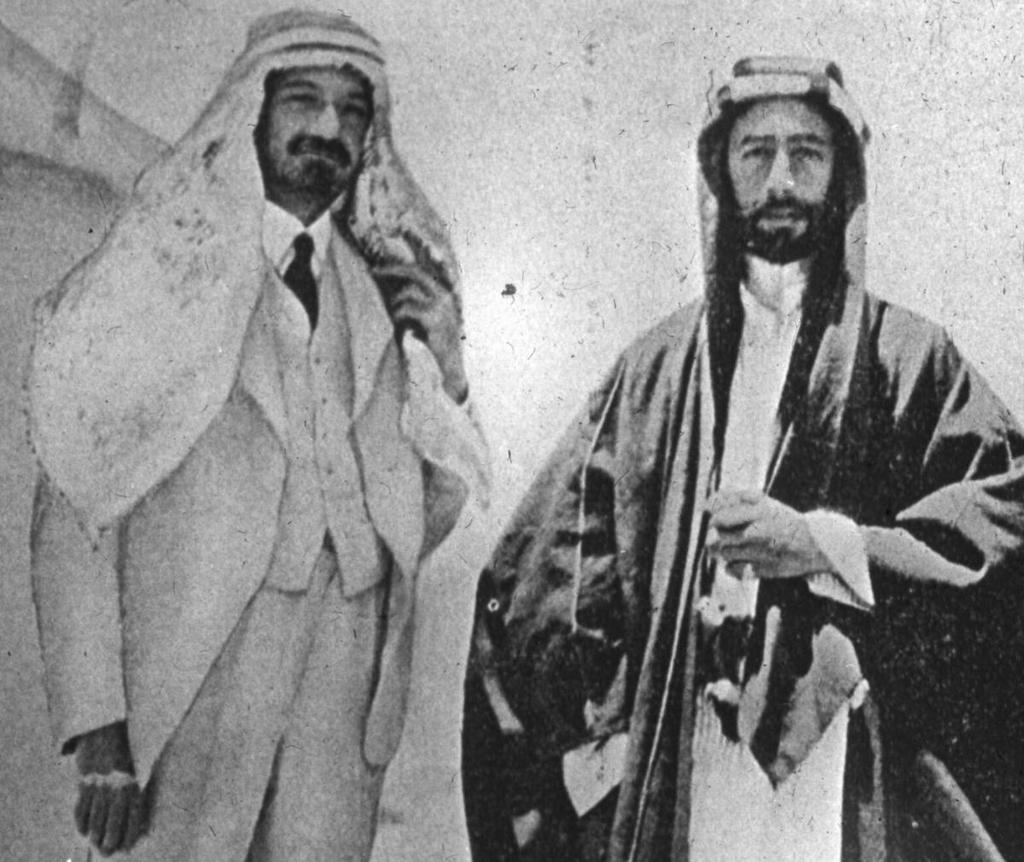
Faisal represented the Arab Kingdom of Hejaz; Weizmann acted on behalf of the Zionist Organisation. The preamble emphasised the kinship and ancient bonds between the Arabs and the Jewish people. Close co-operation in developing the Arab state and Palestine was intended to help fulfil their national aspirations.
The first four articles read as follows:
Article I
The Arab state and Palestine shall be guided in all their relations and joint undertakings by the most cordial goodwill and mutual understanding. To this end, duly accredited Arab and Jewish representatives shall be appointed and maintained in their respective territories.
Article II
Immediately after the conclusion of the deliberations of the Peace Conference, the definitive boundaries between the Arab state and Palestine shall be determined by a commission to be agreed upon by the parties to this agreement.
Article III
In establishing the constitution and administration of Palestine, all measures shall be taken to provide the fullest possible guarantees for implementing the declaration of the British government of 2 November 1917.
Article IV
All necessary measures shall be taken to encourage and promote Jewish immigration into Palestine on a large scale, and to settle Jewish immigrants on the land as swiftly as possible through closer agricultural settlement and intensive cultivation of the soil. In doing so, the rights of Arab peasants and tenant farmers shall be protected, and they shall be assisted in their economic development.
These provisions constitute a remarkable historical document. A Hashemite leader expressed support for co-operation with the Zionist movement, implementation of the Balfour Declaration and large-scale Jewish immigration into Palestine, which was then still a name for the Jewish state.
The Balfour Declaration spoke of a Jewish national home in Palestine. At the same time, the agreement expressly protected the Arab farming population. Had the Arabs implemented the agreement, there might now have been peace.
But Faisal made his consent conditional on achieving the Arab independence he sought. The agreement did not stipulate that what later became Jordan would become the Palestinian state: Article II expressly left the definitive boundaries to a commission yet to be established. Transjordan did not come into being until 1921, under Faisal’s brother Abdullah I, and became independent in 1946.
The agreement thus bears witness to an early attempt at Arab–Jewish co-operation. It does not prove that Israel and Jordan had already agreed to a definitive two-state solution in 1919. Still, it does show that co-operation was considered possible and that the later hostility was not taken for granted at the outset.
Relations between Jordan and the Palestinians acquired a new significance after the wars of 1948 and 1967. Large numbers of Palestinians arrived in Jordan in 1948 following an evacuation order from their leaders and as a result of the bloody war that broke out immediately after the declaration of independence on 14 May 1948.
The day after declaring independence, Israel was attacked by forces from Egypt, Transjordan, Syria, Iraq and Lebanon. Transjordan occupied Judea and Samaria during the war. That territory, where many Palestinian refugees had sought refuge, subsequently became known as the West Bank. Jordan’s 1950 annexation received no international recognition.
By the late 1960s, Palestinian guerrilla organisations in Jordan, the fedayeen, had grown into an independent armed force. From Jordan, they launched attacks on Israel, while within the country they developed a state within a state.
Both relations with Israel and King Hussein’s authority were thus directly at stake. Radical Palestinian organisations, including the Popular Front for the Liberation of Palestine (PFLP, sought to overthrow the monarchy. This was a struggle for power in Jordan.
The crisis escalated in September 1970. The PFLP hijacked passenger aircraft, forcing three of them to land at an airfield in Jordan and holding the passengers hostage. The aircraft were later blown up before the cameras, with no passengers on board.
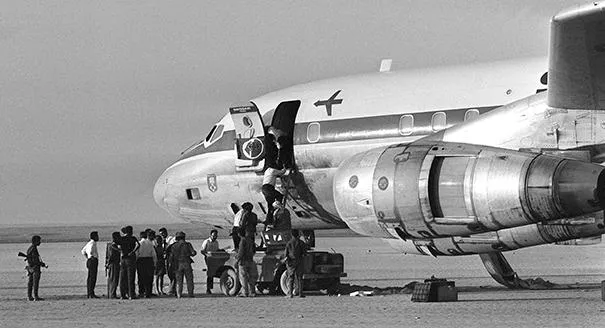
Hussein then appointed a military government; on 17 September, the army launched a major offensive against the Palestinian armed groups. What followed became known as Black September. Heavy fighting took place in cities and refugee camps. Thousands died; estimates vary. Civilians also paid a terrible price.
The ceasefire concluded in Cairo on 27 September 1970 by King Hussein and the PLO leader Yasser Arafat, but it did not bring a definitive end to the fighting. Further confrontations followed until the Jordanian army eliminated the last major PLO strongholds in the north in July 1971. The PLO lost its military base in Jordan and shifted its centre of operations to Lebanon.
Defeat did not bring an end to terrorist violence. In 1971, the Black September organisation emerged within Fatah, the PLO’s dominant movement, named after the bloody confrontation in Jordan.
Initially, it sought revenge against the Jordanian regime, assassinating the Jordanian prime minister, Wasfi al-Tal, in Cairo in November 1971. It subsequently extended its terrorist attacks to Israeli and international targets.
On 5 and 6 September 1972, Palestinian terrorists from Black September murdered eleven members of the Israeli Olympic delegation in Munich: athletes, coaches and officials. Two were killed in the Olympic Village; the remaining nine hostages were murdered during the failed German rescue operation at Fürstenfeldbruck airfield. The attack was carried out by Black September, Palestinians with close ties to Fatah and prominent figures within the PLO.
In Lebanon, too, the PLO’s military dominance eventually ended. After being kicked out of Jordan, Arafat and his companions found refuge in Lebanon and dragged the country into ruin. The Palestinians played a pivotal part in the start of Lebanon’s civil war (1975-1990).
On 6 June 1982, Israel invaded Lebanon. The Israeli army advanced to Beirut and besieged the western part of the city, where the PLO had its headquarters. Under that military pressure, the American envoy Philip Habib mediated negotiations for the PLO’s departure. American, French and Italian troops were deployed to oversee the evacuation.
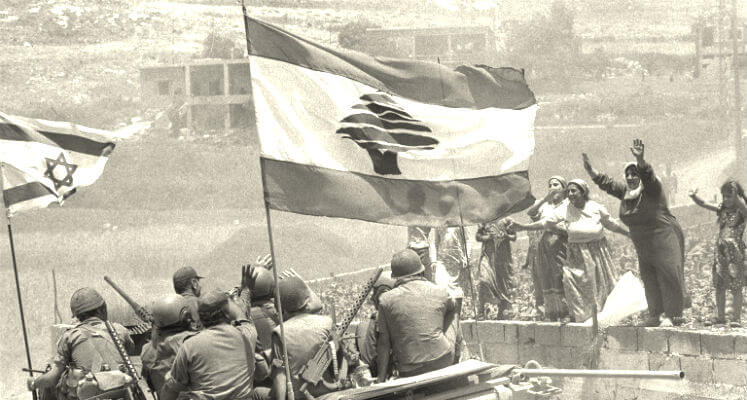
Between 21 August and 1 September 1982, Palestinian fighters and other armed units involved left Beirut. The fighters were dispersed among several countries; the PLO leadership established itself in Tunis.
This was a departure forced by an Israeli invasion and siege, followed by an internationally negotiated evacuation. Palestinians who had first been expelled from Jordan now had to leave Lebanon as well. This also explains why the Arab states surrounding Israel, including Egypt, remain unwilling to take in Palestinian refugees.
The story did not end there. Arafat returned to northern Lebanon in 1983, but in Tripoli he found himself surrounded by Palestinian opponents backed by Syria. On 20 December 1983, he and about 4,000 followers again departed by sea, aboard Greek ships and under the protection of, naturally, French warships.
Even then, not all Palestinian armed groups left Lebanon. The departure of Arafat and his fighters must also be distinguished from the fate of those Palestinian civilians who remained there.
The same distinction is essential in Jordan. The defeat and expulsion of the PLO did not amount to a general expulsion of the Palestinian population. Most Palestinian refugees in Jordan and their descendants now hold Jordanian citizenship. They are therefore citizens of the country in which they live. The Jordanian government itself confirms that citizens of Palestinian refugee origin have the rights and duties of Jordanian citizenship.
This does not, however, apply to everyone. Some Palestinians who arrived from the Gaza Strip in 1967, and their descendants, do not have Jordanian nationality. There are also stateless people among Palestinian refugees from Syria.
The population figures likewise require precision. In its factsheet of 8 December 2025, UNRWA lists approximately 2.4 million registered Palestinian refugees in Jordan. This is an official registration figure from the UN agency, not a count of all residents with Palestinian roots. Moreover, most registered refugees hold Jordanian nationality. Citizenship and UNRWA registration can therefore coexist.
No publicly available, exact official figure exists for the total number of Jordanians of Palestinian descent. The BTI country report for 2026 estimates a ratio of about 60 per cent Palestinian origin to 40 per cent East Jordanian origin. In 2023, the US Congressional Research Service gave a broader estimate of 55 to 70 per cent.
The Palestinian presence in Jordan is thus far more extensive than a refugee register alone suggests. For millions of people, Palestinian ancestry and Jordanian citizenship are part of the same family history.
That interconnection makes Jordan indispensable to any serious discussion of the Palestinian question. It does not, in itself, prove that Jordan is simply the Palestinian state, but it cannot be disputed that Palestinians who did not join armed militias have found a peaceful life there.
The historical lesson is stark enough without exaggeration. Hussein would not tolerate armed organisations independently waging war from his territory and undermining his authority. Expulsion from Jordan was followed by terrorism against Jordanian representatives and the murder of the Israeli Olympic delegation in Munich. In Lebanon, the PLO again lost its power base through war and enforced departure.
In 1940, Churchill declared: “Without victory, there is no survival.” This was unmistakably war rhetoric. It was also the language of a leader who refused to accept his country’s destruction. Harsh words are not, in themselves, proof of belligerence; they may also express the will to survive.
That is precisely why the air of moral superiority with which King Abdullah sits in judgement on Israel at the United Nations jars. His father deployed the Jordanian army against Palestinian armed organisations when they threatened the authority of the state and Jordan’s security.
The fighting claimed thousands of lives, including those of civilians, and ended in their expulsion. Since then, the border has been closed to Palestinians. That history obliges Abdullah to show humility when lecturing others on war, security and Palestinian suffering.
Let the King, then, apply a single standard. To Amman and Jerusalem. To the security of his dynasty and that of Israel’s citizens. To Palestinian victims of Jordanian weapons and Palestinian victims of Israeli weapons. Israel’s right to defend itself justifies its war against Hamas and Hezbollah, just as Jordan’s justified its war against the PLO and the Popular Front for the Liberation of Palestine when the Hashemite throne was at stake.
Those who remind others of their history must have the courage to acknowledge their own. Otherwise, moral authority becomes a pose, indignation an instrument, and the rostrum of the United Nations a stage for royal hypocrisy.
The post Jordan, the Palestinians & royal hypocrisy of the highest order first appeared on The Liberum.