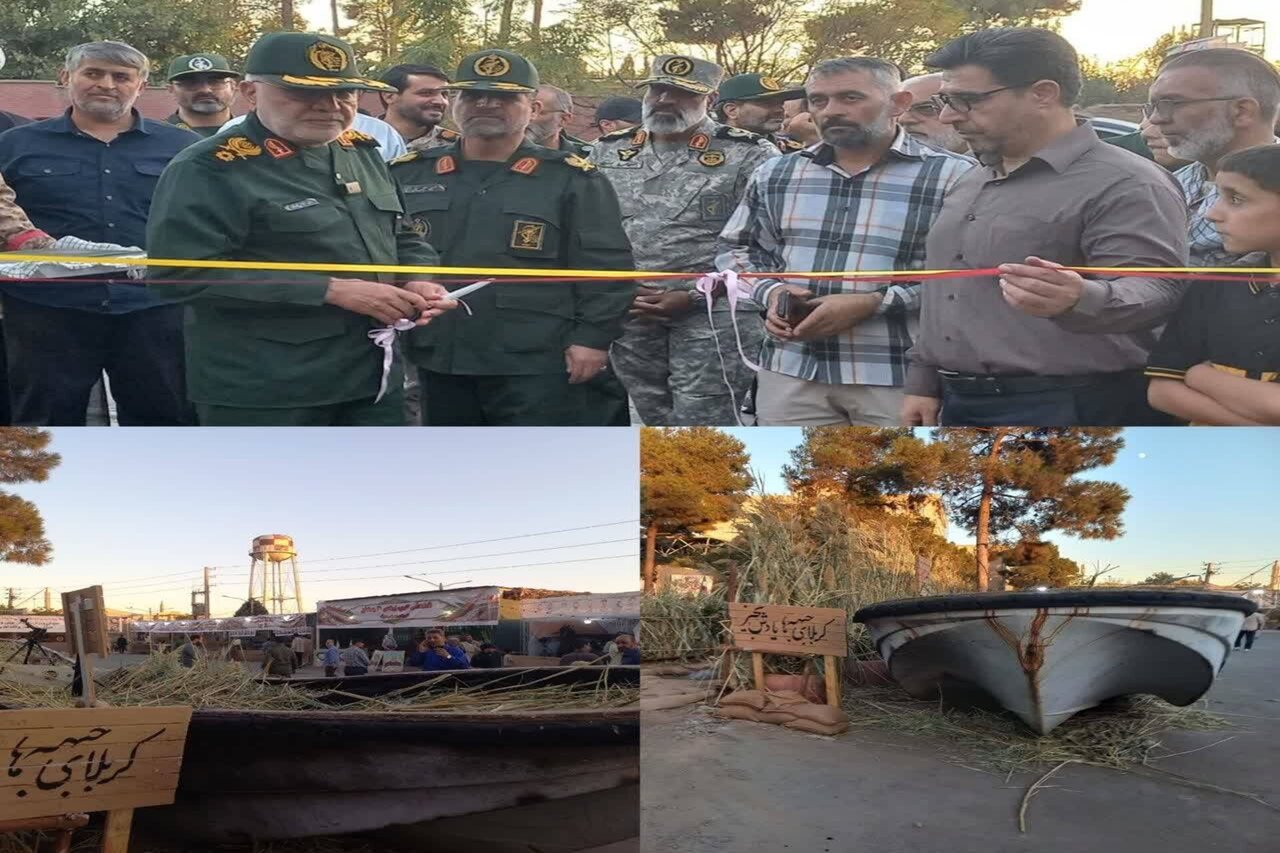
TEHRAN, Sep. 23 (MNA) – An exhibition of the achievements of the Islamic Revolutionary Guard Corps Ground Forces opened Tuesday evening on Shahidan Sarbaz Boulevard in Tehran under the slogan “Labbayk Ya Khamenei.”
 The South Caucasus News - SouthCaucasusNews.com
Подробнее по ссылке: media.az/post/1068109931
#новости #mediaaz #Азербайджан #горнодобыча #AzerGold #проект #финансовыйЭффект #бюджет
Students will reportedly not be allowed to ask questions directly or respond to the answers they receive. Questions must be submitted & approved in advance.
Several Armenian student organizations have contacted All-ASA to express their opposition to the meeting, while several board members have reportedly resigned.
Подробнее по ссылке: media.az/post/1068109931
#новости #mediaaz #Азербайджан #горнодобыча #AzerGold #проект #финансовыйЭффект #бюджет
School closure in Georgia
Ten state schools in Georgia were closed during the first three days of the new academic year. Some of the buildings are due to be demolished and rebuilt, while others will undergo repairs.
The decision followed assessments by the National Forensics Bureau, which found that the school buildings were in a state of disrepair and unsafe for use.
One of the schools is in Tbilisi, while the others are located in different regions across the country.
For the first week after the closures, the schools switched to remote learning. During this period, the Education Ministry and school administrations are expected to urgently find alternative premises.
All 10 schools are likely to be temporarily accommodated in neighbouring schools, with classes held in two or three shifts and lesson times shortened. If any of the alternative schools are too far away, school buses will be provided.
More than 4,000 pupils and around 400 teachers are now waiting for the ministry to decide where they will be relocated and which shifts they will study and work in.
his is not unprecedented. In recent years, thousands of pupils across Georgia have been studying in temporary, “borrowed” premises, while schools that were demolished have yet to be rebuilt.
The closure of all 10 schools followed the same pattern. The start of the new academic year on 15 September was celebrated as usual, with balloons, flags and flowers in school courtyards and classrooms.
Three days later, on the evening of 17 September, parents received messages informing them that the schools were being closed.
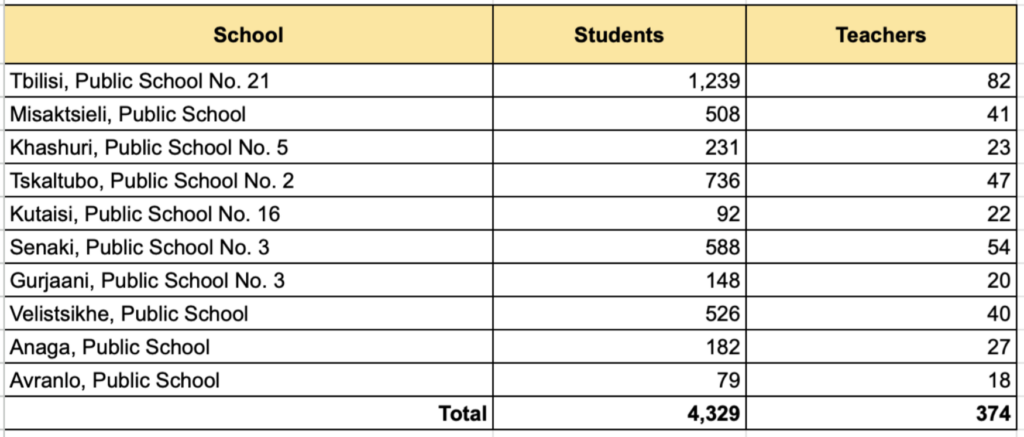
In all 10 cases, the decisions to close the schools were based on assessments by the National Forensics Bureau dated 10 September 2026. The education minister says the ministry did not receive the documents until 17 September, explaining why the closures were announced at such short notice.
Some parents do not believe that the school buildings are unsafe. They suspect that some of the decisions may be linked to corrupt deals and investors’ interests.
JAMnews examined publicly available documents relating to all 10 schools, including decisions by the Authorisation Council, expert assessments, public procurement records, renovation plans and municipal reports.
We sought answers to several questions: Why were these schools allowed to begin the academic year as normal on 15 September if their buildings had to be vacated just days later? When did the responsible authorities learn about the condition of the schools? And if the buildings were already destined for demolition, why was money allocated for their renovation year after year?
The documents examined by JAMnews show that concerns about the poor condition of some of the schools had been known for years. In other cases, however, there had previously appeared to be no need even for repairs, let alone demolition.
Some of the schools underwent minor renovation work in recent years, with substantial sums spent on the projects.
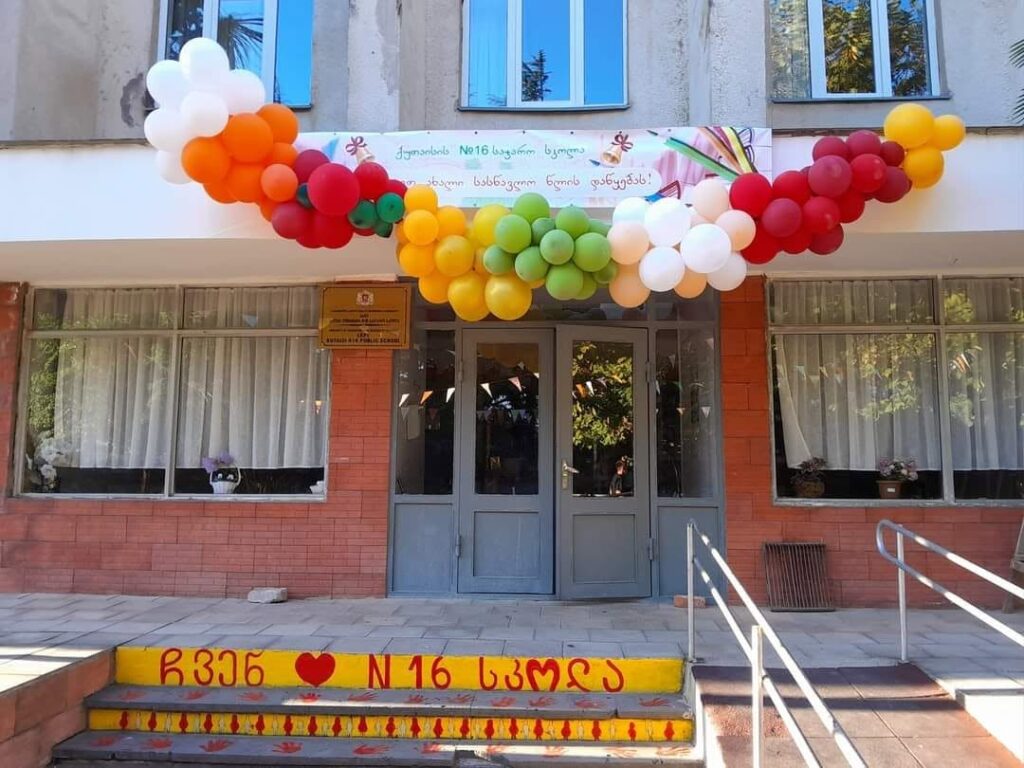
For example, according to public procurement records, Public School No 16 in Kutaisi underwent various repairs in 2015, 2017 and 2022. The largest amount was spent in 2015 — around 190,000 lari [about $70,300].
The Kutaisi school made its most recent purchase just three weeks before the start of the current academic year. On 24 August, the administration signed a 2,500-lari [about $925] contract for maintenance of the school grounds, including mowing and removing grass.
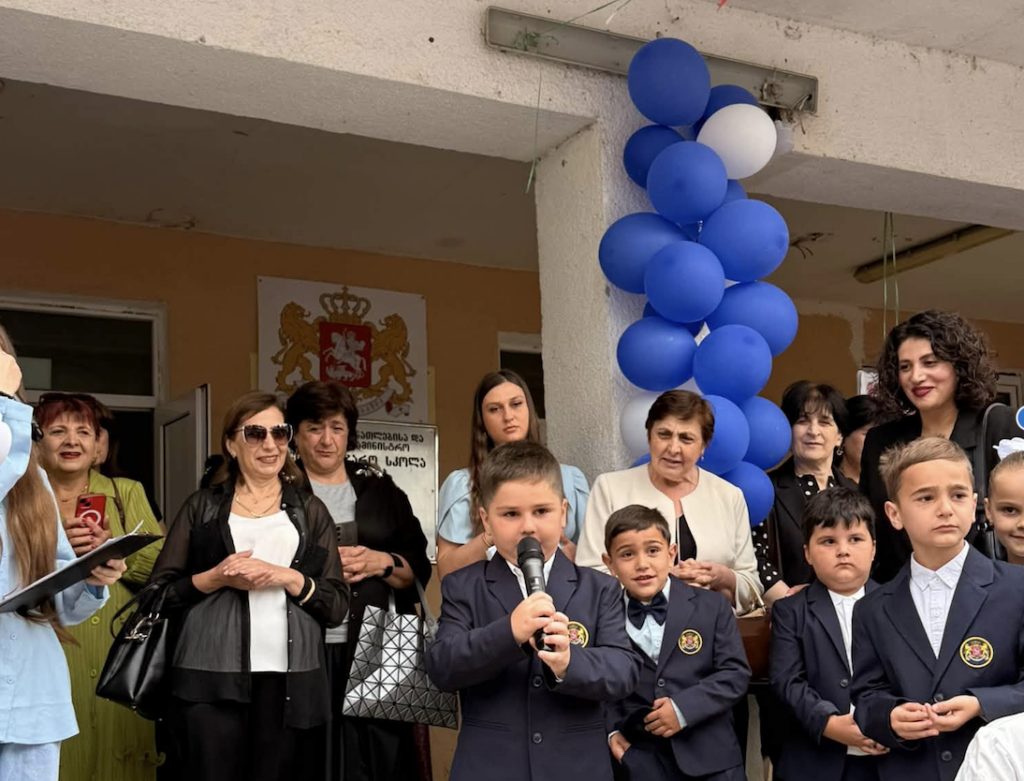
The public school in the village of Misaktsieli underwent major renovations in 2008, while its heating system was completely upgraded last winter.
This is also confirmed by the Mtskheta municipality’s 2025 budget. According to the document, several schools were due to undergo renovation work funded through a targeted transfer from the state budget. The school in Misaktsieli was among them.
The Misaktsieli school continued to spend money on various works and services in 2026. Its most recent contract, signed on 4 September, was worth 12,515 lari [about $4,635] and covered the removal of flooring, plumbing work and the subsequent installation of granite flooring.
The school in the village of Abranlo, in the Kvemo Kartli region, is the smallest of the schools closed in recent days, with around 80 pupils. It too has undergone renovation work in recent years.
Mariko Tsikoridze, a project co-ordinator for CENN in Kvemo Kartli, says three sanitation and hygiene projects were carried out at the school before 2019. Toilets were built, washbasins renovated, and an illegal rubbish dump created by local residents in the school grounds was cleared.
“We brought in six truckloads of soil and built a sports ground. The local authorities were also actively involved at the time,” Tsikoridze says.
The school is now due to be demolished. Its headteacher, Mikheil Jakeli, wrote on social media that, according to the National Forensics Bureau’s assessment, constructing a new building would be preferable to repairing the existing one, prompting the ministry to decide on demolition.
For some of the schools, JAMnews was unable to find any relevant records in the public procurement system. However, municipal reports and local media articles show that concerns about the condition of these schools had been raised for years.
For example, parents of pupils at Public School No 5 in Khashuri were calling for repairs as early as January 2023, complaining about damaged walls, floors and doors, as well as loose stair railings.
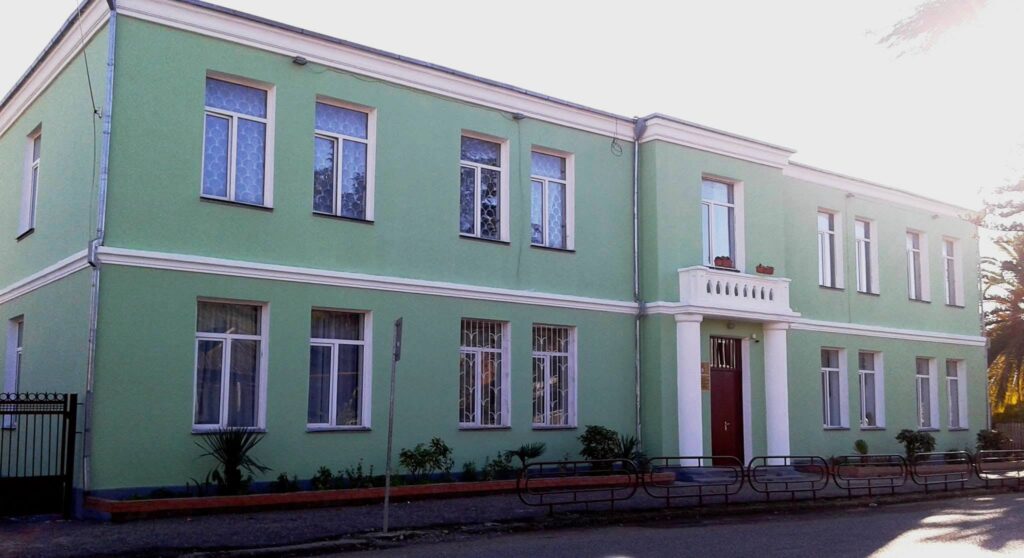
In municipal reports from the Imereti region, Public School No 2 in Tskaltubo had for years been listed as a building in need of renovation.
Available records for 2022-2026 contain no evidence of major renovation work at the school. However, according to Info Imereti, minor repairs were carried out, including in the summer of 2026.
“There is an assessment stating that the building is not cost-effective to repair. It would therefore be better to construct a new one rather than renovate it,” Mamuka Chkhetiani, head of the Tskaltubo education resource centre, told Kutaisi Post.
Officials knew as early as 2022-2023 that Public School No 3 in Senaki was in a state of disrepair. In 2022, the school’s headteacher, Marine Naneishvili, told Etaloni that the building was due to be demolished.
The Finance Ministry’s 2023 review of investment projects listed the “Construction of Public School No 3 in Senaki”as a separate project, with 12.696m lari [about $4.7m] allocated for it. It is unclear what became of the project.
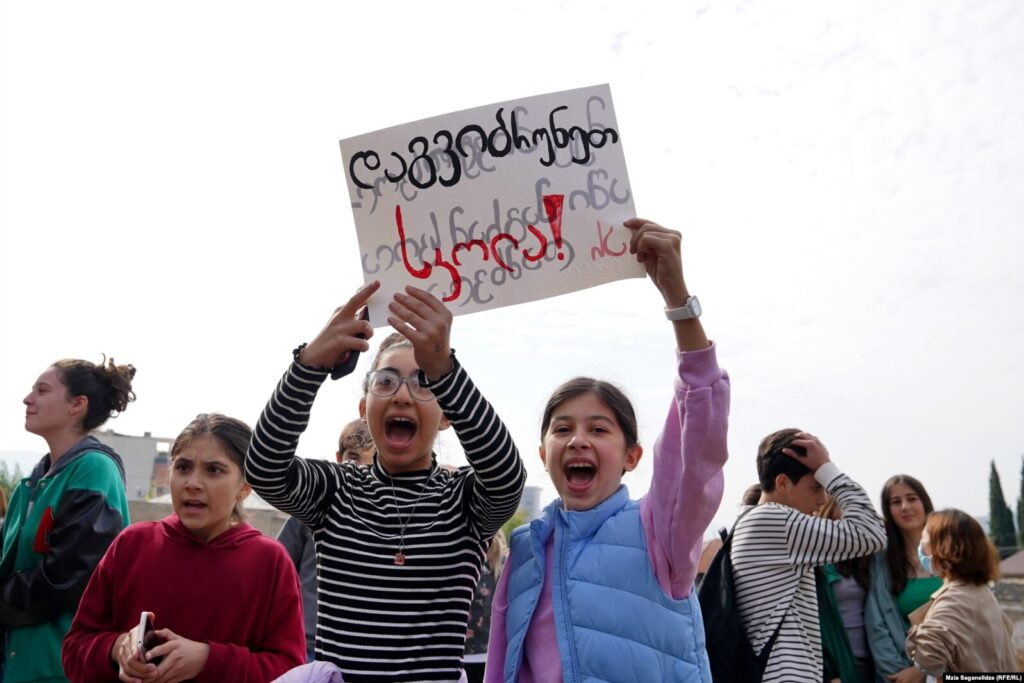
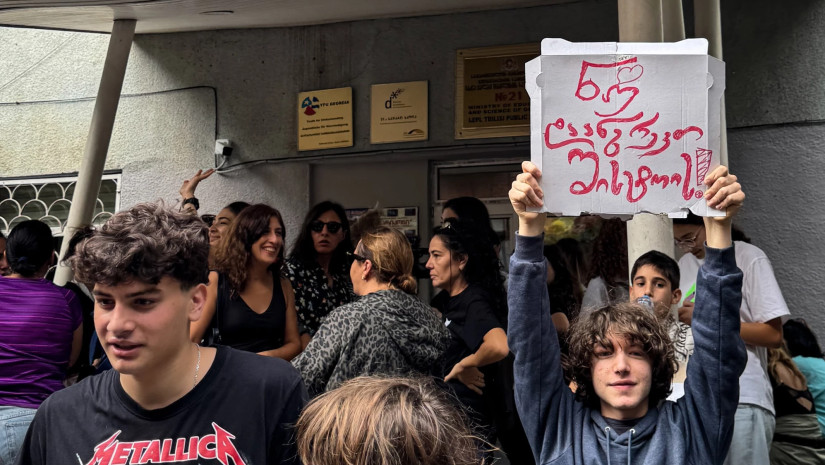
Members of the school communities at two of the 10 schools — in Tbilisi and Misaktsieli — responded to the authorities’ decision with protests, which are still continuing. At the other schools, discontent has largely been confined to social media, where parents have complained about the disruption to both their children’s plans and their own.
“We are in shock” is the most common reaction beneath posts announcing each new school closure.
Two of the three schools closed in the Kakheti region — Public School No 3 in Gurjaani and the school in the village of Velistsikhe — are in Gurjaani municipality. More than 500 children attend the Velistsikhe school, while School No 3 has 148 pupils.
“Congratulations to the school community of Velistsikhe Public School — pupils, parents, teachers and everyone interested in improving our school,” headteacher Nona Menabdishvili wrote on social media alongside the news of its closure.
The post attracted numerous comments, many of them essentially asking: “What is there to celebrate?” Others shared stories of schools elsewhere that have remained closed for years.
Unlike Menabdishvili, Mikheil Jakeli, headteacher of the school in Abranlo, expressed no enthusiasm about the Education Ministry’s decision.
He has appealed to the ministry to allow pupils to complete the current academic year in the old building, subject to appropriate safety measures, “to avoid moving the children elsewhere just days after the start of classes and causing them unnecessary stress”.
The largest of the 10 schools to be closed is Public School No 21 in Tbilisi, formerly Gymnasium No 6. News of its closure was also the first to emerge.
It is one of the capital’s most prestigious schools. Because of its emphasis on German-language teaching, it is often referred to as the “German school”.
According to a National Forensics Bureau assessment dated 10 September 2026, several problems were identified in the school building, including a risk of plaster falling from the façade, a faulty drainage system, cracks in some areas and damage to reinforced concrete blocks.
The assessment also identified seismic vulnerability as a separate problem, citing the absence of an earthquake-resistant reinforcement belt on the roof parapet and other failures to comply with current seismic standards.
However, the same school had previously received a very different assessment from the same National Forensics Bureau on 15 November 2023, when it underwent authorisation. The assessment said the building required repairs, but gave it an overall “positive” evaluation, and the school was authorised to operate until 2032.
In April 2026, the Authorisation Council carried out scheduled monitoring of the school and, citing the positive assessment, said the building required repairs and gave the school until 2028 to address the problems.
In other words, as recently as spring 2026, official documents still listed School No 21 as requiring repairs rather than demolition.
However, by the time the Authorisation Council made that assessment, a new examination of the school building was already under way.
The Municipal Development Fund had requested the examination on 16 September 2025. An expert inspected the building on 10 December, and nine months later, on 10 September 2026, issued a new assessment.
The building was initially classified as Category III based on the extent of the damage. However, following Georgian government decree No 161 of 22 April 2026, which sets out criteria for assessing whether buildings are fit for use, the damage was subsequently classified as Category IV because of seismic safety concerns.
How could the school have deteriorated so severely in three years that it now needs to be demolished? This is the question being asked by parents. Many suspect corruption. The school is located in a prestigious tourist area, prompting speculation that a private investor may be interested in the site.
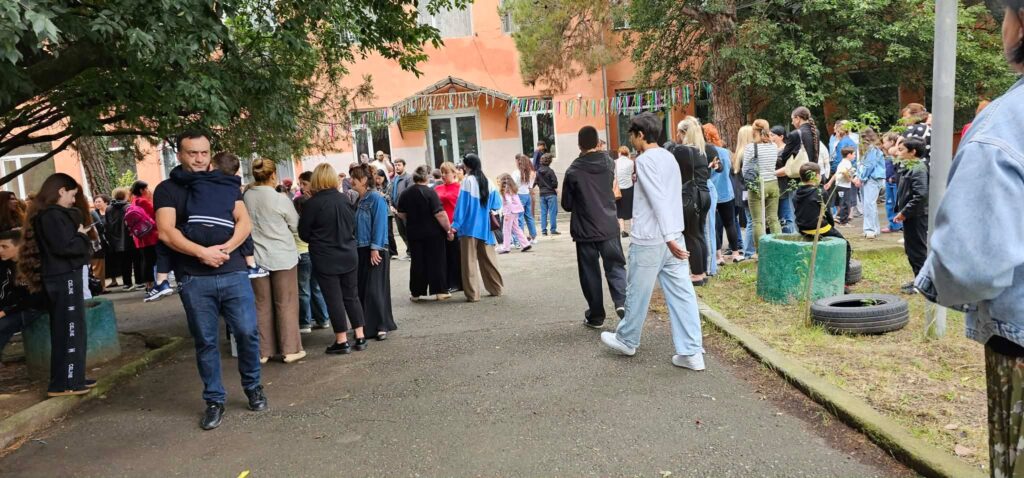
Parents fear that the school will be demolished and never rebuilt. They are demanding an independent assessment and say they will not allow the building to be torn down. They also oppose both online learning and the relocation of pupils to other schools.
Irine Kalandadze’s child started first grade this year. He had barely had time to settle into school when his parents were told it was closing:
“He had only been at school for three days and was eagerly looking forward to the next one — he liked it so much. Then suddenly we were told the school was closing. I can’t explain this to my child, and it is very painful for me too. This is precisely the stage when children need to develop a love of school, and now we don’t even know where or how he will study.”
The school in Misaktsieli serves five villages in Mtskheta municipality and has more than 500 pupils.
Parents say lessons will be held online for the first week after the closure, after which the children will be transferred to the school in the village of Tsilkani. But that school has capacity for only 300 pupils, meaning classes will have to be held in several shifts.
Parents do not know for certain whether the Misaktsieli school is due to be demolished or is being closed for repairs. On 18 September, residents gathered in the school grounds and demanded an explanation from the headteacher, who told them that he had not yet seen the expert assessment himself.
Villagers fear there may also be business interests behind the decision: the school is in a popular tourist area, occupies a large site and is surrounded by numerous commercial properties.
“We all want our children to study in a modern school. It’s just that we have seen many examples of how school renovation projects have ended,” Irine says.
Parents are demanding that, if the school needs repairs, the work be postponed until spring. If the building is to be demolished, they want construction of a new school to begin simultaneously on vacant land nearby, with the existing building demolished only once its replacement is ready.
“If we don’t act now, we will lose our school,” Irine says.
The protest is continuing, and parents say they have no intention of backing down.
According to Georgia’s National Statistics Office, there are 2,086 state schools in the country.
In 2022, the Education Ministry launched a large-scale reconstruction programme that was intended to cover 800 schools.
Since then, hundreds of schools have closed across Georgia. Two years ago, in 2024, the fact-checking platform FactCheck reported that 21,203 pupils had been relocated to alternative premises.
Based on publicly available data, the number is likely still in the tens of thousands. The Municipal Development Fund, which oversees school reconstruction, regularly publishes updates on the completion or launch of work at schools across Georgia.
For example, in August 2026, the fund announced tenders for the reconstruction of 11 schools. None of the 10 schools closed in recent days appears on that list, suggesting that the overall number of schools currently not operating in their own buildings is considerably higher.
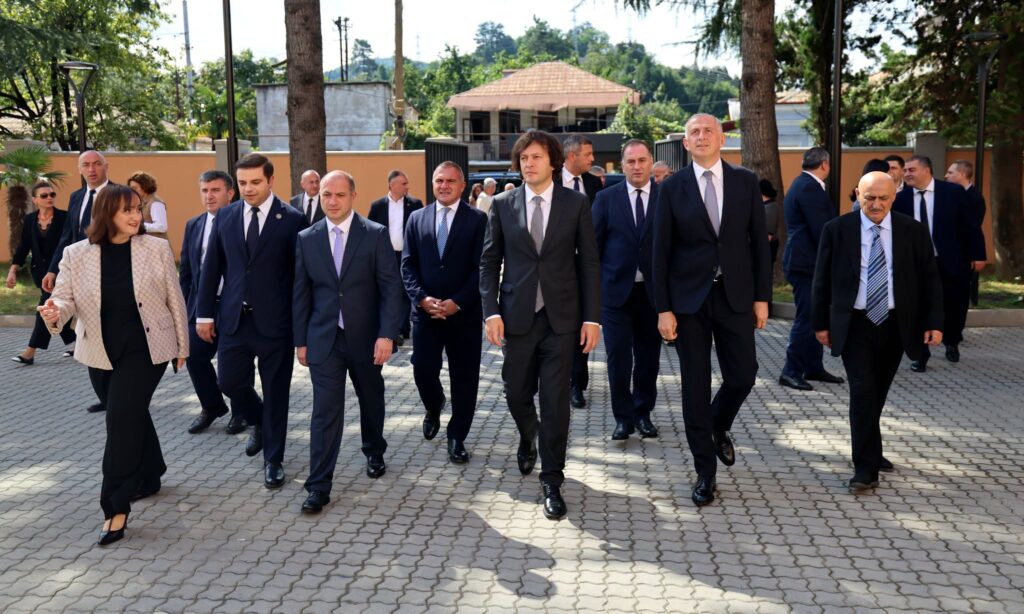
On 18 September, as thousands of teachers, pupils and parents were reeling from the news that their schools were being closed, government officials were holding a high-profile ceremony to reopen the renovated Public Schools No 4 and No 5 in Batumi.
Education experts say the situation illustrates systemic problems and a lack of a consistent strategy and long-term vision in the education system.
Education expert Revaz Abkhazava lists the problems created by what he describes as a poorly planned intervention — the reconstruction of schools:
“The education system is extremely complex. It consists of many interconnected components. If you fail to see it as a whole, you get what we are seeing now. A single decision does not simply create one problem — it can push the entire system to the brink of collapse.”
Abkhazava says such decisions are the result of experienced and qualified professionals with institutional knowledge being pushed out of the education system.
“School reconstruction is a technical task. It does not require any special expertise. Education management professionals could have resolved this issue very easily.”
The expert also points to problems in communication between state institutions. The process, he says, was not managed in a way that would have ensured the assessments were ready at least a month before the start of the academic year.
Revaz Abkhazava believes the root of these problems lies in the politicisation of Georgia’s education system. He says education should not serve any political party and that safeguards are needed to ensure this, including an education council and teachers’ associations. He also argues that the ministry’s strategy should not change every time a new minister takes office.
“The education system should be as decentralised as possible. The ministry should employ professionals with knowledge and experience in education management and education policy.
“The ministry should focus on evaluation, analysis and research, and make decisions based on them. It should support educational institutions, while those institutions should have the autonomy to make decisions on matters that concern them,” the expert concludes.