According to investigators, on 13 February 1993, Russian citizen SvetlanaZhdanova deliberately shot dead local residents TamerlanDaurov and LeonidPachev with an assault rifle before dismembering their bodies and concealing the remains.
Two weeks later, on 28 February 1993, Zhdanova allegedly attempted to kill AslanPachev, Leonid’s brother. She opened machine-gun fire at him, but missed.
Zhdanova later left for Russia and was placed on the wanted list, but investigators were unable to locate her at the time.
Crimes of this nature are not subject to a statute of limitations. In March 2026, the double murder case was reopened after Russian law enforcement authorities located and arrested Zhdanova, 33 years after the killings.
During questioning, she admitted involvement in the double murder in Pitsunda, according to investigators.
On 30 June 2026, Abkhazia’s prosecutor general’s office sent the case file to Russia’s Prosecutor General’s Office to pursue criminal proceedings.
As Zhdanova is a Russian citizen and Russian law prohibits the extradition of Russian nationals, she will stand trial in Russia under a bilateral agreement between Russia and Abkhazia.
Terms, place names, opinions and ideas suggested by the author of the publication are her / his own and do not necessarily coincide with the opinions and ideas of JAMnews or its individual employees. JAMnews reserves the right to remove comments on posts that are deemed offensive, threatening, violent or otherwise ethically unacceptable.
Black Sea Petroleum, a company owned by Georgian businesswoman Maka Asatiani that operates the newly launched Kulevi oil refinery in western Georgia, announced that it will begin refining “crude oil of entirely non-Russian origin” starting in August-September, saying the shift will “open doors to high-margin markets” for its products.
July 1’s statement said the company “continues to develop the plant in accordance with its strategic plan and to make a significant contribution to Georgia’s economic development,” adding that it has expanded its partnership with technology company Honeywell “to cover the procurement and implementation of high-tech equipment and automated control systems.”
It further said that it will “begin producing road bitumen for domestic and export markets,” and will “gain the capacity to produce aviation fuel” by the second quarter of 2027.
The Kulevi refinery, a project inaugurated in 2024 by Georgian officials as the largest private investment project in Georgia’s post-independence history, first drew controversy in October 2025, when Russian oil company Russneft supplied its first oil cargo to the facility. At the time, Georgian authorities maintained that the shipment complied with international sanctions, while critics warned that such deliveries could create a potential channel for re-exporting Russian oil under a Georgian designation.
The questions came amid broader concerns and journalistic investigations pointing to the possibility that Russian oil products may be reaching European countries through Georgia, particularly in light of the recorded spike in Georgia’s oil exports.
The controversy also extended to Kulevi port, which is owned and operated by Azerbaijan’s SOCAR. In March 2026, the European Union considered including the port in its proposed 20th sanctions package against Russia, but ultimately dropped the measure, citing “positive commitments” made by the Georgian authorities and the port operator.
Last month, the health authorities reported two cases from the Kitwe city in the Copperbelt province, Xinhua news agency reported. In October 2024, Zambia reported the first mpox case involving a Tanzanian national who came for a visit. …
President of the Republic of Azerbaijan Ilham Aliyev sent a congratulatory letter to President of the Republic of Belarus Aleksandr Lukashenko, AzerNEWS reports.
During the night of 2 July, Russian forces launched a large-scale combined attack on Ukraine, using hundreds of attack drones as well as cruise and ballistic missiles. The main target was the Ukrainian capital.
According to the Ukrainian authorities, dozens of residential buildings, civilian infrastructure facilities and medical institutions were damaged in Kyiv. The worst destruction occurred in the Darnytskyi district, where a missile struck a residential apartment block. Rescue operations continued throughout the day. According to the latest official figures, at least 27 people were killed in Kyiv and more than 90 were injured.
Ukrainian outlet Hromadske reports from the scene.
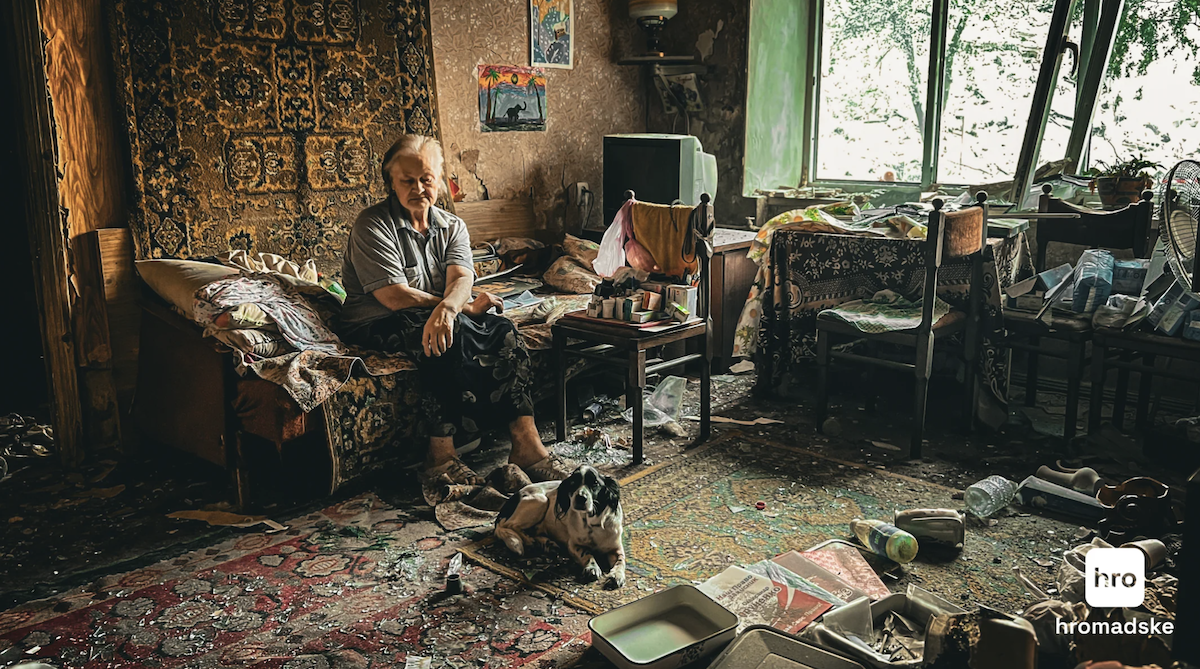
Liudmila and her dog Bima in their ransacked apartment. Maria Yurkian/hromadske
Paths strewn with shattered glass, smoke, and white dust hanging in the air. Russia once again attacked Kyiv with hundreds of drones, cruise missiles, and ballistic missiles.
Tymur Tkachenko, head of the Kyiv City Military Administration, described the destruction as “very serious.” Fires broke out in many districts, and several high-rise buildings were damaged. The hardest hit was a residential neighborhood in the Darnytsia microdistrict, where a Russian missile scored a direct hit on a nine-story building, causing its structure to collapse. The blast wave blew out nearly all the windows in neighboring buildings in the courtyard.
As of 7:17 p.m. on July 2, there were reports of 22 killed and 86 wounded. Rescuers continued clearing rubble, dog handlers searched for those missing, and residents amid the chaos assessed the damage and did not know what to do next.
The location of one of the hits in Kyiv after the Russian strike. Maria Yurkian/hromadske
“I just want to die”
79-year-old Liudmyla greets us in the apartment where she has lived for 56 years. She moves slowly around the room, leaning on a metal walker. In this home, her husband, in-laws and two sons all passed away. Now all that remains for Mrs. Liudmyla is her grandson and her little defender — the dog Bima, who barks fiercely at anyone who crosses the threshold.
At the moment of the strike, the woman was lying in bed. The blast wave tore out the window frame, which flew straight at her along with a pile of sharp glass.
“I was lying right here. And then it happened … the window fell on me. Glass showered down. I somehow crawled out from under that frame … Look what happened in the kitchen, the cabinets fell over. The curtains were ripped out,” she says quietly.
She lowers her eyes and adds:
“Horrible emotions. Right now I think I just want to die. Nothing, no one, nothing is left. All the dishes are gone. I cannot even sort the plates — I can barely walk.”
So she sits in the middle of her devastated apartment and waits for her grandson to help carry out the fragments of her life.
“If I had found the socks right away, I probably would have…”
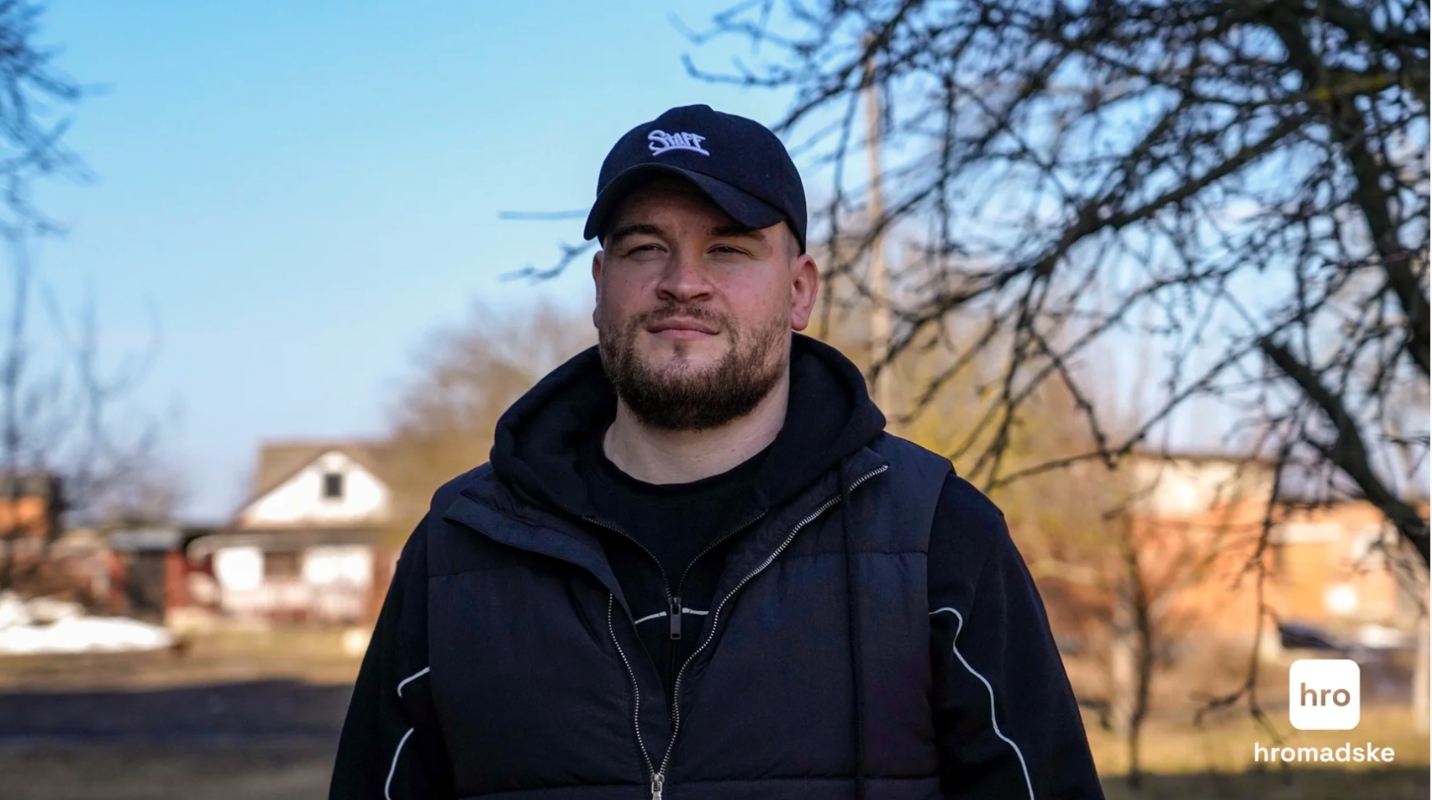
The neighboring courtyard is littered with dirt and pieces of reinforced concrete. Where a playground once stood, there is now a crater. Near the damaged entrance stands a young man named Yaroslav. He recalls how his life nearly ended that night:
“Around 4 a.m. I heard the first missiles flying in. The first one hit the neighboring building. I got up, looked from the balcony. Then, out of habit, I started getting ready to go out and see what was happening. And for some reason I could not find my socks to put on my sneakers.”
Yaroslav managed to survive thanks to his lost socks. Maria Yurkian/hromadske
The young man searched for the socks for exactly two minutes. At that very moment he heard the whistle of the second missile, which tore through the courtyard.
“If I had found the socks right away, I probably would have…” he says, hinting that he would not be standing here.
“Bought it a week ago. Now it’s junk”
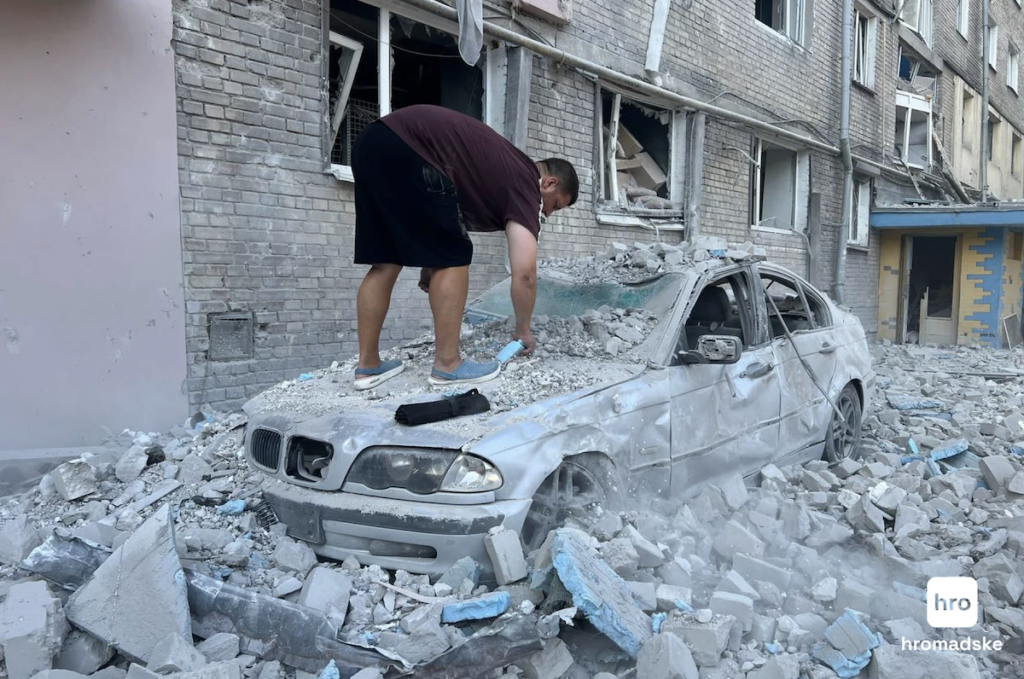
Nearby in the courtyard, a man is urgently trying to start his car. This is Nikita. His vehicle is completely covered in stones, the windshield is smashed, and the body looks like a crumpled tin can.
“The car is gone. That is it. It is scrap,” Nikita says sharply, wiping his dirty hands. “You know what is really upsetting? I bought the car a week ago. Now it won’t move. Only good for the junkyard.”
During the explosion, Nikita was at home with his wife, dog and cat. He says it is a miracle no one was hurt, even though all the windows and the front door in the apartment blew out.
Nikita is dismantling a car from under the rubble. Maria Yurkian/hromadske
When asked what to do next, the man simply shrugs:
“I do not even know. I am not counting on compensation from the insurance company — most likely no one will give anything. What to do next? No idea.”
How are the victims being helped?
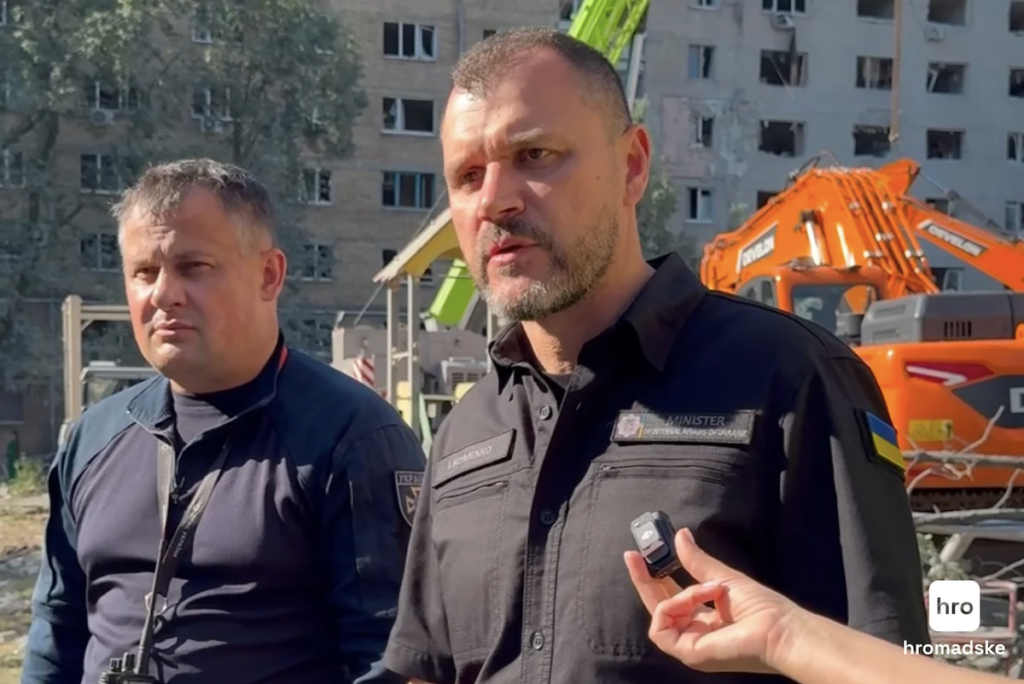
At the site of the tragedy, operational tents have been set up. Making his way past piles of glass and damaged trees is the Minister of Internal Affairs, Ihor Klymenko.
“Today there was a real miracle here thanks to the work of the rescuers. This is the first time in Ukraine that we were able to pull seven people alive from under the rubble,” the minister reports. “The building is made of silicate, white, not concrete — perhaps that gave us time to clear the rubble faster.”
Ukraine’s Minister of Internal Affairs Ihor Klymenko at the scene of the tragedy. Maria Yurkian/hromadske
According to him, services at the site are coordinating their work so that victims receive help here and now.
They are promised payments of 40,000 hryvnias ($894) within three days, and district authorities are already looking for places to relocate people from the destroyed apartments. There are about 38 such people in just one building.
Consequences of the Russian attack on Kyiv. Maria Yurkian/hromadske
Buses from the migration service stand near the ruined entry sections. Passports and birth certificates that burned or remained under the concrete are promised to be restored free of charge starting today.
Specialists from the Ministry of Internal Affairs service center are conducting damage assessments of wrecked cars (like Nikita’s) right in the courtyard for insurance payments. They are also issuing new driver’s licenses and technical passports free of charge to replace those destroyed.
Minister Klymenko repeats several times: There could have been far more victims, but people were saved because they went down to the nearest bomb shelters. There are 10 of them nearby.
By the way, that night the largest number of people in recent years hid in the Kyiv metro at more than 50,000, the Kyiv Metro reported.
According to the Ukrainian Air Force, Kyiv was the main target of the Russian strike. The Russians used 74 missiles and 496 drones of various types. Air defense neutralized 48 missiles and 476 unmanned aerial vehicles.