Categories
South Caucasus News

Armenia unveils exporter support programme to offset Russian restrictions


Second support programme for Armenian exporters

Second support programme for Armenian exporters

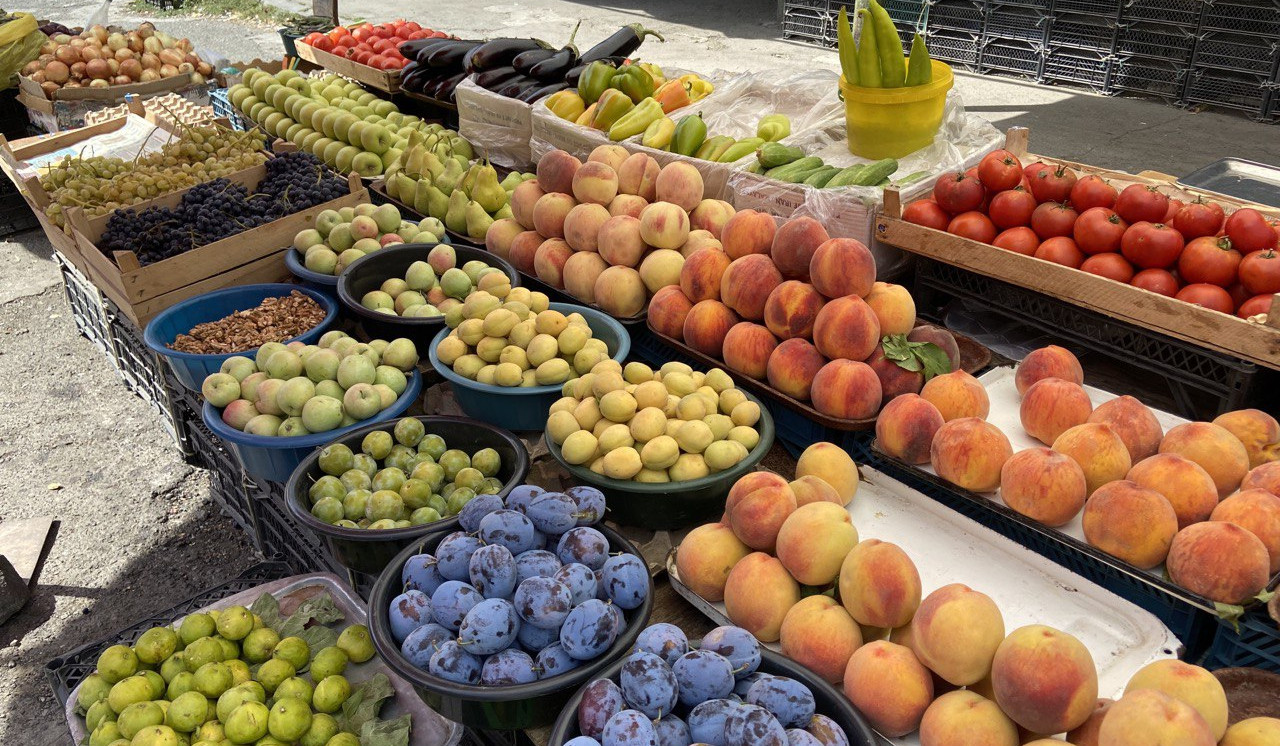
In response to Russian restrictions, the Armenian government has approved another support programme for Armenian exporters. The programme will provide financial compensation for exports of fresh fruit, bottled grape wine, brandy and mineral water. It will cover exports made from 1 June onwards.

Russia introduced the restrictions on the eve of Armenia’s parliamentary elections, which took place on 7 June. Prime Minister Nikol Pashinyan and other government officials expected the situation to improve immediately after the vote.

Experts linked the economic restrictions to an attempt to support pro-Russian politicians who took part in the election campaign. Both analysts and politicians expected Russia to gradually lift the measures after the election.

However, no positive developments have emerged so far. On the contrary, Russia’s agricultural watchdog, Rosselkhoznadzor, introduced new restrictions on 12 June. The agency now limits imports of “quarantine-controlled products”. The measures affect both goods produced in Armenia and goods shipped from the country.

“Moscow is also restricting transit through Russia to member states of the EAEU [the Russia-led Eurasian Economic Union]. The ban will remain in place until the parties develop a specific mechanism to ensure the safety and traceability of shipped goods,” Russian authorities announced.

Responding to the new restrictions, Economy Minister Gevorg Papoyan said the government would continue supporting citizens and would shoulder the “heavy financial burden”.

“As for our relations with our partners, I plan one, and possibly two, visits to Russia in June and July to attend various events. I will also meet with two colleagues. Naturally, we will discuss these issues as well. We will resolve the problems. These are not issues that can create serious tensions,” he said.


New compensation programme worth $10.6m

The Armenian government will provide compensation to both companies and individual exporters, including sole proprietors, who export fresh fruit, bottled grape wine, brandy and mineral water from Armenia during June.

The programme offers the following compensation rates:

  • 200 drams (54 US cents) per kilogram of apricots;
  • 250 drams (68 US cents) per kilogram of plums, peaches and nectarines;
  • 400 drams ($1.10) per kilogram of cherries;
  • 350 drams (95 US cents) per litre of bottled grape wine;
  • 830 drams ($2.27) per litre of bottled brandy;
  • 150 drams (41 US cents) per litre of bottled mineral water.

The government says it introduced the programme to support exporters. It also aims to diversify Armenia’s export markets.

Preliminary estimates suggest the programme will cost the government around 3.9bn drams ($10.6m).

To receive compensation, exporters must submit an application to the Economy Ministry either electronically or in paper form. They must also provide copies of customs declarations and invoices.

The Economy Ministry says Armenia exported fresh fruit, bottled grape wine, brandy and mineral water worth about 106.1bn drams ($290m) in 2025. Russia accounted for roughly 80.7% of those exports.

According to export projections, the support programme will cover about 11,500 tonnes of fruit exports in June 2026. It will also cover around 290,000 litres of bottled grape wine, 800,000 litres of brandy and approximately twice that volume of mineral water.
New restriction: ‘Cases of khapra beetle infestation detected’

Russia’s agricultural watchdog, Rosselkhoznadzor, says it has gradually restricted imports of certain categories of Armenian quarantine-controlled products since May 2026. The agency says it has repeatedly informed the Armenian side about violations involving shipments.

“However, detections of quarantine pests continue. In June, inspectors identified three cases of khapra beetle infestation in nuts, dried peaches and dried tomatoes imported from Armenia,” Rosselkhoznadzor said in a statement.

Officials at the Russian agency argue that these incidents point to insufficient oversight by Armenia’s competent authorities.

“The ineffective work of Armenia’s plant quarantine and protection service threatens the phytosanitary security of Russia and the EAEU,” the statement said.

Rosselkhoznadzor describes the khapra beetle as a highly destructive storage pest that does not exist in Russia. The agency outlined the potential risks posed by the insect. According to the statement, it can damage grain crops and processed grain products, infest grain storage facilities, raw material warehouses and flour depots, and “destroy up to 70% of stored products”.
Economy minister: ‘We are working to secure a special economic status for Armenia in the EU’

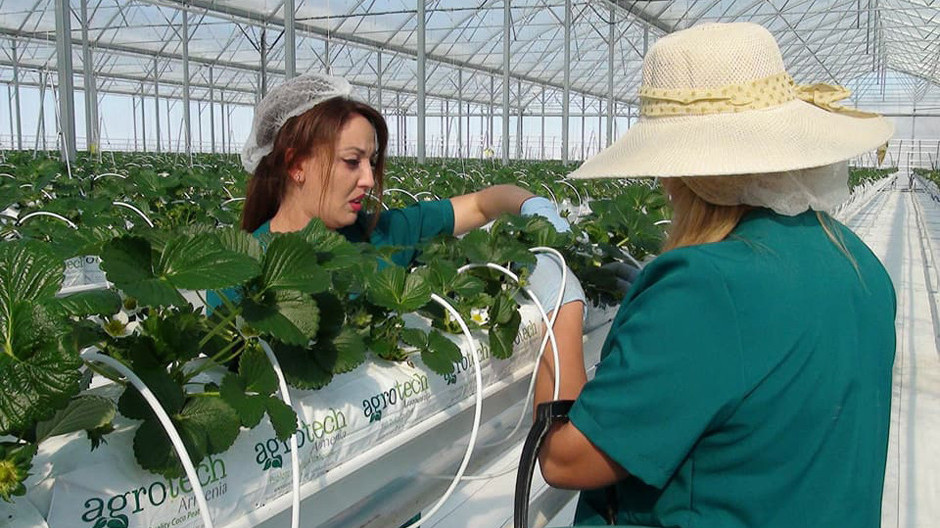
Armenian Economy Minister Gevorg Papoyan said products from Armenia’s intensive orchards and greenhouses face no export-related quality issues because they meet the highest standards. He said Armenian producers already export their goods to European Union countries, which demonstrates their competitiveness.

“The Economy Ministry and the Foreign Ministry are working with our European partners to secure a special economic status for Armenia, similar to the arrangements previously granted to countries such as Moldova and Ukraine,” Papoyan said.

He warned that the process would take time because it requires the approval of all EU member states. However, he expressed confidence that the efforts of the two ministries would ultimately succeed.

Papoyan also said the government would continue support programmes until Armenian products establish a stable presence in different export markets.

He explained that government programmes compensating transport costs and customs duties aim to address price competitiveness rather than product quality.

“In terms of quality, our products are competitive. They compete with products from France, Spain, Portugal, Italy, Turkey, Greece and other countries. But Greece and Spain are much closer to markets such as France and Germany than we are. That increases our costs. As a result, Armenian products face a challenge in terms of price competitiveness,” he said.


Categories
South Caucasus News

Shell pauses $3B share buyback program


Shell plc announced on Friday that it is pausing its $3 billion share buyback program due to securities law requirements related to its acquisition deal with Canadian energy company ARC Resources, AzerNEWS reports.

Categories
South Caucasus News

Occupiers are starving for shells: Ukrainian air strikes make Russia suffer even in defense


Categories
South Caucasus News

Trump: Terms Iran leaked not what was agreed to in writing


United States President Donald Trump stressed on Friday that the terms the Iranians leaked out to “the Fake News have NOTHING to do with the terms that were agreed to, in writing”, AzerNEWS reports.

Categories
South Caucasus News

Meydan TV shortlisted for International Free Media Pioneer Award


The International Press Institute (IPI) and International Media Support (IMS) have announced the shortlist for the 2026 Free Media Pioneer Award.
The shortlist includes 11 media organizations from around the world that work to promote and defend independent journalism. Among the nominees are Meydan TV and AbzasMedia from Azerbaijan.
According to IPI and IMS, the organizations selected this year have developed innovative approaches to ensure the free flow of news and information under increasingly difficult conditions for press freedom, while demonstrating the resilience of independent media.
Founded in 2013, Meydan TV is known for its citizen journalism and reporting on corruption and human rights violations.
According to IPI and IMS, between December 2024 and August 2025, 12 people associated with Meydan TV were arrested. They are being tried as a group and face charges including money laundering, tax evasion, and other financial crimes, which could result in lengthy prison sentences.
The statement notes that Meydan TV journalists continue to defend freedom of expression and press freedom from prison cells and courtrooms. Meanwhile, the media outlet continues its work in exile and remains one of the few sources of independent journalism in Azerbaijan’s increasingly repressive media environment.
Orkhan Mammad, Editor-in-Chief of Meydan TV, said that the nomination is an important source of moral support, especially for the journalists who are imprisoned:
“For us, Meydan TV being considered for this award is not only recognition of our professional work but also an important moral support during a very difficult and sensitive period. Especially for our colleagues who are in prison, this award is a source of hope, joy, and endurance. It is recognition of their struggle for freedom of expression, journalism, and truth in Azerbaijan.
Despite the challenges, pressures, and restrictions we face, being considered for this award shows that our work has not gone unnoticed and that the international community stands in solidarity with us in our fight to protect access to accurate information in Azerbaijan.”
In addition to Meydan TV and AbzasMedia, the shortlist includes the Cambodian Journalists Alliance Association (CamboJA) from Cambodia, Forbidden Stories from France, the Foundation for Investigative Journalism (FIJ) from Nigeria, the Latin American Center for Investigative Journalism (El CLIP) from Costa Rica, Netra News from Sweden and Bangladesh, Oxpeckers Investigative Environmental Journalism from South Africa, Radio Dabanga from Sudan, the Syrian Investigative Reporting for Accountability Journalism (SIRAJ) from Syria, and Zan Times from Afghanistan.
The winners of the 2026 Free Media Pioneer Award are expected to be announced in the coming days.
The post Meydan TV shortlisted for International Free Media Pioneer Award appeared first on MEYDAN.TV.

The post Meydan TV shortlisted for International Free Media Pioneer Award appeared first on azeritimes.com.


Categories
South Caucasus News

China expands organ donation availability


Authorities and experts stated on Thursday that China has significantly improved the efficiency and accessibility of organ transplantation over the past decade, largely thanks to an optimized “green channel” system for transporting vital donor organs. At the same time, public awareness of organ donation has been steadily increasing across the country, AzerNEWS reports.

Categories
South Caucasus News

What’s behind Azerbaijan and Thailand’s first consular consultations?


Azerbaijan-Thailand relations

Azerbaijan-Thailand relations

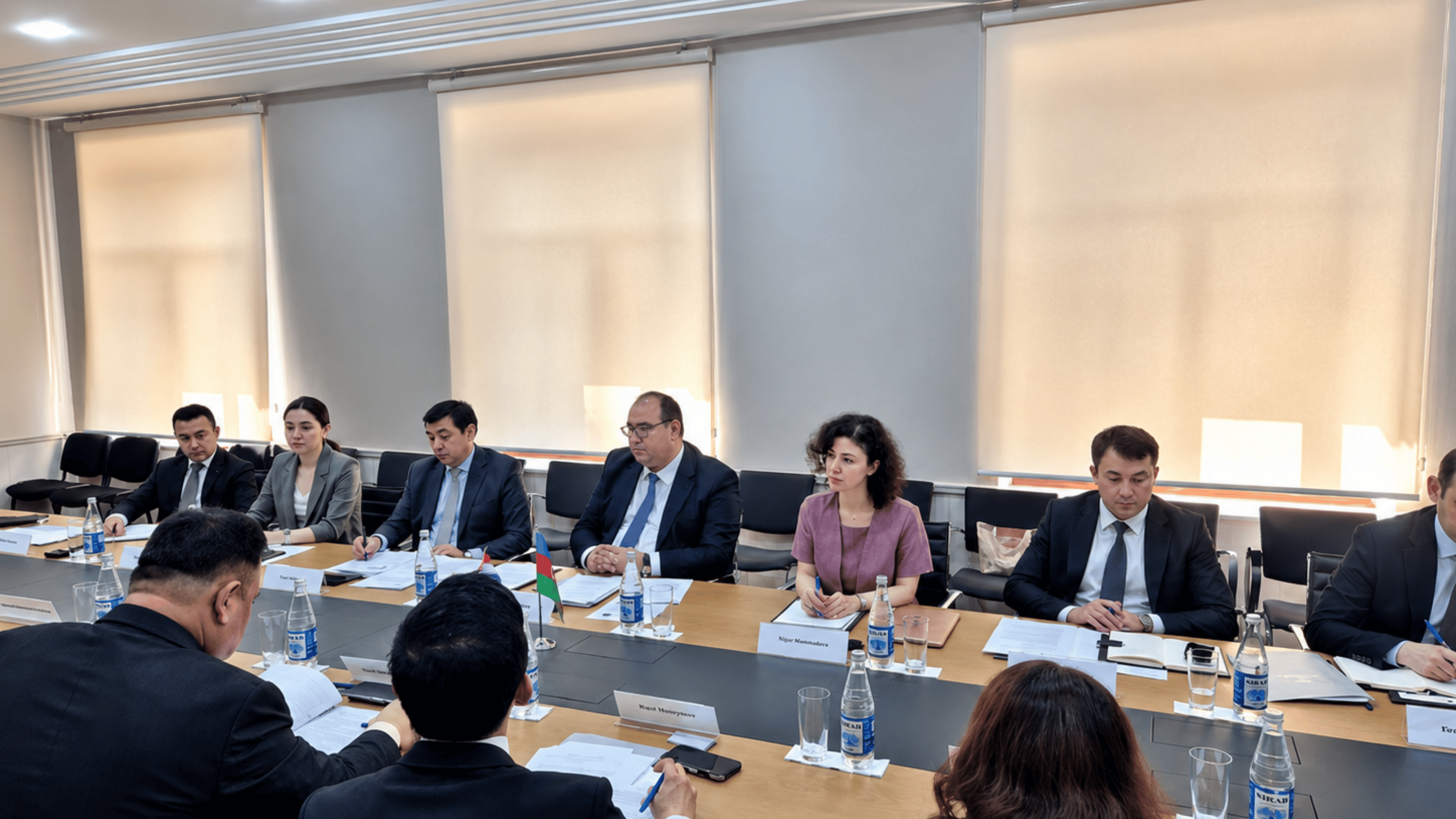
On 11 June, Baku hosted the first consular consultations between the foreign ministries of Azerbaijan and Thailand.

The Azerbaijani delegation was led by Emil Safarov, head of the Consular Department at the Foreign Ministry, while the Thai side was headed by Mungkorn Pratoomkaew, Director-General of the Department of Consular Affairs at Thailand’s Ministry of Foreign Affairs.

At first glance, the meeting may appear to be a purely technical event. In reality, however, consular affairs are among the areas of foreign policy that have the most direct impact on ordinary citizens. They cover issues such as lost passports, travel documents for returning home, emergency assistance, the detention or death of citizens abroad, evacuations and border-crossing procedures. As such, the consultations also suggest that Azerbaijan-Thailand relations are moving towards a more practical and sustainable level of cooperation.

Links between the South Caucasus and Southeast Asia are often overshadowed by larger geopolitical issues. Yet consular diplomacy is one of the clearest examples of how international relations affect people’s daily lives.

Simplified visa procedures, digital application systems, coordination during emergencies and the protection of citizens are among the areas that provide a tangible measure of how effectively countries cooperate with one another.

What was discussed?

During the consultations in Baku, the two sides reviewed the current state of consular cooperation between Azerbaijan and Thailand and discussed prospects for its further development.

According to official information, participants stressed the importance of expanding the legal framework governing bilateral cooperation, creating new mechanisms for engagement and strengthening the institutional foundations of cooperation in relevant areas.

Particular attention was paid to the evacuation of citizens during crises, the provision of emergency consular assistance and the digitalisation of consular services.

The meeting can be seen as a technical starting point for future developments in areas such as tourism, business cooperation, student exchanges and emergency management.

Diplomatic context of the consultations

The June meeting was not the first such contact between the two countries. As early as 11 October 2024, officials at Thailand’s Foreign Ministry discussed a range of issues with Azerbaijan’s newly appointed ambassador to Bangkok, including cooperation in tourism, education, trade and investment, the organisation of the first political consultations, a draft agreement on mutual visa exemptions for holders of diplomatic and service passports, the launch of direct flights and the holding of the first consular consultations. In that sense, preparations for deeper consular cooperation began in autumn 2024.

A new phase of the process started in December 2025. On 11 December, Thai Foreign Ministry representative Vijavat Isarabhakdi attended the official opening ceremony of Azerbaijan’s embassy in Bangkok. The Thai side described the event as an important step in the development of bilateral relations.

On the same day, Thai Foreign Minister Sihasak Phuangketkeow congratulated Azerbaijan on the opening of the embassy and expressed readiness to expand cooperation in trade, investment, energy transition, renewable energy, agriculture, technology and transport connectivity.

The following day, 12 December, the foreign ministries of the two countries signed a memorandum on political consultations and held their first round of talks. Discussions focused on economic cooperation, trade and investment, agricultural development, the production and export of halal goods and services, energy, tourism, logistics and transport links.

The bilateral dialogue continued to develop on 20 April this year in Bangkok, on the sidelines of the 82nd session of the UN Economic and Social Commission for Asia and the Pacific. During a meeting between Azerbaijani Foreign Minister Jeyhun Bayramov and his Thai counterpart Sihasak Phuangketkeow, the two sides reaffirmed their intention to deepen cooperation in the economic, trade, cultural and tourism sectors. The opening of the embassy and the first round of political consultations were described as important milestones in strengthening the institutional foundations of bilateral relations.

Against this backdrop, the consular consultations held on 11 June were a logical continuation of earlier initiatives and part of a broader, gradual process of developing Azerbaijan-Thailand relations rather than a one-off diplomatic event.

Why are tourism, mobility and digital consular services on the agenda?

Although there is no detailed and regularly updated public data on migration flows between Azerbaijan and Thailand, official developments suggest that both countries are preparing for an increase in travel between them.

In October 2024, the two sides discussed the possibility of launching direct flights and holding their first consular consultations. In January this year, the Azerbaijan Tourism Bureau held meetings with around 30 representatives of Thailand’s tourism industry during the TITF B2B event in Bangkok, promoting Azerbaijan as a new and diverse destination for Thai travellers. In April, the two countries’ foreign ministers again identified tourism as one of the priority areas of cooperation.

Taken together, these developments indicate that the institutional groundwork is being laid for expanding tourism, business ties and potentially direct air links. Digitalisation is expected to play a particularly important role in that process.

Azerbaijan’s Foreign Ministry operates an electronic appointment system that allows users to book consular services online both at the ministry itself and at Azerbaijani diplomatic missions abroad. The ASAN Visa system also streamlines the process of obtaining an electronic visa by moving applications, payments and document submissions into a digital format.

Thailand has likewise announced that, since 1 January 2025, its THAI E-VISA system has been available to applicants worldwide. According to Thai officials, the system modernises and simplifies visa procedures, reduces paperwork and enables better integration of government databases. In addition, the Thailand Digital Arrival Card has replaced the traditional paper arrival form with an online system. Thai authorities say the change is intended to strengthen security, speed up immigration procedures and support public health management.

This helps explain why the digitalisation of consular services was highlighted as a separate topic during the consultations in Baku. In practical terms, it could mean shorter waiting times, faster document processing and more effective communication with citizens during emergencies.

What regional significance do these consultations have for Azerbaijan?

The broader significance of the consultations lies in Azerbaijan’s efforts to institutionalise its diplomatic ties with Asian countries. Diplomatic relations between Azerbaijan and Thailand were established on 7 July 1992, but their active development has accelerated mainly since late 2024.

The opening of Azerbaijan’s embassy in Bangkok, the signing of a memorandum on political consultations, the meeting between the two countries’ foreign ministers on the sidelines of UNESCAP, and the first consular consultations together indicate that bilateral relations are moving beyond a symbolic level towards the creation of lasting mechanisms of cooperation.

Regional security and economic considerations also play an important role in this process. In December 2025, Thailand described both countries as key transport and logistics hubs within their respective regions. Logistics and transport connectivity featured prominently during political consultations, while the foreign ministers discussed cooperation within the UN, UNESCAP, CICA, ASEAN and other multilateral platforms.

This suggests that Azerbaijan is seeking to develop its relations with Asia within a broader framework of regional connectivity, multilateral coordination and economic corridor development.

The trend can also be viewed as part of a growing citizen-focused dimension in Azerbaijan’s foreign policy. Creating more predictable conditions for tourists and businesses, while improving the state’s ability to respond to emergencies, aligns with the country’s efforts to prepare for a post-oil phase of development.

For Thailand, the process offers an opportunity to build a more effective consular presence in the South Caucasus, a region where its diplomatic engagement has traditionally been limited.

The key question now is what concrete results these consultations will produce.

Among the areas to watch are the simplification of visa and consular procedures, the expansion of the bilateral legal framework, the development of direct channels between relevant institutions, improvements to evacuation and emergency assistance protocols, and further progress in tourism cooperation, including the possible launch of direct flights.

Azerbaijan-Thailand relations


Categories
South Caucasus News

Baltimore City Department of Public Works


Join Zero Waste Movement Trash & Recycling What We Do The Baltimore City Department of Public Works (DPW) provides important services that keep our city safe and clean. We make sure people have clean drinking water, manage stormwater and wastewater for nearly two million people, and help keep Baltimore tidy by collecting trash and recycling.

Categories
South Caucasus News

Volkswagen to cut jobs


Volkswagen (VW) plans to cut around 19,000 jobs by the end of this year as part of a broader cost-cutting and restructuring strategy, AzerNEWS reports.

Categories
South Caucasus News

Attack on Azerbaijani blogger in France: Up to 30-year sentences sought amid claims of political motive


France: Verdict in Azerbaijani blogger case

France: Verdict in Azerbaijani blogger case

The verdict delivered on 10 June by the Rennes Assize Court in the case of the attack on Azerbaijani political exile and blogger Muhammad Mirzali has become one of the harshest rulings in France involving violence against political exiles.

Reporters Without Borders (RSF) described the decision as “a strong signal to authoritarian regimes in response to transnational repression in Europe”, saying that the French justice system had demonstrated that such operations on European soil would not go unpunished.

According to RSF’s summary of the ruling, the court explicitly recognised the political motive behind the attack. Mirzali was seen not only as an individual targeted for physical harm, but also as a victim chosen to intimidate other dissidents living in Europe. The organisation described this as a “red line” and called on both France and the European Union to develop a coordinated response to similar cases of transnational repression.

How did the attack happen?

On 14 March 2021, Mirzali was walking in central Nantes when he was approached by six men. The attackers beat him and then stabbed him multiple times in the arms, hands, legs, neck and face. According to investigators, they also attempted to cut out his tongue.

Mirzali suffered 16 to 17 stab wounds and was taken to hospital in a critical condition. Before passers-by came to his aid, he tried to defend himself and managed to call the police. In its 2022 report, the US State Department confirmed details of the attack, noting that the assailants had attempted to cut out his tongue.

It was not the first attempt on Mirzali’s life. In 2020, unidentified attackers had already opened fire on him.

Details of the verdict and tensions in the courtroom

The main defendant, Emin Gasymov, was sentenced to 30 years in prison. Rovshan Gojayev received 25 years, Mehraj Zarbaliyev 18 years, Emin Zamanzade 15 years, and Rza Melikov 13 years. Other defendants were given sentences ranging from five to 15 years, while one accused was acquitted.

The severity of the sentences suggests that the case involved more than a single attacker. Investigators described a broader network whose members moved between different countries and provided logistical support for the operation. AFP also identified Melikov as one of the group’s key logistical coordinators.

One of the most tense moments of the trial came when Gasymov addressed Mirzali directly in court. He said: “There is no justice in France. I will not stay in prison for long,” while criticising the French judicial system and addressing journalists present in the courtroom.

In their ruling, the judges said the purpose of the attack was to silence the blogger by “beheading him in a medieval-style manner” and to send a message to other dissidents living in Europe.

According to the case file, phone conversations and other evidence pointed to links between Gasymov, several other defendants, the state oil company SOCAR, and senior Azerbaijani officials.

In one conversation with his uncle, Gasymov asked him to seek assistance from Azerbaijani Interior Minister Vilayat Eyvazov. He also claimed that he had been instructed not to mention SOCAR in his testimony.

RSF reports published in 2025 and 2026 state that Mirzali was targeted because of his independent journalistic work and his criticism of Azerbaijan’s authoritarian political system and senior figures in the country’s oil and gas sector.

According to court documents reviewed by RSF, testimony presented during the proceedings suggested that “professional killers” had been paid to carry out the attack because Mirzali “spoke badly about the president” and had angered people in positions of power.

Mirzali and life in exile

Muhammad Mirzali emerged from opposition circles linked to the Azerbaijan Popular Front Party. He says he helped organise the “No More Soldier Deaths” campaign, after which he faced persecution and ill-treatment.

In 2015, Mirzali founded the Made in Azerbaijan platform. In subsequent years, RSF described it as a YouTube channel through which he sharply criticised the Azerbaijani authorities. In 2016, he was granted political asylum in France.

Mirzali’s reporting and commentary have focused on alleged government corruption, human rights violations and abuses by senior officials under President Ilham Aliyev. AFP and RSF describe him as a dissident who faced repeated persecution and was unable to find safety even after relocating to France. Following the attack in Nantes on 14 March 2021, in which he suffered multiple stab wounds, his life changed dramatically.

Today, Mirzali lives under round-the-clock police protection at a confidential address, and every movement outside his home is preceded by security precautions. Speaking to AFP, he said he felt “as if I am in prison”, cut off from normal social life and personal relationships. In another interview, he put it even more starkly: “My life is dead.” He says he now lives in almost complete isolation.

The pressure has extended to his family. Intimate videos involving his sister were circulated online in what he says was an attempt to silence him. Stones were thrown at his sister’s home, while his father and brother-in-law also came under pressure. In 2021, the Institute for War and Peace Reporting (IWPR) reported an intensifying campaign of intimidation against Mirzali’s relatives, including the use of intimate material related to his sister as a means of blackmail.

Transnational pressure and the political context

RSF views the case as part of a broader pattern of transnational repression. In its submission to the court in Rennes, the organisation argued that threats, intimidation and violence against journalists and opposition figures living outside Azerbaijan can no longer be regarded as isolated incidents.

Earlier this year, Human Rights Watch also stated that Azerbaijani authorities have used measures such as trials in absentia, criminal prosecutions and even cross-border abductions against critics living in exile.

According to case materials, Mirzali was offered money on three separate occasions in exchange for withdrawing his complaint. The proposed compensation reportedly rose to €1 million and was accompanied by direct threats. For that reason, RSF regards the verdict not merely as the outcome of a criminal trial but as a “red line” in protecting journalists who have received asylum in Europe. The organisation has called on France, the European Union and partner countries to impose targeted sanctions on those who order such operations and to develop a more coordinated legal response to transnational repression.

The clearest official response from Baku came from Azerbaijani President Ilham Aliyev in an interview with France 24 on 28 September 2021. He rejected allegations that the Azerbaijani authorities were involved in violence against Mirzali or other critics of the government living abroad.

At the same time, RSF’s 2025 report noted that the French court placed particular emphasis on the alleged role of individuals linked to the Azerbaijani authorities and to the circle surrounding the state oil company SOCAR.

The significance of the Rennes verdict extends well beyond the Mirzali case itself. The ruling has been presented as a warning not only to the Azerbaijani authorities but also to other authoritarian governments seeking to silence dissidents in Europe. As both the French court and RSF stressed, the case concerns not only the fate of one blogger, but also the protection of journalists, political exiles and the rule of law across Europe.