
The situation in #Armenia will not stabilize after the parliamentary elections.
The opposition disagrees with the election results and may resign their mandates.
The geopolitics of the #SouthCaucasus are very complex, and an internal crisis in Armenia is undesirable now.— @postRadioArm Jun 12, 2026
Day: June 12, 2026

A US federal judge rejected a bid by the board of the Kennedy Center and the Justice Department on Friday to halt the removal of President Donald Trump’s name from the performing arts venue, News.Az reports, citing Euronews.
***
US District Judge Christopher Cooper, in a ruling last month, ordered Trump’s name taken off the iconic building in the nation’s capital by Friday.
The board of trustees, which consists of Trump allies, and the Justice Department filed an appeal on Thursday asking Cooper to stay his ruling.
The judge turned down the request, saying the public interest “is rarely served by the ‘perpetuation’ of ‘unlawful’ governmental action.”
In his 29 May ruling, Cooper said the John F. Kennedy Center for the Performing Arts had been illegally renamed after Trump and only Congress has the right to change its name.
He gave the administration 14 days to remove Trump’s name from the facade and any materials linked to the venue.
Earlier this week, the Kennedy Center dropped Trump’s name from the website of the institution.
His name remains for the time being, however, on the building’s white marble facade.
Cooper also issued a temporary block on Trump’s demand to close the Kennedy Center for two years of renovations, which was due to start in July.
A furious Trump reacted by saying he was giving up control of the venue, which he seized at the start of his second term last year by naming himself chairman.
In December, the centre’s governing board, which Trump stacked with loyalists, voted to rename the venue the “Trump Kennedy Center” and the Republican president’s name was added to the facade in large letters above that of Kennedy.
A number of artists cancelled scheduled performances following the move.
The post Federal court rejects effort to keep Trump’s name on Kennedy Center appeared first on azeritimes.com.

According to an unconfirmed report from entertainment insider Jeff Sneider, Marvel alumnus Sebastian Stan (Captain America: The Winter Soldier) has been tapped to play the sadistic serial killer Victor Zsasz. Joining him in the rogues’ gallery is Brian Tyree Henry (Eternals), who will reportedly portray Gotham’s doomed District Attorney, Harvey Dent, News.Az reports, citing foreign media, News.Az reports, citing Polygon.
The casting rumors extend deep into Dent’s family tree. Scarlett Johansson (Black Widow) is reportedly attached to play Harvey’s wife, Gilda Dent, while Charles Dance (Game of Thrones) is set to portray his father, Christopher Dent. It remains unclear if Henry’s character will fully transform into his villainous alter-ego, Two-Face, during the events of the film.
***
In DC Comics lore, Victor Zsasz is a psychopathic killer who carves a tally mark into his own flesh for every life he takes. While the character has made minor live-action appearances before—including brief turns in Batman Begins, Birds of Prey, and the TV series Gotham—he has never been featured as a central antagonist.
This aligns closely with director Matt Reeves’ previous teases. Reeves has stated that the sequel’s primary threat will be someone who has “never really been done in a movie before” and will pose a deeply personal challenge to Bruce Wayne.
“Picking the right villain that digs… into his past and his life, that was what sort of drove that discussion,” Reeves previously shared. “I won’t tell you where we ended up, but I’m super excited about it.”
Whether Zsasz or Dent will serve as the primary psychological threat to Bruce Wayne remains to be seen, but the expansive casting hints at a grounded, crime-thriller atmosphere mirroring the 2022 original.
The Batman Part 2 is scheduled to hit theaters on October 1, 2027. Robert Pattinson will return as the Dark Knight, alongside returning cast members Colin Farrell (Oz Cobb/Penguin), Jeffrey Wright (Commissioner Gordon), and Andy Serkis (Alfred Pennyworth).
The post Sebastian Stan and Brian Tyree Henry rumored for The Batman 2 appeared first on azeritimes.com.

According to Azerbaijan’s Ministry of Foreign Affairs, the repatriated group consists of 7 women and 16 children, News.Az reports, citing Report.
***
At the initial stage, authorities identified the location, identities, and citizenship of the individuals. Azerbaijani diplomatic missions in Syria and Türkiye, as well as the Consulate General in Istanbul, coordinated the process, issuing return certificates and providing air tickets.
A working group composed of relevant state agencies was sent to Syria, where initial medical and psychological examinations were conducted.
Further measures will be taken to ensure the social rehabilitation and reintegration of the repatriated citizens into society.
The implementation of necessary measures for the repatriation of citizens of the Republic of Azerbaijan who have become victims of armed conflicts on the territory of foreign countries will continue.
The post Azerbaijan brings home 23 citizens from Syria appeared first on azeritimes.com.

Minister of Justice Nicolai Wammen (S) cites an ongoing terrorist threat to justify the decision, News.Az reports, citing Sweden Herald.
***
“The security situation here at home is serious and we continue to see a threat of terrorism and sabotage against Denmark. That is why it is important that we have border controls with Germany,” he says, according to Danmarks Radio.
Denmark has had controls at its border with Germany since January 2016.
The post Denmark renews German border checks for four-month period appeared first on azeritimes.com.

Despite missing star player Alphonso Davies due to injury, the Canadians dominated long stretches of the Group B opening match. However, it was Bosnia and Herzegovina who struck first against the run of play. In the 21st minute, forward Jovo Lukić connected with a precise header off a cross from captain Sead Kolašinac to silence the home crowd, News.Az reports, citing NBC News.
Canada piled on the pressure throughout the second half, maintaining 61% possession and logging an expected goals (xG) advantage of 1.25 to 0.98. The hosts were repeatedly denied by a stubborn Bosnian defense, including a spectacular goalline clearance by Kolašinac to stop a Tani Oluwaseyi header.
***
The breakthrough finally came in the 78th minute. Just moments after subbing into the match, Canadian forward Cyle Larin collected a slick flick inside the box, turned his defender, and fired home a deflected strike to bring the hosts level.
The result marks a historic milestone for Canada’s men’s national team. In their previous World Cup appearances in 1986 and 2022, the team was sent home after losing all three of their group-stage matches without securing a single point.
Canada will look to build on the momentum when they face Qatar in their second Group B fixture on Thursday, June 18.
The post 2026 FIFA World Cup: No winner in Canada vs Bosnia and Herzegovina match appeared first on azeritimes.com.

Family-friendly workplaces in Armenia
In Armenia, 48% of women participate in the labour market, compared with 71% of men. Experts attribute much of this gap to the disproportionate burden of family care responsibilities. Those responsibilities often push women aged 25 to 39 out of the workforce.
Women often receive little recognition for housework and for caring for children and adult family members, even though these tasks consume a significant share of their time. Women perform 67% of all unpaid work in Armenia. They spend more than 58 hours a week on such work.
Women also face the difficult choice between career and family far more often than men. Economists describe this phenomenon as the “motherhood penalty”.
- Equality day: 52% of Armenian women unemployed, never intended to work
- How victims of domestic abuse in Yerevan receive help, revealed through personal stories
- Will new quotas ensure better female representation in Armenia’s municipal governments?
An organisation that created family-friendly working conditions for women with children
“Our records manager, Ms Alvard, has a tradition. Whenever she hires a young woman, she says: ‘I will send you on maternity leave.’ She says it jokingly, but then she really does process the maternity leave paperwork. She keeps her word,” says Tatevik Yapunjyan, an employee at the National Centre for Educational Technologies.
Over the past year, female employees at the organisation have given birth to five children. Two young mothers chose to work remotely, while three others opted to take maternity leave, confident that their jobs would remain open for them.
“The birth of my daughter coincided with my appointment as Armenia’s coordinator for the pan-European eTwinning programme. On the one hand, I wanted to enjoy spending time with my child. On the other, I knew my responsibilities at home would increase. During that period, flexibility from management became especially important to me. After discussions with my employer, we agreed that I would work remotely. That allowed me to fully enjoy motherhood while staying connected to my work,” Tatevik says.
She argues that financial stability is equally important for women who decide to have children. Remote work, she says, helps address that challenge as well.
“In general, employers need to support their staff. That creates an atmosphere of mutual understanding. Both the employer and the employee benefit. Support can take many forms. It can mean respectful treatment, flexible working hours or the option to work remotely, with the focus on results rather than physical presence. In that environment, employees become more committed. During motherhood in particular, this kind of attitude from an employer provides not only professional support but also moral support,” Tatevik says.
Artak Poghosyan, director of the National Centre for Educational Technologies, argues that creating a family-friendly workplace is not only a matter of social responsibility but also a strategic decision:
“Human resources are one of our greatest assets. This approach helps us significantly reduce the loss of valuable staff. A family-friendly environment gives employees a sense of belonging and confidence that their employer respects their rights.
Some people have worked here for more than 20 years. Some women have taken maternity leave three times during their careers with us. It is very important for us that each of them knows we are waiting for her return and does not view maternity leave as lost time.
In some cases, employees return from maternity leave, complete additional training and move into more senior positions. We have always followed policies that respond to employees’ needs. Those policies proved their effectiveness during the COVID-19 pandemic. Traditional working models collapsed in many places, but we navigated that period without major difficulties,” Poghosyan says.
According to him, flexible working hours, hybrid working arrangements, additional paid leave and parental leave for fathers represent the minimum steps needed to create a family-friendly working environment. Armenian labour legislation also guarantees these measures.
Poghosyan says the National Centre for Educational Technologies encourages lifelong learning, self-education and professional development among its staff.
“Every employee knows that we support the development of their skills and abilities. Whenever opportunities for retraining or professional development arise, including abroad, we encourage and support participation. I believe this is a very important factor for young professionals when choosing where to work.”
In 2025, Armenia held its first selection of employers that create family-friendly working conditions. Organisers awarded successful employers a special certificate recognising their achievements in this area.
The National Centre for Educational Technologies became the only state institution to receive the certificate.

What does it mean to be a family-friendly employer?
An organisation qualifies as family-friendly when its policies and internal rules allow employees to balance work and family life without undue stress. For example, employees can maintain their jobs and income while caring for a family member who needs support.
Key features of a family-friendly workplace include:
- flexible working arrangements;
- paid leave and personal days;
- support for employees who need to care for a child or another family member;
- measures that promote wellbeing and career development.
Although family-friendly workplaces benefit everyone, they are particularly important for women. Employers need to take into account women’s reproductive role, as well as the fact that women carry out most household responsibilities.
In addition, women provide most of the care for children, people with disabilities and family members who require assistance.

Why does this approach benefit employers?
In recent years, researchers around the world have examined the impact of family-friendly workplaces. In 2019, for example, Deloitte conducted a global survey of:
- 13,000 millennials across 42 countries;
- 3,000 members of Generation Z across 10 countries.
Millennials, or Generation Y, are people born after 1981. They came of age around the turn of the millennium and are widely seen as a generation deeply connected to digital technologies.
Generation Z generally includes those born from the mid-1990s to the early 2010s. Researchers often describe them as the first truly digital generation, having grown up with smartphones and constant internet access. Anthropologists say their defining characteristics include a blurred line between online and offline life, a preference for short-form information and a strong focus on self-expression.
The survey found that:
- 19% of Generation Z respondents and 22% of millennials planned to change jobs in the coming years because of poor work-life balance and a lack of flexibility;
- 27% of Generation Z respondents and 28% of millennials planned to leave their jobs because they considered training and development opportunities inadequate;
- 33% of Generation Z respondents and 35% of millennials intended to resign because of limited career advancement opportunities.
Other studies have shown that paid parental leave can influence an employee’s choice of employer. According to the research, 76% of workers consider paid parental leave an important factor when evaluating job opportunities.
Women who take paid parental leave are also far more likely to return to work. One study found that women with access to paid leave were 93% more likely to return to their jobs within a year of giving birth than women who did not receive such support.
Family-friendly policies can also generate significant savings for employers. For example, when Google extended its paid maternity leave programme from 12 weeks to 18 weeks, the rate at which women left the company after maternity leave fell by 50%.
The company introduced the change at a time when replacing employees typically cost employers between 15% and 30% of a worker’s annual salary, depending on the position.
What is the state’s interest?
Research by the World Bank shows that more than half of working-age women in Armenia do not participate in the labour market. Childcare and family care responsibilities account for much of this gap.
On average, working women earn 25–30% less than men who perform the same jobs. At the same time, 68% of women have higher education qualifications. These figures come from Armenia’s Statistical Committee.
As a result of this inequality, Armenia loses an estimated 4–6% of its GDP.
Another study suggests that if women carried a smaller share of family care responsibilities and worked in their professional fields, the country’s GDP growth potential could increase by as much as 30%.
In recent years, state institutions appear to have recognised the importance of women’s untapped economic potential and have begun introducing more family-friendly policies. Authorities have pursued some of these changes through amendments to labour legislation.
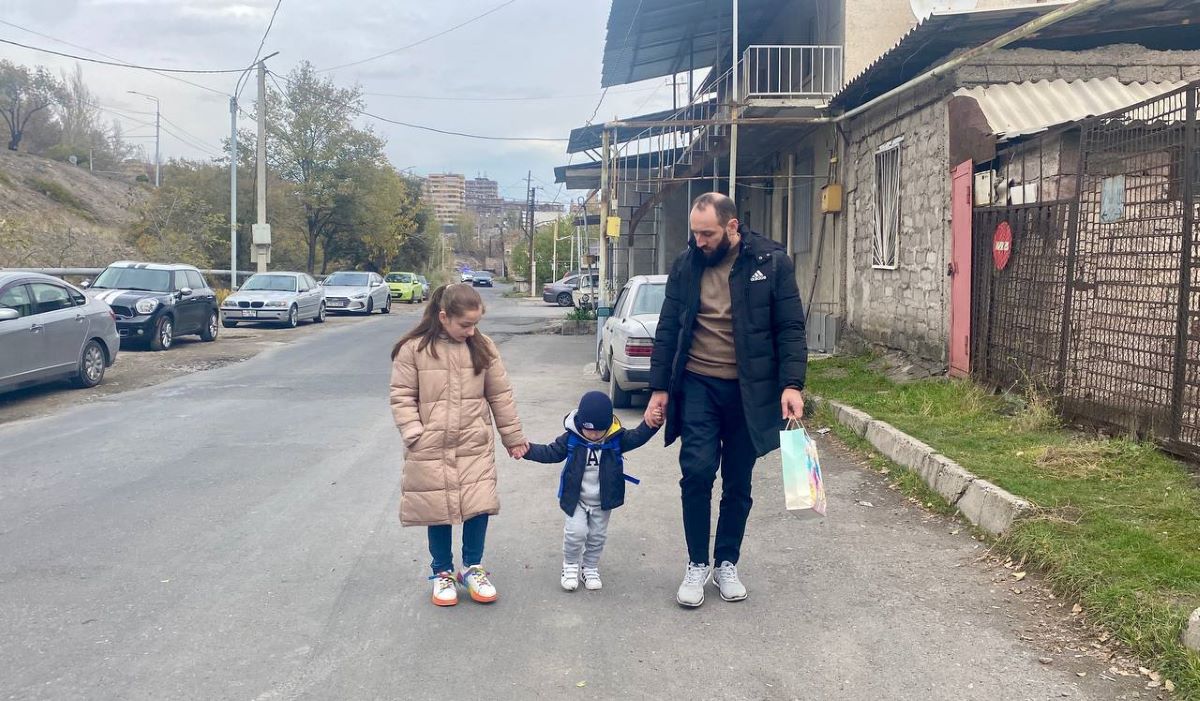
In 2021, fathers gained the right to take leave following the birth of a child. For now, however, the measure provides only five days of paid leave.
The government also plans to introduce “parental hours” and more flexible working arrangements in the near future.
Under the proposed “parental hour” scheme, parents with children under the age of 12 would be able to use part of their working time to take their children to school or kindergarten and pick them up afterwards. Depending on the number of children, parents could spend between 30 minutes and one hour away from work. They would continue to receive their salary during that time.
In addition, employees and employers would be able to agree on flexible working hours through a written agreement. Under such arrangements, both sides could determine the start and end of the working day by mutual consent. The total number of working hours per week would remain unchanged.
Waiting for the law to pass
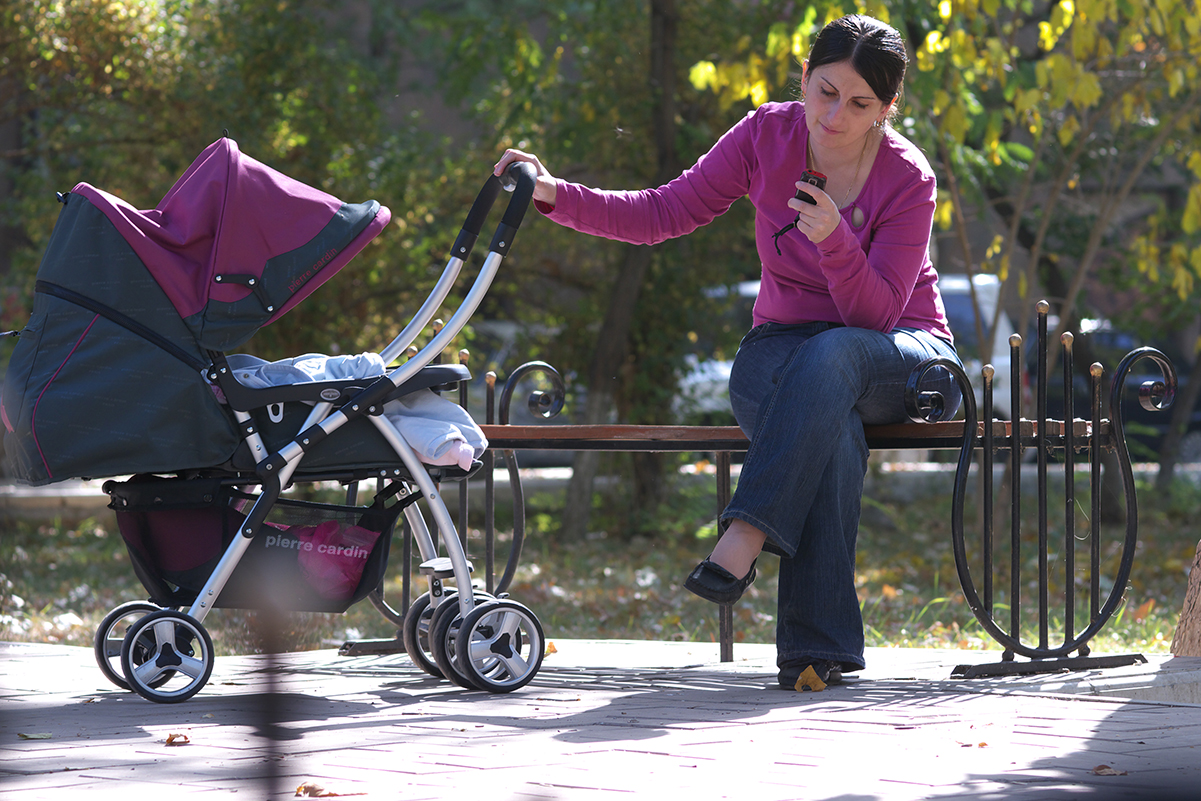
Tatevik’s daughter is now six months old. She will not return to work for some time, but she already worries about what comes next. She does not want to leave her child alone for long periods.
Tatevik hopes parliament will soon approve the proposed amendments to the Labour Code. If lawmakers pass the changes, hiring a nanny will no longer be the only option.
“If parliament approves these amendments, I am sure many women will be able to use their time more effectively by working according to schedules agreed with their employers. Believe me, no one manages time and budgets better than women with young children.
If these changes take effect, balancing family life and work will become easier. Of course, they represent only a small step when you consider overcrowded kindergartens and the shortage of nursery places. But I hope people will discuss those issues as well. Otherwise, many women will continue to face a choice between family and personal development,” she says.
Family-friendly workplaces in Armenia