
An event will be held at the Akhalkalaki railway and logistics complex in Georgia to mark the commissioning of the Baku-Tbilisi-Kars (BTK) railway line following its modernization, one of the region’s key freight transport routes, on June 2, AzerNEWS via the Azerbaijan Railways CJSC.
Day: June 1, 2026
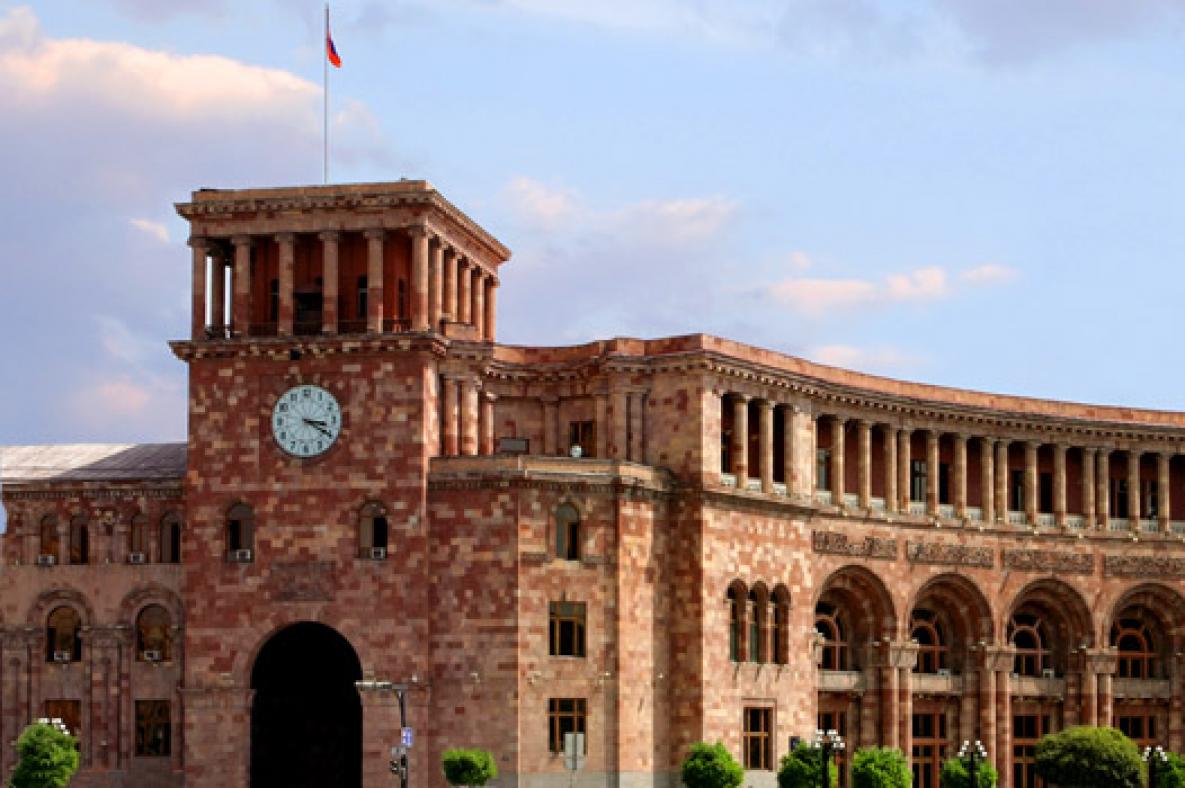
Pashinyan on an EU-EAEU referendum
“Armenia remains a member of the Eurasian Economic Union and will continue to be one until a choice between the European Union and the EAEU becomes unavoidable,” Armenian Prime Minister Nikol Pashinyan said.
He stressed that the Armenian people would make that decision through a referendum. However, the prime minister said he currently sees no grounds for holding such a vote.
Meanwhile, four member states of the Eurasian Economic Union, including Russia, the bloc’s largest member, have urged Armenia to hold a referendum as soon as possible and choose between the EAEU and the European Union.
Similar calls have come repeatedly from Moscow in recent days. Russia has also backed up its rhetoric with economic measures.
The restrictions target Jermuk mineral water and certain alcoholic beverages. In addition, Russia has banned imports of Armenian agricultural products, including tomatoes, cucumbers, peppers, herbs and strawberries, as well as flowers and ornamental plants since 30 May.
Economy Minister Gevorg Papoyan said he had reason to believe that Armenia’s opposition had played a role in these developments.
He referred to three political forces taking part in the election campaign: Strong Armenia, Prosperous Armenia and the Armenia Alliance bloc. These groups are the main rivals of the ruling Civil Contract party in the race for seats in the next parliament.
“I believe they have been lobbying certain officials and decision-makers to impose restrictions on Armenian producers. Their goal is to influence public opinion ahead of the election,” he said.
Papoyan believes some of these issues could be resolved soon after the parliamentary elections on 7 June.
He said Armenia could then discuss the matter calmly with Russian counterparts and seek practical solutions.
The minister also argued that Armenian products fully meet EU standards and could find a niche in European markets.
According to Papoyan, the government could help exporters by subsidising transportation costs, which remain their biggest challenge at this stage.
On 1 June, Vladimir Putin called Armenian Prime Minister Nikol Pashinyan to wish him a happy birthday. According to official statements, the two leaders exchanged views on bilateral and multilateral issues and agreed to continue their discussions at a future meeting.
“The Prime Minister of Armenia thanked the President of Russia for his balanced position, constructive tone and support on a number of issues that had given rise to differences,” Pashinyan’s office said.
- Russian intelligence operatives sent to ‘target Pashinyan’: The Insider investigation
- Leak reveals secret documents on Russia’s hybrid attacks against Armenia
- What’s behind Russia’s hostile response to Armenia’s deepening ties with EU?
EAEU calls for a referendum
At a meeting of the Supreme Eurasian Economic Council in Astana on 29 May, the presidents of four member states of the Eurasian Economic Union — Russia, Kazakhstan, Belarus and Kyrgyzstan — adopted a statement concerning Armenia.
“We share the view that the Republic of Armenia should hold a nationwide referendum as soon as possible on either joining the European Union or remaining a member of the Eurasian Economic Union,” the statement said.
The signatories said their position reflects steps Armenia has taken towards EU membership.
The document specifically cites:
- the Armenian parliament’s adoption in 2025 of the law “On Launching the Process of Armenia’s Accession to the European Union”;
- the European Union’s endorsement of Armenia’s European aspirations in the joint declaration issued after the first Armenia–EU summit on 5 May 2026.
The leaders of the EAEU member states said Armenia’s preparations for possible EU accession create “significant risks to the economic security of the EAEU member states”.
The statement also says that Belarus, Kazakhstan, Kyrgyzstan and Russia have decided to prepare a report on suspending the application of the EAEU Treaty to Armenia. They plan to present the report in December 2026.
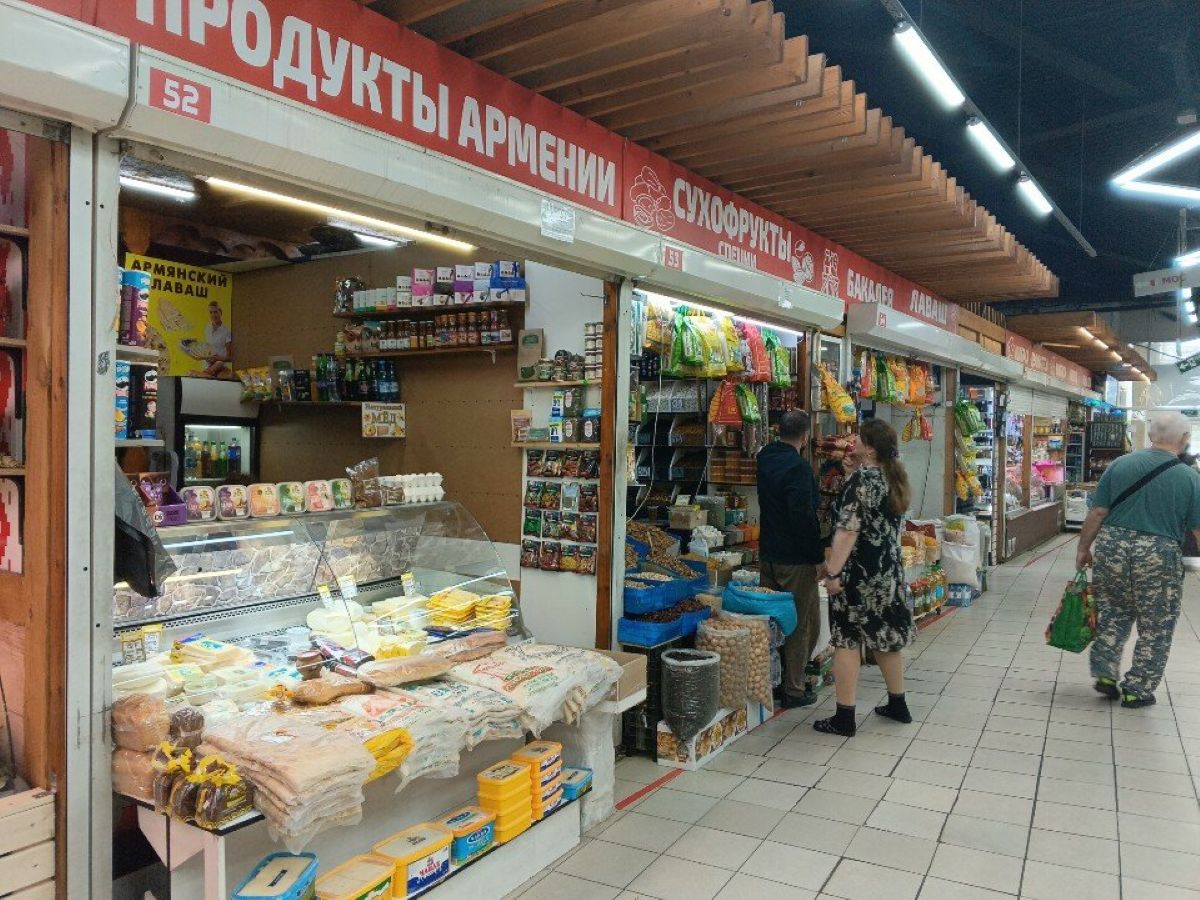
Pashinyan says there are no grounds for a referendum yet
According to Armenian Prime Minister Nikol Pashinyan, there is currently no basis for holding a referendum on a choice between the European Union and the Eurasian Economic Union.
In a video published on his Facebook page, Pashinyan said Armenia’s European integration process has not yet reached a stage where citizens can make such a decision.
“Until Armenia formally applies for EU membership or comes close to obtaining candidate status, it makes no sense to hold any referendum on the issue.”
The prime minister argued that the choice remains theoretical for now.
“Putting a theoretical choice to a referendum is, of course, neither particularly reasonable nor justified.”
Pashinyan also stressed that Armenia will continue to work constructively within the framework of the Eurasian Economic Union.
“We will continue working within the EAEU calmly, without tension and without disputes. I am convinced that we still have untapped potential in this area.”
‘We cannot trade state interests for tomatoes’ – economy minister
Economy Minister Gevorg Papoyan reiterated Armenia’s intention to develop its economy and bring it into line with European standards. He said that once the country completes that process, the Armenian people will decide whether to remain in the Eurasian Economic Union or move towards the European Union.
“Theoretically, that question can always arise. At the moment, we are a member of the EAEU. We are not planning to leave the EAEU, and we will use all the mechanisms available within the union for Armenia’s benefit,” Papoyan said.
The minister agreed that the government must manage the risks associated with that course. However, he argued that those risks have limits.
“There are red lines: the country’s independence, sovereignty and territorial integrity. When weighing the interests of the state, we cannot trade them for tomatoes.”
Papoyan also referred to Chechnya and Belarus as examples of entities that enjoy unrestricted trade relations with Russia, before asking:
“Are you suggesting that we should bring our status closer to theirs?”
According to Papoyan, Armenian officials once justified joining the EAEU by arguing that local products lacked the quality needed to compete elsewhere and could only find buyers on the Russian market.
He argued that the situation has now changed.
The minister insisted that most goods exported from Armenia “meet the highest standards and match the strictest European quality requirements”.
He said that much of Armenia’s exports, including agricultural products,
- “carry GlobalG.A.P. certification, which many producers across the EAEU do not have, and which many farmers in European countries also lack.
- They come from greenhouses equipped with cutting-edge technology that is not available everywhere in Europe.”
Papoyan argued that Armenian products are “fully capable of meeting the standards of the European market”.
However, Armenia remains a member of the Eurasian Economic Union. As a result, customs duties and other costs could increase the price of Armenian goods and make them less competitive in EU markets.
To address that issue, the government is considering subsidies for transportation costs and customs-related expenses.
Officials have already produced preliminary estimates. According to Papoyan, if Armenia began subsidising flower exports to the EU immediately, the programme would cost between $5 million and $5.5 million by the end of the year. Subsidies for tomato exports would require around $3.4 million, while pepper exports would need about $3.5 million.
Papoyan stressed that these figures represent a “worst-case scenario” in which Armenia redirects all exports currently destined for Russia to European Union markets.
“I do not think such a situation will arise. But even so, these costs are entirely manageable. In any case, I expect the current issues to be resolved without such measures, because Armenia remains a member of the EAEU,” the minister concluded.
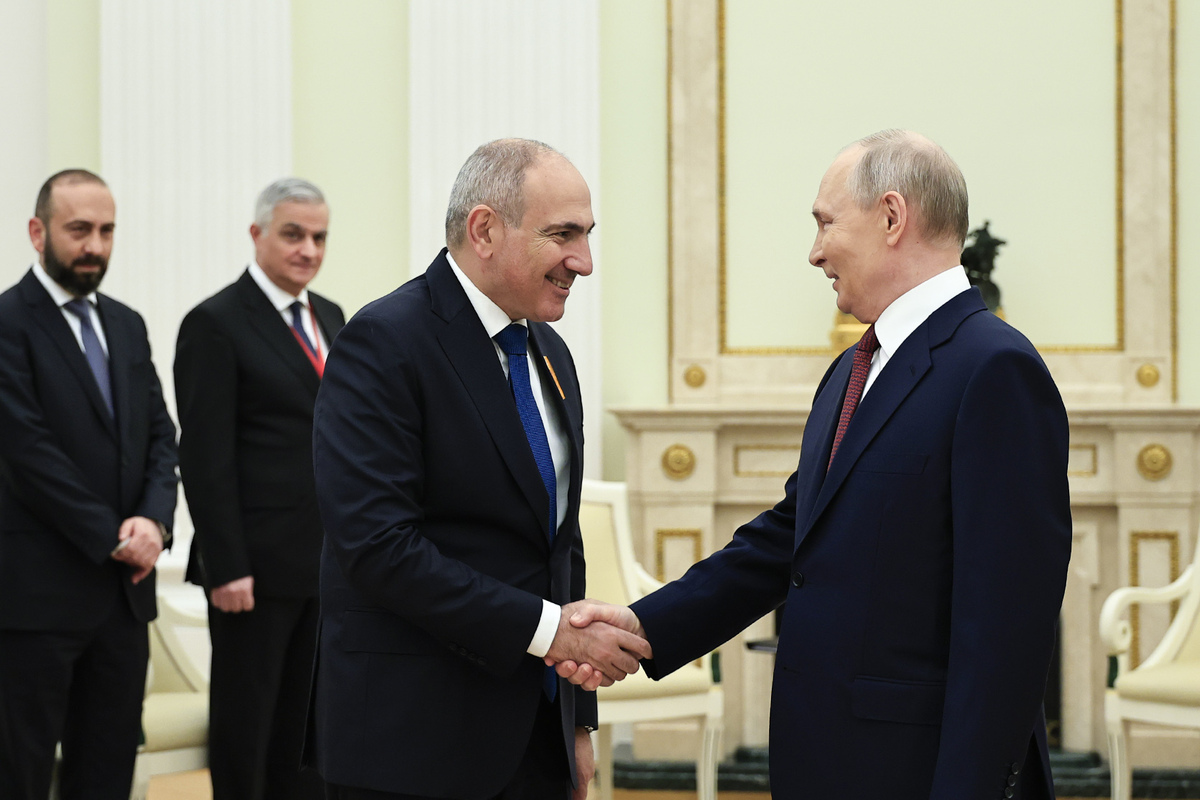
Pashinyan on an EU-EAEU referendum
Turkey’s opposition split and the FETO allegations
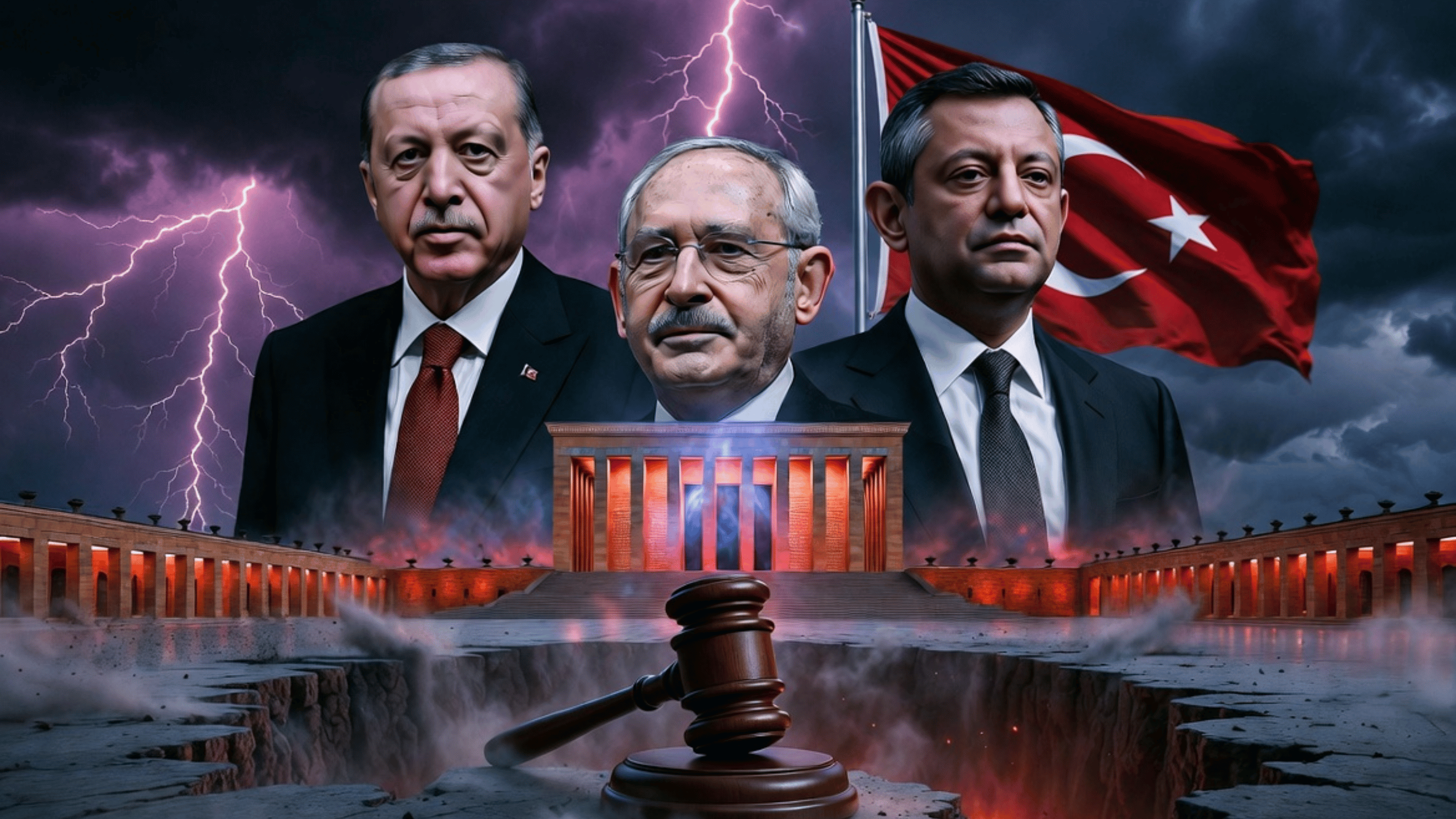
An unprecedented crisis within Turkey’s main opposition force, the Republican People’s Party (CHP), has grown beyond a simple power struggle between its two leading figures, Kemal Kilicdaroglu and Ozgur Ozel.
Pro-government voices have framed the dispute with accusations of links to FETO, the movement associated with US-based Islamic preacher Fethullah Gulen, which Turkey designates as a terrorist organisation. Ankara accuses the network of orchestrating the failed military coup attempt of 15 July 2016. The movement strongly denies the allegation.
The bitter confrontation between the two opposition factions, which has included physical clashes at party offices and police involvement, is also unfolding against the backdrop of discussions on constitutional reform. In practice, the conflict is strengthening the arguments of the ruling camp led by President Recep Tayyip Erdogan.
Background
The current crisis within Turkey’s opposition began on 21 May 2026, when a court in Ankara invalidated the 38th congress of the Republican People’s Party (CHP), which took place on 4–5 November 2023.
As a result, party leader Ozgur Ozel and other officials elected at that congress were removed from office. The court reinstated former leader Kemal Kilicdaroglu, who had been elected at the previous 37th congress, along with his allies.
The decision also invalidated the party’s recent extraordinary congress.
Turkish and international media outlets, as well as various organisations, described the ruling as unprecedented in the country’s political history.
For the first time in the country’s history, a court removed an elected party leadership from office.
Many observers said the case was more than an internal party dispute. They described it as political interference carried out through the judicial system and likely backed by the authorities.
- Human Rights Watch openly described the ruling as a move aimed at neutralising the opposition.
- The Guardian and Associated Press presented the incident as the latest episode in a broader pattern of pressure on the opposition during Erdoğan’s rule.
Kılıçdaroğlu calls rivals “traitors” as pro-government media link them to FETO
Kemal Kılıçdaroğlu’s speech on 30 May escalated the dispute further.
Earlier that day, police cleared CHP headquarters after clashes with supporters of Özgür Özel occupying the building. Once authorities forced them to leave, Kılıçdaroğlu held a celebratory gathering there with his own supporters.
Turkish media reported that his event attracted a significantly smaller crowd than Özel’s rally, which took place simultaneously in Güven Park.
But the more significant difference lay in the political message. Kılıçdaroğlu adopted a far more confrontational tone.
In his speech, Kılıçdaroğlu spoke of “treason”, “bribery” and “foreign connections” within the party.
Without naming specific individuals, he said he regretted failing to identify in time what he described as “people linked to foreign powers”. He also said he had failed to remove figures allegedly involved in corruption from municipal administrations.
Pro-government media outlets highlighted the speech under the headline: “I apologise to Turkey for FETO members and corrupt figures within the CHP.”
In effect, the remarks amounted to a political accusation directed at the alliance between Özgür Özel and Ekrem Imamoglu, the elected mayor of Istanbul, who is currently in custody. In recent years, many observers have regarded İmamoğlu as one of Erdoğan’s strongest potential challengers.
Reports published by pro-government broadcasters A Haber and TGRT, as well as the newspaper Yeni Safak, linked İmamoğlu and Özel’s team to allegations that delegates received money in exchange for votes at the controversial 38th party congress.
Authorities soon launched corruption investigations into municipalities run by İmamoğlu’s supporters. Investigators also examined alleged links between certain individuals and FETO.
In Turkey, accusations of links to FETO carry consequences beyond political rhetoric. Following the failed coup attempt in 2016, such allegations frequently led to dismissals from public institutions and the arrest of thousands of people.
For that reason, some commentators view the growing focus on alleged FETO links involving Özel and his associates as a possible effort to prepare public opinion for future legal action.
Özel, for his part, sought to move the crisis beyond a personal dispute.
Speaking at a rally in Güven Park, he argued that the issue was not a conflict between Özgür Özel and Kemal Kılıçdaroğlu, but a confrontation between Erdoğan and the Turkish people.
Could the split in the CHP make it easier for President Erdoğan to push through a new constitution?
In May 2025, President Recep Tayyip Erdogan announced the creation of a team of ten legal experts to draft a new constitution. He presented the initiative as an effort to replace what he described as a “coup-era constitution”.
Critics fear that the real objective may be to create a legal mechanism that would allow Erdoğan to maintain political continuity beyond 2028, when his final constitutionally permitted presidential term is due to end.
Many analysts see a connection between three parallel developments:
- the split within the opposition and efforts to weaken the faction most strongly opposed to the ruling party;
- discussions about constitutional change and the possibility of extending Erdoğan’s time in power;
- the new “Turkey Without Terrorism” process and attempts to win support among Kurdish voters.
The “Turkey Without Terrorism” process
The initiative aims to bring a definitive end to the conflict with the Kurdistan Workers’ Party, the Kurdish movement that has waged an armed insurgency against the Turkish state since 1984.
Turkey, the United States and the European Union classify the PKK as a terrorist organisation. However, in May 2025, the group announced its dissolution and declared an end to its armed struggle against Turkey.
That development created an opportunity for Erdoğan to attract support among Kurdish voters.
A key player in that effort could be the Peoples’ Equality and Democracy Party (DEM), which primarily represents Kurdish voters. The party rejects claims of organisational ties to the PKK and presents itself as a democratic political force.
In previous years, Turkish authorities frequently criticised DEM. Today, however, the party holds seats in parliament and could play a decisive role in any vote on constitutional reform.
In exchange for support, the government could offer amendments to constitutional provisions that are particularly important to the Kurdish community. Discussions often focus on Articles 66 and 42.
Article 66 states that “everyone bound to the Turkish state through citizenship is a Turk”, while Article 42 provides that “no language other than Turkish shall be taught as a mother tongue to Turkish citizens in any educational institution”.
For years, DEM has advocated “equal citizenship” and education in native languages other than Turkish. Those demands centre directly on these constitutional provisions.
To submit constitutional amendments to a referendum, the ruling alliance must secure at least 360 votes in parliament. To pass amendments without a referendum, it would need at least 400 votes.
The governing bloc does not have enough votes on its own.
As a result, even a relatively small but disciplined group of CHP lawmakers loyal to Kılıçdaroğlu could become a crucial factor if it aligned with DEM, independent MPs or other smaller political groups.
What comes next?
Recent developments within Turkey’s opposition have reinforced concerns that the authorities can use the judicial system as a tool of political control.
Some analysts outline a worst-case scenario that could unfold as follows:
- The Republican People’s Party, Turkey’s oldest and largest opposition force, could split permanently.
- Authorities could arrest members of the faction that continues to challenge the government.
- Pro-government media outlets could help legitimise those actions in the public sphere.
- The government could gain greater room for manoeuvre, both in the event of early elections and in negotiations over constitutional amendments that would benefit the current ruling camp.
In this scenario, the struggle inside the CHP would cease to be merely an internal party conflict and would instead become part of a broader political transformation that could reshape Turkey’s opposition landscape and influence the country’s constitutional future.
Turkey’s opposition split and the FETO allegations