
Month: March 2026
@DailyTurkic Azerbaijan supports the normalization of ties in our region. Restoring air travel is a precursor to opening all land routes, including the Zangezur Corridor. Connectivity is the key to turning the South Caucasus from a zone of conflict into a zone of prosperity. ✈️ #SouthCaucasus
— Emil Axundov (@hidayet_ilyas) Mar 12, 2026
The OSCE Office for Democratic Institutions and Human Rights (ODIHR) has published a report under the Moscow Mechanism that points to a deterioration in human rights and fundamental freedoms in Georgia.
The report, which runs to nearly 217 pages, describes developments in Georgia from early 2024 to the present. It details democratic backsliding, the worsening state of human rights and media freedom, the prosecution of protest participants and opposition figures, repression of dissent, the existence of political prisoners and the adoption of restrictive legislation.
The document also includes recommendations for the Georgian authorities, OSCE participating states and the wider international community.

Report details
The report was published on 10 March. Human rights expert Professor Patricia Grzebyk authored the document. She prepared it under the OSCE’s Moscow Mechanism, which allows participating states to appoint an independent expert when they suspect serious human rights violations in a member country.
Twenty-four states triggered the mechanism in relation to Georgia at the end of January, including Germany and the United Kingdom. During a 14-day mission to Georgia, the expert examined developments since the spring of 2024 and prepared an assessment of the state of human rights and democratic processes.
The OSCE has activated the Moscow Mechanism 16 times before. For example, it examined attacks on civilians in Croatia and Bosnia, and investigated the situation in Turkmenistan, Belarus and Chechnya. The case concerning Georgia became the seventeenth instance.
Насилие и безнаказанность
Violence and impunity
The report notes that violence against protesters, opposition figures and journalists remains a problem in Georgia. According to the document, in some cases the violence “reached the level of torture,” while those responsible often face no punishment.
The report also describes attacks on government critics. These attacks often take place in public spaces and in broad daylight. According to the OSCE report, harsh and stigmatising rhetoric from figures affiliated with the government fuels this atmosphere.
The document also raises concerns about the right to a fair trial for people who “face the threat of criminalisation for expressing opposing views.”
At the same time, the report refers to attacks carried out by “unidentified groups.” This situation further reinforces a climate of impunity.
On the prohibition of torture and other cruel, inhuman or degrading treatment or punishment
- The report calls for an immediate end to the disproportionate use of physical force, especially torture and other forms of ill-treatment against peaceful protesters, journalists and political opponents.
- Authorities should ensure that law enforcement uses force proportionately even when dealing with protesters who engage in violence.
- The report also calls for prompt, independent and impartial investigations into all allegations of torture and ill-treatment.
- Authorities should ensure that the detention and transport of individuals respect human dignity. They should also guarantee appropriate conditions of detention.
- Where possible, authorities should protect children from the impact of police raids. Police operations should also follow child-sensitive practices.
Restrictions on freedoms
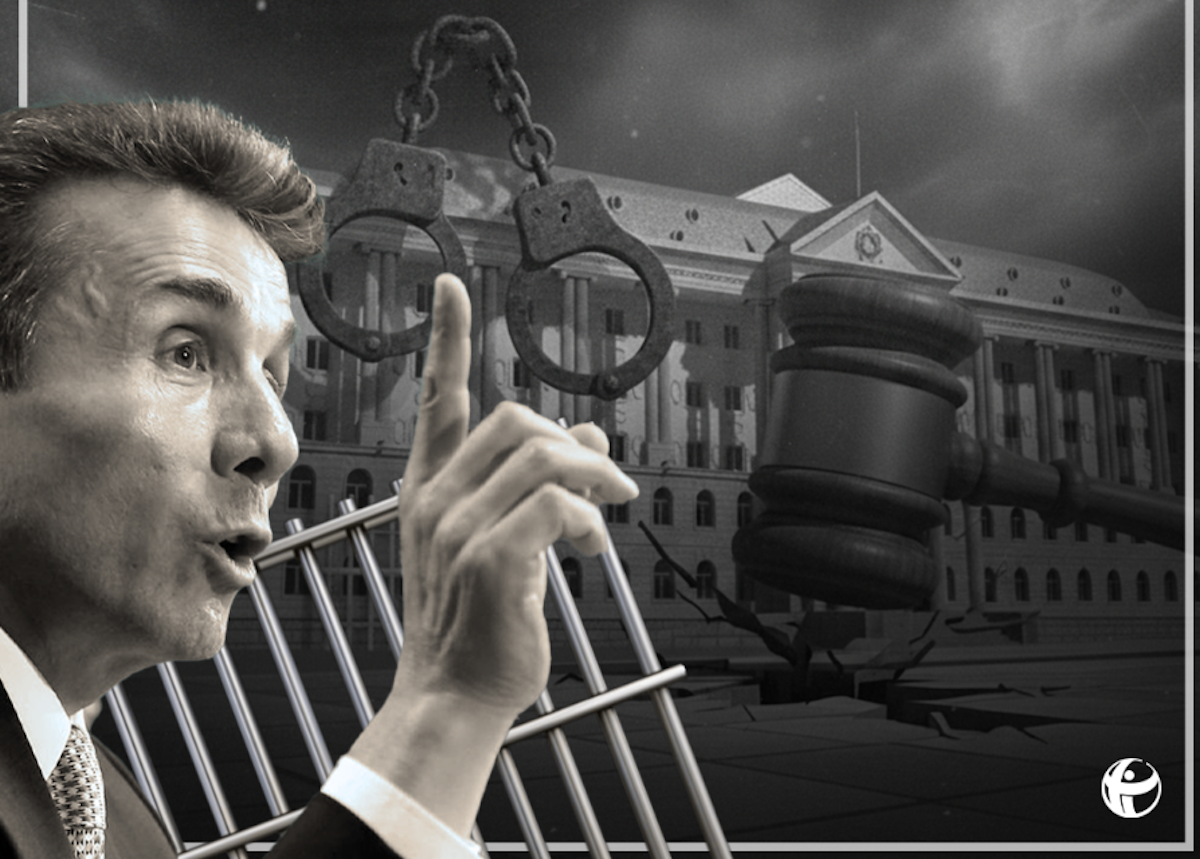
One of the main sections of the report focuses on legislative changes and administrative measures that, according to the document, restrict freedom of expression and freedom of assembly.
The expert says that recently adopted laws often target civil society, independent media, the political opposition and the LGBT+ community.
According to the report, authorities implement this policy through administrative detentions, heavy fines and criminal cases against government critics.
The report also raises concerns about the right to a fair trial, especially for people who may face criminal prosecution because they criticised the authorities.

Recommendations for the Georgian authorities
The OSCE/ODIHR report sets out dozens of recommendations for the Georgian authorities:
- Ensure free and fair parliamentary elections. Authorities should also conduct an independent investigation into allegations linked to previous elections.
- Suspend the process of banning opposition parties. Authorities should also halt ongoing criminal cases against opposition leaders.
- Repeal or revise legislative changes such as the law “On transparency of foreign influence”, the “Foreign Agents Registration Act” and regulations related to foreign grants. The report says these measures do not comply with Georgia’s international obligations.
- Repeal the law “On family values”. According to the report, the law restricts the rights of the LGBT+ community and bans procedures related to the legal recognition of gender identity.
- Stop the disproportionate use of force against journalists and demonstrators. Authorities should also ensure independent investigations into such incidents.
- The report also places special emphasis on judicial independence and stresses the need to reform the High Council of Justice.

Recommendations for OSCE participating states and the international community
The report also urges OSCE participating states to systematically monitor the implementation of the findings made under the Moscow Mechanism.
The document says targeted sanctions against individuals responsible for the most serious violations described in the report could be considered.
The OSCE Office for Democratic Institutions and Human Rights also advises participating states to deploy a strong international observation mission for the upcoming elections in Georgia. It also suggests considering the opening of a permanent OSCE office in the country.
The report recommends that the international community support efforts to document human rights violations in Georgia and disseminate relevant information.
Among the recommendations is the immediate and unconditional release of all prisoners detained for political reasons.
The document also notes that international legal mechanisms could be used in certain cases, including the principle of universal jurisdiction, to investigate torture and other serious violations.
These mechanisms include:
- referring the issue to the International Criminal Court (ICC) in The Hague for the opening of an investigation
- bringing an interstate case before the European Court of Human Rights (ECHR)
- pursuing an interstate dispute at the UN Committee against Torture or at the International Court of Justice (ICJ).
Background
The OSCE Moscow Mechanism is considered one of the organisation’s strongest tools. Participating states use it when they suspect serious problems with human rights and democratic institutions in a member country.
Its activation in Georgia coincided with a deepening political crisis and increasingly tense relations between the authorities and Western partners. Several legislative initiatives have triggered particular controversy. These include the law “On the regulation of foreign influence” and other changes that critics say restrict the space for civil society.
The report appeared against this backdrop. It offers one of the most detailed international assessments of the state of democratic institutions and human rights in Georgia in recent years.
OSCE Moscow Mechanism report on Georgia
Russia tries to send voters to Armenia
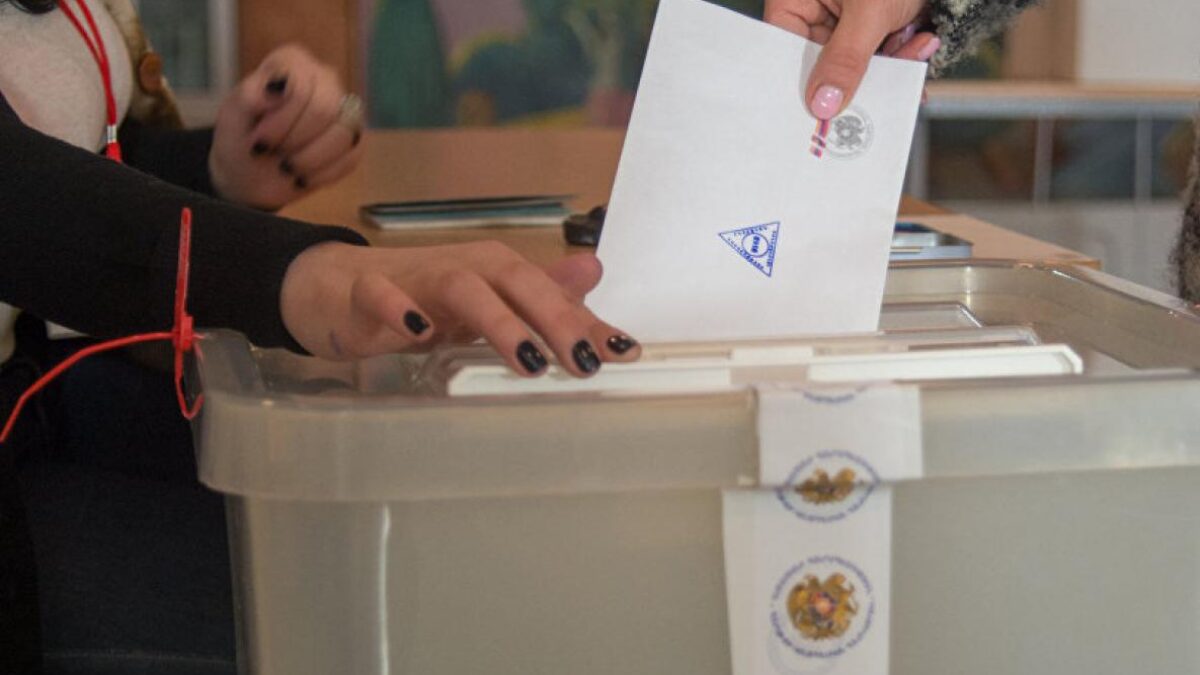
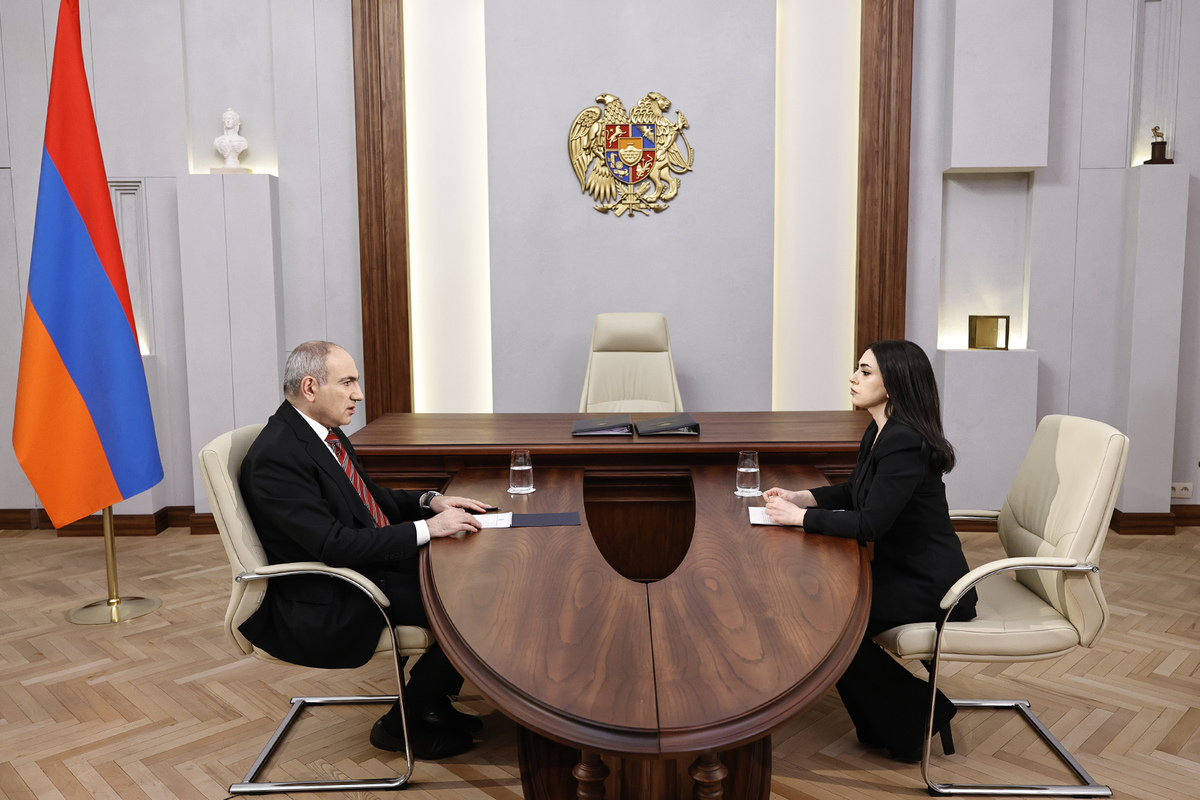
In Armenia, officials and analysts discuss a statement from the Foreign Intelligence Service about attempts by the intelligence services of another country to influence the parliamentary elections scheduled for June. According to the SVR statement, those services pressure people of Armenian origin and Armenian citizens who live in that country. They allegedly urge them to travel to Armenia and vote “in the required way.” Organisers promise payment and compensation for travel expenses.
The Foreign Intelligence Service did not name the country involved. During a weekly briefing, journalists asked Prime Minister Nikol Pashinyan why the authorities had not disclosed where Armenian citizens face pressure.
“This is a question of the scope and expediency of information. I think more detailed explanations will be provided later — if necessary,” he replied.
Pashinyan said these actions require a legal assessment. At the same time, he expressed confidence that the plan would not work as its organisers expect.
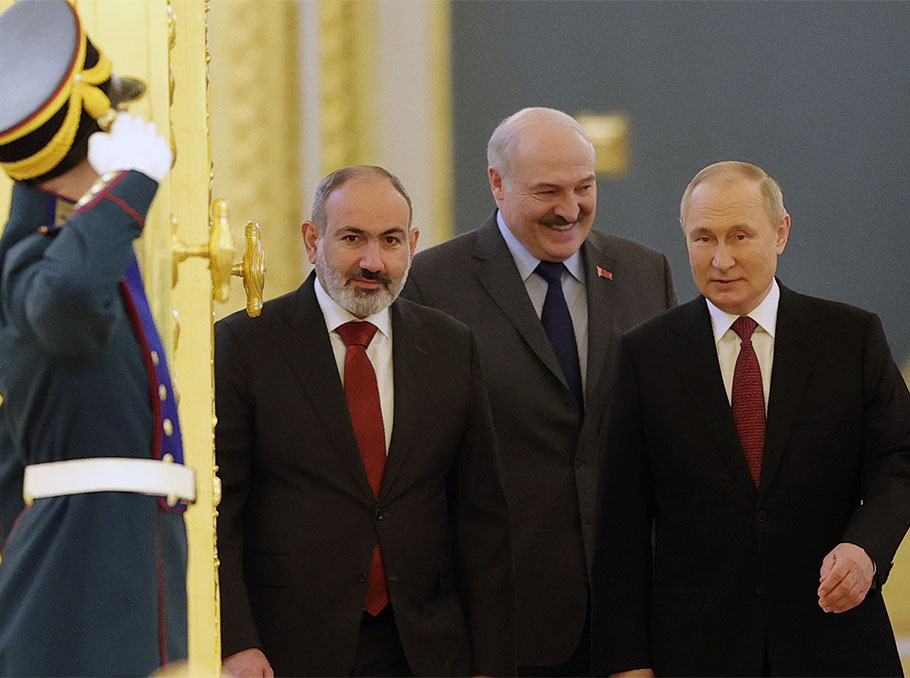
“I have already said that I have no doubt that if such a situation arises [he meant the participation of Armenians living outside the country in the elections], in theory the majority of our compatriots, our citizens living in Russia, will vote for us [his party],” the prime minister said, indicating that the SVR statement referred to Russia.
Representatives of civil society also believe that pressure on Armenian voters comes from Moscow.
Daniel Ioannisyan, a member of the Independent Observer bloc, told Radio Azatutyun (Radio Liberty) that the group knew about the process organised in Russia even before the SVR announcement. After receiving the information, the bloc began collecting evidence. It spoke publicly about the issue only after the topic entered public debate.
According to Ioannisyan, organisers plan to bring about 80,000 voters from Russia to Armenia. Each voter was promised what he described as “an electoral bribe of 100,000 roubles.”
The SVR and law enforcement agencies have not said which political force the organisers want these voters to support. However, representatives of Armenia’s ruling party point to the Strong Armenia party. Russian citizen and dollar billionaire Samvel Karapetyan leads that party. Authorities currently hold the businessman under house arrest in Armenia after he called for the seizure of power. He has announced his candidacy for prime minister, although the constitution does not allow him to hold the post because he holds citizenship of Armenia, Russia and Cyprus.
Here is what is known so far, along with a political analyst’s comment.
- ‘Goal is to turn Armenia into a Russian outpost’: Samvel Karapetyan named as prime ministerial candidate
- Awaiting end of war in Ukraine: Russia’s intentions in South Caucasus
- Opinion: ‘Everything must be done to ensure Russian Railways leaves Armenia’
Statement by the Foreign Intelligence Service
“The Foreign Intelligence Service has received intelligence indicating that in several countries various actors, acting on behalf of the host country’s intelligence services, are trying to pressure people of Armenian origin and citizens of the Republic of Armenia who conduct economic activity in those countries.
Through such pressure, they push them to take actions in support of certain political forces that have applied to participate in the upcoming parliamentary elections in Armenia. These actions may include, but are not limited to, financial and organisational support provided by the above-mentioned businessmen to those political forces,” the intelligence service said on 10 March.
“Possible criminal activity will be neutralised”: response from law enforcement
“Any unlawful influence or interference in the electoral process requires a legal assessment. We urge you to remain vigilant. If you have information about such cases, contact the police immediately,” the Interior Ministry said shortly after the Foreign Intelligence Service released its statement.
Police officers carried out “control measures” and then passed information about the alleged crime to the Investigative Committee. The case concerns obstruction of the free exercise of voting rights. It also involves coercion to participate in elections through material or other forms of dependence.
The Investigative Committee said it already has information about “obstruction of individuals’ free exercise of electoral rights by offering material incentives.” Leaders and responsible figures from several Armenian parties carried out these actions.
The Investigative Committee also said:
“Acting on behalf of the intelligence services of another country, various actors — including major businessmen from that country, leaders of Armenian communities and criminal authorities — are putting pressure on people of Armenian origin and citizens of the Republic of Armenia who conduct economic activity in another country. They urge them to take actions in support of parties that have applied to participate in the upcoming parliamentary elections in Armenia.”
In return, the message says, organisers promise to “arrange travel from another country to Armenia, reimburse transport costs and cover accommodation expenses in Armenia.”
Authorities have opened a criminal case. The Investigative Committee says it will take all necessary measures to “neutralise possible criminal activity.”
‘Russia’s FSB is putting pressure on Armenian businessmen‘
Daniel Ioannisyan, a member of the Independent Observer bloc, said the NGO had submitted a report to Armenia’s Prosecutor General about actions by Russia’s Federal Security Service (FSB).
He claims that the FSB is pressuring Armenian businessmen. They are being forced to finance “the mobilisation and transport to Armenia of voters who live in Russia but hold Armenian citizenship.”
According to Ioannisyan, the aim is to change the government in Armenia after the elections scheduled for 7 June:
“According to the information we have, they are working to ensure that a particular political force wins the election. We will definitely publish evidence as soon as we obtain it.”
He said organisers plan to bring about 80,000 people from Russia alone.
They will not rely only on air travel. Organisers plan to transport some citizens to Armenia by land. According to Ioannisyan, several companies have already booked buses for late May and early June.
At the same time, Daniel Ioannisyan says pressure is also being applied to Armenians living in Georgia who hold dual citizenship.
He said Georgian authorities are not involved in this process, unlike in Russia. “Criminal elements” are putting pressure on Armenians in Georgia. He also says there is “a Russian trace” in this case. Many Armenians travel from Georgia to Russia for work. People warn them that they will lose their income if “they do not comply with the demands.”
Commentary
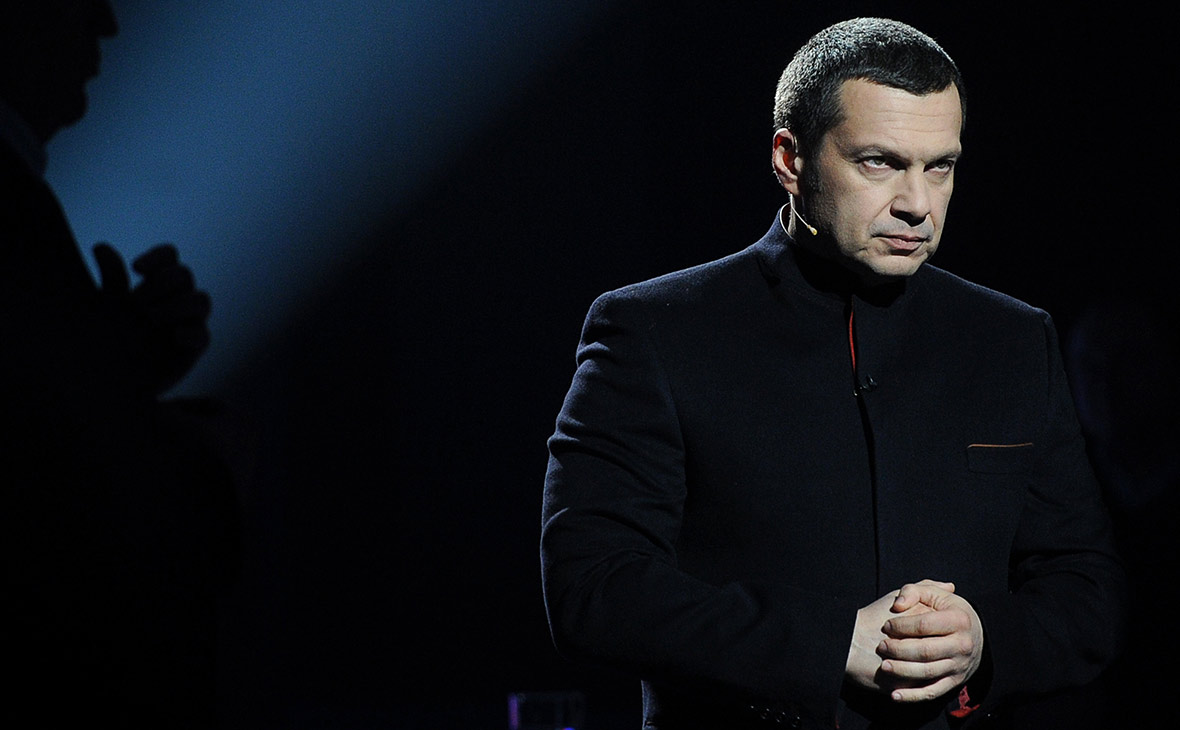
Political analyst Ruben Meghrabyan said:
“Intelligence services usually act on decisions taken by political authorities. Without their approval, there would have been no public statement.
This statement means that Russia has declared war on Armenia as a sovereign state and a democracy.
In essence, Russia is trying to use thousands of Armenians as a tool against the Republic of Armenia.
All this requires a tough response from the state. The state must accept this challenge. A warning alone is not enough. In this war we must destroy these attempts at the very beginning. Otherwise they will destroy our state.
And those unfortunate businessmen who, in the fifth year of the Russia–Ukraine war, believe that their life and work in Russia offer a solution are mistaken. It is a problem. My appeal is: kill Russia within yourselves and return to Armenia. Russia is over for you if it uses you against your own state.”
Russia tries to send voters to Armenia