Month: March 2026
The incident occurred near the town of Bani Hayyan, where the blast destroyed the vehicle carrying the personnel. Two additional peacekeepers were wounded in the attack, one of them seriously, News.az reports, citing Xinhua.
***
Explosion highlights rising risks in southern Lebanon
The force, commonly known as UNIFIL, said the circumstances surrounding the explosion remain unclear and are under investigation. No group has immediately claimed responsibility.
The attack underscores the fragile security environment in southern Lebanon, where UN peacekeepers operate to monitor hostilities and support stability along the border area.
Concerns over safety of international missions
UNIFIL plays a key role in maintaining a buffer between opposing forces and preventing escalation in the region. Incidents targeting peacekeepers are relatively rare but carry significant implications for international security efforts.
The United Nations is expected to launch a full investigation into the explosion, while calls may grow for enhanced protection measures for peacekeeping personnel operating in volatile zones.
Regional tensions add to uncertainty
The blast comes amid heightened tensions across the Middle East, raising concerns that instability could spill over into new areas.
While it is not yet clear whether the incident is directly linked to broader regional dynamics, the attack is likely to intensify scrutiny on security conditions in southern Lebanon and the risks faced by international forces on the ground.
The post UN peacekeepers killed in Lebanon blast near Bani Hayyan appeared first on azeritimes.com.
No one has claimed responsibility for the attack, News.Az reports, citing foreign media.
***
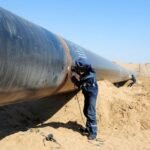
An 18-inch-diameter main gas supply pipeline was blown up by unknown people on the outskirts of Quetta city, the capital of restive Balochistan province, which borders Afghanistan and Iran, a spokesman for Sui Southern Gas Company said.
It suspended gas supply to several parts of the city and at least five more districts, he said.
The post Unknown attackers blow up gas pipeline in southern Pakistan appeared first on azeritimes.com.
The move comes as jet fuel prices climb sharply amid the ongoing conflict involving Iran, adding pressure on airline operating expenses and prompting carriers to pass costs on to passengers, News.Az reports, citing CNBC.
***
Airlines adjust pricing amid oil driven cost pressures
Fuel is one of the largest expenses for airlines, and recent spikes in oil prices have significantly increased the cost of operations across the sector.
Since late February, when military actions intensified in the Middle East, global airfare has trended higher, particularly on international routes. The increase in baggage fees marks another step by airlines to offset these rising costs without sharply increasing base ticket prices.
JetBlue said it is balancing cost management with maintaining competitive fares, noting that ancillary charges such as baggage fees allow carriers to keep headline ticket prices relatively stable.
Passengers face growing travel costs
The latest fee increase highlights a broader trend across the aviation industry, where airlines are increasingly relying on additional charges to protect margins.
For travelers, this means the total cost of flying continues to rise, even if base fares appear unchanged. Baggage fees, seat selection charges and other add ons are becoming a larger share of airline revenue.
Industry analysts note that this pricing strategy helps airlines remain flexible in a volatile cost environment, particularly when fuel prices are subject to geopolitical shocks.
Outlook tied to oil markets and conflict trajectory
The future direction of airline pricing will largely depend on the trajectory of fuel costs and developments in the Middle East.
If oil prices remain elevated or rise further, additional fare increases or fee adjustments could follow across the industry. Conversely, any stabilization in energy markets could ease pressure on airlines and limit further price hikes.
For now, JetBlue’s decision reflects the immediate reality facing carriers, where rising fuel costs are quickly translating into higher charges for consumers.
The post JetBlue raises baggage fees as fuel costs surge appeared first on azeritimes.com.
The bank said last week’s decline in global equities reflects growing concern that the combination of slower economic growth and persistent inflation could challenge multi asset portfolios, News.az reports, citing Xinhua.
***
Energy shock limits diversification benefits
A key concern highlighted by Goldman Sachs is the sharp increase in correlations across asset classes during the current energy shock. Typically, diversification helps cushion portfolios during periods of volatility, but recent market behavior suggests that this benefit is diminishing.
The bank noted that average correlations based on intraday returns have surged, meaning assets are increasingly moving in the same direction. This reduces the effectiveness of traditional portfolio strategies designed to manage risk.
In addition, Goldman pointed to a steep drop in its Risk Appetite Indicator tied to monetary policy expectations, marking one of the largest declines since 2000.
Oil supply constraints amplify risks
The energy market remains central to the outlook. Oil flows through the Strait of Hormuz, a critical global supply route, continue to operate at reduced levels, with limited alternative pipeline capacity to offset disruptions.
Although there are ongoing signals of potential negotiations between Washington and Tehran, supply concerns persist, keeping upward pressure on oil prices and reinforcing inflation risks.
Despite this, short term interest rate expectations have stabilized somewhat, suggesting markets believe central banks may not immediately respond with aggressive tightening.
Markets price rate shocks but underestimate growth risks
Goldman Sachs observed that investors have largely factored in the risk of higher interest rates, but have not fully priced in the potential impact on economic growth.
This imbalance raises the risk of further market volatility if growth data begins to deteriorate. The bank noted that several traditional safe haven assets linked to interest rates have sold off since the start of the conflict, an unusual pattern during periods of heightened uncertainty.
However, some segments of the market have shown resilience. Infrastructure stocks, utilities and companies with stable dividend payouts have begun to stabilize, attracting investor interest as defensive plays.
Shift toward defensive positioning
In response to the evolving risk environment, Goldman Sachs said it has adopted a more defensive asset allocation strategy.
The bank is currently overweight cash, while maintaining neutral positions on equities, bonds and commodities. It has also moved underweight on credit markets over a three month horizon, reflecting concerns about widening spreads and increased default risk.
Within credit, Goldman’s analysts favor U.S. dollar denominated assets over euro denominated ones, across both investment grade and high yield segments.
Gold and inflation hedges regain appeal
Goldman Sachs also highlighted a renewed preference for inflation hedging assets. The bank continues to recommend U.S. Treasury Inflation Protected Securities and infrastructure investments, and has recently turned more positive on gold following its recent pullback.
This shift reflects expectations that inflation pressures could remain elevated if energy prices stay high or rise further.
Key economic data in focus
Looking ahead, investors will closely monitor upcoming economic indicators for further clues on the direction of markets.
In the United States, retail sales data due Wednesday and employment figures on Friday will provide insight into consumer strength and labor market conditions. In Europe, inflation readings, manufacturing activity and employment data are expected to shape expectations around economic momentum and policy responses.
Outlook shaped by geopolitics and inflation
Goldman Sachs’ assessment underscores a fragile market environment where geopolitical tensions, energy prices and monetary policy expectations are deeply interconnected.
With diversification benefits weakening and risks tilted toward stagflation, investors face a more complex landscape that may require greater emphasis on defensive strategies and inflation protection in the months ahead.
The post Goldman Sachs warns of stagflation risk amid oil surge appeared first on azeritimes.com.
France’s foreign minister, Jean-Noel Barrot, has called for an emergency meeting of the UN Security Council following “the extremely serious incidents” targeting UN peacekeepers in Lebanon, News.Az reports, citing France24.
***
“Such attacks near UN peacekeeping positions are unacceptable and unjustifiable”, Barrot said, adding France is calling “for a full investigation into the circumstances of these tragedies”.
The post France calls for UNSC meeting on peacekeepers in Lebanon appeared first on azeritimes.com.
LoLdle – Splash
The US shuttered its embassy in Venezuela during President Donald Trump’s first term, in the aftermath of former President Nicolas Maduro’s disputed election win earlier in 2018, News.Az reports, citing foreign media.
***
But since the military operation that seized Maduro and took him to the US on drugs trafficking charges in January, the second Trump administration has reopened diplomatic ties with Venezuela’s acting President Delcy Rodriguez.
“Today, we are formally resuming operations at the US Embassy in Caracas, marking a new chapter in our diplomatic presence in Venezuela,” the State Department wrote.
The post US reopens Venezuela embassy following Nicolás Maduro’s capture appeared first on azeritimes.com.
An Iraqi security source told Al Jazeera several citizens sustained injuries from falling shrapnel following the mid-air destruction of the drone, News.Az reports, citing foreign media.
***
Ongoing strikes are part of an escalating cycle of attacks between US forces and Iraqi armed groups aligned with Tehran amid the US and Israel’s war on Iran.
Iraq’s oil industry has been severely affected by the war and Iran’s closure of the Strait of Hormuz, a vital oil trading corridor.
The post Iraqi air defenses intercept drone over Baghdad appeared first on azeritimes.com.
After Volvo Cars last year brought back CEO Hakan Samuelsson – a trusted confidant of Geely-owner Li Shufu who ran Volvo Cars for over a decade – the company has strengthened its collaboration with brands, suppliers and technology that are ultimately controlled by privately held Geely Holding (GEELY.UL), News.Az reports, citing foreign media.
***
Among them, Lynk & Co, founded in 2016 in Sweden, is a premium brand that sells and rents vehicles in several European markets and has expanded beyond its original 01 plug-in hybrid SUV.
“Volvo Cars intends to use Volvo Cars retailers for the sale of Lynk & Co cars and use its sales and servicing system in relevant markets,” Volvo Cars said.
The new partnership will allow both brands to reach a wider audience, as they target different customers and segments without additional product investments, it said further.
“By leveraging Volvo Cars’ central commercial operations and mature dealer network, Lynk & Co Europe will achieve faster scalability capable of supporting higher volumes,” Lynk & Co said in a separate statement.
Advertisement · Scroll to continue
The post Volvo Cars to focus on Lynk & Co EV sales in Europe appeared first on azeritimes.com.