
Israeli Defense Minister Israel Katz warned on Tuesday that all homes in the Lebanese villages near the border with Israel will be demolished as the Israel Defense Forces (IDF) plans to establish a buffer zone and control the area up to the Litani River, “including the remaining Litani bridges”, AzerNEWS reports.
Day: March 31, 2026
For decades, Azerbaijan’s economic narrative has been written in oil and gas. The silhouettes of derricks against the Baku skyline served as the primary symbols of a nation fueling regional energy security. However, as the global energy landscape undergoes a seismic shift toward decarbonization, Azerbaijan is pivotally rewriting its script. The recent announcement that a major solar panel manufacturing facility will be established in the Alat Free Economic Zone (AFEZ) marks more than just an industrial contract; it signals the birth of a high-tech manufacturing ecosystem that could redefine the country’s non-oil GDP.
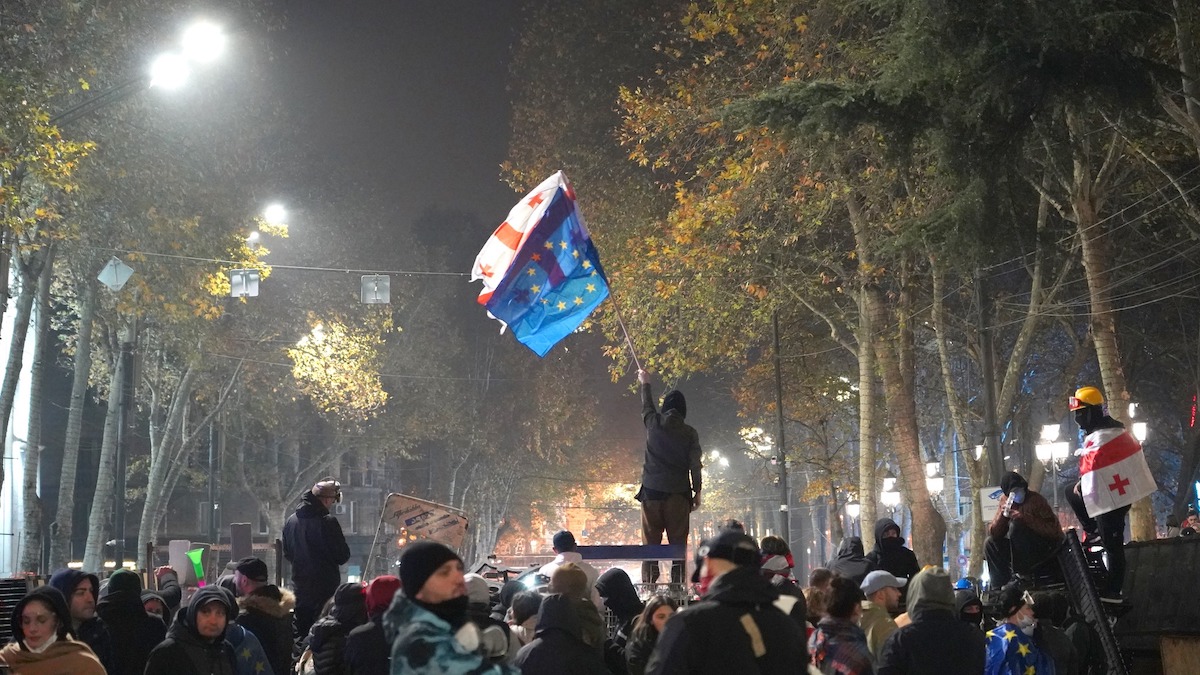
The Committee of Ministers of the Council of Europe has published its 2025 report on the implementation of judgments by the European Court of Human Rights (ECHR). The report shows that while some countries have made notable progress, systemic problems persist, including in Georgia.
In 2025, Georgia paid €748,817 in compensation under ECHR rulings, a sharp increase compared with the previous year, when the figure stood at just €85,512.
Georgia’s cases at the ECHR: statistics and trends
Since ratifying the European Convention on Human Rights in 1999, a total of 202 cases have been brought against Georgia before the ECHR in Strasbourg.
Of these:
- 82 are classified as leading cases
- 120 as repetitive cases
Of the total, 125 cases have now been closed, meaning the judgments have been implemented:
- 53 leading cases
- 72 repetitive cases

New cases: types of violations identified
In 2025, 11 new cases against Georgia moved to the supervision stage for the execution of judgments. This marks a slight decrease compared with previous years (13 in 2024 and 15 in 2023), but the nature of the problems remains unchanged.
The main issues include:
- Excessive length of judicial proceedings
- Restrictions on freedom of assembly
- In one case, excessive use of force by police against protest participants
Pending implementation: accumulated cases
By the end of 2025, Georgia still had 77 unimplemented judgments of the European Court of Human Rights.
Among them:
- 9 leading cases under enhanced supervision (5 of these have been pending for more than five years)
- 20 leading cases under the standard procedure (9 of these have also remained unresolved for over five years)
The report notes that the authorities have submitted:
- 7 action plans
- 15 action reports
However, updated information is still awaited in four cases.
Compensation and financial obligations
In 2025, Georgia fully paid compensation in nine cases. However, overdue obligations remain an issue:
- In five cases, compensation payments or their confirmation are delayed
- The deadlines set by the European Court have expired more than six months ago
Closed cases and signs of progress
In 2025, the Committee of Ministers closed seven cases:
- 2 leading cases
- 5 repetitive cases
One notable achievement was progress in the area of the right to respect for family life. Courts have increasingly relied on the “best interests of the child”, which allowed a specific case to be closed.
The remaining closed cases largely fell into categories where no further individual measures were required.
Systemic problems: key challenges remain
The Committee of Ministers of the Council of Europe highlighted five key cases (or groups of cases) under enhanced supervision, reflecting systemic shortcomings in the legal system:
- Ineffective investigations into ill-treatment and violations of the right to life, including excessive use of force by police
- Unjustified extension of pre-trial detention and insufficient reasoning by courts
- Lack of a legal gender recognition mechanism
- Weak protection against homophobic and religiously motivated violence
- Violations related to demonstrations and arbitrary administrative detentions
Additional concerns include:
- Insufficient mechanisms to prevent domestic violence
- Excessive length of judicial proceedings
- Challenges in ensuring impartial justice
Russia’s obligations and unimplemented judgments
The report also addresses Russia, particularly in relation to inter-state cases involving Georgia.
According to the Committee of Ministers:
- Russia has not implemented the judgment concerning the mass arrests and deportations of Georgians in 2006–2007
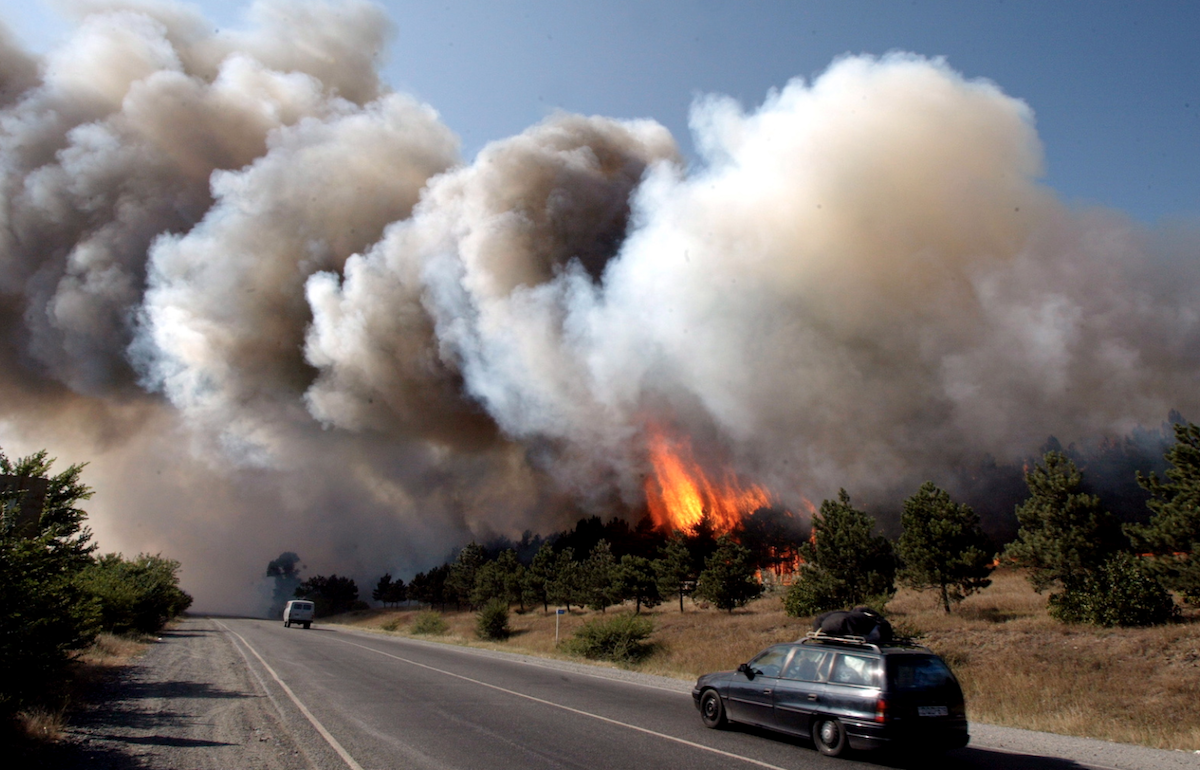
- Compensation has not been paid for human rights violations linked to the August 2008 war
The Committee stresses that the lack of cooperation from Russia, as well as insufficient information, remains one of the key systemic obstacles. Despite being expelled from the Council of Europe in 2022, Russia is still obliged to comply with court judgments concerning violations that occurred before its expulsion.
European picture: progress and systemic risks
In 2025, the Committee of Ministers closed a total of 949 cases—an increase of 6.2% compared with the previous year. Of these, 194 were leading cases, a category that often requires systemic reforms.
The report highlights several positive examples:
- Ukraine — 97 cases closed (including 11 leading cases)
- Romania — which recorded the sharpest reduction in both the total number of cases and leading cases
Significant progress was also noted in Austria, Estonia, France, Germany and Lithuania.
However, the overall picture remains challenging. Key issues include:
- Increasing complexity of cases
- A growing number of long-standing cases
- More than 500 leading cases pending execution for over five years
Georgia remains in this category, indicating that despite some progress, the need for systemic reforms persists.

How Georgia implements ECHR judgments
The opposition alliance of nine parties announced on March 31 the launch of a two-month “national mobilization campaign,” to be symbolically culminated in a large rally in Tbilisi on Independence Day, May 26.
The March 31 announcement came on the 35th anniversary of the 1991 Independence Restoration Referendum, in which around 99% of Georgians who voted chose to restore independence from 70 years of Soviet rule. The referendum led to the proclamation of independence on April 9, 1991, on the second anniversary of the April 9, 1989, Tbilisi massacre. The restoration was based on the May 26, 1918, Act of Independence, which had established the short-lived Democratic Republic of Georgia (1918–1921). May 26, the date of the planned rally, is now celebrated as Georgia’s Independence Day.
“Both of these dates, March 31 and May 26, are among the most important in the history of independent Georgia. Both are linked to the Georgian nation’s most critical challenge – state independence. We believe that today Georgia faces the same challenge,” said Zurab Japaridze, leader of the Girchi-More Freedom opposition party, reading a joint statement of the alliance while standing alongside other leaders.
“For this reason, today, March 31, the opposition alliance announces the launch of a joint national mobilization campaign,” the statement added, inviting all political and civic groups to participate, not just the nine parties of the alliance.
According to the statement, the campaign has five main objectives: “increase direct, face-to-face communication with citizens; counter regime propaganda; transform public anger, protest, and the desire for change into real political action; overcome fear deliberately instilled by this [Georgian Dream] regime over the years; increase the number of people participating in protests.”
“Change does not happen through words alone – it happens when many people stand together, just as it did 35 years ago in the March 31 referendum,” the statement added.
“The campaign will run for two months and will culminate symbolically on May 26 – Georgia’s Independence Day – with a large, mass rally planned in Tbilisi.”
The Facebook event for the planned rally states that gatherings will be held in regional cities and towns, including Kutaisi, Batumi, and Zugdidi, ahead of May 26. The main rally in Tbilisi is scheduled to start at 19:00, proceeding from Tbilisi State University to Parliament.
The opposition alliance, made up of nine parties, was formed on March 2, when the parties signed a coordination document pledging to work together to “save national independence and statehood,” amid a protracted political crisis marked by the ruling Georgian Dream party’s crackdown on dissent and ongoing anti-government protests.
Also Read: