To open Gmail, you can sign in from a computer or add your account to the Gmail app on your phone or tablet. Once you’re signed in, open your inbox to check your mail. Add your account
Day: March 27, 2026
Georgian demographics 2025
The Geostat has published key demographic indicators for 2025. According to official data, the number of deaths in the country exceeded the number of births, continuing a trend observed over the past five years.
According to Geostat, 37,867 children were born in Georgia in 2025, while 44,319 people died. The death rate increased by 0.8% compared to the previous year, while the birth rate declined by 4.1%.
The negative natural increase — the difference between births and deaths — stood at -6,452. A similar pattern was observed in almost all regions of the country, with the exception of Tbilisi, Adjara, and Kvemo Kartli.
Among newborns, there were 19,856 boys and 18,011 girls. The highest number of births (14,334) was recorded in Tbilisi, while the lowest (191) was in Racha-Lechkhumi and Lower Svaneti.
The data also points to shifts in family structure: the share of first-born children rose slightly to 36.6%, while the share of second-born children declined to 32.9%. The proportion of third and subsequent children remained largely unchanged at 29.1%.
The age distribution has also changed: the share of children born to mothers under 25 fell to 21.9%, while the proportion of mothers aged 25 to 39 increased to 70.4%. Growth was also observed among mothers aged over 40, whose share rose to 7.7%. The average age of a mother at the birth of her first child is 27.4 years.
As for mortality, the highest number of deaths (12,743) was recorded in Tbilisi, while the lowest (585) was in Racha-Lechkhumi and Lower Svaneti.
Marriage and divorce statistics show a different trend: in 2025, 22,285 marriages were registered in Georgia, up 2.9% compared to the previous year. The average age at first marriage was 30.1 for women and 32.4 for men. Meanwhile, the number of divorces declined to 13,173 — 2.6% fewer than the year before.

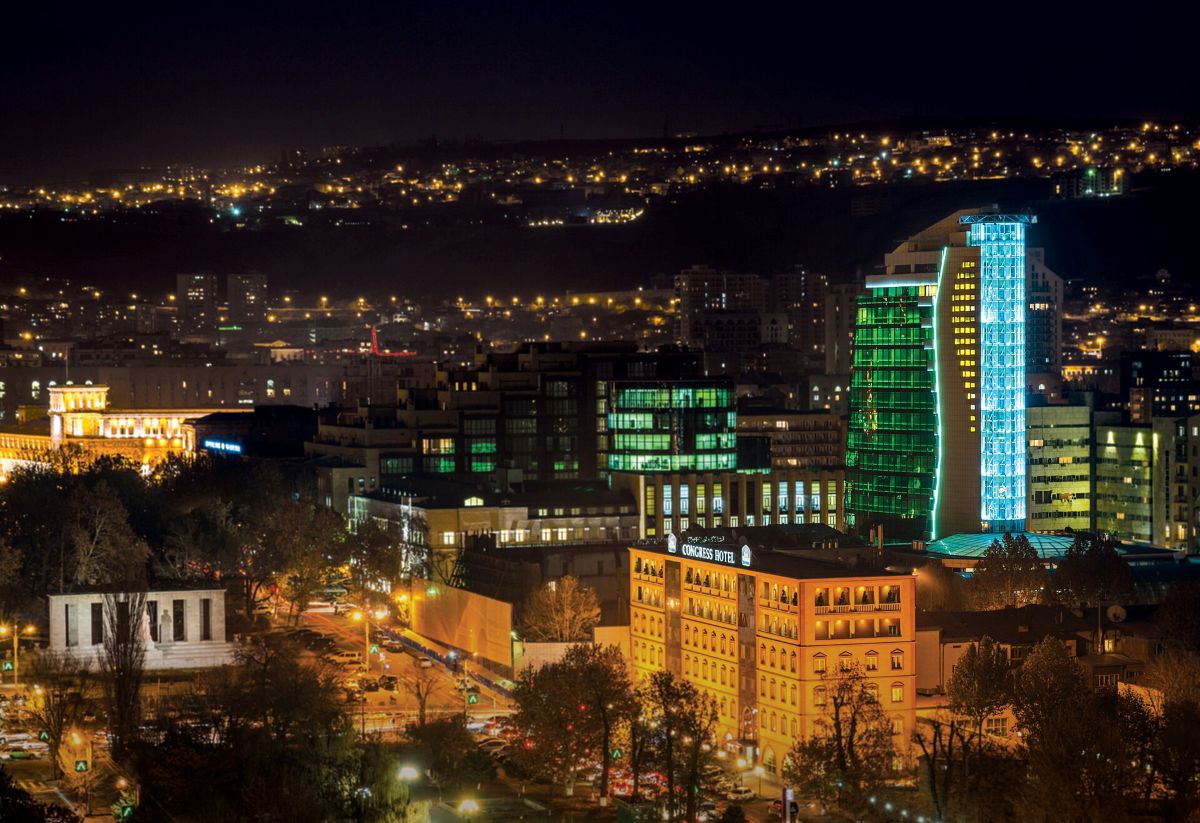
Economic growth and living standards in Armenia
Armenia’s economy has shown steady growth in recent years. According to preliminary data, GDP grew by 7.2% in 2025 compared to the previous year.
A significant share of this growth was driven by sectors such as construction, finance and insurance, information and communication technologies, real estate transactions, as well as wholesale and retail trade.
The largest contributions to GDP growth came from:
- construction — 1.5%,
- financial and insurance activities — 1.3%.
At the same time, foreign trade turnover declined sharply — by around 29% compared to 2024. Against this backdrop, growth was recorded in:
- construction (20.2%),
- services (10%),
- electricity production (6.7%),
- mining (6.4%),
- agriculture (around 5.6%),
- trade (3%).
Meanwhile, consumer prices also rose by 3.3% year-on-year.
There is a view that the pace of growth observed in recent years could trigger an economic shock in the future, particularly if one or more of these sectors experience a downturn. Economists argue that a cyclical economic policy would be preferable — using various tools to smooth rapid growth and create buffers against future crises.
In this context, some economists suggest maintaining economic activity within reasonable limits. They note that no sector can sustain rapid growth indefinitely; such periods are typically followed by phases of stabilisation and decline. These downturns, they argue, should be gradual and not cause shocks to the economy, investors, or the state’s socio-economic policy.
- ‘Modernisation is essential for progress’: Economist’s proposals to Armenian authorities
- ‘Armenia faces choice: lead or follow others’ – IT specialist
- Proposal to shorten Armenia’s workday by an hour is flawed: economist’s opinion
Gold jewellery production also contributed to economic growth
The decline in foreign trade turnover has not significantly affected the jewellery industry. Pargev Aloyan is engaged in exporting gold jewellery from Armenia. According to him, the main export market at present is Kazakhstan. In recent years, it is precisely this direction that has helped maintain the profitability of gold jewellery production and exports.
“Behind these growth figures lie the livelihoods of hundreds of families, because the jewellery production chain is extensive: processing, manufacturing, design, hallmarking, labelling, and so on. I myself work with around 50 producers, most of whom serve foreign demand,” Pargev says.
He explains that the unprecedented rise in gold prices last year led to a multiple decline in domestic demand:
“Traditionally, Armenia is one of the countries whose economic growth is driven by gold jewellery production. Export quickly replaced domestic demand. In this way, shocks were avoided.”
The businessman suggests expanding export destinations. In particular, he highlights the potential of exporting to countries in East Asia, assuring that Armenian businesses are fully capable of meeting new demand — which could increase export volumes severalfold.

Construction growth will eventually give way to other sectors
Representatives of construction companies believe that, at some point, their contribution to economic growth will уступ leadership to other sectors. In other words, construction will remain one of the key industries, but its growth rates are likely to become more modest.
Margarita Karapetyan, head of marketing at one of Armenia’s largest construction companies, explains:
“Development in the sector is still being driven by income tax refund benefits applied to the mortgage market outside Yerevan.”
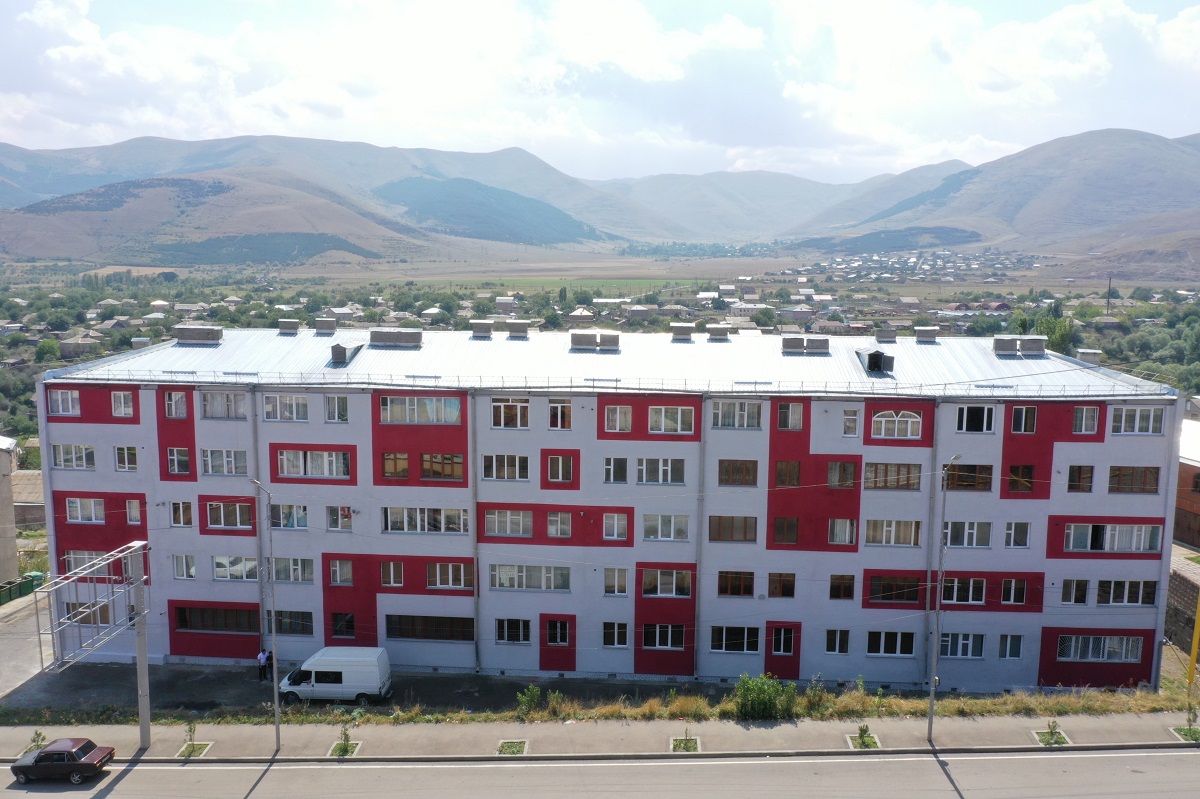
As of 1 January 2025, the income tax refund programme for mortgage interest payments ceased to apply in Yerevan. However, it continues for those purchasing housing in the regions. The programme offers significant savings for beneficiaries, and many Armenians view the tax refund as an attractive condition for buying property.
The marketing specialist notes that construction volumes in Yerevan have halved compared to previous years.
At the same time, construction activity is increasing in settlements located near the capital.
“The law remains in force until 2027 inclusive. This means that over the next two years we will see continued growth in construction in the regions. After that, construction companies will either shift to other areas or begin operating abroad,” Margarita explains.
According to her, companies that maintain high quality will gradually reduce construction volumes but, thanks to their reputation and established niche, will secure state and international contracts.
“Smaller companies have already begun to diversify. In particular, they are engaged in the production and assembly of eco-cottages. They offer the construction of holiday homes, guest houses, and shops. This is a case where challenges create new opportunities,” she concludes.
“Economic indicators are positive, but somewhat distorted”
Political scientist and economist Grant Mikaelyan considers GDP growth of 7.2% impressive, noting that it reflects not only expansion in production and services but also, to some extent, an improvement in living standards:
“This means the economy is going through a favourable period. However, it is important to understand that the growth in economic indicators is driven by a number of случайных factors, from which we should derive not only short-term benefits but also transform them into long-term opportunities.”
According to the economist, anti-Russian sanctions in recent years have stimulated the economy through re-export activity.
In particular, Armenia has become a transit hub for the sale of electronics (smartphones, laptops, tablets), cars and spare parts, gold, and other precious metals.
“The results of re-exports should be calculated separately, which is not being done. As a result, export statistics are inflated, distorting the overall picture. According to my estimates, re-exports accounted for 71% of exports in 2024 and 50% in 2025.”
Mikaelyan says that billions of dollars have flowed into the country in recent years due to this “accidental” factor. In his view, this is not particularly beneficial for domestic production or competition. However, he believes it can be used to create long-term opportunities:
“The Central Bank of Armenia should develop targeted programmes for these inflows. For example, these funds could be used to cover social liabilities arising from the income tax refund scheme introduced in 2014, which currently amount to around 100 billion drams per year (about $266 million).”
Mikaelyan argues that the state has not yet overcome the burden it assumed under the income tax refund programme and has now taken on an even greater one through universal health insurance:
“The state has taken on obligations of around 420 billion drams (about $1.12 billion), for which it currently lacks the resources. This is more of a populist move, given the approaching elections.”
In his view, such “overheating” of the economy is risky and could lead to a slowdown or recession, as happened in 2008. He suggests that the government should pursue a cyclical policy to counter downturn trends — that is, to moderate rapid economic growth using various tools so that the state has buffer protection in the event of future recessions, for example due to a decline in construction activity.
Economic growth and living standards in Armenia
UK Parliament report on Georgia
The Foreign Affairs Committee of the House of Commons has published a new report on disinformation, which mentions Georgia.
The report sharply criticises the policies of Georgian Dream in the context of delays in the country’s integration into the European Union, restrictions on the opposition, tighter regulation of protests, and the spread of disinformation. The document also highlights parallels between the policies of Georgian Dream and Russia.
The document, titled “Disinformation Diplomacy: How Malign Actors Are Seeking to Undermine Democracy,” presents Georgia as a key arena of geopolitical competition between the West and Russia in the Black Sea region.
According to the report, the United Kingdom and the European Union support Georgian society’s aspiration towards liberal democracy and Western institutions, including the prospect of eventual membership in NATO and the EU, while Russia seeks to obstruct this process and halt Georgia’s integration into the West.
- The document notes that Georgian Dream, which has been in power since 2012, has consolidated its position by suppressing opposition voices, suspending EU accession talks, awarding strategic infrastructure projects to Chinese companies, and promoting pro-Russian and anti-Western narratives.
The report also cites the view of Georgia’s fifth president, Salome Zourabichvili, that the government is attempting to restrict the activities of civil society, NGOs, and independent media through laws and practices that, she says, mirror those of Russia and Belarus. These include the so-called “foreign agents” law, which requires organisations receiving a certain share of foreign funding to register as “foreign agents.”
The document also mentions Georgia’s informal ruler, Bidzina Ivanishvili, described as a billionaire who amassed his fortune in the banking, metallurgy, and telecommunications sectors in post-Soviet Russia in the 1990s before returning to Georgia and gaining influence over political processes.
- According to the report, Ivanishvili has repeatedly echoed Russian anti-Western narratives, including claims that the West is seeking to use Georgia to open a “second front” in the Russia–Ukraine war through a so-called “global war party.”
The document notes that the Office of Foreign Assets Control in December 2024 accused Ivanishvili of undermining Georgia’s democratic and Euro-Atlantic trajectory through actions serving Russia’s interests, while the European Parliament in February 2025 adopted a resolution calling on member states to impose sanctions and freeze the assets of Ivanishvili and his associates.
The Foreign Affairs Committee of the House of Commons also noted that it had requested clarification from the Foreign, Commonwealth & Development Office regarding support for civil society in Georgia and the possibility of additional sanctions against the government.
Minister Stephen Doughty responded that support for Georgian independent media and civil society is one of the key priorities of the United Kingdom’s foreign policy, and that London continues to assist relevant organisations.
However, Salome Zourabichvili believes that practical support for Georgia in this area is insufficient and that there is no clear strategy to counter Russian disinformation and influence.
- In the concluding part of the report, the committee expressed “deep concern” over the deterioration of democratic processes in Georgia and stated that the continuation of current trends and the strengthening of Russia’s influence could lead the country towards an authoritarian model similar to that of Belarus.
The committee supported existing UK sanctions against officials responsible for human rights violations in the context of protests and recommended that the government introduce new targeted sanctions against individuals backing the “foreign agents” legislation, as well as against actors whom the committee believes are spreading disinformation.