
Day: March 25, 2026
In January this year, Azerbaijan exported a total of 1.037 billion cubic meters of natural gas to Türkiye, marking a significant increase in bilateral energy trade. As reported by AzerNEWS, according to a report by Türkiye’s Energy Market Regulatory Authority (EPDK), the figure represents a 29.96% increase compared…
Analysis of Azerbaijan’s non-oil exports
In recent years, pro-government websites have frequently published formulaic news reports along the lines of: “In the first X months of this year, exports reached $Y million, an increase of Z%.” These figures are typically sourced from the State Customs Committee or the State Statistics Committee, and the language often repeats familiar terms such as “non-oil exports”, “diversification”, and “reforms.”
The positive aspect of such reporting is that the figures themselves are not fabricated; they are based on official statistics. For example, in 2025, exports of fruit and vegetables amounted to approximately $901 million, showing growth both in value and in volume compared to the previous year.
However, numbers alone do not tell a success story. When these figures are not accompanied by basic questions — “how much is that?”, “why did it grow?”, “who benefits?”, and “will it last?” — they can create the impression that “everything is going well”, while the real picture remains unclear.
This article explains, in simple terms, how to read such data-driven reports. What do these indicators actually mean? Why are they so widely promoted? What is left unsaid? And what could this mean for ordinary people?
What do these figures actually mean?
The most basic question is: is “$901 million” a large amount? It may sound impressive, but on its own it says very little. Without comparing it to the country’s total exports, the figure lacks context.
According to customs data for 2025, Azerbaijan’s total exports amounted to around $25.0 billion. The same data show that 85.51% of exports came from the oil and gas sector. In other words, roughly $21.4 billion of that total was generated by hydrocarbons. Non-oil exports accounted for about $3.63 billion, or 14.49% of the total.
Seen in this context, fruit and vegetable exports — worth $901.5 million — made up just 3.60% of overall exports. However, within the non-oil segment, their share was much higher, at 24.85%.
It is also important to distinguish between value (in monetary terms) and volume (physical quantities, measured in tonnes). If both the value and the volume of fruit and vegetable exports are increasing, this may point to genuine growth in production and sales.
For example, such reports often highlight year-on-year growth compared to 2024: +27.3% in value and +23.2% in volume. While part of the increase in value may be explained by rising prices, the growth in volume suggests that the trend is not driven by prices alone.
There are also reverse examples. In some cases, the headlines point to “growth”, but the underlying dynamics tell a different story.
For instance, last year’s hazelnut exports show this clearly. In 2025, Azerbaijan exported 18,972.7 tonnes of hazelnuts worth $170.7 million. According to calculations by Report.az, this represents a 32% increase in value but a 6% decline in volume compared to the previous year.
What this means in practice is simple: fewer tonnes were sold, but at a higher price. In other words, the reported “significant growth” reflects price increases rather than an expansion in production.
The same logic applies to construction materials. According to the State Statistics Committee’s report on socio-economic development for January–February 2025, production of cement clinker reached 612,900 tonnes, or 111.2% year-on-year (an increase of 11.2%).
This figure may point to increased construction activity, but it does not, on its own, prove that “the construction sector is booming”. At times, growth is driven by state-funded projects; in others, inventories may be building up — something the report itself also tracks through separate data on unsold stock.
The simplified table below helps to put the overall picture of 2025 into perspective:
| Indicator | Amount | What it shows |
|---|---|---|
| Total exports (2025) | ~$25.0bn | Total value of goods sold abroad |
| Oil and gas exports | ~$21.4bn (85.51%) | Exports remain heavily dependent on oil and gas |
| Non-oil exports | ~$3.63bn (14.49%) | The segment described as “diversification” |
| Fruit and vegetable exports | $901.5m (24.85% of non-oil exports) | One of the main drivers of non-oil exports |
| Hazelnut exports | $170.7m (4.70% of non-oil exports) | Growth recorded |
Why are these stories repeated so often?
The widespread circulation of such reports can be explained by three main factors.
First, they are a “ready-made product”.
State bodies regularly publish statistical data, and media outlets turn it into news with minimal processing. For example, a report on fruit and vegetable exports is often published almost verbatim, citing the State Customs Committee as its source.
Second, the figures align with the government’s official economic narrative.
In 2016, a presidential decree approved the “strategic road maps for the national economy and key sectors”. These documents place particular emphasis on “non-oil” areas such as agriculture, logistics and trade, tourism, and industry.
The language of these strategies — long-term development, competitiveness, and new sectors — is typically distilled in media coverage into a single, familiar concept: “diversification”.
Third, such stories are visually and psychologically compelling.
Percentage growth is a powerful signal. When a headline features “+27%”, it is easily read as “the economy is growing”. What is often missing, however, is discussion of the base effect (what was last year’s figure?), as well as risks, costs, subsidies, and potential environmental or social consequences.
Questions behind the numbers
When reading such reports, it would be wrong to say that “the figures are false”. But what lies behind these numbers — and what do they leave out?
One of the key issues is state support and subsidies.
In Azerbaijan, agriculture operates within a structured subsidy system. The Agrarian Subsidies Council sets coefficients for crops, yields, and seeds depending on the type of produce and the region, and determines base payments and subsidy rates per hectare.
In addition, there are mechanisms for concessional lending and leasing. Funds from the Agrarian Credit and Development Agency are reportedly used to finance agricultural projects and provide preferential access to inputs — such as machinery, irrigation systems, and breeding livestock — which are then distributed to businesses through authorised credit institutions.
What does this mean in practice?
First, part of the reported growth is driven by state funding, incentives, and organisational support.
Second, when a report states that “exports have increased”, it is worth asking what share of that growth was made possible by subsidies and preferential schemes. This question, as a rule, is left unanswered.
Import dependence and market risks
Another issue that receives relatively little attention is dependence on imports. For example, local media reports citing an audit by the Chamber of Accounts on the efficiency of the seed sector highlight a “persistently high dependence on imported seeds” — particularly in areas such as vegetables, melons, potatoes, horticulture, and cotton.
This has clear implications. When a report states that “tomato exports have increased”, it is equally important to ask: what share of the seeds, fertilisers, plant protection products, and packaging used for those tomatoes is imported? And how do farmers’ incomes and product prices change as these input costs rise?
Market risks are especially significant in the fruit and vegetable sector. Government documents explicitly identify Russia as the main market for agricultural exports. The same documents note that up to 90% of primary agricultural products are exported to former Soviet countries, primarily Russia.
According to the breakdown of non-oil exports by country for 2025, published by the State Customs Committee, Russia ranks first with a share of 32.37%.
This points to a high concentration of risk: changes in regulations or demand in a single market can affect the entire system.
Information from the Food Safety Agency also makes clear that products failing to meet Russian standards cannot be exported there.
Processing and value added
Another aspect that often remains outside the spotlight is processing and value added. A strategic agricultural document covering the period 2001–2015 states that 44% of exported agricultural and food products are primary goods, while 56% come from the processing industry.
However, a closer look at current reporting on “fruit and vegetable exports” tells a different story. According to customs data for 2025, fresh vegetables and fruits account for 24.85% of non-oil exports, while processed fruit and vegetable products make up just 1.04%.
In practical terms, this suggests that:
The country predominantly exports raw or fresh produce, while processing remains far less developed.
With limited processing, there are fewer high-paying jobs, less technological development, and lower long-term value creation.

What does this mean for an ordinary citizen?
First of all, sectors such as agriculture and construction materials can create jobs. However, the key questions concern the quality of that employment — whether it is seasonal or permanent, the level of wages, and how evenly jobs are distributed across regions.
Statistical growth figures do not address these issues.
Second, rising exports can reduce supply on the domestic market and push prices up.
Conversely, oversupply can lead to falling prices.
To understand which scenario is unfolding, data on domestic prices, logistics costs, and intermediary margins are needed. A simple statement that “exports have increased” does not provide a clear answer about future price trends.
Third, heavy reliance on a single market — such as Russia — creates significant risk.
If regulations tighten, if restrictions are introduced due to plant diseases, or if political or trade tensions arise, exports can fall sharply. In such cases, both farmers’ incomes and regional economic activity are likely to suffer.
When reading such reports, it is worth asking a few basic questions:
- Is the percentage growth driven by higher volumes or by rising prices?
- Can this sector function without state subsidies and concessional financing?
- Are export markets diversified, or is there dependence on a single country?
- Is the share of processed goods increasing, or does raw and fresh produce still dominate?

Analysis of Azerbaijan’s non-oil exports
Armenia’s parliament speaker on “parties of war”
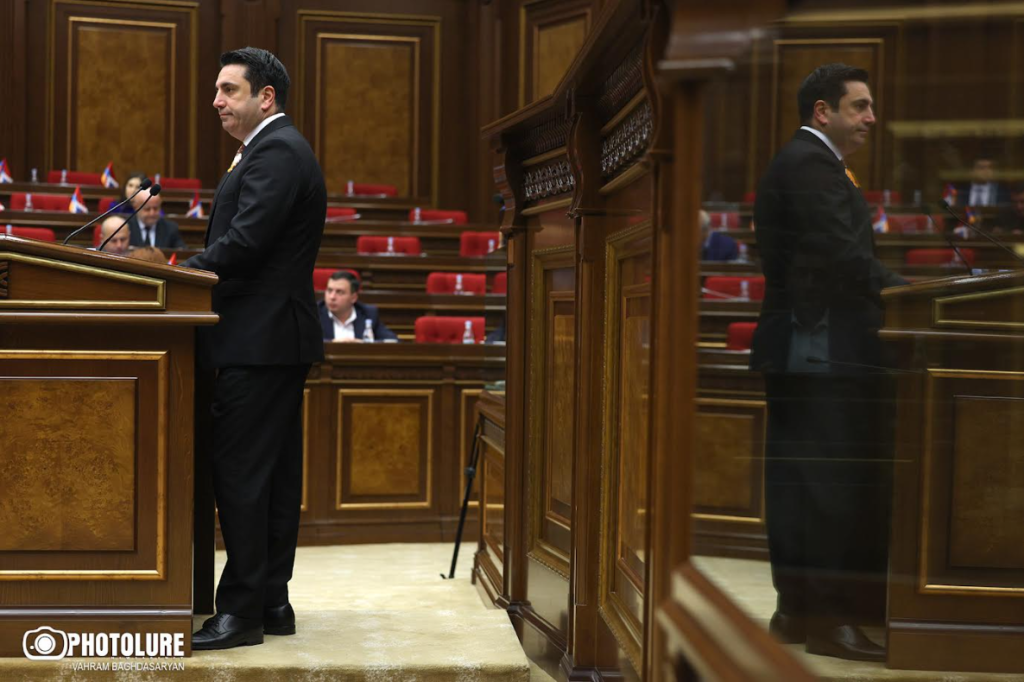
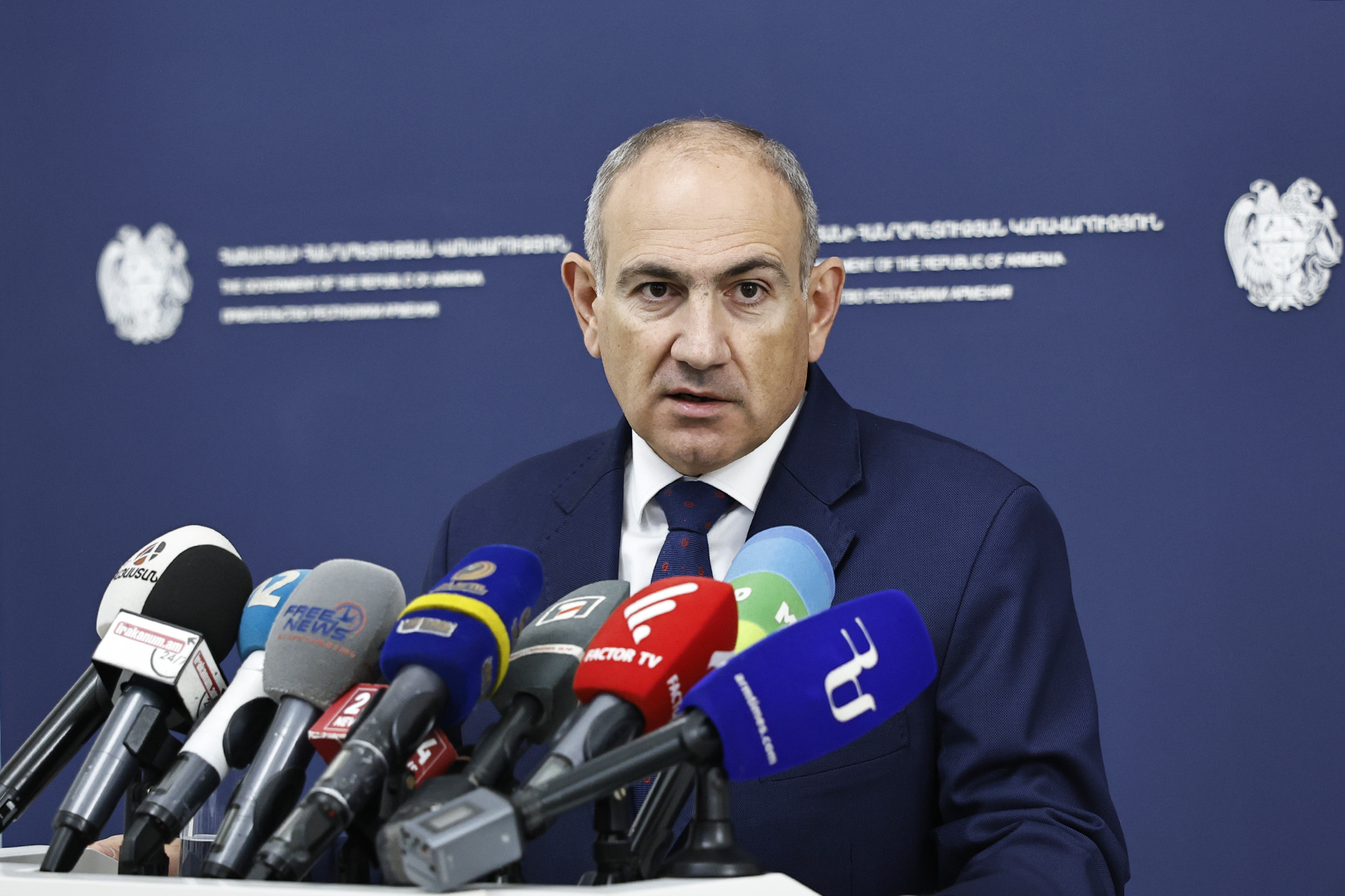
Armenian parliament speaker Alen Simonyan has commented on Prime Minister Nikol Pashinyan’s warnings that war could break out if the ruling party fails to secure a constitutional majority in the upcoming elections. Simonyan said there is no need to look for a “tactical or political trick” behind these remarks.
“In 2020, there was a war. After that, Armenia and Azerbaijan established a border. If a force comes to power and says: ‘I do not recognise the delimitation and demarcation that took place. I intend to think about territories beyond 29,743 square kilometres,’ then naturally, as a politician and as citizens, we can assume that war is possible,” Simonyan said during a briefing.
He added that the prime minister, who has access to information and oversees ongoing processes, has the right to make such forecasts.
Simonyan also agreed with Pashinyan’s view that voters in the 7 June parliamentary elections will face a choice between peace and a possible war.
In recent weeks, Pashinyan has repeatedly said the ruling Civil Contract party must secure a constitutional majority in the elections. He has warned that otherwise war will be inevitable. He has also indicated a possible timeframe, saying hostilities could begin as early as September this year.
The opposition says Pashinyan is using the threat of war as a form of pressure. They argue that this has become the ruling party’s main tool for re-election — to frighten voters with the prospect of conflict. Pashinyan’s team rejects this, saying the statements are political assessments, not threats.
- ‘Russia trying to send tens of thousands of voters to Armenia’s elections’: debate in Yerevan
- Phishing attack by cyber fraudsters posing as members of Armenia’s ruling party
- Poll: Will Armenia’s ruling party win June election?
‘We must not miss the chance for peace’ — Simonyan
“I understand that the forces currently in parliament, as well as those seeking to enter it, need war — or talk of war — to build their political agendas. But there is no war now, there is peace,” the National Assembly speaker told journalists.
Alen Simonyan stressed that no one has been killed by Azerbaijani fire on the border for two years.
“So are we at war or at peace? Since the collapse of the Soviet Union, Armenia and Azerbaijan have never traded. Never before have leaders of both countries spoken about peace at the same time.”
He said people should be careful not to miss the opportunity for peace.
“The current government of Armenia, Civil Contract, is a party of peace. All the other main opposition players are parties of war. That is the reality. If they say they want to put forward demands and go beyond these square kilometres, that is called war.”
Simonyan also recalled that unresolved border issues have remained across the former Soviet Union — in Central Asia, Ukraine and the South Caucasus.
“They told us: people of Armenia, always dream that your home is not only here but also there, and we will support you. The goal was to keep us dependent on them. Yes, there is a party of war, and there is a party of peace. And yes, the 2026 elections will be about peace and a possible war,” he said.
Pashinyan warns of “catastrophic war”
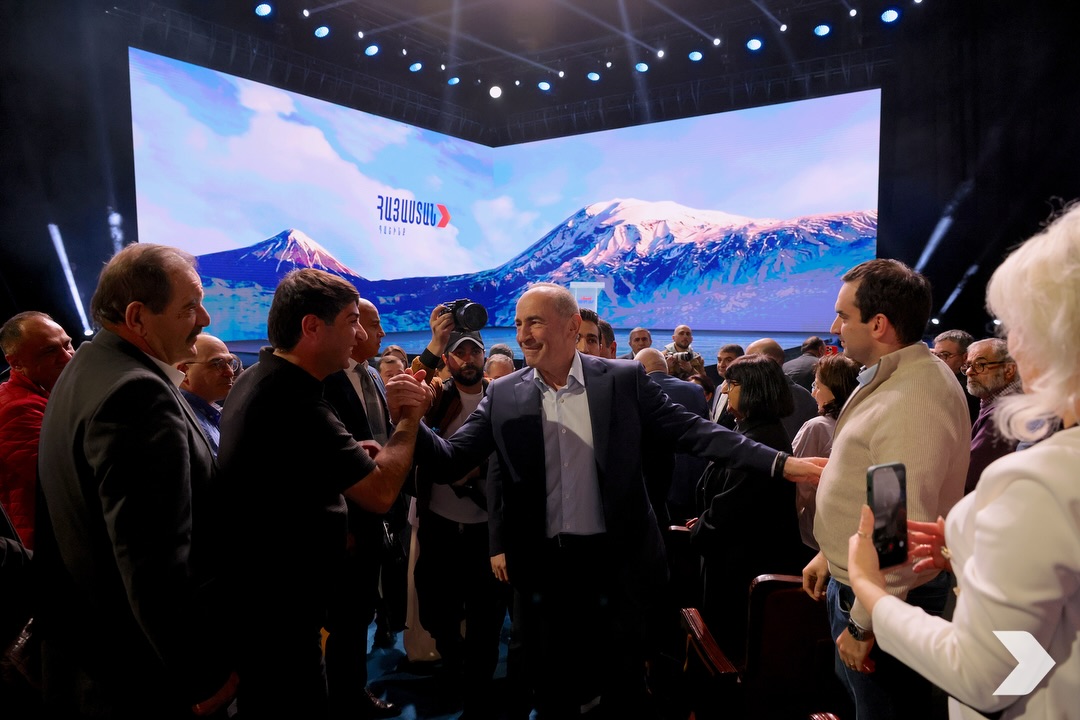
Armenian Prime Minister Nikol Pashinyan said over the weekend that war would be inevitable, speaking during a livestream on his Facebook page:
“There will be war in September. And it will be a catastrophic war if the Civil Contract party does not secure a constitutional majority… I am not just talking about winning the elections.”
He did not provide detailed justification. He said his seven years as prime minister allow him to assess the situation and the risks.
Pashinyan made similar remarks during a briefing on 19 March. He said military action could begin in autumn, shortly after the June elections. He warned that if forces advocating a “revision of peace” come to power, this will lead to serious consequences. He said this could mean losses — not only of territory, but also of sovereignty.
Asked why opposition forces would need a war, Pashinyan said:
“War would bring them the following: they would run an outpost, not a state, because time has shown this benefits them financially. […] All three forces advocating a revision of the peace agreement [the Armenia bloc, Strong Armenia and Prosperous Armenia] have billions in assets in Russia and Belarus. They were told: if you want to keep these assets, you must work, sweat, run, do push-ups 30 times. They will not manage it.”
The prime minister said a constitutional majority in the next parliament could guarantee that peace in the region becomes “irreversible”.
Why does the ruling party need a constitutional majority? Foreign minister responds
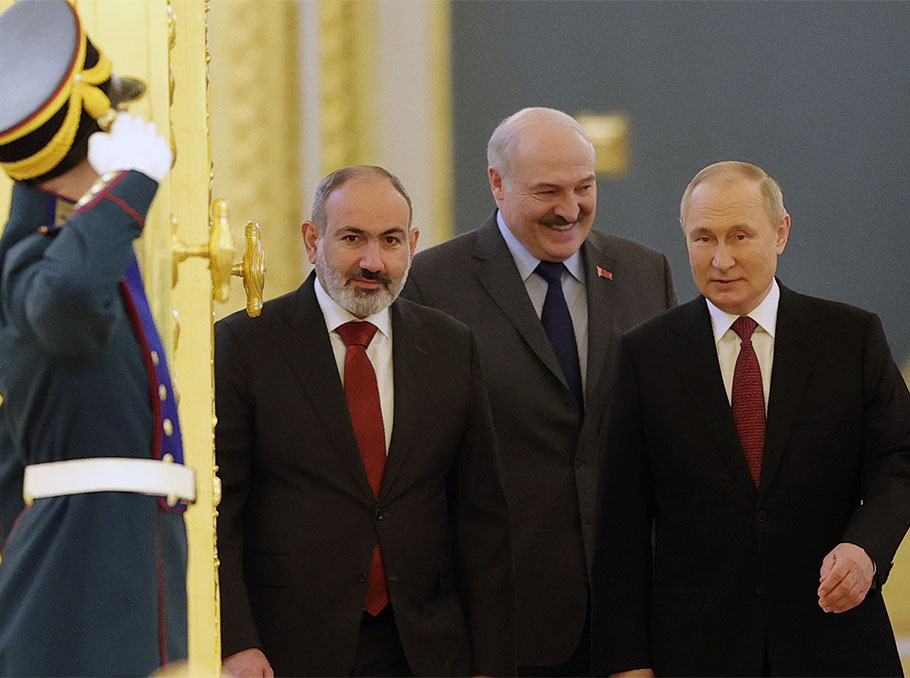
Foreign Minister Ararat Mirzoyan said the timeline for a possible war — set out by the prime minister as September — is conditional, but confirmed that such a scenario remains possible.
Mirzoyan noted that both parliamentary and extra-parliamentary opposition figures hold territorial claims against almost all neighbouring countries.
“If they come to power, problems with neighbours will arise immediately. Given the way disputes are resolved today, Armenia would most likely find itself in a state of war straight away.”
Journalists asked the minister whether he saw the prime minister’s remarks as blackmail.
“Do I see an element of blackmail here? No. Why are we acting this way? We are doing the right thing. This is our political proposal. Are we breaking the law? Absolutely not,” he said.
According to Mirzoyan, the ruling party aims to secure a constitutional majority in order to “form a more stable government”. Radio Azatutyun (RFE/RL) asked whether this was linked to the process of adopting a new constitution.
“It may be related to that as well — I cannot say for sure,” Mirzoyan replied.
To put a draft constitution to a referendum, the ruling party would need at least a two-thirds majority in parliament. This means Pashinyan’s party would not be able to initiate a referendum on the issue unless it secures a constitutional majority in the 7 June elections.
Azerbaijan views Armenia’s Constitution as a key obstacle to signing a peace agreement. Officials in Baku object to the reference to the Declaration of Independence in the Constitution’s preamble. The declaration mentions the unification of Nagorno-Karabakh and Armenia, which Azerbaijan regards as a territorial claim. While a new version of the constitution is still under discussion, Armenia’s prime minister has repeatedly said the Declaration of Independence should not be referenced in it.
Armenia’s parliament speaker on “parties of war”
Tamar Bagrationi, wife of Georgian Dream-elected President Mikheil Kavelashvili, is visiting Washington, D.C., where she was invited by U.S. First Lady Melania Trump to participate in the “Fostering the Future Together” global summit on March 24-25.
“Fostering the Future Together is a global coalition of nations aligned to empower children through education and technology,” according to the White House. The two-day event, with the first day at the U.S. State Department and the second at the White House, brings together First Spouses and leaders from 45 nations and 28 technology companies.
Addressing the working session on March 24 alongside other first spouses, Bagrationi began by extending “heartfelt thanks” to the host, Melania Trump, saying, “The history will remember her, who brought around 45 nations together and turned a mother’s instinct into a global movement.”
“Today, we are united by one shared responsibility – the well-being and future of our children,” Bagrationi said, adding that she, speaking as a “mother of four,” understands the responsibility of protecting a child’s well-being.
“Every parent knows the quiet tension we carry – the will to protect our children from harm, [while] at the same time allowing [them] the freedom to grow, to explore, and benefit from the opportunities of a rapidly advancing world,” Bagrationi said.
“This balance is not simple. It is a daily struggle: silent, invisible, but very real, shared across families everywhere,” she continued. “We cannot choose between safety and development. Our responsibility is to ensure both. This is why a thoughtful solution matters so deeply – a solution that allows our children not only to strive and to innovate, but also to remain open, curious, and connected – free to play, engage, and step into the future with confidence.”
“In Georgia, we are undertaking important steps towards comprehensive digital transformation. Our national approach is guided by the principle of the middle way – a framework that seeks to balance technological innovation with the protection of human dignity, fundamental rights, and above all, children’s safety.”
Before the address, pro-government and U.K.-sanctioned Imedi TV shared a roughly 40-second muted clip of Bagrationi alongside Georgian Dream MP Mariam Lashkhi at the State Department, where, the channel said, she “toured an exhibition on innovation and technology.” The clip shows several people engaging her in conversation.
Further updates may follow…
Also Read:
The report notes that Azerbaijan ranked third among the largest importers of Russian sugar confectionery products last year, highlighting strong demand in the Azerbaijani market. The report notes that Azerbaijan ranked third among the largest importers of Russian sugar confectionery products last year, highlighting strong demand in the Azerbaijani market.
Overall, Russia exported…