
Astronomers have identified an extraordinary galaxy composed almost entirely of dark matter. According to the journal Science, the discovery was made during the analysis of archival images from the Hubble Space Telescope, AzerNEWS reports.
Day: February 25, 2026
This week saw U.S. Vice President JD Vance visit Armenia and Azerbaijan to advance economic and security cooperation, including the TRIPP initiative and surveillance drone agreements. Meanwhile, Azerbaijani courts extended the pre-trial detention of opposition leader Ali Karimli and former presidential official Ramiz Mehdiyev, and prosecutors requested a 13-year prison sentence for Azer Gasimli, head of the Institute of Political Management, drawing criticism from international human rights organizations.
JD Vance in Armenia and Azerbaijan: Economic, and security cooperation
On February 9, JD Vance visited Yerevan and met with Armenian Prime Minister Nikol Pashinyan, culminating in a joint statement on U.S.-Armenia cooperation in the peaceful use of nuclear energy. Additionally, Armenia will purchase approximately $11 million worth of surveillance drones from the U.S. Pashinyan described the visit as historically and symbolically significant, highlighting Armenia’s commitment to U.S. efforts to promote regional peace, and announced his acceptance of Donald Trump’s invitation to attend the inaugural meeting of the TRIPP (Trump Route for International Peace and Prosperity) project. Analysts view the agreements as concrete steps for Armenia to reduce its dependence on Russia and strengthen economic diversification.The visit took place while protests were being held in Yerevan, demanding the release of 19 Armenian prisoners currently detained in Azerbaijan.
On February 10, Vance traveled to Baku, where he held both large-scale and private meetings with Azerbaijani President Ilham Aliyev, after which the U.S. and Azerbaijan signed a Strategic Partnership Charter. The charter seeks to institutionalize and strengthen long-term bilateral relations through concrete mechanisms, focusing on energy security, trade and investment, the TRIPP project, artificial intelligence and digital technologies, cybersecurity, civil nuclear cooperation, security and defense, counterterrorism, and humanitarian mine clearance. President Aliyev described the charter as a significant step for Azerbaijan, opening new opportunities for transit, trade, and energy cooperation, while Vance emphasized that the TRIPP project will expand economic prospects and support regional peace.
During Vance’s visit, the U.S. Congress and international human rights organizations urged attention to the release of political prisoners in Azerbaijan, highlighting the detention of journalists and activists, including Farid Mehralizade, Ulviyya Ali, and Gubad Ibadoglu. It remains unclear whether political prisoners were specifically discussed during Vance’s February 10 meeting with President Aliyev, though Armenia stated that the issue of Armenian prisoners held in Azerbaijan was raised in Yerevan. On January 14, four prisoners held in Baku were returned to Armenia, while 19 Armenian prisoners remain in Azerbaijani custody. The “Committee for the Defense of Political Prisoners” and other organizations called on the U.S. administration to address human rights concerns in Azerbaijan, warning that political repression could pose risks to U.S.–Azerbaijan relations.
Experts note that the U.S. pursues distinct strategies for Armenia and Azerbaijan in the South Caucasus: agreements with Armenia provide concrete strategic guarantees, technological cooperation, and security support, while the charter with Azerbaijan emphasizes economic and energy collaboration. Analyst Nahid Jafarov interprets the omission of democracy and human rights discussions in Baku as a sign of U.S.–Azerbaijan diplomatic pragmatism, prioritizing national interests over these concerns, whereas Vance’s focus on Armenian prisoners in Yerevan is seen as a measure to promote regional peace. Expert Elman Fattah adds that U.S. cooperation with Armenia, particularly in nuclear and technological sectors, helps reduce Armenia’s dependence on Russia, with the TRIPP project placing U.S.–Armenia collaboration at the forefront.
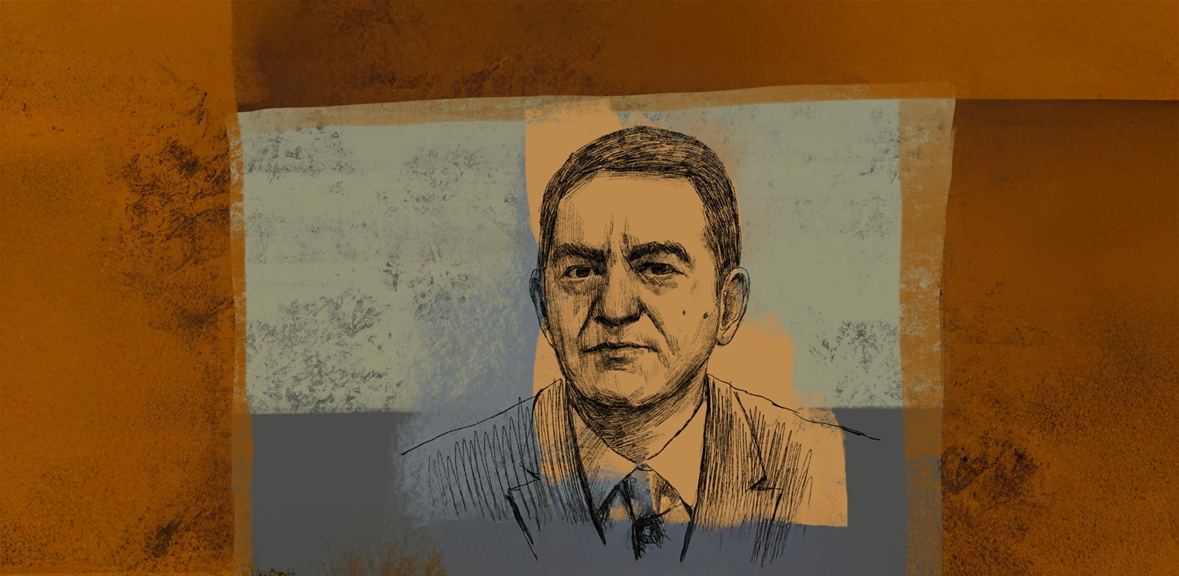
Opposition leader Ali Karimli and former official Ramiz Mehdiyev face extended detention
Ali Karimli, illustration: Meydan TV
On February 9, The Sabail District Court has extended the pre-trial detention of Ali Karimli, chairman of the Azerbaijan Popular Front Party (APFP), and Mammad Ibrahim, a member of the party’s Presidium, by four months. Both politicians were initially detained by the State Security Service (DTX) on November 29, 2025, and charged under Article 278.1 of the Criminal Code, relating to actions aimed at forcibly seizing power or altering the constitutional order. Their original detention, ordered on December 1, 2025, was set for two months and fifteen days. Party representatives criticized the decision as “extremely absurd” and politically motivated, noting that supporters were blocked from approaching the courthouse during the closed-door hearings.
On February 10, the court also extended the house arrest of Ramiz Mehdiyev, former Head of the Presidential Administration and former President of the Azerbaijan National Academy of Sciences, by another four months. Mehdiyev had been placed under house arrest on October 4, 2025, in connection with a criminal investigation. His former assistant, Eldar Amirov, who held senior positions in both the Presidential Administration and the Academy of Sciences, had his pre-trial detention extended for the same period.
The DTX claims that Mehdiyev, Karimli, former Deputy Prime Minister Abbas Abbasov, and several others were involved in efforts to forcibly change the government. Investigators reference an organization called the “Union of Russian-Azerbaijani Organizations,” also known as the “Billionaires’ Union,” which was reportedly established abroad in 2012 to influence Azerbaijan’s political processes. The agency claims that the “National Council,” formed to nominate writer-director Rustam Ibrahimbeyov for the 2013 presidential elections, received foreign support to provoke unrest and exert pressure on authorities, with around 933,000 Azerbaijani manats spent to bring supporters to Baku. Additional allegations include treason, money laundering, and the drafting of a document titled “Proposals for the Reconstruction of the State Administration System” intended for Karimli.
Opposition figures have strongly rejected the accusations. APFP vice-chair Fuad Gahramanli said his testimony was obtained under pressure and would be clarified in court, while editor-in-chief Ganimat Zahidov called the claims a “fairy tale.” Vice-chair Seymur Hazi informed Meydan TV that the party has never discussed illegal changes of power. Pro-government media have linked the arrests of the opposition leaders to the ongoing criminal case against Mehdiyev, which remains under investigation, raising concerns about broader implications for Azerbaijan’s political landscape.
Prosecutor Seeks 13-Year Sentence for Azer Gasimli
Azer Gasimli, illustration: Meydan TV
The trial of Azer Gasimli, head of the Institute of Political Management, concluded a key session on February 11, 2026, at the Baku Court for Serious Crimes. The prosecutor requested a 13-year prison sentence for Gasimli, who has been in pretrial detention since December 8, 2024, on charges of extortion through threats using force under Article 182.2.3 of the Criminal Code. Gasimli has repeatedly stated that the charges are politically motivated and fabricated.
Speaking to Meydan TV, Gasimli’s wife, Samira Gasimli, recounted their reaction:
“When the prosecutor spoke, Azer and I exchanged a glance and laughed sarcastically. This entire trial has proceeded without evidence or witness testimony, relying solely on the word of one person.”
The trial also revealed inconsistencies in the testimony of Gurbanali Yusifov, the alleged injured party, who claimed Gasimli caused his divorce. Court records, however, show that Yusifov divorced his ex-wife Farahbanu Yusifova in January 2022. Despite multiple summonses, Yusifova did not appear in court, prompting a brief compulsory appearance order that was later canceled when her location could not be determined. Gasimli reportedly remarked that the authorities could have located her if they had wanted to.
The Norwegian Helsinki Committee condemned the proposed sentence as political retaliation, calling it an attempt to intimidate independent civic leaders in Azerbaijan. Secretary General Berit Lindeman emphasized that harsh, fabricated charges are used to silence government critics and undermine civil society. The committee highlighted the ongoing repression of journalists, opposition figures, human rights defenders, and activists in the country.
Observers say the 13-year sentence, if imposed, would not only punish Gasimli but also send a warning message to other critics and civil society leaders. International human rights organizations have called on Azerbaijan’s partners to demand his release and to address the broader crackdown on independent voices.
The post Friday Wrap-Up: JD Vance visits Armenia and Azerbaijan, Ali Karimli and Ramiz Mehdiyev detention extended, Prosecutor seeks 13-year for Azer Gasimli appeared first on MEYDAN.TV.
The post Friday Wrap-Up: JD Vance visits Armenia and Azerbaijan, Ali Karimli and Ramiz Mehdiyev detention extended, Prosecutor seeks 13-year for Azer Gasimli appeared first on azeritimes.com.
Categories
“Лягушиный” протест в США
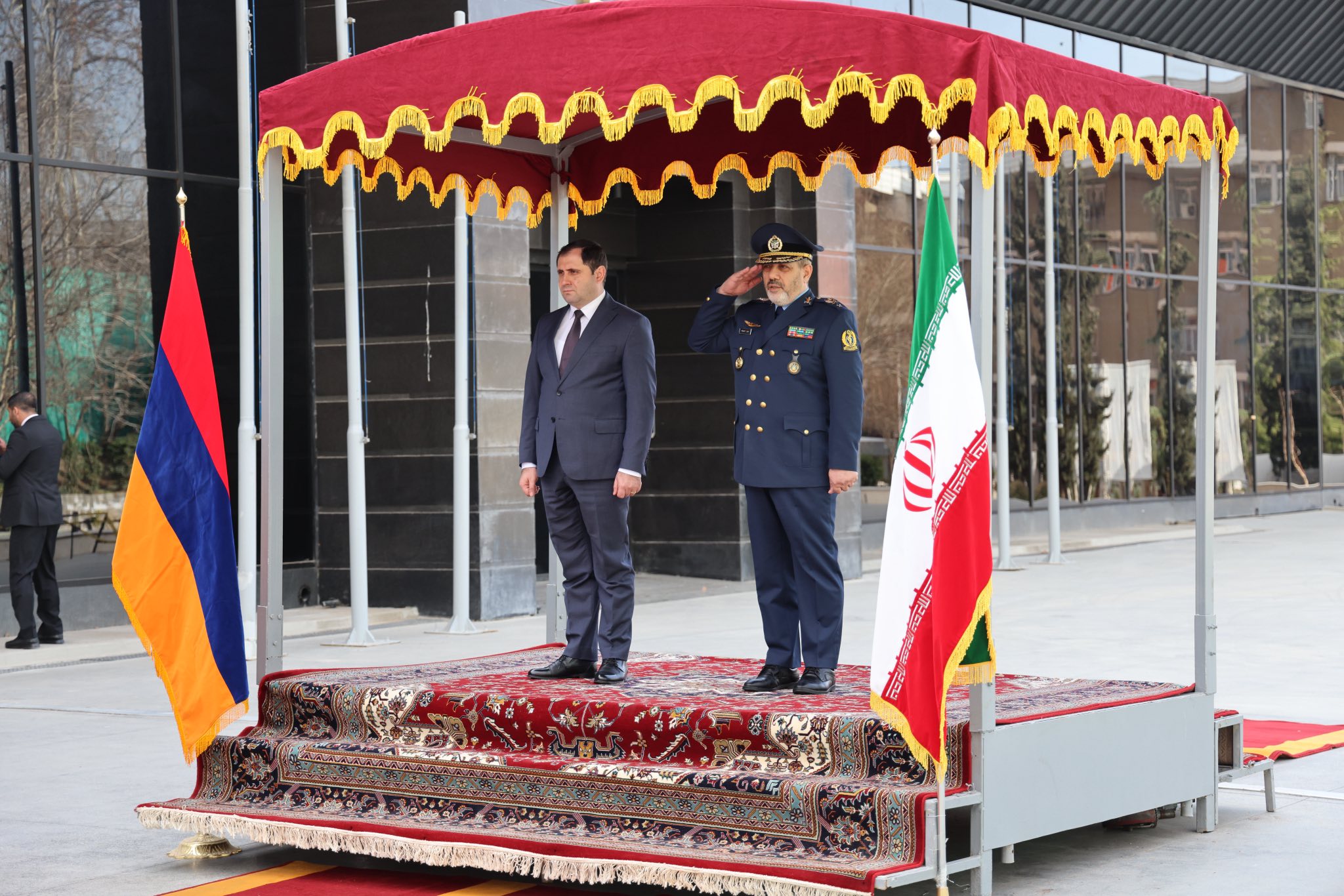
Armenian defence minister’s visit to Iran
During an official visit to Tehran, Armenia’s Defence Minister Suren Papikyan met Iran’s defence and armed forces support minister, the chief of the general staff, the secretary of the Supreme National Security Council and the country’s president.
Reports say Armenia’s defence minister discussed “the need to resolve the situation around Iran through diplomatic negotiations” during his meeting with President Masoud Pezeshkian.
On Armenian-Iranian relations, both sides stressed “the importance and necessity of continued high-level dialogue, as well as strengthening peace and stability in the region”. They also discussed defence cooperation during the visit.
Iran specialist Armen Vardanyan says Armenia clearly intends to expand military-technical cooperation with Iran:
“Both sides are now moving towards signing a strategic partnership agreement. From this perspective, developing Armenian-Iranian military-technical cooperation is very important. There are no signals yet that Iran plans to sell weapons to Armenia. However, this scenario cannot be ruled out in the future.”
The key details of the visit, along with analysis from an Iran expert.
- Opinion:’Trump’s 25% tariffs will not be a major burden for Armenia’
- Iranian president: “Visit to Armenia is part of priority trips to neighbouring countries”
- Cooperation with Iran – a solution for Armenia, blockaded by Azerbaijan and Turkey
Regional and international security discussed
Armenia’s defence ministry released limited information about Suren Papikyan’s visit to Tehran. Officials said only that the minister met his Iranian counterpart, Aziz Nasirzadeh, and discussed cooperation between the two ministries.
“The sides also exchanged views on a number of issues related to regional and international security.”
Published photographs suggest the talks went beyond a bilateral meeting and included an expanded format with the participation of an Armenian delegation.
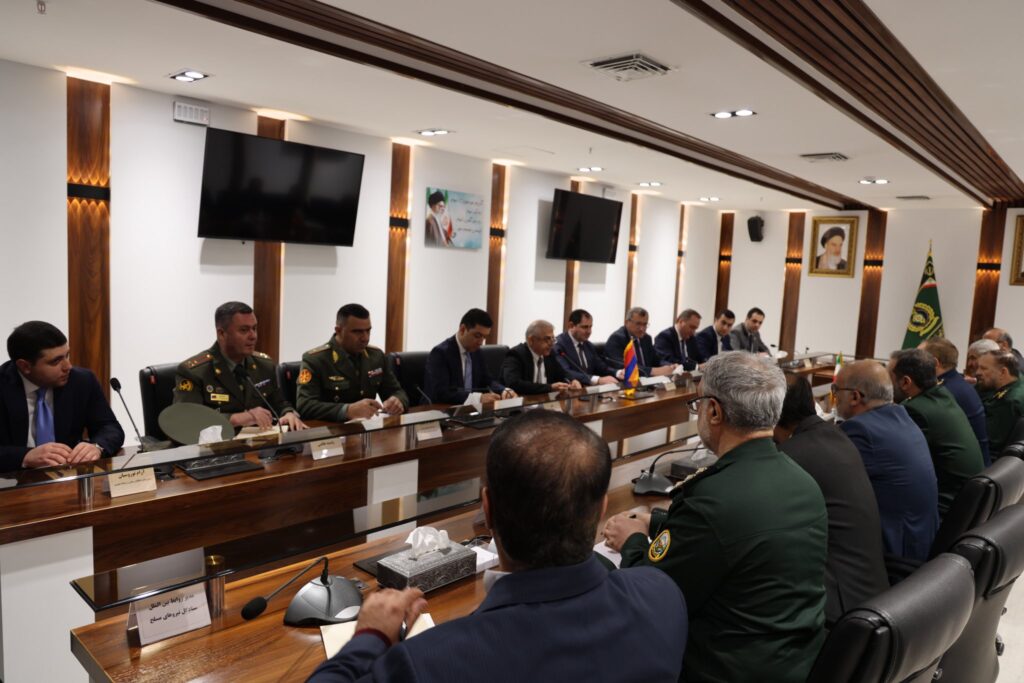
Armenia’s defence ministry says Suren Papikyan also met Chief of Staff of the Iranian Armed Forces Abdolrahim Mousavi and Secretary of the Supreme National Security Council Ali Larijani. They discussed bilateral defence cooperation and regional security issues.
Iran’s ambassador in Armenia notes a “higher level of relations”
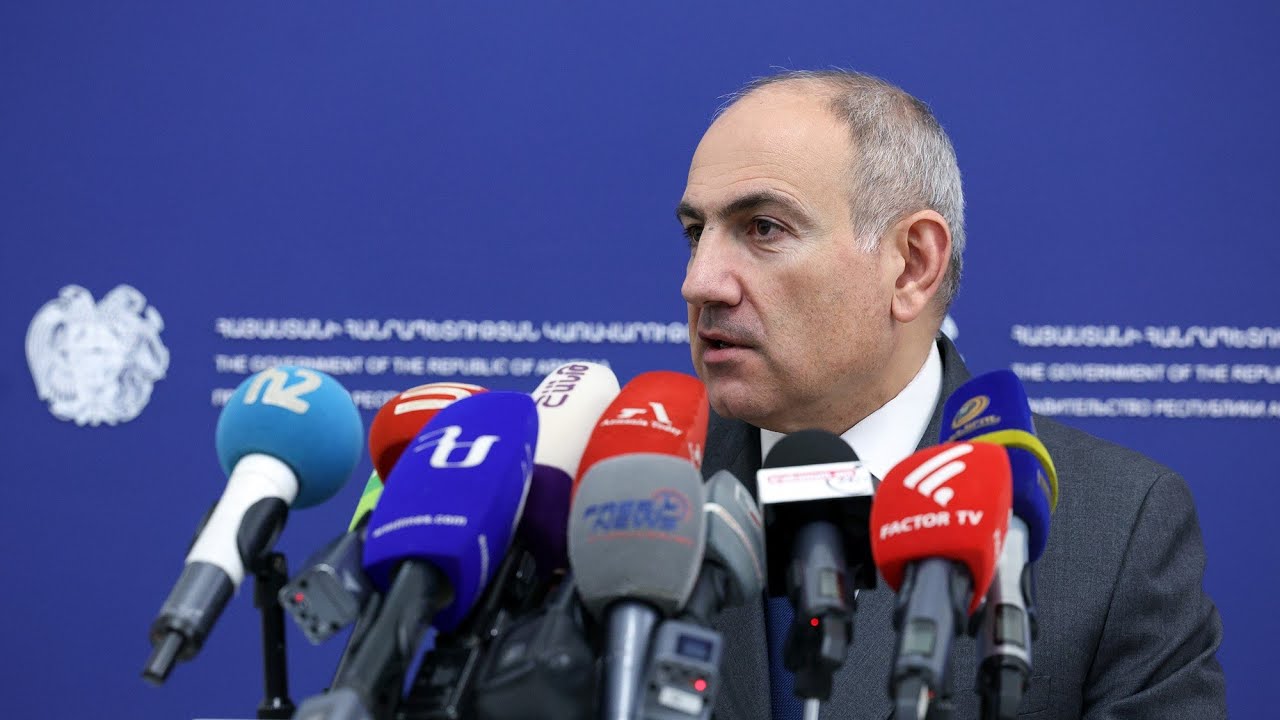
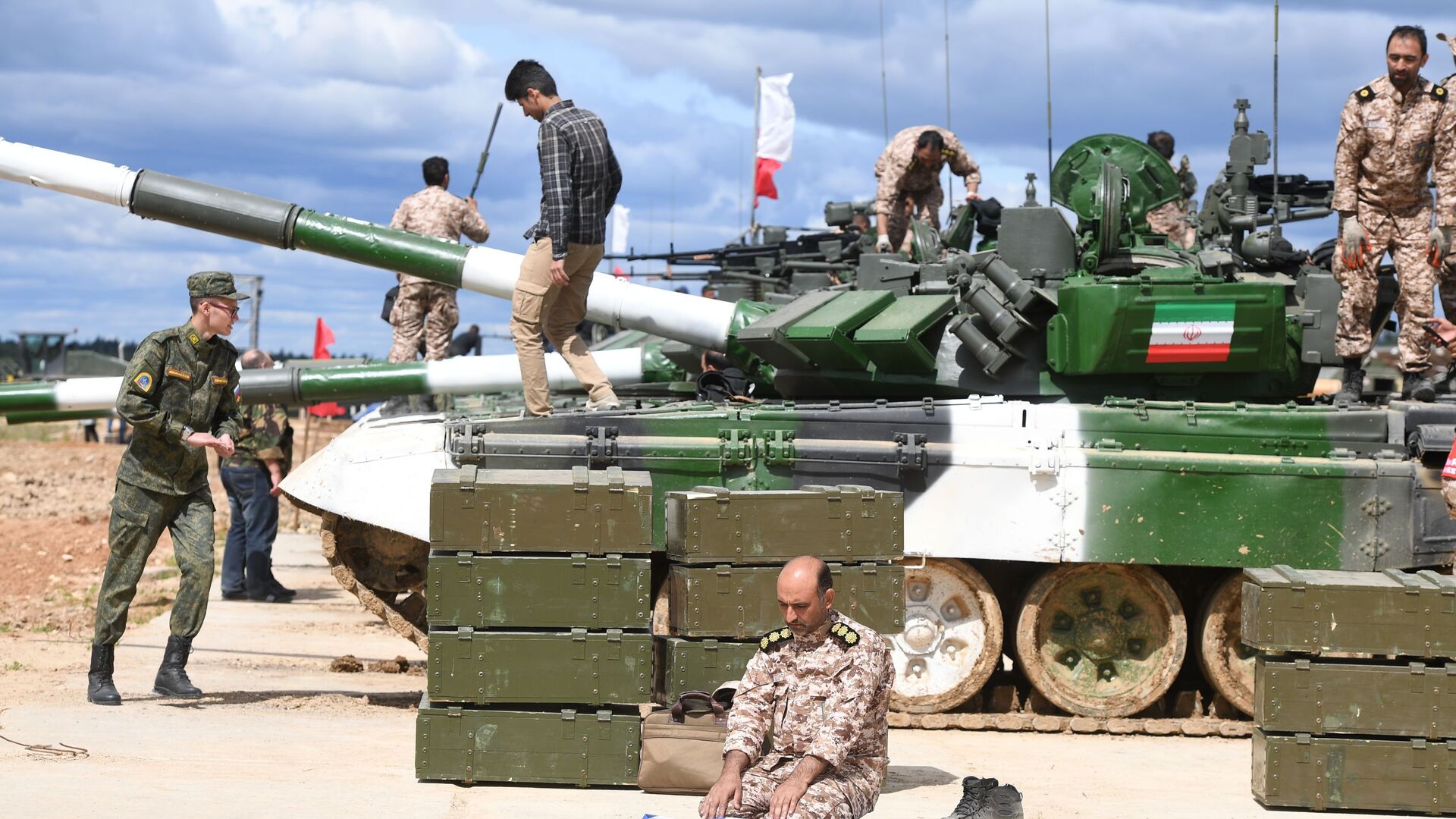
Commenting on Suren Papikyan’s visit, Iran’s ambassador to Armenia, Khalil Shirgolāmi, said officials had planned the trip in advance. He added that the visit reflects a higher level of Armenian-Iranian relations. The diplomat suggested the two countries may hold large-scale joint military exercises as cooperation develops further.
“Defence partnership between our two countries rests on historical ties, the inviolability of borders and the preservation of the territorial integrity of both states,” Shirgolāmi said.
He described the Armenian-Iranian border as a “border of peace” and said it holds major importance for both countries.
Commentary
Iran specialist Armen Vardanyan said Armenian-Iranian dialogue has a strategic character. He noted that weapons and military equipment Armenia purchases from India are transported through neighbouring Iran.
“Certain problems emerged shortly before this. In that context, dialogue between the Armenian authorities and the Iranian leadership was very important,” he said, without providing further details.
Like Iran’s ambassador, the expert believes the sides may have discussed future Armenian-Iranian military exercises during the talks.
“In previous exercises, Armenia held drills on its own territory and Iran on theirs, yet they were still joint exercises. However, I do not rule out that this format will evolve and lead to larger-scale joint drills.”
On 9–10 April 2025, Armenian and Iranian armed forces special units conducted joint military exercises. The drills focused on neutralising terrorist attacks on border checkpoints. Officials said the border regions of both countries faced no threats. They described the exercises as aimed at “strengthening border security”.
Vardanyan also believes tensions surrounding Iran were discussed during the visit. In his view, Tehran is concerned about two key issues:
- “Armenia must not become a platform for anti-Iranian actions,
- and Armenia’s borders must not be changed.”
He added that Armenia also has concerns linked to regional tensions involving Iran. According to the analyst, both sides therefore had plenty to discuss, and dialogue is likely to continue.

Armenian defence minister’s visit to Iran
Prezident İlham Əliyev Xocavənd şəhər və Xocavənd kənd sakinləri ilə görüşüb
#IlhamAliyev #Azerbaijan #Khojavend #KhojavendCity #Karabakh #NagornoKarabakh #IDPsReturn #Reconstruction #LiberatedTerritories #AzerbaijanPresident #SouthCaucasus #PostConflict #Reintegration pic.x.com/dnSptQN5UA
— APA İnformasiya Agentliyi (@APA_agentliyi) Feb 25, 2026