
Day: January 14, 2026
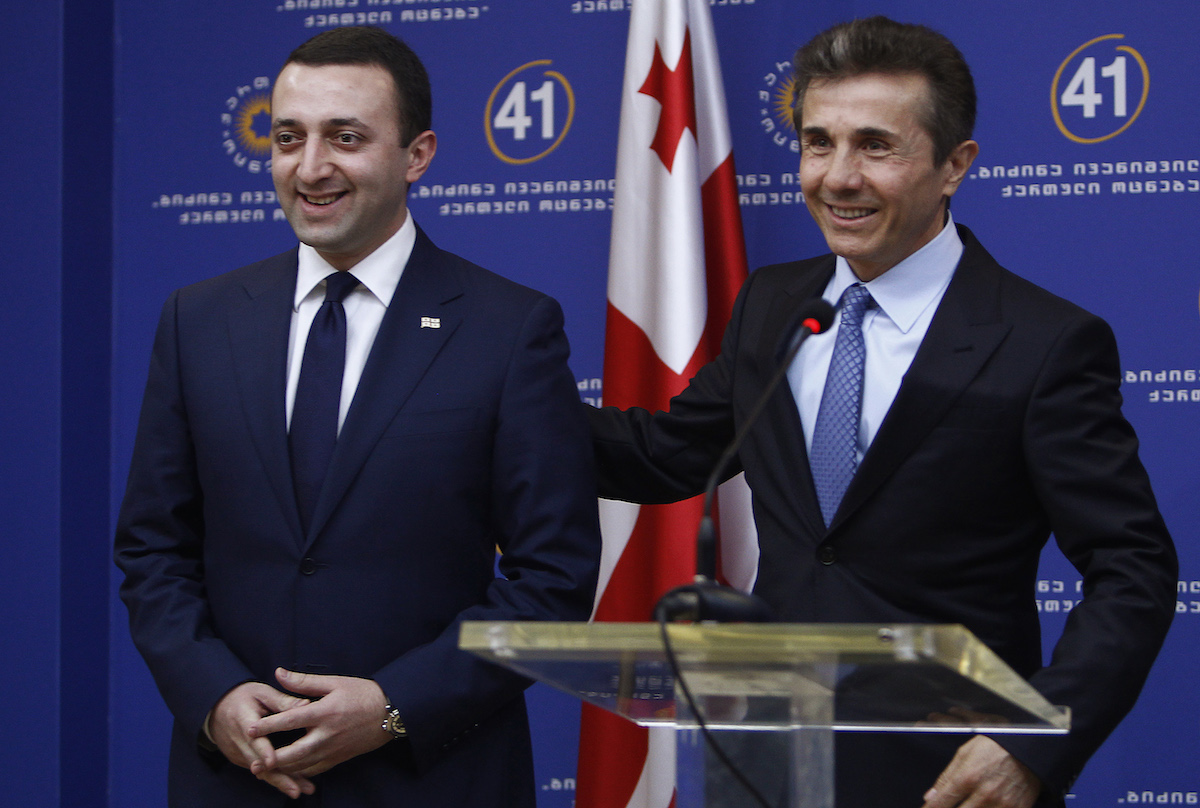
Ivanishvili turns on his allies
The arrest of former Georgian prime minister Irakli Garibashvili and his five-year prison sentence on charges of “money laundering” have raised a key question.
Why is Bidzina Ivanishvili, the founder of the ruling Georgian Dream party and the country’s de facto leader, targeting his recent allies?
Garibashvili is not the only figure to face prosecution. Over the past month, authorities have also jailed Grigol Liluashvili, the once powerful head of the State Security Service and a member of Ivanishvili’s inner circle. Earlier, in 2025, Ivanishvili also sent his former protégé, businessman Giorgi Bachiashvili, to prison.
There should not be too much money
Political commentator David Zurabishvili, who also served in the government of the ruling Georgian Dream party in its early years, said he expected Garibashvili’s arrest.
“I was absolutely certain he would be arrested,” he said. “This is Ivanishvili’s style. When he decides to punish someone, he has to catch them.”
Zurabishvili said corruption in Bidzina Ivanishvili’s system does not in itself count as a crime. He said problems begin when corruption reaches a scale that could weaken Ivanishvili’s control.
“In Bidzina Ivanishvili’s system, the crime is not making money,” Zurabishvili said. “The crime is doing more than that. In other words, you must not have so much money that you can start playing an independent political game.”
Zurabishvili believes the same “red line” applied in the cases of Garibashvili, Bachiashvili, Liluashvili and others. He said the system turns on a person as soon as their financial or political resources grow to a point where they could, even theoretically, become a political actor rather than an object. At that moment, he argues, the system treats them as an enemy.
Revenge for a ‘double game’?
Political analyst Irakli Melashvili said in an interview with the Formula TV channel that Garibashvili’s arrest was likely accelerated by specific factors. He linked the case more to a geopolitical and intelligence context than to domestic politics.
Melashvili said Ivanishvili’s inner circle suspected that both Garibashvili and Liluashvili were playing a “double game” with the West.
“Ivanishvili’s current entourage gave him information suggesting that both Liluashvili and Garibashvili were engaged in some kind of game with the Americans, and that information was leaking,” he said. “I think this is why they took revenge on them.”
David Zurabishvili agrees with this assessment and points to another factor: US sanctions.
“The United States imposed sanctions on Bidzina Ivanishvili, but not on Liluashvili or Garibashvili,” Zurabishvili said. “Such things matter a great deal to Ivanishvili, and he treats them with deep suspicion. This fuels his belief that they are plotting something without him.”
In this way, experts say, formerly loyal allies move from the category of “obedient managers” into that of a “potential risk”. They argue that it is enough for such figures to avoid direct sanctions, maintain channels of communication with the West, and possess financial resources and personal networks to attract Ivanishvili’s suspicion and provoke his ire.
‘Debt restructuring’
Another version, circulated by opposition media citing confidential sources, focuses on the return of stolen funds and specific deadlines allegedly set for this.
Put simply, the claim is that Georgian Dream is trying to mobilise financial resources. According to this account, the party now demands that its allies, whose corruption it tolerated in previous years, return the money. The sums involved run into hundreds of millions.
Opposition media, citing information they say experts have confirmed, report that several senior officials received a deadline of 1 January 2026 to “return” specific amounts of money. In this context, reports most often mention Tbilisi mayor Kakha Kaladze, former Adjara regional leader Tornike Rizhvadze, and former prime minister Irakli Garibashvili.
Political commentator David Zurabishvili says this version has “no direct evidence”. At the same time, he adds that “given the logic of this system, a demand to hand over money looks entirely natural”.
However, he says such a demand alone would not be enough to result in a prison sentence.
‘Bidzina as an all-powerful god’
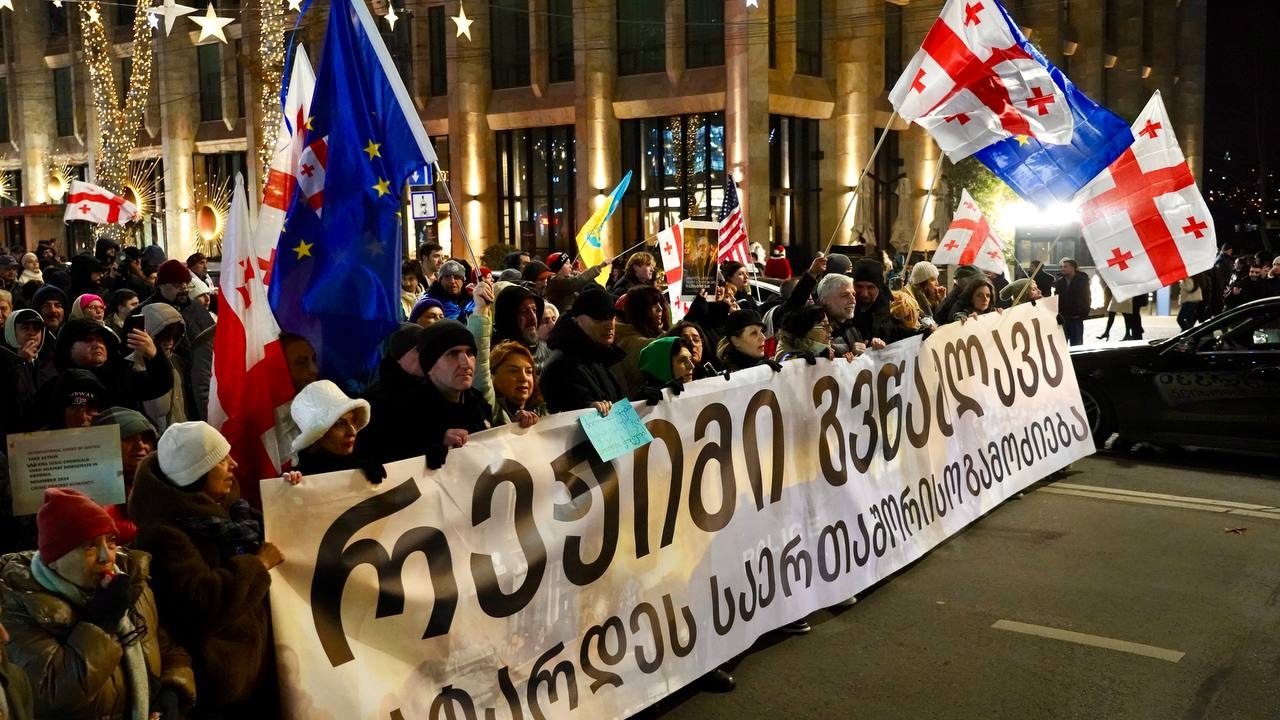
Why has discontent within the Georgian Dream party not turned into an open conflict after Garibashvili’s arrest? Why has no serious debate emerged, even as almost all former senior officials — a prime minister, a defence minister, a state security chief and a former prosecutor general — now sit in prison or face investigation?
David Zurabishvili explains the silence by comparing the relationship between Bidzina Ivanishvili and his supporters to a religious system. In this analogy, Ivanishvili acts as “God”, his inner circle forms the “community”, and senior officials serve as “priests”.
“Bidzina is like a god,” Zurabishvili said. “If Ivanishvili said yesterday that Irakli Garibashvili was a good man, then that was the truth. If today he says Garibashvili is a criminal, then that is also the truth. In the eyes of his supporters, Ivanishvili is always right.”
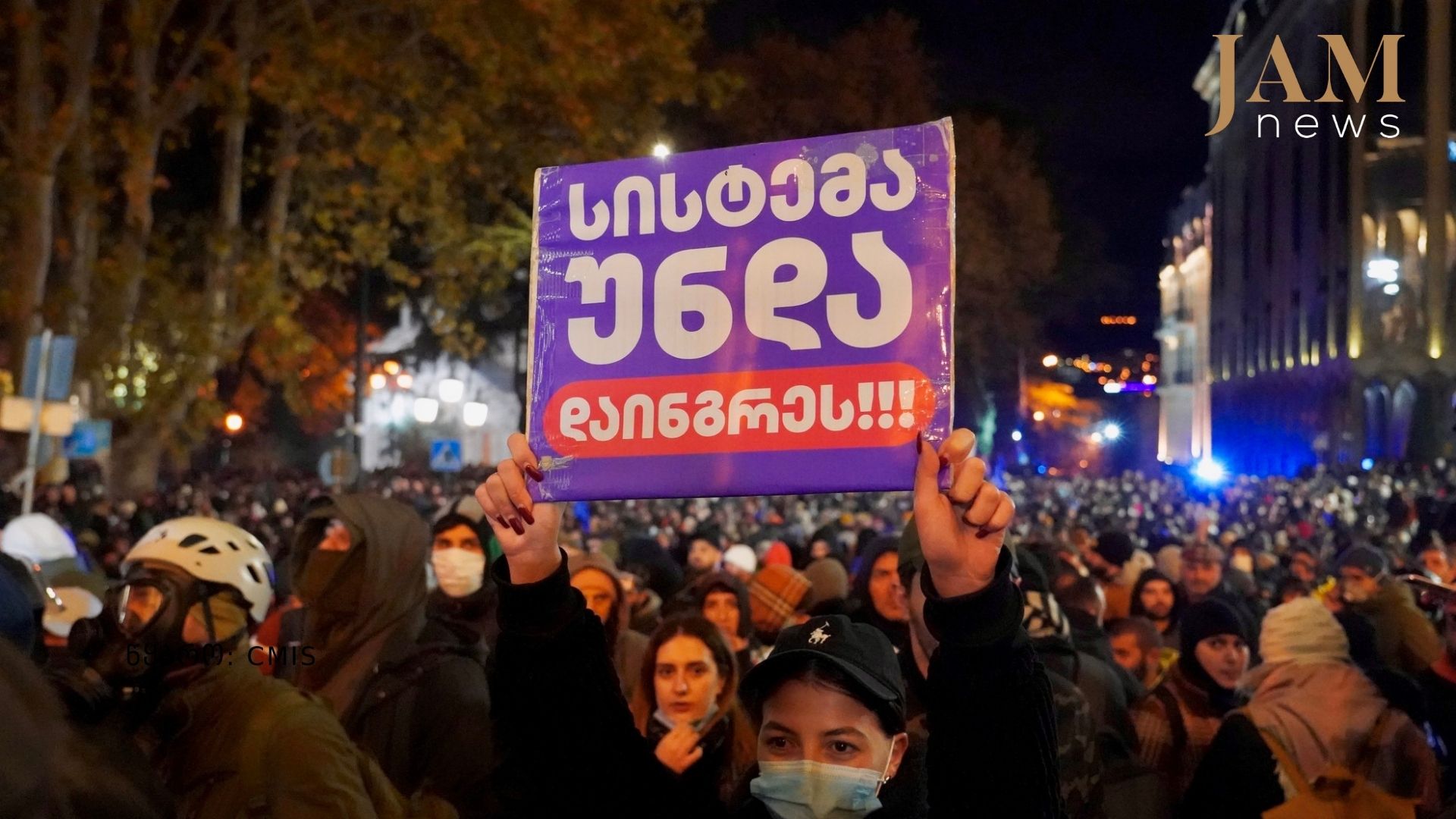
According to the expert, this is not just a metaphor but a practical architecture of loyalty. He argues that Bidzina Ivanishvili does not have a political team in the classical sense.
“He has no political team, and that is entirely deliberate. He views his team as a resource.
For example, Bidzina takes an ordinary bank clerk and makes him a minister. Another person like him watches this and thinks: I need to stay loyal, maybe he will notice me too.
Ivanishvili does not need party debates or internal pluralism. He needs an elite that is maximally dependent and easily replaceable. That is why the ‘end’ of Irakli Garibashvili inspires not only a sense of solidarity with him among others, but also fear that tomorrow it could be their turn.”
The future of the system: endless crisis
Experts agree that Ivanishvili’s actions against his once loyal allies represent a natural, late stage in the development of the system he has built.
Bidzina Ivanishvili has created a regime in which:
- Loyalty offers no protection.
- Anyone can become a target of unlawful or selective justice.
- The state security service and anti-corruption bodies act as the main political “broom”.
All of this unfolds as the opposition remains weak. Many of its leaders are also in prison. As a result, it cannot turn public protest into real political pressure or a tool for change.
A regime of what experts describe as “endless fear” is taking shape. The country faces a prolonged crisis with no clear beginning and no clear end.
Experts say this model can survive for years unless two things change at the same time: the external context and domestic political thinking. Until then, Ivanishvili will continue to carry out periodic purges among his own “adepts”.
Ivanishvili turns on his allies
I present links to my posts on the connection between the West and the East through #Armenia and the #SouthCaucasus as a whole:
x.com/ArMaghak/statu…
x.com/ArMaghak/statu…
x.com/ArMaghak/statu…
x.com/ArMaghak/statu…
x.com/ArMaghak/statu…
x.com/ArMaghak/statu… pic.x.com/1LfyLK6LjE— Arthur Maghakian (@ArMaghak) Jan 14, 2026
2025 was the third warmest year on record globally. According to the Copernicus Climate Change Service and the Copernicus Atmospheric Monitoring Service of the European Centre for Medium-Range Weather Forecasts (ECMWF), global average temperatures were 1.47°C (2.65°F) above pre-industrial levels (1850–1900), Azernews reports.
Categories