
Day: October 27, 2025
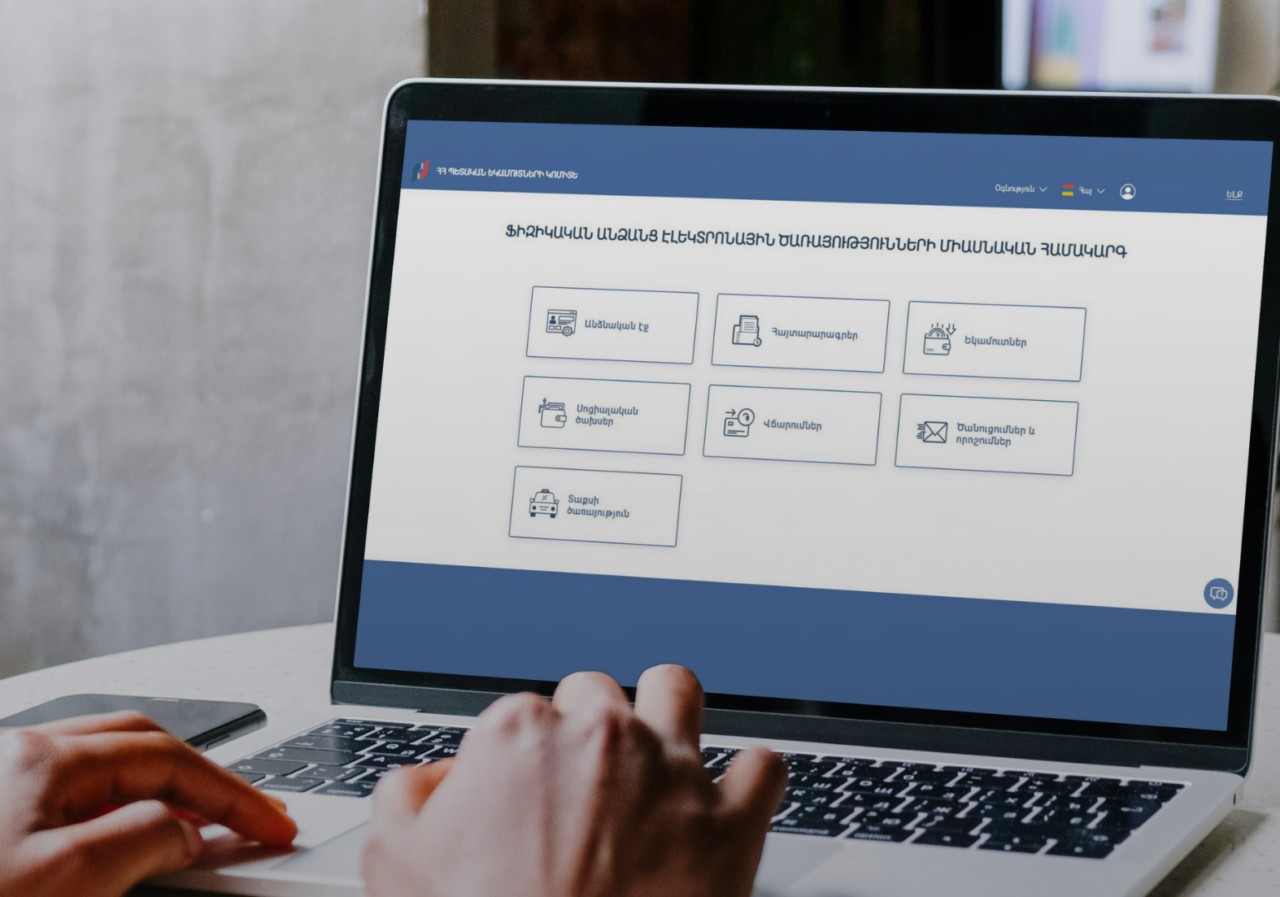
Armenia simplifies the income declaration process
The deadline for filing income declarations in Armenia is drawing near. By 1 November, all employed and permanently resident citizens were expected to submit their 2024 income declarations to the State Revenue Committee via an online form.
So far, however, only around 200,000 people have done so. In response, Parliament has decided to simplify the process.
“Citizens who are required to file a declaration but have not logged into the system will not be held liable. Their declarations will be considered completed and submitted based on the data already available to the State Revenue Committee,” said Babken Tunyan, an MP from the ruling Civil Contract faction.
This means that all registered employees who have no additional sources of income are no longer required to fill out the electronic form.
According to Tunyan, Parliament adopted this decision to make the process easier and relieve citizens of unnecessary “administrative burden.”
Under Article 169.1 of the Code of Administrative Offences, those failing to submit their declaration on time would first receive a warning. If the declaration were not filed within 30 days, a fine of up to 50,000 drams ($131.57) could be imposed. A further 30-day delay could lead to a penalty of up to 100,000 drams ($263).
- Unemployment rate in Armenia falls: statistics and commentary
- Armenia joins international financial data exchange: Russian citizens voice concerns
- Public clash between Putin and Pashinyan: statistics back Armenian PM
Details of the changes to the Income declaration process
According to MP Babken Tunyan, the latest package of amendments to Armenia’s Tax Code has effectively improved the income declaration system, helping to address issues that emerged after the launch of the new framework.
From now on, individuals who are confident that their income data are accurately reflected in the State Revenue Committee’s records do not need to take any action.
However, those who neither complete nor confirm their automatically generated declaration will not be eligible for reimbursement of social expenses related to education and healthcare.
“These amendments are intended to encourage citizens to take part in completing or confirming their declarations,” Tunyan explained.
Under the new regulations:
- With a citizen’s consent, the State Revenue Committee will be able to automatically obtain the necessary data from banks — for example, information on interest income from deposits — eliminating the need to enter such data manually.
- Money transfers between family members will no longer be subject to declaration.
- Loans and borrowings received by individuals will no longer be included in the mandatory declaration fields.

The new system will be introduced in stages
Starting in 2026, all adult citizens of Armenia will be required to file an income declaration — regardless of whether they are formally employed or not.
This year, the obligation applies to citizens who were employed and received taxable income under civil contracts during 2024. The same requirement extends to state and municipal employees, as well as to individuals who earned income — for example, rental income from property.
The State Revenue Committee has reminded taxpayers that this last group of citizens must, along with filing their declaration, pay the corresponding income tax to the state budget.
Citizens who file declarations by 1 November can receive reimbursements
Those who declare their income by 1 November will be eligible for reimbursement of certain social expenses for themselves or their family members (spouses, parents, and children). Reimbursements will cover two main categories:
- Healthcare: including medical insurance packages and dental services (maximum reimbursement of 50,000 drams per year, approximately $131.57).
- Education: including tuition fees, payments for extracurricular educational services, informal education costs, and rental fees for school textbooks (maximum reimbursement of 100,000 drams per year, around $263).
For individuals with expenses in both categories, the maximum total reimbursement is 100,000 drams per year.
Reimbursements are available only for cashless payments related to education or healthcare expenses. To claim reimbursement, citizens must submit an application to the State Revenue Committee, accompanied by supporting documentation such as an invoice.

Follow us – Twitter | Facebook | Instagram
Armenia simplifies the income declaration process
#SouthCaucasus #Azerbaijan #US
The financial contributions of Azerbaijan into the political system and election outcomes in the US – Google Search google.com/search?q=The+fina…
AI Overview
Investigations and reporting indicate that Azerbaijan has engaged in significant and, at times, illicit financial and lobbying activities to influence US politics. While there is no evidence that these actions have altered the outcome of a US election, they have been documented as attempts to shape US policy, particularly regarding the conflict with Armenia over Nagorno-Karabakh. [1, 2, 3]
Lobbying and political influence According to the nonpartisan research group OpenSecrets, the government of Azerbaijan has spent millions on lobbying and public relations firms to advance its interests in the US.• From 2015 to 2023, Azerbaijan spent nearly $9.2 million on traditional lobbying efforts. In 2024 alone, it spent at least $480,000.
• Azerbaijan hires prominent Washington D.C. lobbying firms, such as BGR Government Affairs, to act as liaisons to the US government.
• Lobbying efforts have aimed to secure favorable US military assistance for Azerbaijan and block negative amendments to bills like the National Defense Authorization Act.
• The government has also used its influence to organize events, such as the 2024 UN Climate Change Conference (COP29) in Azerbaijan, and used lobbying firms like Teneo Strategy LLC to promote them in the US. [1, 3, 5, 6, 7]Illicit influence and corruption Beyond official lobbying, reporting indicates that Azerbaijan has engaged in corrupt activities, often referred to as “caviar diplomacy,” to influence foreign officials.
• Congressional bribery case: In May 2024, US Congressman Henry Cuellar and his wife were indicted on charges of accepting nearly $600,000 in bribes from Azerbaijan’s state oil company (SOCAR) and a Mexican bank. In exchange, Cuellar allegedly used his office to influence foreign policy in Azerbaijan’s favor.
• FARA violations: In 2018, an individual pleaded guilty to concealing that a 2013 trip to Azerbaijan for members of Congress was secretly funded by SOCAR, a violation of the Foreign Agents Registration Act (FARA). An FBI investigation into illicit Azerbaijani influence in the US led to the raiding of Congressman Cuellar’s home in January 2022.
• “Azerbaijani Laundromat”: The Organized Crime and Corruption Reporting Project (OCCRP) documented a $2.9 billion slush fund used between 2012 and 2014 to funnel money to European and American officials to buy influence. [1, 2, 8]Impact on election outcomes There is no public evidence to suggest that Azerbaijani financial contributions have directly altered the outcome of a US election. However, the goal of these financial contributions is to sway US policy in Azerbaijan’s favor by influencing key figures, not necessarily to swing an election.
• Critics argue that Azerbaijan’s illicit influence has contributed to a muted US response regarding military actions in Nagorno-Karabakh.
• Azerbaijan’s influence is countered by the efforts of the Armenian-American diaspora, which lobbies for increased US support for Armenia. [1]AI responses may include mistakes.
[1] responsiblestatecraft.org/az…
[2] en.wikipedia.org/wiki/Caviar…
[3] nytimes.com/2024/05/04/us/po…
[4] opensecrets.org/orgs/governm…
[5] opensecrets.org/federal-lobb…
[6] responsiblestatecraft.org/az…
[7] mirrorspectator.com/2025/06/…
[8] quincyinst.org/research/the-…
–
Pic.:
Azerbaijan’s Elections and the US-Azerbaijan Strategic Partnership – Jamestown
google.com/search?num=10&new…— Michael Novakhov (@mikenov) Oct 27, 2025
The Australian Competition and Consumer Commission (ACCC) has filed a Federal Court case against Microsoft Australia and its parent company, Microsoft Corporation, accusing them of misleading approximately 2.7 million Australian customers regarding subscription options and pricing, Azernews reports, citing foreign media.