Education Reform in Georgia
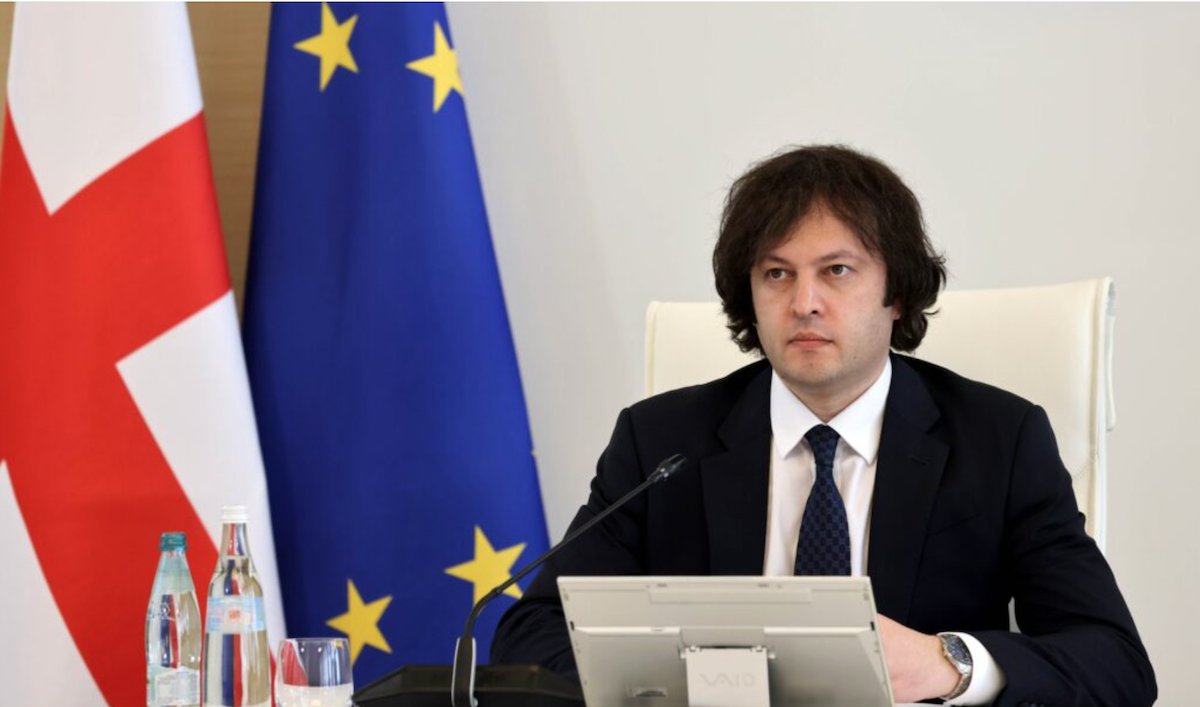
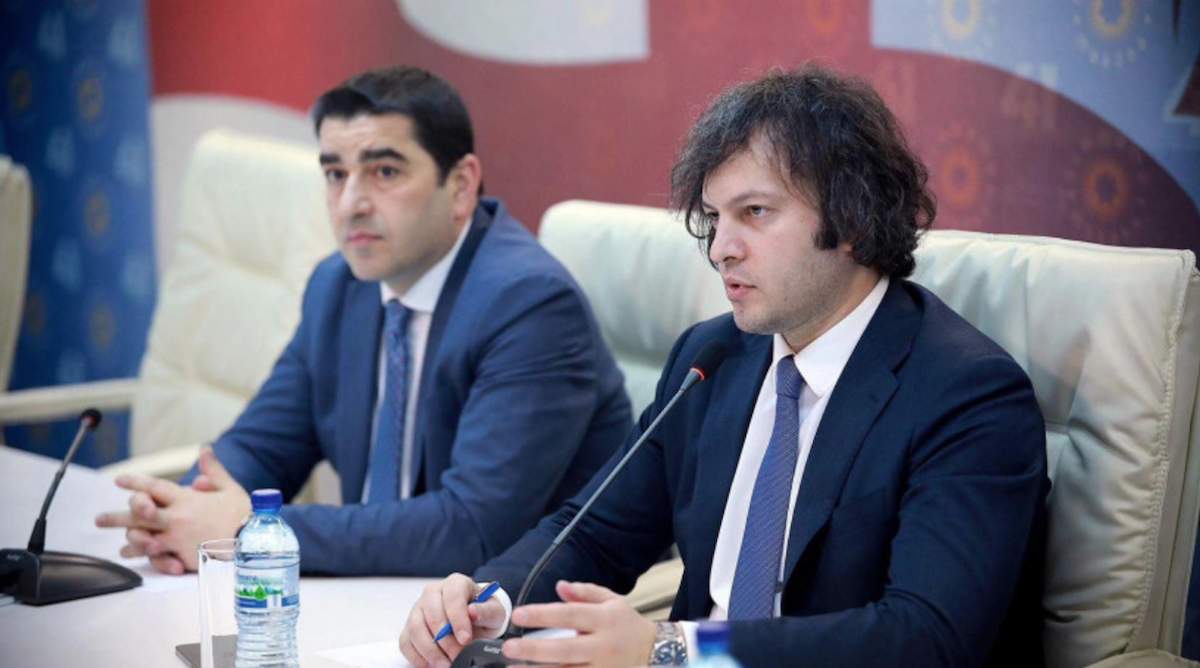
On 16 October 2025, Georgian Dream Prime Minister Irakli Kobakhidze announced an education reform in Georgia. “The current education system does not meet modern challenges and standards, so it is necessary to set an ambitious goal to ensure that students in Georgia receive the same level of education as abroad,” the prime minister said.
Experts, however, have described the planned reform as repressive.
What reform will include
‘One City — One Faculty‘
- The principle of “one city — one faculty” will be applied, meaning that each city will host only one specific faculty within a single public university. This will lead to the reorganization and redistribution of faculties among universities, taking into account their traditional functions and experience.
- The country will have two main centres covering all fields of study: Tbilisi + Rustavi and Kutaisi. Regional universities will be specialised.
“Multifunctional development of the university system should be concentrated in two cities: Tbilisi + Rustavi and Kutaisi. Today, Kutaisi has two public universities: Kutaisi International University and Akaki Tsereteli University. When we talk about optimisation, we do not mean merging the universities, whether you like it or not.
Both universities can remain autonomous and independent as usual. The point is that in Kutaisi we should cover all fields: technical, humanities, economics, law, social and political studies, etc.
There will be two main centres — Tbilisi + Rustavi and Kutaisi — covering all disciplines typically included in higher education. As for the other regional universities, they will essentially be specialised institutions, offering only a few key fields,” Kobakhidze explained.
Professors and lecturers
- To motivate staff, salaries for lecturers need to be increased and infrastructure improved.
- In areas with a shortage of highly qualified Georgian personnel, retired foreign specialists will be recruited. In addition to teaching students, they will also train Georgian lecturers through professional development programs.
“Incentives need to be created; today, there are none. When salaries are 2,000–2,500 lari, it’s impossible to motivate anyone… If salaries are high and infrastructure is adequate, a professor will be happy to come to the university. At present, infrastructure is lacking, and there are no offices.
There will still be fields and specialisations where it may be impossible to find highly qualified Georgian lecturers, and in such cases, foreign lecturers will be provided for students…
For example, in Germany, professors retire at 65 but often have the capacity to teach freely for another 5–10 years. We can recruit such lecturers. Besides filling this gap, they will also provide professional retraining for Georgian lecturers,” Kobakhidze said.
3+1 Programme
- The bachelor’s degree will now last three years, and the master’s degree one year. This change will likely apply to all faculties except medicine.
“In fact, three years is quite enough for a student to acquire the basic knowledge of a bachelor’s degree. At the same time, the master’s programme should have a clear purpose, which it currently lacks. Today’s master’s degree is merely an abstract continuation of the bachelor’s. The 3+1 programme has many advantages, including cost savings and optimisation across all areas,” Kobakhidze explained.
11-year school education programme
- Schools may switch to an 11-year education programme. When asked by Imedi TV whether this could create problems for students wishing to continue their studies abroad, Kobakhidze replied that the government wants “Georgian youth to stay in Georgia and receive quality education here.”
- The prime minister also stressed the need to ensure equal quality of education in all cities and uniform qualifications for teachers — something that, he noted, is currently lacking.
“We want Georgian youth to stay in Georgia and receive quality education here. Why should there be a mass exodus of Georgians from the country? It’s natural for young people to study abroad, especially from their first year, but a significant part of them remain abroad afterwards. Why should we artificially encourage migration?
At the same time, we are not creating any barriers. If someone wants to complete the twelfth grade, we can even make that possible in Georgia — this is under discussion. Otherwise, any young person can finish the twelfth grade abroad and then continue their studies at a higher education institution from the first year,” Kobakhidze said.
Grant funding
●According to Kobakhidze, a labour market study will be conducted, after which priority fields in education will be determined based on its findings. The changes will not affect students who are already enrolled.
“Priorities are determined primarily by labour market needs. Today, we have no idea how many lawyers the country actually needs — no one has ever studied this. An interesting survey shows that the gap between the number of graduates and the needs of the labour market is enormous.
Of course, there may be fields that the government will continue to support despite their lower demand in the labour market. We must also take potential demand into account. Two ministries — Education and Economy — will be responsible for this.
For students who are already enrolled, the existing grant system will remain in place. As for the redistribution of faculties among universities, students will also have a choice: if someone is currently studying at a particular university, they will have the opportunity to stay there,” Kobakhidze said.
Geographical deconcentration
According to Kobakhidze, the government plans to promote Kutaisi and Rustavi as university cities. He added that greater attention will also be given to regional universities in order to strengthen their resource base and increase their capacity to admit more students.
“Today, over 85% of students receive higher education in the capital. We want to turn Kutaisi and Rustavi into university cities. At the same time, with the development of infrastructure in these areas, new incentives for employment will emerge, creating new jobs and driving comprehensive change,” Kobakhidze said.
He noted that Georgia currently has five regional universities — in Batumi, Akhaltsikhe, Gori, Telavi and Zugdidi. One of the government’s priorities, he said, is to improve their infrastructure and enhance their material and technical capacity.
“These universities must be able to accommodate more students. The main focus will be on teacher training and agricultural studies. We also need to strengthen their material and technical base in the field of vocational education,” Kobakhidze added.
The TV channel Imedi asked questions about the timeline and financial aspects of the planned reform. According to Prime Minister Kobakhidze, the public discussion of the concept will last for about two to three weeks. Once it is approved, some issues will be addressed within a year, while others will take several years to implement.
Experts’ opinions
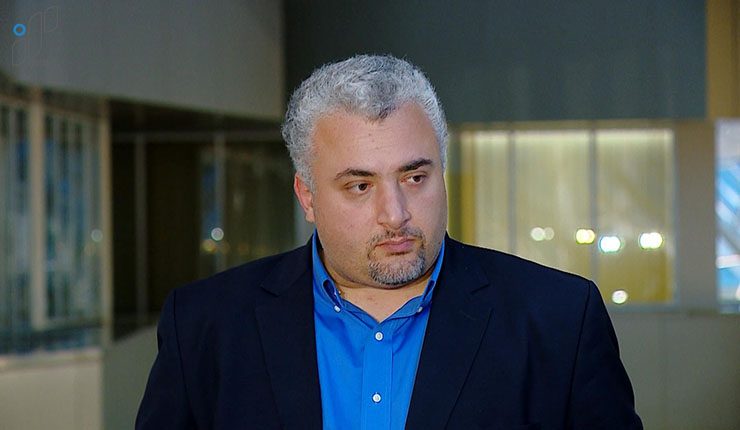
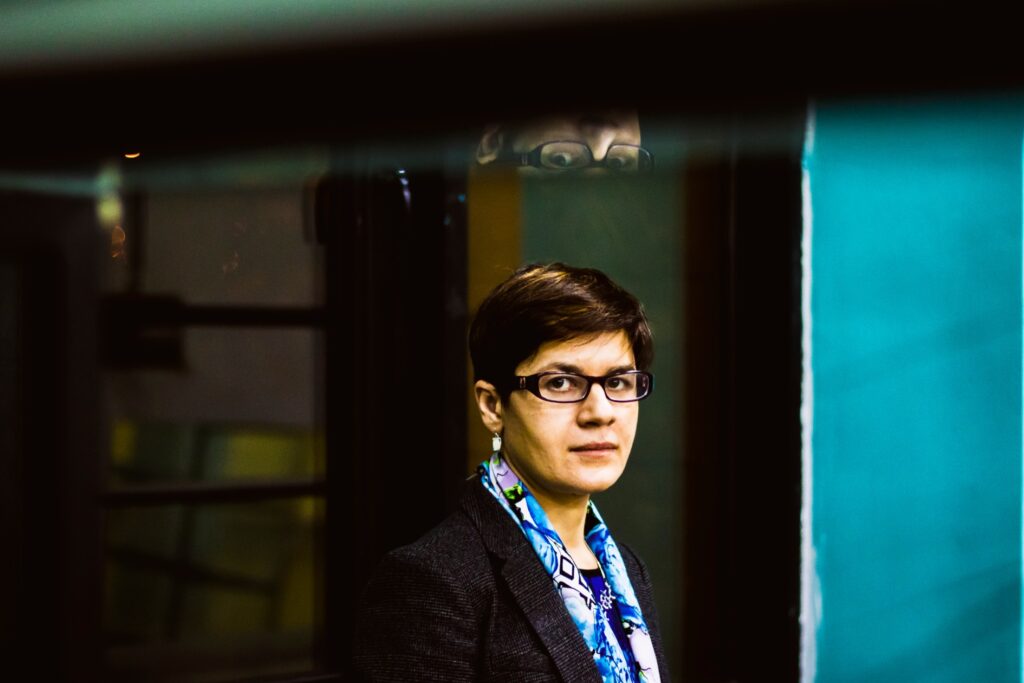
Sergi Kapanadze, former member of parliament, sharply criticised the government’s proposed education reform, calling the three-page concept paper “devoid of any real improvements.”
“Look at it this way,” he said.
The overall duration of studies, including a master’s degree, will be reduced by three years. That means a six-year-old starting school will already have a master’s diploma by the age of 21.
The bachelor’s programme is to be cut to three years, while students will still have to study both Georgian and foreign languages. Just calculate how many of the required 180 credits will remain for other subjects — many won’t be covered at all.
They don’t like student protests in Tbilisi, so they want to move students out to the regions.
One of the main goals seems to be saving money. They have serious problems funding education.
Officials claim that 30,000 university graduates will enter the labour market earlier thanks to the reform. That’s a superficial argument — those 30,000 graduates already exist. There’s no need to push anyone out early to fill vacancies.
The focus appears to be on vocational education. While this is a good idea in theory, it’s unclear how they plan to make people enrol in vocational schools. Will they just close university admissions so young people have no other choice? That would mean sacrificing them to a system they don’t want.
The government also plans to sell off public university property — likely demolishing buildings in the Vake district. The proceeds will be used to construct new facilities outside the city and “move” students there.
Competition in higher education will be buried. The only real driver of quality has been competition among universities. If each city ends up with just one faculty, that competition will disappear.
This plan only makes sense if private universities are also involved. The Georgian University will likely be the first, followed by others. Decentralised faculties can’t function if private ones continue operating as usual. The best students will simply transfer to private universities, making the whole reform pointless.
Of course, they’ll use this to get rid of professors and lecturers with “unacceptable” views, even if it harms the quality of education. The regime has a political agenda, and it will pursue it at any cost.
As a result, Georgia’s education system will drift far from the Bologna framework. An 11-year school system doesn’t fit the Bologna model. First-year students will no longer be able to study abroad. Georgian Dream sees this as an advantage — keeping young people here to make them subjects of ideological indoctrination. It also stops student tax money from “leaving” the country. When the government runs out of funds, it turns to measures like this.
And the claim that students “do nothing” in the 12th grade is absurd. They’ll do just as little in the 11th. That’s a reflection of the broader dysfunction in Georgian education — a deeper issue we’ll discuss separately.
Kapanadze concluded that the reform would leave students with a chaotic, politicised, and uncompetitive higher education system — one that perfectly suits an authoritarian government.
P.S. The idea that each department should have one professor, three associate professors, and ten assistants is so misguided and unrealistic that it defies serious comment.
Nana Dikhaminjia, director of the Digital Transformation Center at Alte University, criticised claims in favour of Georgia’s education reform, saying some parents pretended to support it, arguing that 12th-grade students “did nothing.”
“First, an 11-year graduate could theoretically continue studies at foreign universities, but due to much greater bureaucratic barriers, some universities don’t even consider their applications. The reason we extended schooling to 12 years after joining the Bologna system was to remove these barriers and ensure our school diploma is recognised abroad without additional explanations.
Second, the Ministry of Education recently claimed that children are not sufficiently taught their native language and that their knowledge is not properly assessed. As a result, universities were instructed to include a mandatory Georgian language course in their programmes. The logic is flawed: are 11 years enough or not? If even 12 years aren’t sufficient to learn the native language properly, how can fewer years be adequate?
Third, adults need more and more education to live fully, even if they don’t go to university. They must understand statistics, have basic knowledge of biology, physics, chemistry, sociology, and psychology. They need to recognise fake information and political manipulation.
They must be capable of self-education and know English at least at an intermediate level to independently learn and use constantly evolving technologies. Twelve years were not enough for this — and 11 years are even less sufficient.
‘There are online courses’ — but then why haven’t you managed to study AI algorithms independently, and why is your salary low?
Fourth, the claim that ‘students do nothing in 12th grade’ is shameful, especially coming from parents or teachers. Students choose subjects based on the career they plan to pursue. For example, my son focused on world history and computer science in 10th grade.
He now takes advanced courses in biology, mathematical analysis, physics, language and literature, US history, and computer science. Next year, he plans to take five more advanced courses. In school, he studied Python, Java, and algorithms in computer science. In engineering, he studied electronics and microelectronics, and as part of a group project, he created a robot vacuum.”
Giga Zedania, philosopher and former rector of Ilya State University, expressed serious concerns about the planned education reform in Georgia:
“It is undeniable that the quality of higher education in the country far exceeds that of secondary education.
Georgian universities undoubtedly offer programmes comparable to those in Eastern European countries, both in teaching and research. European integration has played a particularly positive role in improving higher education. Therefore, if a reform was necessary, it should have started with secondary education.
If the proposed reform is implemented, it will have extremely negative consequences:
“A significant portion of the educational infrastructure will leave Tbilisi, which would be a huge loss both for the capital and for the educational process itself. Historically, universities have been city-based institutions.
The number of professors and students in public universities will sharply decline due to structural, financial, and political factors. The sector will lose highly qualified personnel, and there will not be enough places for future students.
The remaining universities will largely be removed from the European system; the new system will be isolationist and deeply provincial. The main driver of development, coming from the West over the last twenty to thirty years, will disappear completely.
Some of my ‘predictions’ may be unclear, but they are guided by both theoretical and practical experience. Generally, I am self-critical, but in this particular case, I have no doubts.”
Education Reform in Georgia