Categories
The News And Times Blog

Putin worries about the signatures… Foreign support and the legitimacy of leaders


If Putin worries about the signatures (Validity) on the future agreement with Ukraine, the foreign leaders: Trump and the Europeans, as one of the, and very important, sources of Zelensky’s legitimacy, may to cosign these accords. Furthermore, the cosigners as the guarantors are appropriate when this war is seen by many as the one between Russia and the “collective West” and the NATO. If the agreement is acceptable to Zelensky, it will be acceptable to them. This situation also raises the issue of the “foreign support as one of the sources of the leaders legitimacy” in general.

Foreign Support and Leader Legitimacy

Created with 2.5 Pro August 4, 2025 at 05:12 PM Published August 4, 2025 at 05:13 PM

Foreign Support: A Double-Edged Sword for Leader Legitimacy

Foreign support can be a critical lifeline for a nation’s leader, offering the resources to stabilize a country, stimulate economic growth, and enhance international standing. However, this external backing is a double-edged sword that can just as easily undermine a leader’s legitimacy, fostering perceptions of puppetry and eroding public trust.1 The impact of foreign support hinges on a delicate interplay of the type of aid, its source, the domestic context, and the perception of the citizenry.

Bolstering Legitimacy: The Upside of External Backing

Foreign support can significantly enhance a leader’s legitimacy in several key ways. Economic aid, for instance, can provide the capital for crucial infrastructure projects, improve public services, and create jobs, leading to tangible improvements in citizens’ quality of life. This can translate into increased approval for the incumbent leader, who is credited with delivering prosperity.

Military assistance can be vital for leaders facing internal insurgencies or external threats.2 By providing training, equipment, and intelligence, foreign partners can bolster a state’s security apparatus, enabling the leader to project an image of strength and competence in safeguarding the nation.

Diplomatic recognition from influential global powers and international organizations is a powerful tool for legitimization.3 It confers a sense of validity on a leader’s rule, especially after a contested election or a period of political instability. This international endorsement can strengthen a leader’s hand domestically and open doors to further cooperation and development.

A prime example of foreign support initially bolstering a leader’s legitimacy is the case of Hamid Karzai in Afghanistan. Following the U.S.-led intervention that ousted the Taliban in 2001, Karzai, with significant international backing, was seen by many as a unifying figure who could lead the country toward a more stable and democratic future. The influx of foreign aid and military support was crucial in establishing his government and initiating reconstruction efforts.

Undermining Legitimacy: The Perils of Foreign Dependence

Conversely, the very same mechanisms of support can severely damage a leader’s standing. The most significant risk is the perception of being a “puppet” of foreign powers. When a leader is seen as overly beholden to external benefactors, their decisions can be viewed as serving foreign interests rather than those of their own people. This narrative can be a potent weapon for political opponents and can lead to widespread public resentment.

The case of the Shah of Iran, Mohammad Reza Pahlavi, serves as a stark warning. His close ties to the United States and other Western powers, particularly after the 1953 coup that restored him to power, were a central grievance for the opposition. Critics portrayed him as a Western puppet, and this perception, coupled with his authoritarian rule, ultimately contributed to his overthrow in the 1979 Islamic Revolution.

Foreign aid often comes with conditions, such as economic austerity measures or political reforms, that can be deeply unpopular with the domestic population. When a leader implements these policies at the behest of foreign donors, it can fuel accusations of sacrificing national sovereignty and erode their popular support.

Military intervention, even when invited, can be a particularly fraught form of support. The presence of foreign troops on a country’s soil can be a powerful symbol of diminished sovereignty and can incite nationalist sentiment against the leader who permitted it. Over time, the association with a foreign military presence can tarnish a leader’s legitimacy, as was increasingly the case with Hamid Karzai, who in the later years of his presidency grew publicly critical of the international military presence in Afghanistan, in part to distance himself from his foreign backers and shore up his nationalist credentials.

The Decisive Role of Public Perception

Ultimately, the impact of foreign support on a leader’s legitimacy is filtered through the lens of public perception. If the population views foreign assistance as a genuine effort to help their country and trusts their leader to manage it effectively and in the national interest, it can be a significant political asset. However, if it is perceived as a tool of foreign domination or a source of corruption that benefits only the elite, it can become a powerful catalyst for dissent and a lasting stain on a leader’s claim to legitimate rule. The successful leader is one who can navigate this fine line, leveraging foreign support to deliver tangible benefits to their people while fiercely guarding their autonomy and the sovereignty of their nation.

Foreign support as one of the sources of the leaders legitimacy – GS 

AI Overview

International actors and their support can indeed be a source of legitimacy for leaders, though the dynamics are complex and can have varied impacts

. 

Here’s how foreign support can play a role in a leader’s legitimacy:
  • International Recognition: When a leader or their government receives formal recognition from other states and international organizations, it enhances their standing and perceived legitimacy on the global stage. This can open doors to diplomatic relations, treaties, and participation in international forums, further solidifying their position.
  • Foreign Aid and Development: Foreign assistance, whether for economic development or humanitarian relief, can be strategically leveraged by leaders to demonstrate their ability to provide for their population, thereby potentially bolstering their domestic legitimacy. 
However, the impact of foreign support on a leader’s legitimacy isn’t always straightforward or positive: 
  • Attribution Dilemma: If citizens perceive that crucial services are being primarily provided by foreign donors rather than their own government, it can undermine the perceived competence and relevance of the domestic government, potentially eroding legitimacy.
  • Risk of Undermining Democratic Processes: Some argue that foreign intervention or support can interfere with or distort democratic processes by favoring certain leaders or factions, potentially hindering the development of genuine, internally-derived legitimacy.
  • Dependence and Erosion of Sovereignty: Over-reliance on foreign support can raise concerns about a leader’s independence and autonomy in decision-making, potentially leading to a perception of external influence that might diminish their legitimacy in the eyes of their people.
  • Potential for Undeserved Blame: While leaders may claim credit for donor-provided services, they can also face blame for negative consequences or failures in aid delivery, even if they aren’t directly responsible. 
In essence, while external backing can offer a leader avenues to strengthen their legitimacy, it’s a delicate balance. Effective leadership necessitates navigating these dynamics carefully, ensuring that foreign support is integrated in a way that maximizes benefits for the populace and reinforces, rather than erodes, the government’s perceived capacity and accountability. 

5 hours ago

foreign support as one of the sources of the leaders legitimacy
Foreign support can play a role in 

legitimizing a leader’s authority, both internationally and domestically. 

Here’s how:
  • External Recognition: International recognition from other states or international organizations can confer legitimacy on a leader or government, according to law.unimelb.edu.au. This is particularly important for leaders seeking to participate in international affairs or secure their position on the global stage.
  • Foreign Aid and Assistance: Foreign aid can contribute to a leader’s legitimacy by supporting the provision of public services and infrastructure projects. When citizens attribute these improvements to their government, it can enhance their perception of the government’s competence and effectiveness. Some studies suggest this can happen even if the aid is channelled through non-governmental organizations, with citizens still attributing some credit to the government for attracting the aid.
  • Intervention and Support for Stability: In some cases, foreign intervention and assistance may be intended to establish or re-establish legitimate political authority in a country. Examples include the US’s emphasis on democracy-building in Iraq and Afghanistan, and the support for the French intervention in Mali to affirm democracy and effective government. 
However
  • Risk of Undermining Legitimacy: If citizens perceive their government as overly reliant on foreign aid or if foreign aid projects are poorly managed, it can undermine the government’s legitimacy and be seen as a sign of weakness or incompetence.
  • Attribution and Expectations: The impact of foreign support on a leader’s legitimacy can depend on whether citizens accurately attribute credit for aid projects to the government and on their expectations regarding the government’s role in service provision.
  • Varying Effects Across Contexts: The effects of foreign support can vary depending on the specific circumstances of the recipient country, the type of foreign support, and the existing level of government legitimacy. 

AI responses may include mistakes. Learn more

Categories
The News And Times Blog

Victims identified in Montana bar massacre as cops escalate urgent manhunt for ‘armed and dangerous’ gunman | Daily Mail Online


Victims identified in Montana bar massacre as cops escalate urgent manhunt for ‘armed and dangerous’ gunman | Daily Mail Online
Articles and Tweets

Categories
South Caucasus News

Iran–Azerbaijan trade faces sharp decline as non-oil exports drop by quarter


Iran’s non-oil exports to Azerbaijan decreased by 24.4% in value and 7.11% in weight during the first four months of the current Iranian year

Categories
South Caucasus News

Israeli army strikes journalists’ camp, killing 4 Al Jazeera employees


Categories
South Caucasus News

Azerbaijan starts importing cucumbers, gherkins from another country


Azerbaijan starts importing cucumbers, gherkins from another country


Categories
South Caucasus News

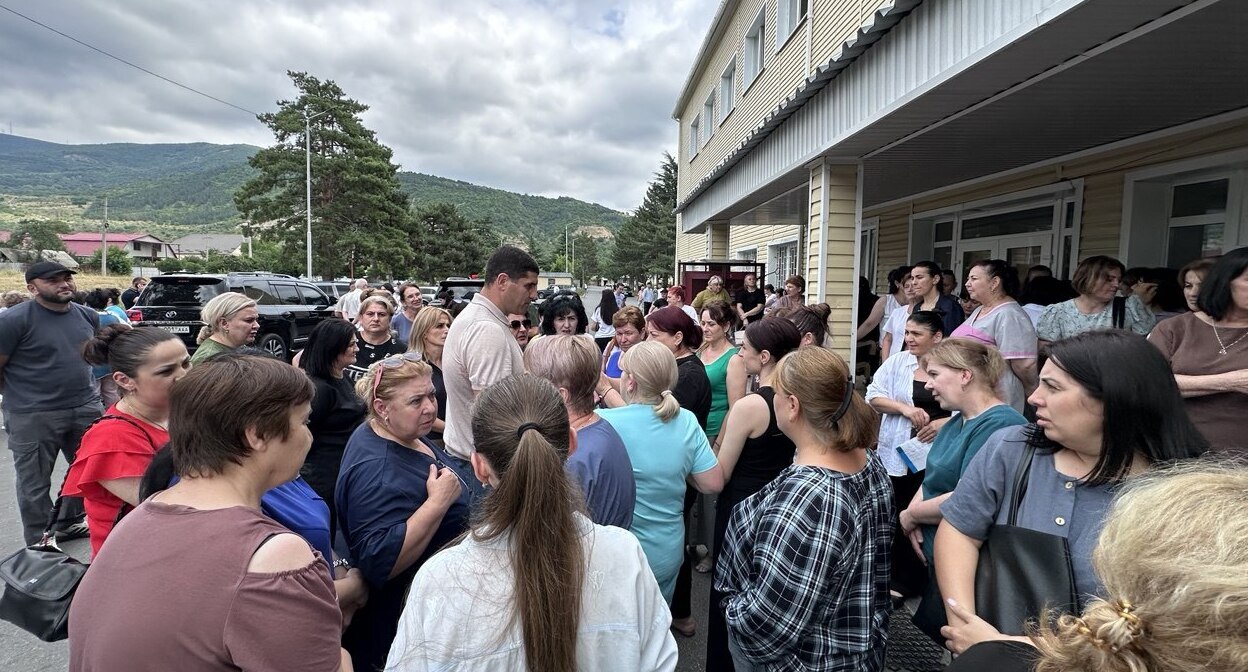
South Ossetia broke its promise to raise nurses’ pay


South Ossetia nurses pay rise

The authorities in South Ossetia have failed to deliver on their promise to raise nurses’ pay, a demand that led to a strike at the end of July.

Around 100 nurses took part, addressing their demands directly to president Alan Gagloev. Nurses in South Ossetia earn half as much as hospital assistants – a gap that opened after assistants’ salaries were raised by 60%, while nurses received only a 25% increase. The protest was fuelled by the fact that they had originally been promised a 40% rise.

Another grievance was the acute shortage of medicines, dressings and even basic conditions for treating patients.

Alan Gagloev came to meet the protesters, but the talks went nowhere. According to participants, the president, in an aggressive mood, insulted them before calling a few nurses for a private conversation and promising to resolve the pay issue within a week.

That deadline has long passed, yet the problem remains. Instead, labour and social affairs minister Oleg Gagloev shifted the responsibility to Russia. He cited an agreement under which South Ossetia pledged to gradually raise public-sector salaries, including for healthcare workers, to the level in North Ossetia. But it is clear the authorities have been unable to do so. How this acknowledgment was supposed to absolve them of responsibility or help solve the problem is unclear.

Anonymous sources in Tskhinvali told JAMnews that the president had involved the security services to put pressure on the nurses – prosecutors allegedly used threats and blackmail to extract “guarantees not to destabilise the situation”.

The protesters, however, found a more willing audience among MPs from the opposition United Ossetia faction. Or at least they tried to listen, until pro-government lawmakers intervened. The dispute has now deepened not only between healthcare workers and the government, but also within parliament. After pro-presidential parties complained that United Ossetia was receiving “excess” public funds, a court froze the opposition’s accounts, curbing its political activity.


Toponyms, terminology, views and opinions expressed by the author are theirs alone and do not necessarily reflect the views and opinions of JAMnews or any employees thereof. JAMnews reserves the right to delete comments it considers to be offensive, inflammatory, threatening or otherwise unacceptable.


Categories
South Caucasus News

35% Off Duluth Trading Promo Code (45 Active) Aug ’25 – Knoji


Duluth Trading promo codes, coupons & deals, August 2025. Save BIG w/ (45) Duluth Trading verified discount codes & storewide coupon codes. Shoppers saved an average of $20.36 w/ Duluth Trading discount codes, 25% off vouchers, free shipping deals. Duluth Trading military & senior discounts, student discounts, reseller codes & DuluthTrading.com Reddit codes.

Categories
South Caucasus News

Greece hails Armenia–Azerbaijan agreement as key step toward lasting peace


Greece has welcomed the agreements reached between Armenia and Azerbaijan, calling them an important step toward ending the decades-long conflict in the South Caucasus, Azernews reports.

Categories
South Caucasus News

With this devil in the details, Azerbaijan wins – Responsible Statecraft


With this devil in the details, Azerbaijan wins  Responsible Statecraft

Categories
South Caucasus News

Liveblog: Resistance | Pro-EU Protester Insaf Aliev on Hunger Strike


Non-stop protests have been taking place across Georgia for 257 days since Georgian Dream announced it was halting the EU integration process. Since then, protesters have blocked Tbilisi’s Rustaveli Avenue, where the parliament building is located, every day, while daily gatherings have also taken place in other major Georgian cities. Georgian Dream authorities, whose legitimacy is disputed after the contested October 26, 2024, parliamentary elections, have responded to the protests with force and repression.

The one-party parliament has introduced a series of repressive laws to crack down on dissent, independent media, and civil society. Dozens have been arrested and remain in jail on criminal charges, including protesters, opposition leaders, and journalist Mzia Amaglobeli. Key demands include the release of political prisoners, the resignation of the GD government, and the scheduling of new elections.

For earlier developments, refer to our previous:

Monday, August 11

11:00 – Pro-EU Protester Insaf Aliev on Hunger Strike

Insaf Aliev, one of eight protesters detained during recent pro-EU demonstrations in Georgia and facing charges of participating in group violence that carry prison sentences of four to six years, has gone on hunger strike, his lawyer announced on Facebook. According to the lawyer, Aliev reported inhumane prison conditions, including cockroach infestations, lack of water, and blocked sanitation facilities after being moved to a new cell. Denied basic hygiene and food access for hours despite appeals for help, Aliev was punished with a five-day solitary confinement after knocking on his cell door for assistance. His lawyer stressed that Aliev suffers from health issues requiring medication and injections every two days, yet his access to essential treatment remains restricted.

Wednesday, August 6

14:00 – Journalist Mzia Amaghlobeli Sentenced to Two Years in Jail as Court Reclassifies Charges

Batumelebi and Netgazeti founder Mzia Amaghlobeli has been sentenced to two years in jail after the court’s last-minute decision to reclassify criminal charges from attack on a police officer to “resistance, threat or violence” against an official. While still deemed unfair by Amaghlobeli’s supporters, the verdict is seen as a slight retreat from the Georgian judiciary’s previously uncompromising stance on protest-related cases.

Tuesday, August 5

20:00 – “Don’t you dare! You cannot bring back Soviet terror!” Tbilisi Protesters Rally

“Don’t you dare! You cannot bring back Soviet terror!” – protesters march in Tbilisi in solidarity with detained journalist Mzia Amaghlobeli, teacher Nino Datashvili, and others jailed over protests.

16:15 – Another Activist Fined 3500 GEL

Tbilisi City Court Judge Koba Chagunava has fined activist Mariam Mekantsishvili 3,500 GEL [ 1,296 USD] over the July 24 incident in Tbilisi’s Africa settlement. That day, tensions flared on Tvalchrelidze Street as the National Enforcement Bureau carried out evictions from a building it said was unsafe, privately owned, and illegally occupied. Throughout the day, dozens of families were removed, and other citizens gathered at the scene. By evening, 17 people, including residents and activists, had been detained on administrative charges, mainly for disobeying police orders.

12:30 – Appeals Court Overturns Fine Against RFE/RL Journalist in Contempt Case

The Tbilisi Court of Appeals, led by acting chair Irakli Shengelia, has overturned a decision by Tbilisi City Court judge Romeo Tkeshelashvili to fine Radio Free Europe/Radio Liberty journalist Nino Tarkhnishvili 200 GEL [74 USD] for alleged contempt of court. Tkeshelashvili imposed the fine on July 7 during a hearing in the case of pro-European rally participant and doctor Giorgi Akhobadze, accused of drug-related offenses, claiming Tarkhnishvili sat down without permission before the judge formally allowed it. However, the Appeals Court, citing video footage of the session, found that Tarkhnishvili had stood up upon the court clerk’s prompt after the recess, refuting the City Court’s account and nullifying the penalty.

Monday, August 4

13:00 – RSF Slams Georgia’s Growing Wave of Journalist Entry Bans

Reporters Without Borders (RSF), the Paris-based press freedom watchdog, has condemned what it calls a “worrying rise in authoritarianism” after Moroccan journalist Hicham El Bouhmidi, known for covering anti-government protests, was denied entry at the Georgian border. Similar bans have affected other journalists, including French reporters Jérôme ChobeauxClément Girardot, and Marylise Vigneau were denied Entry in Georgia. “We condemn the wave of entry bans imposed on more than five journalists in recent months,” RSF stated, urging authorities to halt these restrictions on press freedom.