Azerbaijan’s main oil pipelines carried a total of 18.513 million tons of oil during January-June 2025. This figure represents a 3.8% decrease compared to the same period in 2024, Azernews reports, citing the State Statistical Committee.
The majority of this volume – 75.2% – was transported via the Baku-Tbilisi-Ceyhan (BTC) export pipeline. Between January and May, the BTC pipeline delivered…
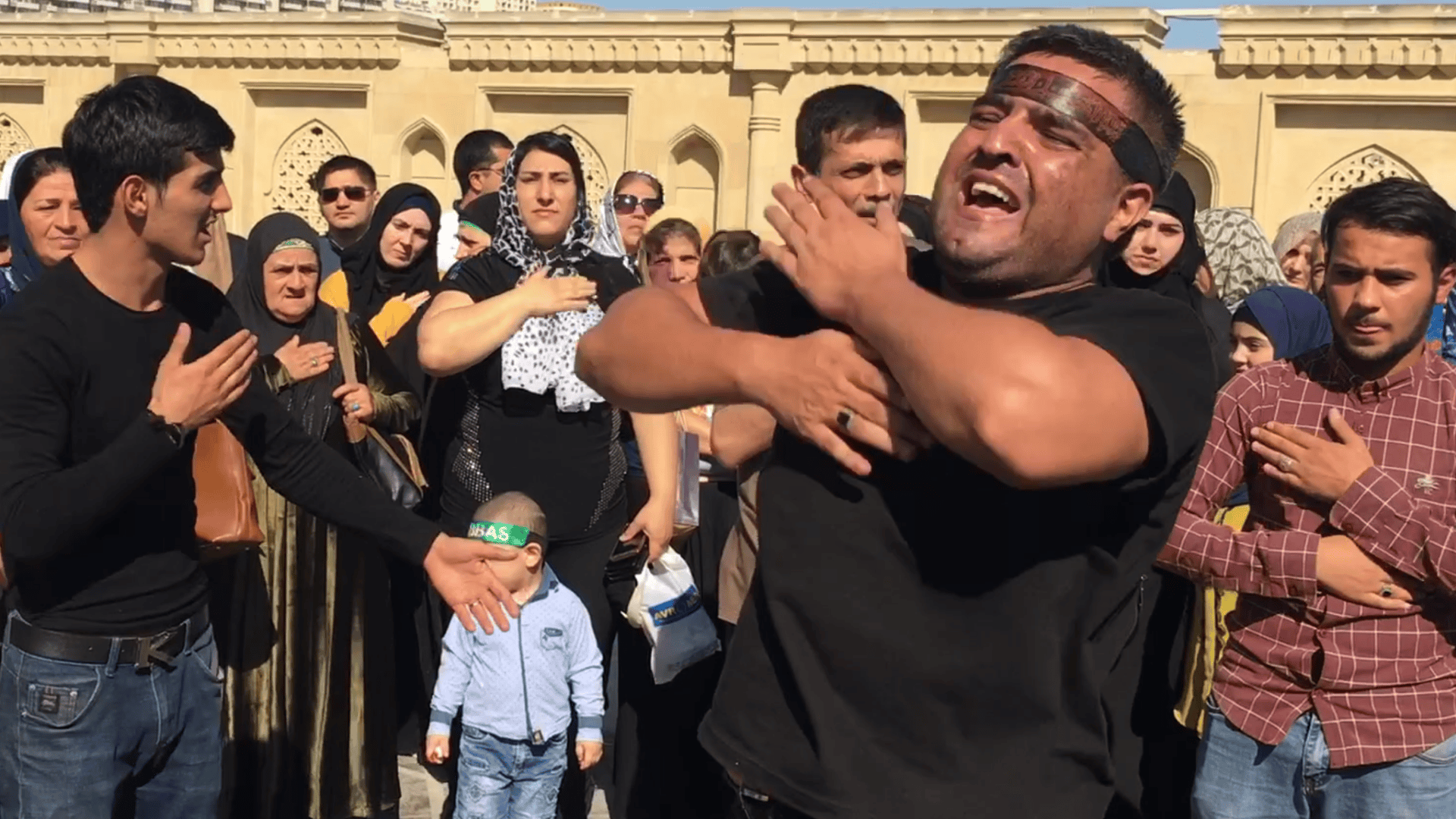
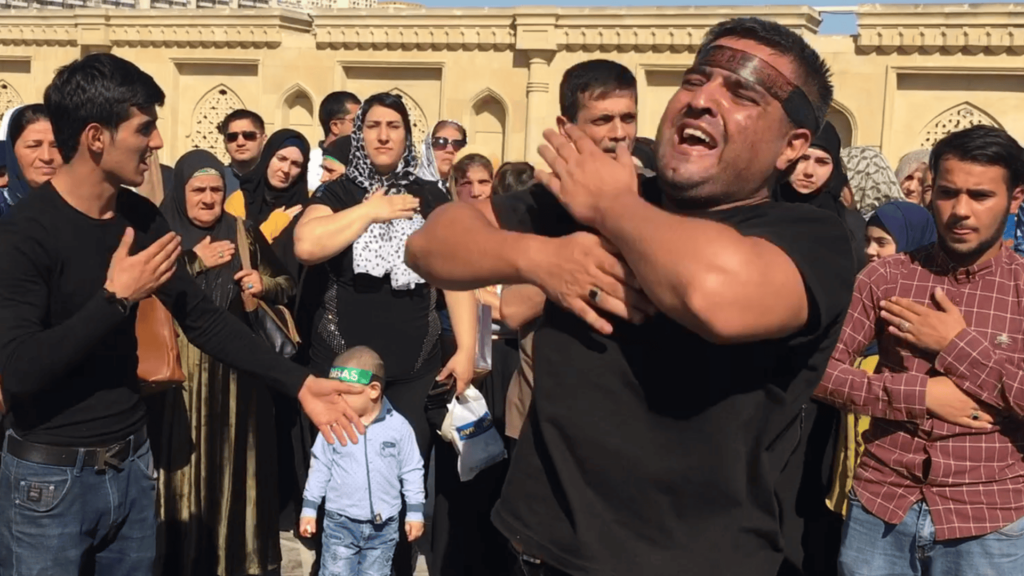
This year, Ashura in Azerbaijan was marked by unprecedented restrictions. Many mosques introduced bans on certain religious rituals. Social media users reported that people were not allowed to recite mersiye (funeral elegies), beat their chests, or even cry.
Ashura is the tenth day of the sacred month of Muharram in the Islamic calendar and a day of mourning, especially significant for Shia Muslims. On this day in 680 AD (61 AH), the Prophet Muhammad’s grandson, Imam Hussein, along with 72 companions, was killed by the army of Umayyad Caliph Yazid on the plains of Karbala (in present-day Iraq). This event led to the split in the Muslim world between the Shia, who supported Hussein, and the Sunni, who followed Yazid—a divide that remains a source of conflict to this day.
Thus, the day is a time of mourning specifically for Shia Muslims. Sunnis also mark Ashura, but for different reasons. According to the Quran, it is the day when the heavens, the earth, and humanity were created—and the Day of Judgment will also fall on this date.
In Azerbaijan, Ashura is observed as a day of faith, martyrdom, and resistance, especially in regions such as Baku, Nardaran, Lankaran, Masalli, Ganja, and others. Around the world, Shia communities commemorate the day by reciting elegies (marsiya), beating their chests, weeping, and holding tragic theatrical performances (ta’zieh). Historically, many also practiced self-flagellation to express grief. However, religious leaders have long encouraged people to donate blood instead.
Among those affected by the new restrictions this year was journalist Arzu Abdulla Gulzaman. She described her experience at the Edjerbey Mosque in Baku.
According to her, the mullah and akhund did not allow the reading of elegies (marsiya), and police officers stated: “The government does not allow crying.”
“This was a gathering in honor of Imam Hussein (peace be upon him). But we were told that Ashura was yesterday and today we are not allowed to mourn — even though Ashura actually falls on July 6, and we gathered in accordance with our faith,” said Gulzaman.
The state-controlled Caucasus Muslim Board declared that Ashura would be marked on 5 July this year. However, for the Shia community, the actual date of Ashura fell on 6 July.
The discrepancy led to religious events being officially held on 5 July, while commemorations on 6 July were effectively prohibited.
Many within the Shia community saw this as an attempt by the government to tighten its grip on their religious life through state-sanctioned structures.
Children banned from mosques: psychological reasoning and public backlash
One of the most debated aspects of this year’s Ashura was the ban not only on women, but also on children entering mosques. As reported earlier by JAMnews, schools and parents were warned in advance not to bring children to the ceremonies.
Social worker Sanubar Geydarova told JAMnews that while the authorities claim the move is intended to “protect children’s mental wellbeing,” she sees it as interference in the personal and family freedom to participate in religious rituals:
“If children are taken to military events filled with imagery of blood, death, weapons and heroism — why is participation in religious ceremonies considered a problem?” Geydarova asks.
Experts: “This is ideological pressure on the Shia community”
Lawyer Khalid Bagirov, in a previous comment to JAMnews, stated that such interference in religious ceremonies constitutes a violation of the right to freedom of conscience and religion, as guaranteed by Azerbaijan’s Constitution.
According to him, restrictions justified by “public safety” or “public order” are often rooted not in legal grounds, but in political decisions.
Alemdar Bunyatov, a representative of the Muslim Unity Movement in Europe, believes this approach reflects a clearly hostile stance by the state toward the Shia community:
“This is not merely a matter of regulation — it is a fight against religious and cultural identity.”
Pressure on Shia community amid tensions with Iran
The restriction of Ashura ceremonies in Azerbaijan is not just a matter of religious freedom. These events unfold against the backdrop of broader geopolitical and ideological tensions.
Seeking to keep the Shia community under control, the Azerbaijani government has taken pre-emptive measures against perceived Iranian influence within the country. Since many Azerbaijani Shia follow the fatwas of high-ranking Iranian clerics — ayatollahs — the authorities view this as a potential threat.
As a result of these ties, religious activists have been charged with “collaboration with Iran,” “incitement against the state,” and even “possession of drugs and weapons,” leading to lengthy prison sentences.
According to Alemdar Bunyatov, this has become a systemic policy of pressure on the Shia community:
“In Azerbaijan, believers who follow Shia Islam are persecuted solely because of the way they worship. The state interprets their style of prayer as Iranian influence and turns them into criminal targets. This is, in essence, a campaign against freedom of religion.”
At a deeper level, the government seeks to assert control over religious independence in the country, impose a unified religious policy through the Caucasus Muslim Board, and weaken the influence of Iran’s top spiritual authorities.
State-managed faith
Religious freedoms in Azerbaijan have long been regulated through official institutions and law enforcement. This year’s Ashura made it clear that this control now extends not only to the organisation of ceremonies, but also to their content — the tears, the marsiya, and even the breaking of silence.
The contradiction between the Shia community’s right to gather and worship according to their religious calendar and the state’s drive to impose a unified religious policy is becoming increasingly stark.
Water as much as necessary and as little as possible. This is simplified with an automatic irrigation system with moisture sensor – in the bed, on the balcony and on the lawn. Waterlogging suppresses the breathing air of the roots out of the soil – the root cells drown without oxygen.
Peskov: Censorship necessary in the context of information warfare
Russian presidential spokesperson Dmitry Peskov said in an interview with Expert magazine that Russia is facing a large-scale attack, including in the information sphere, which makes the use of military censorship tools in the context of the Russian-Ukrainian war, which Peskov calls a “special military operation,” entirely justified. “This is a time of military censorship unprecedented for our country. After all, the war is also being waged in the information space. And it would be wrong to turn a blind eye to media outlets that are deliberately engaged in discrediting Russia. Therefore, I believe that this regime is justified at present,” he said. Peskov also commented on the closure of a number of media outlets and the departure of some journalists, calling for the current circumstances to be taken into account. He noted that it would be short-sighted to ignore the work of media outlets engaged in the systematic discrediting of Russia (expert.ru).
Lavrov continues to accuse Europe of seeking a new war with Russia
At a press conference following his participation in ASEAN events in Kuala Lumpur, Russian Foreign Minister Sergey Lavrov said that Europe is once again moving toward war with Russia, forgetting the lessons of history. He criticized the actions of Berlin, Paris, and London, as well as the statements of German Chancellor Friedrich Merz, comparing his rhetoric to that of World War II. “As for Mr. Merz, he has said some amusing things on more than one occasion, including that his main goal is to make Germany the leading military power in Europe once again. He didn’t even stumble over the word ‘once again’,” he said. Lavrov also commented on the provocations against North Korea, the situation in Taiwan, and the Palestinian issue. He stressed that the U.S. and its allies are destabilizing the international situation with regard to North Korea, and Russia intends to defend the interests of its allies and advocate for compliance with international law (TASS).
Lavrov on talks with Rubio: “Expect surprises,” START not on the agenda
At a press conference in Kuala Lumpur, Russian Foreign Minister Sergey Lavrov spoke about his meeting with U.S. Secretary of State Marco Rubio. According to him, the issue of the Strategic Arms Reduction Treaty (START) was not raised, with the main focus being on the situation in Ukraine. Lavrov confirmed Moscow’s position, previously voiced by Vladimir Putin. Commenting on Rubio’s words about a “new plan,” Lavrov referred to Donald Trump’s phrase: “That’s what I’m telling you. And expect big surprises, he said. I don’t know about big surprises, but you understand… there are things that are not commented on.” Lavrov also gave Rubio a selection of statements by Ukrainian politicians which, according to him, contain calls for the destruction of Russians. CNN rumors about the “bombing of Moscow and Beijing” were not discussed at the meeting – Lavrov called them frivolous compared to the real agenda (TASS).
Kornilov: Macron’s visit showed that the “new Entente” is inspired by Russophobia
After Brexit, the UK has become a rare destination for foreign leaders, and French President Emmanuel Macron’s visit was only the fifth state visit in more than five years — and the first by an EU leader, Russian political analyst Vladimir Kornilov writes in his article for RIA Novosti. According to him, King Charles III called the meeting the beginning of a “new Entente,” but the French press virtually ignored the event, while the British press greeted it with derision. According to the author, the key issue on the agenda was illegal migration, but the expected agreement on the return of migrants fell through. He claims that the Daily Mail and The Sun harshly criticized Macron, accusing him of hypocrisy and Britain’s new ally of mocking London. In the end, Kornilov concludes, all that remains of the “friendly Entente” is general anti-Russian rhetoric — the only area where the parties are still united (ria.ru).
Mikhalkov: Putin approves idea to restrict access of foreign films to Russia
Nikita Mikhalkov, chairman of the Russian Filmmakers’ Union, a well-known Soviet film director who has become a mouthpiece for the Kremlin and an active propagandist for the so-called “Russian world,” said that Vladimir Putin has once again supported his idea of introducing quotas and financial barriers for foreign films in Russia. The initiative involves introducing an entry fee of 5 million rubles for the consideration of foreign films, a 10% levy on box office receipts to support domestic cinema, and the creation of a “single window” system for market access, possibly through Gazprom-Media or the National Media Group. According to Mikhalkov, the relevant authorities are still considering the proposal, but he is confident that officials will not be able to ignore Putin’s resolution. He also accused the bureaucratic system of corruption and said that he does not intend to wait for a response, nor, in his opinion, will Putin himself (TASS).
Geral • Quartos para não fumantes • Ar-condicionado • Comodidades para hóspedes com mobilidade reduzida • Proibido fumar em todo o hotel • Quarto antialérgico • Elevador • Jardim Estacionamento Estacionamento gratuito e privativo disponível no local (não necessita de reserva).
In honor of the 150th anniversary of Azerbaijan’s national press, the Media Development Agency (MEDİA) and Azerconnect Group jointly organized a forum titled “The Media of the Future: Following the Footsteps of ‘Əkinçi’”.
Azerbaijani para-taekwondo athlete Sabir Zeynalov has won a silver medal at Chuncheon 2025 World Para Taekwondo Open Challenge in South Korea, Azernews reports.
Tbilisi City Hall has awarded a USD 150 million tender to local company GT Group to supply new metro cars from Chinese state-owned rail giant CRRC, Mayor Kakha Kaladze announced on July 10.
The announcement comes some two years after an earlier deal to purchase cars from a Russian Metrovagonmash company, backed by EBRD funding, fell through amid Russia’s full-scale invasion of Ukraine and subsequent Western sanctions. The new project is funded by the Asian Infrastructure Investment Bank (AIIB), with the delivery of a total of 111 cars expected to start in November next year.
Long-Delayed Procurement
In 2021, Tbilisi City Hall announced plans to modernize the metro system, initially seeking to buy 44 subway cars worth nearly USD 50 million from the Russian manufacturer Metrovagonmash, with financing from the European Bank for Reconstruction and Development (EBRD).
That plan collapsed following Russia’s full-scale invasion of Ukraine in 2022. Tbilisi authorities said at the time EBRD had suspended payments to Metrovagonmash due to international sanctions, with Mayor Kaladze announcing in November the same year that the city would cancel the deal and seek other suppliers. In February 2023, however, officials said Metovagonmash remained the supplier, citing its lower bid and concerns over financial penalties.
Ultimately, Tbilisi city authorities had to cancel the deal after the U.S. Treasury Department sanctioned Metrovagonmash over its role in Russia’s military production in May 2023. Authorities launched a fresh tender in 2024, this time with the AIIB funding, seeking to purchase 97 subway cars.
Allegations of Favored Tender
Critics say the latest tender was designed to favor CRRC and discourage European competitors.
“That company faces serious problems and restrictions in the United States,” Irakli Abesadze, head of the Center for Civic Participation, told Business Media Georgia.
He said Czech-based Škoda Group submitted a symbolic bid of just one GEL per subway car, signaling it saw no realistic chance of winning. “This is direct evidence that a major European manufacturer was interested but knew the outcome was predetermined,” Abesadze said, alleging the tender’s terms were “tailored to serve someone’s interests,” leaving no space for fair competition.
Early in 2024, the European Commission opened an investigation into the participation of CRRC, one of the world’s largest rail suppliers, in a Bulgarian rail tender under its Foreign Subsidies Regulation, suspecting the company received state subsidies that distorted the EU’s internal market. The company then withdrew its Bulgaria bid, leading the EU Commission to close the investigation.
GT Group
The winning local partner, GT Group, has also faced questions over its political ties.
In a 2021 report, Transparency International (TI) Georgia said the company had received more than GEL 12 million (about USD 4,4 million) in simplified public procurement contracts in 2020, noting the company’s ties to the ruling Georgian Dream party. Company owner Temur Ustiashvili donated GEL 60,000 (about USD 22,100) to Georgian Dream in 2016, while another owner, Giorgi Gvelesiani, donated a total of 120,000 (about USD 44,200) to Georgian Dream and fifth President Salome Zurabishvili’s campaign between 2016 and 2018.
The 2021 report said that prior to 2020, GT Group had secured more than GEL 100 million (about 36,9 million) in public tenders, with the watchdog saying such deals raised “legitimate concerns about corruption and inefficient spending.”
As part of its ongoing efforts to promote regional agricultural development, local entrepreneurship, and financial access for farmers, Azerbaijan’s Ministry of Agriculture has successfully organized seven Agricultural Credit Fairs across the country in 2025. During the first half of 2025, banks and non-bank credit institutions extended a total of 965,500 AZN in loans to farmers and business owners through these fairs.