
Categories
South Caucasus News

Pressure, intimidation, unequal opportunities: international missions evaluate elections in Georgia


International assessment of Georgia’s elections

International observer missions highlighted deep political polarization, financial inequality among political forces, disputed electoral law changes, media polarization, a tense pre-election atmosphere, alleged control over voter choices, and concerns over ballot secrecy in their review of Georgia’s October 26 parliamentary elections.

The recent elections are of unprecedented importance for Georgia, as their outcome will determine the country’s future political and geopolitical direction. Voters had to choose between the ruling party “Georgian Dream,” perceived as pro-Russian, and the pro-Western opposition.

According to the Central Election Commission (CEC), “Georgian Dream” won the elections with 53.92% of the votes. Four other opposition parties also secured seats in parliament: the Coalition for Change received 11.03%, the United National Movement garnered 10.16%, Strong Georgia obtained 8.81%, and the party of former prime minister Giorgi Gakharia, “For Georgia,” received 7.77%.

These CEC figures differ significantly from the exit polls, which indicated that “Georgian Dream” only had 40-42% support.

All opposition parties that entered parliament have declared the electoral process fraudulent. The three alliances stated that they would not accept their mandates and are preparing for a permanent street protest.
These are preliminary assessments, generally very strict and critical, highlighting systemic issues.

This article summarizes the key points.

OSCE / Office for Democratic Institutions and Human Rights (ODIHR)
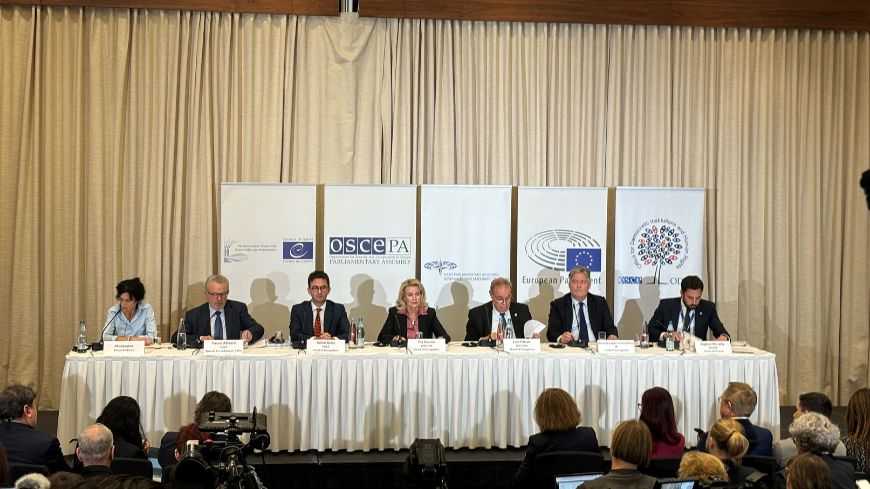
Briefing of the OSCE/ODIHR Observation Mission after the elections. Photo: OSCE

The OSCE/ODIHR observation mission presented a report on issues and violations seen during both the pre-election period and election day, noting:

  • A polarized electoral environment,
  • Incidents of voter intimidation and pressure,
  • Financial inequality among political entities, favoring the ruling party,
  • A polarized media landscape,
  • Use of independent media for political propaganda,
  • Lower female participation in the elections.
The OSCE/ODIHR monitoring mission, consisting of 529 observers from 42 countries, was active in Georgia throughout both the pre-election and election periods. The mission included 380 ODIHR experts as long- and short-term observers, alongside 60 OSCE Parliamentary Assembly members, 39 from the Parliamentary Assembly of the Council of Europe (PACE), 12 from the European Parliament, and 38 from the NATO Parliamentary Assembly.

The imbalance in financial resources, divisions in the pre-election environment, and recent legislative changes were significant concerns throughout the election period,” said Pascal Allizard, OSCE Special Coordinator and head of the short-term observation mission.

  • According to the monitoring mission, Georgia’s electoral legislation generally allows for democratic elections. “However, recent amendments to the electoral code have undermined its stability and raised concerns about potential misuse for political aims,” noted the briefing.
  • The observation mission highlighted political and media polarization, hostility towards the opposition and civil society, and a campaign against the presidential administration.
  • Mission members reported witnessing instances of voter bribery, pressure, and intimidation before the elections, particularly in rural areas: “In these elections, there were two realities—one inside polling stations, where the voting process was well-organized, and another outside,” said Iulian Bulai, head of the PACE delegation.
  • Cameras installed by the ruling party at polling stations and voter registration measures created an atmosphere of pressure: “It felt like ‘Big Brother’ was watching,” Bulai added.
  • The electoral process showed clear inequalities among political entities, which undermines confidence in its outcomes,” he stated.
  • The OSCE/ODIHR also stressed gender inequality in the electoral process. This year, a previously enforced quota was removed, which had required every fourth candidate on a party’s electoral list to be a woman. As a result, the number of female candidates in the recent elections dropped significantly compared to previous years.

Mission representatives noted that party platforms largely lacked messages for women, and few women were involved in campaign activities. “Women politicians in Georgia still face deeply entrenched stereotypes and even violence,” the mission members stated at the briefing.

While we regard these elections as mostly peaceful, the reduction in female candidates due to the removal of gender quotas is a setback. The active participation of women voters highlights the vital importance of their role and calls for broader representation,” said Pia Kauma, head of the OSCE Parliamentary Assembly.
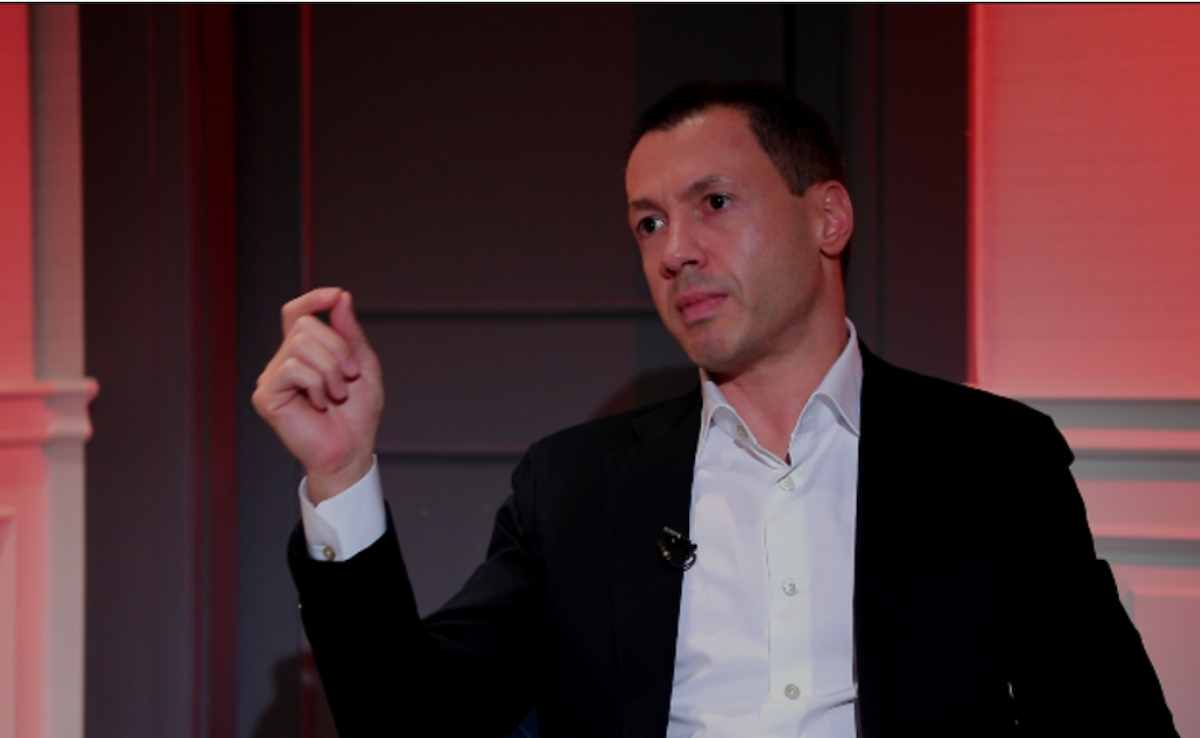
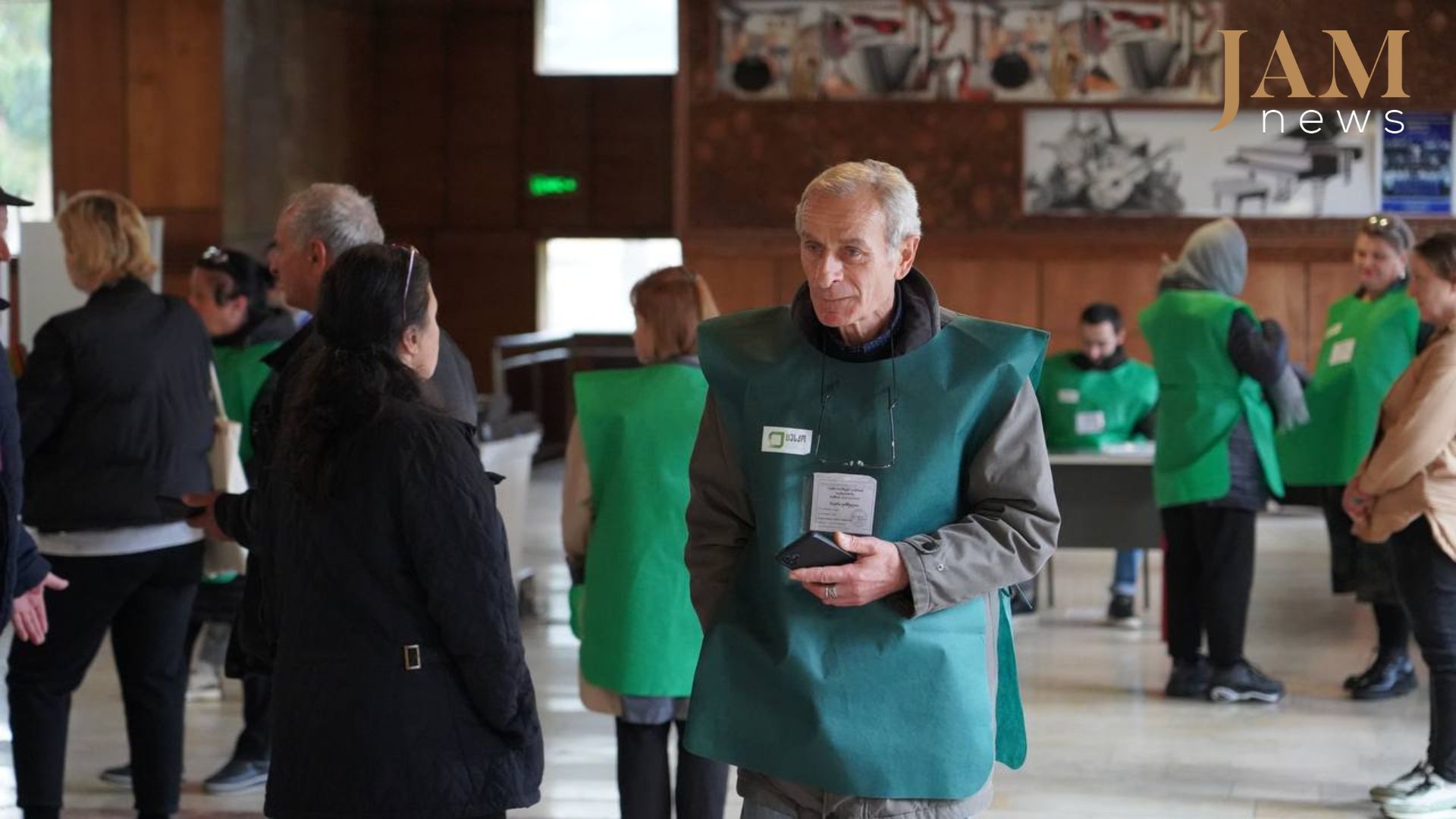
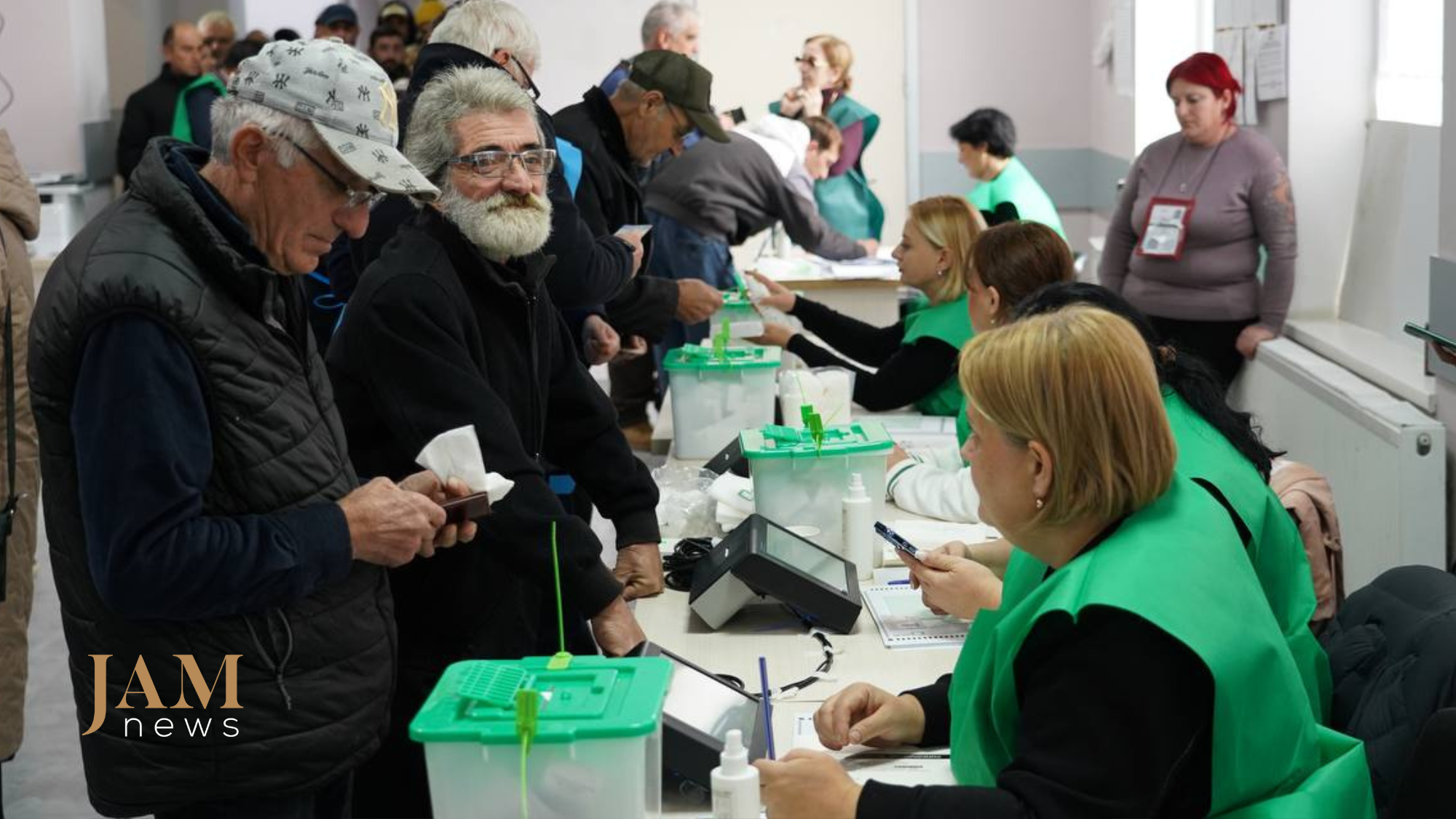
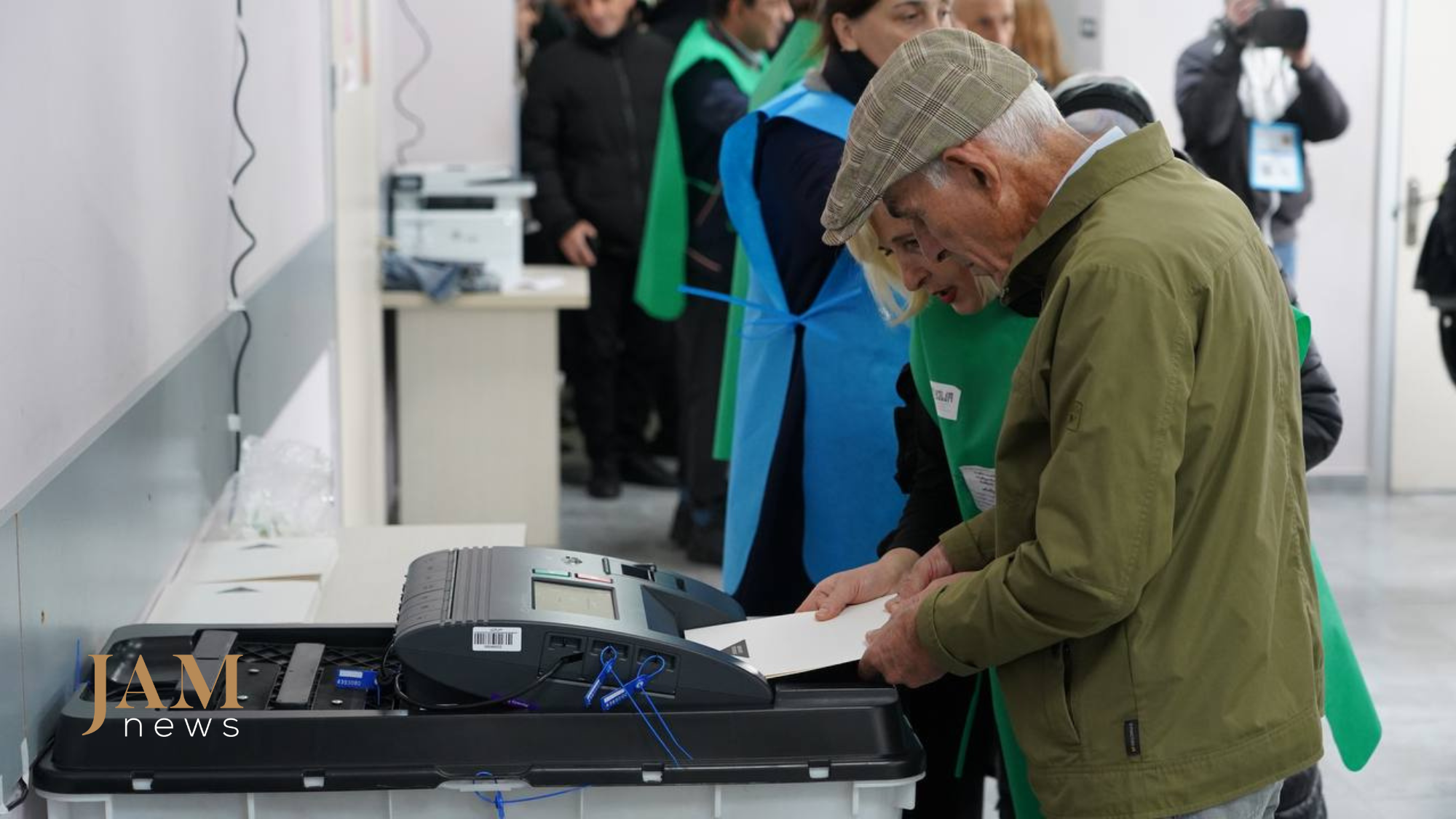
  • The mission commended the efforts of the Central Election Commission in informing voters about the use of electronic devices before election day. The voting day itself was generally well-organized in terms of procedures, but tensions were high. Voting secrecy was often compromised, with reports of voter intimidation and pressure.
  • “These elections have been another critical test for democracy in Georgia. Their results will be the next challenge. My responsibility now is to report my assessment of these elections so that the Assembly can consider how best to support the Georgian people, who have repeatedly voiced their desire to see their country in the European Union and NATO,” stated Faik Öztrak, head of the NATO Parliamentary Assembly delegation.
  • “During the pre-election period, representatives of the ruling party publicly expressed intentions to ban major opposition parties after the elections. Observers received reports of voter intimidation, coercion, and pressure. Some voters may not have cast their ballots freely due to fear of retaliation. We are deeply concerned about the erosion of democracy in Georgia. Unfortunately, yesterday’s elections have confirmed this decline,” said Antonio López-Istúriz White, head of the European Parliament delegation.

IRI and NDI
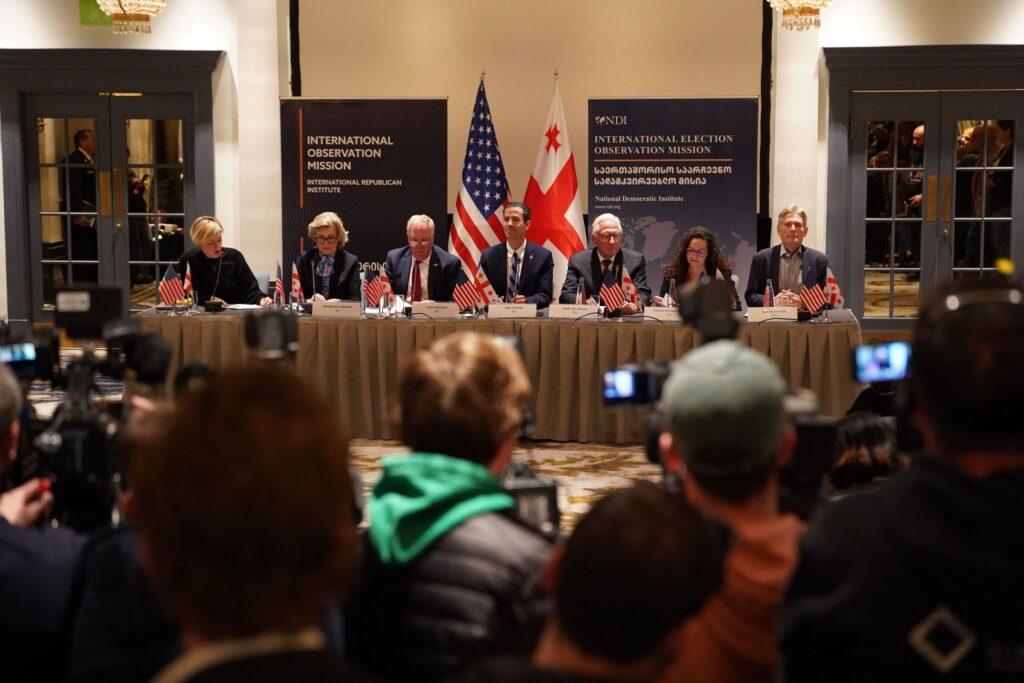
IRI and NDI Monitoring Mission Briefing. Photo: Publika.ge

Joint Monitoring Mission of IRI and NDI in Georgia
American organizations the International Republican Institute (IRI) and the National Democratic Institute (NDI) have sent a joint monitoring mission to Georgia, with observers present at 260 sites across 44 municipalities.

Their preliminary assessment highlights unprecedented legal and administrative changes during the pre-election period.

Key points:

  • Dén Twining, president of IRI, stated that the government enacted unprecedented political, legal, and administrative laws and changes during the pre-election period, thereby limiting political competition. “Such manipulations create an unequal playing field for political actors ahead of the elections,” Twinning said.
  • Margareta Siderfeld, a member of the Swedish Parliament and part of the observation delegation, emphasized the adoption of the “foreign agents” law in spring 2024. “NGOs face the risk of ongoing persecution and intimidation from the government and government-affiliated groups,” Siderfeld noted.

She further stated that the ruling party, Georgian Dream, controlled the electoral process through local government representatives, warning that individuals were threatened with loss of social assistance if they voted for the ruling party.

  • John Shimkus, another member of the delegation, stated: “During the pre-election period, the authorities claimed that new electronic voting technologies would be used to ensure that all voters were registered. However, they were subsequently used for an intimidation campaign, primarily targeting minority-populated regions and rural areas.”

Shimkus mentioned instances where local authorities confiscated voters’ identification cards, which he said was used to exert psychological pressure: “This contributed to the development of vote-buying schemes, raising doubts about the secrecy of the ballot and ultimately creating an atmosphere of fear,” he noted.

Mission representatives indicated that they would soon present their final assessment. In the meantime, they urged the Central Election Commission to address the 337 complaints received fairly and transparently.

ENEMO
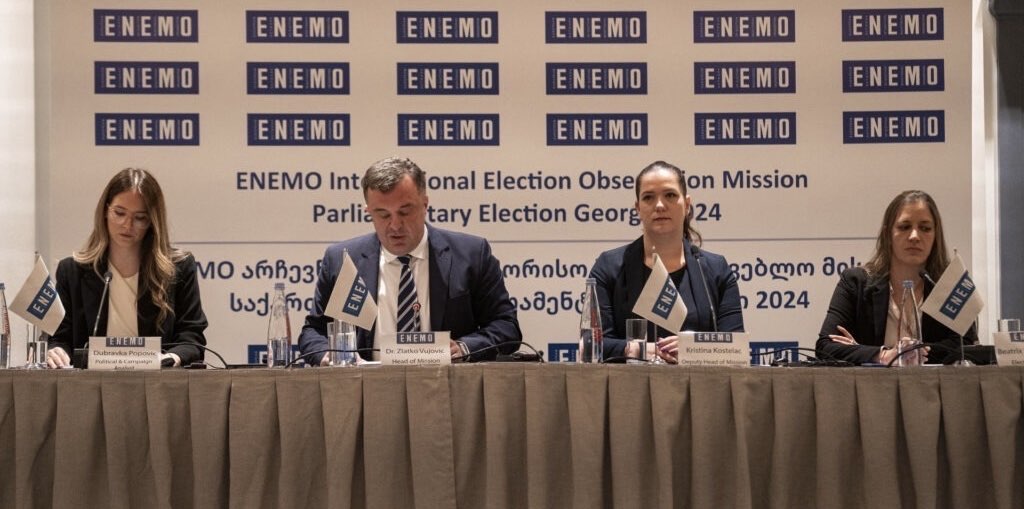
European Network of Election Monitoring Organizations (ENEMO)

The “European Network of Election Monitoring Organizations” (ENEMO) stated that the parliamentary elections in Georgia were conducted in a polarized environment filled with restrictions, undermining confidence in the transparency and fairness of the electoral process.

The monitoring mission reported incidents of violence against opposition members, the use of administrative resources, and pressure on journalists.

ENEMO also raised concerns about the independence of the Central Election Commission (CEC).

“The violations had a significant impact on the democratic nature of the electoral process. Due to legislative changes, the elections took place in a more tense atmosphere than they could have been,” said Zlatko Vujovic, head of the ENEMO monitoring mission.


Categories
South Caucasus News

Georgia’s president says the country was the victim of a Russian ‘special operation’ in election – ABC News


Georgia’s president says the country was the victim of a Russian ‘special operation’ in election  ABC News

Categories
South Caucasus News

Georgia’s president says the country was the victim of a Russian ‘special operation’ in election – ABC News


Georgia’s president says the country was the victim of a Russian ‘special operation’ in election  ABC News

Categories
South Caucasus News

Georgia’s president says the country was the victim of a Russian ‘special operation’ in election – ABC News


Georgia’s president says the country was the victim of a Russian ‘special operation’ in election  ABC News

Categories
South Caucasus News

Georgia’s president says the country was the victim of a Russian ‘special operation’ in election – ABC News


Georgia’s president says the country was the victim of a Russian ‘special operation’ in election  ABC News

Categories
South Caucasus News

Georgia’s president says the country was the victim of a Russian ‘special operation’ in election – ABC News


Georgia’s president says the country was the victim of a Russian ‘special operation’ in election  ABC News

Categories
South Caucasus News

Georgia’s president says the country was the victim of a Russian ‘special operation’ in election – ABC News


Georgia’s president says the country was the victim of a Russian ‘special operation’ in election  ABC News

Categories
South Caucasus News

International Reactions to Results of the Parliamentary Elections in Georgia


With more than 99% of precincts counted, official results from the Central Election Commission give the ruling Georgian Dream party a 54.23% lead. The combined total of opposition parties that passed the 5% threshold is 37.44%. While the Georgian Dream celebrates the victory, the opposition denies the legitimacy of the elections and observer organizations speak of “large-scale” rigging and demand the annulment of the official results. The OSCE/ODIHR shared its first preliminary assessment, saying the elections “unfolded amid entrenched polarization in an environment marred by concerns over recently adopted legislation, its impact on fundamental freedoms and civil society.”

We have collected the international reactions to the election results:

HR/VP Josep Borrell: “We call on the Central Election Commission of Georgia and other relevant authorities to fulfil their duty to swiftly, transparently and independently investigate and adjudicate electoral irregularities and allegations thereof. Those irregularities must be clarified and addressed. That is a necessary step to re-building trust in the electoral process… In line with the European Council Conclusions of 17 October, the EU calls on Georgia to adopt democratic, comprehensive and sustainable reforms, in line with the core principles of European integration…In this context, the EU recalls that any legislation that undermines the fundamental rights and freedoms of Georgian citizens and runs counter to the values and principles upon which the EU is founded, must be repealed.” [Read the full statement here]

Espen Barth Eide, Foreign Minister of Norwey: “I am concerned by the OSCE/ODIHR report on the elections in Georgia that documents numerous irregularities, pressure on voters, intimidation and an unlevel playing field. Uncertainties relating to the integrity of electoral process undermine confidence and must be addressed.”

Edgars Rinkēvičs, President of Latvia: “Georgian people have European dream, no one has the right to steal this dream through intimidation and manipulation. Full solidarity with the people of Georgia and President Salome Zurabishvili.”

Jean-Noël Barrot, Minister for Europe and Foreign Affairs of France: “The preliminary findings of OSCE/ODIHR confirm our concerns about recent developments in Georgia, where parliamentary elections have just been held. We expect the authorities to investigate allegations of irregularities. Fundamental freedoms and politican pluralism must be respected so that Georgia can return to the path of the European Union.”

Maria M. Stenergard, Minister of Foreign Affairs of Sweden: “Seriously concerned by the irregularities in Georgia’s elections reported by OSCE/ODIHR and other observers. To restore trust I urge Georgian authorities to credibly address these concerns in an inclusive political process. We are ready to work on Georgia’s European Integration with all forces in parliament truly committed to European values and principles. Laws restricting civil society and fundamental rights undermine Georgia’s EU aspiration and increase polarisation. They need to be repealed.”

Charles Michel, President of European Council: “Following the parliamentary elections in Georgia, I intend to put Georgia on the agenda of the informal EUCO in Budapest. We note the OSCE/ODIHR preliminary assessment and call on the Central Election Commission and other relevant authorities to fulfil their duty to swiftly, transparently and independently investigate and adjudicate electoral irregularities and allegations thereof. These alleged irregularities must be seriously clarified and addressed. We reiterate the EU’s call to the Georgian leadership to demonstrate its firm commitment to the country’s EU path, also in line with EUCO June and October conclusions. Constructive and inclusive dialogue across the political spectrum is now paramount. The November EUCO will assess the situation and set the next steps in our relations with Georgia,” 

Caspar Veldkamp, Minister of Foreign Affairs of Netherlands: “Parliamentary elections in Georgia resulted in a lead for the ruling party, but were marred by an uneven playing field and substantial irregularities on election day. I call on the Georgian authorities to address the concerns expressed by OSCE/ODIHR internatioanal election observers. Georgia’s next government should recommit to democratic principles if it wants to fulfil its promise to the Georgian people to bring the country closer to the EU. I commend the work done by OSCE/ODIHR during its important Election Observation Mission in Georgia.”

German Federal Foreign Office: “Germany fully supports preliminary findings and conclusions of the OSCE/ODIHR international election observation mission on yesterday’s parliamentary election in Georgia. We are concerned about the reported tense environment and irregularities which must be addressed and remedied. Germany is closely following further events in Georgia and calls on all parties to exercise restraint and avoid violence and further polarisation. The handling of the election outcome and government formation will also affect the future progress of Georgia and its European path.”

Rasa Juknevičienė, MEP: “Desperate to cling to power, Georgian Dream has created a toxic electoral atmosphere far from democracy. The government is blatantly using the Kremlin’s playbook to conduct these elections. We are closely monitoring election observers’ evaluations.”

Sergey Lagodinsky, MEP: “No observers will be able to certify fraud. But: Article 78 of Georgia’s Constitution obliges the state to advance integration into EU. The “winner” of the elections ran clearly against this obligation. Election that produces anticonstitutional result needs a rerun!”

Baiba Braže, Minister for Foreign Affairs of Latvia: “All of Latvia carefully follows parliamentary elections in Georgia and is waiting for the OSCE/ODIHR assessment from international observers. We note with concern reports on various irregularities during the elections.”

Alicia Kearns, Member of Parliament of the United Kingdom: “The multiple reports from Georgia which suggest election rigging and breaches of Georgian electoral law confirm the fears many have expressed over the last few months. The people of Georgia deserve free and fair elections.”

Rihards Kols, MEP: “The people of Georgia deserve free and fair elections, yet reports of violence, vote-buying, and intimidation indicate that the recent elections fall far short of these standards. Without genuine democratic processes, Georgia risks drifting away from its European path. The EU must take these developments seriously, standing firm on the principles of democracy and the rule of law.”

Gabrielius Landsbergis, Minister of Foreign Affairs of Lithuania: “Elections must be based on freedom and fairness. I take allegations of irregularities in any election very seriously and will be paying close attention to the developing situation in Georgia.”

Žygimantas Pavilionis, Member of the Lithuanian Parliament: “Georgian Nightmare is stealing the European future of Geogian nation, trying to consolidate the Russian or Belarussian way back to the Russian past instead of consolidating its future, freedom, democracy, souvereignity and territorial integrity inside the EU and NATO.”

Margus Tsahkna, Estonian Minister of Foreign Affairs: “Reports of irregularities in Georgian elections give rise to grave concern. Closely following the evaluations of international and local observers.”

Viktor Orban, Hungary’s Prime Minister sent his congratulations before the official preliminary results: “Congratulations to Prime Minister Irakli Kobakhidze and the Georgian Dream party on their overwhelming victory at the parliamentary elections today. The people of Georgia know what is best for their country, and made their voice heard today!”

Ilham Aliyev, President of Azerbaijan: “I warmly congratulate you on the results of the parliamentary elections held in Georgia and the victory of the Georgian Dream – Democratic Georgia party, which is the leading political force in your country. By voting, the citizens of Georgia expressed their support for development, stability, and traditional values. I believe that the results of the elections will serve the all-round development and prosperity of Georgia.”

Aleksey Pushkov, Senator of the Russian Federation: “There may still be unrest in Georgia, but it appears that the West’s “regime change” in Georgia by supporting the opposition has, simply put, failed. Georgian Dream won with more than 54% of the vote, an absolute majority. The West’s plan was to turn Georgia into its semi-colony, promising it a happy integration into the multi-gender and “non-binary” family of European nations. For some reason, however, this did not appeal to the majority of Georgian voters. Nor did the demagoguery of President Zurabishvili, who looks more and more like a relic of the bygone Saakashvili era. Saakashvili, by the way, also dreamed of a new pro-Western revolution in Georgia – and where is it now?”

Grigory Karasin, Head of the Russia’s Federation Council’s Committee on International Affairs: “According to reports from Tbilisi, the parliamentary elections in Georgia took place in a calm atmosphere. The high voter turnout of about 58% is another indicator of civic activity. The nearly 53% of the vote received by the ruling Georgian Dream, as well as the entry of four opposition parties into Parliament, promises an active period in the country’s domestic politics. We trust that it will be conducted in a predictable and civilized manner. This is in the interest not only of Georgia, but of the entire Caucasus region.”

Marko Mihkelson, Member of the Estonian Parliament: “Georgia’s apparent election result falsification makes it impossible to recognize their legitimacy. By rigging elections, one cannot join the European Union, but can end up back in Russia’s embrace.”

Nikol Pashinyan, Prime Minister of Armenia: “I congratulate the Prime Minister of Georgia Irakli Kobakhidze and the party “Georgian Dream” on the victory in the parliamentary elections. I believe that the strategic relations between Armenia and Georgia will continue to develop sustainably for the benefit of the brotherly Armenian and Georgian peoples.”

More to follow…

Also Read:


Categories
South Caucasus News

Pro-Western Georgian President Calls For Protests, Won’t Recognize Election Results


Pro-Western Georgian President Salome Zurabishvili said she will not recognize the results of parliamentary elections held on October 26 and called for protests in Tbilisi on the evening of October 28.

Categories
South Caucasus News

Global e-commerce trade hits $5.8 trillion, Türkiye eyes larger share in exports: Minister


Global e-commerce trade reached a record high of $5.8 trillion in 2023, and Türkiye is eyeing to grab more of the global market share, with expectations that the figure will climb to $6.3 trillion by the end of 2024, Turkish trade minister said at an e-commerce summit in Istanbul, Azernews reports citing Anadolu Agency.