
opensea,crear cuenta en opensea,cómo cambiar el nombre de la cuenta en metamask,cómo cambiar el nombre en opensea (pasó a paso),como verificar mi cuenta de o…
Day: October 10, 2024
While few Americans will have the #SouthCaucasus in mind as they cast their ballots, the outcome could have big regional impact. https://t.co/Q1LOOnMYI3
— Foreign Policy Research Institute (@FPRI) October 10, 2024


Foreign agent bill in Georgia
Lawyer Saba Brachveli comments on the Georgian Constitutional Court’s decision not to suspend the foreign agents’ law, arguing that the court is now complicit with the 85 lawmakers who voted for its passage.
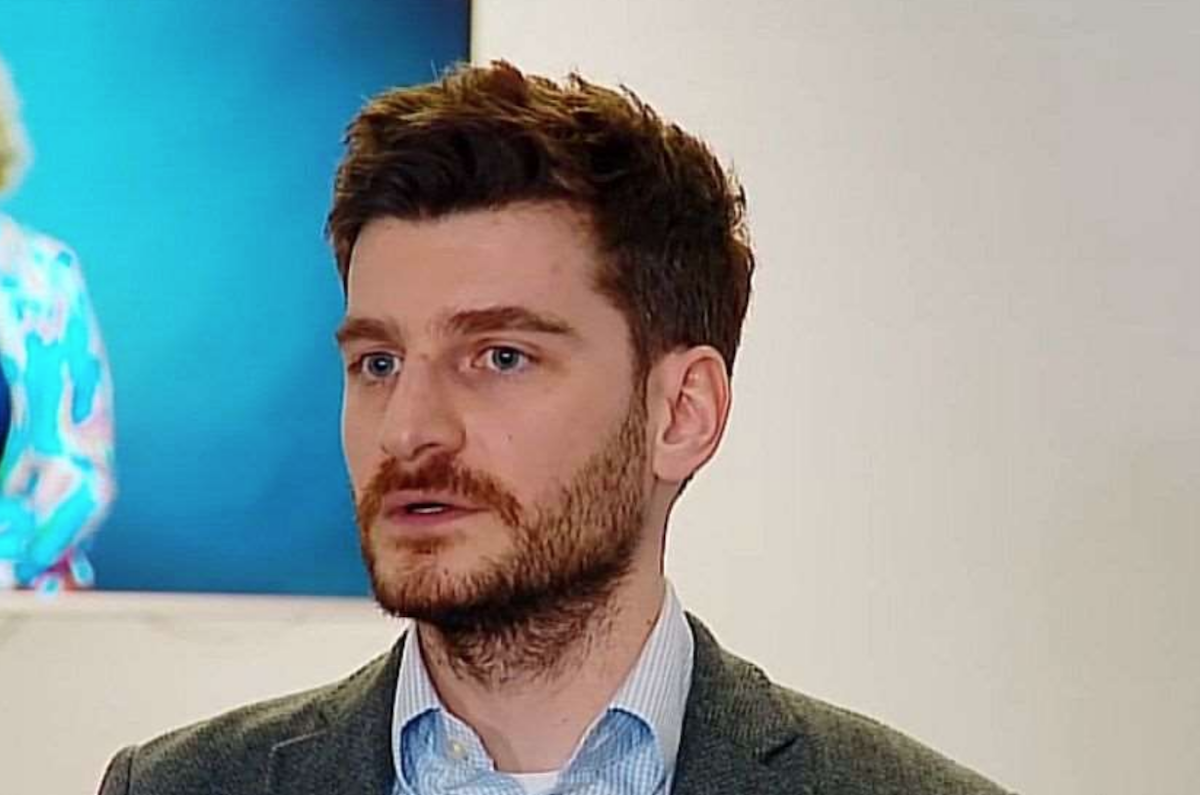
The Constitutional Court did not suspend the foreign agents’ law but has accepted related lawsuits filed by the president, opposition representatives, NGOs, and media organizations. Four lawsuits claiming the law is unconstitutional have been consolidated into a single case.
According to Saba Brachveli, this decision allows for several conclusions:
- The Constitutional Court—specifically, the six judges who made this ruling—is complicit with the 85 lawmakers who voted for the “foreign agents” law.
- At best, the court is a fraud; at worst, it is a conscious criminal and traitor to its people and constitution.
- This ruling will not hinder the work of NGOs, which will continue until the parliamentary elections on October 26.
“It doesn’t matter if these six judges refuse to recognize the ‘foreign agents’ law as unconstitutional. The Georgian people will do that in 17 days,” the lawyer asserts.
Foreign agent bill in Georgia
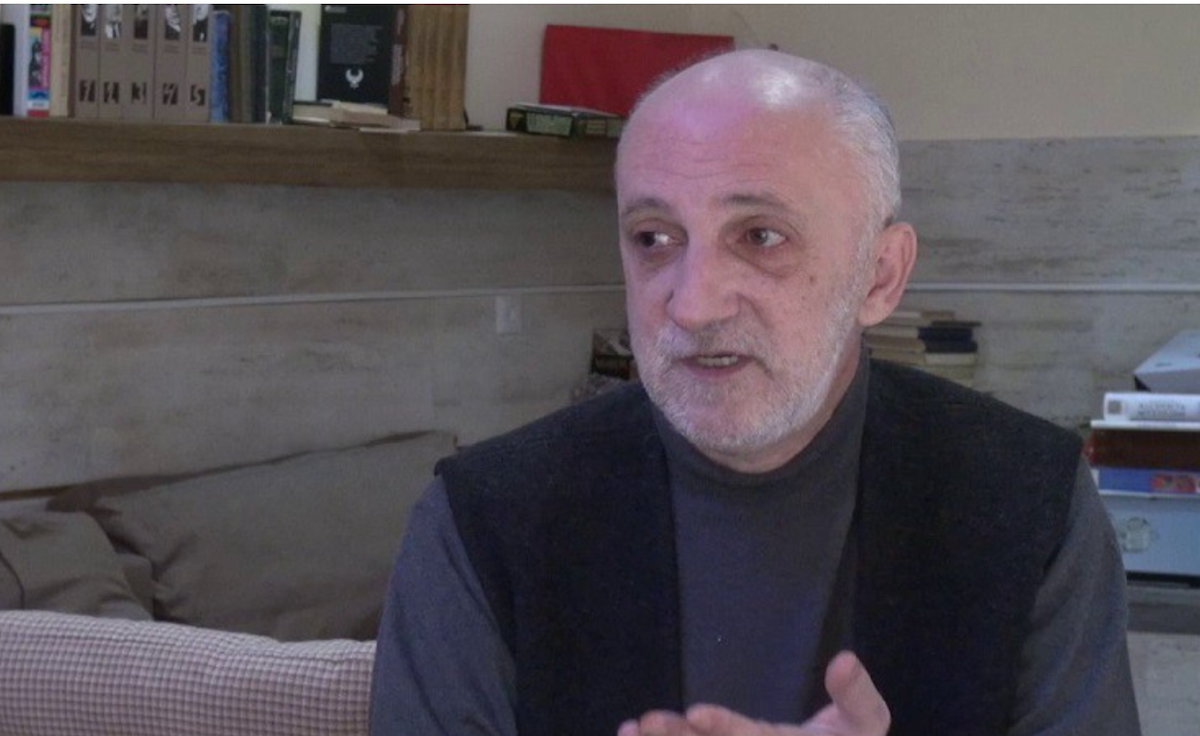
On October 20, the German Bundestag debated and adopted a resolution entitled “A European Future for Georgia.” The resolution highlights the country’s democratic backsliding and the anti-democratic steps taken by the current government, and calls on the German government to take concrete action in response. Civil.ge’s Nata Koridze used this opportunity to talk to Robin Wagener, a Member of the German Bundestag and Federal Foreign Office’s coordinator for inter-societal cooperation with the South Caucasus, the Republic of Moldova, and Central Asia about the resolution, its messages and Germany’s perspective on developments in Georgia and its prospects for European integration ahead of the crucial parliamentary elections on 26 October.
Civil.ge: Mr. Wagener, thank you for your time and your willingness to talk to us. I would like to start by asking you what prompted the adoption of today’s resolution and what it is essentially about.
Robin Wagener: The European Union granted Georgia candidacy status in view of the very strong commitment of the Georgian people, which we can observe and which we see in the media, but also when we visit Georgia on a regular basis. A very strong commitment. We based it on the understanding that certain steps would be taken to meet the requirements to become a member of this value-based organization – the European Union.
At the moment we see that the doors of the European Union are very open to Georgia, but the Georgian government has decided to go in the other direction…
At the moment we see that the doors of the European Union are very open to Georgia, but the Georgian government has decided to go in the other direction and to adopt the so-called Russian law or the law on foreign influence, as well as the anti-LGBTIQ plus legislation in Georgia.
…A member state of the European Union needs a strong civil society, needs strong NGOs, and also needs the protection of minorities, which is a fundamental principle of the European Union.
But both of them are totally contrary to the values of the European Union. Because a member state of the European Union needs a strong civil society, needs strong NGOs, and also needs the protection of minorities, which is a fundamental principle of the European Union. And we want to make it very clear that there can’t be any further progress towards membership of the European Union with these two laws.
What impact will the resolution have on Germany’s policy towards Georgia?
The position that I’m stating is that there can be no further progress with these laws, is not only the position of the German Bundestag, it’s the position of the German government. And it’s the position that is widely shared in the, democratic centre of the German parliament, the German political sphere, I would say.
It [the resolution] is clearly in line with this completely official German position…
And also, I think, within the European Union, because there have been many, many clear statements by representatives of the European Union. I was in Georgia several months ago as a representative of the German government, as the coordinator for civil society cooperation with Georgia, and I made it very clear in every communication with civil society, with the government, with the opposition parties, with everybody I spoke to, that there can’t be any further progress with this. So, it’s clearly in line with this completely official German position, I would say, but clearly emphasize, that we as a parliament expect our government to maintain this course and to take this course, because we want the European Union to be a fully value-based organization, not just an economic hub.
Some of Georgia’s Western partners said they are stopping high-level contacts and consultations with the Georgian Dream government. The Georgian Dream officials, on the other hand, say the relations with the Western partners will be reset following the elections. How do you see the prospect of resetting the relations?
Indeed, the elections are the point at which a decision has to be made, and it’s a decision that has to be made by the people of Georgia.
The decision is in the hands of the Georgian people.
The decision whether to go towards the open doors of the European Union and through those open doors, or to go in the other direction, which is the course that the government has taken at the moment. And this is a decision that has to be taken, as we expect, in clear and fair and open elections. So we expect that these elections will be monitored, and that is why we really appreciate the invitation of the OSCE to Georgia. But it is very important to make this decision with this election. It’s in the hands of the Georgian people.
And, after this, will be the decision which way to go. The European doors are open, but we also clearly say what has to be fulfilled by the Georgian side.
Do you foresee such a reset if the Georgian government continues as it is now, with this kind of policy, and if it doesn’t repeal the law on foreign agents and the other laws that are problematic from a European point of view?
If Georgian government decides to continue on this way, there will be no European Union accession process.
You visited Georgia last year, right after the first attempt by the GD government to pass the Foreign Agents’ law. Could you have predicted based on your meetings with the Georgian officials that the relations between Georgia and its Western partners would deteriorate so drastically?
I did not expect this kind of development. And also with the Georgian government applying for candidate status, saying we want to be part of this club based on values. I mean, it was not the idea of European Union. It was the idea of the Georgian government to want to join the European Union. And with that, of course, there are certain commitments that you have to take, and we agreed on the principles. We agreed on the steps that needed to be taken, and I trusted the words that I heard. And so it has been disappointing to see the different path at the moment.
The German Ambassador to Georgia Peter Fischer said on October 8 that Georgians are in danger of missing out on the opportunity to join the EU. What impact, in your opinion, might the elections have on this process?
The elections are the point where the decision has to be made which way to go, and it’s in the hands of the Georgian people to make this decision. So, it’s necessary all around the country to understand that there cannot be a process towards European Union membership with these laws, as I said, with the Russian law, or “the foreign influence” legislation, and the anti LGBTIQ plus legislation.
They are so contrary to the values of the European Union that there can’t be a process towards the European Union with these laws.
They are so contrary to the values of the European Union that there can’t be a process towards the European Union with these laws. They are symbols, they show the way the government has chosen to go down its increasingly autocratic path. Other aspects are the violent suppression of demonstrations and the increasing polarization in the country, and there need to be steps in a different direction. And the point to decide that is the elections.
The resolution mentions the issue of possible sanctions. Is there a scenario in which Germany might impose sanctions on Georgian individuals undermining democracy, similarly to the U.S? Or support the imposition of such sanctions by the EU?
With this motion, the Bundestag asked the government to monitor the situation closely, also with regard to the need for sanctions, for example against certain individuals. But there will be no German sanctions, because in the European Union this is something that has to be decided at the European Union level, and there has to be a unanimous decision at the European Union level. So I think that is not the way I would focus so clearly. I think it’s it’s more important to clearly see that there can’t be any more European Union accession process on that.
The resolution also calls for the visa-free regime for Georgian citizens to be maintained, which I don’t think we’ve seen in many other resolutions.
Yes. We see the strong commitment of the Georgian people. We have seen people beaten up because of their strong position for a European values-based process and for standing up for those values. We see the commitment of the Georgian people and we do not want to punish the Georgian people. We want to clearly show there is a European perspective.
Germany wants a European perspective for Georgia, but it is Georgia that has to decide whether to go that direction or not.
Germany wants a European perspective for Georgia, but it is Georgia that has to decide whether to go that direction or not. But because we want this direction, we see the clear commitment of the Georgian people, and we do not want to punish the Georgian people.
What potential impact, if any, in your opinion the Georgian elections might have on the South Caucasus and Black Sea region?
Georgia is an important country in the South Caucasus, and of course in the Black Sea. And I think it’s the decision that has to be made in Georgia in which direction it wants to go, whether it’s the direction that is clearly stated in the Georgian Constitution- the direction of being part of a democratic western society, or being part of an autocratic club, an autocratic neighbourhood. And that’s the decision that has to be made in Georgia, but we clearly want Georgia to be part of a democratic family, and therefore an important player in the South Caucasus and in a peace process in the South Caucasus and also with the connection to Europe.
Thank you for the interview
On October 10, following debates on Georgia the German Bundestag adopted a resolution entitled “A European Future for Georgia”, which highlights the country’s democratic backsliding and the anti-democratic actions of the current GD government. The resolution calls on the German Federal Government to take concrete action in response. The motion was initiated by the coalition factions SPD, Alliance 90/The Greens and FDP (20/13222 ). The coalition factions voted in favor, the Union faction, the AfD faction and the BSW group voted against. The Left group abstained.
The resolution begins by saying: “It is primarily thanks to Georgia’s courageous civil society, and its decades of dedication to democracy and the rule of law, freedom and independence, that Georgia has developed since the Rose Revolution of 2003 into one of the region’s more progressive and democratic states, which has moved closer to the European Union.” Noting that both the UNM and GD governments had initially made progress towards the EU, the resolution adds, “both have seen setbacks.”
“In pursuing the authoritarian and anti-European direction that the current Georgian Government has embarked on, however, the country’s political leaders are willfully putting Georgia’s future within the EU at risk, contrary to the wishes of the broad majority of the Georgian population,” the resolution says.
It goes on to detail the anti-democratic actions of the GD government, including the controversial laws it has passed, the reversal of the country’s stated European foreign policy, the repression of minorities and the crackdown on civil society, as well as other authoritarian tendencies in the country ahead of crucial elections.
The resolution also mentions the GD Honorary Chair Bidzina Ivanishvili, saying “the goal of holding onto power for the honorary chairman and founder of the party, Georgian oligarch Bidzina Ivanishvili, is being prioritized higher than Georgia’s European future and democratic stability.”
The Bundestag calls on the Federal Government of Germany to act upon, among others, the GD-adopted legislation, including the Foreign Agents Law, the anti-LGBT law and the so-called “Offshore Law”, as well as the upcoming parliamentary elections and the visa-free travel issues.
The Bundestag calls on the German government “to insist” at European level that “no further progress occurs in Georgia’s EU accession process” with the Foreign Agents Law in force.
It also calls on the German government “to work” at the European level to ensure that, in the context of EU integration, the Georgian government is called upon to withdraw the legislation restricting the rights of LGBT+ people’s rights and the so-called ‘Offshore Law’. Regarding the anti-LGBT legislation and constitutional amendments sought by the GD, the resolution states that they constitute “an attack not only on the LGBTQIA+ community but also on human rights, freedom of opinion, and a free civil society.” On the so-called “Offshore Law”, the resolution states that the law “could weaken economic transparency and anti-corruption efforts as well as facilitating the circumvention of sanctions.”
As the above-mentioned legislation restricts civil society and minority rights in Georgia, the resolution also calls on the German government to provide “bureaucratically uncomplicated” support to groups affected by repressive measures and to adopt protective measures. The resolution also calls for increased cooperation and cultural exchanges with Georgian civil society, while ensuring that federal funding for Georgian public institutions is not used to move the country away from democratic standards.
The German government is urged “to advocate” in the spirit of the European Council Conclusions of June 27, 2024 for free and fair parliamentary elections in Georgia by supporting international observational missions of the OSCE/ODIHR and PACE and “by making the future development of relations with Georgia dependent on free and fair parliamentary elections.”
The Bundestag stresses the importance of the OSCE/ODIHR and Council of Europe reports on Georgia’s elections and calls on the German Government “to pay particular attention to whether undemocratic practices identified by long-term observers in the run-up to the elections cast doubt on the legitimacy of those elections.” In this context, the resolution refers to what the reports will say about the mobilization of administrative resources to support the policies of the governing party.
Notably, the resolution calls on the Federal Government “to advocate at the European level for visa-free travel to remain in place for the people of Georgia in spite of the government’s democratic regression, as suspending it would affect the entire population, including the pro-European forces.”
The resolution also mentions sanctions. It calls on the German government to monitor the situation in Georgia and “to take note of any violations that could lead to targeted sanctions.”
The resolution also calls on the German government to urge the Georgian leadership to stop the unlawful persecution of peaceful demonstrators by police and prosecutors.
Furthermore, the Bundestag says the German government should call on Russia to respect Georgia’s territorial integrity and to condemn any Russian influence with regard to the illegal de facto control of Russian troops and any attempt to further destabilize Georgia.
Also Read: