
— Michael Novakhov (@mikenov) June 3, 2024
Month: June 2024
Dozens of images related to the war in the Gaza Strip that appear to have been made using artificial intelligence have spread across Instagram in recent days following the viral success of a post calling for “All Eyes on Rafah,” which has now been shared more than 47 million times.
The images, a mix of pro-Irsael and pro-Palestinian posts, include imitations of the original Rafah post as well as more graphic depictions, including a bloodied Israeli Prime Minister Benjamin Netanyahu and an Israeli child confronted by a Hamas fighter. One seemingly AI-generated image shows a large crowd gathered in a town square with giant block letters spelling out “bring them home now,” a reference to the 125 Israeli hostages who remain in captivity in Gaza. It’s been shared over 134,000 times on Instagram.
A seemingly AI-generated pro-Israel image responding to the viral
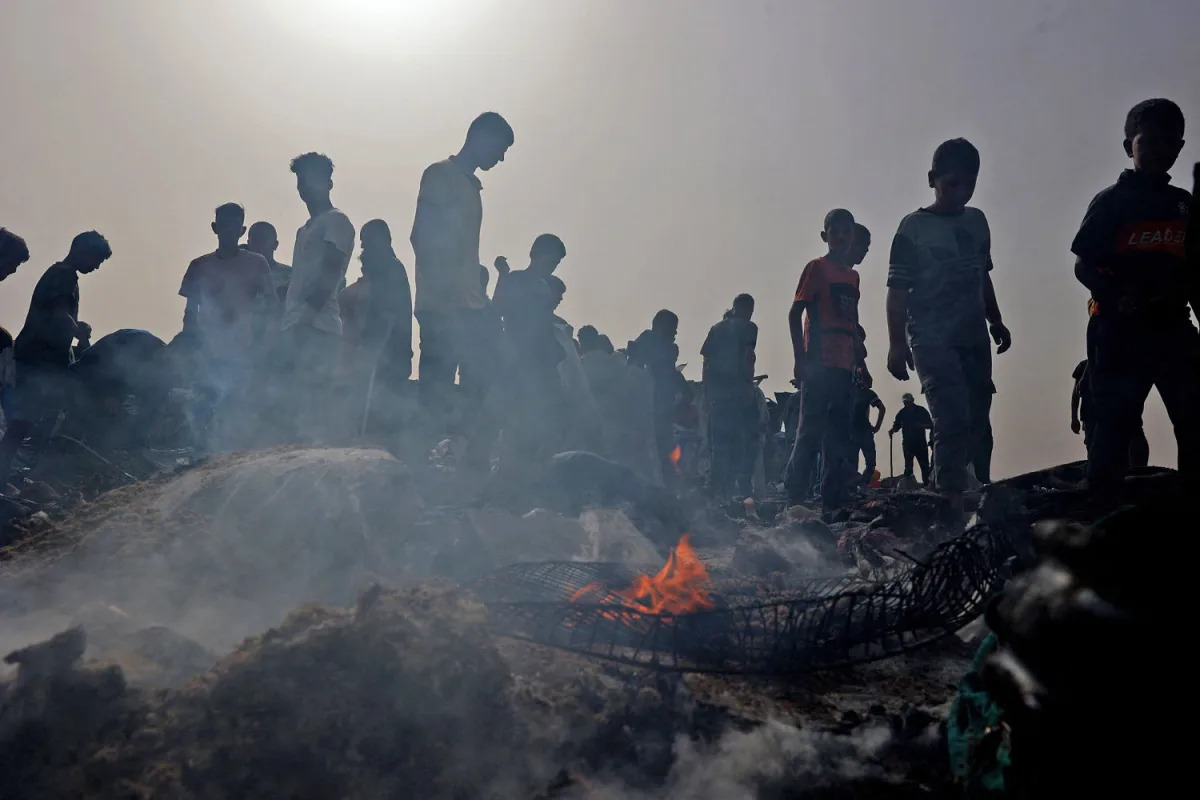
The sudden and rapid spread of the images comes as international attention has been refocused on Israel’s push into Rafah following an Israeli airstrike that local officials said killed at least 45 civilians Sunday.
The proliferation of the images adds to what has been an ongoing battle for attention on social media between voices supporting Israel and its campaign in Gaza and those supporting Palestinians. And while AI images have increasingly become common across the internet, their use on Instagram — a platform that has at times eschewed news while remaining a crucial outlet for Palestinian journalists — underscores how the technology is already beginning to influence political speech online.
Shortly after the “All Eyes on Rafah” image began to go viral, pro-Israel images began to circulate. The images bear many of the hallmarks of AI-created content, including repeated or blurred visual elements. Some accounts and people who have posted the images have been explicit about their use of AI to create them.
The images have posed a challenge for Meta, particularly around how to enforce its policies against AI-generated content and depictions of violence.
On Wednesday, several Israeli media outlets reported that a pro-Israel Instagram template responding to the “Rafah” image was removed from Instagram by the platform. The AI-generated image showed a Hamas gunman standing over a baby in a puddle of blood and a burning Israeli flag with text reading, “Where were your eyes on October 7?”
An AI-generated image posted to Instagram imitating the style of the original
Israel’s official Instagram account published several responses about the removal of the image, complaining in one now-deleted post, “Instagram decided to take down the template, intentionally silencing people from sharing what happened on October 7th.”
The Times of Israel has reported that the original post had been reinstated. Meta said that the image did not violate its terms of use and was mistakenly removed.
Many of the images have been uploaded to Instagram’s “template” feature that lets users quickly share posts to their own accounts.
Some viral templates show graphic images that appear to be made by AI, including one that falsely depicts Netanyahu in different contexts, including with blood on his hands and body. One image, which was shared 5 million times on Instagram, depicted Netanyahu in a waist-high pool of blood, with accompanying text saying “terrorist baby killer!”
Meta has said that it hopes to not amplify political content heading into the 2024 presidential election, but the spread of such images suggests that the platform may be struggling to accomplish that goal in the age of AI.
Despite a new initiative from Meta to more strictly label AI-generated content on its platforms, none of the templates seen by NBC News contained clarifications that the images were made with AI.
Following the virality of the original “Rafah” image, many pro-Palestinian activists criticized the use of AI in sharing their message, arguing that it was sanitizing the real horrors of the war.
This article was originally published on NBCNews.com
Dozens of images related to the war in the Gaza Strip that appear to have been made using artificial intelligence have spread across Instagram in recent days following the viral success of a post calling for “All Eyes on Rafah,” which has now been shared more than 47 million times.
The images, a mix of pro-Irsael and pro-Palestinian posts, include imitations of the original Rafah post as well as more graphic depictions, including a bloodied Israeli Prime Minister Benjamin Netanyahu and an Israeli child confronted by a Hamas fighter. One seemingly AI-generated image shows a large crowd gathered in a town square with giant block letters spelling out “bring them home now,” a reference to the 125 Israeli hostages who remain in captivity in Gaza. It’s been shared over 134,000 times on Instagram.
A seemingly AI-generated pro-Israel image responding to the viral
The sudden and rapid spread of the images comes as international attention has been refocused on Israel’s push into Rafah following an Israeli airstrike that local officials said killed at least 45 civilians Sunday.
The proliferation of the images adds to what has been an ongoing battle for attention on social media between voices supporting Israel and its campaign in Gaza and those supporting Palestinians. And while AI images have increasingly become common across the internet, their use on Instagram — a platform that has at times eschewed news while remaining a crucial outlet for Palestinian journalists — underscores how the technology is already beginning to influence political speech online.
Shortly after the “All Eyes on Rafah” image began to go viral, pro-Israel images began to circulate. The images bear many of the hallmarks of AI-created content, including repeated or blurred visual elements. Some accounts and people who have posted the images have been explicit about their use of AI to create them.
The images have posed a challenge for Meta, particularly around how to enforce its policies against AI-generated content and depictions of violence.
On Wednesday, several Israeli media outlets reported that a pro-Israel Instagram template responding to the “Rafah” image was removed from Instagram by the platform. The AI-generated image showed a Hamas gunman standing over a baby in a puddle of blood and a burning Israeli flag with text reading, “Where were your eyes on October 7?”
An AI-generated image posted to Instagram imitating the style of the original
Israel’s official Instagram account published several responses about the removal of the image, complaining in one now-deleted post, “Instagram decided to take down the template, intentionally silencing people from sharing what happened on October 7th.”
The Times of Israel has reported that the original post had been reinstated. Meta said that the image did not violate its terms of use and was mistakenly removed.
Many of the images have been uploaded to Instagram’s “template” feature that lets users quickly share posts to their own accounts.
Some viral templates show graphic images that appear to be made by AI, including one that falsely depicts Netanyahu in different contexts, including with blood on his hands and body. One image, which was shared 5 million times on Instagram, depicted Netanyahu in a waist-high pool of blood, with accompanying text saying “terrorist baby killer!”
Meta has said that it hopes to not amplify political content heading into the 2024 presidential election, but the spread of such images suggests that the platform may be struggling to accomplish that goal in the age of AI.
Despite a new initiative from Meta to more strictly label AI-generated content on its platforms, none of the templates seen by NBC News contained clarifications that the images were made with AI.
Following the virality of the original “Rafah” image, many pro-Palestinian activists criticized the use of AI in sharing their message, arguing that it was sanitizing the real horrors of the war.
This article was originally published on NBCNews.com

By Jon Miltimore
My wife and I are in the process of finishing Shōgun, the new FX miniseries on Hulu based on James Clavell’s 1975 book.
Shōgun was one of the first books that truly captivated me. I read it for the first time when I was 13 years old, and couldn’t put it down.
Set in the early 17th century, Shōgun tells the story of an English pilot—John Blackthorne, a character based on William Adams, an actual English sailor—who is stranded in Feudal Japan when his ship, the Erasmus, runs aground. The plot follows Blackthorne’s experiences in “the Japans” as he becomes embroiled in the political intrigue and the power struggles of rival warlords fighting for dominance over Japan following the death of the Taikō. (The Taiko is based on Toyotomi Hideyoshi(1537–1598), “the Great Unifier of Japan.”)
Hulu’s adaptation of Clavell’s bestselling book is not the first. A miniseries starring Richard Chamberlain as Blackthorne was released in 1980 and became the second-highest-rated miniseries (behind Roots) ever at the time, attracting some 120 million viewers.
The success of the original miniseries set a rather high bar for the latest adaptation of Shōgun, but FX has not disappointed. The series has proven a hit with critics and general audiences alike, scoring 99% and 90%, respectively, on Rotten Tomatoes.
Audiences are right to be impressed. The 2024 adaptation is so good that it just might be superior to the 1980 version (which benefited from the participation of Clavell, who died in 1994).
The latest Shōgun is less grand in scope than the previous one, but it’s also less daunting. The characters are more relatable, and less archetypal. Cosmo Jarvis’s Blackthorne is strong, capable, and savvy, but he’s more human than Chamberlain’s Blackthorne.
One of the greatest strengths of the show is that it takes viewers to an alien land completely different from anything they’ve ever experienced, and the writers make it clear that life in early 17th-century Japan was not for the faint of heart.
Though the Japanese were more advanced than Westerners in some ways, in other ways they were more brutal and barbaric than the European “barbarians” (their term for the English and Portuguese) living among them. We see this early in the show when one of Blackthorne’s shipmates is boiled alive for no apparent reason, and when a villager is beheaded on the spot for not showing the proper respect to Omi, the samurai lord of the village.
All of this should prompt viewers to ask important questions: What makes a society good? What makes it just? Where should power lie?
Though Feudal Japan is not without its charms, we see that there is something not quite right about its political structure. Even those who have power, like samurai and daimyos, are at the mercy of those who have more of it. It’s Game of Thrones but in the Orient; and the powerful have little respect for the individual.
Blackthorne learns this early in the show. After wrecking the Erasmus off the coast of a small fishing village, he and his men are thrown into a pit. When he’s brought outside the pit, he begins to make demands to the samurai who rules the village, Omi. To demonstrate that Blackthorne has no power in Japan and no business making demands, Omi has Blackthorne held down. He then proceeds to urinate on the English navigator.
Things don’t end there, of course. Blackthorne is taken to Osaka where he meets the powerful Lord Toranaga, whom Blackthorne helps escape.
In Episode 4, Blackthorne returns to the fishing village, where he once again meets Omi. This time, however, Blackthorne is hatamoto, an honor he received from Toranaga. He’s also armed with a pair of mean-looking pistols he was able to retrieve from his ship.
Omi doesn’t like any of this. And in one of the best scenes of the show, the samurai tells Blackthorne’s Japanese interpreter that he must turn his pistols over.
MARIKO: “Omi-Sama insists it is forbidden to bring your weapons today.”
BLACKTHORNE: “Nonsense, your people bring swords wherever they go.”
MARIKO: “He says guns are different. You must turn them over.”
Blackthorne refuses, prompting Omi to take a step toward Blackthorne to confiscate the guns. Blackthorne cocks them and points them right at Omi’s head.
“For some reason, I just can’t shake the memory of our first meeting,” he tells Mariko.
The takeaway is clear. Now armed again with his pistols, and bestowed with samurai standing, Blackthorne has no intention of being powerless ever again.
There’s a lesson here. Firearms empower individuals. They offer protection against the tyrants (big and small) who would rule others.
This is why we have a Second Amendment. Our natural and constitutionally-protected right to bear arms has nothing to do with hunting. It’s to protect us from tyranny.
“To disarm the people… [i]s the most effectual way to enslave them,” George Mason said during Constitutional Debates in 1788.
Writing nearly a half-century later, the famous jurist Joseph Story (1812–1845) elaborated on this point:
The right of the citizens to keep and bear arms has justly been considered, as the palladium of the liberties of a republic; since it offers a strong moral check against the usurpation and arbitrary power of rulers; and will generally, even if these are successful in the first instance, enable the people to resist and triumph over them.
Shōgun shows just how important a firearm can be when it comes to protecting one’s rights and human dignity. Blackthorne might have had hatamoto status during his second encounter with Omi, but it was his two pistols that really made the difference (watch the scene below).
Shōgun is a good reminder that the sole moral purpose of government is to protect our individual rights, not to trample them, as it often does.
- About the author: Jonathan Miltimore is the Senior Creative Strategist of FEE.org at the Foundation for Economic Education.
- Source: This article was published by FEE
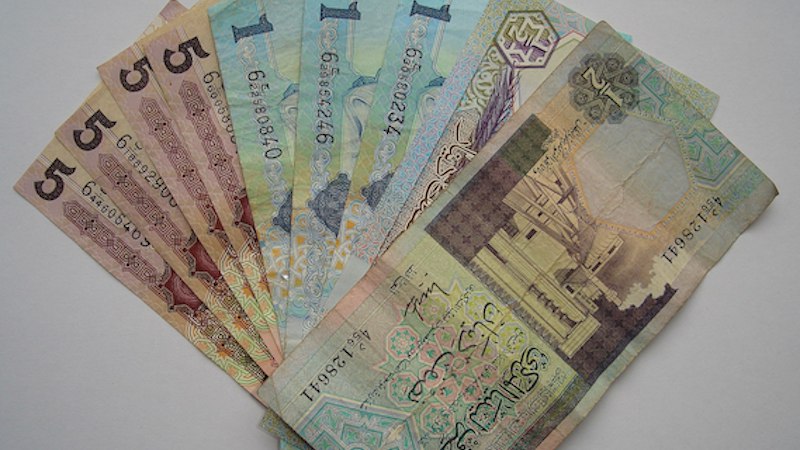
Russia faces fresh allegations of flooding Libyan markets with counterfeit banknotes in another bid to further destabilize the country. The Kremlin has a documented history of sending counterfeit currency to Libyan National Army (LNA) leader Field Marshal Khalifa Haftar.
The Central Bank of Libya (CBL) announced in April that it began withdrawing the first and second prints of 50-dinar (just more than $10) banknotes from circulation after officials discovered counterfeit prints.
Russia is accused of printing the fake money at a farm on the outskirts of Benghazi, Haftar’s base. Russia’s Wagner Group of mercenaries, now known as the Africa Corps, supports the LNA.
The CBL asked banks in Libya and their branches to allow the public to present the banknotes and deposit them in their accounts. It urged banks to exercise due diligence to prevent counterfeit currency from being passed and it published a presentation that showed the minute differences between legitimate and counterfeit 50-dinar prints.
The country is divided between Haftar’s government in Benghazi and Libya’s internationally recognized Government of National Accord (GNA) in Tripoli, which Haftar is attempting to overthrow.
Jalel Harchaoui, an associate fellow at the Royal United Services Institute, said Haftar has intensified efforts to strengthen his ties with the Kremlin since August 2023.
“It’s important to emphasize that Russia’s assistance to Haftar rarely comes without financial demands,” Harchaoui told The New Arab. “Haftar is always required to cover the expenses incurred by the Russians active on Libyan soil — in military and other domains.”
A $150 million dispute between Haftar and Wagner emerged in 2020 after a contract between the parties ended. Haftar was accused of not paying the group after the combined forces lost seven cities over a 24-hour stretch in 2019, the year the warlord launched a sustained assault on Tripoli that ultimately failed.
At the time, Wagner was bringing “fighters — not so experienced — from Syria, Belarus and Serbia,” a military source close to Haftar said in a report by the Arabic Post news website.
In September 2019, five months into Haftar’s attack on Tripoli, Malta officials intercepted a shipment of Russian-made dinars en route to Haftar. Nearly 4.5 billion dinars were shipped from Russia to the eastern port city of Tobruk in the first half of 2019, coinciding with the start of the Tripoli war, Reuters reported. Another billion dinars was delivered to the east in 2016, according to the Libya Herald.
Legitimate Libyan dinars issued by the GNA in Tripoli are printed in the United Kingdom. Joint Stock Company Goznak, a Russian state-owned company, printed the illegitimate bills seized in 2019 and 2020.
As with the current crop of counterfeit cash, the previous fake Libyan dinar bills looked almost identical to official bills. By some estimates Haftar’s government flooded the country with nearly 12 billion Russian-made dinars between 2015 and 2020.
The fake bank notes were used to pay Haftar’s fighters and were found all over the country. They fueled inflation, drove down the value of the dinar, and undermined the official currency supplied by the central bank in Tripoli, according to Libyan economic analyst Mukhtar Al Jadeed.
The primary purpose of the counterfeit currency was to “fund the war on Tripoli,” Al Jadeed told Al-Jazeera.
Officials intercepted a shipment of $1.1 billion in fake dinars bound for Haftar in Malta in the spring of 2020.
By Steven Curtis and Peter D. Rocha
The Department of Defense (DOD) needs a new approach to electrical grid infrastructure to maintain security and access to operational energy. Recent natural disasters and cyber attacks have exposed the vulnerability of the current system, posing threats to military operational readiness. Strategic military facilities currently acquire most of their electric power directly from the national grid, which is increasingly vulnerable to failures. The problems experienced to date could be exponentially worse if targeted by a sophisticated adversary with advanced offensive cyber capabilities, such as Russia or China. Simultaneously, the growth of renewables and increased DOD demand for carbon-free energy create challenges and opportunities for operational energy. To date, only a small fraction of work has been done to create a system for DOD energy that is robust, responsive, and reliable.
A Defense Energy Architecture (DEA) should address these issues by providing a comprehensive approach to microgrid implementation for defense installations and deployable energy capabilities. A DEA would simultaneously deliver increased infrastructure security and carbon-free energy with an advanced microgrid system based on small modular reactor (SMR) nuclear power and renewables, such as wind and solar, when they are available. A DEA should also emphasize the development of energy storage applications beyond batteries, specifically hydrogen. A fully integrated system of baseload (that is, on all the time) electricity production, renewables, and energy storage is necessary to maximize the benefits to DOD in both permanent installation and expeditionary environments. The focus of a DEA should be on efficient resources based on the requirements of each base in which the microgrids would be employed.
DOD needs to advance microgrid systems for several reasons. First, DOD has energy assurance and resilience needs that significantly exceed most civilian requirements, and it therefore requires a separate system for energy production and storage. Second, as one of the largest single energy consumers in the world, DOD has the scale to create a market demand signal strong enough to encourage private investment and drive down hardware costs. Finally, with suitable guidance, DOD could move quickly to reach net-zero carbon goals for energy production.
The defense grid system and energy production mechanisms must improve to increase resilience to natural disasters and terrorist attacks on the national grid and integrate clean energy improvements in a cogent manner. This article defines the concept of a Defense Energy Architecture that may guide the construction of microgrid systems to supply desired energy production while supporting energy independence, security, resiliency, and affordable power. We further recommend that DOD integrate emerging energy concepts, in both garrison and expeditionary environments. Advances in modern energy technologies provide many opportunities for DOD to modernize, increasing security and operational capabilities.
DOD Reliance on the National Electric Grid System and Vulnerabilities
The national grid was designed with one purpose: to deliver electric power from the source of production to end users. However, at the time of its creation, there was little thought given to things such as redundancy in natural disasters and certainly none given to potential problems that could not be imagined at the time, such as cyber attacks and electromagnetic pulse (EMP) weapons. For the security of the Nation, DOD must ensure that it has continuous access to energy, making the entire defense system more robust and able to withstand the emerging threats of 21st-century warfare.
America’s electrical grid is the system that powers the garrison operations of DOD and provides a platform for the application of military power worldwide. For decades, the reliability of the grid system was such that the military was confident that when electricity was needed, it would be there. However, this basic assumption is being questioned as the national grid ages, shows vulnerabilities, and grapples with the challenges of incorporating distributed electricity-generating sources like solar and wind energy.1 These shortcomings—coupled with the realization that the existing system is vulnerable to disruptions from incidents both natural (hurricanes and solar flares) and man-made (cyber attacks and EMPs)—call for more direct control by DOD of energy production systems.
However, rather than simply moving ahead with its current course, DOD should embrace best-in-class technologies to ensure that it is moving forward with the best solutions. Moreover, the system needs to be flexible enough to incorporate new technologies as they evolve to ensure that best-in-class remedies are delivered to address the changing nature of power generation and increasingly sophisticated potential attacks on critical infrastructure.
The current grid system struggles to deal with vulnerabilities that could disrupt power and harm American security, including potential attacks by foreign adversaries or terrorists. For many, Superstorm Sandy in 2012 was a wakeup call—it demonstrated a potential for widespread damage that could affect the national electrical grid, leaving 8.5 million people without power across 21 states.2 However, to those watching closely, Sandy was not an anomalous event but rather more of a culmination of a long-term trend that has revealed how susceptible the grid is to disruption from severe weather, including wildfires and extreme temperatures.3 The potential for disruptive events seems to be increasing.
As devastating as these natural events have been, many national security experts predict that damage from man-made attacks could be multiple times worse. The insurance company Lloyd’s of London has modeled a plausible scenario in which a cyber attack on the Eastern Interconnection, which services approximately half of the United States, could leave large areas—including dozens of military installations—without power for days.4 This is not a distant theoretical scenario: Russia has already demonstrated the ability to successfully attack electrical grid infrastructure in Ukraine, and China is believed to have similar offensive cyber capabilities.5 Additionally, the ransomware attacks on Colonial Pipeline in 2021 demonstrated that criminal organizations and other nonstate actors also possess the tools to sow chaos in American energy infrastructure.6 The national grid is susceptible to large-scale disruption, whether from devastating natural weather events, military attacks from near-peer competitors, or terrorists or international crime syndicates. Therefore, response readiness largely depends on a secure supply of electricity from the main grid.
We know that the military is susceptible to the same threats that menace civilian energy infrastructure. In recent years, weather events have disrupted energy service to military installations, such as Tyndall Air Force Base during Hurricane Michael in 2019 and Joint Base San Antonio–Lackland and others during the winter storms of February 2021.7 While the effect on operations was relatively minor in these instances, it does not take much to imagine that targeted attacks on military infrastructure could be orders of magnitude more harmful and severely impact readiness. DOD recognizes this possibility and has conducted a series of exercises to better understand “the growing threat associated with natural or nefarious events . . . such as missions being separated from access to the national grid.”8 The effects from such events could have major consequences on the military’s ability to respond rapidly to crises.
Defense Energy Architecture
The goal of a DEA is to ensure that the advancement of microgrids for DOD use is comprehensive and standardized. A microgrid can be defined as “a local energy grid with control capability, which means it can disconnect from the traditional grid and operate autonomously.”9 For our purposes, we believe this encompasses both energy generation and storage. Defining the concept must not only focus on near-term needs, but also keep options open for future adaptations. It is beyond the scope of this article to prescribe what a fully functional standard for a DEA would look like. However, we can outline key principles that must be addressed to answer the challenges that face the future of DOD energy systems. The following should be considered as the essential tasks for a DEA to address the emerging energy needs:
- provide carbon- and pollution-free energy and baseload power as much as possible
- provide continuous energy on demand
- provide defense against attacks and resilience in the case of natural disasters
- provide expeditionary capability.
Provide Carbon and Pollution-Free Energy
In recent years, DOD has increasingly focused on the potential threats posed by climate change. An example of this is the Army Climate Strategy, which set goals for 100 percent carbon- and pollution-free electricity for Army installations by 2030.10 Given this policy priority, we believe a DEA should follow the same path. The current focus for the source of this energy is renewables, primarily solar and wind. However, wind and solar power suffer from the fact that they are intermittent (they supply energy only about 30 percent of the time, and wind is not predictable). This creates reliance on fossil fuel–based electrical plants to meet operational demands for energy, which not only runs counter to low carbon goals but also maintains the vulnerable linkage to the main grid.
An ideal solution to this intermittency problem is to use small modular reactors (SMRs) to integrate baseload nuclear energy as the carbon-free backup for solar and wind. In 2021, 60 percent of the electricity generated in the United States came from natural gas and coal.11 So when renewables are not available in the desired amount, DOD and other electricity consumers plug into a system that generates over half its power from carbon-producing and -polluting resources. Instead of backing up renewables with fossil fuels, SMRs can assure that clean energy is available on demand. This shift would allow DOD to phase out fossil fuels in the energy mix over time. Each individual installation could be configured to maximize the natural resources available—for example, relying more on wind for installations on the Great Plains. Once the optimal mix of renewables is designed, SMRs would be deployed to make up the balance. The units are modular and can be added to provide more energy. This would enable DOD installations to sever themselves completely from the national grid over time and achieve clean energy goals.
Provide Continuous Energy on Demand
A second aspect of a DEA is to ensure the availability of continuous operational energy. Again, the intermittent nature of renewables causes issues with instantaneous accessibility to energy. For an organization with 24/7 operational needs, this would not do. Much of the DOD focus thus far has been to look at battery storage to preserve the electricity generated by solar and wind sources.12 However, lithium-ion batteries, which are the current state of the art, are best suited for intra-day storage, as their ability to store energy competitively is capped at around 8 hours.13 In a normal operating environment, this is possibly adequate since it provides overnight storage and dispersion when demand for electricity is low. However, in a crisis scenario when high energy loads are present around the clock, this may lead to shortfalls. In addition, if a natural disaster took solar and wind capabilities offline, battery storage capability would be diminished rapidly after only a few hours. Therefore, a truly independent microgrid system should have autonomous power that could be provided in the case of a prolonged interruption.
While SMRs are ideal for providing continuous energy, a microgrid system should have backup power available in case the unit does need to go offline for any period. As stated, batteries have limited ability to provide anything beyond intra-day energy storage, which itself is a system vulnerability. Hydrogen has much greater capability to integrate with a microgrid system to meet energy storage needs. Hydrogen can be produced by splitting water molecules (H20) into their component parts of H2 and elemental oxygen. When this is done with renewable electricity, the resulting hydrogen is carbon-free or “green.” Once hydrogen is formed, it can store energy indefinitely.14 Therefore, H2 could maximize the total amount of energy produced by renewables.15
Furthermore, hydrogen can be produced by nuclear power, so it is also carbon-free and can store an almost unlimited amount of energy. Infrastructure investments would be required to store the hydrogen in a safe manner, but this is currently done globally in many industries that use hydrogen. If the SMR ever went down, hydrogen could provide a long-term bridge of operational energy until the issue was resolved. Though currently less efficient for short-duration storage than batteries, the flexibility that hydrogen provides in a microgrid system makes it extremely valuable for energy assurance. In fact, coupling hydrogen with battery storage may provide the most overall benefit for the entire system.
Provide Security and Resiliency
A third requirement for a microgrid system for defense use is the ability to safeguard it from potential attacks. We have noted that one of the vulnerabilities of the current grid is susceptibility to cyber attacks. The nature of warfare is constantly evolving. A World War I–era general transported to the 21st century would barely recognize how warfare is conducted in the age of long-range missiles, precision-guided munitions, and stealth bombers. It is not difficult to believe that future warfare may become as unrecognizable to us, since the main contested spaces in the future might not be air, land, and sea but space and cyberspace.
A tipping point may have been reached already with advances in the sophistication of offensive cyber capabilities and society’s increasing reliance on digital technology.16 The national electric grid is vulnerable because of age and the threat to the Supervisory Control and Data Acquisition (SCADA) control system from cyber attacks. An additional threat comes from EMP weapons, which deliver a pulse of energy from a nuclear or electromagnetic detonation “that creates a powerful electromagnetic field capable of short-circuiting a wide range of electronic equipment,” including computers and telecommunications equipment.17 The conventional grid is exposed to EMP attacks in the form of high-voltage control cables and transformers that regulate the grid. High-voltage transformers take 2 years to build, and the United States is inadequately stocked with backup transformers. Thus, a large-scale EMP attack could bring down a large section of the grid for an extended time.18
Certainly, military operational readiness would suffer if military installations were still integrated in the national grid at the time of such an attack. Again, this is not a scenario found only in science fiction novels and dystopian Hollywood films. Today, China is already believed to possess super-EMP weapons and to have developed procedures to execute a first strike.19 This rationale is arguably enough for DOD to explore alternative power delivery systems to maintain response capabilities in the event of such an assault.
Fortunately, a microgrid system based on SMR technology has significant defensive advantages to the national grid. First, by definition, a microgrid is a discrete system that provides power locally. An SMR acts as an “island of power,” which decouples from the larger grid and from other military installations, so a successful attack on one installation would be an isolated incident and not a systemic failure. In the case of a cyber attack or EMP detonation on the larger grid infrastructure, a military microgrid would simply not be affected because it is separate from the rest of the system.
Direct cyber attacks on microgrid infrastructure are also possible, but this infrastructure is more resilient because of its independent computer control. We recommend that both buried SMRs and underground power lines are a standard part of a DEA microgrid configuration. By virtue of being below surface, they are less vulnerable to overhead EMP explosions, which is not an option for systems based on solar panels and wind turbines. Increased sophistication and sheer volume of monitoring sensors required on a large grid necessitate the automated monitoring capabilities of a SCADA system. Automation not only provides efficiency of operation but also affords efficiency of disruption if cyber security systems can be breached. A series of smaller grid systems could be better protected individually, thus vastly increasing cyber security.20 Furthermore, the use of hydrogen as an energy storage medium provides a long-term reservoir of energy, and if the SMR were taken offline for a period, a reversible hydrogen stack could return the stored power in the form of electricity, assuming no damage to the transmission infrastructure.
Provide Expeditionary Capability
The fourth concept underpinning the DEA is the idea that any investments in energy production and storage systems should be applicable in expeditionary environments as well as at installations after the strategic systems become mature. The military uses doctrine, organization, training, materiel, leadership, personnel, and facilities (DOTMLPF) to assess organizational systems and the resources required to support those systems. DOD should avoid redundancy of DOTMLPF for separate systems for energy production and delivery in garrison and expeditionary environments. This just represents waste and opportunity cost.
Second, the challenges faced in deployed operations are equally well addressed by the microgrid systems that we advocate. In the wars in Afghanistan and Iraq, powering forward operating bases was one of the most challenging and deadly aspect of the conflicts. Diesel generators and vehicles required constant fueling, which gave the enemy ample opportunity to attack resupply convoys. The Army Environmental Policy Institute calculated that every 39 fuel-resupply missions resulted in a U.S. casualty.21 These are lives that are lost or irreparably changed, and no price tag can be placed on them. Additionally, it has been estimated that the financial cost of delivering fuel to the end user in the operational theater exceeded $400 per gallon.22 Given the personal and fiscal costs that result from current in-theater energy systems, the clear challenge is to develop systems that remove military operations from the “tether of logistics” as much as possible. This would not only save blood and treasure but also enhance operational flexibility of commanders since they would experience more autonomy in deploying forces.
In addition to installation energy systems, SMRs have the potential to act as the centerpiece of deployed energy systems. As DOD better understands the capabilities of mobile reactors, we expect to see the technology migrate further to the tactical level. The Navy is certainly no stranger to small nuclear reactors, as they have been employed in the fleet since the USS Nautilus launched in 1955. Project Pele, conducted by DOD,23 envisions an SMR that can be used at remote operational bases.24 Analysis has shown that SMR technology allows for production units that are small enough to be moved by a heavy truck but are large enough to produce up to 20 megawatts of energy, enough to power an Army division headquarters.25
As discussed, an SMR can be buried underground, making it a hard target in a deployed environment. While SMRs address the need for a forward operating base’s energy, they do not directly address vehicle mobility. However, the electricity from nuclear generation can be used to power electric and hybrid electric vehicles that the U.S. military is already experimenting with.26 As stated, nuclear energy can be used to create hydrogen and other fuels, and higher operating temperatures of SMRs are ideal for producing hydrogen. Because hydrogen is energy-dense, it can extend the operational range of vehicles. In fact, H2 is nearly three times as energy-dense as petroleum diesel, which means less refueling and fewer halts in missions for refueling operations.27 These expanded operational capabilities are simply not available with batteries, which have one-hundredth the energy storage capacity of hydrogen on an equal-weight basis.28 The nuclear-hydrogen synergy could provide all the energy needed for military operations in deployed environments and eliminate the fossil-fuel supply chain altogether.29 We believe a Defense Energy Architecture should unequivocally embrace an SMR-hydrogen system in deployed operations to save lives and resources and increase operational range and flexibility.
DOD Role in Advancing Energy Technology
Both SMRs and green hydrogen production can be considered emerging commercial technologies. That is, there are commercial units available, but the industries have not yet scaled to optimize production costs. The general trend in technologies over time is to become smaller and cheaper as the technology evolves. However, this takes place only if demand for the product is such that the product is seen as having long-term profitability, and companies have the incentive to invest in research and development that keeps technology moving forward.
The military operates nearly 800 installations worldwide.30 If even a fraction of these installations were to develop SMR capabilities, it would provide a clear signal to producers and investors. The first SMRs would be much less risky to financiers if they had long-term contracted customers once completed. In fact, the Special Capabilities Office (SCO) within the Office of the Secretary of Defense has already narrowed the selection for the first such SMRs to two commercial designs under Project Pele.31 However, this project cannot be seen as a one-off event if the scale benefits for DOD are to be realized. Project Pele could drive the procurement of the first few units within years and lay out a comprehensive plan for future purchases in the out years. A similar effort to identify promising hydrogen technologies would serve to spur investment and bring down costs for long-term, flexible energy-storage options.
The current moment is favorable for this transition in energy systems. SMR designs are being developed by more than 50 startup companies with private capitalization of greater than $2 billion.32 Instead of paying for the entire technological development cost, the military need only pay for the adaptation to military standards. Based on this, the SCO predicts the initial non-Navy military SMR market will be 300 units and the civilian market 1,000 units.33 The Department of Energy (DOE)’s Office of Nuclear Energy is already collaborating with the SCO to move the project forward and coordinate national laboratory efforts. In fact, the coauthor has personally been involved in extensive meetings at Creech Air Force Base, Nevada, to discuss the possibility of “assured energy” being supplied to the base through a prototype SMR as early as 2030.
Similarly, there is much interest in advancing green hydrogen technology. DOE has launched an initiative called the Hydrogen Shot to reduce the production cost of green hydrogen by 80 percent by 2030.34 Furthermore, the Inflation Reduction Act has announced an investment of up to $8 billion in creating regional hydrogen hubs.35 These programs will stimulate significant private investment as well and help advance the current state of hydrogen technology. DOD can draft off these efforts to ensure that developing hydrogen technologies meet the military specifications of an advanced microgrid system. The earlier the demand signal from the military (vs. DOD hoping for the appropriate solutions to emerge organically), the more likely that customized offerings will be available. DOD can play an important role in providing a market for these emerging technologies.
Conclusion
For the military, energy is the lifeblood to maintain military capabilities. In the event of a large-scale natural disaster or infrastructure attack, the military needs to maintain its own systems to ensure readiness. For these reasons, DOD needs to keep advancing SMR-based microgrid systems with adequate long-term energy storage in the form of hydrogen. For strategic facilities, this would mean that bases control their own destiny without counting on an ever more vulnerable electric grid. With SMR microgrids, military bases can isolate their power supply from the grid when necessary. In fact, during crises, excess power could be supplied to the civilian sector as it is available.
DOD should double down on the current efforts of developing microgrids to increase the resilience of its installations, retain the ability to deploy forces globally when needed, and provide expeditionary power without exposed refueling logistics. The benefits would be multifold. In addition to decreasing vulnerability, DOD adaptation of SMR-based microgrids would allow the military to meet clean energy goals and separate itself from carbon-producing fossil fuels. Increased DOD adaptation would drive demand, resulting in greater competition and lower prices. Furthermore, it would serve as a model to civilian energy planners who could observe the positive outcomes and adapt the technology to civilian requirements.
The military has already determined that SMR microgrids have merit, as evidenced by the maturing of Project Pele. The final solution to base supply of electricity should consider long-term efficiencies to the military of the 21st century. All sources of clean energy integration should be considered on a case-by-case basis to meet the individual needs and priorities of each base mission. Success could drive a successful transition to tactical use of SMR microgrids as well.
The national electric grid is becoming vulnerable because of age and the threat of the SCADA control system being compromised through cyber attacks, EMP disruptions, intermittent power outages, or terrorist threats. Military electric power supply, both strategic and tactical, must adapt to this reality and plan for increased future use of microgrids within a generation in the name of mission assurance. Availability, affordability, and uninterrupted power are the force multiplier requirements governing the transition away from legacy systems toward independent microgrids. It is critical that a transition to a defined Defense Energy Architecture, based on these principles, be developed and implemented soon.
About the authors: Captain Steven Curtis, USA (Ret.), is a Consultant at the Readiness Resource Group. Colonel Peter D. Rocha, USAR, is a Faculty Instructor at the U.S. Army War College.
Source: This article was published in Joint Force Quarterly 112, which is published by the National Defense University.
Notes
1 Brian Warshay, “Upgrading the Grid: How to Modernize America’s Electrical Infrastructure,” Foreign Affairs, March/April 2015.
2 Stephen Lacey, “Resiliency: How Superstorm Sandy Changed America’s Grid,” Green Tech Media, June 10, 2014, https://www.greentechmedia.com/articles/featured/resiliency-how-superstorm-sandy-changed-americas-grid.
3 Ibid.
4 Robert K. Knake, A Cyberattack on the U.S. Power Grid (New York: Council on Foreign Relations, April 2017), https://www.cfr.org/report/cyberattack-us-power-grid.
5 Daniel R. Coats, Worldwide Threat Assessment of the U.S. Intelligence Community (Washington, DC: Director of National Intelligence, January 29, 2019), https://www.dni.gov/files/ODNI/documents/2019-ATA-SFR—SSCI.pdf.
6 David E. Sanger, Clifford Krauss, and Nicole Perlroth, “Cyberattack Forces a Shutdown of a Top U.S. Pipeline,” New York Times, May 8, 2021, https://www.nytimes.com/2021/05/08/us/politics/cyberattack-colonial-pipeline.html.
7 Rose L. Thayer, “Winter Weather Causes More Than a Dozen Military Bases to Close,” Stars and Stripes, February 16, 2021, https://www.stripes.com/theaters/us/winter-weather-causes-more-than-a-dozen-military-bases-to-close-1.662417.
8 Rachel S. Cohen, “DOD’s ‘Black-Start’ Exercises Explore What Happens When Utilities Go Dark,” Air & Space Forces Magazine, October 17, 2019, https://www.airforcemag.com/dods-black-start-exercises-explore-what-happens-when-utilities-go-dark/.
9 Allison Lantero, “How Microgrids Work,” Breaking Energy, July 20, 2015, https://breakingenergy.com/2015/07/20/how-microgrids-work-2/.
10 Department of the Army, Office of the Assistant Secretary of the Army for Installations, Energy, and Environment, United States Army Climate Strategy(Washington, DC: Headquarters Department of the Army, February 2022), https://www.army.mil/e2/downloads/rv7/about/2022_army_climate_strategy.pdf.
11 “Electricity Explained: Electricity Generation, Capacity, and Sales in the United States,” U.S. Energy Information Agency, June 30, 2023, https://www.eia.gov/energyexplained/electricity/electricity-in-the-us-generation-capacity-and-sales.php.
12 National Renewable Energy Lab (NREL), “‘Fort Renewable’ Shows Benefits of Batteries and Microgrids for Military and Beyond,” NREL, July 27, 2021, https://www.nrel.gov/news/program/2021/fort-renewable-shows-benefits-of-batteries-and-microgrids-for-military-and-beyond.html.
13 Jonathan Spencer Jones, “The Different Types of Energy Storage and Their Opportunities,” Smart Energy International, May 14, 2021, https://www.smart-energy.com/storage/the-different-types-of-energy-storage-and-their-opportunities/.
14 Mark Newton, “Is Hydrogen Storage the Future of Renewable Energy?” Reset, June 27, 2022, https://en.reset.org/is-hydrogen-storage-the-future-of-renewable-energy/.
15 NREL, “Answer to Energy Storage Problem Could Be Hydrogen,” NREL, June 25, 2020, https://www.nrel.gov/news/program/2020/answer-to-energy-storage-problem-could-be-hydrogen.html.
16 Peter Yeung, “Why Cyber Attacks Will Define 21st-Century Warfare,” Raconteur, August 26, 2021, https://www.raconteur.net/technology/why-cyber-attacks-will-define-21st-century-warfare.
17 Washington State Department of Health, “Electromagnetic Pulse (EMP),” Fact Sheet 320-090, September 2003, 3, https://doh.wa.gov/sites/default/files/legacy/Documents/Pubs/320-090_elecpuls_fs.pdf.
18 James Conca, “China Has ‘First-Strike’ Capability to Melt U.S. Power Grid With Electromagnetic Pulse Weapon,” Forbes, June 25, 2020.
19 Ibid.
20 Terrorism and the Electric Power Delivery System (Washington, DC: National Academies Press, 2012), https://nap.nationalacademies.org/catalog/12050/terrorism-and-the-electric-power-delivery-system.
21 David S. Eady et al., Sustain the Mission Project: Casualty Factors for Fuel and Water Resupply Convoys (Arlington, VA: Army Environmental Policy Institute, September 2009), 14, https://apps.dtic.mil/sti/pdfs/ADB356341.pdf.
22 Adam Tiffen, “Going Green on the Battlefield Saves Lives,” War on the Rocks, May 22, 2014, https://warontherocks.com/2014/05/going-green-on-the-battlefield-saves-lives/.
23 “Project Pele: Mobile Nuclear Reactor,” Office of the Under Secretary of Defense for Research and Engineering, n.d., https://www.cto.mil/pele_eis/.
24 Jaroslaw Gryz et al., “Mobile Nuclear-Hydrogen Synergy in NATO Operations,” Energies 14, no. 23 (2021), 6, https://www.proquest.com/openview/21c797e164840e6b525ba8343e949115/1?pq-origsite=gscholar&cbl=2032402.
25 Ibid., 7. See also “U.S. Army Signs onto 20 MW Solar Farm, Biggest in Military,” GreenBiz, April 12, 2013, https://www.greenbiz.com/article/us-army-signs-20-mw-solar-farm-biggest-military.
26 Jen Judson, “Oshkosh Unveils Hybrid Electric Joint Light Tactical Vehicle,” Defense News, January 25, 2022, https://www.defensenews.com/land/2022/01/25/oshkosh-unveils-hybrid-electric-joint-light-tactical-vehicle/.
27 Patrick Molloy, “Run on Less With Hydrogen Fuel Cells,” RMI, October 2, 2019, https://rmi.org/run-on-less-with-hydrogen-fuel-cells.
28 Gryz et al., “Mobile Nuclear-Hydrogen Synergy in NATO Operations,” 9.
29 Ibid.
30 David Vine, “Where in the World Is the U.S. Military?” Politico, July/August 2015, https://www.politico.com/magazine/story/2015/06/us-military-bases-around-the-world-119321/.
31 Aaron Mehta, “Pentagon Awards Contracts to Design Mobile Nuclear Reactor,” Defense News, March 9, 2020, https://www.defensenews.com/smr/nuclear-arsenal/2020/03/09/pentagon-to-award-mobile-nuclear-reactor-contracts-this-week/.
32 John Milko, Jackie Kempfer, and Todd Allen, “2019 Advanced Nuclear Map,” Third Way, October 17, 2019, https://www.thirdway.org/graphic/2019-advanced-nuclear-map.
33 Patrick Tucker, “U.S. Military Eyes Tiny Nuclear Reactors for Deployed Troops,” Defense One, January 24, 2019, https://www.defenseone.com/technology/2019/01/us-military-eyes-tiny-nuclear-reactors-deployed-troops/154406/; and author teleconference meeting April 16, 2019, with the National Defense Industrial Association–Las Vegas and the Special Capabilities Office.
34 Department of Energy, “Hydrogen Shot,” Office of Energy Efficiency and Renewable Energy, 2021, https://www.energy.gov/eere/fuelcells/hydrogen-shot.
35 Department of Energy, “Regional Clean Energy Hubs,” Office of Clean Energy Demonstrations, n.d., https://www.energy.gov/oced/regional-clean-hydrogen-hubs.