
Требования Путина о начале переговоров с Украиной невыполнимы. Это заставляет некоторых прийти к выводу, что #Путин не пытается вести переговоры. Это напомнило мне старый анекдот:
Богатый бизнесмен и известный бабник приглашен ко двору королевы Виктории и Виктория задала ему… pic.twitter.com/gmiTzREikV
— gerry Karisson (@KarissonGerry) June 14, 2024
Day: June 14, 2024
Categories
NPR News: 06-14-2024 12PM EDT
NPR News: 06-14-2024 12PM EDT
Learn more about sponsor message choices: podcastchoices.com/adchoices
![The BRP Bagacay (center), a Philippine Coast Guard ship, is hit by water cannon fired by Chinese coast guard ships near Scarborough Shoal in the South China Sea, in this frame grab from a handout video filmed and released April 30, 2024. [Handout/Philippine Coast Guard]](https://www.eurasiareview.com/wp-content/uploads/2024/05/a-26.jpeg)
The polemics over a so-called “gentleman’s agreement” between the Philippines and China to manage a bitter row over the South China Sea may confound future diplomatic efforts to handle the spat. China sees Philippine commitment as fleeting, with abrupt reversals from earlier understandings not startling and discreet deals fair game to domestic partisan politics. Manila dismisses Beijing’s revelations as part of its false narratives meant to sow discord and confusion. Unreliability breeds skepticism. Divulging details of supposed behind-the-scenes negotiations is reprehensible.;
Despite both sides’ initial hope and interest, maritime tensions hijacked relations. On the sidelines of last year’s APEC Summit in San Francisco, Presidents Ferdinand Marcos and Xi Jinping;agreed;that the sea row should not define bilateral ties. However, later events showed how maritime issues cause relations to deteriorate. Philippine Defense Secretary Gilbert Teodoro and National Security Adviser Eduardo Año;called;for the expulsion of Chinese embassy officials responsible for recording a supposed phone conversation between a Chinese diplomat and a Filipino military official.;;
“New deal” to manage old disputes?;
Two supposed deals are put on the spot – one over;Second Thomas Shoal;and another over;Scarborough Shoal. Both features were sites of the most violent sea mishaps between the two sides. Chinese coast guard ships used;water cannons to drive away a Filipino civilian supply boat contracted by the military bound for Second Thomas last March. The month after, a similar high-pressure;water blasting;against a Filipino coast guard ship and a fisheries authority vessel off to bring supplies to Filipino fishers in Scarborough occurred.;
Beijing took control of Scarborough after a tense standoff in 2012, while Manila maintains a presence in Second Thomas through BRP Sierra Madre, an old rusting tank landing ship grounded on the low-lying reef in 1999. In 2016, the then-new Duterte government purportedly entered into a pact with China that allowed Filipino fishers to;resume;fishing in Scarborough, a rich traditional fishing ground. A supposed agreement over Second Thomas allowed Manila to bring basic provisions to its troops but;not;construction materials to reinforce the beached ship. Critics argue that such informal accords;compromised;Philippine interests since access to the two features is seemingly hinged on Chinese consent and regulation. Filipinos were;restricted;from entering Scarborough’s lagoon, where there were more fish. Philippine military and coast guard assets were also;barred;from entering the rock’s 12 nautical mile territorial sea or airspace. Meanwhile, failure to fortify the weathered BRP Sierra Madre may erode the country’s sovereign marker in Second Thomas, although;repairs;were still made despite the supposed deal.;
One sorry consequence of all this raucous sea drama was the dissipation of dispute management and preventive diplomacy. China wants to;revive;the Joint Coast Guard committee platform between the two parties established during the previous government, but there seems to be no enthusiasm on Manila’s part. The hotline communication between the banner maritime agencies of both sides was also;severed. Philippine Navy Vice Admiral Alberto Carlos of the Western Command who spoke on the phone with a Chinese military attache to help de-escalate tensions, wasrelieved;from his duty. Without setting a bottom, relations can further descend. The rancor may make the search for a mutually face-saving off-ramp more difficult.;
At the rate things are going, another run-in may be just around the corner. That it could be worse than the previous is not unlikely. From lasers and dangerous maneuvers to collisions and water cannons against civilian supply boats and, most recently, against government vessels, one shudders what could be next. Even the deterrent value of joint sails and exercises with allies and partners is now under strain as China;undertakes;simultaneous drills and deploys ships to;shadow;rival vessels in choppy waters. The most dangerous sea incident thus far between both sides occurred while the 2024 Philippine-U.S. Balikatan military exercise was ongoing. This is despite this year’s drill being touted as one the biggest and most complex in the history of the annual activity.;
In reply to Manila’s transparency initiative, exposing Chinese activities in the Philippines’ exclusive economic zone, Beijing also began to bare all,;spilling;the beans on deals that were apparently reached with the former and current Philippine governments. Marcos’ fiery;speech;at the Shangri-la Dialogue and Chinese;seizure;of supplies meant for Filipino troops stationed in Second Thomas show more fireworks are underway. Beijing also;accusedFilipino soldiers of pointing guns at its coast guard.;
Yet, for all these worrying developments, the last public high-level in-person meeting between the two disputants;happened;last January during the eighth bilateral consultative mechanism held in Shanghai, attended by their respective vice foreign ministers. The Philippines was;absent;at the 19th Western Pacific Naval Symposium held in Qingdao last month – the only member to miss the biennial meeting that gathers naval leaders from 30 countries. Whether it was a deliberate snub or not, the event in the eastern Chinese city, home to PLA Navy’s North Sea Fleet, coincided with the early days of Balikatan. Opportunities for frank and candid exchanges are now hard to come by, so letting one pass is a blunder.;
In stark contrast, the U.S. and China, despite the range of issues that divide them, have been increasing high-level official contacts. While the first week of Balikatan was underway, Secretary of State Antony Blinken;traveled;to Shanghai and Beijing, where he met Public Security Minister Wang Xiaohong, Foreign Minister Wang Yi, and Chinese President Xi Jinping. Two weeks prior and days before the Philippines-US-Japan trilateral summit in Washington, Treasury Secretary Janet Yellen;was;in Guangzhou and Beijing to talk business with Chinese leaders. No country should delegate its security or diplomacy to another country, even to a longstanding ally. If you are not on the table, you can be on the menu. The 2012 Scarborough deal can be a case in point.;
Domestic politics can complicate diplomacy;
A congressional;probe;on the alleged “gentleman’s agreement” was made with some;solonswanting former President Rodrigo Duterte to appear. But such an inquiry may also set a worrisome precedent. There can be no statute of limitations for such investigation in aid of legislation. What would prevent a lawmaker from filing a resolution to examine a supposed 2012 deal brokered by the U.S. that called for Philippine and Chinese ships to simultaneously withdraw from Scarborough? The;meeting;allegedly took place in a Virginia hotel;betweenthen-U.S. Assistant Secretary of State Kurt Campbell and Chinese Vice Foreign Minister Fu Ying. It was unclear if a Philippine representative was in the meeting, but Manila obliged and accused China of reneging. Since then, Manila lost control of the feature, and one can see Duterte’s move as salvaging something from an already bad situation he inherited. A Senate;inquiry;over a leaked Philippine Drug Enforcement Agency report dated 2012 shows the possibility of scrutinizing an event more than a decade ago. This means the circumstances around the 2012 U.S.-mediated deal can be unpacked.;
The open feud between former and current Philippine presidents may give a political color to such investigations. That domestic politics can ferret out such confidential discussions or upset such arrangements means the current Marcos administration can also be held answerable by its successor. For instance, an;inquiry;into the decision to expand U.S. military access in the country, including three additional sites in northern Luzon close to Taiwan but distant from the West Philippine Sea, may be revived. The same goes for reported U.S. involvement in building a possible dual-use;port;in Batanes, which is not even a designated agreed site under the 2014 Enhanced Defense Cooperation Agreement. If Manila’s warming up to a Taiwan contingency is a big factor behind more intense Chinese pressure on the West Philippine Sea, then some lawmakers may ask what’s behind the Marcos giving America a blank check in northern Luzon and Batanes.;
One silver lining is that despite all the noise, most Filipinos still prefer diplomacy to address the multiparty maritime tiff. A recent survey revealed that 72% of Filipinos support diplomacy and peaceful approaches in dealing with the sea row. Unlike China or Vietnam, it may be hard to insulate foreign policy from the vagaries of domestic politics in a boisterous democracy like the Philippines. Although foreign policy generally does not figure high in midterm elections, politicians may ride on it to boost their nationalist credentials and shore up their campaigns. Anything related to China, from offshore gaming, tourists, students, and academic exchanges to investments, can be politicized and securitized. This is a challenging time for diplomacy.
- This article was published at China-US Focus
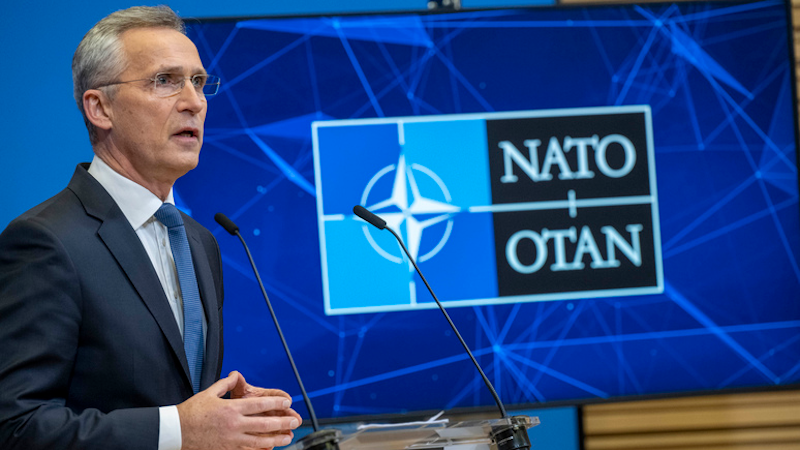
NATO Defence Ministers concluded a two-day meeting on Friday (14 June 2024) to prepare the Washington Summit in July. They discussed strengthening NATO’s deterrence and defence and support for Ukraine.;
On Ukraine, ministers agreed a plan on how NATO will lead the coordination of security assistance and training. “This will allow NATO leaders to launch this effort at the Washington Summit in July, putting our support to Ukraine on a firmer footing for years to come,” said Mr Stoltenberg. With a command in Wiesbaden, Germany, NATO will coordinate training and equipment donations, with nearly 700 personnel from Allied and partner nations involved in this effort. NATO will also facilitate equipment logistics and provide support to the long-term development of Ukraine’s Armed Forces. “These efforts do not make NATO a party to the conflict, but they will enhance our support to Ukraine to uphold its right to self-defence,” said the Secretary General.
Defence ministers also agreed on response options for Russia’s hostile actions against Allies. These include increased intelligence exchange, enhanced protection of critical infrastructure, including undersea and in cyber space, and further restrictions on Russian intelligence operatives. “Russia’s campaign will not deter us from supporting Ukraine and we will continue to protect our territories and populations against any kind of hostile actions,” said Mr Stoltenberg.;
On deterrence and defence, ministers discussed new NATO defence plans, which military planners are translating into concrete requirements for the forces and capabilities needed to defend Allies. “Allies are offering forces to NATO’s command at a scale not seen in decades. Today we have 500,000 troops at high readiness across all domains, significantly more than the goal that was set at the 2022 Madrid Summit,” said Mr Stoltenberg. He added that Allies are investing in key capabilities, noting that “over the next five years, NATO Allies across Europe and Canada plan to acquire thousands of air defence and artillery systems, 850 modern aircraft – mostly 5th generation F-35s – and also a lot of other high-end capabilities.” NATO is also investing in innovation, including over 1 billion dollars in the NATO Innovation Fund. Allies discussed a new Defence Industrial Pledge which will scale up military production and solidify long-term cooperation with industry.;
In a meeting of the Nuclear Planning Group on Friday, defence ministers also discussed the ongoing adaptation of NATO’s nuclear capabilities. “We are a nuclear Alliance – committed to being responsible and transparent. But clear in our resolve to preserve peace, prevent coercion, and deter aggression,” said Mr Stoltenberg.

By Matthew Olay
President Joe Biden and Ukrainian President Volodymyr Zelenskyy on Thursday signed a 10-year bilateral security pact aimed at strengthening Ukraine’s ability to defend itself in the present while also deterring aggression in the future.
“Our goal is to strengthen Ukraine’s credible defense and deterrence capabilities for the long term,” Biden said during remarks shortly after the signing.
“A lasting peace for Ukraine must be underwritten by Ukraine’s own ability to defend itself now, and to deter future aggression anytime in the future,” the president continued, adding that the U.S. is going to help ensure Ukraine can do both. ;
Per the agreement, the U.S. and Ukraine will spend the next 10 years building and maintaining Ukraine’s credible defense and deterrence capability; strengthening Ukraine’s capacity to sustain its fight over the long term; accelerating Ukraine’s Euro-Atlantic integration; and consulting in the event of a future Russian armed attack against Ukraine.
Biden said that the agreement also lays out the two countries’ shared vision for achieving a “just peace.”
“[It’s] a peace rooted in the U.N. charter, and the principles of sovereignty and territorial integrity,” Biden said. “[It’s] a peace with a broad basis for it around the world that holds Russia accountable for the damage it has done in this war.”
During his remarks, Biden also said that the G7 recently achieved a “significant outcome” by freeing up some of the $280 billion in Russian assets that members of the G7 and European Union worked to freeze following Russia’s invasion of Ukraine in early 2022.;
“I’m very pleased to share that, this week, the G7 signed a plan to finalize and unlock $50 billion in the proceeds of those frozen assets, to put that money to work for Ukraine [as] a reminder to [Russian President Vladimir] Putin we’re not backing down,” Biden said.;
“[The unlocking of the proceeds] has been something that the United States has put a lot of energy and effort into, because we see the proceeds from these assets as being a valuable source of resources for Ukraine at a moment when Russia continues to brutalize the country — not just through military action on the front, but through the attempted destruction of its energy grid and its economic vitality,” National Security Advisor Jake Sullivan told reporters Thursday.
In addition to the signing of the bilateral security agreement and the distribution of proceeds from unlocked Russian assets to Ukraine, Biden also said that the G7 has taken a third “major step” in support of Ukraine by coming to an agreement on sanctioning countries that are contributing to Russia’s war efforts.;
“Collectively, this is a powerful set of actions;” Biden said, “and it will create a stronger foundation for Ukraine’s success.”
The G7 summit takes place in Italy’s Puglia region and runs through this Saturday.
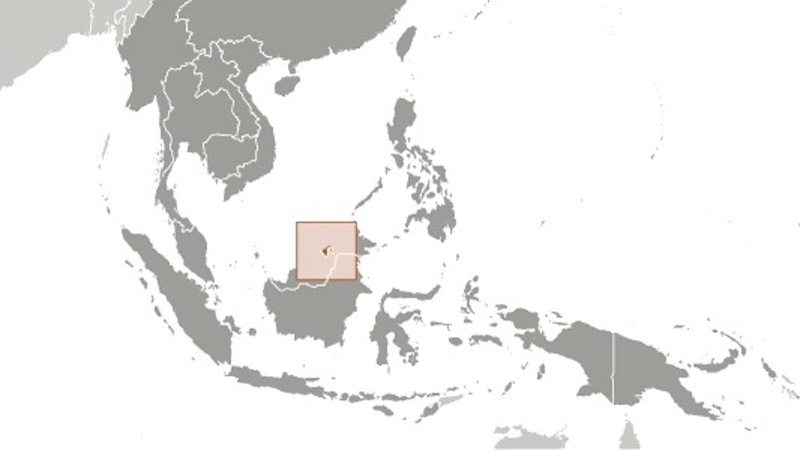
TotalEnergies said Friday it has entered into an agreement to sell its wholly-owned subsidiary TotalEnergies EP (Brunei) B.V. to Hibiscus Petroleum Berhad, a Malaysian independent oil and gas exploration and production company, for a consideration of $259 million. The transaction is expected to close in the fourth quarter 2024.
TotalEnergies EP (Brunei) B.V. owns and operates a 37.5% interest in Block B, alongside Shell Deepwater Borneo (35%) and Brunei Energy Exploration (27.5%).
Block B, located 85 kilometers off the coast of Brunei, contains the Maharaja Lela/Jamalulam (MLJ) field, which started producing in 1999 and represented a net production for TotalEnergies of approximately 9,000 barrels of oil equivalent per day in 2023.
“This transaction fits with our strategy to actively manage our portfolio by monetizing mature assets and to allocate our talents to the most promising assets”, said Jean-Pierre Sbraire, Chief Financial Officer of TotalEnergies.
Top Iranian and Russian officials express their countries firm determination to strengthen mutual relations and implement bilateral agreements in various fields. https://t.co/XTXeVy50Co
— Michael Novakhov (@mikenov) June 14, 2024
Top Iranian and Russian officials express their countries firm determination to strengthen mutual relations and implement bilateral agreements in various fields. https://t.co/XTXeVy50Co
— Michael Novakhov (@mikenov) June 14, 2024
Top Iranian and Russian officials express their countries firm determination to strengthen mutual relations and implement bilateral agreements in various fields. https://t.co/XTXeVy50Co
— Michael Novakhov (@mikenov) June 14, 2024