
You’ve heard of Onnik Dinkjian. We’ve all heard of Onnik Dinkjian. “He sang at my wedding—my parents’ too.” “I have three copies of The Many Sides of Onnik.” “We listen to Havadamk on the car ride to Sunday school.” “Hoy Nazan is my kids’ favorite song!” “I can’t remember an Olympics without his voice.” These are all common refrains. Well, this past weekend was his final performance at St. Illuminator’s Cathedral in New York City.
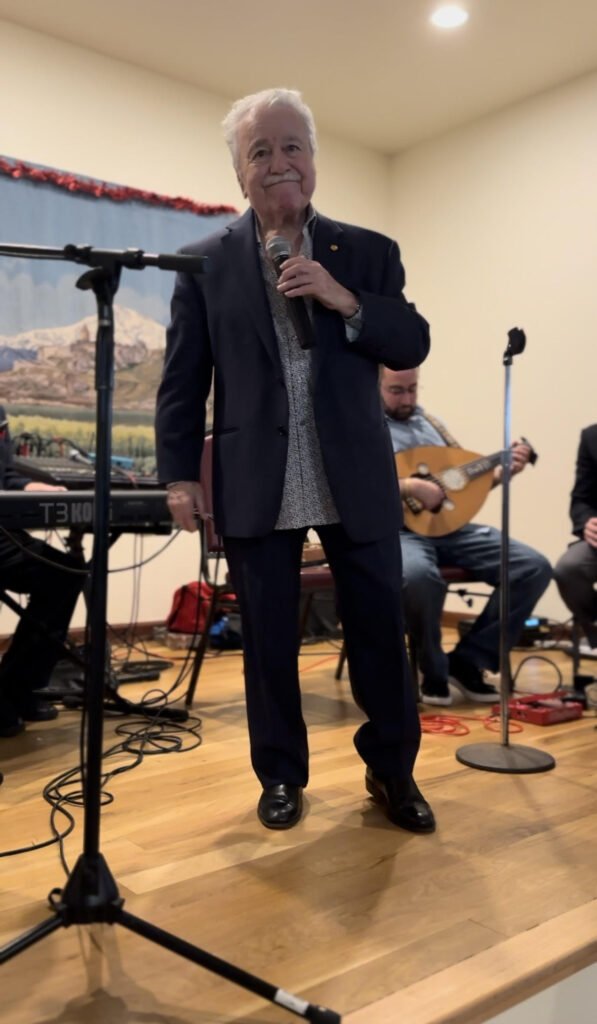 Onnik Dinkjian
To commemorate this monumental event, I could tell you about his humble childhood growing up in a dirt floor shack. How he lost both parents at a young age. How he was adopted by his godparents and moved to the United States in 1946. How his music career started with choir practice at church and has grown in achievements and awards. How he’s just as sweet at home as he is on stage—perhaps a little less hammy, but nonetheless. How he’s selflessly served his community through music for over 70 years, and how as his granddaughter, I’m just so proud. I could tell you he’s a legend, but I don’t have to tell you any of that, because like I said, we all know Onnik. No, instead I’d like to tell you about Club 27, and I think he’d like that, too.
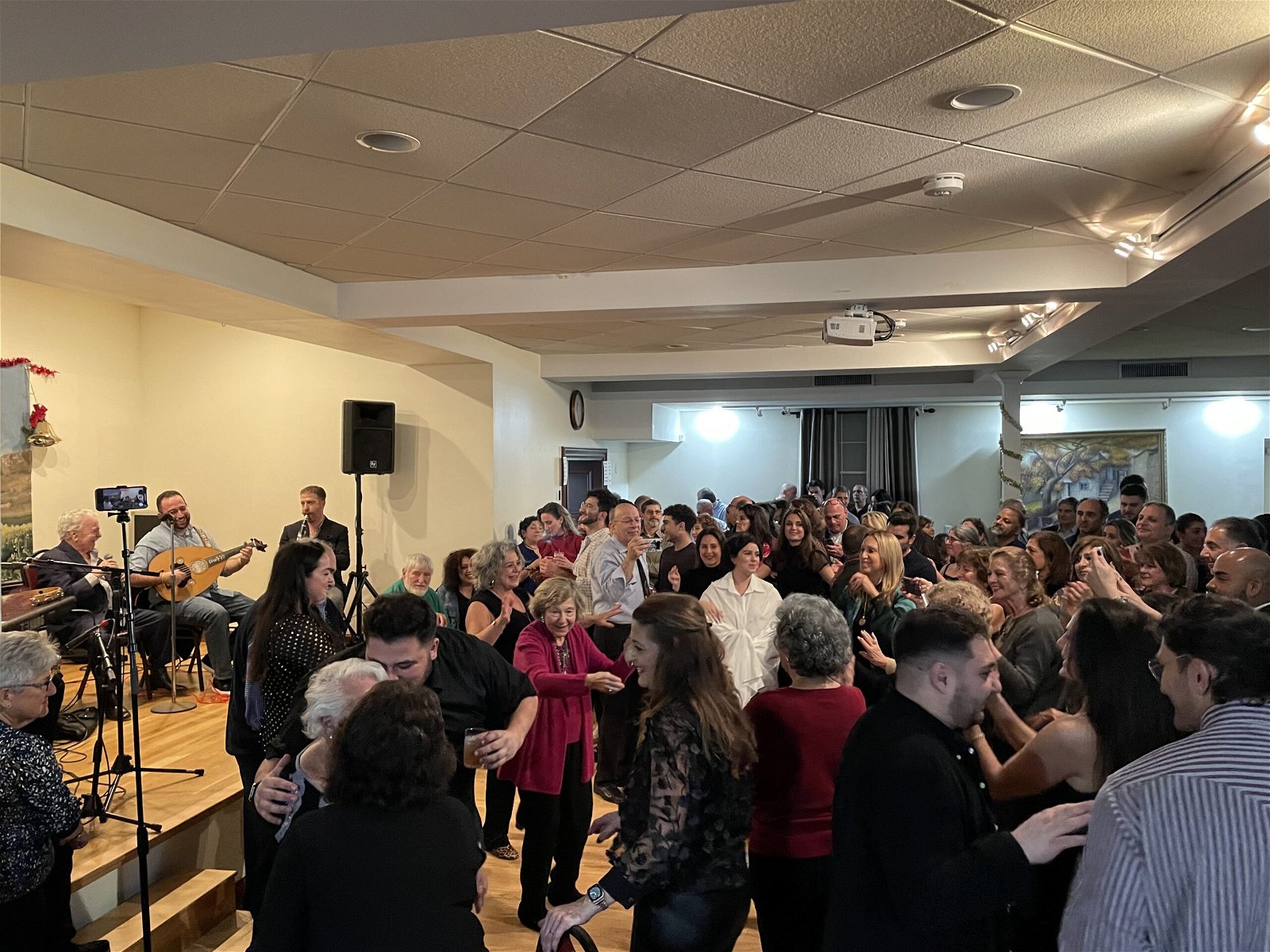 A packed dancefloor
Ornate oak doors open upon a modest church basement. A self-service coat closet is on your right, and Aunt Louise and Uncle Morris man the ticket table on your left. You’re told your mom already paid for you, so you make your way inside, stopping every couple of steps to kiss and greet the usual cast of characters. Round tables are draped with red and gold cellophane tablecloths, a few peppermints scattered across them. Aunt Lulu and Aunt Sally, Aunt Alice and Aunt MaryAnne are already seated at their usual table—front row seats to the dance floor. Uncle Pete and Uncle Avi are setting up behind the bar, and Aunt Meg runs Poland Spring bottles out from the kitchen. On the little stage, with a big Mount Ararat painting, the musicians are already seated—Jimmy on dumbeg, Dad on keyboard, Raffi on oud, Stevie on clarinet, Onnik. The music starts, and it’s time to dance.
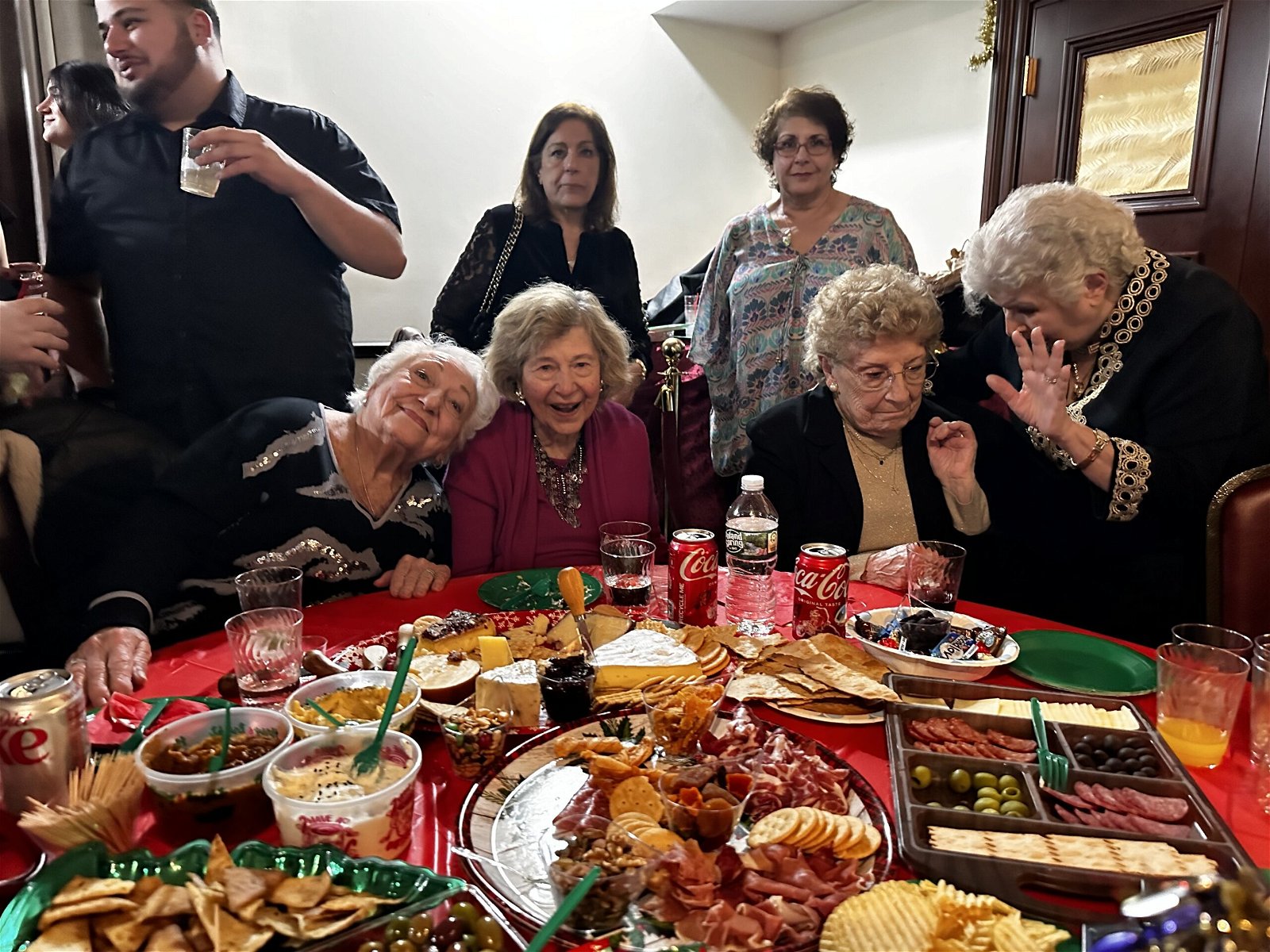 Front row seats to the dancefloor
For four hours, you shoorch bar and halleh, tamzara and pampouri, solo dance with your Meme and smile to watch your friends dance with their grandmas, too. You look around and see everything and everyone doing exactly what they always do at Club 27. There’s Aunt Rosemary leading line after line, and you stare at her feet to make sure you’ve got the steps right. There’s Big Mike sitting by the corner of the stage, waving his cane and egging on the dancers. There’s the hierarchical order of who stands where during the halleh, and don’t even think about trying to break into the center of that line. My nephews are at a table—one sipping on a seltzer with muffling headphones covering his ears, the other fast asleep across two chairs pushed together. There are the two odar women who come every year, because they feel something in this music. There’s Aunt Roxy with her funky jacket and Aunt MaryLou making everyone laugh. There’s more money in the tip basket at the bar than what they sold in drinks. There’s phones out recording and moms Facebook live-ing. Pinkies grow tired and feet grow sore, but no one dares to stop dancing, because Onnik hasn’t stopped singing.
The coffee is served and you know the night is coming to an end. He sings one final song—Yerevan like always, but this time there isn’t a dry eye in the house. Everyone pitches in to clean up the hall. We roll up the tablecloths and stuff them into the garbage cans. The musicians’ equipment is loaded into their cars. The secret window is opened up and the bottles of alcohol are stashed away. The night is over although no one wants it to be.
There is something so magical about Club 27, something I wish I could bottle up and keep to myself, store on my shelf and revisit when I feel my identity waning, when I just need a little kef. For so long, I’ve watched my Pepe up on that stage. I’ve seen how he accompanies these incredible club-goers as they carry on our traditions and harness our culture, as they create community unlike anything anywhere else. I’ve watched as they, too, have accompanied him. They transport Onnik back in time. They restore him into the young man whose career started on that very same stage.
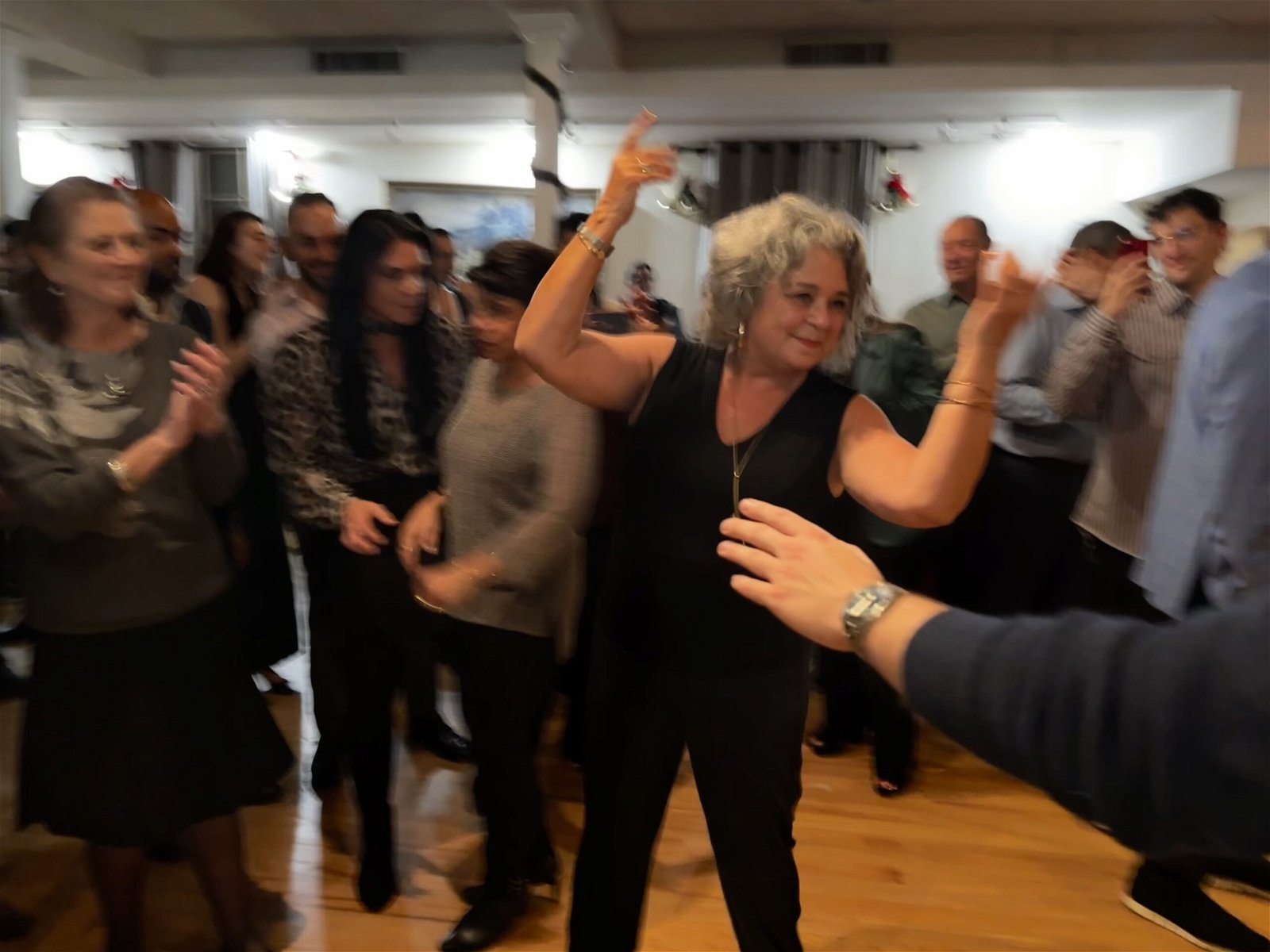 Margo Dinkjian, author’s mother, dancing
Club 27 is not just a dance in a crowded church basement. It’s a time capsule, a suspension of reality, where a performer and his crowd don’t feel or act their own age. It’s a cherished tradition that will never be the same. But that’s how things go. Onnik gave his final performance at St. Illuminator’s Cathedral—a fitting farewell. His music, his impact, his legacy and his beloved Club 27 will reign forever, though. We’ll make sure of it.
Author information

Arev Dinkjian
Arev Dinkjian grew up in an Armenian household in Fort Lee, NJ. She was always surrounded by art, sourced by her musical father and grandfather, Ara and Onnik, or her creative mother Margo. Arev graduated from Providence College with a degree in elementary and special education. She enjoys teaching language arts to her students and takes great pride in instilling an appreciation for literature in her classroom. She is a former member of the New Jersey AYF “Arsen” Chapter and a member of both the Bergen County ARS and the Sts. Vartanantz Ladies’ Guild. She also dedicated many summers to AYF Camp Haiastan, which she says remains her favorite topic to write about.
The post Club 27: A Fitting Farewell appeared first on The Armenian Weekly.