
A Green Legacy: ATP’s eight millionth tree planting Armenian Weekly
Day: December 12, 2023

Images from Ani, the ancient Armenian capital, are featured in the 2024 wall calendar published this week by Stone Garden Press.
The photographs are from the portfolio of Matthew Karanian, the author-photographer of The Armenian Highland, an award-winning history book about Western Armenia and the First Armenian Republic of 1918. Karanian’s photographs of Ani cover a period of 20 years, dating back to 2003 when he made his first research trip to the ancient capital. During those years, Karanian has documented the changes at Ani.
Ani was a restricted military zone when Karanian first visited 20 years ago. Photography was forbidden, and armed soldiers enforced the law. Still, Karanian was able to take photographs of Ani using a film camera, while standing outside the city walls. One of those images graces the cover of the 2024 calendar. Later, when the military restriction was lifted, Karanian returned and documented the city within the walls, using digital equipment.
“The loosening of the restrictions harmed Ani,” says Karanian. “With the military restriction lifted, and with the soldiers largely gone, Ani was plundered.” Karanian has documented illegal excavations that were performed, apparently by looters, during the past decade.
There have also been so-called “renovations” to the churches, walls and other monuments in Ani in recent years. These reconstructions were performed under the supervision of Turkish authorities and, according to Karanian, the work was sometimes performed without regard to historical accuracy.
Karanian first published images from his portfolio of Ani in the historical guidebook Historic Armenia After 100 Years. This is the first time the images have been available in a calendar.
The 2024 Ani wall calendar is available online from www.HistoricArmeniaBook.com for the online discounted price of $21.95 with free shipping within the U.S. The calendar measures 9 x 18 inches, and covers the 13-month period from December 2023 through December 2024.
Mail orders are also accepted with checks for $24.95 made payable to Stone Garden Press, P.O. Box 943, Pasadena, CA 91102.
Author information

Guest Contributor
Guest contributions to the Armenian Weekly are informative articles or press releases written and submitted by members of the community.
|
The post Photography of ancient Armenian Ani featured in new 2024 wall calendar appeared first on The Armenian Weekly.

AYF Camp Haiastan, a cherished institution fostering memorable experiences for campers, is excited to announce a job opening for the position of Executive Assistant. As we continue to grow and enhance our operations, we are seeking an individual who is proactive, organized and adept at multitasking to join our dynamic team.
The Executive Assistant will play a pivotal role in supporting the Executive Director in day-to-day operations, with responsibilities spanning from maintaining a professional line of communication with parents, service suppliers and camp personnel to handling administrative tasks. The position offers flexibility, allowing for a work-from-home/hybrid setup during the offseason and requiring onsite presence during the bustling summer camping season.
Requirements:
- Proactive and problem-solving oriented personality.
- Advanced computer skills, including proficiency in Google Suite and Microsoft Office.
- Demonstrated expertise in utilizing social media and marketing platforms, such as Facebook, Instagram, Twitter and Constant Contact.
- Proficient website development skills, particularly with Wix websites (experience with other platforms will be considered).
- Must hold a valid driver’s license.
If you are passionate about contributing to the success of Camp Haiastan and possess the required skills and attributes, we invite you to apply for this exciting opportunity. Join us in creating unforgettable experiences for campers and being a vital part of our dedicated team.
To apply, please submit your resume and cover letter to execdirector@camphaiastan.org.
Applications will be accepted until January 2, 2024.
Thank you for your interest in joining the AYF Camp Haiastan family!
Author information
Located in Franklin, Massachusetts, AYF Camp Haiastan, was founded in 1951 and is the oldest Armenian camp in the United States. The Camp prides itself on providing a healthy and safe experience to Armenian-American youth to help them foster their Armenian identity and establish lifelong friendships.
| Twitter |
The post AYF Camp Haiastan is Hiring: Executive Assistant Position Available! appeared first on The Armenian Weekly.
Armenia Tree Project (ATP) reached an extraordinary milestone on December 1, 2023, as it planted its eight millionth tree at the Khoren and Shooshanig Avedisian School in Yerevan’s Malatia-Sebastia District. As ATP approaches its 30th anniversary, this event stands as a testament to the organization’s unwavering commitment to the greening and reforestation of Armenia.
The celebration at the Avedisian School was a vibrant showcase of unity, youth-leadership and the invaluable support of ATP’s partners. Synopsys Armenia, the Armenian Missionary Association of America and Fuller Center for Housing Armenia were among the distinguished guests who joined school administrators and students for this momentous occasion.
Elen Baghdasaryan, a student representative from Artsakh, delivered a heartfelt welcome speech alongside Hamlet Varpetyants from Armenia. They emphasized the symbolic significance of tree planting as a gesture of love and hope for Armenia’s future. Elen shared, “This is the first time I’m planting a tree, and it symbolizes new beginnings as we [Artsakhtsis] have to start our lives again here in Armenia.”
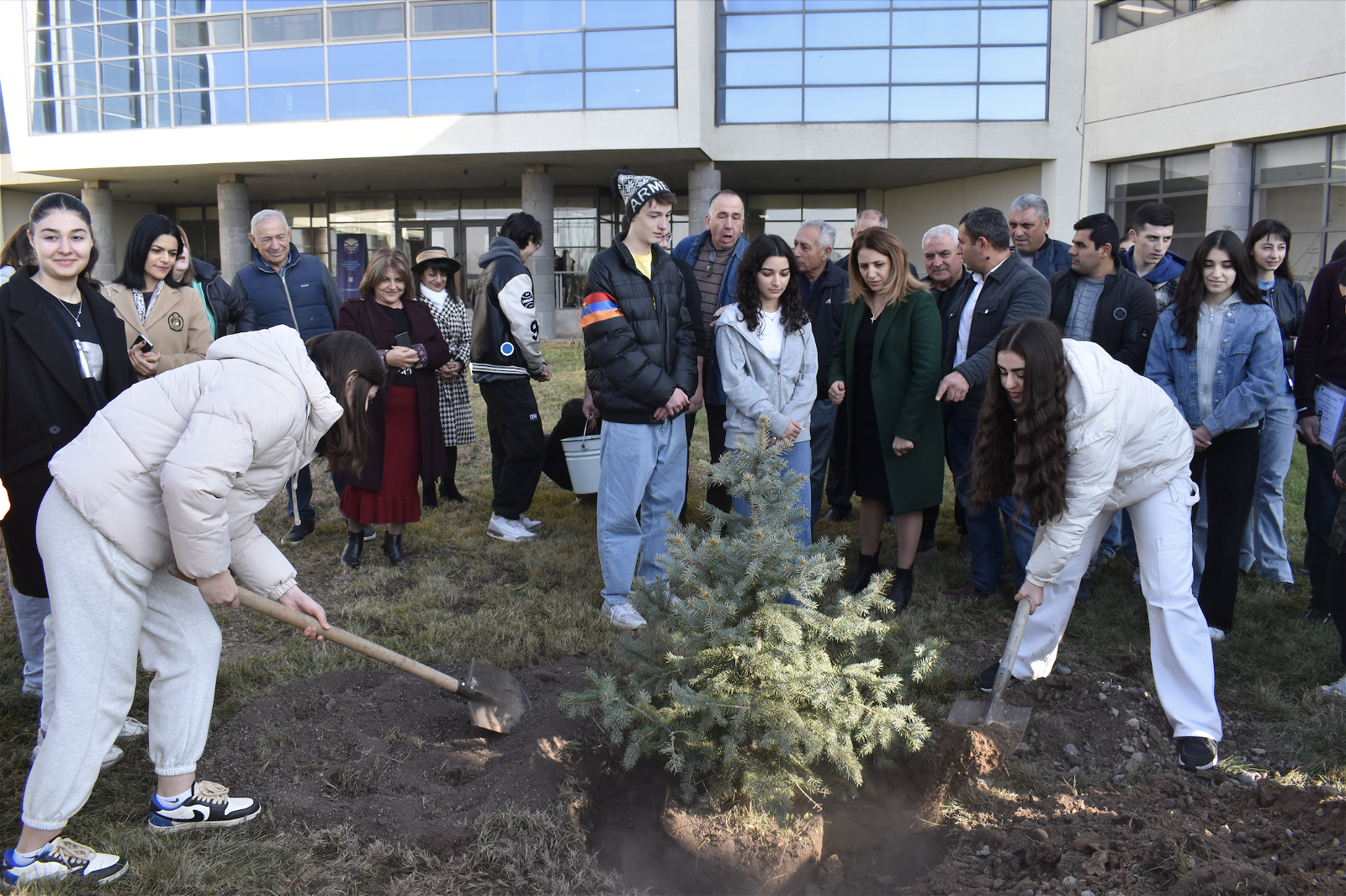 ATP Plants eight millionth tree with students from Artsakh
The celebration continued with traditional Armenian music and dance, including the energetic Yarkhushta, symbolizing the strength and resilience of the Armenian people. Students orchestrated a human figure-eight, representing the eternal nature of Armenia and the unity of our cultural past, present and future.
ATP’s choice to plant the eight millionth tree at the Avedisian School reflects the deep appreciation for its long-standing partnership. Over two decades, the school has actively participated in ATP’s environmental education and tree planting initiatives, eco-club activities and greenhouse projects.
Rousanne Arustamyan, ATP’s Yerevan coordinator, expressed gratitude to sponsors, partners and volunteers, acknowledging their indispensable role in making the eight millionth tree a reality. “With your help, we’ve been able to expand our planting efforts, implement community projects, educational initiatives and partnerships across Armenia and beyond,” she emphasized.
The eight millionth tree serves as a poignant reflection of the organization’s impactful year in 2023. This year alone, ATP planted 712,481 trees, established over 200 hectares of new forests and distributed fruit trees to over 1,200 families in border villages.
As ATP approaches its 30th anniversary in 2024, the leading environmental organization in Armenia is proud to know that each of those eight million trees have found homes in cities, towns, villages, schools and forests. Throughout 2024, ATP will host a series of events across the U.S. and Armenia to celebrate the 30th anniversary, and looks forward to solidifying its green legacy for years to come.
Author information

Armenia Tree Project (ATP) is a non-profit program based in Woburn and Yerevan conducting vitally important environmental projects in Armenia’s cities and villages and seeks support in advancing its reforestation mission. Since 1994, ATP has planted and restored more than 6,000,000 trees, and hundreds of jobs have been created for Armenians in seasonal tree-related programs.
|
The post A Green Legacy: ATP’s eight millionth tree planting appeared first on The Armenian Weekly.
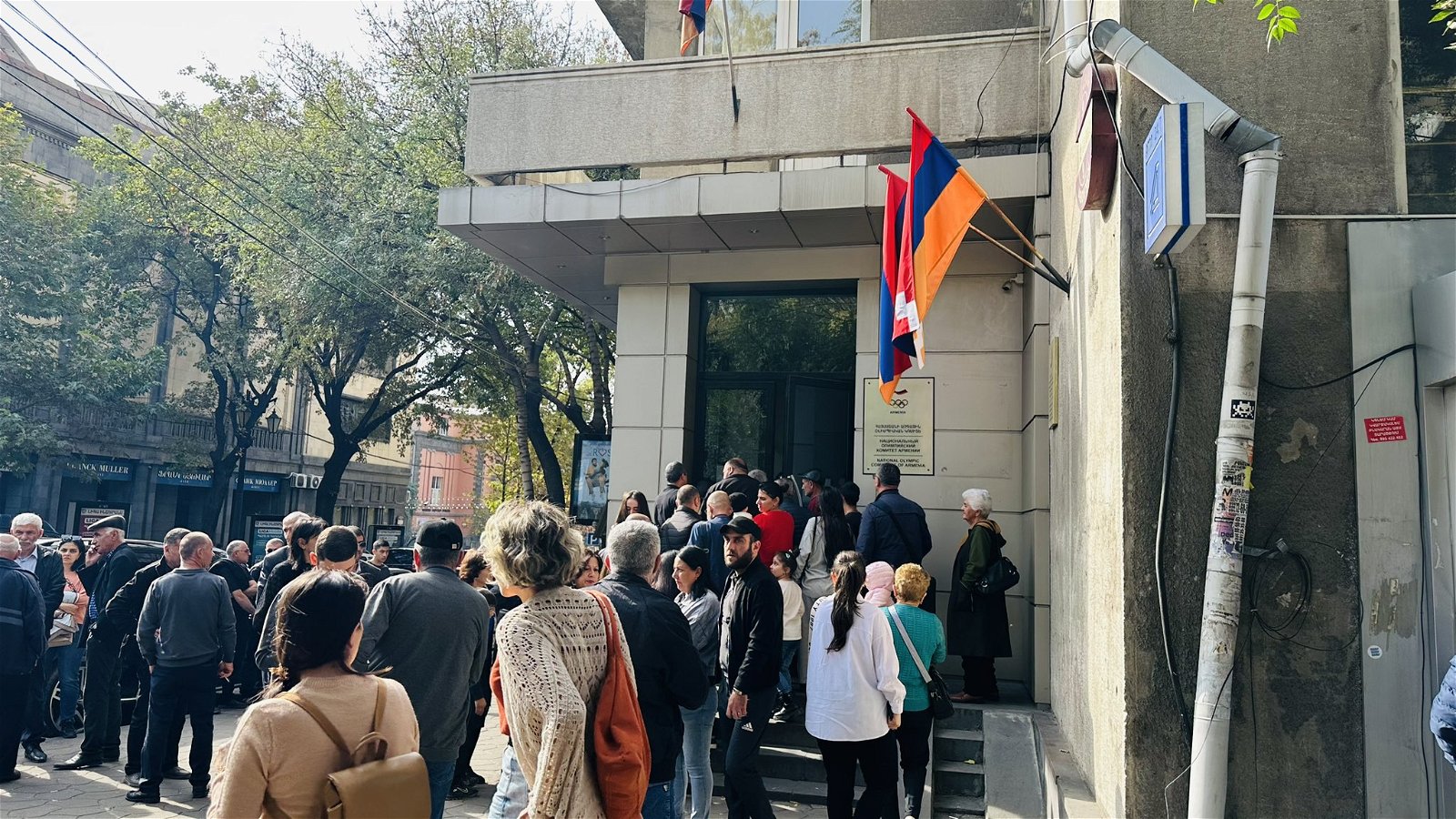 Artsakh residents gather at a government building in central Yerevan seeking help with documents, pensions and other issues
As if the problems of displaced Artsakh Armenians were not bad enough, given their forced departure from their native land and the subsequent hardships due to the lack of housing, food, medicines and other essential items after their arrival in Armenia, the government is now creating more unnecessary difficulties for them.
Artsakh Armenians, who have been citizens of Armenia for a long time, are suddenly told by the Armenian government that they are not citizens of Armenia, even though they possess passports issued by the Republic of Armenia. Many Artsakh Armenians have used their Armenian passports for years to travel to foreign countries without any problems, which means that the authorities in Armenia and other countries accepted their passports as genuine Armenian passports. How is it possible that Artsakhtsis were citizens of Armenia while living in Artsakh, but not after they arrived in Armenia?
To make matters more confusing, the government of Armenia is now telling Artsakh Armenians that since they are not citizens of Armenia, they may apply for Armenian citizenship in the future. This is complete nonsense. How can a citizen of Armenia apply a second time for citizenship? If I, as a U.S. citizen, apply for U.S. citizenship for the second time, American government officials will treat me as a fool and show me the door.
I believe that the Armenian government, led by Prime Minister Nikol Pashinyan, has a hidden agenda in treating Artsakh Armenians as non-citizens. He wants to make sure that during future elections in Armenia, Artsakh Armenians will be unable to vote, knowing that many of them will not vote for his political party’s candidates, since Pashinyan is the one who handed Artsakh to Azerbaijan. We now have the additional evidence that the country’s leader is not only incompetent, but also violates the country’s laws for political gain. This is confirmed by the Interior Ministry’s declaration: “A person with refugee status does not have the right to vote and be elected in national elections.”
Last week, the Republic of Armenia’s Ministry of Interior issued a statement in the format of “answers to frequently asked questions by forcibly displaced citizens of the Republic of Artsakh.” In this first sentence, there is already an error. Artsakh Armenians are citizens of Armenia, not citizens of Artsakh or Azerbaijan.
The Ministry tried to entice Artsakh Armenians to accept their refugee status, telling them that those who have the status of a refugee have no obligation to serve in the armed forces of Armenia. In other words, Artsakh Armenians, who must serve in Armenia’s armed forces as citizens of Armenia, are wrongly exempted from military service, in violation of Armenian law.
The Ministry also stated that as refugees, Artsakh Armenians have no right to own agricultural land. This provision deprives them of the ability to grow food on their own plot of land, while they do not have the necessary funds to purchase food.
The Ministry then stated that refugees cannot travel to a foreign country. This is also false, as Artsakh Armenians with their Armenian passports can travel to any country after obtaining a visa, if one is required. Some countries like Russia do not require a visa from Armenian citizens. Thousands of Artsakh Armenians have already left Armenia simply by showing their Armenian passports, which means that both Armenia and other countries have recognized their passports as legitimate documents.
The Ministry then contradicted itself by stating that “should a refugee’s passport expire, it can be renewed by presenting two photos and the expired passport.” How can Artsakh Armenians renew their passports in Armenia, if they are not Armenian citizens and do not hold Armenian passports?
In a further contradiction, the Ministry stated that those Artsakh Armenians who become Armenian citizens do not lose their ability to benefit from social assistance programs for refugees. The only requirement is that they be classified as ‘displaced.’ If Artsakhtsis do not jeopardize their right to receive assistance after becoming citizens of Armenia, why are they classified as refugees and not recognized as citizens?
Incredibly, after giving away Artsakh and repressing the rights of Artsakh Armenians to pursue political activity in Armenia on behalf of Artsakh, the Ministry of Interior stated that the loss of property in Artsakh “does not disappear or cease to exist as a result of a change in a person’s legal status,” meaning acquiring citizenship of Armenia. It remains to be seen if the Armenian government, beyond mere words, will be willing to file lawsuits in international courts to defend the property rights of Artsakh Armenians.
Artsakh Armenians, who are citizens of Armenia, have suffered more than enough. They should not be burdened with such unnecessary bureaucratic nonsense.
Author information

Harut Sassounian
California Courier Editor
Harut Sassounian is the publisher of The California Courier, a weekly newspaper based in Glendale, Calif. He is the president of the Armenia Artsakh Fund, a non-profit organization that has donated to Armenia and Artsakh one billion dollars of humanitarian aid, mostly medicines, since 1989 (including its predecessor, the United Armenian Fund). He has been decorated by the presidents of Armenia and Artsakh and the heads of the Armenian Apostolic and Catholic churches. He is also the recipient of the Ellis Island Medal of Honor.
|
The post Armenian government adds unnecessary burdens on already suffering Artsakhtsis appeared first on The Armenian Weekly.
Categories
A patent on victimhood
Growing up, whenever my attention would move to the causes of other peoples, my family and Armenian community would turn my attention back to our Armenian struggle, as if their hands were permanently embedded on my cheek, turning it the other way. Yet do we want to patent our victimhood and struggle? Is the Armenian struggle different or more important than other struggles?
In these past eight weeks, we have seen the death of over 20,000 Palestinians, many of them women and children. Families have been torn apart and entire lineages obliterated. We have seen the state of Israel perpetuate genocide. This is nothing new, but also begs us to ask our Jewish friends—is this the best you can do? Do you really believe you are the victims in this war? No civilian life should be taken, be it Palestinian or Israeli; however, there is something wrong in having to justify our support for an occupied people. Each day I come across a social media post and shake my head in disbelief at the delusions of many Zionists, the delusions of a people who justify their actions with their victimhood.
Our Armenian people also have delusions. Few Armenians are standing by the Palestinians, and I question the silence of our community. Some justify their stance by saying that Hamas congratulated Azerbaijan on taking Artsakh. This is true, and Al-Jazeera often sides with the Muslim side, but are we forgetting that Israel is a strong ally of Azerbaijan and armed them to commit genocide in Artsakh?
Recently, my husband Haig, my sister Taline and I climbed Mount Ararat. It was magical and one of the hardest things we have done. The highlight for me was the unity of all people, of Armenian and Kurdish guides, on our ancestral lands. Many Armenians do not want to step foot in historic Armenia because it is present day Turkey. Yet this land calls to us, recognizes us and knows us deeply.
It took us three days to climb the mountain amongst friends who quickly became best friends. When undergoing an arduous adventure, our vulnerabilities emerge, creating space for true humanity. On our first night at base camp one, we met a group of Israelis who were preparing for their climb. Born in Lebanon and having lived through war in my early years, I am a bit wary of Israelis when I first meet them and where their politics and feelings lie. The eldest of the group, Daniel, was 80 years old at the time and very friendly. He had been a runner all his life, having completed numerous marathons. Daniel was also an environmentalist. He opposed Israeli PM Benjamin Netanyahu with passion, and as a progressive Jew, took part in many protests prior to coming on the trip.
On our first night, we partied under the full moon. We danced and sang, collecting our strength for the next day. Some of us felt a bit woozy from the elevation, but it was bearable. The Israeli group stood to the side watching us dance. Two of them joined, then retreated to their tent.
The next day was grueling, as we climbed and descended from Ararat in 14 hours. When we returned to base camp one, I noticed a Palestinian flag flying high. I ventured toward it and was excited to find a group of Palestinians preparing for their upcoming climb. We spoke a bit, and I told them that a group of Israelis was up on the mountain now. “They are progressives,” I said. Their eyebrows turned up. “Progressives. Let them show us how progressive they are. I would like to see that,” one of them said.
That evening, my body needed rest, and I had no choice but to lay in my sleeping bag. I heard the Palestinian group partying all night and fell asleep muttering about how much I wanted to join them. I still think of them often.
As survivors of genocide, we need to build alliances with other communities to take our cause further. We need to fight for our existence, side by side with people who fight for their existence. We need to incorporate Indigenous voices in our narrative and support Indigenous struggles. Ours is an Indigenous struggle, so why do we hesitate to support others?
For me, this was the highlight of our climb—people joined together in one place behaving like the humans that we are.
I ask myself why we cannot take this approach with us everywhere. As Armenians, we need to stand with the Palestinians. As survivors of genocide, we need to build alliances with other communities to take our cause further. We need to fight for our existence, side by side with people who fight for their existence. We need to incorporate Indigenous voices in our narrative and support Indigenous struggles. Ours is an Indigenous struggle, so why do we hesitate to support others? Why is it that we look at our struggle as us-against-them?
I believe our country has a bright future if we stand together. I pray that the narrative changes to allow for unity and the betterment of Armenia. As Hrant Dink wrote in one of his articles: “Come, let us first understand each other…Come, let us first respect each other’s pain…Come, let us first let one another live…”
The world has not been a safe place for Armenians, just as it has not been for the Jews. The victim mentality of seeing threats in many places is still present in the Armenian mindset. This approach perpetuates fear and promotes the intergenerational trauma within us.
How about a different narrative? How about not seeing ourselves as victims? How about not fearing the people around us? How about embracing our strengths and not defining ourselves just by 1915? How about making our ancestors proud by becoming stronger in unity?
Author information
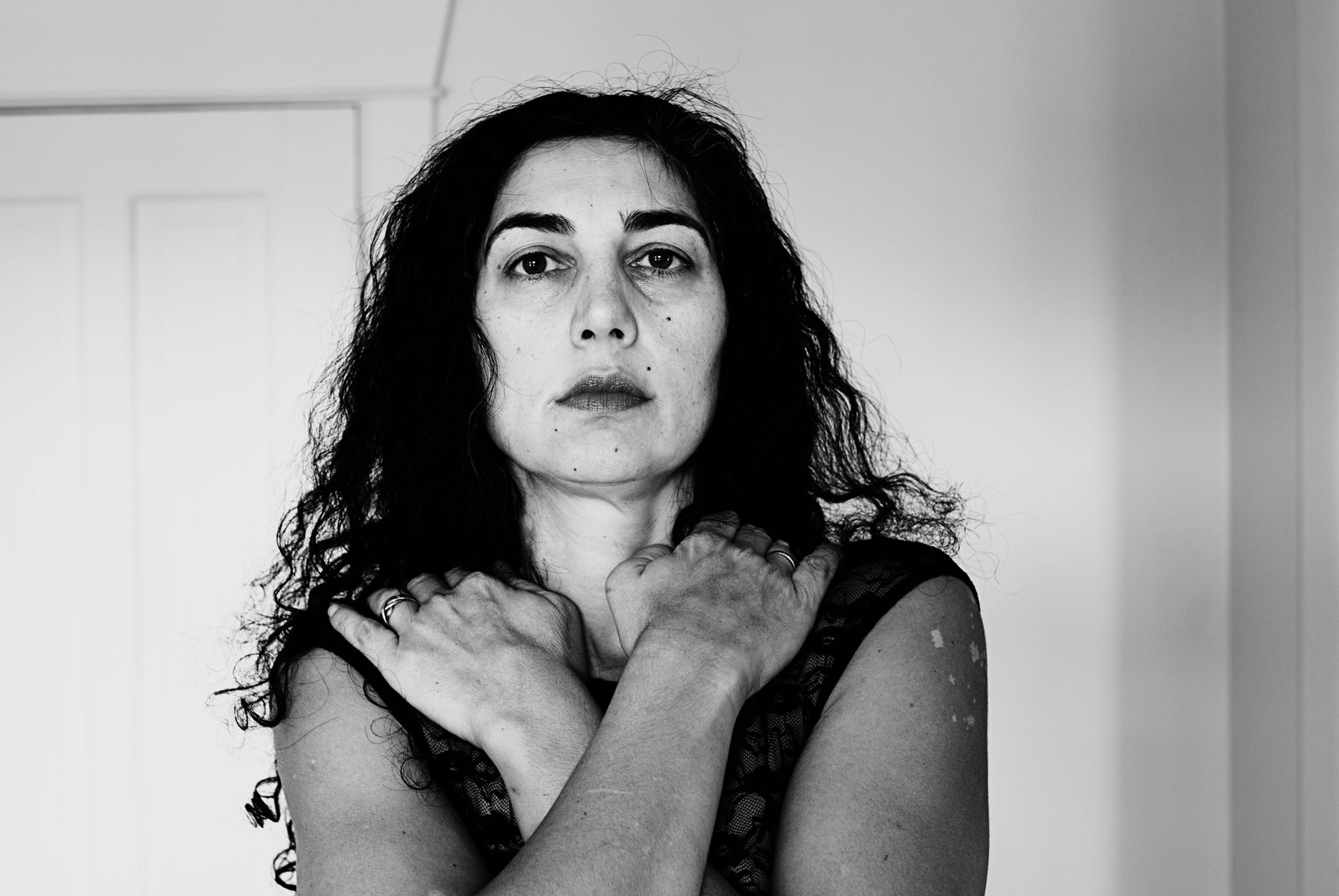
Tamar Haytayan is a Vancouver-based photographer working from a personal and intuitive perspective to capture candid moments of the culture of everyday life. A central theme of several of her projects has been the exploration of memory, mortality and grief. Tamar Haytayan studied photography at the Bournemouth & Poole College of Art & Design in Bournemouth, UK, and her body of work spans over the last 28 years. Tamar has shown at the Armenian Centre for Contemporary Art (Yerevan, Armenia), PhotoHaus Gallery (Vancouver, Canada), Philadelphia Photo Arts Center (Philadelphia, USA), The Women’s Art Show (Vancouver, Canada), The Center for Fine Art Photography (Fort Collins, Colorado), Los Angeles Centre of Photography (Los Angeles), and The Blue Sky Gallery (Portland, Oregon). She has also collaborated with the performance artist and poet Dr. Celeste Snowber (Simon Fraser University, Vancouver, Canada) and currently resides in Vancouver, Canada with her musician and designer husband, Haig, children Jivan and Ani and poodle Tipper.
|
The post A patent on victimhood appeared first on The Armenian Weekly.