Categories
Audio Review - South Caucasus News

Argentina: A Market Experiment Trumped National Unity In Election – OpEd


Argentina: A Market Experiment Trumped National Unity In Election – OpEd

By Rocío Ceballos and Pablo Nemiña

On November 19, 2023, the Argentinean people elected their next president in a runoff election. Right-wing libertarian Javier Milei won with 56% of the vote against Economy Minister Sergio Massa’s 44%. Milei’s victory reveals a lot about shifting allegiances in Argentina’s political climate.

Compared to the last 15 years, two novelties stood out in this election: The demand for a political and economic change is large, and the traditional division between Kirchnerism — a left-wing populist movement — and anti-Kirchnerism seems to have faded.

Since 2003, President Néstor Kirchner (2003–2007) and his wife and successor, President Cristina Fernández de Kirchner (2007–2015) have promoted a “neo-developmentalist” economic model, in which the state plays an active, paternalistic role in fostering economic growth. Both of them represented the Peronist movement, which has been the dominant political force in Argentina since the 1980s. In the last four presidential elections, the most successful political formulas were those that proposed to maintain, deepen or return to the roots of the neo-developmentalism.

Both of the candidates that made it to the runoff, however, proposed more market-oriented economic models. Massa, who is also a Peronist, proposed a development project centered on production and the coordination of labor, capital and the state. In contrast to this moderate proposal, the libertarian Milei promotes a drastic reduction of the state and the implementation of a market economy in all spaces of social life. He wants to privatize broad swathes of Argentinean life, from health to education, and even calls for liberalizing trade in human organs.

The last four presidential elections were organized around the cleavage between Kirchnerism and anti-Kirchnerism, i.e. between left-wing populists and their opponents. Today such opposition is attenuated. Massa called for national unity.

Milei, instead, created his own original rift, one between the “caste” of elites and those excluded by them. Milei took the concept of caste from the Spanish leftist movement Podemos and redefined from a libertarian perspective. It refers to a vague group that includes corrupt politicians, rent-seeking businessmen, trade unionists who betray the workers they represent, journalists and professionals (especially economists, lawyers and pollsters) who act as accomplices of the politicians and “give an intellectual patina to the theft of the State.” On the other side are the “good people.” In Milei’s worldview, these are individuals who compete in the market by offering quality goods and services at a better price, without resorting to traps or shortcuts.

A tired society wants Milei’s markets

Argentineans were divided between two proposals. The first was Massa’s plan to move towards a government of national unity. It appealed to the best men and women of all political spaces that respect democracy, laying the foundations for an inclusive and stable development model that revolved around production and employment.

The second proposal was Milei’s reset, unraveling the Argentinean welfare state. It was a dramatic reaction from the people’s annoyance with repeatedly unfulfilled promises of economic prosperity. Milei’s plan is to replace it, by consensus or force, with a dogmatic market society that turns every type of social relationship into a market transaction. American economist Gary Becker would be proud.

Milei personifies the people’s tiredness with a system that shows a serious imbalance between proclaimed and effectively guaranteed rights. He became the political leader that a part of society had been wanting for a while. A society unenthused by traditional electoral options, socially fragmented and angry with the political-economic system found its leader.

Part of Milei’s success is explained by his ability to synthesize that diversity of feelings in his own speech and person. His approach exalts individual freedoms and capabilities while denying collective solutions, mainly the state. It is an entrepreneurial ideology that looks for infinite markets between individuals, algorithms and digital technologies that make transactions efficient. It places no restrictions above and below to moderate wealth concentration or support the less fortunate. The sky’s the limit … or perhaps Hell is.

Solid support, shaky statements

Milei wields a figurative (and literal) chainsaw. With it, he intends to viciously cut public spending, suppress the Central Bank and end the impoverishing political caste and its promise of dollarization. This goal has generated sympathies among informal workers and liberal sectors that identify inflation as a result of the fiscal deficit and irresponsible monetary issuance.

However, Milei’s other remarks have put many sectors of Argentinean society on alert. He has firmly avoided highlighting the value of democracy. Milei seemingly has an experimental laboratory vision of society. He has made worrying statements about the free sale of human organs and children. He has referred to Pope Francis, the first Argentinean to hold the office, as a “son of a bitch preaching communism” and “the representative of the evil one on Earth.” His approach to foreign policy is anachronistic and includes cutting diplomatic relations with Brazil and China — Argentina’s two main trading partners — for having communist leaders. These ideas are frightening, to say the least.

Despite the economy’s poor performance, it was not clear that Milei was destined to win. In the first round of voting, Massa surpassed him by more than 6 percentage points, thanks to greater citizen participation. To improve his chances for the runoff, Milei handed over the management of his campaign to Mauricio Macri of the center-right Juntos por el Cambio coalition. Macri was president from 2015 to 2019, but could not plausibly run again due to the terrible memory he left among workers and entrepreneurs.

After the first round of voting, Juntos por el Cambio’s candidate, Patricia Bullrich, was eliminated. With his own coalition therefore out of the electoral race, Macri departed from his coalition and outlined a more radical pro-market ideological line. Evidently, his choice bore fruit.

Argentinean sociologist Christian Ferrer says that Argentina “is a sentimentally anti-capitalist but pragmatically hyper-consumerist country.” The latter trait has triumphed in this election. Society has chosen to pursue Milei’s uncertain market utopia, which he guarantees will demand sacrifice. The question remains: Will this sacrifice ultimately be worthwhile?

The views expressed in this article are the author’s own and do not necessarily reflect Fair Observer’s editorial policy.

About the authors:

  • Rocío Ceballos received her Bachelor of Arts degree in Sociology from the University of Buenos Aires and her Master of Arts degree in Economic Sociology from the National University of San Martín. She is an Assistant Professor at the University of Buenos Aires. Her research agenda is organized around the International Political Economy.
  • Pablo Nemiña is a research fellow for the National Scientific and Technical Research Council at the National University of San Martín and associate researcher at the Latin American Social Sciences Institute (FLACSO — Argentina). He teaches and conducts research on the political economy of international finance. He holds a PhD in Social Sciences from the University of Buenos Aires.

Source: This article was published by Fair Observer

Categories
Audio Review - South Caucasus News

The UN’s Public Communication Is Broken – OpEd


The UN’s Public Communication Is Broken – OpEd

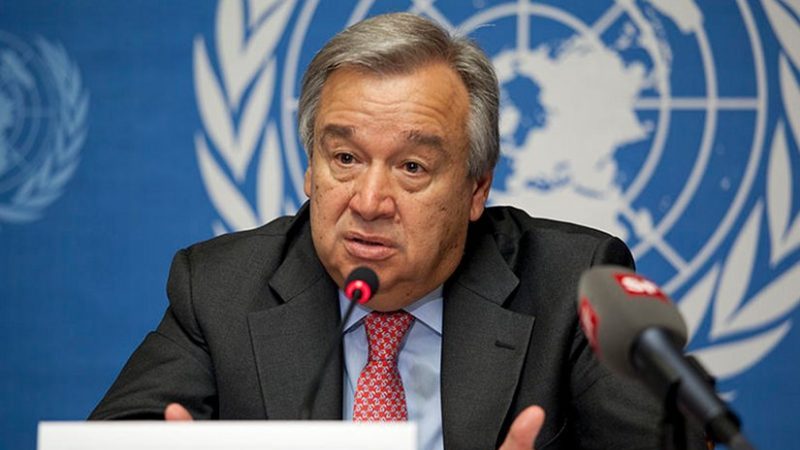
File Photo of António Guterres, Secretary-General of the United Nations. Credit: Eric Bridiers, Wikipedia Commons.

By Mark S. Cogan

The United Nations is suffering from its worst crisis in decades. It’s not its inability to resolve global crises, such as the current conflicts in Gaza, Ukraine, Myanmar, and Syria. Rather, the source of the crisis is internal, as critical personnel, from the Secretary-General to program officers in various UN agencies, have failed to communicate the UN’s increasingly complex mission to the public at large. While the problem extends across agencies and cuts across thematic areas, no one issue exemplifies the institution’s catastrophic inability to communicate more than climate change. Before representatives gathered in Dubai for the UN Climate Change Conference (COP28), Secretary-General António Guterres paid a visit to Antarctica, where in a series of social media posts and related press releases attempted to convey the risks associated with failure to address global temperature rise by taking a page from Las Vegas, noting that “what happens in Antarctica doesn’t stay in Antarctica,” unless leaders take drastic action.

Beside the hypocrisy of taking the long flight and the associated carbon emissions to record a video and receive a briefing from scientists, public communication at the UN, not just about climate change, but a host of issues, is ironically, not rooted in science. A vast body of research from social and political psychology, in effect, renders Guterres’ message on climate ineffective. First, a concept known as construal-level theory, where the further removed one is from an experience, the more it impacts their preferences and actions. In other words, people have to experience climate change themselves and have tangible means of creating change in order to take concrete actions. Second, the UN faces the twin challenges of public mistrust, not only in scientists and scientific information, which was prevalent during the COVID-19 pandemic, but also growing distrust in leaders.

Mitigating trust and building confidence in the United Nations on a range of issues also means communicating results, which rarely at the global level result in something tangible to the public. Because UN agencies often use different terminology, have different climate-related programming, and often have varying ideas of what results mean, the resulting communication fails to connect with the public at large. Part of the problem is a failure to understand a long-standing “theory of change” within development organizations, defined as how an intervention can lead to a specific development change, drawing on causal analysis. Getting results depends not only on understanding what contributes to change, but focusing on results rather than the inputs or activities. When this occurs, UN officials will often talk about high-level government officials or staff that attended a key meeting or the general purpose of that meeting, but not the end results or what will contribute to results over time.

Results-based communication consequently becomes less frequent, or the impact of those results at a country level fail to make their way into communications that can resonate with the general public at the international level. In the case of the United Nations Development Programme (UNDP), its 2022 Annual Report featured fragments of information with little to no context, such as where artificial intelligence and technology somehow will “increase smarter use of water and irrigation in Palestine” or “strengthen climate resilience of farmers in Egypt.” Aside from an array of statistics that suggested “record delivery” the reader is left wondering what to do with the information. Donors have started to take notice. The Multilateral Organisation Performance Assessment Network (MOPAN), which consists of 21 countries that regularly contribute to UNDP, including Australia, Japan, Denmark, Germany, and Canada, noted in a 2020 Assessment of UNDP that “[its results-based management (RBM) systems insufficiently steer and aggregate results at the global level”.

These issues are all compounded by the pace of modern communication. While the spectacle of a talking dinosaurvoiced by actor Jack Black might draw some attention, it is of little to no use to the general public or to global leaders who are already well briefed on the complexities of climate inaction. On social media, senior UN officials are often followed by other UN employees. What is perceived internally as amplification is merely communication in a bubble.

The United Nations must quickly learn three critical lessons. First, results matter as they provide both credibility to donors and are essential in restoring public trust in the UN as an instrument of good. Second, public communication about complex issues need not come from Guterres, particularly from remote Antarctica, or through a ridiculous talking dinosaur. These first two lessons provide the basis for the third and final lesson: the UN must treat the beneficiaries of program results as equally as it does senior leadership. On climate change, the UN should let local people not only demonstrate the impacts of climate inaction, but communicate the impacts of program outputs directly. That can be easily done at any level and without the reputational damage of a trip to Antarctica that could have easily been prevented by a simple meeting on Zoom.

  • About the author: Mark S. Cogan is an Associate Professor of Peace and Conflict Studies at Kansai Gaidai University in Osaka, Japan. His research interests include Southeast Asia and the broader Indo-Pacific region, as well as security studies, peacebuilding, counter-terrorism, and human rights. He is a former communications specialist with the United Nations, serving in Southeast Asia, Sub-Saharan Africa, and the Middle East.
  • Source: The views expressed in this article belong to the authors alone and do not necessarily reflect those of Geopoliticalmonitor.com.

Categories
Audio Review - South Caucasus News

Israel: A Rich Nation Receiving The Bulk Of US Foreign Aid – Analysis


Israel: A Rich Nation Receiving The Bulk Of US Foreign Aid – Analysis

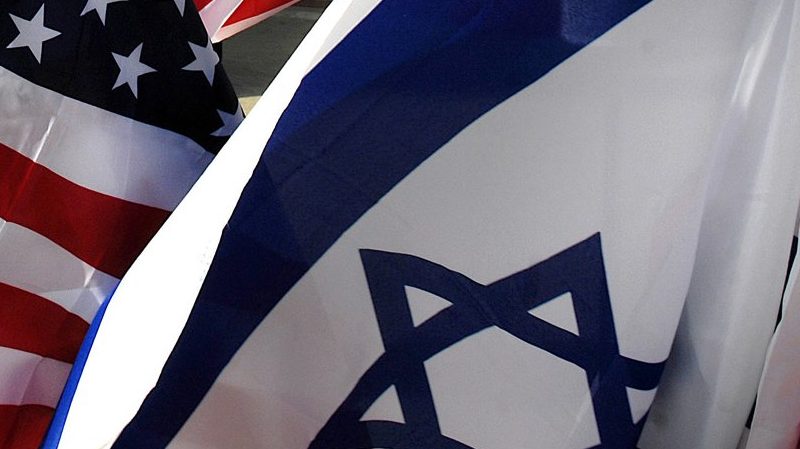
Flags of Israel and United States

By Lipton Matthews

Why is Israel a primary benefactor of United States foreign aid? Is Israel a proxy for US imperialism in the Middle East? Does American aid to Israel benefit constituencies other than the defense industry? The ongoing feud between Israel and Palestine has raised these questions to the forefront of public debate. Israel is the leading recipient of American foreign aid, despite its wealth. In 2022, The Economist ranked Israel as the fourth most successful economy in the Organisation for Economic Co-operation and Development.

A prosperous country such as Israel should hardly be a contender for America’s benevolence; hence, America’s commitment to sponsoring Israel strikes people as odd. However, some observe that Israel plays a critical role in bolstering American hegemony in the Middle East by curbing the extremities of Islamic movements. Like earlier European imperialists, who recognized the strategic value of Palestine as a trade route linking Europe to the Far East, commentators opine that America’s aid to Israel is motivated by economics and geopolitics.

The Middle East is a key reservoir of energy resources and contains trade routes of global importance. Therefore, America uses Israel as a watchdog to safeguard its interests in the region. Empowering Israel to act as a deterrent to Arab radicalism enables America to exert greater influence in the Middle East by weakening the Arab states. Scholars think that Israel’s strength protects friendly Arab states, thereby ensuring easier access to oil from the Middle East. However, in a powerful critique, Elizabeth Stephens undercuts the argument that America funds Israel for strategic purposes.

Stephens explains that despite US-Israeli cooperation during the 1970 Jordan crisis, America is aware that collaborations with Israel can adversely affect America’s relations with amicable Arab states. As a result, America refrained from using Israeli troops in conflicts with Arab states, as was demonstrated during the 1990–91 Gulf War. Citing government reports, she highlights deficits in the economic argument for supporting Israel by concluding that such sponsorship poses a financial liability to America.

Stephens identifies domestic politics as the prime factor engendering support for Israel. According to her analysis, the American Jewish lobby and the pro-Israel lobby wield enormous influence on American foreign policy in the Middle East. Although she exclaims that American politicians have not uncritically engaged Israel, the power of lobbyists ensures the consistency of America’s approach to Middle Eastern politics: “As a result of domestic and congressional pressure, a president will generally not be overtly anti-Israel. It is this generally high level of public support for Israel and popular distrust of the Arab states that has set the tone for America’s Middle East policy.”

Noted scholar James Petras reveals that Israel’s relationship with America has conferred the former with unique privileges; therefore, Israel can be described as a lesser power extracting tribute from the American empire. Yet, the image of Israel as a skillful ally is being overturned by intellectuals contending that America has been using foreign aid as a tool of manipulation. Jacob Siegel and Liel Liebovitz complained in a recent article that whereas old rules allowed Israel to allocate 26 percent of aid to the domestic military market, new provisions will eventually require Israel to spend aid in the US.

Quoting figures from Israel, Siegel and Liebovitz purport that the policy change will cost $1.3 billion for Israel, gut twenty-two thousand jobs, and make Israel reliant on American technology. In their view, greater dependence on American technology curtails the ability of Israel to innovate, thus making it susceptible to the machinations of aggressive neighbors. Others posit that foreign aid rules undermine Israel’s autonomy because military transactions with other countries require America’s permission. Fiercer critics believe that foreign aid imperils Israel’s security by enslaving the country to the whims of America.

Caroline B. Glick reminds readers that America and Israel have competing interests, but receiving aid forces the latter to sacrifice national goals to appease America. Using the example of Hezbollah, Glick illustrates that reliance on American aid increases Israel’s vulnerability to extortion:

Consider for instance, the IDF’s support for the U.S.-dictated maritime border agreement with Hezbollah-controlled Lebanon last October. The deal is a strategic disaster for Israel. It gives Hezbollah a share of the Mediterranean gas industry. It limits Israel’s offensive options and maneuver room in a future war with Hezbollah. It threatens Israel’s northern coast from the sea. It presents Israel as a paper tiger who succumbed to Hezbollah extortion.

There is a burgeoning consensus that America should cut aid to Israel. Doing so is a practical policy, but it cannot be achieved without confronting the defense industry. Players in the industry will say that they are crucial to job creation; however, reports show that the defense industry has been shedding jobs even in periods of employment growth. While lobbyists tout the benefits of the defense industry, researchers from Brown University declare that military spending is crippling investments in education, healthcare, and infrastructure. The researchers also indicate that spending in areas such as healthcare, education, and infrastructure would create more jobs. So, evidently, the benefits of military spending are not diffused throughout society.

Addressing issues raised by the current conflict is crucial because people should be dissuaded from believing nonsense. The myth that modern-day Palestinians are indigenous to Palestine is being widely circulated, but it is absurd. Contemporary Palestinians are not the descendants of the Philistines who occupied Gaza, and the Philistines were not indigenous to the region.

Although Palestine has always existed as a place, modern-day Palestinians are the descendants of people who migrated to the region and are not its original inhabitants. Furthermore, the notion of a Palestinian identity is quite recent. When the partition of Palestine was suggested by the Peel Commission in 1937, local leader Auni Bey Abdul-Hadi remarked: “There is no such country as Palestine. Palestine is a term the Zionists invented. . . . Our country was for centuries part of Syria.”

This opinion is even reinforced by the scholarship of mainstream historian Daniel Pipes, who affirms that Palestinian identity emerged in response to Zionism: “Ultimately, Palestinian nationalism originated in Zionism; were it not for the existence of another people who saw British Palestine as their national home, the Arabs would have continued to view this area as a province of Greater Syria.”

The plight of Palestinians is indeed unfortunate, but facts don’t change. Sympathizing with Palestinians is understandable, yet this does not alter the reality that Hamas is a terrorist group known for using its people as human shields to blackball Israel. Propagandists are seizing the present conflict to legitimize lies so we must neutralize their campaigns with facts before the lies become official history.

  • About the author: Lipton Matthews is a researcher, business analyst, and contributor to Merion WestThe FederalistAmerican Thinker, Intellectual Takeout, mises.org, and Imaginative Conservative. Visit his YouTube channel, with numerous interviews with a variety of scholars, here. He may be contacted at lo_matthews@yahoo.com or on Twitter (@matthewslipton).
  • Source: This article was published by the Mises Institute

Categories
Audio Review - South Caucasus News

Iran’s ‘Resistance Front’ And Its Bridge With South Asia – Analysis


Iran’s ‘Resistance Front’ And Its Bridge With South Asia – Analysis

war terrorism Mercenaries

By Kabir Taneja

With the war in Gaza between Israel and Hamas crossing the 55-day mark, no breakthrough seems to be in sight that could bring hostilities to a stop despite the successful exchange of some hostages. As Palestinians in Gaza continue to face the brunt of Israeli military reaction to the terror attacks of 7 October orchestrated by Hamas, tensions over the crisis can increasingly be seen expanding into other theatres, particularly where Iran-supported militias are looking to act together as part of a ‘resistance’ narrative.

The recent attacks against commercial ships travelling through the Red Sea, a vital artery of global trade that connects Europe to Asia via the Suez Canal, by Houthi militants backed by Iran and operating out of Yemen showcases the range of the ongoing crisis. It expands well beyond just the Israel–Palestine fault line, and into the wider Israel–Iran rivalry with Tehran’s vocal promotion of an ‘Axis of Resistance’. “Your brothers in the Axis of Resistance stand united with you…the resistance will not allow the enemy to achieve its goals in Gaza and Palestine”, Esmaail Qaani, Commander of Iran’s Quds Force reportedly said last month while reiterating support for Hamas. Qaani had replaced now revered Iranian commander Qassem Soleimani as head of the Quds after the latter’s assassination in a United States (US) drone strike in January 2020. The web of militias across Iraq, Syria, and Yemen supported by Iran, now seen as a collective ‘resistance’, was Soleimani’s success story in the region over the past decade.

While groups such as the Houthis in Yemen, Hezbollah in Lebanon, Kata’ib Hezbollah in Iraq and Hamas in Gaza are often talked about as part of this Iran-backed resistance, there are smaller, lesser-known influence zones that Tehran can potentially tap into if this crisis expands. In Afghanistan, the Fatemiyoun Brigade and in Pakistan, the Zainabiyoun Brigade, are Shia militias that formed in and around the Syrian civil war which included fighting against the juggernaut of the Islamic State (ISIS or Daesh in Arabic). The Zainabiyoun’s foundations could be traced back to attacks against the Sayyidah Zaynab mosque in Damascus in 2015, which was targeted by Sunni militants, for which some of the first Pakistani Shias were recruited by Iran to fight. Shias make up only 10-15 percent of Pakistan’s population. The logo of the Zainabiyoun, which has not been very active since its peak of about 1,600 fighters in 2018, is similar to the one of Hezbollah. The US placed the Zainabiyoun on its financial blacklist in 2019. The Zainabiyoun can also be seen from the lens of fundamental differences between Iran and Pakistan, specifically on issues such as Baluchistan, an insurgency-riddled province where both Islamabad and Tehran often accuse each other of allowing cross-border terrorism.

Afghanistan is the other country where Iran has tapped into the Shia population to bolster its fighting cadre. The Fatemiyoun Brigade was formed in 2014 to help bolster the fighting prowess of Syrian President Bashar al-Assad. The brigade, similar in construct to its sister agency from Pakistan, consists of Afghan Shia refugees that, over the years, moved into Iran for safety. The Brigade also recruits from the Afghan Shia Hazara community. The Hazaras, less than 10 percent of Afghanistan’s population, are a targeted minority, specifically as of today with the Taliban back in power. As of 2018, more than 2,000 Afghan Shias were reported to have died fighting in Syria with over 20,000 combatants known to be active at a point. However, the Afghan Shias have often complained of not being paid enough by Iran’s preeminent Islamic Revolutionary Guard Corps (IRGC) for their participation. While some joined the Iranian designs based on the ideology of protecting Shias against Sunnism and Salafism, many others, specifically from Afghanistan, joined in because there was pay involved. Both ideology and poverty made Afghanistan a fertile ground for the recruitment of foreign fighters. Soleimani has previously also visited the graves of Afghan Shias in Syria who died fighting in a show of appreciation but also to highlight that the fighters were not just cannon fodder, but martyrs of the Shia cause.

When the Taliban took back power in Afghanistan in 2021, many saw the Fatemiyoun as an already trained group that could take on the Taliban, secure Iranian interests in the country as and when needed and a pool that could be tapped into in exchange for money if more cadres are needed to fight in the wider Middle East. Prior to the collapse of Kabul, the Fatemiyoun was also seen as a ‘strategic depth’ for Iran by the US, the latter fearing that these combat veterans could be used by Tehran to attack American troops and interests inside Afghanistan. A few months later, along with the state, these security concerns were also inherited by the Taliban. The Fatemiyoun has not shown itself to be a potent homogenous grouping in Afghanistan, but predominantly a stitched-together group of rag-tag fighters looking for a payday.

Despite the limited employability of both the Zainabiyoun and Fatemiyoun in Afghanistan and Pakistan, it does successfully demonstrate Iran’s capability to mobilise Shia ecosystems not only in the immediate Middle East but on its ‘other’ border as well. While no such mobilisation has taken place in India, Shias represent only around 13-15 percent of India’s Muslim population, but this still makes it the second-largest Shia population in the world after Iran. A good concentration of these are in Kashmir, where Shia organisations even took out protests against the US assassination of Soleimani. And perhaps more interestingly, Shias in India are known to electorally favour the in-power right-leaning Bharatiya Janata Party (BJP) due to its strong stance against Salafism (which resides within Sunni Islam).

One of the major successes of Hamas in stoking a war against Israel has been that it has diluted the narrative between ‘terrorism’ and ‘resistance’. Iranian leadership openly meeting chiefs of Hezbollah, Hamas, and even factions of Fatah which are against current Palestinian president Mahmoud Abbas shows that despite global narratives, Tehran is using the Palestinian cause to mobilise its anti-Israel and anti-American postures openly and publicly. It is taking upon risk of the Gazan war to expand into something more regional, and ideologically, something even more global, as being witnessed from the college dorm rooms of the US to parliamentary debates of Europe.

However, the ‘resistance’ block is also diverse. While Iran-backed actors are looking to be the flagbearers of the same, others, including al-Qaeda and Islamic State affiliates, also look at this moment as an opportunity to ride the narrative and bolster their own interests and position. For example, the emir of Jamaat-i-Islami in Pakistan, Sirajul Haq, this weekend hyphenated the Kashmir issue with Palestine, calling for Muslims, not leaders or states, to mobilise. “The Ummah is facing this situation due to its spineless rulers. From the soil of Muzaffarabad, I call upon the rulers of Pakistan as well as all other Muslim states to take practical steps [for freedom of Kashmir and Palestine] rather than banking on ritual resolutions of the Organisation of Islamic Cooperation (OIC),” Haque said at a gathering in Pakistan-occupied Kashmir. There are enough groups within this mobilisation that in fact do not serve Iranian interests considering Iran’s President Ebrahim Raisi travelled to Saudi Arabia in November after a decade to attend OIC meet on Gaza with his Arab counterparts.

Finally, the current crisis is as much about raw geopolitical and geostrategic calculations as it is about ideology. For Iran, protection and preservation of the current regime is at the top of its strategic aims, as is the same with its regional Arab neighbours and their own monarchic and theocratic political ecosystems. Countries like Pakistan and Afghanistan provide fertile grounds, loosely tied around realities of failed or nearly failed states, for others to fish for their individual interests, as demonstrated by foundations of both the Zainabiyoun and Fatemiyoun brigades. These non-state aberrations are not one-offs. In an increasingly chaotic global order, such unconventional methods of tactical operations will only gain strength despite their perilous nature for all involved.


  • About the author: Kabir Taneja is a Fellow with the Strategic Studies Programme at the Observer Research Foundation
  • Source: This article was published by the Observer Research Foundation

Categories
Audio Review - South Caucasus News

Secretary Cardona’s Quagmire – OpEd


Secretary Cardona’s Quagmire – OpEd

Man Thinking Money Debt Mortgage Investment Sales

“I think it was President Reagan who said, ‘We’re from the government. We’re here to help!’” That was a recent post from Education Secretary Miguel Cardona, who has it wrong. President Reagan actually said: “The nine most terrifying words in the English language are: I’m from the government, and I’m here to help.” It’s a funny mistake for an education secretary, but it’s understandable.

According to his official bio, “Cardona earned a bachelor’s degree from Central Connecticut State University, and a master’s degree and PhD from the University of Connecticut.” The bio does not explain that the degrees are all in “education.” The Secretary also reflects an institutional problem. 

Cardona heads a federal Department of Education (ED), which dates only from 1978. The new department was Jimmy Carter’s payoff to teacher unions for endorsing him in his presidential run. Top-heavy with bosses bagging six-figure salaries, ED did nothing to improve student achievement. 

The 1983 A Nation at Risk report warned that “the educational foundations of our society are presently being eroded by a rising tide of mediocrity that threatens our very future as a Nation and a people.” America’s “once unchallenged pre-eminence in commerce, industry, science, and technological innovation is being overtaken by competitors throughout the world.” And so on. 

Education is the purview of the states, so, strictly speaking, ED should not exist. President Reagan failed to eliminate the department, and subsequent presidents made no move to take it down. Despite his ignorance, Cardona may not be the worst bureaucrat to head the department. Consider Arne Duncan, the selection of Barack Obama. 

Like Clinton, Obama sent his children to the prestigious Sidwell Friends School, which is unaffordable for the majority of students in Washington, DC. The best alternative is the D.C. Opportunity Scholarships Program, a Congress-run school choice program. The program is popular with African-American parents but opposed by teacher unions and federal education bureaucrats. 

Arnie Duncan, who chose to study sociology at Harvard, captained the anti-choice team. As the Washington Post stated in a 2009 editorial, “Mr. Duncan decided—disappointingly to our mind—to rescind scholarships awarded to 216 families for this upcoming school year.” Nine out of 10 students who were shut out of the scholarship program were “assigned to attend failing public schools.” 

White Arne Duncan ejected black students from the schools their parents wanted them to attend. That’s much worse than botching a quote from Ronald Reagan, but the comparison shouldn’t end there. In January, Secretary Cardona announced the “Raise the Bar: Lead the World” initiative, which gives no role to school choice. 

Secretary Cardona is from the government, but he is not there to help. Like Arne Duncan, he’s part of the anti-choice team, which is rather extensive. Forty years after A Nation at Risk, with failure on every hand, Democrats and Republicans remain unwilling to side with parents as they fight for the freedom to choose the schools their children attend as a matter of basic civil rights

This article was published at The Beacon


Categories
South Caucasus News

Azerbaijan, Armenia may exchange military servicemen very soon – Armenian parliament – Trend News Agency


Azerbaijan, Armenia may exchange military servicemen very soon – Armenian parliament  Trend News Agency

Categories
South Caucasus News

National Assembly of the Republic of Armenia | Official Web Site – National Assembly of RA


National Assembly of the Republic of Armenia | Official Web Site  National Assembly of RA

Categories
South Caucasus News

Armenia News – NEWS.am


Armenia News  NEWS.am

Categories
South Caucasus News

Azerbaijan, Armenia agree to prisoner swap and to work towards peace deal – CNN


Azerbaijan, Armenia agree to prisoner swap and to work towards peace deal  CNN

Categories
South Caucasus News

Facts on COP28 to date – 6 December 2023