
Day: October 24, 2023
Georgia’s rejection of the regional format
From the first day of the creation of the “3+3” format for discussing issues of regional cooperation, Georgia has refused to participate therein. Tbilisi explains its refusal by its unwillingness to sit at the negotiating table with Russia. According to Azerbaijani politician Natik Jafarli, the reason for the Georgian side’s refusal to participate in the work of the regional platform is not the most favorable outlook for the country.
- ‘We believed he would come back’. Remains of Azerbaijani soldier discovered after 30 years
- Ukrainian intelligence: Russia moves part of military fleet from Crimea to Abkhazia
- Armenia-Azerbaijan talks. Will Aliyev go to Brussels and what to expect?
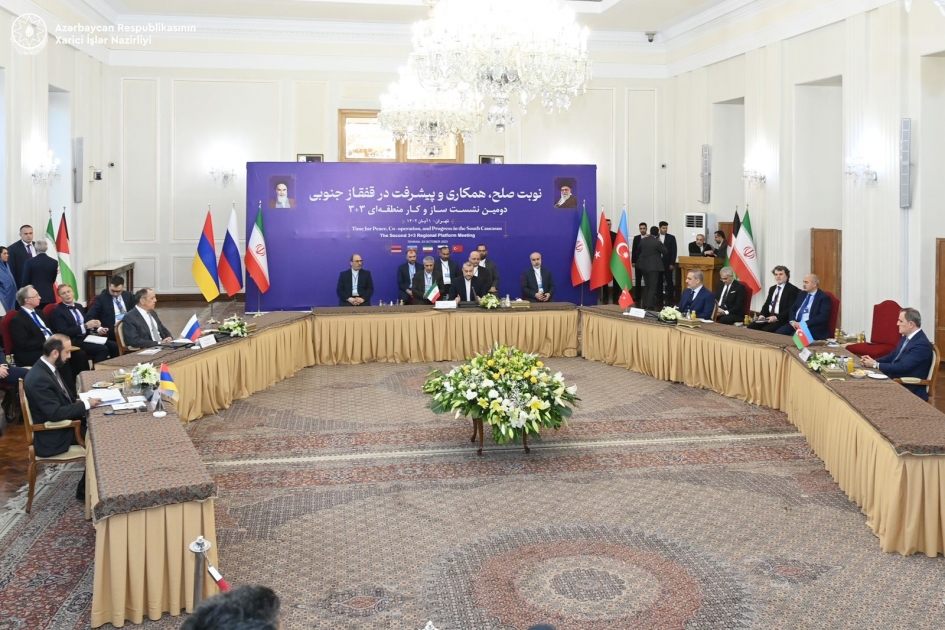
The foreign ministers of Armenia, Azerbaijan, Iran, Russia and Turkey met in Tehran. Although the regional cooperation format is called “3+3”, only five countries take part. Georgia has refused to participate in this format from the day of its creation.
What is the format and what is it for?
After the end of the second Karabakh war in late 2020, Turkish President Recep Tayyip Erdogan announced the idea of a “3+3” platform with the participation of the three countries of the South Caucasus (Armenia, Azerbaijan and Georgia) and the three major states of the region (Iran, Russia and Turkey) in order to deepen regional cooperation.
Immediately after the publication of this proposal, Armenia and Georgia refused to participate. Subsequently, official Yerevan joined the work of this platform, the first meeting within the framework of which was held in Moscow in 2021.
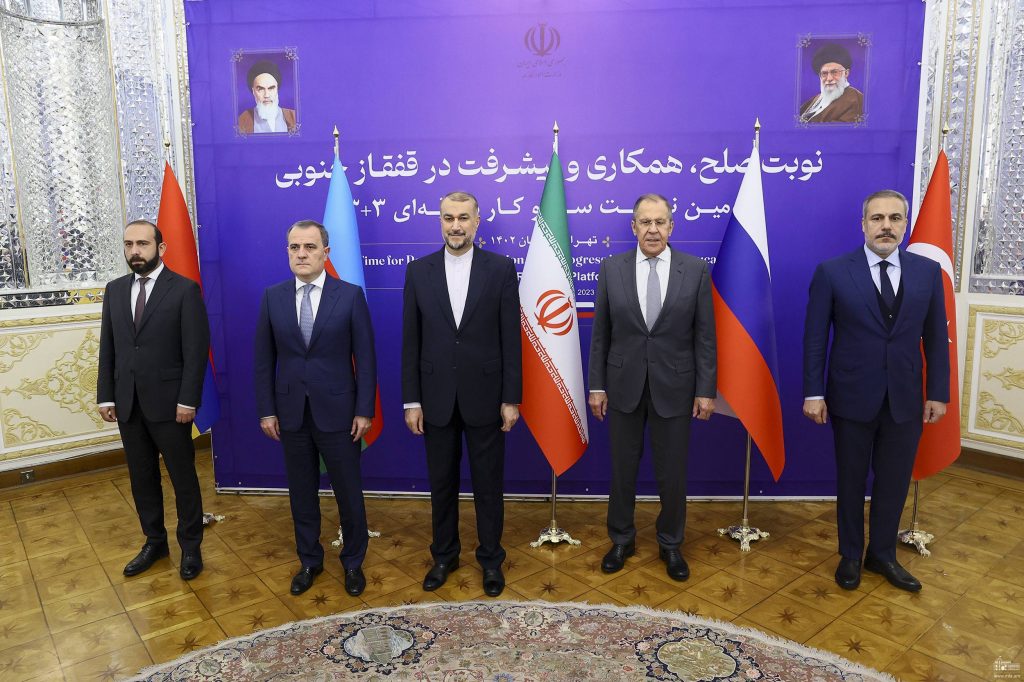 Foreign Ministers of the five countries at the 3+3 meeting in Tehran. October 23, 2023. Photo: Azerbaijani Foreign Ministry
Why did Georgia refuse?
“It will be difficult for Georgia to participate in the 3+3 format together with Russia, nevertheless, the country should be represented in some form in major geopolitical projects.” This is how Georgian Deputy Prime Minister and Foreign Minister David Zalkaliani reacted to the idea of creating a regional cooperation format.
“Of course, when we do not see any movement in the direction of de-occupation, it is very difficult to participate in such a format and talk about infrastructure projects.
Nevertheless, I want to give the public such a position for reflection – in these big geopolitical projects and relations we should be represented at least in some form, certainly not at the expense of state interests and some concessions to the occupier,” Zalkaliani said.
“In Tbilisi, there is a zealous attitude towards this format.”
Azerbaijani politician Natik Jafarli, one of the leaders of the opposition Republican Alternative party, does not agree with the Georgian side’s argument about non-participation in the 3+3 format.
According to him, the main object of discussions in this format is the opening of logistical routes:
“Tbilisi believes that after the opening of roads through Iran and Armenia, Georgia’s logistics priority will decrease. This issue is treated with caution in Georgia. Because for many years, due to the Azerbaijani-Armenian conflict and the occupation policy of Armenia, Georgia has turned into a logistical center of routes from Turkey to Azerbaijan and back.
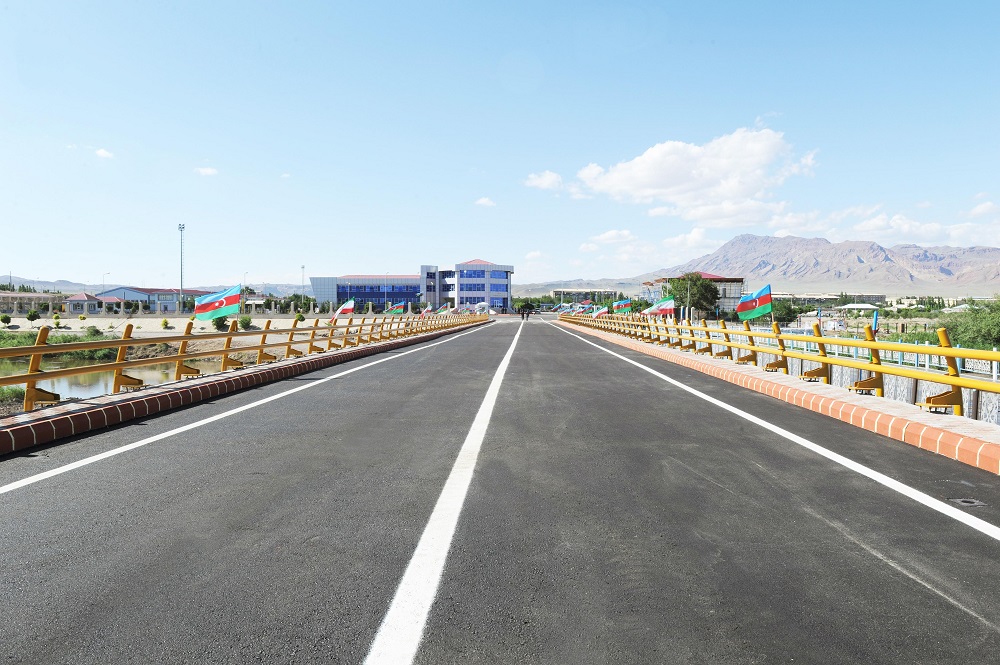
All cargo delivered from Azerbaijan to the countries of Central Asia and the Far East were transported through the territory of Georgia, and during these 30 years the relevant infrastructure has been created in this country. Tens of thousands of jobs have been created around these routes, motels, cafes, service stations, repair shops, and other numerous units of necessary infrastructure are functioning.
Georgia receives nearly $1.5 billion in revenue for the use of the roads and through indirect turnover.
Now Georgia fears that after the opening of new roads, the flow of cargo through its territory will be significantly reduced. It seems to me that this is the reason why Tbilisi is jealous of this format.”
Jafarli emphasizes that Azerbaijan and Turkey can achieve a solution to problematic issues through separate meetings with Georgia:
“Turkey and Azerbaijan should work more seriously with Georgia on these issues and make it clear that some goods will still pass through this country. Georgia should be more persistently invited to participate in the work of this platform. Because Georgia’s non-participation in its work, frankly speaking, creates some questions for international partners.
That is why both Turkey and Azerbaijan at bilateral meetings should bring to the attention of the Georgian side that the opening of new roads in no way means the exclusion of cargo transportation through the territory of Georgia. I think that after such meetings Georgia may turn into a participant of a new regional platform”.
Georgia’s rejection of the regional format
Georgia and 3+3
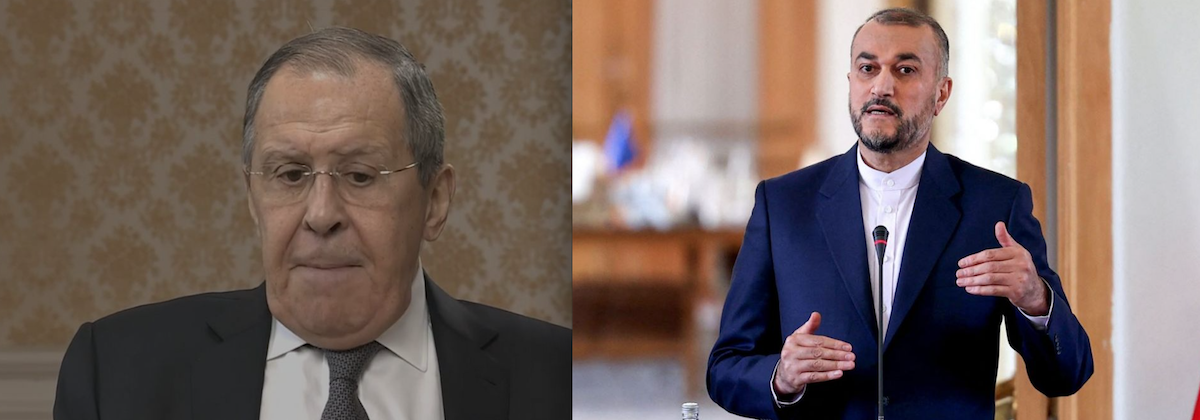
Iranian and Russian Foreign Ministers Hosein Amir-Abdolahian and Sergey Lavrov express hope that Georgia will join the 3+3 format. Lavrov explains this by the Georgian government’s policy based on “national interests”, while the Iranian Foreign Minister says that “we will witness Georgia’s constructive and effective participation”.
Another meeting of the 3+3 foreign ministers was held in Tehran on October 23. The Georgian Foreign Ministry said that the country will not participate in this meeting, as before.
Lavrov’s statement:
“The current government in Tbilisi, as has been proven many times before, in all its actions proceeds from basic national interests. This gives me reason to assume that a full 3+3 format can be launched in the near future.”
Hosein Amir-Abdollahian’s statement:
“We hope that at the next meetings, which will be dedicated to discussing the problems of the South Caucasus, we will witness the constructive and effective participation of Georgia.”
- Georgia and China: Advantages and risks of friendship
- Georgia signs economic partnership agreement with Arab Emirates
What is the “3+3” format?
The idea of a “new platform for regional cooperation to ensure lasting peace and stability” or “3+3” in the South Caucasus belongs to Turkish President Recep Tayyip Erdogan, who came up with this initiative after the second Karabakh war in 2020.
The first meeting in the new format was held in 2021, also without Georgia, although the original idea implied its participation. Thus, according to Erdogan’s idea, the governments of Turkey, Azerbaijan, Armenia, Georgia, Russia and Iran were to participate in the meetings of the “3+3” format. According to the Turkish president, the establishment of peace in the Caucasus region is possible through regional cooperation and it will benefit the entire planet.
Initially, official Tbilisi said that Georgia “should somehow participate in this format so that the country does not lose its function in the region.” However, so far Georgia has not participated in any such meeting.
In March 2023, Russian Foreign Minister Sergei Lavrov said that official Tbilisi was still considering joining the 3+3 format. This statement provoked a strong reaction among pro-Western Georgian political parties and the civil sector, as they strongly oppose Georgia’s inclusion in anti-Western platforms.
Israel’s Energy Minister Israel Katz, a close ally of Prime Minister Benjamin Netanyahu, has claimed that Israel’s military campaign in Gaza is part of a global conflict against Islam and that the US would have done the same or worse in a similar situation.
Katz defended Israel’s actions in Gaza, where more than 1,300 Israelis and 4,000 Palestinians have been killed since October 7, 2023.
However, Katz’s statement has been widely condemned by Muslim countries around the world.
Artificial intelligence companies and governments should allocate at least one third of their AI research and development funding to ensuring the safety and ethical use of the systems, top AI researchers said in a paper on Tuesday.
The paper, issued a week before the international AI Safety Summit in London, lists measures that governments and companies should take to address AI risks.
“Governments should also mandate that companies are legally liable for harms from their frontier AI systems that can be reasonably foreseen and prevented,” according to the paper written by three Turing Award winners, a Nobel laureate, and more than a dozen top AI academics.
Currently there are no broad-based regulations focusing on AI safety, and the first set of legislation by the European Union is yet to become law as lawmakers are yet to agree on several issues.
“Recent state of the art AI models are too powerful, and too significant, to let them develop without democratic oversight,” said Yoshua Bengio, one of the three people known as the godfather of AI.
“It [investments in AI safety] needs to happen fast, because AI is progressing much faster than the precautions taken,” he said.
Authors include Geoffrey Hinton, Andrew Yao, Daniel Kahneman, Dawn Song and Yuval Noah Harari.
Since the launch of OpenAI’s generative AI models, top academics and prominent CEOs such as Elon Musk have warned about the risks on AI, including calling for a six-month pause in developing powerful AI systems.
Some companies have countered this, saying they will face high compliance costs and disproportionate liability risks.
“Companies will complain that it’s too hard to satisfy regulations — that ‘regulation stifles innovation’ — that’s ridiculous,” said British computer scientist Stuart Russell.
“There are more regulations on sandwich shops than there are on AI companies.”
Artificial intelligence companies and governments should allocate at least one third of their AI research and development funding to ensuring the safety and ethical use of the systems, top AI researchers said in a paper on Tuesday.
The paper, issued a week before the international AI Safety Summit in London, lists measures that governments and companies should take to address AI risks.
“Governments should also mandate that companies are legally liable for harms from their frontier AI systems that can be reasonably foreseen and prevented,” according to the paper written by three Turing Award winners, a Nobel laureate, and more than a dozen top AI academics.
Currently there are no broad-based regulations focusing on AI safety, and the first set of legislation by the European Union is yet to become law as lawmakers are yet to agree on several issues.
“Recent state of the art AI models are too powerful, and too significant, to let them develop without democratic oversight,” said Yoshua Bengio, one of the three people known as the godfather of AI.
“It [investments in AI safety] needs to happen fast, because AI is progressing much faster than the precautions taken,” he said.
Authors include Geoffrey Hinton, Andrew Yao, Daniel Kahneman, Dawn Song and Yuval Noah Harari.
Since the launch of OpenAI’s generative AI models, top academics and prominent CEOs such as Elon Musk have warned about the risks on AI, including calling for a six-month pause in developing powerful AI systems.
Some companies have countered this, saying they will face high compliance costs and disproportionate liability risks.
“Companies will complain that it’s too hard to satisfy regulations — that ‘regulation stifles innovation’ — that’s ridiculous,” said British computer scientist Stuart Russell.
“There are more regulations on sandwich shops than there are on AI companies.”