
Shop the latest made by Google devices including the Pixel series phones, the latest Pixel Watch, Fitbit and Google Nest devices at Google Store!
Categories
Search – Settings
Categories
⚽️ Азербайджан готовится к Чемпионату мира и фестивалю ФИФА U-15.
#новости #mediaaz #Азербайджан #чемпионатМира #фестиваль #ФИФА #турнир #футболист

Assistant to the President of Azerbaijan and Head of the Foreign Policy Affairs Department of the Presidential Administration Hikmat Hajiyev has shared a post about Counterpoint, a documentary exploring the two-century history of coexistence between Germans and Azerbaijanis.
According to Report, Hajiyev shared the post on the social media platform X.
The post notes that the story began with the resettlement to Azerbaijan of Swabian families from the territory of present-day Baden-Württemberg, a federal state in Germany.
“The documentary explores how German settlers and local Azerbaijanis built prosperous communities while preserving their religions, languages and traditions.
Through descendants, historians and diplomats, the film examines what remains of that legacy today and how cultural memory has survived,” the post reads.
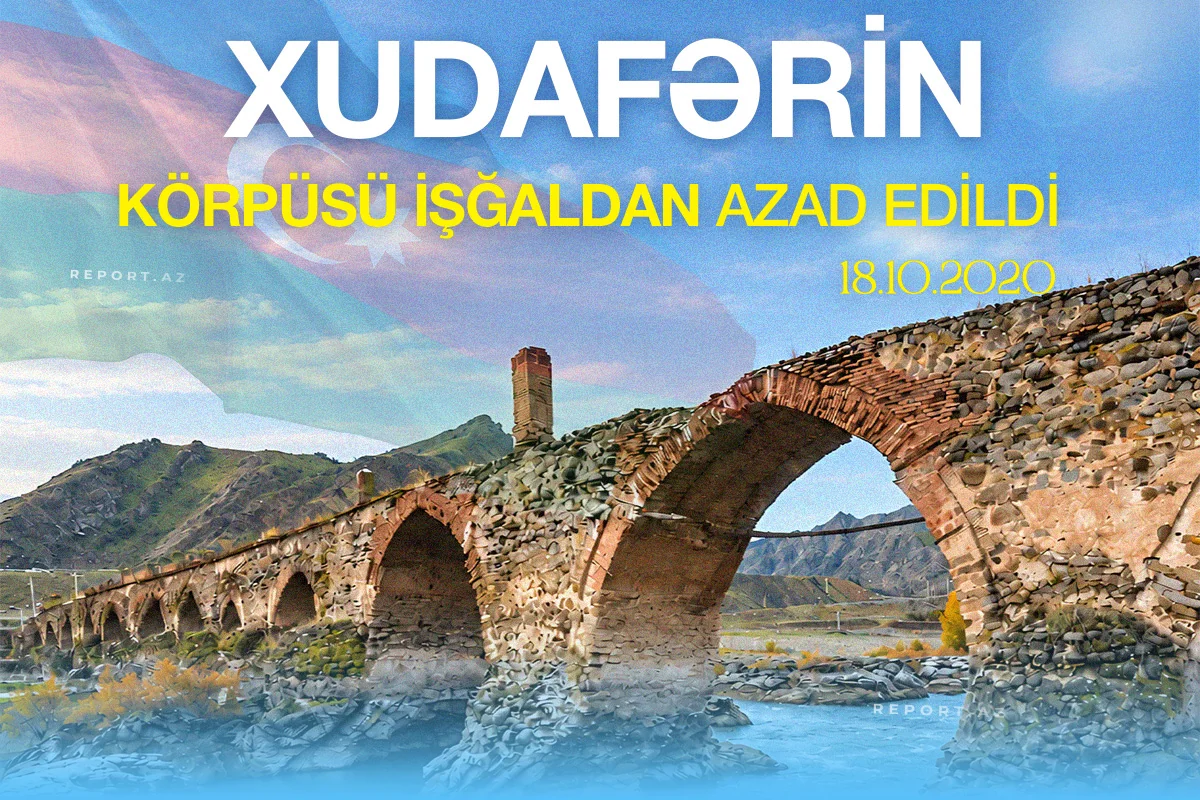
Today, October 18, marks the sixth anniversary of the liberation of the historic Khudafarin bridge on the Araz River, located on the Azerbaijan–Iran border in Jabrayil district, from Armenian occupation.
As Report recalls, on October 18, 2020, in addition to the Khudafarin bridge, two villages of Jabrayil – Hajili and Haji Isagli – were also freed from occupation during the Second Karabakh War.
The Khudafarin bridge, a notable example of Azerbaijani architectural heritage, consists of the remains of an 11-arch structure dating back to the 11th–12th centuries. Built from stone and faced with finely hewn slabs, the bridge spans nearly 130 meters in length, six meters in width, and rises 12 meters above the river. Researchers believe it was rebuilt in the 13th century during the Ilkhanate period over the remnants of an ancient bridge. While three central arches remain intact, the side arches were destroyed in the 1930s by Soviet authorities.
Nearby, the 15-arch Khudafarin bridge, believed to date back to the 7th century, is attributed to Bakr ibn Abdullah, a close companion of Prophet Muhammad, according to historian Hamdallah Qazvini. Constructed from baked brick and river stone, the bridge stretches approximately 200 meters in length, 4.5 meters in width, and also rises up to 12 meters above the river. Its arches are irregularly spaced, supported by natural rock foundations.
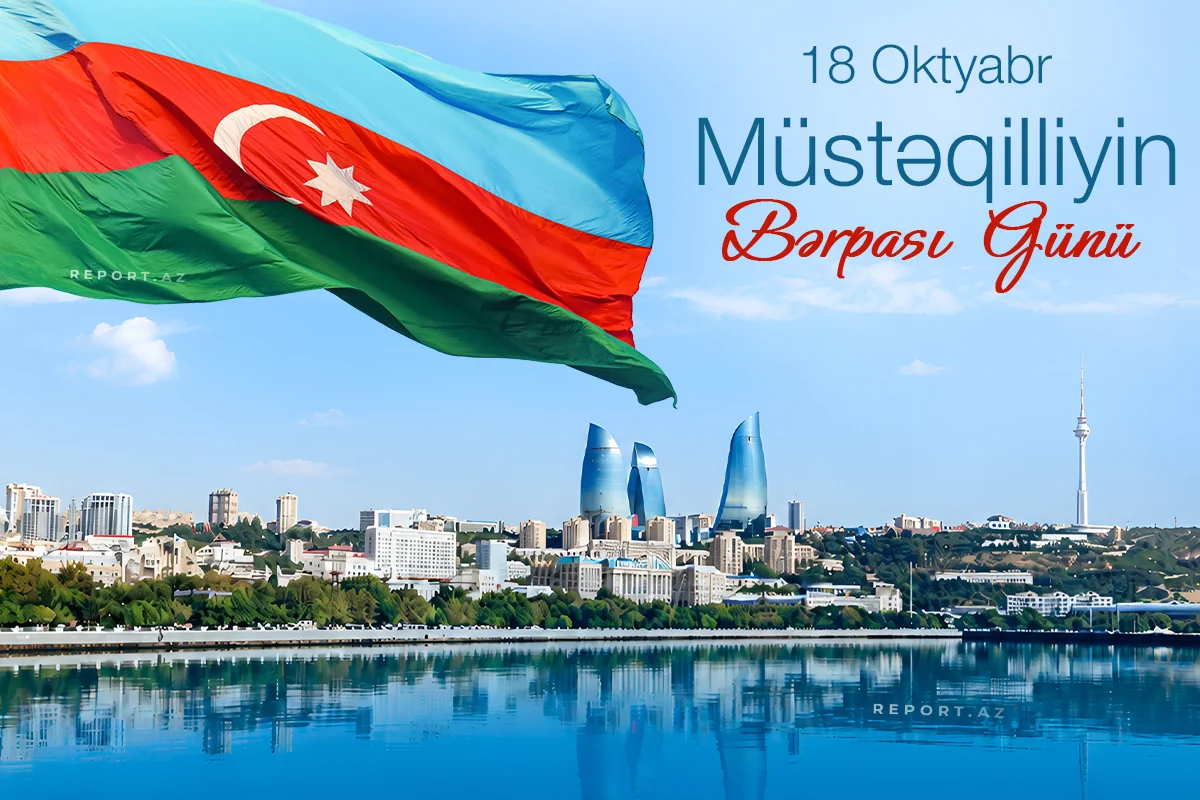
Today, October 18, marks the 35th anniversary of the restoration of the independence of Azerbaijan.
On this day in 1991, the Supreme Soviet adopted the Constitutional Act “On the State Independence of the Republic of Azerbaijan,” officially declaring the restoration of Azerbaijan’s independence.
The Act referenced the Declaration of Independence of May 28, 1918, and the statement “On the Restoration of State Independence of the Republic of Azerbaijan” adopted by the Supreme Soviet on August 30, 1991. It affirmed that the modern Republic of Azerbaijan is the legal successor of the Azerbaijan Democratic Republic (ADR), which was established in 1918.
In 1992, the Milli Majlis (Parliament) adopted key state symbols, including the national anthem (with music by Uzeyir Hajibayov and lyrics by Ahmad Javad), the tricolor flag, and the national emblem featuring an eight-pointed star with a flame.
On October 15, 2021, the Azerbaijani Parliament passed a new bill titled “On Independence Day,” which was signed into law by President Ilham Aliyev the same day. Under this legislation, the former State Independence Day was renamed the Day of Restoration of Independence.
The Day of Restoration of Independence is celebrated annually in Azerbaijan as a public holiday, though it remains a working day.
Categories