Categories
Selected Articles

Hikmet Hajiyev: A new dramatic misinformation and manipulation campaign was launched


Assistant to the President of Azerbaijan, Head of Foreign Policy Affairs Department of the Presidential Administration Hikmat Hajiyev has made the following statement on X:

“From the money talks series! Apparently, on the eve of the “anniversary” of the most terrible, bloody and criminal separatist entity in Europe so-called “Nagorno-Karabakh Rep”, a new dramatic misinformation and manipulation campaign was launched by the order of the Armenian Government and armenian lobby groups. At least, but disgracefully, the former NATO Secretary General does not deny that he is paid by the Government of Armenia for propaganda campaign. Copy of income sheet is attached. Hypocritically, some politicians divide the world between “good and bad separatists and criminals”. Old habits die hard! But disturbing is that the BBC in its Charter declaring that “is committed to achieving due impartiality in all its output. This commitment is fundamental to our reputation, our values and the trust of audiences” is engaged in one-sided and biased aggressive manipulation and promotion of lies as well in “Context” program. BBC should serve as a platform for all voices, particularly on sensitive topics.”


The post Hikmet Hajiyev: A new dramatic misinformation and manipulation campaign was launched appeared first on Azerbaijan In Focus.


Categories
South Caucasus News

FAO talks food export improvement strategy for Azerbaijan


The UN Food and Agriculture Organization (FAO) is supporting Azerbaijan in exporting its food products around the world, noted Muhammad Nasar Hayat, FAO representative in Azerbaijan, according to Azerbaijan in Focus, reporting Trend.

“Azerbaijan is importing a lot of food, especially wheat and meat. If prices increase, then the availability and consumption of these items may be affected. Azerbaijan is a country rich with resources, it has enough to feed its population. But, still, the food balance, what we produce and what we consume, needs improvement. We need to rely less on imports,” he said.

According to FAO representative, Azerbaijan has really good food products that can be exported to other countries around the world.

“Fruits in Azerbaijan, for instance, are very high quality, and, at large, are organically produced. These things create a market for specific Azerbaijani products that we need to take out of the country to earn more for the farmers that engage in agriculture,” Nasar Hayat said.

He added that FAO is supporting the government of Azerbaijan in terms of food safety, standards, improving productivity, packaging, labeling – everything that is necessary to access the international market.

Azerbaijan is a member of FAO since October 20, 1995. The co-ordination office will carry out the Office of the Partnership and Co-operation in Azerbaijan from the autumn of 2015.

The post FAO talks food export improvement strategy for Azerbaijan appeared first on Azerbaijan In Focus.


Categories
South Caucasus News

New book alert: ‘Istanbul 50 Unsung Places’


Expat author and aficionado on Türkiye, Lisa Morrow, has released her first guidebook, which uncovers 50 off-the-beaten-track destinations in Istanbul that are well worth discovering

Australian expat, author and sociologist Lisa Morrow has recently released a new guidebook on some of the most captivating yet lesser-known places of interest in Istanbul. From mosques to churches, doll museums and more, Morrow’s new guidebook, “Istanbul 50 Unsung Places” offers in-depth knowledge of 50 lesser-known sites broken down by different districts in the city. Each site contains personal directions and instructions on how to visit and why. I had the chance to catch up with Lisa to talk about her new book on Istanbul released this summer.

Morrow has been in Türkiye for over 20 years and while she now lives on the Asian side of Istanbul, she has lived in several cities in the country from the central Anatolian province of Nevşehir to the Mediterranean coastal city of Antalya and has been writing about her experiences in books and international publications for the last decade. “Istanbul 50 Unsung Places” is her first guidebook and came about through her fascination with the history, social life, religious customs and personal stories to be found in less famous sites around the city. This eclectic guide celebrates the rich cultural heritage of Istanbul, combining history, little-known facts, transport information, directions and handy tips.

The guidebook is the culmination of thorough research and field trips to 50 destinations throughout the city that are for the most part overlooked. Morrow details how exactly to get to the destinations, which include places such as mosques, tombs and museums. Of the 50 unsung places, 24 are on the European side, while 26 are on the Asian side.

“The names of sights are listed in Turkish because I know outside tourist areas not as many people speak English,” Morrow explained, adding that “the index is in English.” Available online in ebook and paperback form and soon to be available in bookshops in Istanbul, Morrow foresees people taking a screenshot or printing out the pages for the destinations they want to see and taking it along with them as the road map for their adventure.

“The guide includes descriptions of transport hubs in Kadıköy, Üsküdar, Taksim and Eminönü. The idea is you know what you want to see and how to get there, so you can enjoy the moment rather than constantly having to check your phone for directions. I also know not all tourists have Wi-Fi while they’re here, so readers can screenshot a walking route in advance.”

As for how the book came about, Morrow says: “I’ve spent years going to less visited places in Istanbul, all by public transport. People were always interested when I talked about what I’d seen and learned, both Turks and internationals, so I decided to put together a guide. I really want people to experience the Istanbul I live in, a place where tradition and modernity combine to create a unique and distinct atmosphere I call the ‘everyday extraordinary.”

Undiscovered destinations

Morrow takes her readers to destinations you won’t find in guides like Lonely Planet, but as you will see they are each equally captivating in their own right, such as Zühtü Paşa Mosque near Kızıltoprak. Built in 1883-34, it contains the largest number of examples of Kufic writings of any mosque in Istanbul. Kūfic is a type of handwritten Islamic script, believed to have first been used to record quotes from the Quran in the early Islamic center of Kufah, Iraq, and this mosque has the scripture covering its walls and dome.

Morrow also takes her readers to the Yeraltı Mosque in Karaköy, which as the name suggests is hidden underground.


The interior of the Yeraltı Mosque is seen in Karaköy, Istanbul, Türkiye. (Photo courtesy of Lisa Morrow)The interior of the Yeraltı Mosque is seen in Karaköy, Istanbul, Türkiye. (Photo courtesy of Lisa Morrow)

Another site is the Şakirin Mosque in a cemetery in Üsküdar, near Kadıköy, which was designed by a woman. Morrow also ends up in Marmara University’s Theology Faculty Mosque and Culture Centre in Altunizade and describes the fantastic fractal dome housed inside a post-modern building that also contains a library and a cafe.

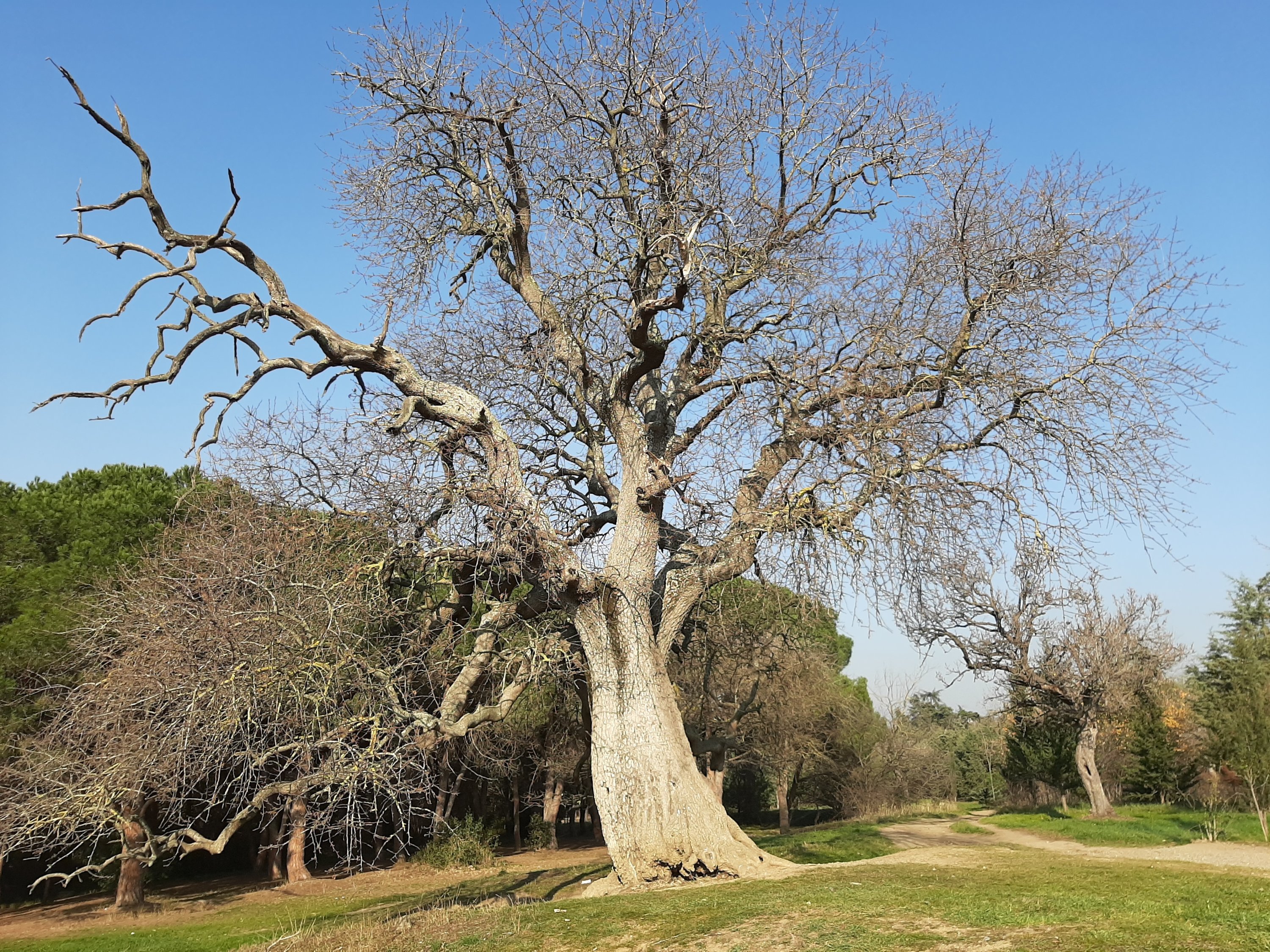
Morrow visits the Aya Efimia Rum Ortodoks Kilisesi in Kadıköy, a Greek Orthodox church named after Saint Euphemia who died in A.D. 303. Her tumultuous life is described at length in the book. Morrow also takes her reader along walks in Validebağ Grove, located near Altunizade, a 354,000-square-meter (3.81 million-square-foot) tree-filled grove that once belonged to a sultan’s mother.


An old giant tree in Validebağ Grove, located near Üsküdar's Altunizade, Istanbul, Türkiye. (Photo courtesy of Lisa Morrow)An old giant tree in Validebağ Grove, located near Üsküdar’s Altunizade, Istanbul, Türkiye. (Photo courtesy of Lisa Morrow)

Some of the stories behind the sites are just interesting, such as how the Haydarpaşa Train Station was constructed by German architects to accommodate the tomb of Şeyh Haydar Buhari. I also didn’t know that there was a museum, called the Üsküdar Hanım Sultanlar Museum, devoted to exhibiting handmade dolls dressed in miniature exact copies of outfits worn by the sultana and sultans of the Ottoman Empire. The guidebook also contains cultural gems such as mosque etiquette, answering any of the questions that could pop into your mind. This is why whether you’re familiar with the city or not, reading “Istanbul 50 Unsung Places” is a treasure.

Morrow has written a number of books on her observations in Türkiye and is the author of the popular blog on all things Istanbul-related and beyond entitled “Inside Out in Istanbul.” Having lived in Türkiye for nearly two decades, she has been offering personal insights and sharing her tried-and-tested experiences in her entertaining vernacular with readers for decades.

Some of her books include “Istanbul Dreams: Waiting for the Tulips to Bloom,” which is her memoir about moving to Türkiye for good in 2010 when she bought an apartment and had to deal with relocating and bureaucracy. There is also “Inside Out In Istanbul: Making Sense of the City” and “Longing for Istanbul: The Words I Haven’t Said Yet,” as well as “Exploring Turkish Landscapes: Crossing Inner Boundaries,” which has also been translated into Turkish as “Türkiyeyi Keşfederek Sınırlarını Aşarken.” In addition, Morrow has created an audio tour of a walk in Kadıköy called “Stepping Back Through Chalcedon.”


This article originally appeared in Daily Sabah on September 08, 2023.

The post New book alert: ‘Istanbul 50 Unsung Places’ appeared first on Azerbaijan In Focus.


Categories
South Caucasus News

Russia summons Armenian ambassador over ‘unfriendly’ acts


Moscow summoned the Armenian ambassador in a harsh protest over Yerevan’s alleged “unfriendly steps” as the country announced that it would hold joint military drills with the U.S. and escalating tensions over the issue of Karabakh, according to Azerbaijan in Focus, reporting Daily Sabah.

Yerevan, a traditional Russian ally, has increasingly criticized Moscow’s peacekeeping mission there.

The Russian Foreign Ministry said in a statement that “the Armenian leadership had in recent days taken a series of unfriendly steps.”

These included “U.S. military drills on Armenian territory,” a trip to Kyiv by the Armenian prime minister’s wife and Yerevan’s move to join the International Criminal Court (ICC), it added.

Moscow’s Foreign Ministry said the Armenian envoy was given a “tough presentation.”

Despite the summoning, the Foreign Ministry stressed that Russia and Armenia “remain allies and all agreements on developing the strengthening of the partnership will be fulfilled.”

Russia deployed peacekeepers to Karabakh as part of a Moscow-brokered deal to end a 2020 war between Armenia and Azerbaijan.

Many of Russia’s traditional allies in the ex-Soviet space have questioned Moscow’s role after its full-scale Ukraine offensive.

The post Russia summons Armenian ambassador over ‘unfriendly’ acts appeared first on Azerbaijan In Focus.


Categories
South Caucasus News

Nearly 300 killed in powerful quake in Morocco


At least 296 people were killed and 153 sustained injuries following a powerful earthquake that struck Morocco, according to Azerbaijan in Focus, reporting Anadolu Agency, citing the country’s Interior Ministry.

Fatalities from the magnitidue-7 quake occurred in various regions, including Al Haouz and Marrakesh provinces, as well as the cities of Ouarzazate, Azilal, Chichaoua and Taroudant, Morocco’s Royal Armed Forces wrote on X, citing the interior minister.

Local media said the quake was recorded in Al Haouz province within the Marrakech region, occurring at around 11.10 p.m. local time. Several aftershocks were subsequently felt across a significant part of the country, affecting cities such as Casablanca, Rabat and Agadir.

The United States Geological Survey (USGS) previously said a magnitude-6.8 quake rattled central Morocco late Friday. The epicenter was 75 kilometers (46.6 miles) southeast of Marrakech, striking shortly after 11 p.m. at a depth of 18.5 kilometers.

Morocco’s National Seismic Monitoring and Alert Network assessed the earthquake at magnitude-7 on the Richter scale.

Videos on social media captured the immediate aftermath and showed residents spilling out onto the streets.

The situation is particularly dire in the Marrakech region, where numerous houses have collapsed and residents are trapped under debris. These distressing scenes have been corroborated by multiple videos showing pleas for help on social media.

Morocco’s Royal Armed Forces are issuing warnings to citizens, urging them to exercise caution and directing them toward safe areas to shield them from aftershocks.

The tremor was felt not only across Morocco but also in neighboring Algeria and Mauritania.

The post Nearly 300 killed in powerful quake in Morocco appeared first on Azerbaijan In Focus.


Categories
South Caucasus News

Ilham Aliyev: Transportation of goods by Armenia through Lachin checkpoint without consent – interference in internal affairs of Azerbaijan


The bringing of goods, which Armenian side claims were for humanitarian purposes, by Armenia in front of Azerbaijan’s “Lachin” border crossing point without agreement with the Azerbaijani side is interference in Azerbaijan’s internal affairs and disrespect for the territorial integrity and sovereignty of the country, President of the Republic of Azerbaijan Ilham Aliyev said during a phone talk with U.S. Secretary of State Antony Blinken, according to Azerbaijan in Focus, reporting Trend.

The Azerbaijani President said that such a policy of Armenia seriously harmed the peace treaty negotiations.

The head of state noted that food cargo was delivered to that area through the Azerbaijan Red Crescent Society, but the illegal separatist regime refused it.

President Ilham Aliyev recalled that representatives of the Armenian population of Azerbaijan’s Karabakh were invited to the capital Baku and other cities of the country to hold discussions on reintegration issues, but they refused.

The post Ilham Aliyev: Transportation of goods by Armenia through Lachin checkpoint without consent – interference in internal affairs of Azerbaijan appeared first on Azerbaijan In Focus.


Categories
Selected Articles

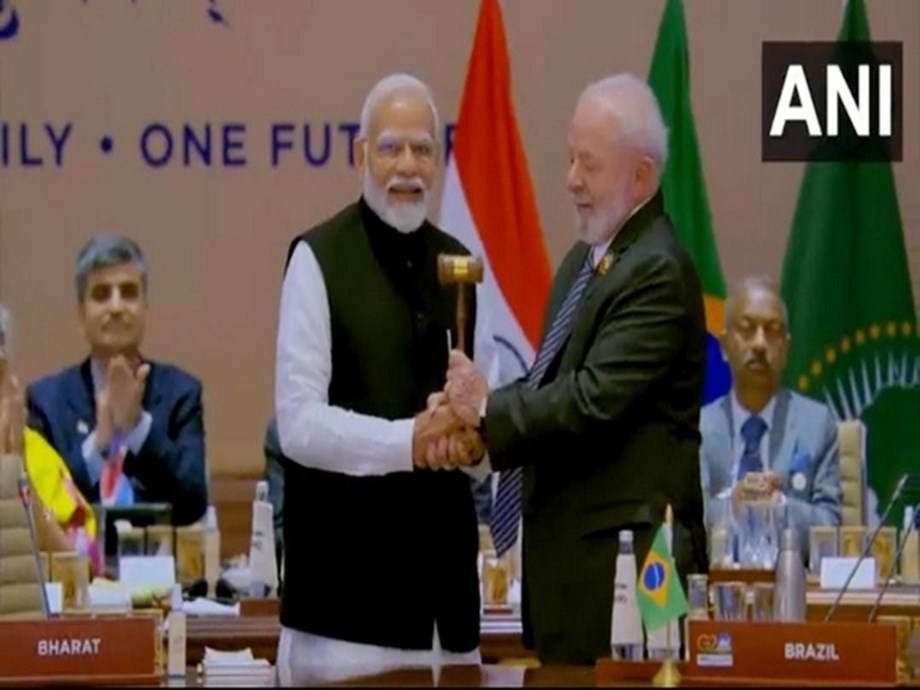
PM Modi hands over gavel of G20 presidency to Brazil President Lula da Silva | International


10_09_2023_08_02_09_9120564.jpg?width=92

ANI | Updated: 10-09-2023 13:32 IST | Created: 10-09-2023 13:32 IST

Prime Minister Narendra Modi on Sunday handed over the ceremonial gavel of the Group of 20 presidency to Brazil President Luiz Inacio Lula da Silva at the G20 summit here. “I congratulate Brazilian President and my friend Lula da Silva and hand over the gavel of Presidency,” PM Modi said minutes before the New Delhi G20 Summit concluded.

Earlier Indonesian President Joko Widodo and Luiz Inacio Lula da Silva handed over saplings to Prime Minister Narendra Modi ahead of Session 3 of the G20 Summit. While Indonesia held the G20 presidency last year, Brazil will hold the presidency after India.

India took over the G20 presidency on December 1 last year at the G20 Summit at Bali in Indonesia and will continue to hold it till the end of November. The New Delhi Declaration was adopted by G20 leaders on Saturday, the first day of the Summit.

The G20 leaders visited Rajghat on Sunday morning to pay tributes to Mahatma Gandhi.  (ANI)

(This story has not been edited by Devdiscourse staff and is auto-generated from a syndicated feed.)


Categories
Selected Articles

Azerbaijan denies deal reached to reopen Karabakh-Armenia road – Devdiscourse


Azerbaijan denies deal reached to reopen Karabakh-Armenia road  Devdiscourse

Categories
Selected Articles

Robert Reich: Why Have So Many Americans Succumbed To Trumpism? – OpEd


Robert Reich: Why Have So Many Americans Succumbed To Trumpism? – OpEd

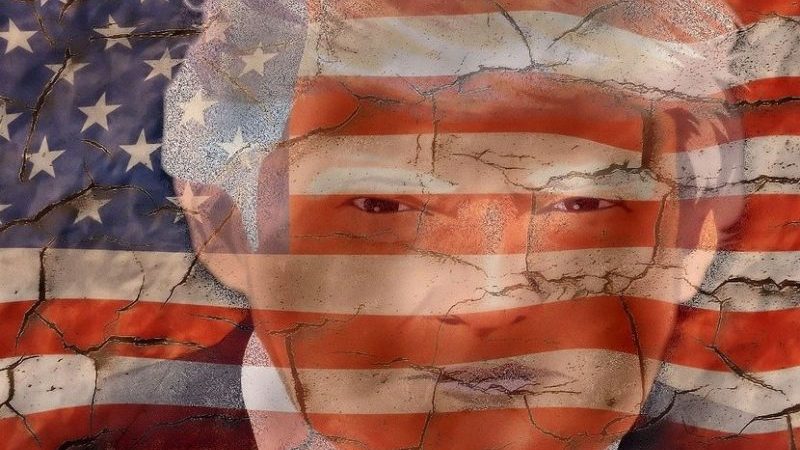
donald trump poster

Today in the sixth essay about the loss of America’s sense of common good, I want to summarize where we’ve come by focusing on one of the worst consequences of the loss: The emergence of Trumpism, and of the despair that has led so many Americans to give up on democracy. 

Starting next week, in the seventh essay of this series, I’ll talk about what I believe we can and should do to resurrect the common good.

It is easy for many of us to condemn fellow Americans who have succumbed to the lies and thuggery of Donald Trump. It’s convenient for us to assume they’re ignorant, or racist, or gullible fools. 

But what if their willingness to believe and support Trump is understandable, given what has happened to them? I’m not suggesting it’s justifiable, only that it may be explicable. 

As we have seen, many of the key political and economic institutions of our society have abandoned their commitments to the common good — and along the way, abandoned the bottom half of the adult population, especially those without college degrees. 

The consequence has been a catastrophe, especially for the bottom half. The erosion began 40 years ago. By 2016, when Trump was elected president, the typical American household had a net worth 14 percent lower than the typical household in 1984, while the richest one-tenth of 1 percent owned more wealth than the bottom 90 percent put together. 

Income has become almost as unequal as wealth: Between 1972 and Trump’s election in 2016, the pay of the typical American worker dropped 2 percent, adjusted for inflation, although the American economy nearly doubled in size. 

Most of the income gains have gone to the top. The 2016 Wall Street bonus pool was larger than the annual year-round earnings of all 3.3 million Americans working full-time at the federal minimum wage of $7.25 an hour.

Whereas 90 percent of American adults born in the early 1940s were earning more than their parents by the time they reached their prime earning years, this proportion steadily declined. Only half of adults born in the mid-1980s are now earning more than their parents by their prime earning years.

Average weekly nonsupervisory wages, a measure of blue-collar earnings, were higher in 1969 (adjusted for inflation) than they are now.

Most Americans without college degrees are working longer hours than they worked decades ago and taking fewer sick days or vacations, and they have less economic security.

Nearly one out of every five American workers is in a part-time job. Two-thirds are living paycheck to paycheck. Along with pay, employment benefits have been shriveling. The gap in life expectancy between the nation’s most affluent and everyone else is widening, as well. 

Increasing numbers of working Americans have been succumbing to opioids. Death rates have been rising for Americans with no more than high school degrees, due to suicides, chronic liver cirrhosis, and poisonings, including drug overdoses.

Americans who for decades have been on a downward economic escalator have become easy prey for demagogues peddling the politics of hate. 

THE STANDARD EXPLANATION for why America has become so economically lopsided is that most Americans are no longer “worth” as much as they were before digital technologies and globalization, and therefore must now settle for lower wages and less security. If they want better jobs, they need more education and better skills.

But this account doesn’t explain why other advanced economies facing similar forces haven’t succumbed to them nearly as dramatically as has the United States. 

Or why America’s U-turn from broadly shared prosperity to stagnant wages for most and great riches for a few occurred so quickly in the late 1970s and 1980s. 

It doesn’t clarify why the pay of top executives at big companies has risen so dramatically since then, or why the denizens of Wall Street are now paid tens or hundreds of millions annually.

To attribute all this to the impersonal workings of the “free market” is to be blind to the political power America’s economic elites have gained over the rules of the market — and their failure to use their power to deliver rising or even stable incomes and jobs to most of the rest of the nation. 

Since 1971, when Lewis Powell urged the leaders of American corporations to devote a portion of their profits to politics, America has witnessed the largest and most entrenched system of legalized bribery in its history. 

This money — supplemented by additional money from the super-wealthy — has rigged the “free market” for the benefit of large corporations and the rich. 

And what have they gotten for their money? 

— Lower trade barriers have enabled corporations to outsource abroad, making more stuff in low-wage nations and then selling it back to Americans, who get the benefit of cheaper goods but also lose higher-paying and more secure jobs. As a result, entire sections of America have been denuded of manufacturing jobs. 

— The deregulation of Wall Street has enabled corporate raiders (now dubbed shareholder activists and private-equity managers) to force CEOs to abandon all other stakeholders except shareholders. 

— Deregulation of finance also allowed high-paid bankers to pocket huge sums while exposing most Americans to extraordinary economic risks, culminating in the Wall Street crisis and the taxpayer-funded bailout of large Wall Street firms. Americans who subsequently lost their jobs, savings, and homes were understandably outraged — especially after these same bankers were never held accountable. Within a few years of the financial crisis, most bankers returned to pocketing vast fortunes, but most other Americans were still living with the consequences. 

— Weakened unions, causing the unionized portion of the workforce to drop from 35 percent of all private-sector workers in the 1960s to just 6 percent today, and wages to stagnate. 

— Laws against monopolies have been weakened. 

— Laws that prevent corporate insiders from getting rich in the stock market by using confidential information have been negated.

— Laws that prevent the wealthy and big corporations from bribing politicians with campaign donations have been weakened or repealed. 

IT HAS BEEN A VICIOUS CYCLE. Each change in laws has ratcheted wealth and power upward, making it easier for the wealthy and powerful to gain further legal changes that ratchet even more wealth and power upward. 

All of this has taken a profound toll on public trust. Much of the public no longer believes that the major institutions of America are working for the many; they are vessels for the few.

When the game is widely seen as rigged in favor of those at the top, society shifts from a system of mutual obligations to a system of private deals. Rather than be founded in the common good, political and social relationships increasingly are viewed as contracts whose participants seek to do as well as possible, often at the expense of others (workers, consumers, the community, the public) who are not at the table. 

When it’s all about making deals, one “gets ahead” by getting ahead of others. Duty is replaced by self-aggrandizement and self-promotion. Calls for sacrifice or self-denial are replaced by personal demands for better deals.

SOME CONSERVATIVE COMMENTATORS seeking an explanation for the decline of the working class and the rise of Trumpism have turned to social Darwinism. They assume that struggling white people, like poor Black people, are simply losing the race to survive. 

In his 2012 book Coming Apart, sociologist Charles Murray, the darling of conservative intellectuals, attributed the demise of America’s white working class to what Murray described as their loss of traditional values of diligence and hard work. 

He argued they brought their problems on themselves by becoming addicted to drugs, failing to marry, giving birth out of wedlock, dropping out of high school, and remaining jobless for long periods of time. Government has aided and abetted their decline, he argued, by providing help that encourages these social pathologies.

Murray and others of his stripe — such as J.D. Vance, author of Hillbilly Elegy(and now a Republican senator from Ohio) — seem not to have noticed that the wages of the white working class have stagnated or declined for the past 40 years, steady jobs once available to them have disappeared, the economic base of their communities has deteriorated, and their share of the nation’s income and wealth has dramatically shrunk. 

These are the underlying source of the social pathologies Murray chronicles. The drug addiction, out-of-wedlock births, lack of education, and unemployment are its symptoms, not its cause. 

AS BERNIE SANDERS CHARGED in the 2016 Democratic primaries, “This type of rigged economy is not what America is supposed to be about.” Hillary Clinton noted at the start of her 2016 campaign that the “deck is still stacked in favor of those at the top.” 

Donald Trump proclaimed that “the system is rigged against the citizens.” Trump added that he was the only candidate “who cannot be bought”— a refrain he repeated all the way to the White House. And in his inaugural speech in January 2017, he charged:

“The establishment protected itself, but not the citizens of our country. Their victories have not been your victories; their triumphs have not been your triumphs; and while they celebrated in our nation’s Capital, there was little to celebrate for struggling families all across our land.”

Trump’s attempted coup could not have gotten as far as it did — and it continues to this day — without the deepening anger, despair, and suspicions that have subsumed a substantial portion of the American population. 

This is especially true of Americans without college degrees, without good jobs, whose pay has stagnated, who have little or no job security, and whose adult children are no longer doing better than they did — in places that have been hollowed out and economically abandoned.

It’s a mistake to assume that their anger and despair are rooted mainly in racism or xenophobia. America has harbored white supremacist and anti-immigrant sentiments since its founding. The anger and despair come as the consequence of four decades of widening inequalities and political corruption. 

Trump has responded to this by portraying himself as a strongman who would fight for the “forgotten Americans.” He has responded to their suspicions by giving them a set of villains who, he claims, have conspired to keep them down — the so-called “Deep State,” the cultural elites supporting it, and the political establishment guarding it.

And now, in his third run for the presidency, he is casting himself as a martyr on their behalf — fusing his identity with theirs. When he announced his candidacy in March 2023, he told supporters, “In 2016, I declared: I am your voice. Today, I add: I am your warrior. I am your justice. And for those who have been wronged and betrayed, I am your retribution.”

Last June, after being charged with retaining government secrets, he told a Republican gathering in Michigan: “I’m being indicted for you.” On August 3, the day of his indictment for seeking to overturn the 2020 election, he posted, in all caps, “I AM BEING ARRESTED FOR YOU.” A week later, at a campaign event in New Hampshire, he said, “They want to take away my freedom because I will never let them take away your freedom. They want to silence me because I will never let them silence you.”

In his 2024 campaign, Trump is using the criminal proceedings against him as a means of fusing his own identity with that of millions of Americans who have felt mistreated and bullied by the system. He is them. This fusion is a hallmark of authoritarian fascism.

Hopefully, democracy will survive the 2024 election. The longer-term challenge for America will be to respond to the anger, despair, and suspicions of those who have been left behind, with hope rather than neofascism. We must assert a common good based on democracy, the rule of law, and a system that works for the good of all. 

How and where do we begin? In the chapters ahead, I will offer some ideas. Thanks, once again, for joining me on this journey. 

These weekly essays are based on chapters from my book THE COMMON GOOD, in which I apply the framework of the book to recent events and to the upcoming election. (Should you wish to read the book, here’s a link). This article was published at Robert Reich’s Substack

Categories
Selected Articles

G-20 Summit In New Delhi: Can India Shape Global Policy Discourse? – Analysis


G-20 Summit In New Delhi: Can India Shape Global Policy Discourse? – Analysis

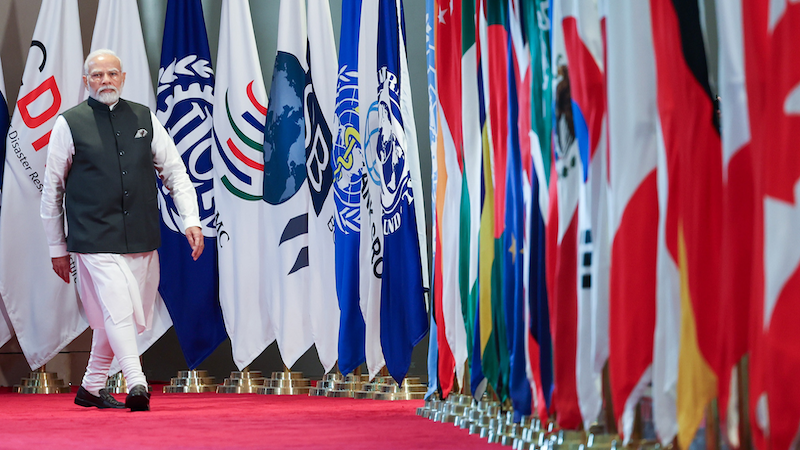
India's Prime Minister Narendra Modi at G20 Summit in New Delhi. Photo Credit: India PM Office

The G20 Summit 2023 is underway in New Delhi, India, at a time when the country is making major strides in space exploration, technology, and economy. Recently, India has become the fourth nation in the world to soft-land a rover on the Moon-Chandrayaan-3. This week, it launched its first spacecraft to explore the Sun- Aditya-L1. It also passed China to become the world’s most populous nation this year, and it passed the United Kingdom to become the fifth-largest economy.

These achievements are a testament to India’s growing scientific and technological capabilities. They also demonstrate India’s rising economic power and its increasing influence in the world. This summit represents a diplomatic milestone for New Delhi as it endeavours to bring together a fragmented world amidst the backdrop of the ongoing Russia-Ukraine conflict. Its theme– “One Earth, One Family, One Future”–suggests a broad agenda for collaboration.  Experts believe that this summit will serve as India’s moment to shine, marking its emergence as an independent and influential voice on the global stage.

Here are some specific ways in which India can use the G20 summit to extend its leadership and polish its credentials on the world stage: 

The 18th G20 Summit is a major opportunity for India to showcase its leadership on the world stage. As the host of this year’s summit, India has a chance to set the agenda and shape the discussions on key global issues. Indeed, this is a chance for India to demonstrate its commitment to multilateralism and its willingness to work with other countries to address common challenges. The summit is also an opportunity for India to strengthen its ties with other G20 members. These countries are major economic and political players, and India needs to build strong relationships with them to promote global peace and security. The summit is a major opportunity for India to raise its profile on the world stage. By seizing this opportunity, India can strengthen its leadership and play a more active role in shaping the global agenda. India may use the summit as a forum to debate on trade, investments, climate change, and other topics of shared concern. India can showcase its geopolitical strength during the summit. India is becoming more and more influential in the world as a growing power. India may use the summit to demonstrate to the rest of the world that it is a serious and significant actor in global politics.

India can propose initiatives to address global challenges such as climate change, food security, and poverty. The G20 is the most important forum to achieve this. India can hold the sensitive task of ensuring that even in a carnival-like atmosphere, issues like the Ukraine war do not derail its ambitions, as was deeply felt during the G20 summit in Bali, Indonesia, last year. Although differences are visible. India would hope that the focus should be on consensual issues rather than discussing divisive issues like Ukraine. India has not been able to do this till now, but now it would like to look better.

It has to work with other countries to find common ground and build consensus. After assuming the presidency of the G20, India said that it wanted to put on the agenda of the summit the issues that disproportionately affect developing countries, such as climate change, the increasing debt burden of developing countries, digital transformation, rising inflation, and food and energy security. This summit is taking place at a time when the Global South has succeeded in establishing itself as a major stakeholder in the international system.

Additionally, India can use the summit as a platform to promote India’s economic and social development. As one of the world’s leading economies, India also feels that it has both the capacity and the means to achieve this. But trying to become a bridge between developed and developing countries will not be easy for India, which is in a geopolitically delicate situation. Under the leadership of Prime Minister Narendra Modi, India has invested heavily in organising the G20 summit. He would like to show that he is capable of strengthening India’s position in the world, especially ahead of next year’s general elections.

Moreover, it highlights India’s commitment to multilateralism and its willingness to work with other countries. India has to build strong relationships with other G20 members. This was visible during the Corona epidemic, when India helped even Africa, South Asia, and China, while the Western countries remained absorbed only in their own worries. The message to the population and the Global South is that we are with you. We are ready to lead from the front. The message to the international community is that you cannot ignore the concerns coming from this part of the world under India’s leadership. The proposal to include the African Union in the G20 is a reflection of India’s desire to support developing countries.

Will the Ukraine issue dominate the summit also? Despite the Ukraine conflict taking centre at Bali Summit in Indonesia, India has focused on addressing issues that directly affect developing countries, including food and fuel insecurity, rising inflation, debt concerns, and reforms within multilateral development banks. At the same time, Western countries have realised that their exclusive club alone cannot solve the problems of the entire world. Amid rising inequality, high food and oil prices, and climate change, many countries are now questioning the relevance of a Western-dominated forum like the G-20. They claim that it is based on the old global distribution of power.

Finally, India’s G20 presidency is an opportunity for the country to promote its development model and elevate the voices of emerging economies. The theme of the presidency, “Vasudhaiva Kutumbakam” or “One Earth, One Family, One Future”, reflects India’s commitment to multilateralism and sustainable development. India has traditionally been a non-interventionist country, but under the leadership of Prime Minister Narendra Modi, the country has become more active in global affairs. Modi has made it a priority to strengthen India’s ties with other developing countries, and he sees the G20 as an important platform for promoting South-South cooperation.

India, under the leadership of Narendra Modi, is looking ambitious; the Prime Minister cares about his image at the world level. He has established himself as a global politician. A big and successful G-20 show will further enhance his image. On the other hand, even though this summit has been disturbed by the Ukraine issue, people will see it as an event that will increase India’s international stature. Now it is official: India has proposed the African Union’s membership in the G20 at this meeting. The African Union, comprising 55 nations, would further amplify the voices of emerging countries and the global south in the G20 forum. The G20 summit offers India a valuable opportunity to demonstrate its strong partnership with the Global South, highlighting its dedication to multilateralism and solidifying its position as a key player in international politics.