Categories
Selected Articles

OIC reps to conduct fact-finding mission in Azerbaijan’s Aghdam, Fuzuli and Ganja


A delegation headed by the chairman of the Independent Permanent Human Rights Commission within the framework of the Organization of Islamic Cooperation (OIC) arrived in Azerbaijan at the invitation of the Commissioner for Human Rights (Ombudsperson) of the Republic of Azerbaijan Sabina Aliyeva to conduct a fact-finding mission in Ganja, Aghdam and Fuzuli districts, according to Azerbaijan in Focus, reporting Trend.

The delegation included Chairman of the Independent Permanent Human Rights Commission of the Organization of Islamic Cooperation (OIC IPHRC) Muhammad Suleiman Lawal (Nigeria), Deputy Chairman of the OIC IPHRC Haci Ali Acikgul (Türkiye), member of the OIC NHRC Hilal bin Said Al Shidhani (Oman), Executive Director of the OIC NHRC Secretariat Noura bint Zaid Al-Rashoud (Saudi Arabia Arabia), Director of the OIC NHRC Secretariat Javed Saglaine (Pakistan), employee of the OIC NHRC Secretariat Ibrahim Saidu Kamara (Guinea).

The main purpose of the visit is to establish the facts of Armenia’s destruction of religious and cultural monuments, and cemeteries belonging to Azerbaijanis, to collect materials about Azerbaijanis affected by occupation and rocket bombing, as well as to prepare a report on the results of the mission and present it to the international community.

The post OIC reps to conduct fact-finding mission in Azerbaijan’s Aghdam, Fuzuli and Ganja appeared first on Azerbaijan In Focus.


Categories
Selected Articles

Made in Ukraine: Kyiv’s burgeoning weapons industry is enabling it to project power far beyond the front lines


In the early hours of August 29, swarms of Ukrainian drones flew across seven Russian regions. Many were intercepted; some were not.

Several reached a Russian airbase in Pskov, some 600 kilometers from the Ukrainian border, destroying two Russian military transport aircraft and damaging two more.

It was the most dramatic evidence yet of a new dimension to the 18-month conflict: Ukraine’s growing appetite to take the war to Russian territory.

Aerial and marine drones, mysterious new missiles and sabotage groups are all part of the toolkit; Russian airfields, air defenses and shipping among the targets.

Ukraine has plenty of reasons for broadening the conflict.

A win is a win wherever and whenever it occurs – whether damaging planes at a distant Russian airbase, disrupting commercial aviation and shipping, putting the residents of Russian border regions on edge or hitting Russian air defenses in Crimea.

For Ukrainians who have suffered endless drone and missile attacks, evidence of payback (albeit on a much smaller scale) is a welcome morale-booster, especially when the counteroffensive in the south is still struggling to gain traction.

President Volodymr Zelensky has been unapologetic for taking the conflict to Russian soil, saying recently: “The war is returning to the territory of Russia – to its symbolic centers and military bases, and this is an inevitable, natural and absolutely fair process.”

Attacks far from the current front lines are also evidence of an evolving Ukrainian capability to project power.

That projection very deliberately does not rely upon Western hardware but local adaptations, in terms of both technology and tactics. President Volodymyr Zelensky and Defense Minister Oleksiy Reznikov have repeatedly assured Western donors that their weapons won’t be used against targets inside Russia; that would be viewed by Moscow as an act of aggression which would make them party to the conflict.

That point was reiterated by Ukrainian presidential adviser an adviser to the Head of the President’s office, Mykhailo Podolyak this week. “Ukraine strictly adheres to the obligation not to use the weapons of its partners to strike Russian territory,” he said.

Instead, Ukraine is pushing ahead with creating a weapons industry that will provide everything from 155mm artillery shells to longer-range drones and now – it seems – a new long-range missile.

Senior Ukrainian officials have been dropping hints about the development of a new cruise missile. Oleksii Danilov, secretary of Ukraine’s National Security and Defense Council, posted a video last week of the purported missile with the caption: “The President of Ukraine’s missile program in action. The tests are successful, the use is effective.”

Later he spoke of a three-year development program, “to provide a distance of thousands of kilometers, this is the work of large teams, powerful work. Now we can say we have a result.”

Zelensky himself dropped a cryptic note, congratulating the Ministry of Strategic Industries with the message: “Successful use of our long-range weapons: the target was hit 700 kilometers away!”

And Ukraine’s Center for Strategic Communication reinforced the point Friday, saying on Telegram: “Having launched a full-scale aggression, the Russians counted on their impunity: that the fighting would be localized in Ukraine, and they would feel safe in their rear.”

“The increase in range destroys the Russian illusion of security and increases the cost of aggression for the enemy,” it added.

This is clearly a developing part of Ukraine’s strategy. Podolyak said: “The war is increasingly moving to Russia’s territory, and it cannot be stopped. This is a consequence of the lost frontline component (Russia has long been fighting only in numbers and only in defense, despite all propaganda myths) and the lack of realistic… systems in the regions (including air defense).”

Central to this projection of force is an array of Ukrainian drones – in the air and at sea. The latest iterations have longer range and greater payloads than previous models, thanks to what the Ukrainians describe as a global trawl for drone technology and contracts for multiple indigenous manufacturers.

The attack on the Pskov airbase is the fruit of this labor, though just how it was executed is something of a mystery. The head of Ukrainian Defense Intelligence, Kyrylo Budanov, said that the attack was launched from within Russia, while declining to say what kind of drones were used or how many.

That may be Budonov’s flair for gamesmanship – intended to sow confusion and distrust inside Russia.

It is possible that the drones were launched from Ukrainian territory, but accurate targeting over a distance of more than 700 kilometers would require a step-change in navigational capabilities.

One Russian blogger complained that the Pskov strike indicated that Russian air defenses had not adapted to defend against repeated Ukrainian drone strikes.

The damage being done is not going to break the back of the Russian air force, but it has become a serious irritant. On August 22, at least one Tu-22M strategic bomber was set ablaze at the Soltsy-2 airbase in northern Russia; then came the Pskov attack.

All at sea

Ukraine has also invested heavily in the development of marine drones. The latest deployed carry an explosive payload of up to 400 kilograms, capable of holing a substantial vessel, and can travel hundreds of kilometers.

Early in August, one struck the Russian gas and chemical tanker SIG close to the Kerch strait, immobilizing but not sinking it. Another hit a Russian naval ship in the port of Novosibirsk.

The maritime drones in use against both Russian naval and merchant shipping in the Black Sea provide both a morale boost and complicate Russian calculations. Some Russian warships in the Black Sea have mounted machine-guns on their decks to repel what are difficult weapons to defend against.

These attacks force Russia to spend time on developing counter-measures: One recent example is being the sinking of barges close to the Kerch bridge to Crimea, in an effort to prevent it being hit again by maritime drones following the attacks in July and August.

As Mick Ryan, author of the blog Futura Doctrina and a former General in the Australian armeed forces, writes: “With almost no likelihood of developing its own conventional naval fleet to fight the Russians, the Ukrainians have developed uncrewed capabilities. While ostensibly designed to sink or damage Russian surface warships, they are also intended to have the psychological effect of dissuading the Russian ships from putting to sea.”

Similarly, Russian authorities have to devote air defenses that might be deployed in Ukraine to the Moscow region and infrastructure such as air bases, which have become a frequent target of Ukrainian attacks. Open-source reporting suggests there are at least several Pantsir-2 air defense batteries around Moscow.

The Institute for the Study of War notes that “Russian forces may have focused their air defenses on covering Moscow and somehow missed the unusually large number of Ukrainian drones that reportedly struck the Pskov airfield.”

The Ukrainians are also more focused on degrading Russian transport links, air defenses and bases in annexed Crimea. Last month, they carried out a missile strike against one of Russia’s modern S-400 air defense systems on the Crimean coast, following it up with a commando raid.

Budanov said subsequently: “We have the ability to hit any part of the temporarily occupied [Crimea] as of now. We can reach the enemy absolutely anywhere.”

Strikes at greater range are an extension of the strategy successfully employed since last year to target Russian logistics hubs, command centers and ammunition/ or fuel dumps way behind the frontlines. Longer range Western systems such as HIMARS and more recently Storm Shadows, which with a range of 250 kms have have been critical to that effort, in Kherson, Luhansk and Zaporizhzhia.

Such weapons put Russian forces on notice that they are vulnerable far from the front lines. An attack on a Russian command center in occupied Berdiansk in July killed a senior Russian general; another in January obliterated a barracks in Donetsk, with considerable loss of life.

The drone operations and even the development of new missiles won’t determine the course of the war. Success or failure for the Ukrainians will be determined by the amount of territory reclaimed from Russian occupation and the ability to deter further aggression. That counter-offensive is making at best marginal progress.

But long-range strike operations have their vallue. Mick Ryan says that such operations “will only grow in importance and visibility. It is a way to keep fighting when ground maneuver becomes difficult in the wet, cold season. And it is a way to project progress in the war to Ukraine’s supporters during a period of low tempo in other operations.”

Ukrainian Air Force spokesman Yuriy Inhat says Russia should expect more.

“You can see the hysteria in the Russian public, Russian propaganda channels. They really don’t like what is happening. But what did they want?” he said Friday.

Mykhailo Podolyak says the long-term goal is to inflict a wider war on Russia. “As long as Putin remains president, the war will continue. Pulling Russia deeper and deeper into the abyss of chaos.”

This article originally appeared on CNN on September 2, 2023.

The post Made in Ukraine: Kyiv’s burgeoning weapons industry is enabling it to project power far beyond the front lines appeared first on Azerbaijan In Focus.


Categories
Selected Articles

Hikmet Hajiyev: A new dramatic misinformation and manipulation campaign was launched


Assistant to the President of Azerbaijan, Head of Foreign Policy Affairs Department of the Presidential Administration Hikmat Hajiyev has made the following statement on X:

“From the money talks series! Apparently, on the eve of the “anniversary” of the most terrible, bloody and criminal separatist entity in Europe so-called “Nagorno-Karabakh Rep”, a new dramatic misinformation and manipulation campaign was launched by the order of the Armenian Government and armenian lobby groups. At least, but disgracefully, the former NATO Secretary General does not deny that he is paid by the Government of Armenia for propaganda campaign. Copy of income sheet is attached. Hypocritically, some politicians divide the world between “good and bad separatists and criminals”. Old habits die hard! But disturbing is that the BBC in its Charter declaring that “is committed to achieving due impartiality in all its output. This commitment is fundamental to our reputation, our values and the trust of audiences” is engaged in one-sided and biased aggressive manipulation and promotion of lies as well in “Context” program. BBC should serve as a platform for all voices, particularly on sensitive topics.”


The post Hikmet Hajiyev: A new dramatic misinformation and manipulation campaign was launched appeared first on Azerbaijan In Focus.


Categories
South Caucasus News

FAO talks food export improvement strategy for Azerbaijan


The UN Food and Agriculture Organization (FAO) is supporting Azerbaijan in exporting its food products around the world, noted Muhammad Nasar Hayat, FAO representative in Azerbaijan, according to Azerbaijan in Focus, reporting Trend.

“Azerbaijan is importing a lot of food, especially wheat and meat. If prices increase, then the availability and consumption of these items may be affected. Azerbaijan is a country rich with resources, it has enough to feed its population. But, still, the food balance, what we produce and what we consume, needs improvement. We need to rely less on imports,” he said.

According to FAO representative, Azerbaijan has really good food products that can be exported to other countries around the world.

“Fruits in Azerbaijan, for instance, are very high quality, and, at large, are organically produced. These things create a market for specific Azerbaijani products that we need to take out of the country to earn more for the farmers that engage in agriculture,” Nasar Hayat said.

He added that FAO is supporting the government of Azerbaijan in terms of food safety, standards, improving productivity, packaging, labeling – everything that is necessary to access the international market.

Azerbaijan is a member of FAO since October 20, 1995. The co-ordination office will carry out the Office of the Partnership and Co-operation in Azerbaijan from the autumn of 2015.

The post FAO talks food export improvement strategy for Azerbaijan appeared first on Azerbaijan In Focus.


Categories
South Caucasus News

New book alert: ‘Istanbul 50 Unsung Places’


Expat author and aficionado on Türkiye, Lisa Morrow, has released her first guidebook, which uncovers 50 off-the-beaten-track destinations in Istanbul that are well worth discovering

Australian expat, author and sociologist Lisa Morrow has recently released a new guidebook on some of the most captivating yet lesser-known places of interest in Istanbul. From mosques to churches, doll museums and more, Morrow’s new guidebook, “Istanbul 50 Unsung Places” offers in-depth knowledge of 50 lesser-known sites broken down by different districts in the city. Each site contains personal directions and instructions on how to visit and why. I had the chance to catch up with Lisa to talk about her new book on Istanbul released this summer.

Morrow has been in Türkiye for over 20 years and while she now lives on the Asian side of Istanbul, she has lived in several cities in the country from the central Anatolian province of Nevşehir to the Mediterranean coastal city of Antalya and has been writing about her experiences in books and international publications for the last decade. “Istanbul 50 Unsung Places” is her first guidebook and came about through her fascination with the history, social life, religious customs and personal stories to be found in less famous sites around the city. This eclectic guide celebrates the rich cultural heritage of Istanbul, combining history, little-known facts, transport information, directions and handy tips.

The guidebook is the culmination of thorough research and field trips to 50 destinations throughout the city that are for the most part overlooked. Morrow details how exactly to get to the destinations, which include places such as mosques, tombs and museums. Of the 50 unsung places, 24 are on the European side, while 26 are on the Asian side.

“The names of sights are listed in Turkish because I know outside tourist areas not as many people speak English,” Morrow explained, adding that “the index is in English.” Available online in ebook and paperback form and soon to be available in bookshops in Istanbul, Morrow foresees people taking a screenshot or printing out the pages for the destinations they want to see and taking it along with them as the road map for their adventure.

“The guide includes descriptions of transport hubs in Kadıköy, Üsküdar, Taksim and Eminönü. The idea is you know what you want to see and how to get there, so you can enjoy the moment rather than constantly having to check your phone for directions. I also know not all tourists have Wi-Fi while they’re here, so readers can screenshot a walking route in advance.”

As for how the book came about, Morrow says: “I’ve spent years going to less visited places in Istanbul, all by public transport. People were always interested when I talked about what I’d seen and learned, both Turks and internationals, so I decided to put together a guide. I really want people to experience the Istanbul I live in, a place where tradition and modernity combine to create a unique and distinct atmosphere I call the ‘everyday extraordinary.”

Undiscovered destinations

Morrow takes her readers to destinations you won’t find in guides like Lonely Planet, but as you will see they are each equally captivating in their own right, such as Zühtü Paşa Mosque near Kızıltoprak. Built in 1883-34, it contains the largest number of examples of Kufic writings of any mosque in Istanbul. Kūfic is a type of handwritten Islamic script, believed to have first been used to record quotes from the Quran in the early Islamic center of Kufah, Iraq, and this mosque has the scripture covering its walls and dome.

Morrow also takes her readers to the Yeraltı Mosque in Karaköy, which as the name suggests is hidden underground.


The interior of the Yeraltı Mosque is seen in Karaköy, Istanbul, Türkiye. (Photo courtesy of Lisa Morrow)The interior of the Yeraltı Mosque is seen in Karaköy, Istanbul, Türkiye. (Photo courtesy of Lisa Morrow)

Another site is the Şakirin Mosque in a cemetery in Üsküdar, near Kadıköy, which was designed by a woman. Morrow also ends up in Marmara University’s Theology Faculty Mosque and Culture Centre in Altunizade and describes the fantastic fractal dome housed inside a post-modern building that also contains a library and a cafe.

Morrow visits the Aya Efimia Rum Ortodoks Kilisesi in Kadıköy, a Greek Orthodox church named after Saint Euphemia who died in A.D. 303. Her tumultuous life is described at length in the book. Morrow also takes her reader along walks in Validebağ Grove, located near Altunizade, a 354,000-square-meter (3.81 million-square-foot) tree-filled grove that once belonged to a sultan’s mother.


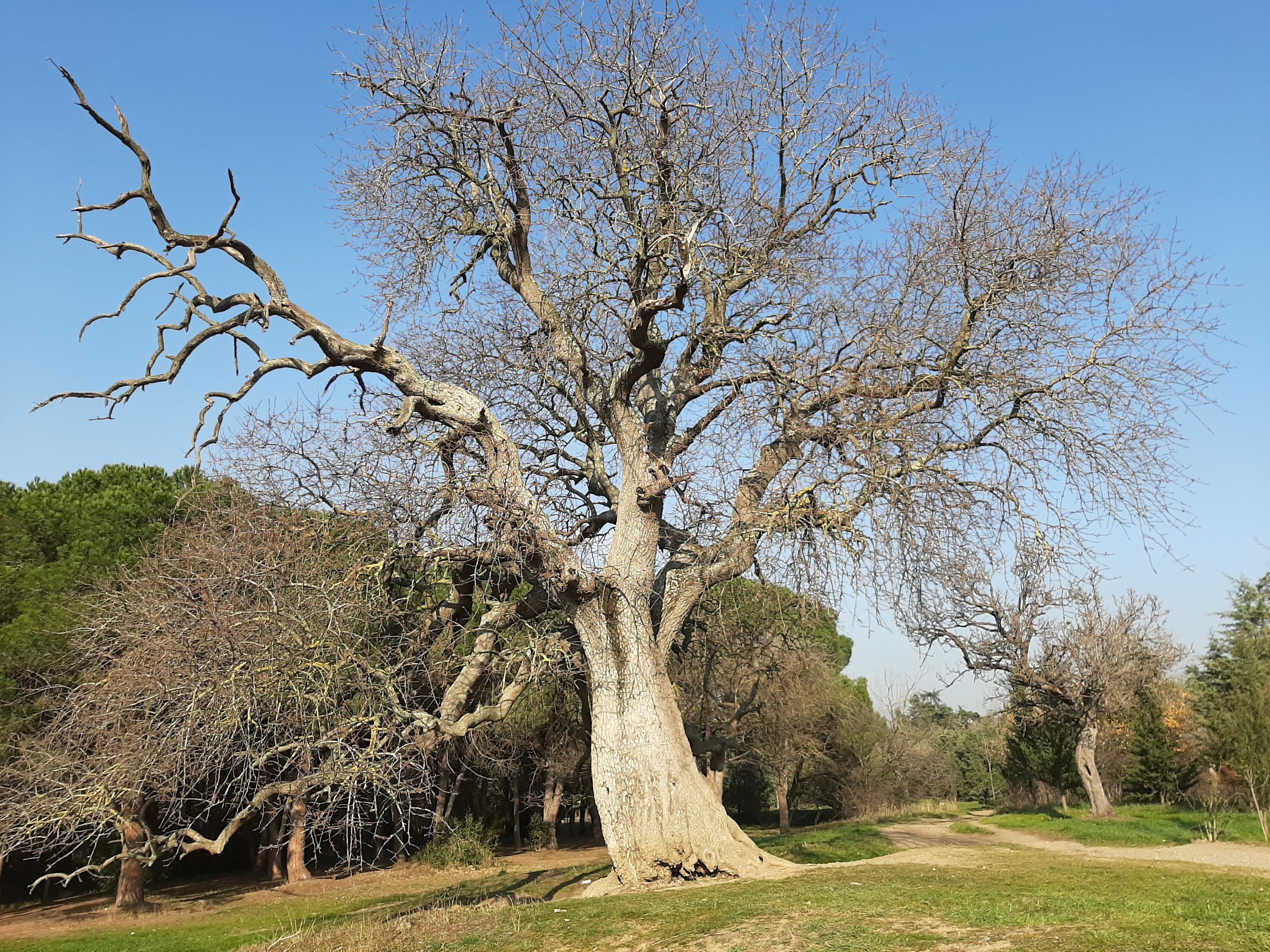
An old giant tree in Validebağ Grove, located near Üsküdar's Altunizade, Istanbul, Türkiye. (Photo courtesy of Lisa Morrow)An old giant tree in Validebağ Grove, located near Üsküdar’s Altunizade, Istanbul, Türkiye. (Photo courtesy of Lisa Morrow)

Some of the stories behind the sites are just interesting, such as how the Haydarpaşa Train Station was constructed by German architects to accommodate the tomb of Şeyh Haydar Buhari. I also didn’t know that there was a museum, called the Üsküdar Hanım Sultanlar Museum, devoted to exhibiting handmade dolls dressed in miniature exact copies of outfits worn by the sultana and sultans of the Ottoman Empire. The guidebook also contains cultural gems such as mosque etiquette, answering any of the questions that could pop into your mind. This is why whether you’re familiar with the city or not, reading “Istanbul 50 Unsung Places” is a treasure.

Morrow has written a number of books on her observations in Türkiye and is the author of the popular blog on all things Istanbul-related and beyond entitled “Inside Out in Istanbul.” Having lived in Türkiye for nearly two decades, she has been offering personal insights and sharing her tried-and-tested experiences in her entertaining vernacular with readers for decades.

Some of her books include “Istanbul Dreams: Waiting for the Tulips to Bloom,” which is her memoir about moving to Türkiye for good in 2010 when she bought an apartment and had to deal with relocating and bureaucracy. There is also “Inside Out In Istanbul: Making Sense of the City” and “Longing for Istanbul: The Words I Haven’t Said Yet,” as well as “Exploring Turkish Landscapes: Crossing Inner Boundaries,” which has also been translated into Turkish as “Türkiyeyi Keşfederek Sınırlarını Aşarken.” In addition, Morrow has created an audio tour of a walk in Kadıköy called “Stepping Back Through Chalcedon.”


This article originally appeared in Daily Sabah on September 08, 2023.

The post New book alert: ‘Istanbul 50 Unsung Places’ appeared first on Azerbaijan In Focus.


Categories
South Caucasus News

Russia summons Armenian ambassador over ‘unfriendly’ acts


Moscow summoned the Armenian ambassador in a harsh protest over Yerevan’s alleged “unfriendly steps” as the country announced that it would hold joint military drills with the U.S. and escalating tensions over the issue of Karabakh, according to Azerbaijan in Focus, reporting Daily Sabah.

Yerevan, a traditional Russian ally, has increasingly criticized Moscow’s peacekeeping mission there.

The Russian Foreign Ministry said in a statement that “the Armenian leadership had in recent days taken a series of unfriendly steps.”

These included “U.S. military drills on Armenian territory,” a trip to Kyiv by the Armenian prime minister’s wife and Yerevan’s move to join the International Criminal Court (ICC), it added.

Moscow’s Foreign Ministry said the Armenian envoy was given a “tough presentation.”

Despite the summoning, the Foreign Ministry stressed that Russia and Armenia “remain allies and all agreements on developing the strengthening of the partnership will be fulfilled.”

Russia deployed peacekeepers to Karabakh as part of a Moscow-brokered deal to end a 2020 war between Armenia and Azerbaijan.

Many of Russia’s traditional allies in the ex-Soviet space have questioned Moscow’s role after its full-scale Ukraine offensive.

The post Russia summons Armenian ambassador over ‘unfriendly’ acts appeared first on Azerbaijan In Focus.


Categories
South Caucasus News

Nearly 300 killed in powerful quake in Morocco


At least 296 people were killed and 153 sustained injuries following a powerful earthquake that struck Morocco, according to Azerbaijan in Focus, reporting Anadolu Agency, citing the country’s Interior Ministry.

Fatalities from the magnitidue-7 quake occurred in various regions, including Al Haouz and Marrakesh provinces, as well as the cities of Ouarzazate, Azilal, Chichaoua and Taroudant, Morocco’s Royal Armed Forces wrote on X, citing the interior minister.

Local media said the quake was recorded in Al Haouz province within the Marrakech region, occurring at around 11.10 p.m. local time. Several aftershocks were subsequently felt across a significant part of the country, affecting cities such as Casablanca, Rabat and Agadir.

The United States Geological Survey (USGS) previously said a magnitude-6.8 quake rattled central Morocco late Friday. The epicenter was 75 kilometers (46.6 miles) southeast of Marrakech, striking shortly after 11 p.m. at a depth of 18.5 kilometers.

Morocco’s National Seismic Monitoring and Alert Network assessed the earthquake at magnitude-7 on the Richter scale.

Videos on social media captured the immediate aftermath and showed residents spilling out onto the streets.

The situation is particularly dire in the Marrakech region, where numerous houses have collapsed and residents are trapped under debris. These distressing scenes have been corroborated by multiple videos showing pleas for help on social media.

Morocco’s Royal Armed Forces are issuing warnings to citizens, urging them to exercise caution and directing them toward safe areas to shield them from aftershocks.

The tremor was felt not only across Morocco but also in neighboring Algeria and Mauritania.

The post Nearly 300 killed in powerful quake in Morocco appeared first on Azerbaijan In Focus.


Categories
South Caucasus News

Ilham Aliyev: Transportation of goods by Armenia through Lachin checkpoint without consent – interference in internal affairs of Azerbaijan


The bringing of goods, which Armenian side claims were for humanitarian purposes, by Armenia in front of Azerbaijan’s “Lachin” border crossing point without agreement with the Azerbaijani side is interference in Azerbaijan’s internal affairs and disrespect for the territorial integrity and sovereignty of the country, President of the Republic of Azerbaijan Ilham Aliyev said during a phone talk with U.S. Secretary of State Antony Blinken, according to Azerbaijan in Focus, reporting Trend.

The Azerbaijani President said that such a policy of Armenia seriously harmed the peace treaty negotiations.

The head of state noted that food cargo was delivered to that area through the Azerbaijan Red Crescent Society, but the illegal separatist regime refused it.

President Ilham Aliyev recalled that representatives of the Armenian population of Azerbaijan’s Karabakh were invited to the capital Baku and other cities of the country to hold discussions on reintegration issues, but they refused.

The post Ilham Aliyev: Transportation of goods by Armenia through Lachin checkpoint without consent – interference in internal affairs of Azerbaijan appeared first on Azerbaijan In Focus.


Categories
Selected Articles

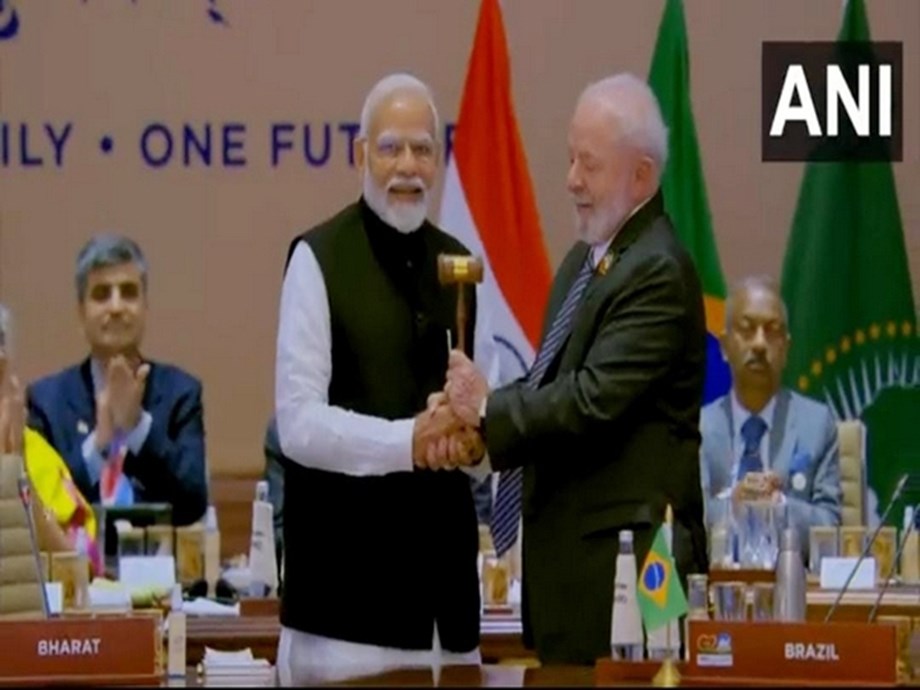
PM Modi hands over gavel of G20 presidency to Brazil President Lula da Silva | International


10_09_2023_08_02_09_9120564.jpg?width=92

ANI | Updated: 10-09-2023 13:32 IST | Created: 10-09-2023 13:32 IST

Prime Minister Narendra Modi on Sunday handed over the ceremonial gavel of the Group of 20 presidency to Brazil President Luiz Inacio Lula da Silva at the G20 summit here. “I congratulate Brazilian President and my friend Lula da Silva and hand over the gavel of Presidency,” PM Modi said minutes before the New Delhi G20 Summit concluded.

Earlier Indonesian President Joko Widodo and Luiz Inacio Lula da Silva handed over saplings to Prime Minister Narendra Modi ahead of Session 3 of the G20 Summit. While Indonesia held the G20 presidency last year, Brazil will hold the presidency after India.

India took over the G20 presidency on December 1 last year at the G20 Summit at Bali in Indonesia and will continue to hold it till the end of November. The New Delhi Declaration was adopted by G20 leaders on Saturday, the first day of the Summit.

The G20 leaders visited Rajghat on Sunday morning to pay tributes to Mahatma Gandhi.  (ANI)

(This story has not been edited by Devdiscourse staff and is auto-generated from a syndicated feed.)


Categories
Selected Articles

Azerbaijan denies deal reached to reopen Karabakh-Armenia road – Devdiscourse


Azerbaijan denies deal reached to reopen Karabakh-Armenia road  Devdiscourse