
An explosion was recorded at a military airfield in the city of Yeysk, Russia, Report informs.
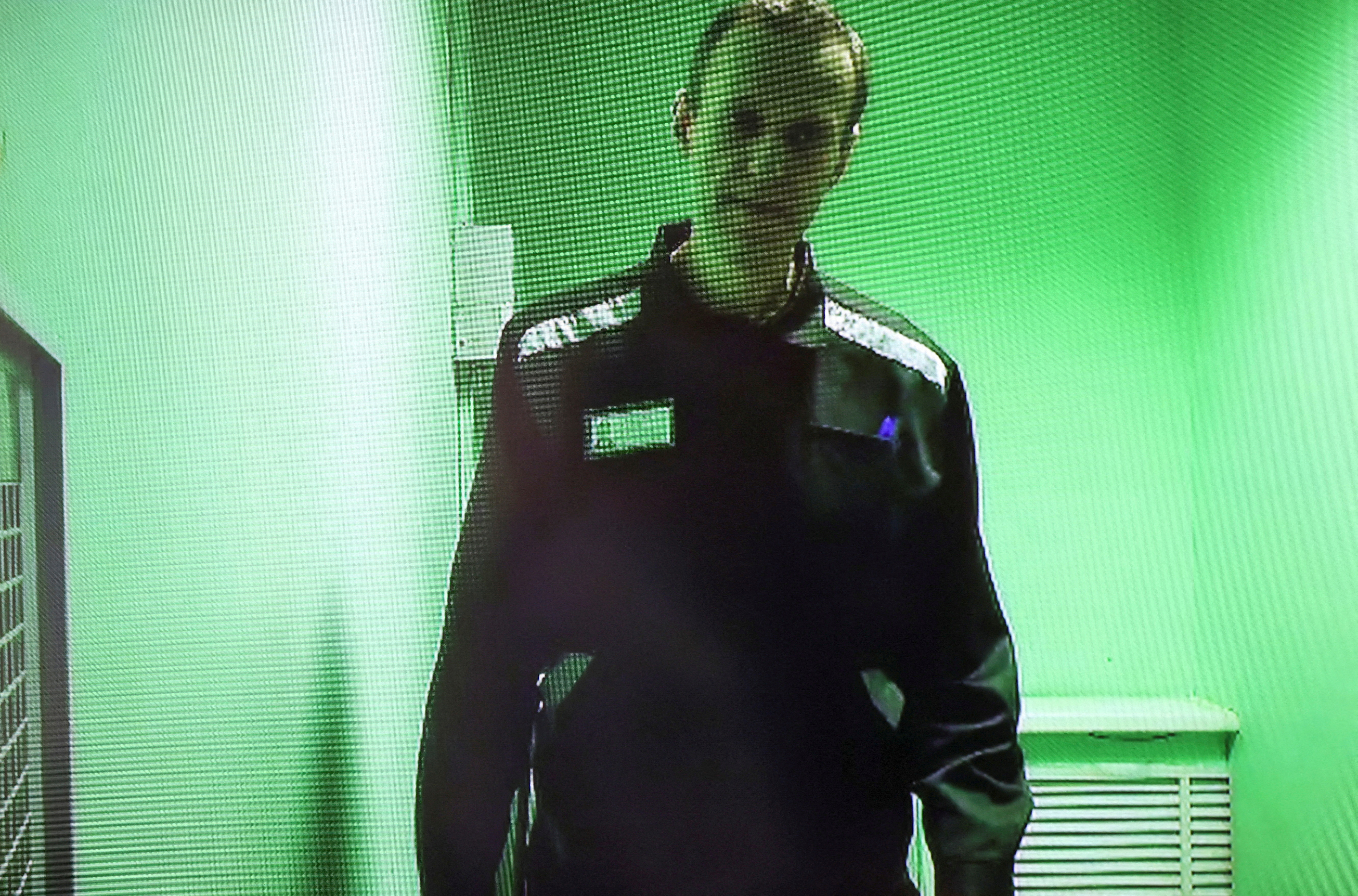
Russian opposition politician Alexei Navalny is seen on a screen via a video link during a court hearing to consider his claims against the administration of a penal colony, where he serves a sentence after being found guilty of parole violations, fraud and contempt of court charges, in the town of Kovrov, Russia October 7, 2022…. Acquire Licensing Rights Read more
MOSCOW, Dec 25 (Reuters) – Jailed Russian opposition politician Alexei Navalny has been moved to a penal colony in an Arctic region of northern Russia, his spokeswoman said on Monday after supporters lost touch with him for more than two weeks.
Navalny was tracked down to the IK-3 penal colony in Kharp in the Yamal-Nenets region, about 1,900 km (1200 miles) north east of Moscow, spokeswoman Kira Yarmysh said.
Navalny’s lawyer managed to see him on Monday, Yarmysh said.
Navalny’s allies, who had been preparing for his expected transfer to a “special regime” colony, the harshest grade in Russia’s prison system, said he has not been seen by his lawyers since Dec. 6 and raised the alarm about his fate.
“Many thanks to our supporters, activists, journalists and the media who are concerned about Alexei’s fate and who do not get tired of writing about the situation,” Navalny lawyer Ivan Zhdanov said.
Zhdanov said his supporters sent 618 requests for information about the location of Navalny, who had been held at a penal colony 235 km (145 miles) east of Moscow.
Reporting by Reuters; Editing by Guy Faulconbridge
Our Standards: The Thomson Reuters Trust Principles.

On December 25, local watchdog Transparency International – Georgia released “2023 Statistics of Violence against Georgian Media Representatives and the State’s Response”. According to the data, approximately 45 incidents of various forms of violence, harassment and intimidation against journalists critical of the ruling party have been publicly documented this year both in Tbilisi and in the regions.
TI Georgia reports that from January 1, 2023 to November 30, 2023, the Special Investigative Service opened 14 criminal cases for illegal obstruction of a journalist’s professional activities. Of the 14 cases, one was closed, four were sent to court for a hearing on the merits, and the remaining nine cases are under investigation. In addition, the Prosecutor’s Office initiated criminal proceedings against nine individuals in six criminal cases.
The organization identifies three main categories of violence against journalists: instances of overt assaults against media representatives; threats and alleged intimidation attempts against media representatives; and violence against journalists during protests, arrests and imposition of fines.
Instances of overt assaults against media representatives
With regard to the first category, statistics show that throughout the summer and fall, a number of disturbing incidents plagued the journalistic landscape in Georgia. In June, Misha Mshvildaze, an anchor and co-founder of Formula TV, was assaulted in central Tbilisi, resulting in charges against one individual. Then, in July, crews from Mtavari TV and Formula TV, opposition media channels, were attacked while covering an event of the opposition United National Movement party in Kakheti’s Sagarejo municipality.
Another obstruction occurred in July during the coverage of Tbilisi Pride, when the Mtavari TV crew was prevented from carrying out their professional activities. The situation escalated in August, when the Mtavari TV crew was attacked in Khaishi, Mestia municipality. In September, the bodyguards of Otar Partskhaladze, a U.S.-sanctioned former prosecutor general, physically attacked the crews of TV Pirveli and Formula TV in Tbilisi and confiscated their equipment.
The disturbing trend continued in October, when law enforcement officials restricted media access to the village of Chorvila during the United National Movement’s protest march, according to Mtavari TV. During clashes between supporters of Georgian Dream founder Bidzina Ivanishvili and opposition activists, a cameraman from TV Pirveli was hit with a rock and a journalist was hit with an egg.
Threats and alleged intimidation attempts against media representatives
In the second category, examples of threats and alleged attempts to intimidate media representatives include the August incident in which Gela Mtivlishvili, editor of Mtis Ambebi, was threatened with being thrown into the water while covering a landslide in Shovi. Irakli Kobakhidze, leader of Georgian Dream, denigrated Mtivlishvili, and Shalva Papuashvili, Speaker of Parliament, asked him to delete a Facebook post, calling him a “self-proclaimed journalist.”
In addition, Vakho Kareli, a photographer for Formula TV, was summoned for questioning by the State Security Service in connection with an investigation into an alleged coup attempt in October. Government-affiliated television channels furthered these discrediting efforts by airing allegations in October that the Friedrich Ebert Foundation and Indigo were involved in orchestrating a revolution in Georgia.
The ruling party resorted to discrediting independent media, such as when Parliament Speaker Shalva Papuashvili filed a complaint with international donors after OC Media refused to publish his op-ed in September.
TI Georgia also notes that concerns arose this year in February when a new accreditation rule for journalists in the legislature was introduced, raising fears of possible suspensions for asking critical questions. Already, 11 journalists have had their parliamentary accreditation suspended under the new rule, signaling a precarious environment for press freedom.
Violence against journalists during protests, arrests and imposition of fines
In early March, journalists Zura Vardiashvili and Beka Jikurashvili were arrested and subsequently fined while covering protests against the Russian-style “Foreign Agents” bill. At the same time, other journalists were obstructed in their coverage of the same demonstrations, with law enforcement officials using violence against them.
TI Georgia notes that these incidents exacerbated a broader atmosphere of fear and insecurity among journalists, who perceived these crimes as tangentially related to their professional activities. For example, in February, Nato Gogelia, a journalist with TV Pirveli, had her home broken into twice within a short period of time. In July, Nodar Meladze, the news director of TV Pirveli, had an external hard drive stolen from his car, while valuable personal items were left untouched. Also in July, journalist Vasil Dabrundashvili reported both the loss of documents from his home and the feeling of being under surveillance, adding to the worrying pattern of incidents targeting media workers.
TI Georgia Assessment
Transparency International – Georgia states: “Assaults on journalists, threats against them, interference in their professional activities, frequent instances of intimidation, and attempts of discrediting, coupled with a lack of thorough investigation and impunity, are clear characteristics of a kleptocratic state.”
Transparency International Georgia highlights the critical need for a fear-free and safe media landscape, especially in light of European integration and the upcoming crucial parliamentary elections in 2024. The organization stresses that ensuring an enabling environment for journalists, free from intimidation and interference, is paramount. It underscores the need for journalists to be able to carry out their professional duties unhindered in order to accurately inform the public. TI-Georgia calls for the prompt investigation of crimes against journalists and an end to impunity to ensure a safe media environment.
Also Read:
- 09/08/2023 – Local News Outlet Calls on Authorities to Ensure Safety of its Journalists
- 30/06/2023 – Opposition Leader Confronted, Journalist Assaulted by Ruling Party Activists in Kaspi
- 14/06/2023 – Adjara TV Public Broadcaster Journalist Assaulted
- 24/04/2023 – DW Akademie Study: Polarization, Attacks on Journalists and Weak Advertising Market among Main Challenges for Media
- 17/03/2023 – UPDATE: One Person Arrested for Violence Against the Journalist of TV Pirveli
- 01/02/2023 – Media Coalition Denounces ‘Discrediting Campaign’ Against Journalists as Unacceptable
On December 25, the Prosecutor General’s Office of Georgia issued a statement announcing that it had initiated criminal proceedings against three organizers of a transnational organized criminal group, one member of an organized group, and one legal entity. The Prosecutor General’s Office stated that it had cooperated with Eurojust and the German authorities to initiate the prosecution.
According to the Prosecutor’s Office, the investigation revealed that the members of the organized group set up a so-called call center based based on companies in Georgia. “In accordance with a pre-developed plan, the employees of the call center contacted citizens of the Federal Republic of Germany, using fictitious names, provided false information about the location of their company and offered to participate in electronic trading of securities, shares, commodity assets, currencies and cryptocurrencies using electronic platforms created by the criminal group,” – reads the statement.
According to the Prosecutor’s Office, the operators assured users that they would make a solid profit in the case of participation in electronic trading. “In fact, the funds allocated by the victims for electronic trading were fraudulently appropriated by them,” – notes the statement.
The appropriated money was given the appearance of legitimacy “as a result of multiple fictitious transactions on the bank accounts under the control of the criminal group,” says the Prosecutor General’s office and was then used to purchase various properties, including real estate. “By the mentioned scheme, the organized group legalized illegal income amounting to fraudulently acquired tens of millions of GEL,” the statement says.
Criminal proceedings for the legalization of illegal income, which carries a sentence of nine to twelve years in prison, have been initiated against all five of the defendants. Real estate worth millions of GEL has also been confiscated, making it impossible to dispose of or conceal it. The Public Prosecutor’s Office has also announced that it will take the appropriate legal steps to ensure that the property of criminal origin is confiscated for the benefit of the State.
The Georgian Prosecutor’s Office also notes that the organizers of the crime have already been sentenced by the Regensburg Regional Court in Germany for commercial and group fraud. It also says that the Prosecutor’s Office will apply to the Tbilisi City Court with a motion to use imprisonment as a preventive measure against the defendants.
According to the statement, the Georgian Prosecutor’s Office “continues the investigation in order to identify and expose other individuals and legal entities engaged in the activities of so-called fraudulent call centers in different countries, including the organizers of transnational crimes.”
Also Read:
In an interview with the Georgian Public Broadcaster (GPB) aired on December 24, NATO Secretary General’s Special Representative for the Caucasus and Central Asia, Javier Colomina, stated that the relations between the Alliance and Georgia are in “very good health.”
“We are using all the tools we have to cooperate with our partners, particularly practical cooperation through military-to-military channels,” Colomina noted, adding that NATO-Georgia cooperation covers a wide range of issues, including maritime and cyber security, special operations forces, and hybrid security.
Regarding the NATO Open Door Policy, Colomina reiterated that the Alliance adheres to the 2008 Bucharest Summit decision, affirming that Georgia and Ukraine will eventually become members. According to Colomina, this is a political decision to be made by the Alliance. In this context, he once again praised practical cooperation and, without further elaboration, noted that “we want to see some of the reforms that we’ve been requesting to be implemented.”
Asked about the upcoming parliamentary elections in Georgia in 2024, Colomina made it clear that the Alliance itself does not send election observer missions. However, he stressed that NATO expects the elections to be held “in a fair, competitive and free manner, as we expect in any healthy democracy.”
Speaking of the Black Sea region, Colomina emphasized its strategic importance for the Alliance and also its “enormous importance for the stability of the Euro-Atlantic area.” He added that the Black Sea is “part of our military plans and it is part of the conversations that we have with both Allies and partners in the region.”
In a follow-up question, Colomina was reminded by the journalist of Russia’s plan to open a permanent naval base in occupied Abkhazia. When asked what kind of threats this plan brings to NATO and what its reaction is, Colomina noted that “whenever we see investments from Russia to have a presence in areas that are in our vicinity, it is a matter of concern.” He added that “if we see the need, we will be capable and willing to take action if we are under attack or if we consider that it is threatening enough.”
The conversation also touched upon killings and kidnappings of Georgian citizens by Russian occupation forces. According to Colomina, in this regard, the Alliance is supporting Georgia by helping strengthen its capabilities and also increasing the level of deterrence messages. Colomina reiterated NATO’s “extremely clear” position supporting Georgia’s territorial integrity and sovereignty.
Among other topics, the conversation covered Armenia-Azerbaijan relations as well. Colomina noted that NATO is supportive of the normalization of relations between the countries, which is “fundamental” for the security in the region.
“I think Armenia has decided very clearly to make a shift in their foreign policy to take some distance from Moscow. It’s something that we have encouraged,” Colomina said in response to a question regarding Yerevan’s security policy diversification and its potential interest in getting closer to NATO. “The Armenians are free to take their own decisions, but they decided to do that and I believe they’re already starting to get closer to us – to ask for more cooperation, to ask for more political dialogue, to ask for more NATO presence and visibility in the relationship they have with us.”
Also Read:
- 19/12/2023 – NATO Secretary General’s Special Representative: We want democracy to work
- 24/05/2023 – NATO Special Rep. for South Caucasus and Central Asia Visits Georgia
- 22/05/2023 – Georgian Parliamentary Delegation Attends NATO PA Spring Session
- 28/09/2022 – Defense Minister Meets NATO Special Rep. for the Caucasus, Central Asia
The Government of Georgia, which coordinates the open governance reform, held a high-level Georgia’s Open Governance Partnership (OGP) interagency council meeting to discuss the draft of the Fifth Action Plan of the OGP for 2024-2025 and endorsed the mentioned Action Plan.
According to the government, the meeting was led by Revaz Javelidze, head of the government administration, along with USAID head of mission John Pennell and UNDP head of democratic governance in Georgia Gigi Bregadze.
The draft plan, soon to be approved by the government, proposes 10 initiatives aimed at improving the quality of access to information and transparency, strengthening the accountability mechanisms of government agencies to the public, and increasing opportunities for engagement. The draft plan also envisages the involvement of several municipalities in the process of open government.
USAID also stated that USAID supports the Government of Georgia and civil society in working together to strengthen governance and better meet the everyday needs of citizens, whether they live in big cities, towns, or villages.
“Open governance principles are an important part of Georgia’s European path. USAID congratulates the council on endorsing the OGP action plan, and encourages an inclusive process to implement the plan” reads the statement.
Earlier this year, concerns were raised that Georgia had failed to comply with the OGP process for two consecutive Action Plan cycles (2021-2023 and 2022-2024). As a result, Georgia was expected to undergo a review by the OGP Criteria & Standards Subcommittee (C&S), with scrutiny and support from C&S, the OGP Support Unit, and the OGP Steering Committee. Georgia needs to submit a new Action Plan by December 31, 2023 to avoid being declared inactive.
Also Read:
Also Read: