
Drone alert declared in occupied Abkhazia Georgia Today
Category: South Caucasus News
Category Added in a WPeMatico Campaign
New development plan for Anaklia Port
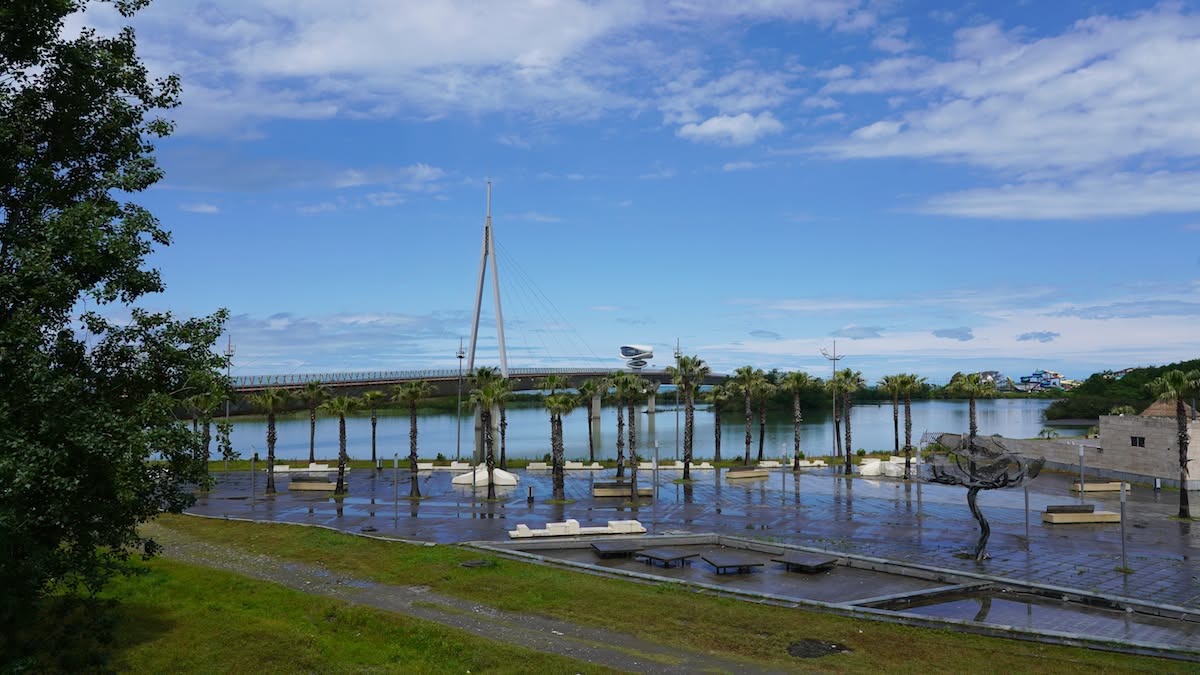
The Georgian government has decided to develop the Anaklia deep-sea port under a so-called landlord model. Under the new plan, the state will own and develop the port’s core infrastructure, while private international operators will lease and run its terminals.
The decision marks a shift away from the previous model, under which a strategic investor would have played the leading role in developing the port.
The government announced the changes after it failed to sign an investment agreement with a Chinese-Singaporean consortium.
What has changed in the Anaklia port project?
Economy Minister Mariam Kvrivishvili announced major changes to the Anaklia deep-sea port project at a press conference on 6 July. She said the port would remain fully state-owned and that the government would not sell any shares in it.
According to the economy minister, the state will build the port’s core maritime and transport infrastructure, including breakwaters, quays, dredged access channels, roads and railway links. Private international companies will then equip and operate the terminals.
“We will not sell any shares. This will be a Georgian port, and the state will own the Anaklia deep-sea port… International companies will participate directly in managing the terminal infrastructure, but that has nothing to do with ownership.”
Kvrivishvili said the new model would allow the government to cooperate with several countries and companies rather than relying on a single strategic investor. She added that the government particularly welcomed investment from China, Central Asian countries, Azerbaijan and other partners involved in the Middle Corridor.
The minister also said the government would revise the parameters of the project’s first phase. According to her, rising freight volumes along the Middle Corridor have created an opportunity to increase Anaklia’s initial cargo capacity.
Under the government’s timetable, the port is expected to receive its first ship in 2029.
Why did the model change, and what happened to the Chinese-Singaporean consortium?
The new approach means the government has abandoned the model it announced in 2024, under which a Chinese-Singaporean consortium would have acquired a 49% stake in the port.
The consortium was the only bidder in the 2024 tender. It included China Communications Construction Company (CCCC), one of China’s largest state-owned infrastructure corporations.
It also included China Harbour Investment Pte. Ltd., a Singapore-registered subsidiary of CCCC.
The project immediately attracted international attention because CCCC is a Chinese state-owned company that is under US sanctions. That prompted questions in the West about China’s involvement in a strategically important project such as Anaklia.
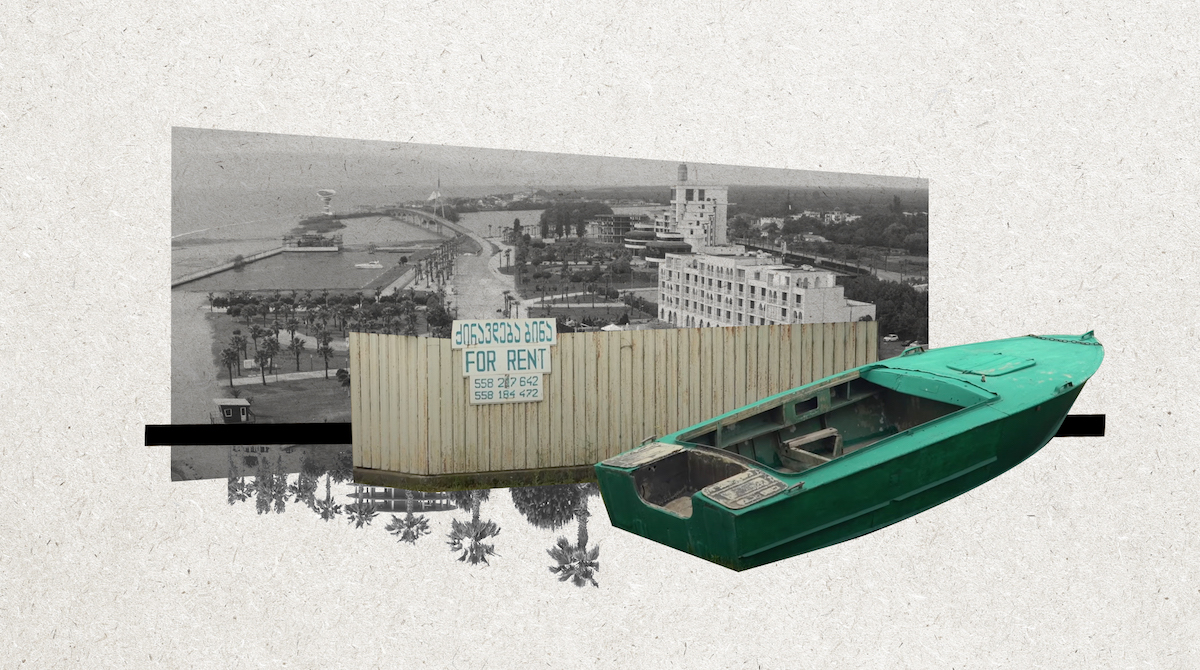
Despite repeated statements by the Georgian government about the consortium’s credentials, the two sides never signed the investment agreement.
According to the economy minister, issues affecting Georgia’s national interests led to the decision. However, the government did not specify which issues caused the disagreement.
The minister also said the government wanted the Chinese side to take part in the project under the new development model.
What has changed in the financing?
According to the government, the project’s total investment cost remains about $1.1bn. However, the new model changes how the state and the private sector will share financial responsibility.
Under the revised plan, the government will need to raise an additional $200m.
The money will fund the construction of quays, engineering infrastructure and other core port facilities that the private investor would have financed under the previous model.
The minister said the government would provide the funding through the state budget and in cooperation with international financial institutions.
She also said the government had saved about $50m-$52m on the current phase of construction.
As a result, instead of the originally estimated $250m, the government now needs to secure about $200m.
Opposition: “The problem is not the model”
The government’s decision has drawn criticism from the opposition.
Irakli Kupradze, secretary general of Lelo, said the government had presented three different development models for Anaklia over the past decade, yet the port still had not become operational.
“We face one simple fact: one government, three different models and only one outcome – Anaklia remains stalled.”
The opposition argues that the real problem is not the choice of development model but the continued delays in implementing the project.
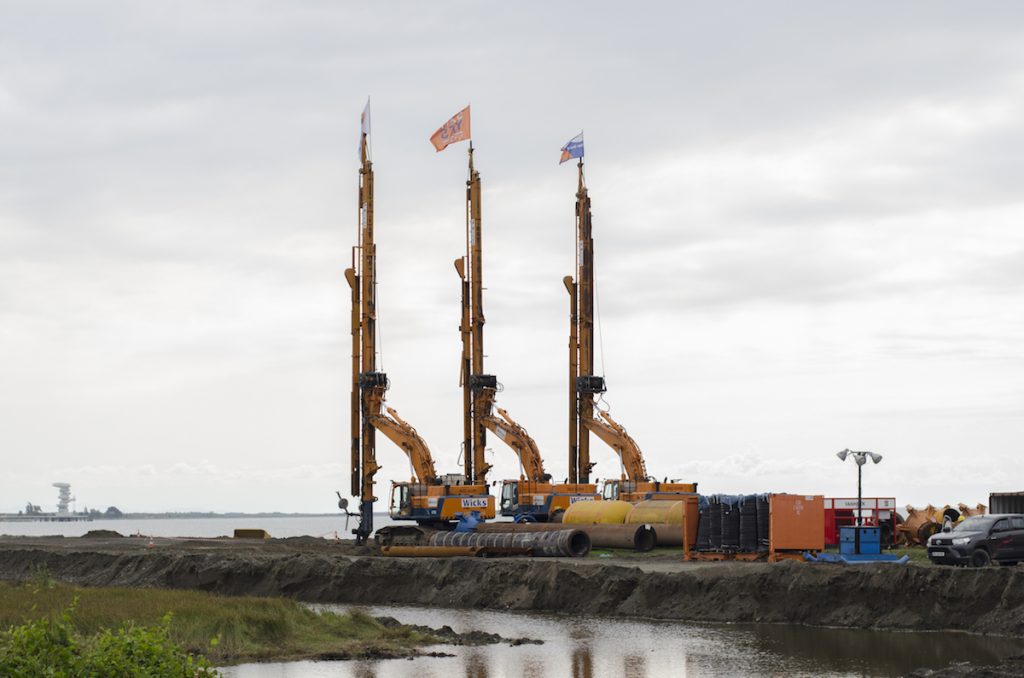
Grigol Gegelia, Lelo’s foreign affairs secretary, expressed a similar view. He pointed out that the state had spent years without completing even the infrastructure leading to Anaklia.
The ruling party argues that the new model will give international partners greater opportunities to participate in the project and further strengthen Anaklia’s role in the Middle Corridor.
-
What is the Middle Corridor?

The Middle Corridor, officially known as the Trans-Caspian International Transport Route (TITR), is an international trade route linking China and Central Asia with Europe while bypassing Russia.
The route runs through:
- China
- Kazakhstan
- the Caspian Sea
- Azerbaijan
- Georgia
- the Black Sea
- Europe
Why is it important?
Russia’s war against Ukraine has prompted European and Asian companies to look for trade routes that do not pass through Russian territory. As a result, interest in the Middle Corridor has grown.
The route offers several advantages:
- It reduces reliance on transit routes through Russia.
- It provides an alternative to the Northern Corridor.
- It can be faster than maritime shipping on some routes.
- It connects Central Asian countries with European markets.
What is Georgia’s role?
Georgia is one of the key countries along the Middle Corridor because it provides rail and road links between Azerbaijan and the Black Sea.
The country is also home to the ports of Poti and Batumi. Plans to build the Anaklia deep-sea port aim to increase the corridor’s capacity.
Anaklia’s main advantage is that, as a deep-water port, it will be able to accommodate large container ships that Georgia’s existing ports cannot fully handle.
What does the new model change?
The Civil Idea organisation says the government’s decision marks a shift away from a model based on direct foreign investment.
According to the organisation, instead of attracting about $600m in private investment, the government will now have to raise additional public funds. It argues that the decision transfers the project’s financial risks to the state.
“For a government that has consistently presented Anaklia as proof of investor confidence, financing the port through the state budget and loans amounts to a tacit admission that its investment model has failed.”
The organisation also raised several questions:
- Who will provide the additional $200m in funding?
- Who will operate the terminal?
- How transparent will the public procurement process be?
- Will contractors linked to Chinese companies return to the project?
Civil Idea also argues that the landlord model works effectively only in countries with an independent port authority, competitive terminal concessions and a clear separation between the state’s regulatory role and commercial operations.
Background: Why is Anaklia port important?
The Anaklia deep-sea port has ranked among Georgia’s most important infrastructure projects for almost a decade.
Its main objective is to strengthen Georgia’s role in the Middle Corridor.
In 2016, the government awarded the project to the Anaklia Development Consortium. Under the original plan, the port was due to receive its first vessel in 2020. However, the government terminated the contract with the consortium that same year.
The government said the investor had failed to meet its obligations, while the consortium accused the authorities of delaying the project.
The state later won two international arbitration cases related to the dispute.
In recent years, the Anaklia project has gained additional strategic importance because of the growing role of the Middle Corridor.
A study commissioned by the European Commission identifies the port as one of Georgia’s key strategic infrastructure projects.
However, the report also highlights growing regional competition, including the possibility that new transport routes could bypass Georgia.
Against that backdrop, Anaklia is no longer viewed simply as an economic infrastructure project. Its significance now also lies in Georgia’s role as a transit country, its regional competitiveness and its position along the trade corridor linking Europe and Asia.
New development plan for Anaklia Port
Categories