
Ukraine’s deputy defense minister said Kyiv’s forces had recaptured the village of Urozhaine, a small step in its grinding campaign to break through Russian defenses in the south.
 The South Caucasus News - SouthCaucasusNews.com
Category Added in a WPeMatico Campaign

(Reuters) -Azerbaijan’s defence ministry said on Saturday that Armenian forces had fired on its troops overnight, and that Azerbaijan army units took “retaliatory measures”.
It said Armenian units opened small arms fire on Azerbaijani soldiers in Sadarak in the north of Nakhchivan, an exclave of Azerbaijan that borders Armenia, Turkey and Iran.
The ministry’s statement did not say if there had been any casualties.
Reuters could not independently verify the reported incident, which came against the background of rising tensions between Armenia and Azerbaijan in recent days.
The Armenian government and state media said Armenian Prime Minister Nikol Pashinyan held phone conversations on Saturday with the leaders of France, Germany and Iran and with U.S. Secretary of State Antony Blinken.
The government said Pashinyan told Blinken and Iranian President Ebrahim Raisi that tensions were rising on the border and Azerbaijan was concentrating troops around the Armenian-populated enclave of Nagorno-Karabakh. Baku has denied this.
The government said Pashinyan told Blinken and Raisi he was ready to hold an urgent meeting with Azerbaijani President Ilham Aliyev to reduce tensions.
State news agency Armenpress said Pashinyan had similar conversations with French President Emmanuel Macron and German Chancellor Olaf Scholz.
Azerbaijan meanwhile denounced the holding on Saturday of a presidential election in Nagorno-Karabakh, a territory that is internationally recognised as part of Azerbaijan but is populated by about 120,000 ethnic Armenians.
Nagorno-Karabakh established de facto independence in a war in the early 1990s after the collapse of the Soviet Union, but Azerbaijan recaptured significant amounts of territory in its most recent war with Armenia, in 2020.
In a statement, Azerbaijan’s foreign ministry called the ethnic Armenian leadership of Karabakh a “puppet separatist regime” and said the vote was illegal.
“The Republic of Azerbaijan will resolutely counter threats to its sovereignty and territorial integrity within its internationally recognized borders,” the statement said.
“The only way to achieve peace and stability in the region is the unconditional and complete withdrawal of the Armenian armed forces from the Karabakh region of Azerbaijan and the disbandment of the puppet regime.”
(Reporting by Nailia Bagirova, Mark Trevelyan and Felix LightEditing by Peter Graff)
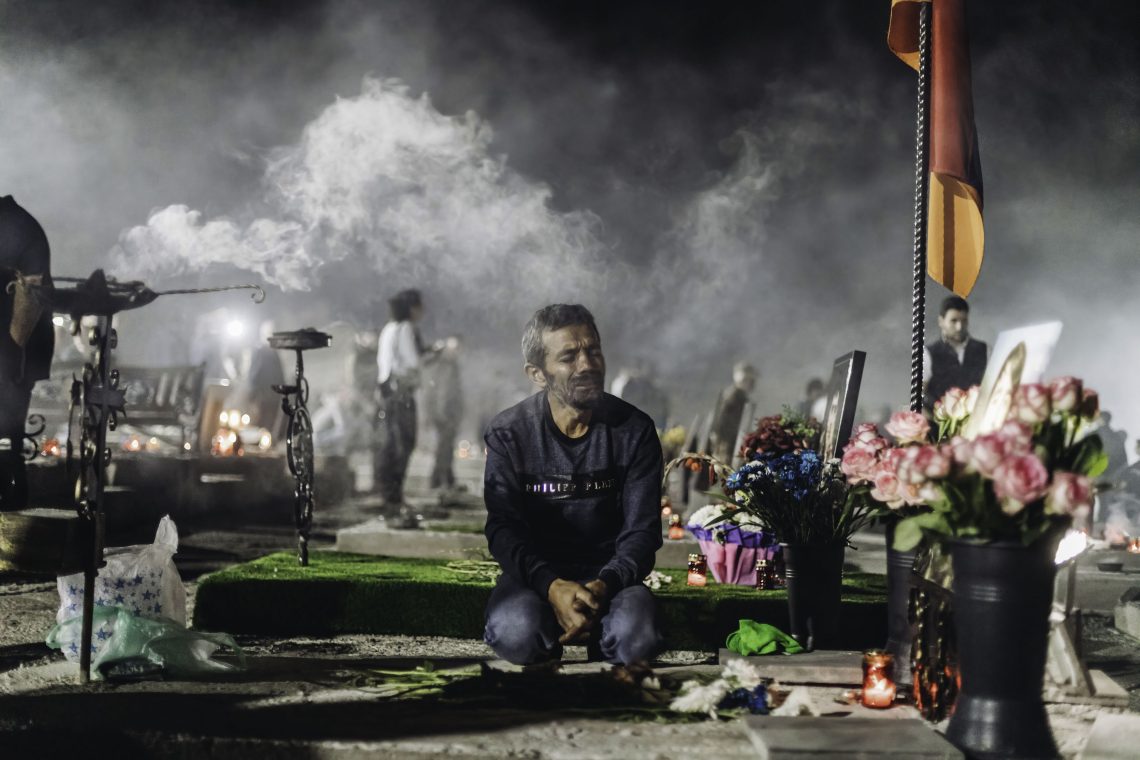 A man near Yerevan on September 26, 2021, mourns a relative killed in the 2020 Nagorno-Karabakh war that ended with Armenia’s defeat against Azerbaijan. © Getty Images
Turkey-allied Azerbaijan is seeking dominance over Armenian-controlled Nagorno-Karabakh and two key land corridors. Russia and Iran may stand in the way.
A man near Yerevan on September 26, 2021, mourns a relative killed in the 2020 Nagorno-Karabakh war that ended with Armenia’s defeat against Azerbaijan. © Getty Images
On January 23, United States Secretary of State Antony Blinken made a seemingly innocuous request to Azerbaijan President Ilham Aliyev: Lift the blockade from Armenia to Nagorno-Karabakh, the ethnically Armenian exclave inside Azerbaijan.
There were humanitarian reasons for this plea. For the 120,000 ethnic Armenians trapped inside the region, the Azeri blockade has resulted in shortages of food, gas and electricity, plus disruptions of internet services. The causes, which began on December 12, seem rather minor – environmental activists demanding the right to monitor alleged illegal mining operations in Nagorno-Karabakh.
Known as the Lachin corridor, the road connecting Armenia and Nagorno-Karabakh is nominally under the control of Russian peacekeeping forces. As agreed in an armistice deal brokered by Russia in November 2020, it should be open for commercial traffic. According to Armenian Prime Minister Nikol Pashinyan, it is not open. In a separate conversation with Secretary Blinken, he voiced concern about the humanitarian consequences.
Casual observation may suggest this is a tempest in a teapot. Not so. It is a warning sign of an underlying conflict that already reaches far outside the region.
The driving force is the weakened position of Russia, a direct consequence of its brutal war against Ukraine. As the Kremlin no longer has either the clout or credibility to enforce its version of order in the South Caucasus, or indeed in Central Asia, regional actors are raising the stakes in their own games for influence.
The most immediate consequence is to scupper any hopes of a peace settlement between Azerbaijan and Armenia. Political developments will be marked by the threat of a resumed military offensive by Azerbaijan, which would be supported by Turkey and deeply resented by Iran. The outcome will be a geopolitical transformation of the South Caucasus, which will shape transport infrastructure through the region.
War between Armenia and Azerbaijan has been going on sporadically since the early 1990s. When the first phase concluded, in May 1994, large swaths of Azeri territory were occupied by Armenian forces. Nagorno-Karabakh was de facto incorporated into Armenia. The local leadership in Stepanakert proclaimed a Republic of Artsakh that was not recognized even by Armenia. It was the first in a series of “frozen conflicts” in post-Soviet space.
From 1994 onwards, the Organization for Security and Co-operation in Europe maintained a mission to broker a solution, but its struggles served mainly to reflect the marginal influence of international organizations. What kept the conflict frozen was Russian military clout. Although nominally on the side of Armenia, Moscow sought to maximize its influence by supplying arms to both sides.
The balance shifted in September 2020, when Azerbaijan launched an armed invasion to reclaim Armenian-occupied territories. The action had been in the cards for some time after Baku used its oil wealth to beef up its military. The novelty in its bid was that it had found new and more reliable allies. It secured advanced weaponry from Israel and received much support from Turkey, including the Bayraktar drones that would become famous in the war in Ukraine. The outcome was a rout of the Armenian forces.
By making life difficult for the inhabitants of Nagorno-Karabakh, Baku hopes to achieve three goals.
On November 10, following six weeks of intense fighting, the Kremlin managed to secure an armistice. It had three important features, the consequences of which are now being played out. The first was that it preserved Armenian control over much of Nagorno-Karabakh, unacceptable to Azerbaijan. The second was that it stipulated the creation of two important corridors – the Lachin corridor, providing a lifeline for ethnic Armenians left inside landlocked Nagorno-Karabakh; and the Zangezur corridor, to provide a link from Azerbaijan across Armenian territory to Baku’s Nakhichevan exclave. The third was that Russia received a five-year mandate to deploy about 2,000 peacekeepers.
The current blockade drives home that Russia is too weak to police the agreement, and it suggests an obvious Azeri game plan. By making life difficult for the inhabitants of Nagorno-Karabakh, Baku hopes to achieve three goals. One is to force the leadership in Nagorno-Karabakh into submission. The second is to force Armenia into accepting an opening of the Zangezur corridor and the third is to compel the Russian peacekeepers to withdraw.
Baku is emboldened by the fact that Armenia has been denied support from the Russia-led Common Security Treaty Organization (CSTO), of which it is the only member in the region. The Russian response to its appeal for help was that the 2020 invasion was not an attack on Armenia but merely on the self-proclaimed Republic of Artsakh. The CSTO has since been cold-shouldered both by Kyrgyzstan, which canceled planned drills in its country and Armenia, which has said it sees no point in hosting drills planned for this year.
The demise of the CSTO into near irrelevance is a powerful symptom of Russian weakness. The vacuum left behind will be filled by two competing alliances, an ascendant one between Turkey and Azerbaijan and the other between Russia and Iran.
Although Azerbaijan’s struggle to reclaim control over Nagorno-Karabakh is partly a nationalist cause, it boils down to securing the Zangezur corridor. The main impact of Armenia’s seizure of large swaths of Azeri territory was to interdict a vital Soviet-era transport corridor. Drawn along the Caspian Sea, it ran from Russia to the south of Azerbaijan where it turned west to Turkey and Armenia, hugging the border with Iran. Having ended up in a war zone, it could no longer be used, and rapidly fell into disrepair.
Turkey consequently became dependent on Iran for transport to Central Asia, a situation marked by increasing conflict, ranging from raised transit fees to harassment of Turkish truck drivers. Ankara is presently keen on promoting a peace deal between Armenia and Azerbaijan that would feature a reopening of its former direct link to Central Asia.
But Armenia has found ample reason to drag its feet. It opposes the proposed extraterritoriality of the Zangezur corridor, concerned that it would run along the border with Iran. The arrangement would block vital access to a friendly neighbor and risk placing the management of critical water resources from the Aras River basin in the hands of Azerbaijan.
The bulk of Armenia’s border in the south is with Turkey and with the Nakhichevan exclave. There are only two small stretches that offer passage into Iran, one of which is between Azerbaijan and Nakhichevan. If the Zangezur corridor becomes reality, the only remaining lifeline to Iran would be a small stretch between Nakhichevan and Turkey.
Baku has grown increasingly insistent that a peace deal must be consummated, and that work must begin on getting the Zangezur corridor operational. On January 10, President Aliyev accused Armenia of reneging on its obligation, ominously noting that “whether Armenia wants it or not, it will be implemented.” Although he was careful to add that Azerbaijan has no intention to launch another war, the implied threat was clear.
The outcome if Turkey and Azerbaijan emerge as winners would be infrastructure investment that is geared toward providing energy from Central Asia and the Caspian basin into Europe.
What may still serve to thwart Turkish-Azeri ambitions is the deepening link between Russia and Iran. Deliveries of Iranian Shahed drones have already been helpful to Russia’s war against Ukraine. If cooperation is extended further, it could have consequences far outside the region. Reports have suggested that Iran may deliver ballistic missiles in return for advanced Russian fighter jets and possibly even help in completing its nuclear weapons program.
Armenia has every reason to bank on this alliance. Aside from Russia, which has played both sides, Iran has been its only friend. It has long provided energy and other critical supplies via roads across the common border, and its motivation for providing such support is reliable self-interest.
Iran is concerned about the implications for its own security from a peace treaty that allows the Zangezur corridor to be launched. There are more than 20 million ethnic Azeris living in Iran, mainly in the north, and it is no secret that any Israeli attack on Iran would be supported by Baku. Such concern has been augmented by Azeribaijan’s recent decision to open an embassy in Israel.
In the runup to the blockade of Nagorno-Karabakh, the Iranian army conducted drills along the Aras River, which separates the two countries. Those drills included a simulated building of temporary bridges, implicitly threatening an armed invasion. An Iranian Azeri-language broadcaster warned that “anyone who looks at Iran the wrong way must be destroyed.”
Azerbaijan countered with drills of its own that featured participation by Turkish armed forces. The Azeri press also reported that the Islamic Revolutionary Guard Corps (IRGC) had provided vital military supplies to Armenia and sent military advisors to Armenian forces inside Nagorno-Karabakh. Although the veracity of the claims may be disputed, the conflict is heating up. After its military exercises along the Aras, Iran upped the ante even further by opening a consular office in Kapan, located in Armenia’s southern Syunik province, through which the Zangezur corridor would be drawn.
Iranian fears of closer relations between Israel and Azerbaijan were enhanced by the bombing campaign that struck several Iranian cities on the night of January 29. Presumably orchestrated by Israel, it targeted vital military and industrial sites, including the headquarters of the IRGC. Although it is unclear what the main objective was, it sent a powerful message of Iranian vulnerability.
Developments can move in two very different directions in this geopolitical transformation of the South Caucasus. One features a stalemate in the war in Ukraine, a gradual recovery of Russian strength and a deepening relationship between Moscow and Tehran. The outcome would be to counter the growing influence of Azerbaijan. Russian peacekeepers would reassert control over the Lachin corridor. Iran would begin sales of weapons to Armenia, notably the Shahed-136 drones, and the Zangezur corridor would be stalled. The longer-term investment would be aimed at promoting the north-south transport corridor that has long been favored by Russia and Iran.
The alternative scenario features a defeat for Russia in Ukraine and effective sanctions against Iranian exports of weapons. This would embolden Azerbaijan and Turkey to push through the Zangezur corridor, to further erode Russian influence in the South Caucasus and to shut Iran out of the region. It is worth remembering that during the 44-day war in 2020, Azerbaijan not only shelled targets in Nagorno-Karabakh but also targets inside Armenia proper. It remains in a position to do so again, and Russia may be too weak to prevent it.
The outcome if Turkey and Azerbaijan emerge as winners would be infrastructure investment that is geared toward providing energy from Central Asia and the Caspian basin into Europe. There would be many winners. Turkey is only too happy to become a major energy hub. The European Union has already courted Baku for gas while dialing back criticism of Azeri human rights abuses. And the U.S. would be happy to see Russia pushed out. It does look like the most likely outcome.
Receive insights from our experts every week in your inbox.
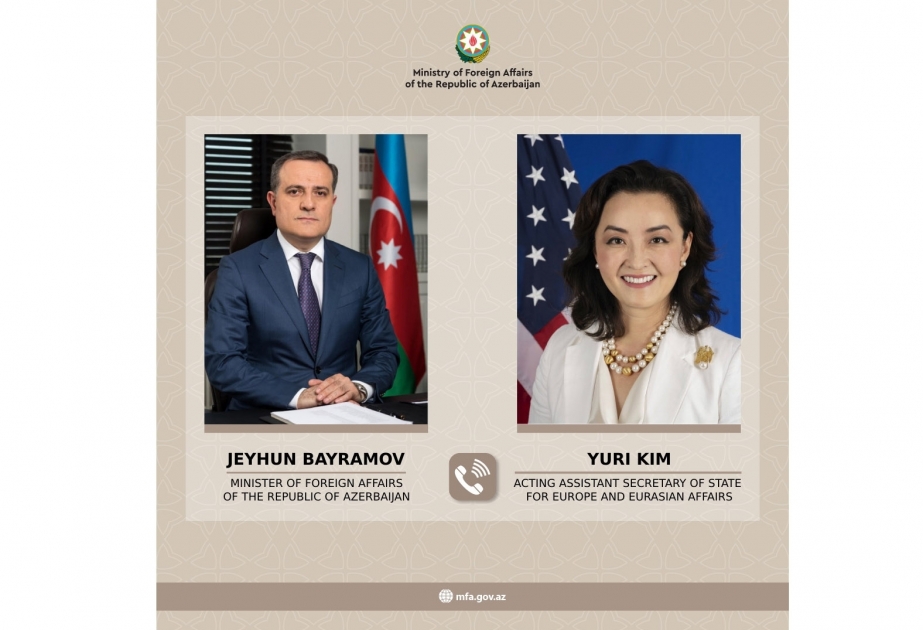
Baku, September 9, AZERTAC
Azerbaijan’s Minister of Foreign Affairs Jeyhun Bayramov has held a telephone conversation with US Acting Assistant Secretary of State for European and Eurasian Affairs Yuri Kim.
During the telephone conversation, the sides discussed the latest situation in the region.
Minister Jeyhun Bayramov underscored that the increasing provocations of Armenia and the so-called regime, established by it in the territories of Azerbaijan, against the territorial integrity and sovereignty of Azerbaijan, and the Armenian armed forces, which have not yet been withdrawn from the territories of Azerbaijan in violation of obligations, pose a major threat to peace and security in the region.
FM Bayramov noted that the illegal activity carried out by the puppet regime in Azerbaijan’s Garabagh region under the pretext of “presidential elections” on September 9 is a gross violation of the Constitution of the Republic of Azerbaijan, laws and norms and principles of international law, adding that this activity seriously undermines efforts to normalize relations in the region and the process of reintegrating the Armenian residents of Garabagh.
The minister stressed the need for the unconditional and complete withdrawal of Armenian armed forces from the Garabagh region of Azerbaijan and the dissolution of the puppet regime.
The minister called for a resolute condemnation of this illegal activity carried out under the pretext of “election” in the territory of Azerbaijan, in accordance with the obligations under international law.
During the phone conversation, the sides also exchanged views on other issues of mutual interest.

A telephone conversation took place between the Prime Minister of Armenia Nikol Pashinyan and the President of France Emmanuel Macron, Press Service of the Armenian government reports.
Issues related to the deepening humanitarian crisis in Nagorno-Karabakh as a result of the illegal blocking of the Lachin Corridor, the accumulation of Azerbaijani troops around Nagorno-Karabakh, and the increasing tension on the Armenia-Azerbaijan state border were discussed.
Prime Minister Pashinyan reaffirmed his commitment to the Prague agreements of October 6, 2022 and the Brussels agreements of May 14, 2023, and to the approach of solving all issues exclusively through diplomatic means and in a constructive atmosphere.
President Macron emphasized that the reduction of tension along the borders is a necessity. Prime Minister Pashinyan expressed readiness to hold urgent discussions with the president of Azerbaijan aimed at reducing tension.President Macron expressed his willingness to support the efforts aimed at establishing peace and stability in the region.
TBILISI, Georgia — Nino Takaishvili, an ethnic Georgian from Moscow, clearly remembers Aug. 8, 2008, the day that the Russian army invaded her ancestral homeland while she was on her first trip abroad in Paris.
She also remembers the surprise she felt when her Russian-speaking guide began the tour with words that seemed to have been plucked from an alternate reality: “Dear friends, at this moment, as we are standing here, Georgia attacked Russia.”
Fifteen years since Russia’s five-day war against Georgia, most Russians living in this South Caucasus country still have a vague idea of what was happening here at that time, said Takaishvili, who left Russia for Georgia in 2021 out of disagreement with the Kremlin’s policies.
“Anti-war Russians … come to Tbilisi and are surprised when they are told that Russia has occupied 20% of Georgia,” Takaishvili said, referring to the breakaway statelets of South Ossetia and Abkhazia, which have hosted a Russian military contingent since the 2008 war.
But for many Russian emigres, their country’s invasion of Ukraine has brought the Russian war on Georgia, another former Soviet republic, into sharper focus.
The Russian army’s invasion of Georgia came hours after Georgian troops bombed and stormed the city of Tskhinvali, the capital of the separatist region of South Ossetia, on the night of Aug. 8, 2008.
The Georgian-Ossetian conflict had been frozen since 1992, when Russia supported the separatists and forced Georgia to enter truce negotiations with the self-proclaimed republic.
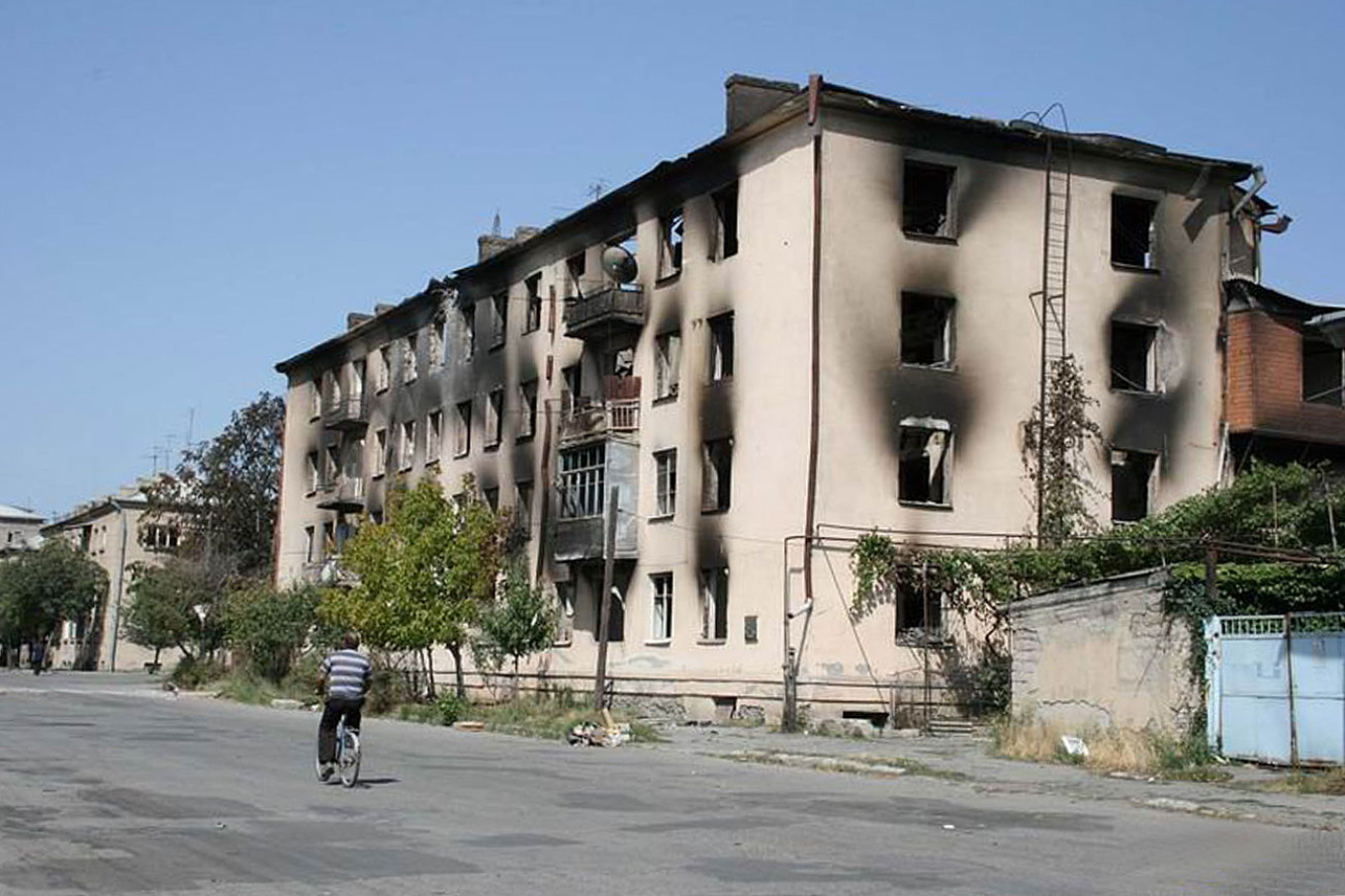 Tskhinvali after Russo-Georgian war, 2008. OSinform (CC BY-SA 3.0)
 The crisis started to flare again following 2004 as Russian-Georgian relations cooled and Tbilisi turned toward the West. By July 2008, clashes and mutual shelling had become more frequent on the contact line, becoming the prelude of a new escalation.
Following the invasion, the Russian army drove the Georgian military out of Tskhinvali within a few days and captured several cities in Georgia, even coming close to Tbilisi before a peace agreement was signed on Aug. 12.
Georgia says 228 civilians were killed during the war, and 184 Georgian servicemen died or went missing.
Many of the tens of thousands of young anti-war Russians who moved to Georgia following the invasion of Ukraine had been children and teenagers at the time of the 2008 war.
Tatiana, an independent Russian journalist, admitted that she previously hadn’t had an interest in the Russian-Georgian war, but the invasion of Ukraine forced her to take a fresh look at the events.
“Since childhood, I thought it was a territorial conflict between Georgia and South Ossetia. I learned about Russia’s role in this war only after moving to Georgia,” said Tatiana, 26, who declined to share her surname.
Others admitted to The Moscow Times that they only remembered those events through the lens of the news on TV and their parents’ conversations.
“I was 10 years old and I didn’t realize at all that there was some kind of war,” recalled 25-year-old Maxim, who moved to Tbilisi last fall to flee Russia’s mobilization for the war in Ukraine.
“About [then-Georgian President Mikheil] Saakashvili, I have only heard that he is a criminal, a psycho and an instigator of wars. That’s what the adults told me. But I didn’t know why Saakashvili was bad and for what he was specifically to blame,” Maxim said.
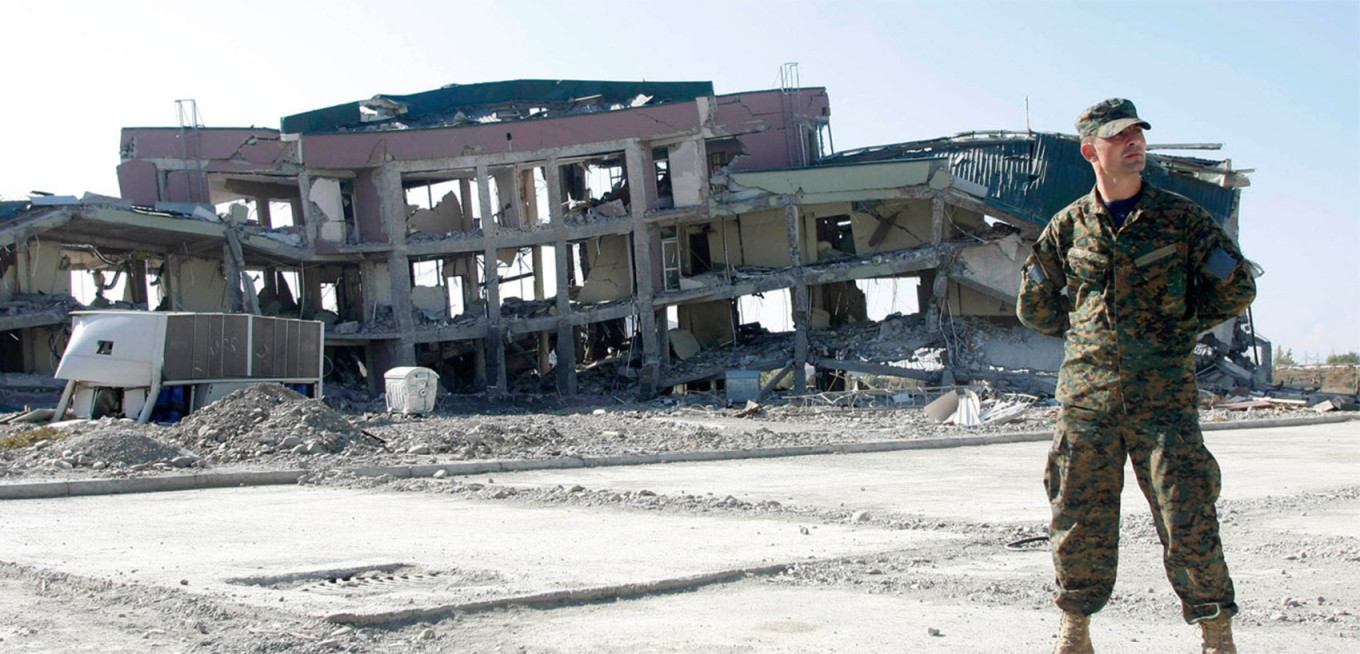 Destroyed barracks at the Gori Military Base following the Russian bombing in 2008. Giorgi Abdaladze (CC BY-SA 4.0)
 Although the emigres who spoke to The Moscow Times admitted that they still know little about that war, they said they see clear similarities between the invasion of Georgia and the invasion of Ukraine.
“In my opinion, the invasion of Georgia was a manifestation of Russia’s colonial policy toward a neighboring state that does not agree to live by Russian rules,” said 26-year-old Mikita, an ethnic Ukrainian with a Russian passport who lives in Tbilisi.
Although he admitted that he did not know who exactly was responsible for the outbreak of hostilities, the events of February 2022 radicalized his attitude toward Russia and strengthened his sense of solidarity with Georgia.
“I do not know who started it first. It doesn’t matter to me. At any rate, Russia for me is now a terrorist state and a world-shattering evil that needs to be wiped off the face of the earth,” Mikita said.
According to an April 2023 survey conducted by the Washington-based think tank International Republican Institute, 37% of Georgians believe that Russians should not be allowed into Georgia until Russia leaves the occupied territories, and 29% would prefer that Russians leave their country.
Graffiti with the inscriptions “F*** Russia,” “Russians go home” and “Russian warship — go f*** yourself,” a common sight on Tbilisi’s historic streets, also speaks to the public mood here.
“During the first months in Georgia, I felt ashamed that I am from Russia,” said journalist Tatiana. “But I feel calmer now. Once at a bus stop in Tbilisi, we met some locals and after 10 minutes they invited us to drink wine. We drank to a free Georgia and a free Russia, hugged, and almost cried.”
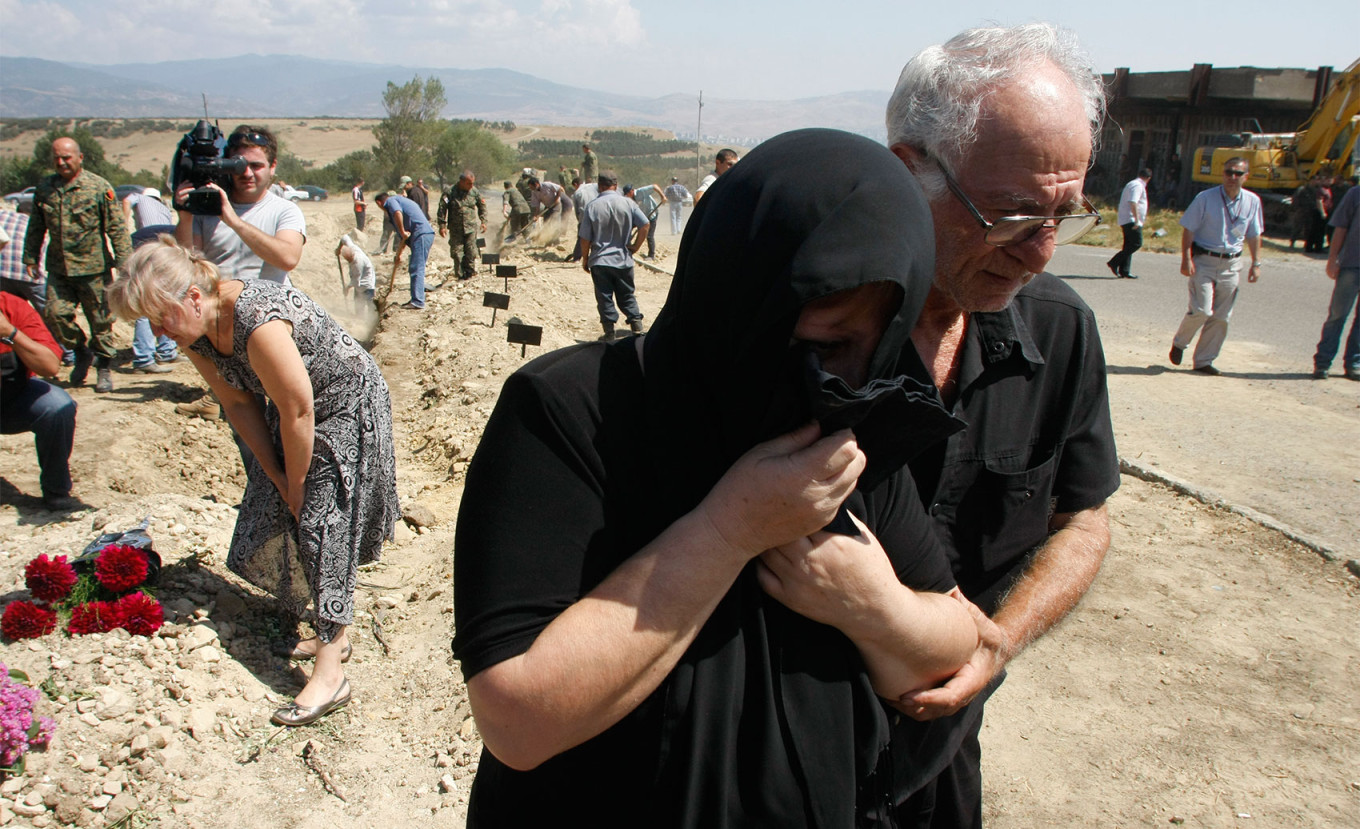 Family crying in the aftermath of the Russian bombing of Gori, Georgia in 2008. Giorgi Abdaladze (CC BY-SA 4.0)
 However, most of the Russians who spoke to The Moscow Times admitted that they do not feel personally guilty for the events of 15 years ago.
“I could not influence these events as a child from a provincial small town. But, of course, few people [here] care. If you have a Russian passport, then you are responsible for everything that Russia has done,” 25-year-old Maxim said.
Gleb, a 26-year-old political science graduate student living in Tbilisi, said he thinks the “Russian occupation” narrative obscures other complex aspects of the conflict, such as Georgia’s responsibility for attempts to dominate its own ethnic minorities.
“Georgian society seems to be unable to reflect on the conflict with Ossetians and Abkhazians in isolation from Russian interference,” he said.
“The problem existed much earlier, they did not control these republics before Russia invaded Georgia. The question is, do Ossetians and Abkhazians consider themselves occupied?”
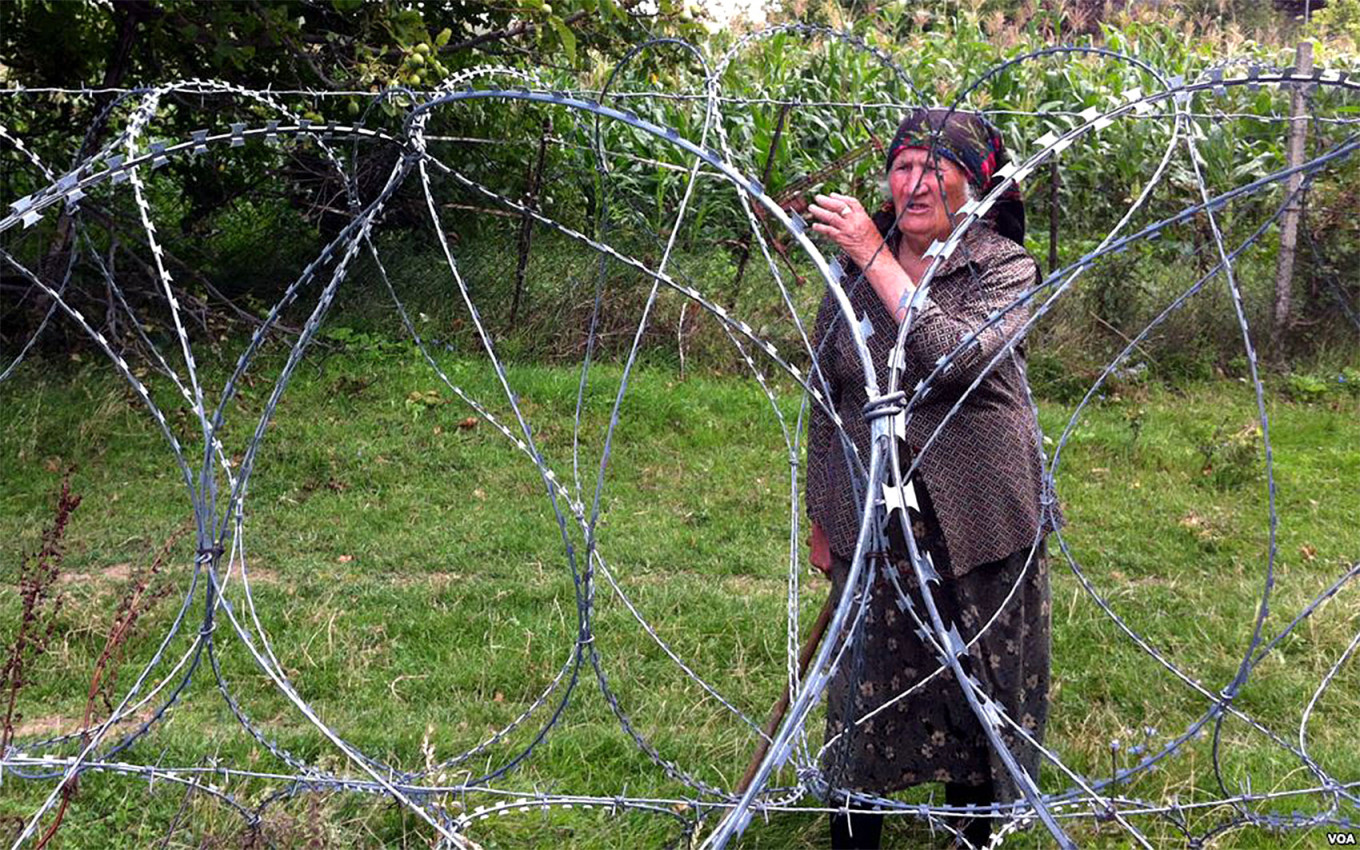 A Georgian villager is left beyond the barbwire installed by the Russian troops along the South Ossetia-Georgia contact line in September 2013. VOA
 Russia managed to avoid serious diplomatic consequences over its war on Georgia despite the fact that Moscow’s actions were considered “incommensurable” in the West.
This was reinforced by an EU Commission investigation into the circumstances of the conflict, which blamed Georgia for the outbreak of hostilities but noted that the subsequent Russian invasion was a violation of international law.
Takaishvili said it is key to remember the Russo-Georgian war today given how it in many ways precluded the invasion of Ukraine.
“Everyone very quickly forgot about this war,” said Takaishvili. “What is happening now in Ukraine is a logical continuation of how the whole world turned a blind eye to what happened in Georgia. But I have never forgotten these days, I have never forgotten the horror I felt for my father and relatives in Georgia.”
“It’s strange that Russians only found out after the war in Ukraine that they are not loved here,” she said.

YEREVAN, SEPTEMBER 9, ARMENPRESS. Armenian Prime Minister Nikol Pashinyan spoke by phone on Saturday with his Georgian counterpart Irakli Garibashvili to discuss issues related to the current situation in the region, the Prime Minister’s Office reported.
PM Pashinyan and PM Garibashvili discussed the worsening humanitarian crisis in Nagorno-Karabakh due to the illegal blocking of the Lachin Corridor, the accumulation of Azerbaijani troops around Nagorno-Karabakh, and the increase in tension on the Armenia-Azerbaijan state border, the Prime Minister’s Office said in a readout.
“Prime Minister Pashinyan emphasized his commitment to the Prague agreements of October 6, 2022 and Brussels agreements of May 14, 2023, as well as to the approaches to solving all issues exclusively through diplomatic means and in a constructive atmosphere.
The Prime Minister of Georgia stated that he is ready to make necessary efforts to promote peace and stability in the region.
The sides emphasized the settlement of existing problems through peaceful negotiations.
PM Nikol Pashinyan reaffirmed that he is ready to have urgent discussions with the President of Azerbaijan,” the Prime Minister’s Office added.
YEREVAN, SEPTEMBER 9, ARMENPRESS. Armenian Prime Minister Nikol Pashinyan spoke by phone on Saturday with his Georgian counterpart Irakli Garibashvili to discuss issues related to the current situation in the region, the Prime Minister’s Office reported.
PM Pashinyan and PM Garibashvili discussed the worsening humanitarian crisis in Nagorno-Karabakh due to the illegal blocking of the Lachin Corridor, the accumulation of Azerbaijani troops around Nagorno-Karabakh, and the increase in tension on the Armenia-Azerbaijan state border, the Prime Minister’s Office said in a readout.
“Prime Minister Pashinyan emphasized his commitment to the Prague agreements of October 6, 2022 and Brussels agreements of May 14, 2023, as well as to the approaches to solving all issues exclusively through diplomatic means and in a constructive atmosphere.
The Prime Minister of Georgia stated that he is ready to make necessary efforts to promote peace and stability in the region.
The sides emphasized the settlement of existing problems through peaceful negotiations.
PM Nikol Pashinyan reaffirmed that he is ready to have urgent discussions with the President of Azerbaijan,” the Prime Minister’s Office added.
Azerbaijan and Israel have engaged in close cooperation since 1992.[1] Azerbaijan is one of the majority Muslim countries, alongside Turkey, Egypt, Bahrain, United Arab Emirates, Jordan, Sudan, Kosovo, Morocco, Albania, Gulf countries and the other former Soviet republics to develop bilateral strategic and economic relations with Israel. In President Ilham Aliyev‘s meeting with Israel Prime Minister Benjamin Netanyahu, Aliyev praised the active role of the Jewish community living in Azerbaijan in developing bilateral relations between the countries.[2]
 Azerbaijani stamp commemorating the 3000th anniversary of Jerusalem.
On October 18, 1991, the declaration of the Parliament of Azerbaijan restored the country’s independence, and in November 1991 Turkey became the first state to formally recognize it.[3] On December 25, 1991, Israel formally recognized the independence of Azerbaijan,[4] becoming one of the first states to do so, and established diplomatic relations with the country on April 7, 1992.[4] During the Nagorno-Karabakh conflict between Armenia and Azerbaijan, Israel funded and provided weapons and artillery to Azerbaijan.[5]
According to a 2009 U.S. diplomatic memo, made public through WikiLeaks, Azerbaijan’s President Ilham Aliyev once compared his country’s relationship with Israel to an iceberg: “Nine-tenths of it is below the surface.”[6]
Azerbaijan was visited by David Harris, executive director of the American Jewish Committee, in July 2010, shortly after the visit of Hillary Clinton to Baku. During the reception, Harris said Azerbaijan presented cultural, strategic and political importance.[7]
Azerbaijan was visited by John Shapiro, executive director of the American Jewish Committee, in January 2017, shortly after the visit of Benjamin Netanyahu to Baku. During the reception, Shapiro said that constructive partnership between Azerbaijan, US and Israel has a big significance.[8]
Visiting Azerbaijan in December 2016 the Israeli, Prime Minister Benjamin Netanyahu said: “Relations with Azerbaijan are very close. They will be even better after this visit.”[9]
Azerbaijan is home to some 30,000 Jews, residing primarily in Baku and the Qırmızı Qəsəbə settlement in the Quba district of Azerbaijan.[10] Mountain Jews have been living in Azerbaijan for close to 1,500 years; they are the descendants of Persian Jews. During the conquest by the Islamic Caliphate, Arabs settled an allied Jewish tribe in the neighborhoods of Baku; in 1730, Jews were officially allowed the right of residence and property ownership rights in Quba.[11] There are also nearly 5,000 Ashkenazi Jews living mostly in Baku. The first Jewish Sochnut school in the Soviet Union was opened in 1982 in Baku, then capital of Azerbaijan SSR.
April 2017 marked the 25th anniversary of the establishment of diplomatic ties between Israel and Azerbaijan.[12][13] A congratulatory letter to the President of Azerbaijan Ilham Aliyev from the Israeli Prime Minister Benjamin Netanyahu included:[14][15]
Israel is proud to have been one of the first nations to recognize the independent Republic of Azerbaijan. In the quarter-century since, our countries have built a solid relationship based on genuine friendship between the Jewish and Azerbaijani peoples. … Azerbaijan is a model of inter-faith and multicultural harmony in an area fraught with religious and ethnic rivalries. Like you, Israel is a beacon of stability and tolerance in an unstable region. Despite the challenges we face, we have both succeeded in creating thriving economies and vibrant, prosperous and peace-seeking societies.
Israeli–Azerbaijani ties strengthened since the very early 1990s. The strategic relationship included cooperation in trade and security matters, cultural and educational exchanges, etc. Relations entered a new phase in August 1997 during the visit of the then Israeli prime minister Benjamin Netanyahu to Baku. Since then Israel has been developing closer ties with Azerbaijan and has helped modernize the Armed Forces of Azerbaijan. The Israeli military has been a major provider of battlefield aviation, artillery, anti-tank, and anti-infantry weaponry to Azerbaijan.[16][17]
In 2009, Israeli President Shimon Peres made a visit to Azerbaijan where military relations were expanded further, with the Israeli company Aeronautics Defense Systems Ltd announcing it would build a factory in Baku.[18]
In 2010, Azerbaijani President Ilham Aliyev issued a decree banning the issue of visas in the country’s international airports; foreigners henceforth had to apply for visas at the nearest Azerbaijani consulate. Israel and Turkey were the only two countries whose citizens were unaffected by the new law.[19]
In 2016, Israel’s Defence Minister Avigdor Lieberman supported the position of Azerbaijan in the 2016 Nagorno-Karabakh conflict, calling it “absolutely justified”.[20] Furthermore, Lieberman held Armenia responsible for provoking the conflict in April 2016.[citation needed]
A delegation of the World Jewish Congress visited Azerbaijan in September 2016; during the talks with the Azerbaijani President Ilham Aliyev emphasis was put on “excellent” relations with Israel and the Jewish community.[21][22]
In December 2016, Israeli Prime Minister Benjamin Netanyahu paid an official visit to Baku. During the visit he emphasized that “Israel and Azerbaijan enjoy an excellent relationship and warm friendship”.[23] During the visit Netanyahu visited the Alley of Martyrs and paid tribute to Azerbaijani heroes.[24] He also visited the Ohr Avner Chabad Day School, met with the local Jewish community and gave a speech before students.[25][26] Press statements made by the President of Azerbaijan Ilham Aliyev and the Israeli Prime Minister Benjamin Netanyahu also showed satisfaction with the bilateral cooperation of the two countries.[27][28]
In December 2016, the Azerbaijan-Israel intergovernmental agreement on air communication was signed.[29]
In March 2017, several regional tours were made by the Israeli envoy to Azerbaijan to deepen economic cooperation in the spheres of economy, agriculture, and tourism:[30] Azerbaijan and Israel abolished double taxation between the two countries in April 2017.[31]
During his speech at the 72nd session of the UN General Assembly on September 19, 2017, Netanyahu mentioned the expansion of cooperation between the two countries.[32]
In January 2019, the State Border Service of Azerbaijan purchased Sky Striker kamikazes from Israel’s Elbit Systems. Azerbaijan became the first foreign buyer of Sky Strikers.[33]
In the September 2020 Nagorno-Karabakh war with Armenia, Azerbaijan has deployed Israeli-made weapons on Armenian targets,[34] and Israel continues to back Azerbaijan in its decades-long territorial dispute with Armenia.[citation needed]
Following an October 2001 meeting with Israeli ambassador Eitan Naeh, Azerbaijan’s then-president Heydar Aliyev declared that the two countries had identical positions in the fight against international terrorism.[35] Israeli intelligence helps collect human intelligence about what they view as extremist organizations in the region. One of the groups, Hizb ut-Tahrir, which seeks the annihilation of the state of Israel, threatens both Jerusalem and Baku. Hizb ut-Tahrir is suspected of having several hundred members in Azerbaijan, and several its members were arrested and prosecuted by Azerbaijani authorities.[36]
In 2008, a plot was foiled to bomb the Israeli Embassy in Baku, which is located in a high-rise building along with the Thai and Japanese embassies. Two Hezbollah militants went on trial for the attempt in May 2009.[37] Local police narrowly averted the potential disaster, which involved placing three or four car bombs around the high-rise complex to carry out the attack. Groups planned the bombing in retaliation for the 2008 assassination in Damascus, Syria of Hezbollah’s second in command Imad Mughniyah, which the Lebanese group blamed on Israel. News reports suggested Iran was involved in the plan as well.[38]
In 2012, Israel and Azerbaijan signed an agreement according to which state-run Israel Aerospace Industries would sell $1.6 billion in drones and anti-aircraft and missile defense systems to Azerbaijan.[39]
Some analysts consider that both Israel and Azerbaijan see Iran as an existential threat. Azerbaijan fears Iranian Islamist influence, but Iran fears Azerbaijan, too, as up to 18 million Iranians are ethnic Azeris. On the other hand, Azerbaijan has close links with Turkey, and the post-2006 worsening of Israel–Turkey relations may have repercussions on Azerbaijan’s relations with Israel.[40]
In February 2012, Iran rebuked Azerbaijan for allegedly aiding anti-Iranian activities by Israel’s Mossad intelligence agency.[41] A few weeks later Azerbaijan arrested 22 people in a suspected Iranian plot against Israeli and US targets in Azerbaijan.[42] In March 2012, the magazine Foreign Policy reported that the Israeli Air Force may be preparing to use the Sitalchay Military Airbase, located 500 km (340 miles) from the Iranian border, for air strikes against the nuclear program of Iran.[6]
Azerbaijan has sought closer relations with the West. There are, however, several inhibiting factors to a more proximate alliance. One is Russia. Another is Azerbaijan’s vulnerability to pressure from the Muslim world. This pressure is the reason Azerbaijan has yet to open an embassy in Israel and why it has voted against Israel’s views in international forums.[43]
Economic cooperation between Israel and Azerbaijan has been growing significantly. As Azerbaijan deregulated its industries and liberalized its economy in the early 1990s, Israeli companies penetrated Azerbaijani markets.[44] Many companies have invested in service industry. One example is Bezeq, a major Israeli telecommunication provider. Through a trade contract bid in 1994, Bezeq bought a large share of the telephone operating system.[45] Today it installs phone lines and operates regional services throughout much of the country. Another company, Bakcell, was commenced as a joint venture between the Ministry of Communication of Azerbaijan and GTIB (Israel)[46] in early 1994 as the first cellular telephone operator in the country. Dozens of Israeli companies are active in the Azerbaijani energy sector. For instance, Modcon Systems Ltd., an Israel-based supplier of high technology to the oil and gas industries, opened a branch in Azerbaijan.[citation needed] In March 2021, Israeli defense company Meteor Aerospace teamed up with Caspian Ship Building Company (CSBC) of Azerbaijan to jointly offer advanced defense solutions to meet the Eurasian country’s national needs.[47]
Between 2000 and 2005, Israel has risen from being Azerbaijan’s tenth largest trading partner to its fifth. According to U.N. statistics, between 1997 and 2004, exports from Azerbaijan to Israel increased from barely over US$2 million to $323 million, fueled in recent years by the high price of oil.[48] As of 2013, 40 percent of oil to Israel is exported from Baku, which makes Azerbaijan Israel’s largest oil supplier.[49]
Azerbaijan and Israel abolished double taxation between countries in April 2017.[50] “Defense and energy sectors apart, the bilateral trade between the two countries amounted to $260 million in 2016,” said the Israeli ambassador to Azerbaijan.[51] According to the State Customs Committee of Azerbaijan, the total trade turnover between Azerbaijan and Israel amounted to $116.2 million in January–February 2017, which is 17.5 percent more compared to the same period of 2016.[50]
In 2020 trade between Azerbaijan and Israel was approximately 200 million US dollars (beside oil supplies).[52]
On July 29, 2021 Trade and Tourism representative office of Azerbaijan was founded in Tel Aviv.[53]
Azerbaijan and Israel cooperate closely in the field of energy: Israel buys 40 percent of its oil from Azerbaijan. [54][55]
In a 2007 speech, the Israeli ambassador to Azerbaijan, Arthur Lenk, spoke of continuous trade between Azerbaijan and Israel in the energy sector. He noted that until the inauguration of the Baku–Tbilisi–Ceyhan pipeline in 2006, Israel was a key consumer of Azerbaijani oil exports and that the proximity of Ceyhan to Israel offers excellent new opportunities for greater Israeli participation in this sector of the economy, thus creating additional areas for collaboration and mutual benefit. He underlined that through the Trans-Israel pipeline between Ashkelon and Eilat, Israel could be a strategic partner for marketing Caspian oil to Asia. Israeli efforts in developing alternative energy resources, especially solar energy, were also mentioned. Israel additionally seeks possibilities of importing gas from the Caspian Sea region.[56]
In December 2016, during his visit to Azerbaijan the Prime Minister of Israel Benjamin Netanyahu said: “Today we are negotiating not only for the supply of Azerbaijani oil, but also imports of Azerbaijani gas to Israel”.[27][28]
On March 29, 2012, officials[who?] stated that Israel was granted access to air bases in Azerbaijan through a “series of quiet political and military understandings.” According to Haaretz, these airbases could potentially be used in a strike against Iran over its nuclear program and other tensions with Iran, and would be allowed by Azerbaijan.[57] Israeli and Azerbaijani officials denied these reports.[58][59]
On September 30, 2012, it was reported that Azerbaijan and Israel jointly examined the use of Azerbaijani air bases and spy drones to help Israeli jets perform a long-range strike on Iran. This would help Israel with regard to issues with refueling, reconnaissance, and rescuing crews, and could make an attack more feasible.[60] The plan involves using an Israeli tanker aircraft painted in the colors of a third country airline company that would land and refuel in Azerbaijan and then refuel the Israeli strike aircraft.[61]
Israel is an important exporter of arms to Azerbaijan. According to research of the Stockholm International Peace Research Institute, Israel accounted for 27 percent of Azerbaijan’s major arms imports from 2011 to 2020 and from 2016 to 2020, Israel accounted for 69 percent of Azerbaijan’s major arms imports.[62]
As of 2016, approximately 30,000 Jews live in Azerbaijan
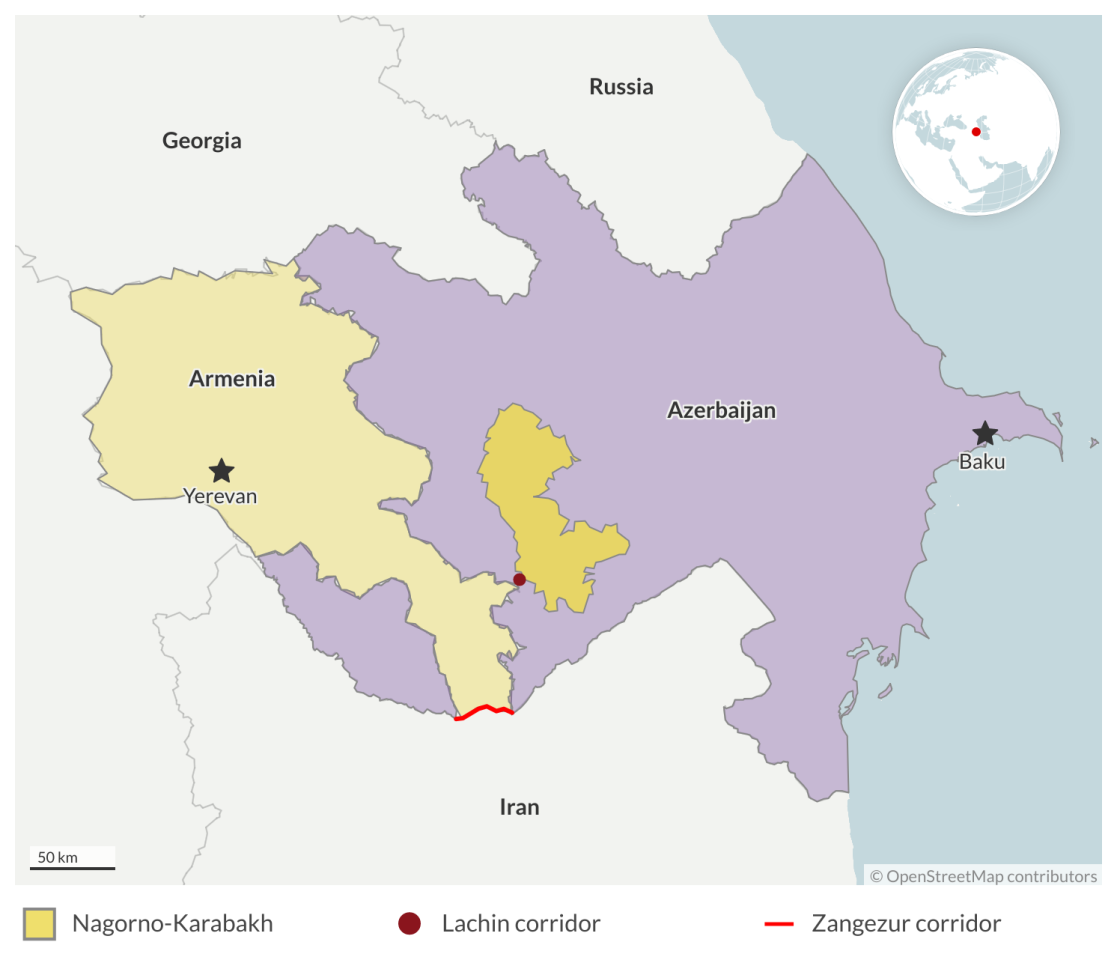
 https://www.gisreportsonline.com/r/geopolitical-transformation-south-caucasus/
 Azerbaijan–Israel relations


